Whirlpool’s own support base carries 1,449 laundry pages — 536 on washers alone, 351 on stacked centers, 289 on dryers, 130 on the all-in-one, 143 on commercial laundry. That is more than it publishes for any other branch of the house, and it is why 17 of the jobs on this list are laundry jobs rather than four or five. A stacked laundry tower is its own repair and not a washer repair done twice: one control panel is reporting for two machines, and the first part of the visit is establishing which half is talking. The all-in-one, which washes and then dries in the same drum without a duct, is a third thing again — its maintenance is a condenser and a drain rather than a vent run.
48 jobs · 11 appliances
Whirlpool service in South Florida, on the machines that are actually in the building.
Whirlpool is the make in the rented condo, in the second kitchen, in the laundry closet behind a louvered door. Its parts are already on the van rather than five days out, and that is the single largest reason the figures on this list sit where they do. 17 of these jobs are laundry, because laundry is where this make publishes most and where it fails most. Each card says what the work is; the figure beside it is a floor rather than a quote.
- 48 jobs with a published figure
- 17 of them in the laundry room
- 11 appliance types on this badge
- from $89 diagnostic, credited to the repair
Start from the job
The work in each job, and the floor it starts from
Treat each number as a floor rather than a quote. It reflects what this equipment and this labor go for in South Florida, and what moves it is written out on the job's own cost page.
-
from $89 Diagnostic visit
One visit, one technician, one answer in writing. On a Whirlpool the first question is whether the appliance is talking, because this make is not evenly talkative. It publishes a separate page for every code on its ranges, its ovens, its cooktops, its washers and its dryers, and it publishes almost nothing of the kind for its refrigerators and freezers. Knowing which half of the house you are standing in changes how the visit starts.
- Whether this appliance talks at all decides how the visit starts
- Laundry and cooking almost always have a code; the cold side almost never does
- Whatever we find goes to you in writing, and the visit comes off the repair
-
from $119 Appliance maintenance
Nothing on this list saves an owner more money and nothing is booked less often. Whirlpool builds appliances that will run for fifteen years in an ordinary house, and what usually ends them early is a maintenance item rather than a design one: a coil under a blanket of dust, a drain pump filter that has never once been opened, a duct that has closed a little further every year. This make publishes cleaning instructions for every one of those. Almost nobody has read them.
- One visit across everything you own, priced on time rather than per machine
- The washer drain pump filter, which is the most neglected part in South Florida
- You keep a written list of what is closest to failing
-
from $139 Appliance installation
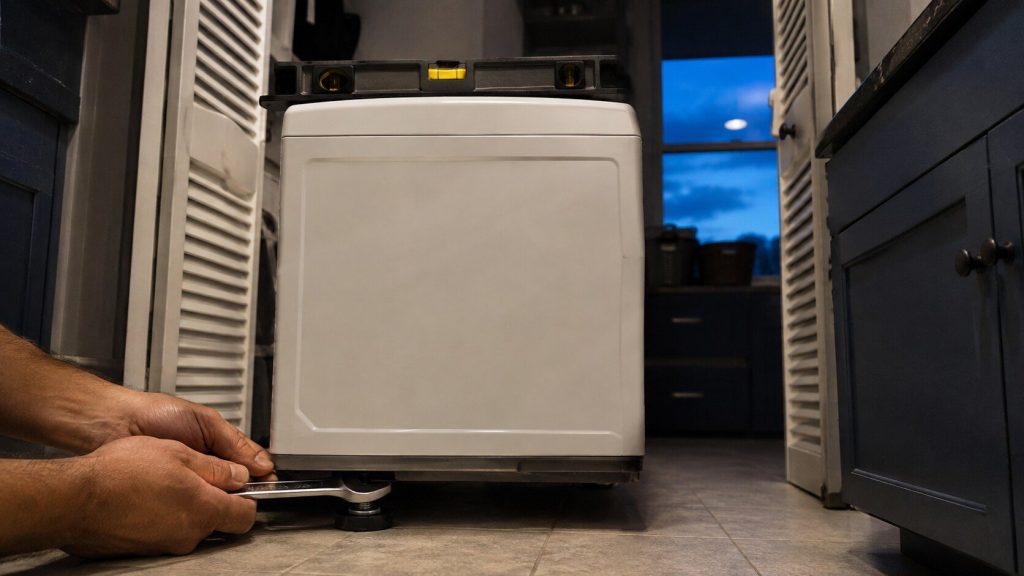
Most installations on this make are replacements, and that is worth saying out loud. The owner has just weighed a two-hundred-dollar repair against a nine-hundred-dollar machine and chosen the machine. What decides whether the new one is still working in eight years is the hour after it arrives: whether the opening was measured, whether the duct behind it was cleared, whether anyone put a level on it. A delivery crew is not paid for that hour and does not stay for it.
- The hour after the delivery truck leaves, which is the hour nobody is paid for
- Leveling done with a level and the lock nuts tightened, on every machine that has feet
- Gas joints leak-tested and the result written down
-
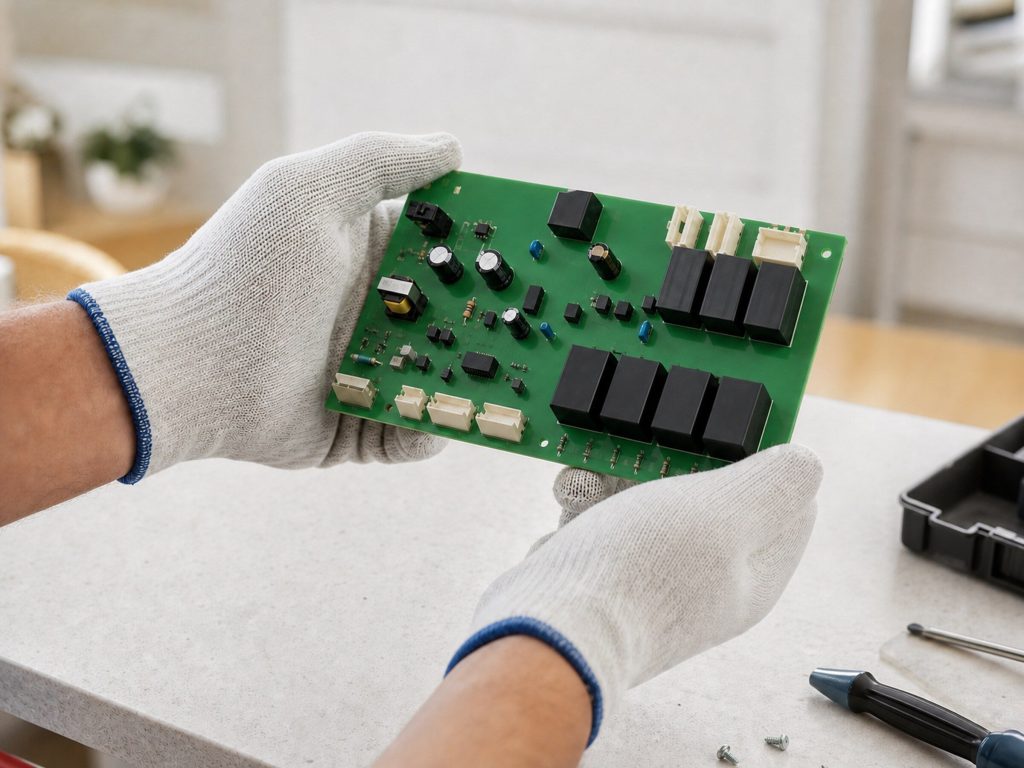
from $265 Appliance control board repair
The board is where a Whirlpool reports from, and it is also the part that gets blamed for everything else. Whirlpool runs the same control architecture across its whole line, which is why an F#E# code looks familiar on a range and on a washer — but a board that has died usually died of something, and replacing it without finding that something buys you a few months.
- A board that died usually died of something, and that something kills the next one too
- Browned connectors and pins backed out of a housing are cheap; boards are not
- Whirlpool revises these mid-production, so the order goes out against the serial
-
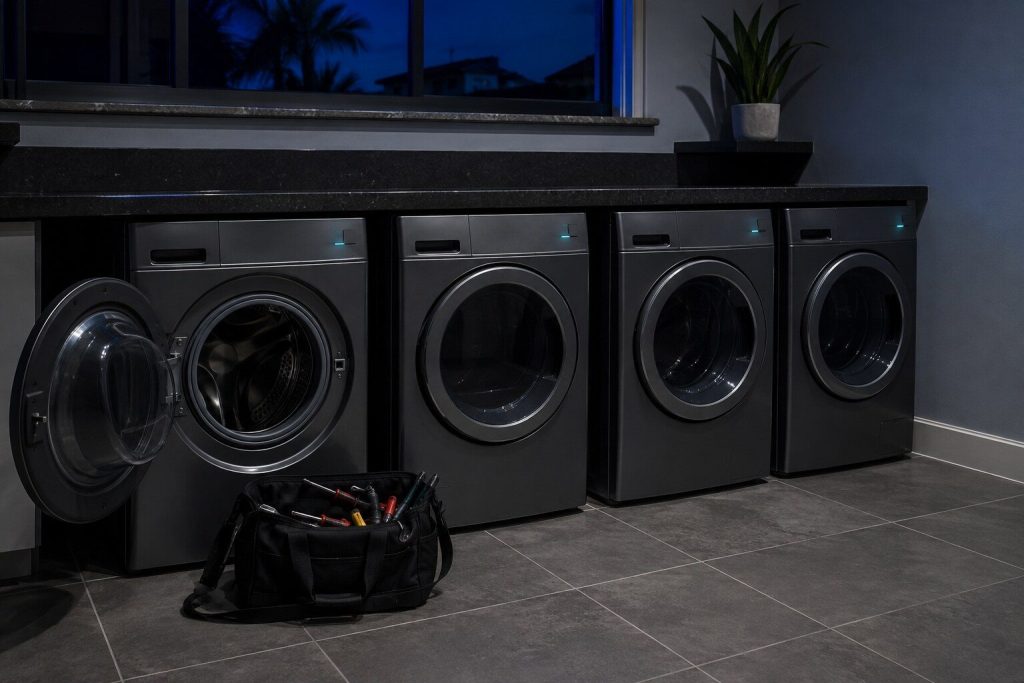
from $159 Commercial appliance repair
Whirlpool's commercial line is laundry, and that is the honest scope of this page. The make's own support base carries a commercial branch of 142 pages — coin and card washers and dryers — and nothing comparable for its kitchen appliances. So this is the work we take on in building laundry rooms, short-let blocks, small gyms and staff facilities: machines built on the domestic platforms, run at a duty cycle the domestic ones never see.
- This make's commercial equipment is laundry, so that is what this page covers
- A machine out of service costs the building money every day it stays out
- Coin and card mechanisms included, since that is what stops the revenue
-
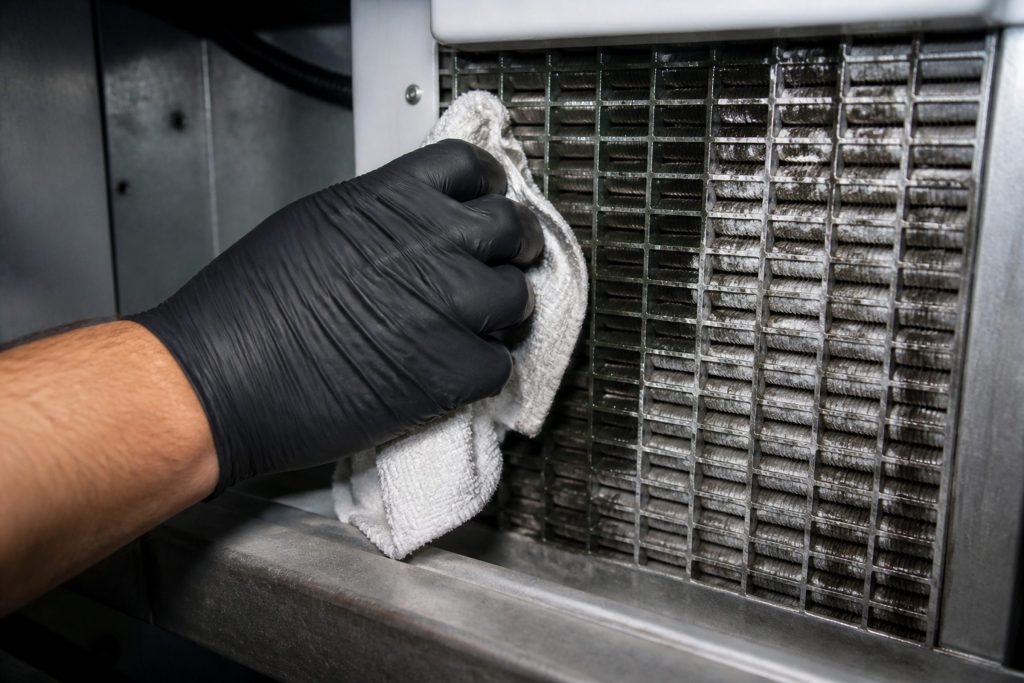
from $225 Commercial ice machine repair
A machine that makes ice for a bar, a clinic or a break room is a different animal from the module inside a refrigerator. It has its own sealed system, its own water circuit, its own drain, and it fails in this climate for reasons that are mostly about water and heat rather than about the machine. Whirlpool's freestanding ice makers report through indicator lights rather than a code display, so the diagnosis is measurement.
- Sealed system, water circuit and drain treated as three separate questions
- Scale and the local water supply are the first suspects here, not the last
- Cleaning and sanitizing done properly as part of the repair
-
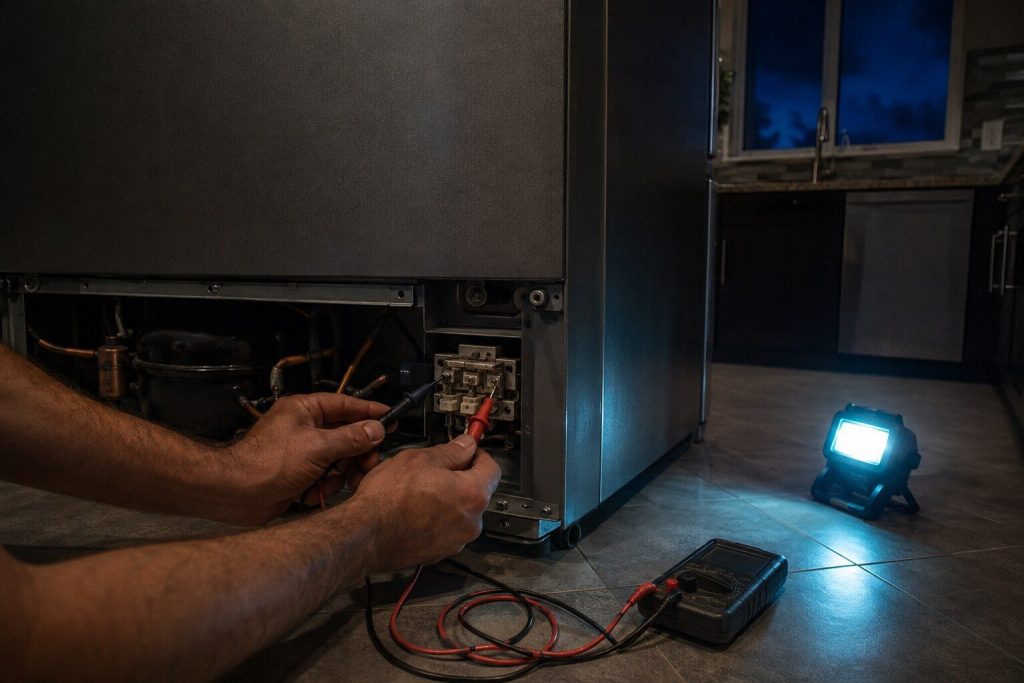
from $145 Refrigerator not cooling repair
A Whirlpool that has stopped cooling will not name the part for you. This make publishes 24 code pages across its French door line, nine on side-by-side and none whatsoever on top freezers, so a warm cabinet arrives as a warm cabinet and nothing else. In practice that makes the first hour measurement — temperatures in both compartments, airflow at the vents, current at the compressor — and it makes anybody who names a part before that hour a guesser.
- Measured, not read: on most of this make's cabinets there is no code to look up
- The causes that cost nothing come first — groceries against a vent, a door held ajar, a coil under dust
- Sealed-system work is quoted only after gauges, and on an old cabinet we will say when it is not worth doing
-
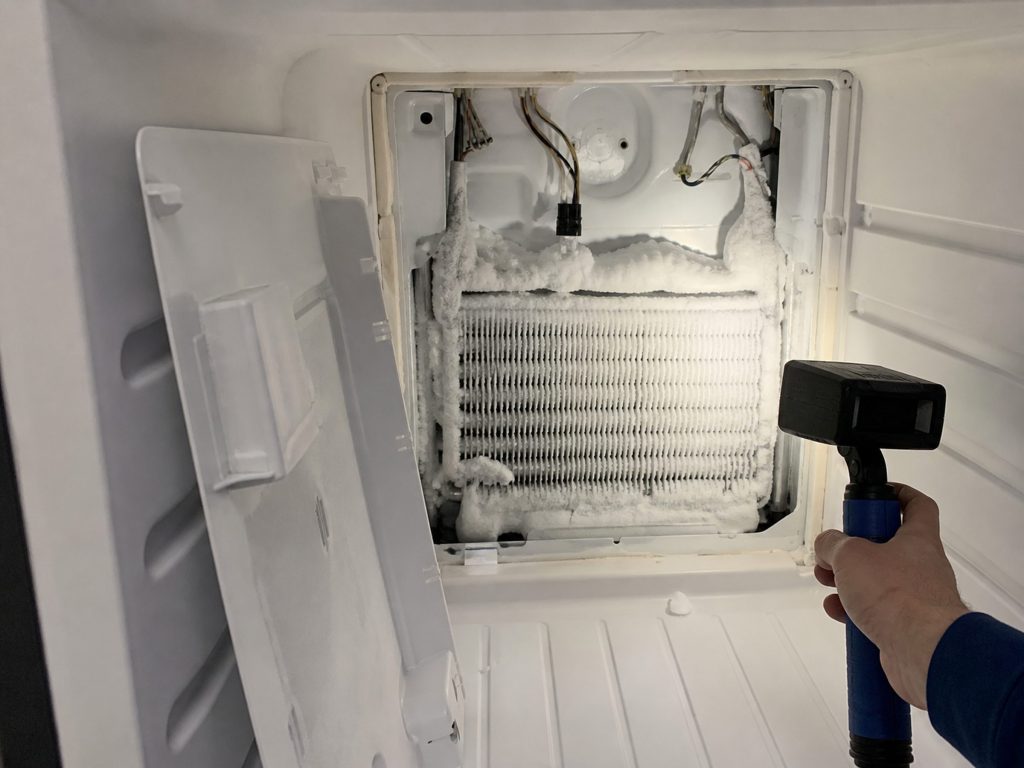
from $165 Defrost system repair
Ice builds across the evaporator a little at a time, and for the first two weeks the cabinet hides it by running longer. Then the fresh food side starts creeping up while the freezer still looks perfectly normal, and by the time anyone picks up the phone the coil is a solid block. Nothing on the panel of a Whirlpool will have said so: this make publishes no code pages at all for its top-freezer refrigerators or its upright freezers, so what you get instead is a frost pattern and a meter.
- No published reading for this on most of this make's cabinets — it is read off the coil
- Heater, bimetal terminator, and either a mechanical timer or the board, depending on age
- The thaw is hours of the visit and it happens before any part is fitted
-
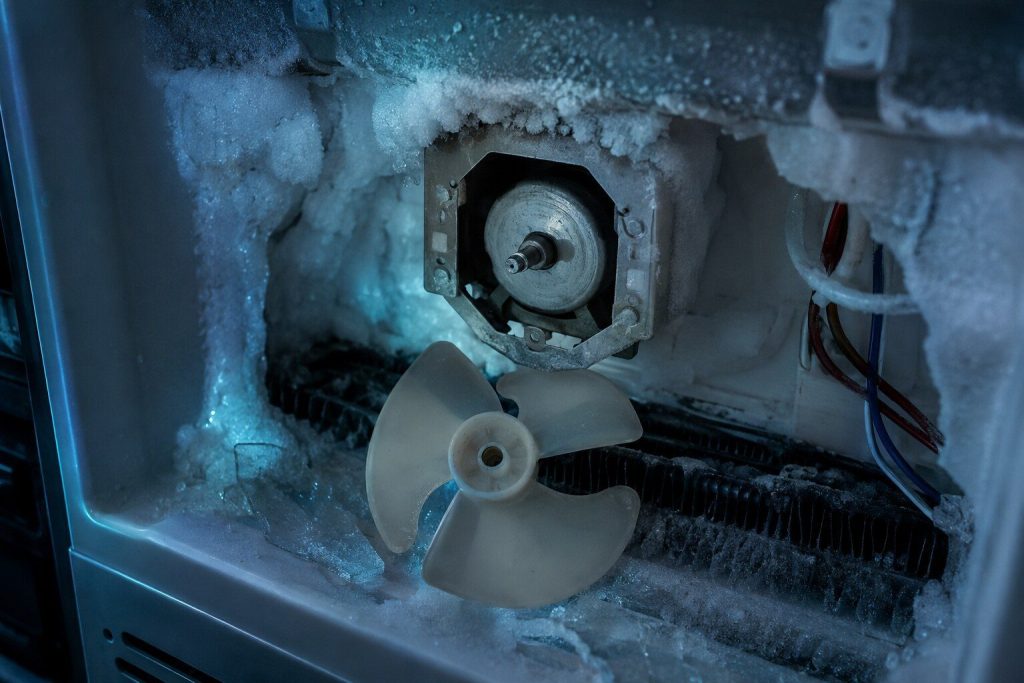
from $155 Evaporator fan repair
The fan behind the freezer wall moves all the cold air in the cabinet, including the air the fresh food side gets. When it stops, the freezer often stays acceptable and the refrigerator warms up, which is why this repair is so often mistaken for a refrigerant problem. In this climate the usual reason it stopped is ice, not a dead motor, and that changes what has to be fixed.
- A warm fresh food side with a cold freezer usually starts here
- Ice on the blade is a defrost problem wearing a fan problem's symptoms
- Freezer contents come out and the coil usually has to thaw before anyone can reach it
-
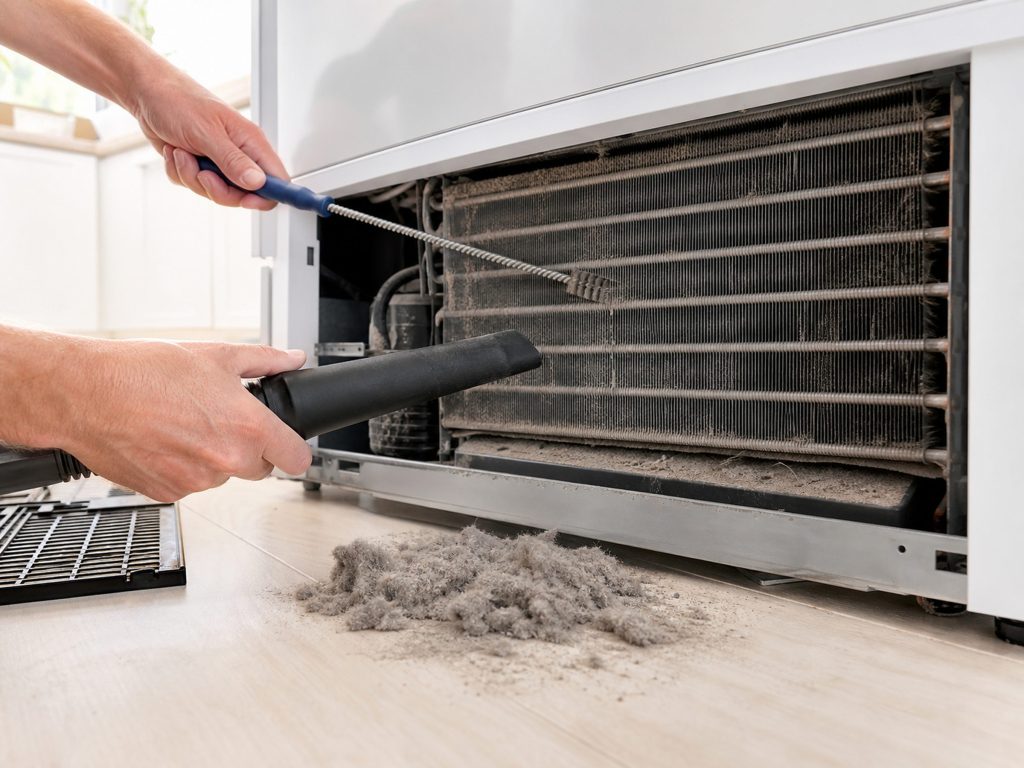
from $115 Condenser cleaning service
Nothing on a Whirlpool will ever tell you the coil is blocked. This make publishes a cleaning-the-condenser page for its top-freezer refrigerators and not one code page for them, so the condition is invisible until the compressor is running almost continuously and the ice cream starts going soft. The machines that need this most are the ordinary ones — the top-freezer in a rental condominium that has not been pulled away from the wall since the day it was delivered.
- There is no code for a blocked coil on this make, so somebody has to go and look
- Top-freezer and side-by-side cabinets, where a toe grille hides most of the coil
- Compressor run time recorded on the visit, so next year has something to compare with
-
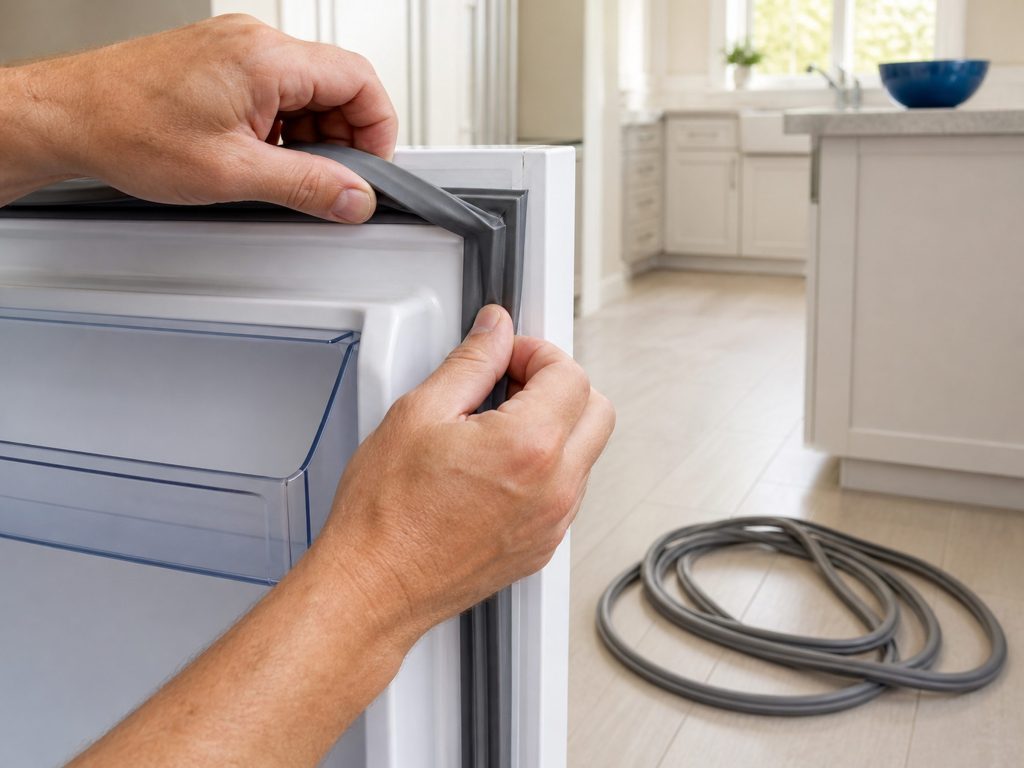
from $135 Refrigerator door seal replacement
A door gasket is a cheap part and a fussy fitting, and in South Florida a bad one costs more than anywhere else in the country. Humid air pulled past a tired seal condenses, then freezes, and the cabinet spends its life defrosting what the room keeps sending in. Whirlpool has support pages for doors that will not seal and doors that pop open, because it is common.
- Frost at the door edge and condensation on the trim are seal symptoms, not gas symptoms
- The hinge and the leveling are checked first, because they cause half of these
- Gaskets are ordered against the model, and handed doors are not interchangeable
-
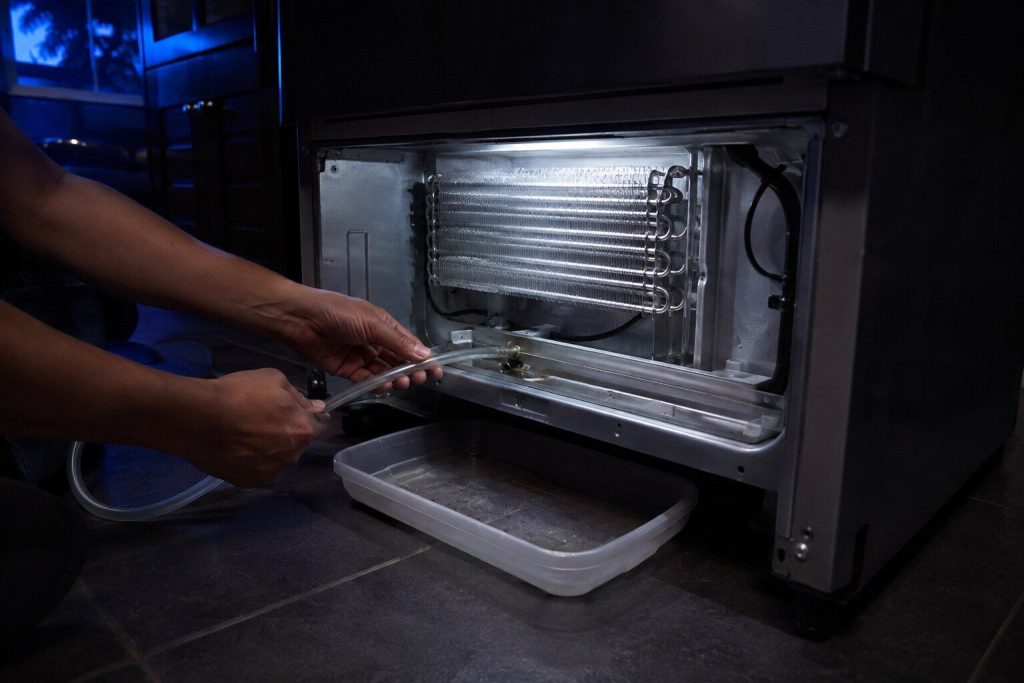
from $135 Refrigerator leak repair
Water on the floor in front of a refrigerator has four common sources and they are four different jobs. A blocked defrost drain, a split water line, a cracked filter housing and an overflowing drain pan look identical from the kitchen and cost quite different amounts. This is a diagnosis before it is a repair.
- Four common causes, priced separately once we know which one it is
- A blocked defrost drain is the most common and the cheapest
- Water inside the crisper and water on the floor are usually the same problem
-
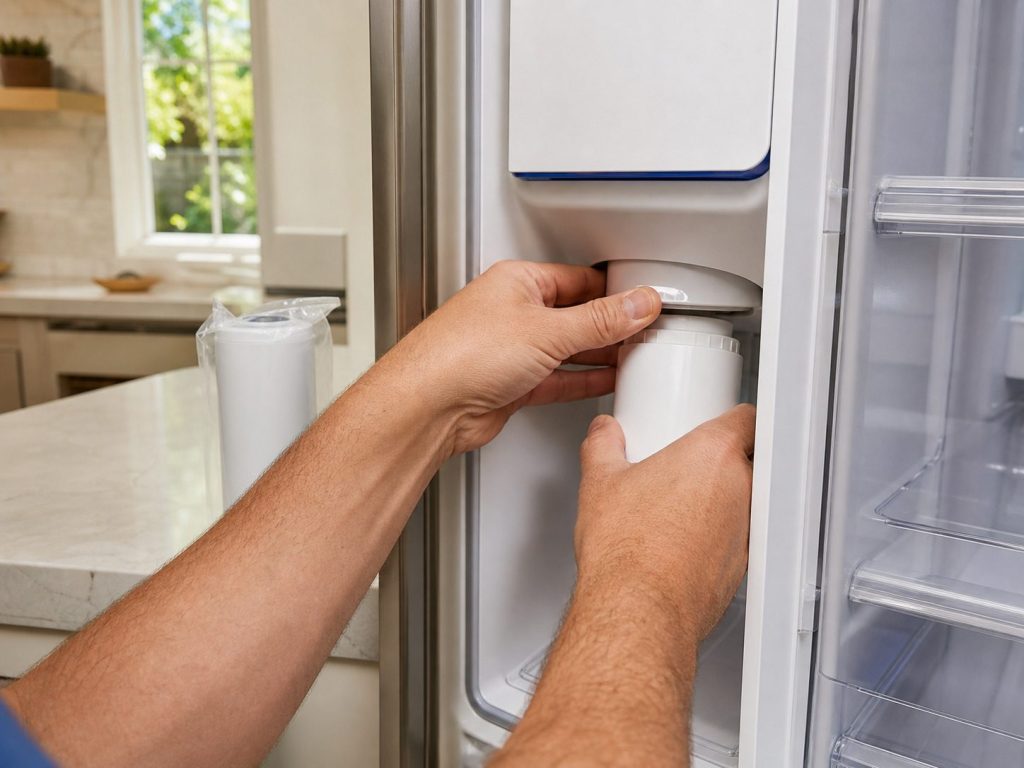
from $109 Water dispenser and filter service
The dispenser is a short circuit with a lot of failure points: a valve, a line, a tank, a filter head and a switch, most of it routed through a door hinge that flexes every time you open it. Whirlpool documents the H2O indicator and the filter status light that will not reset, and those two pages between them cover a lot of what people call a dead dispenser.
- Slow water is usually the filter or a frozen line, not the valve
- The filter status light and the actual filter life are two different things
- Genuine filters ordered against the model, because the housings are not universal
-
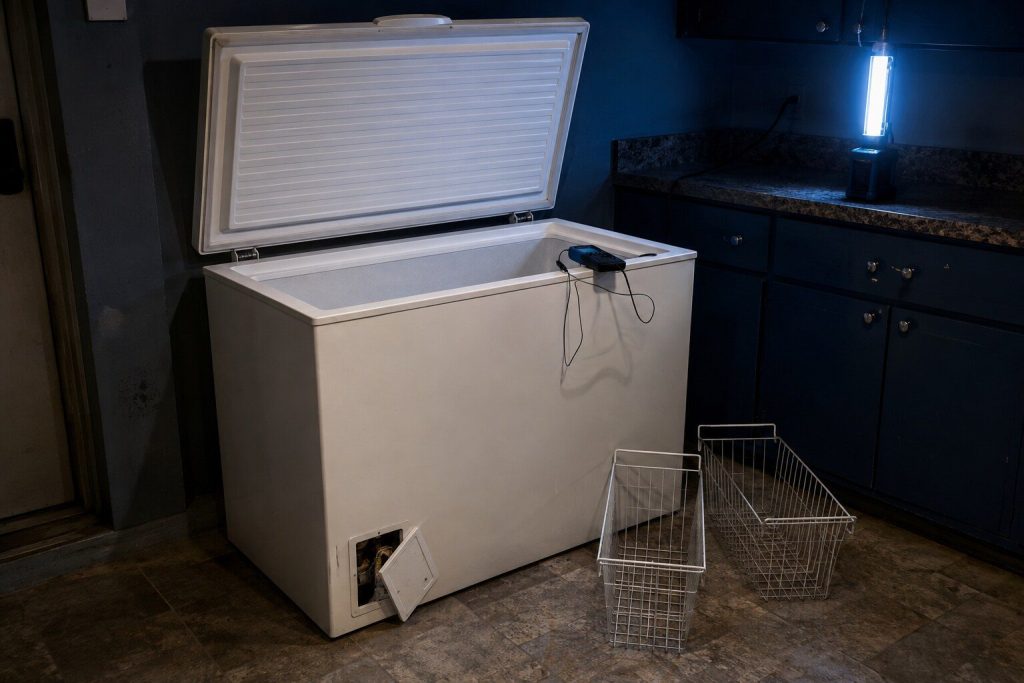
from $145 Upright and chest freezer repair
A standalone freezer usually holds several hundred dollars of food and gives very little warning. It is also the appliance where this make is at its quietest: Whirlpool publishes 63 support pages for its upright freezers and not one of them is a code page. Everything here is measured — temperature, airflow, seal, current — and nobody should be quoting you a code number for it.
- No published code list on this appliance, so the diagnosis is measurement
- Seal, frost pattern and the alarm are read together
- Garage and utility-room installations are checked against ambient temperature
-
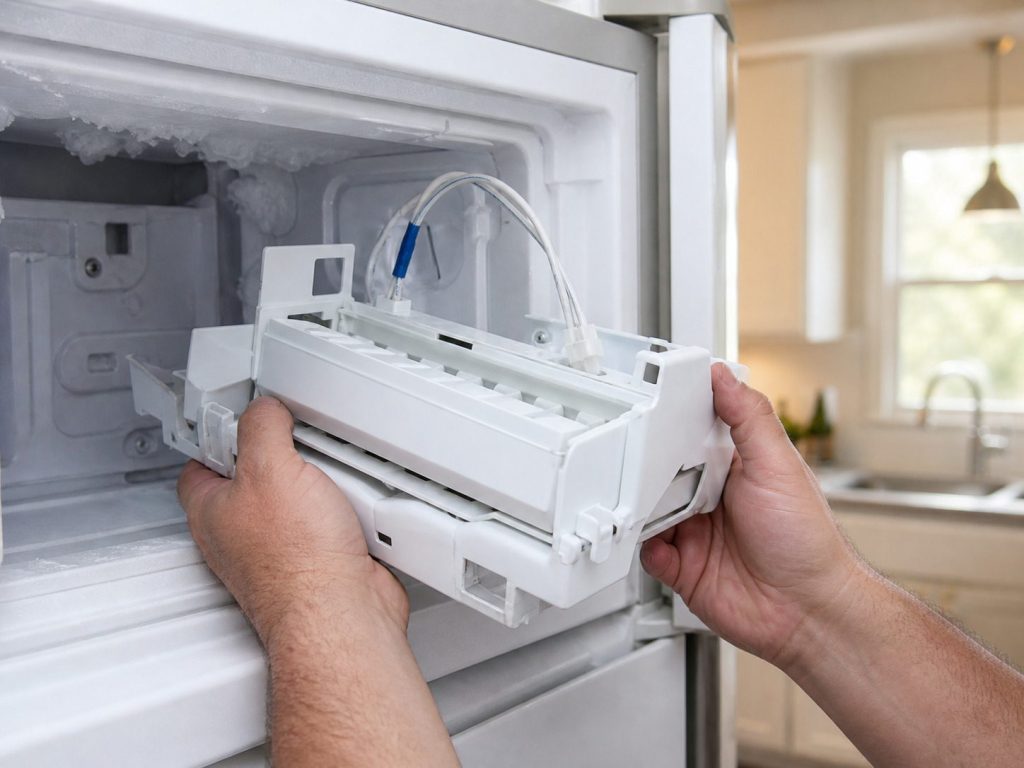
from $145 Ice maker repair
The ice maker is the part of a refrigerator that gets used hardest and understood least. On this make the module is a self-contained assembly with a motor, a thermostat, a heater and a fill switch, and it fails in ways that mimic each other: no ice, small ice, hollow ice, or a bin full of one solid block. Whirlpool has a separate support page for each of those, and they are not the same repair.
- No ice, thin ice and clumped ice are three different problems
- Freezer temperature is checked first, because the module will not cycle if it is too warm
- The module usually comes out as an assembly, which keeps the job contained
-

from $125 Ice maker water line and fill valve service
Most ice complaints on this make are water complaints. The fill valve, the saddle or shutoff at the wall, the line behind the machine and the fill tube into the mold are a short chain with a lot of ways to restrict. In this climate the fill tube also ices at the mouth, which produces a machine that makes ice for six hours and then stops.
- Thin, hollow or short-filled cubes point at water, not at the module
- A fill tube that ices at the mouth is a defrost-side symptom and is treated as one
- Supply pressure at the machine is measured rather than assumed
-
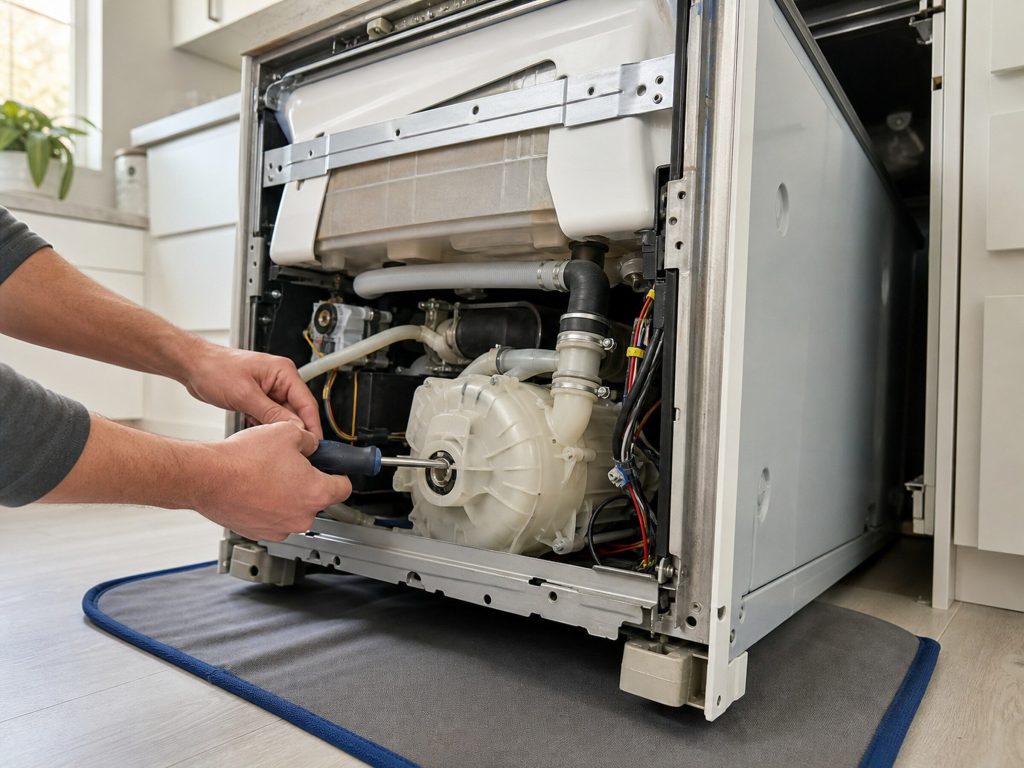
from $135 Dishwasher drain and pump repair
Water standing in the bottom at the end of a cycle is the most common dishwasher call there is, and on a Whirlpool it is worth taking in order because most of it is not the pump. Filter, hose, air gap and the disposal spigot come first, and this make publishes flashing-light sequences and F#E# codes on the drain circuit that tell you when to stop looking at the plumbing and start looking at the machine.
- Filter, hose and disposal spigot before anything is opened
- This make reports drain issues both as F codes and as counted flashing lights
- A drain pump is a contained repair; a knocked-out disposal plug is a five-minute one
-
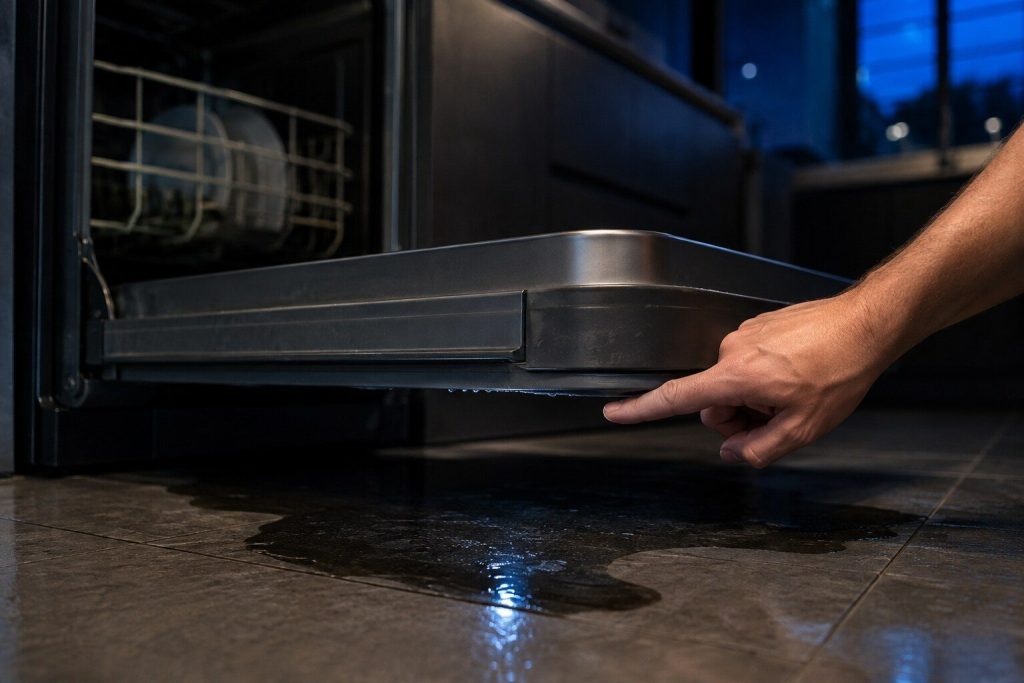
from $145 Dishwasher leak repair
A dishwasher leak is worth finding quickly because the damage is to the floor rather than to the machine. Door gasket, door vent, hose connection, sump seal and the tub itself are the usual candidates, and only the last of them is a conversation about replacement rather than a repair.
- The source is found before anything is quoted
- Most leaks on this make are a gasket or a hose, not the tub
- Cabinet and floor damage checked while the machine is out
-
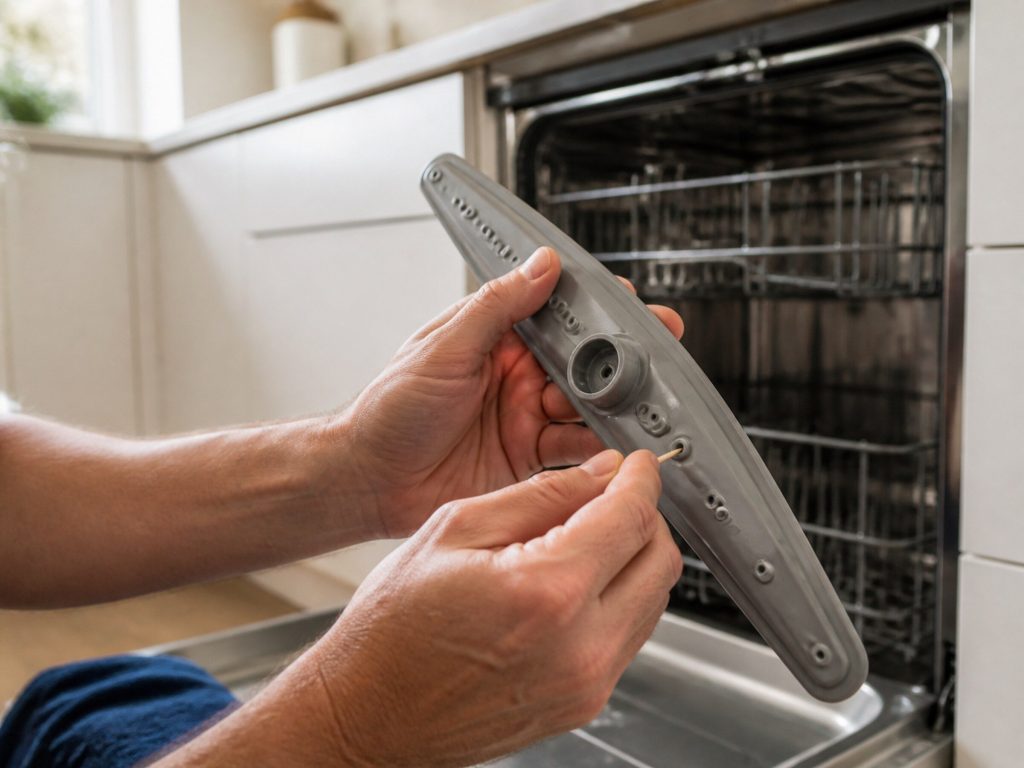
from $119 Dishwasher wash performance service
Dishes coming out dirty or filmed is the complaint with the widest range of causes and the smallest average repair. Spray arms, filter, water temperature, detergent, hardness and loading account for most of it, and Whirlpool devotes 27 pages of its own base to wash performance for exactly that reason. It is diagnosed as a system, not as a part.
- Twenty-seven pages of this make's own base are about wash results, and they are not all the machine
- Hard water here leaves film that reads exactly like a broken dishwasher
- Priced on time, and it frequently ends with no part at all
-
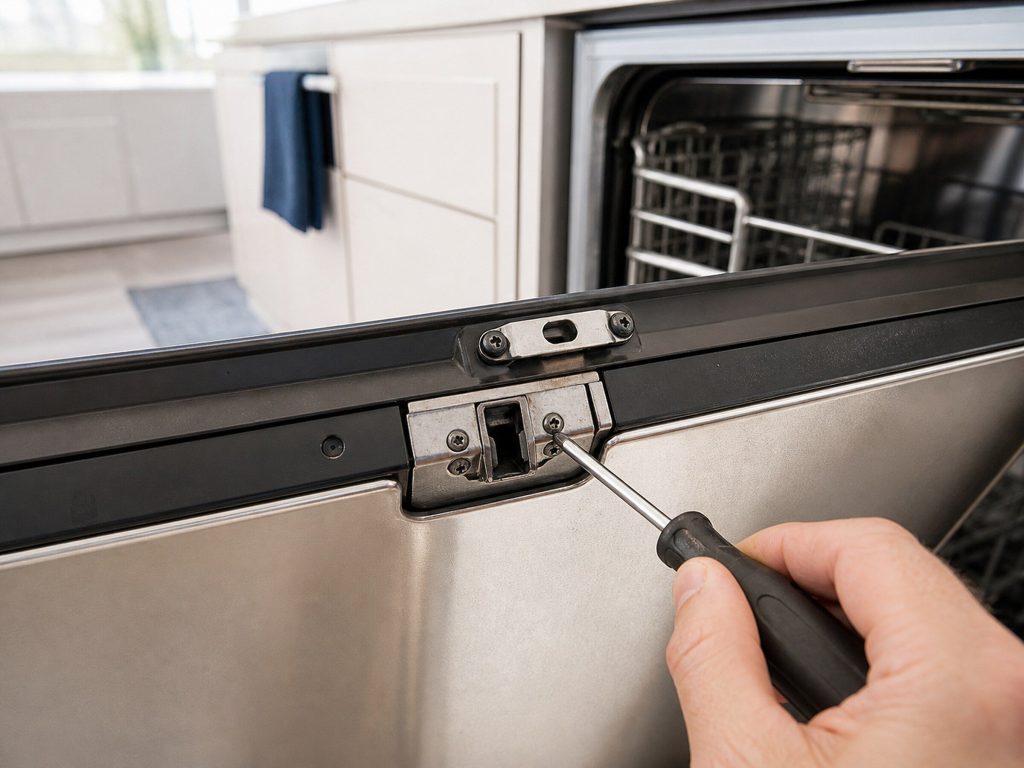
from $135 Dishwasher door latch repair
A dishwasher that will not start is very often a dishwasher that does not believe its door is shut. The latch carries a switch, and the machine will not fill until that switch closes. It is a small part behind the inner door panel and it is one of the more contained repairs on this appliance.
- A panel that lights up and a machine that never fills usually means the latch
- A door that drops rather than lowers has broken a cable, and it eats latches
- Door springs, cables and the gasket all get looked at while the panel is off
-
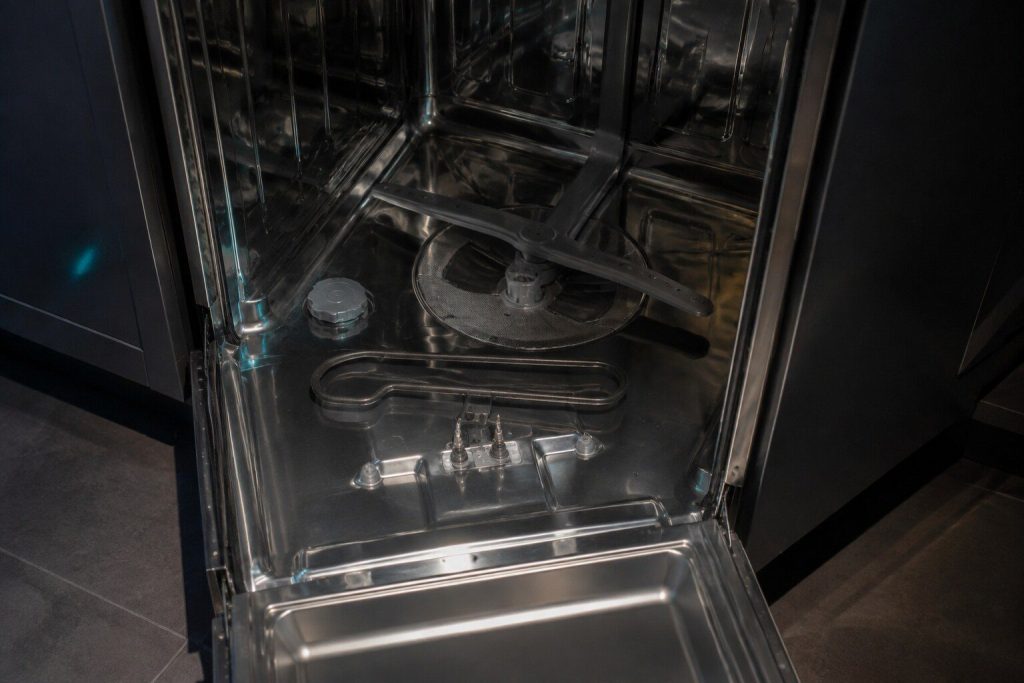
from $175 Dishwasher drying and heat repair
Wet dishes at the end of a cycle are either a heating problem or a drying-strategy problem, and they are worth separating before anybody buys a part. The element inside the tub also heats the wash water, so an element that has failed shows up as poor cleaning before it shows up as wet plastic. Whirlpool publishes both heating errors and drying performance pages, and the two lead to different places.
- Poor cleaning and wet dishes together point at the heating circuit
- Wet plastic alone is usually normal behavior on a condensing dry cycle
- Thermostats and the element are tested, not swapped hopefully
-
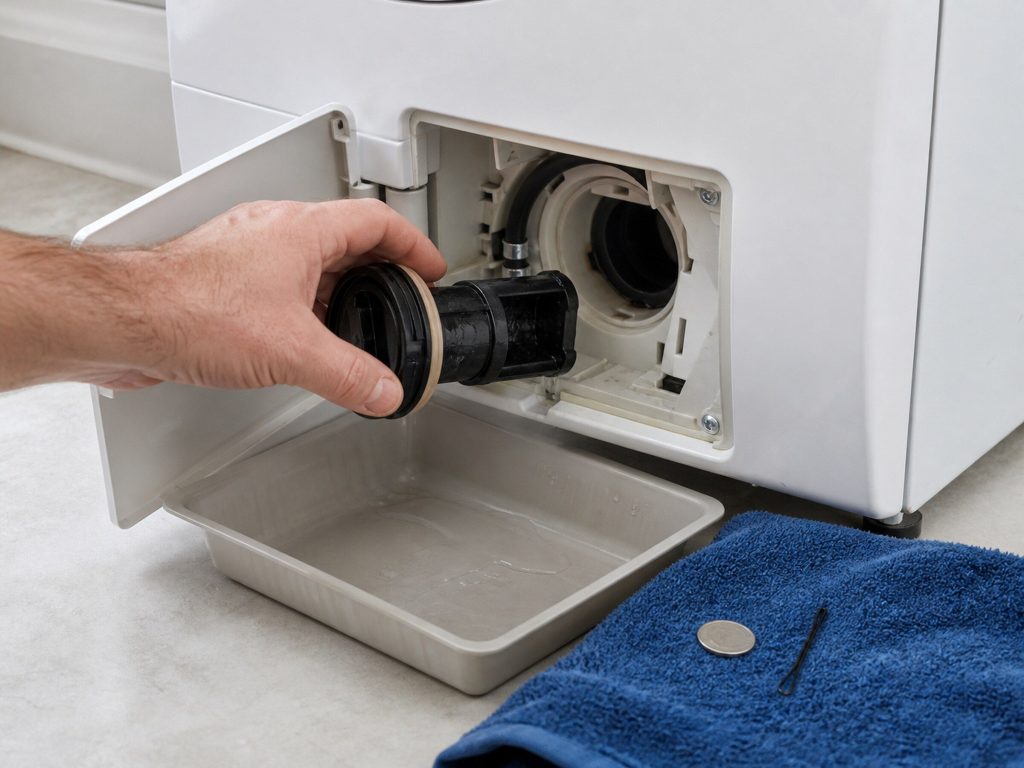
from $175 Washer drain pump replacement
The drain pump is the single most replaced part in Whirlpool laundry, and about half the time it did not need replacing at all. This make publishes a drain error, a long-drain code and its own page on cleaning the drain pump filter, and on a front loader that filter is behind a little door at the bottom right that most owners have never opened. What comes out of it is coins, hair clips and lint felted into a plug.
- Nobody condemns a pump on this make before that little door at the bottom is opened
- Whirlpool publishes both a drain code and a long-drain code, and they read differently
- Commodity part on the volume brand — it is in the van or half an hour away
-
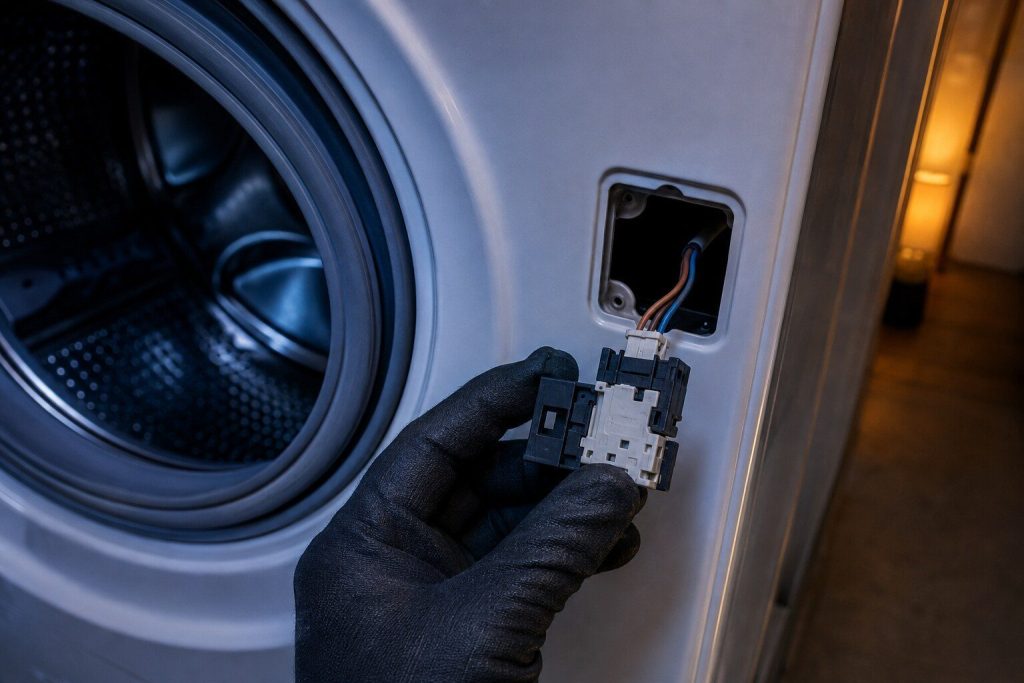
from $145 Washer door lock repair
A front-load Whirlpool will not fill until its door lock reports locked, and will not open until it reports unlocked, so a failing lock produces a machine that either refuses to start or holds your laundry hostage. Whirlpool publishes both cases — door will not lock, door will not unlock — as separate pages, along with the codes that accompany them.
- A machine that beeps and does nothing is usually here, not on the board
- This make publishes separate pages for will-not-lock and will-not-unlock
- The strike alignment is corrected, or the new lock fails the same way
-
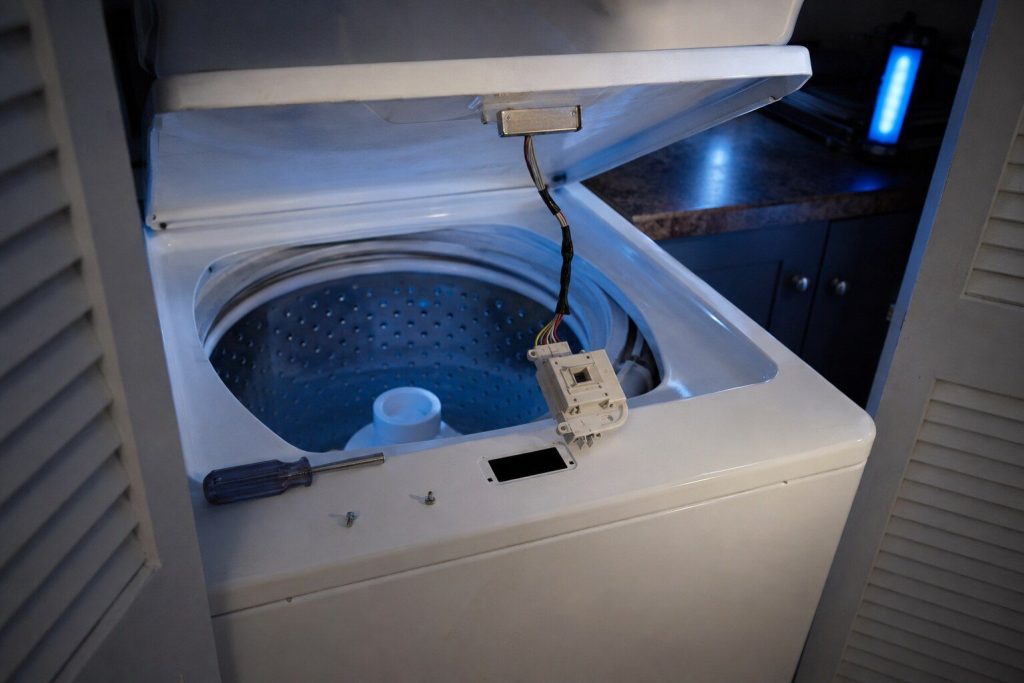
from $139 Washer lid lock and lid switch repair
Top loaders are half of Whirlpool's washer base — 157 support pages against 179 for front loaders — and their lid lock is a different part with a different failure than a front-load door lock. A modern Whirlpool top loader locks the lid before it agitates and will not spin with the lid unlocked, and this make publishes several separate lid-related readings for it, including a lid light that flashes on its own.
- A top loader that fills and then stops before spinning usually starts here
- This make publishes distinct lid-lock and lid-open readings, and they are not the same part
- The lid strike and the hinge are checked, because a sagging lid kills locks
-
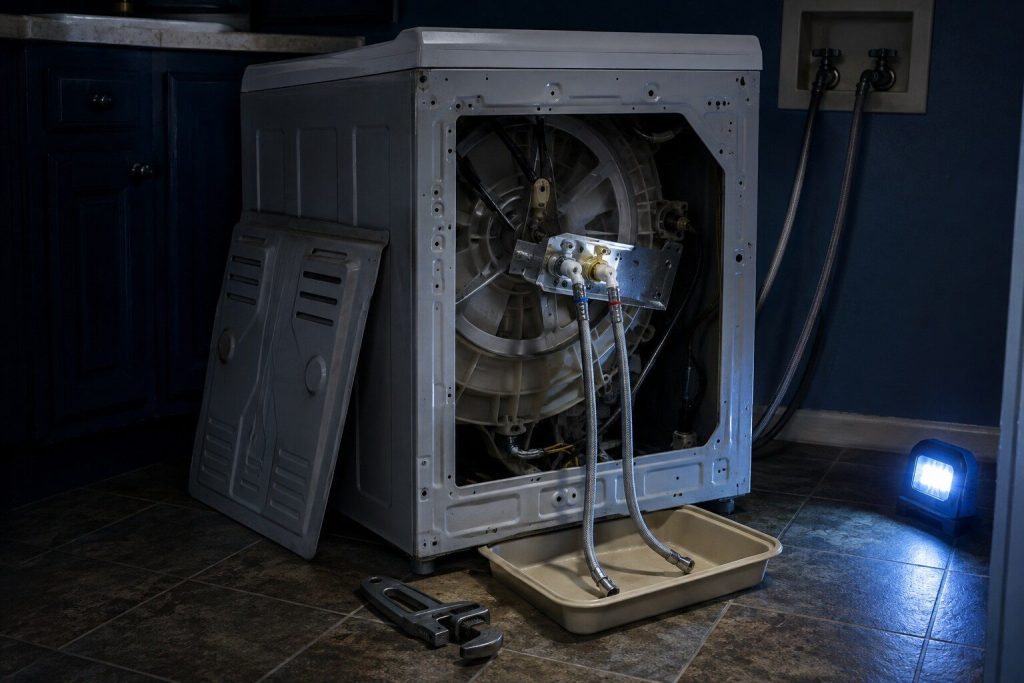
from $139 Washer water inlet valve repair
A washer that fills slowly, will not fill, or fills and drains at the same time is reporting on the water side, and Whirlpool is unusually explicit about it: this make publishes a long fill reading, a no-water-detected reading, a low-flow reading and a code specifically for the water supply. That is a great deal of published information for one circuit, and it is worth using before anything is opened.
- Screens, hoses and household pressure come before the valve
- This make names long fill and no water detected as separate readings
- Both hot and cold sides are tested, because one closed tap reads as a broken machine
-
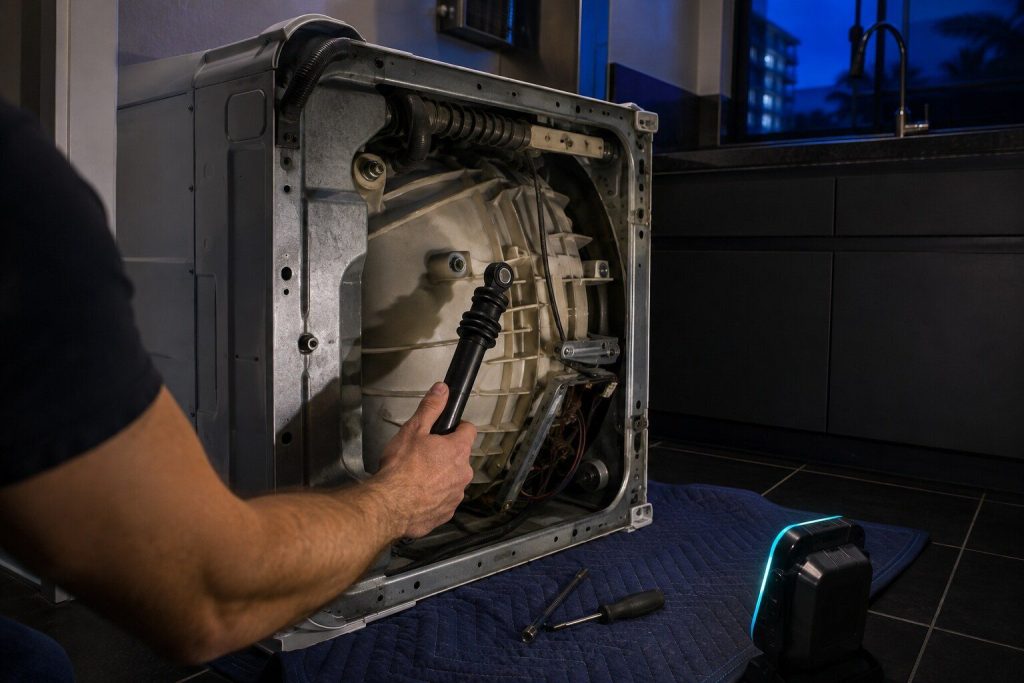
from $195 Washer not spinning and balance repair
A load that comes out soaked is not always a spin failure. Whirlpool machines abort or reduce spin deliberately when they cannot balance the drum, and this make publishes an unbalanced reading and an overload reading as separate things from an actual mechanical problem. Reading the difference correctly is what keeps this from becoming an unnecessary parts bill.
- Unbalanced and overloaded are published readings and they are not part failures
- Suspension, dampers and the shipping bolts are checked before the drive
- Leveling is part of the repair, not an afterthought
-
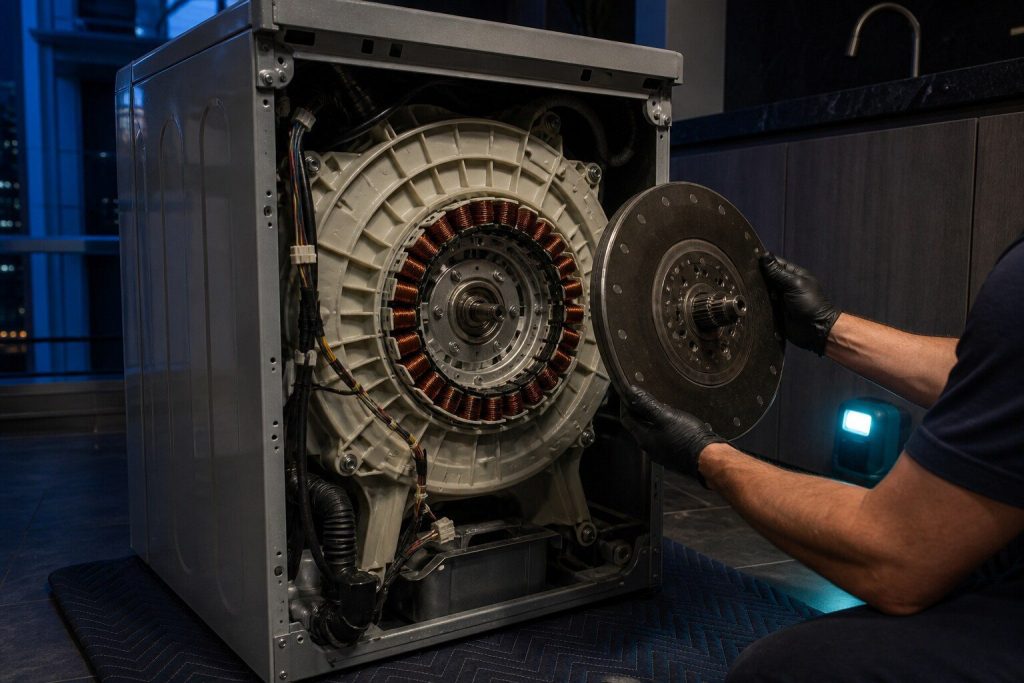
from $265 Washer motor and drive repair
The drive is what turns the drum, and on Whirlpool it takes more than one form: a direct-drive top loader with a shift actuator that decides between agitate and spin, and a belted front loader with a motor and a control. They fail differently and they cost differently, so the first job is establishing which machine is in front of us.
- Top-load and front-load drives are different jobs with different figures
- The shift actuator is a small part that mimics a large failure on a top loader
- Motor control and motor are tested separately
-
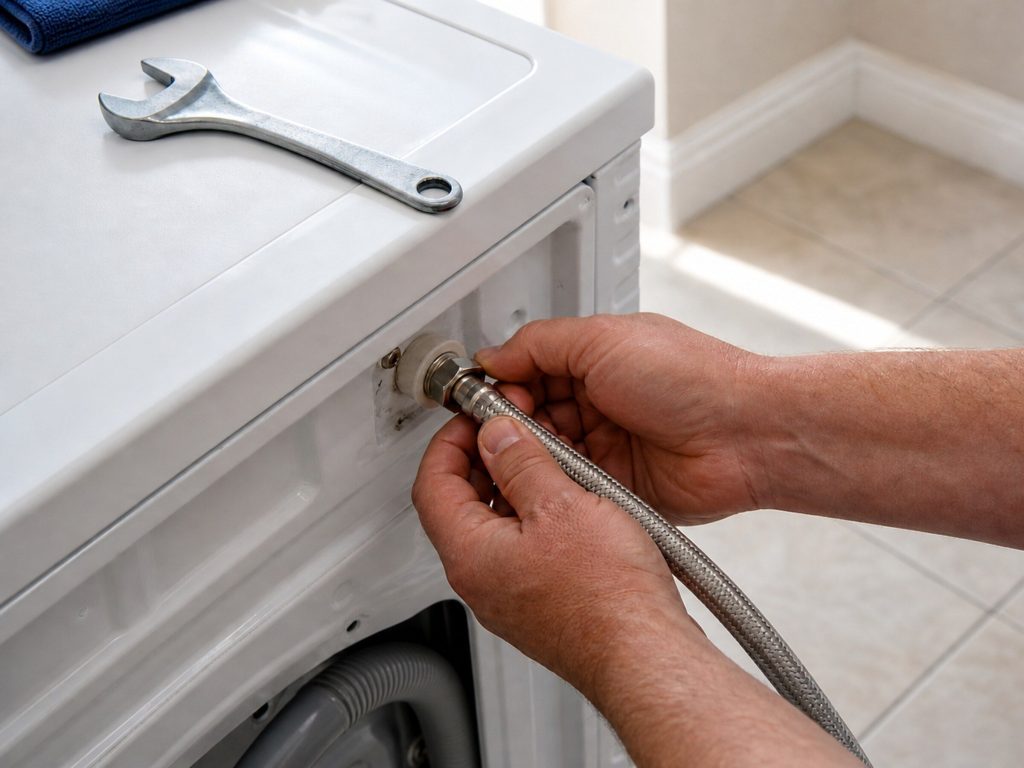
from $155 Washer leak repair
Whirlpool publishes leak pages by location — from the front, from underneath, from the back, from inside — and that is exactly the right way to think about it, because location names the part. A leak from the back is usually a hose connection. A leak from the front on a front loader is usually the door boot. They are not the same money.
- Whirlpool sorts its own leak pages by location, and that is the right instinct
- The door boot is the commonest front-load leak and it is a contained repair
- Detergent overdosing causes leaks that look like a broken machine
-
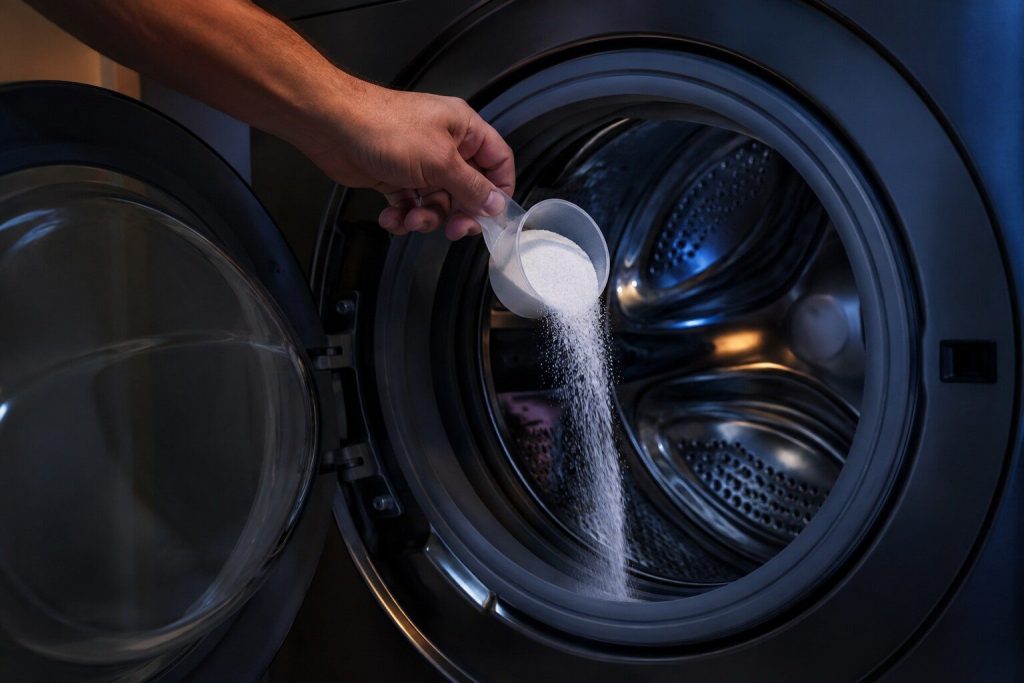
from $99 Washer excess suds service
This is one of the few repairs that usually ends without a part, and it is worth its own page because Whirlpool publishes a specific reading for it on both its top and front loaders. Too much detergent, or the wrong kind, produces a foam blanket that the machine cannot pump, so it pauses, adds rinses, extends the cycle, and eventually reports. The owner sees a slow machine and assumes a pump.
- A published reading on this make, not a guess about your detergent
- Long cycles and poor rinsing usually arrive together with this
- Ends with a purge and a dosing conversation more often than with a part
-
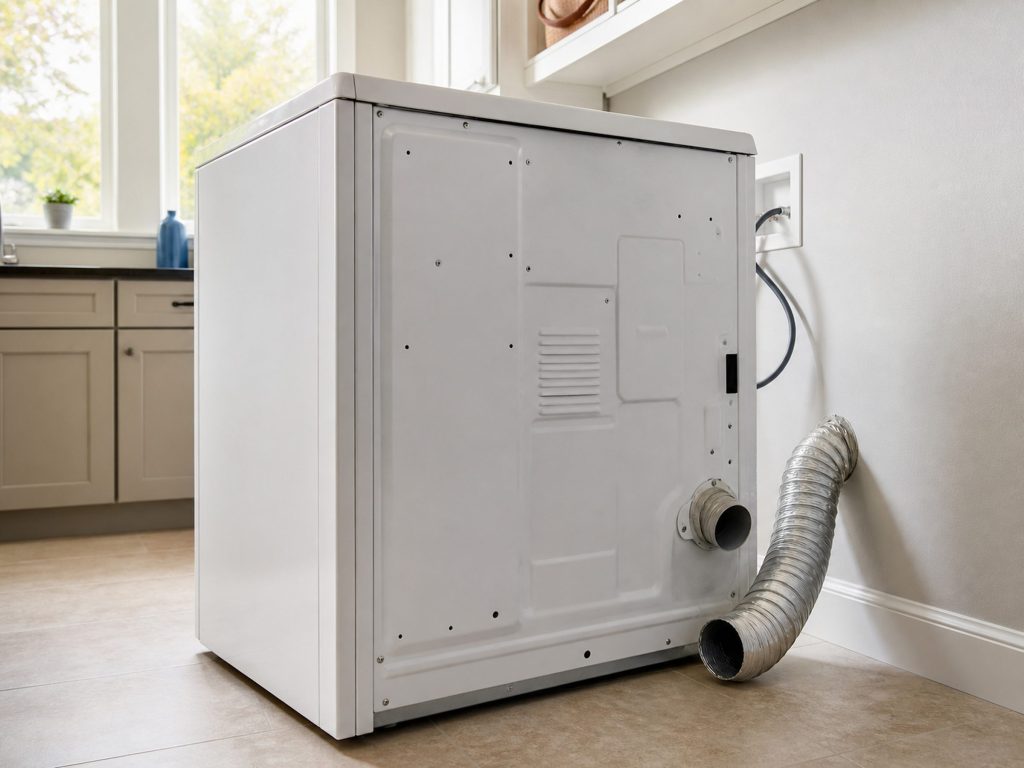
from $145 Dryer not heating repair
A dryer that tumbles without heat is one of four things, and on a Whirlpool the machine usually helps: this make publishes 55 code pages for its dryers, including a dedicated indication for restricted venting. That last one matters more here than anywhere, because in South Florida a blocked duct is the single most common reason a dryer stops heating.
- The vent is checked first, and it is the answer more often than any part
- This make reports restricted airflow itself rather than leaving you to guess
- Thermal cutoffs are never replaced without finding what opened them
-
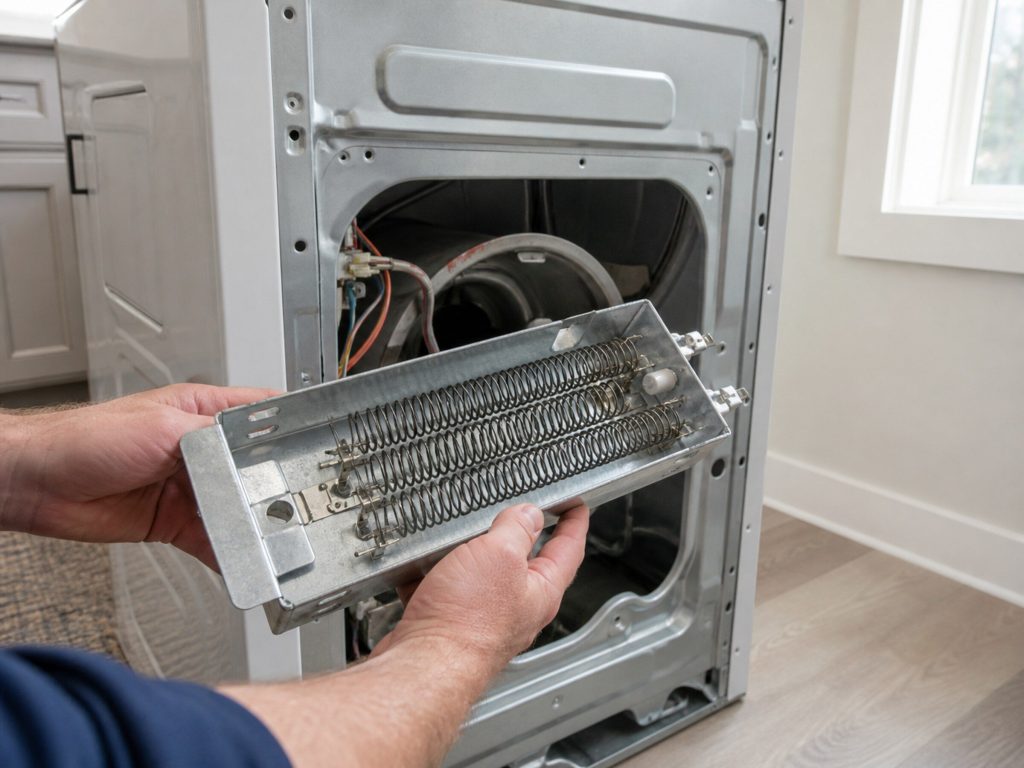
from $175 Dryer heating element replacement
On an electric Whirlpool the element sits in a housing on the back or the side of the drum, and when it fails it usually takes a thermal cutoff with it. Replacing the element alone is how this repair comes back in a fortnight, because the cutoff opened for a reason and the reason is nearly always airflow.
- Element, thermal cutoff and high-limit replaced as a set
- The vent is cleared in the same visit or the new element inherits the same problem
- A stocked part on this make, which keeps this to one visit
-
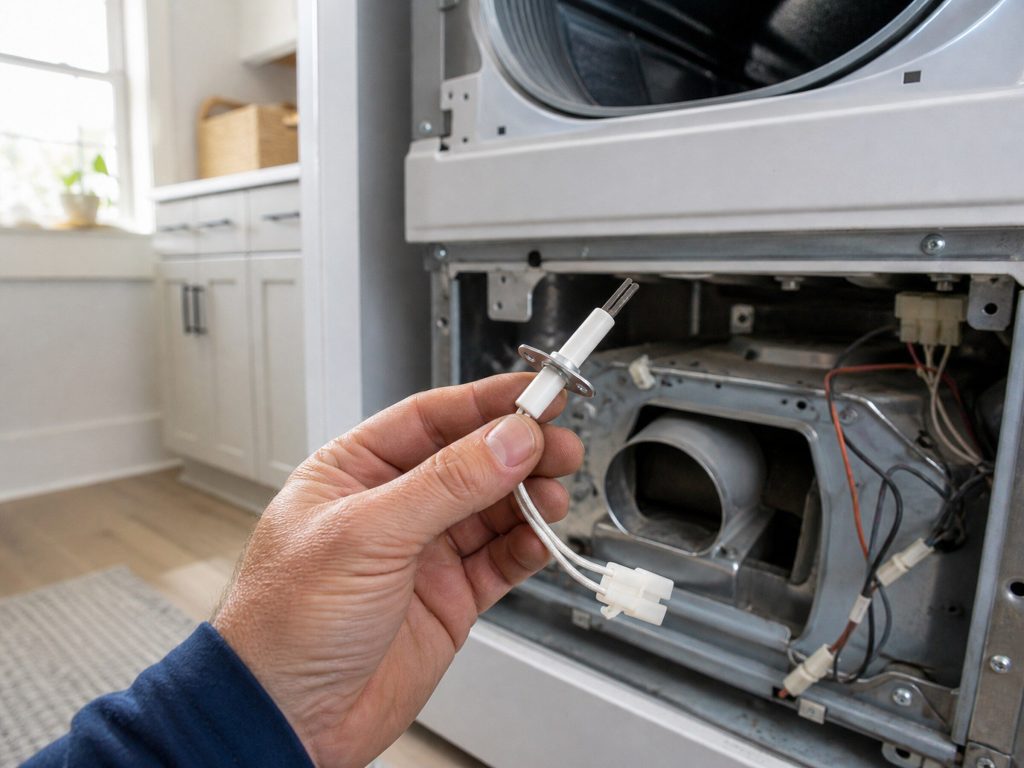
from $175 Gas dryer igniter and valve repair
A gas dryer that tumbles cold has a short, specific list: the igniter, the flame sensor, the gas valve coils and the safety devices around them. The failure is often intermittent — it lights on the third attempt, then on the fifth, then not at all — and an intermittent gas appliance is not something to live with.
- Igniter, flame sensor and valve coils tested as one circuit
- The gas connection is leak-tested afterwards and the result written down
- Intermittent ignition is treated as a repair now, not a wait-and-see
-
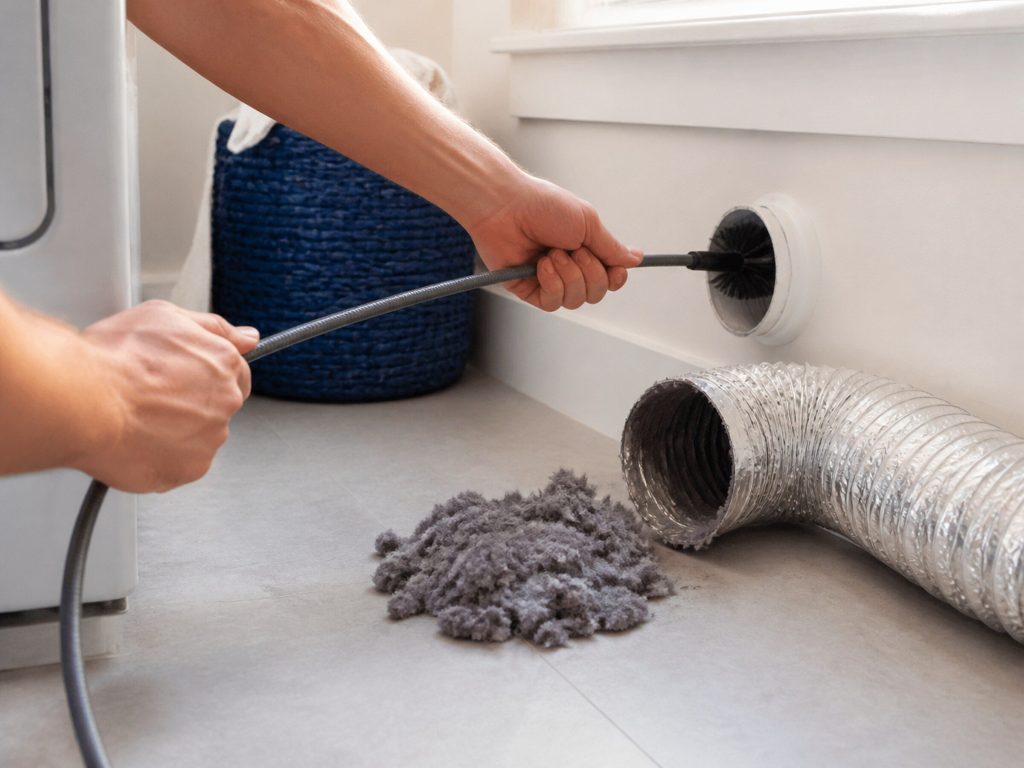
from $129 Dryer vent cleaning
This is a safety job before it is a performance job. Lint that has been packing into a duct for years is fuel sitting next to a heat source, and long drying times are the warning. On Whirlpool dryers the machine measures the restriction itself and reports it, which is a genuine advantage — most makes leave you to notice.
- The dryer reports its own restricted-vent condition on this make
- Duct, wall hood and the transition behind the machine, all three
- Drying time measured before and after
-
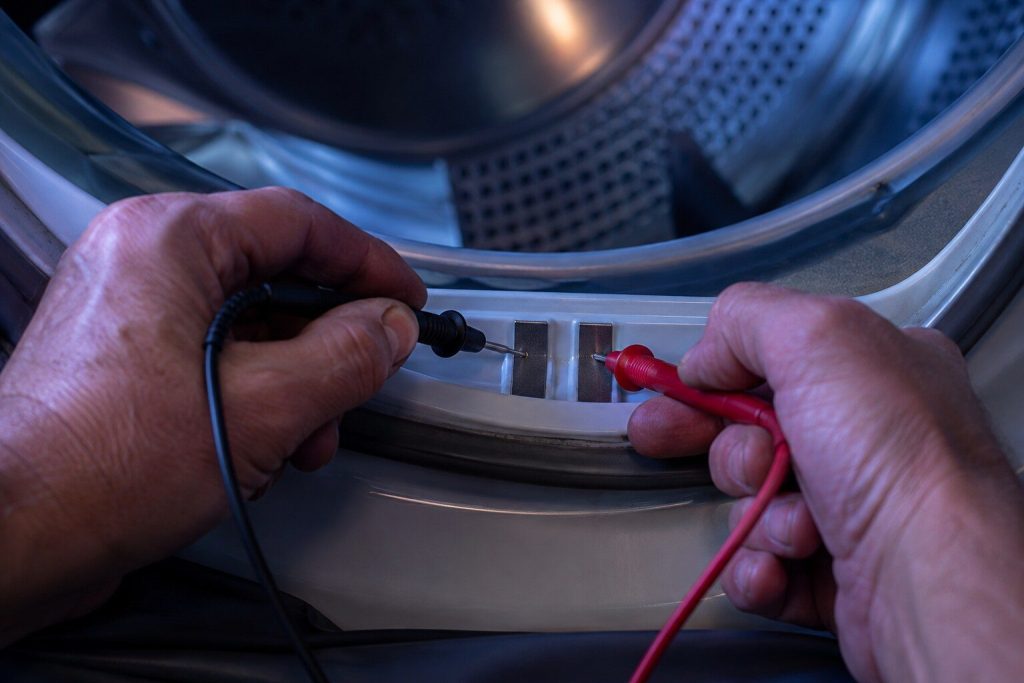
from $109 Dryer moisture sensor service
An automatic cycle stops when the load is dry, and it knows that from two metal strips inside the drum front. Softener residue insulates them, so the machine sees dry clothes that are still damp and shuts off early — or reads them as wet and runs for an hour. This is usually cleaning rather than a part, and it is priced that way.
- Cycles that end too soon or run far too long usually start here
- Often a cleaning job rather than a part
- The vent is checked with it, because both produce long cycles
-
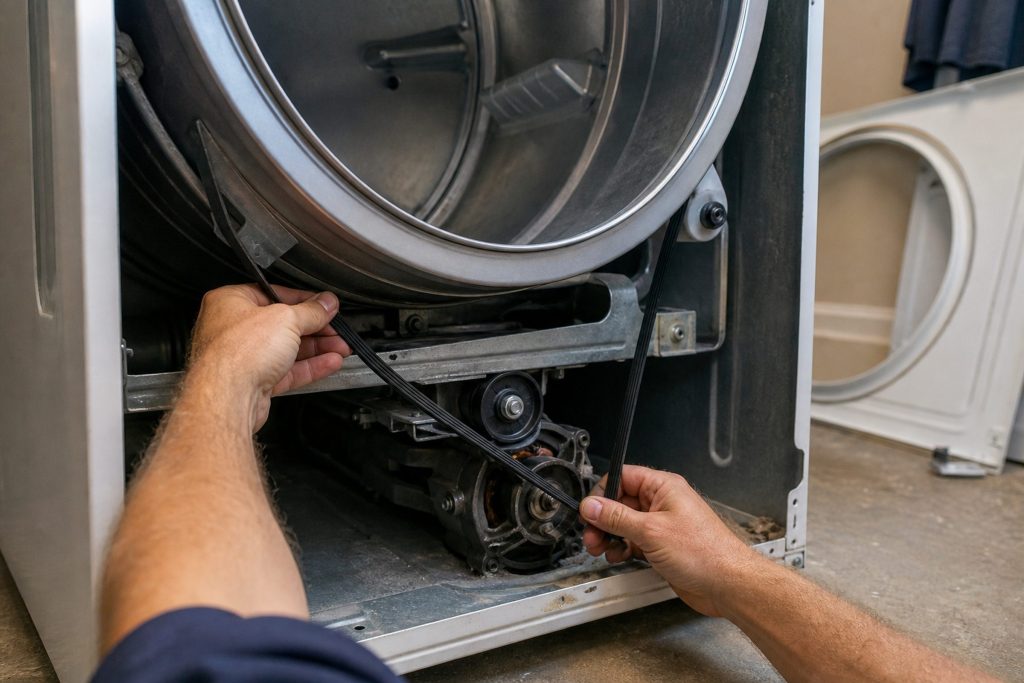
from $185 Dryer drum belt and roller repair
A dryer that hums but does not turn has usually broken its belt. A dryer that turns while sounding like a train has usually worn its rollers or its idler. Both are mechanical, both are audible long before they fail, and both are worth doing together because the machine has to be opened for either.
- Belt, idler, rollers and bearing done as one job
- Noise is the early warning and it is worth acting on
- The blower and duct are cleaned while the machine is open
-
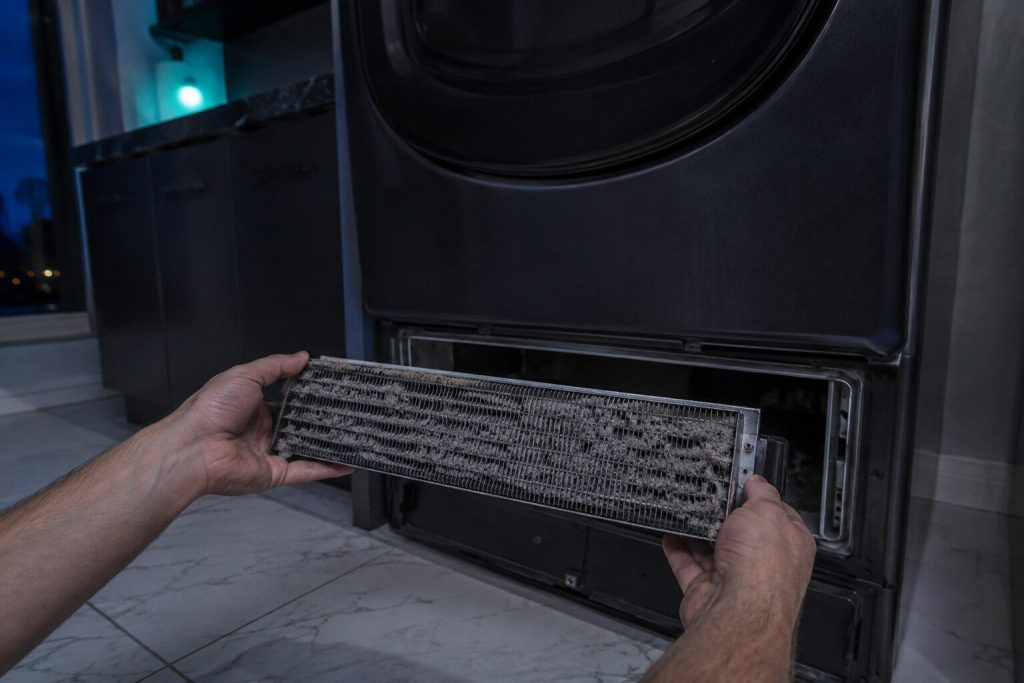
from $215 Heat pump dryer service
Ventless laundry is growing in South Florida condominiums because there is nowhere to put a duct, and Whirlpool has a compact heat pump dryer and a HybridCare line to serve it. These are not vented dryers without a vent. There is no element and no duct; there is a sealed refrigeration loop, a condenser that has to be cleaned, and a water tank or condensate drain that has to work.
- A sealed refrigeration circuit, not a heating element
- This make publishes its own separate code set for these machines
- Condenser and filter cleaning is real maintenance here, not an optional extra
-
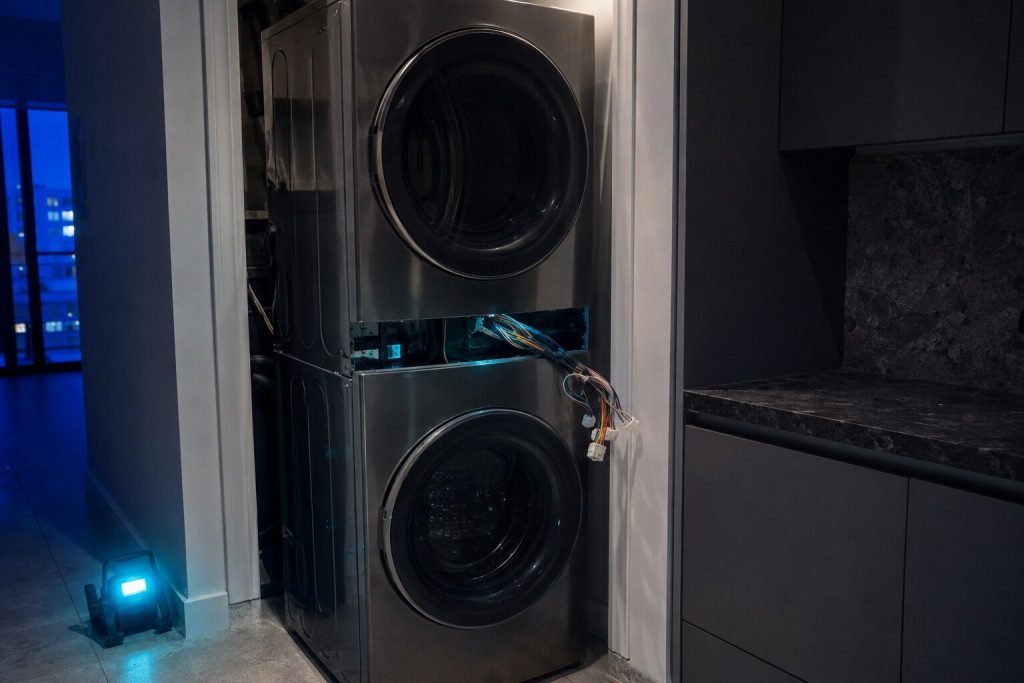
from $185 Laundry tower and stacked center repair
Two machines behind one panel, in a closet built exactly their size. Whirlpool's Laundry Tower and its stacked laundry centers together account for 310 pages of this make's own support base — more than its front-load washers — and they are their own repair discipline. The first task is always establishing which half has the problem, because on a shared control one half can report on behalf of the other.
- Which half has failed is established before anything is opened
- Access is planned first: these live in closets with no room to work
- This make publishes an extensive code set specifically for the Laundry Tower
-
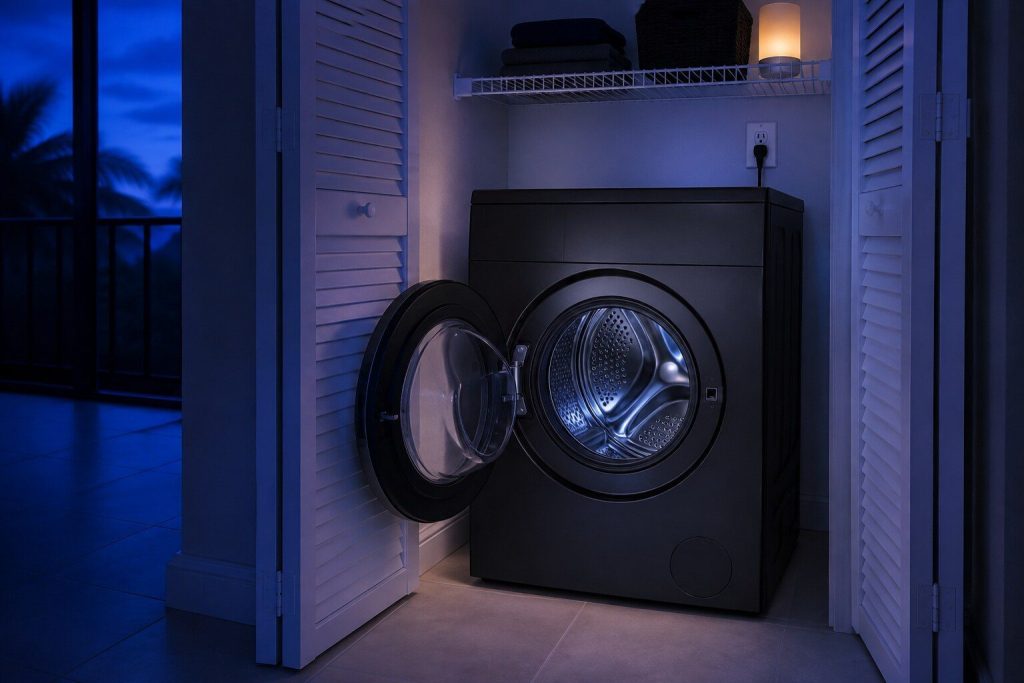
from $195 All-in-one washer and dryer repair
One drum that washes and then dries, in an apartment with a single water connection and no vent. Whirlpool publishes 129 pages for these machines with their own error code section, and they deserve it: the drying half is a condensing system that uses water, so a drain problem and a drying problem are the same problem more often than anyone expects.
- Washing and drying share one drum and one drain, so the diagnosis follows both
- This make publishes a dedicated code set for the all-in-one
- Long cycles are normal on these, and knowing that saves an unnecessary call
-
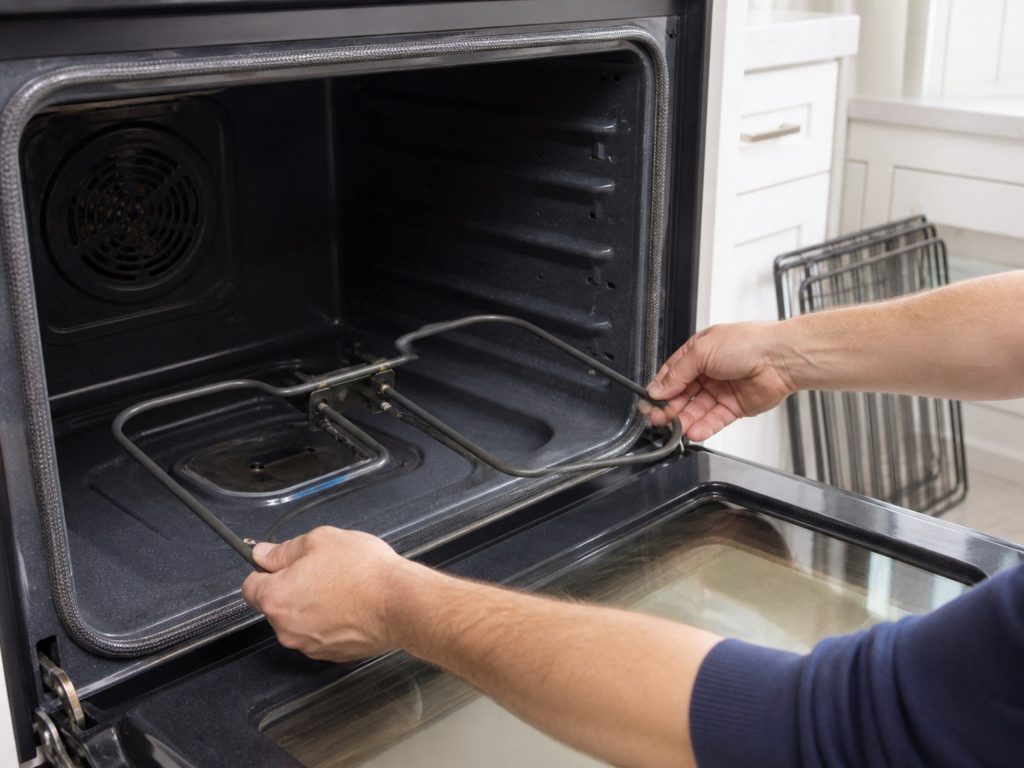
from $155 Oven not heating repair
This is where Whirlpool is at its most talkative. Its ranges carry 170 code pages in its own support base and its wall ovens 176, which is more published diagnostic detail than the whole of its refrigeration line put together. An oven that will not heat on this make usually names its own circuit before anyone opens the back, and that is worth using.
- The machine usually reports first on this appliance, unlike the refrigeration side
- Bake and broil elements, igniter, sensor and relay checked in order
- The exact code characters matter, because this make publishes each combination separately
-
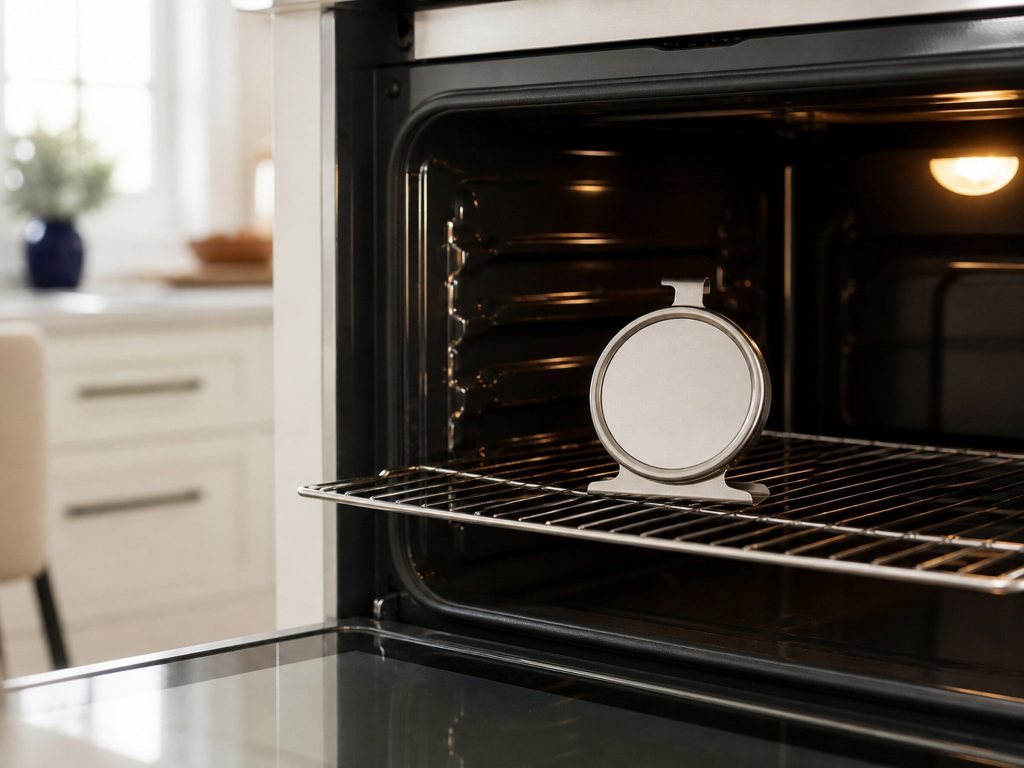
from $125 Oven temperature calibration and sensor service
An oven that runs hot, runs cold or swings wildly is usually reporting the truth about its own sensor. This is a small part with a large effect: everything the control does depends on what the sensor says the cavity is doing, and a sensor that has drifted takes the whole oven with it. It is also the repair most often confused with a bad element.
- Baking badly with no code is a sensor question before it is an element one
- The oven is measured against an independent probe, not against its own display
- Calibration offset is set and documented
-
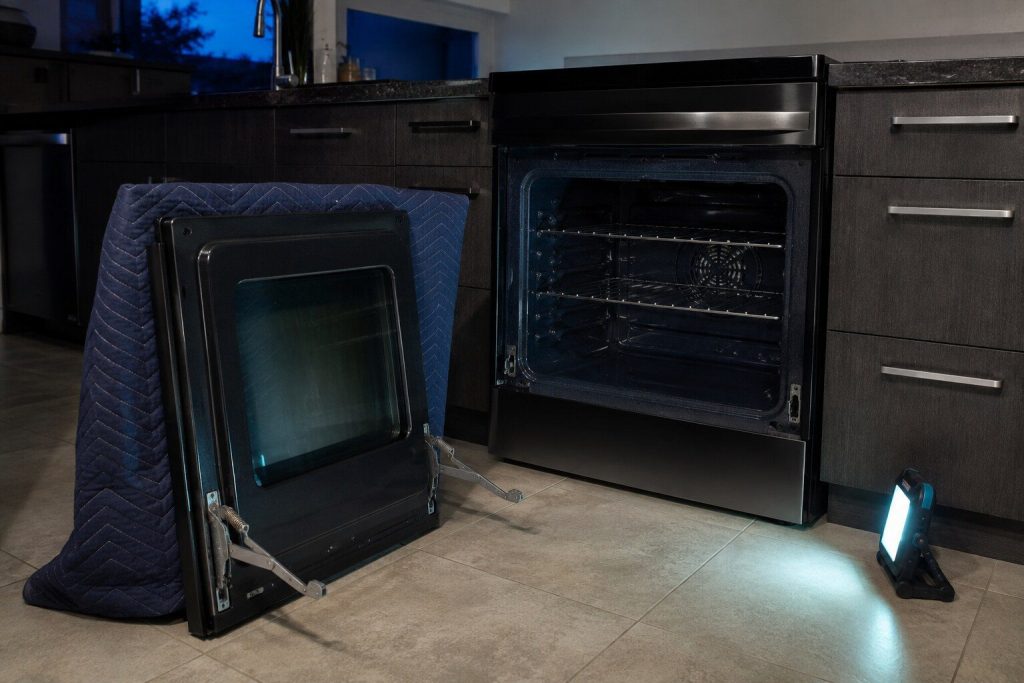
from $175 Oven door and hinge repair
An oven door is a heavy assembly of two or three glass panels, a pair of spring hinges and a seal, and every one of those parts has a job in keeping heat where it belongs. A door that does not close square wastes heat, browns unevenly, and can leave the front of the range hot enough to be a genuine hazard in a house with children.
- A door out of alignment costs heat, evenness and safety
- Hinges are replaced in pairs, because one worn hinge means both are worn
- The gasket is inspected and renewed while the door is off
-
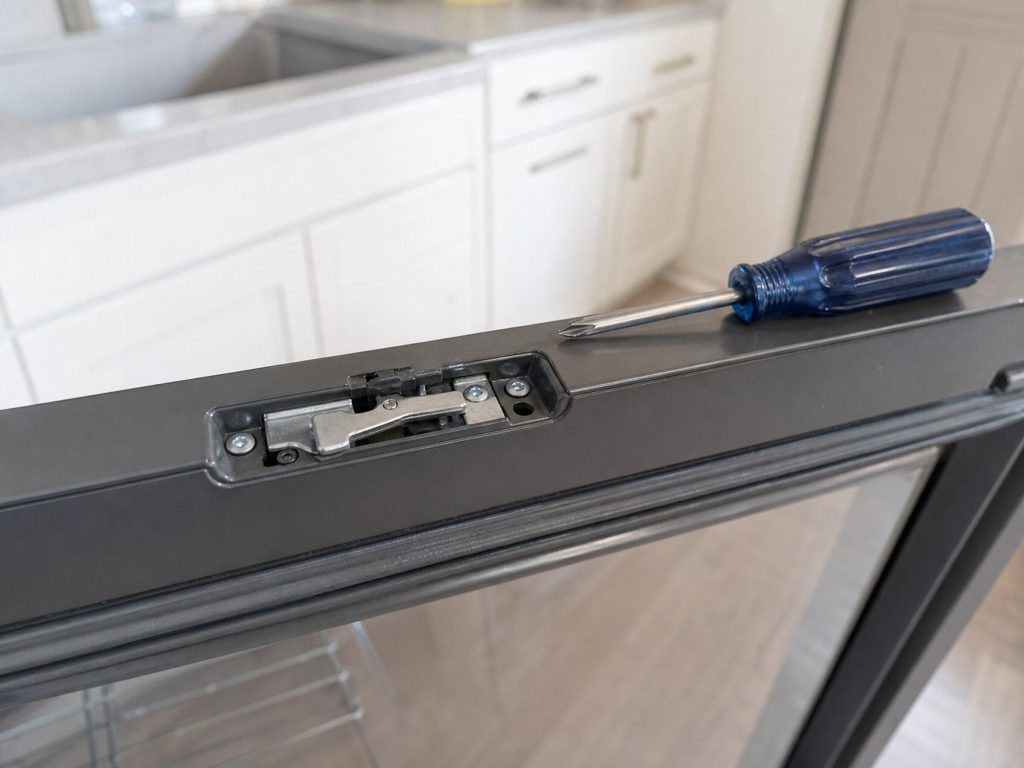
from $155 Self-clean and oven door lock repair
The self-clean cycle takes the cavity to a temperature that nothing else in the house reaches, and it is also the cycle that finds every weak component in the oven. Doors that will not unlock afterwards, locks that jam mid-cycle and controls that report during a clean are common enough that Whirlpool publishes on them, and it is a repair worth doing properly.
- A door locked shut after a clean cycle is a repair, not a wait
- The motor, the switches and the control are treated as one circuit
- What the clean cycle damaged is checked at the same time
-
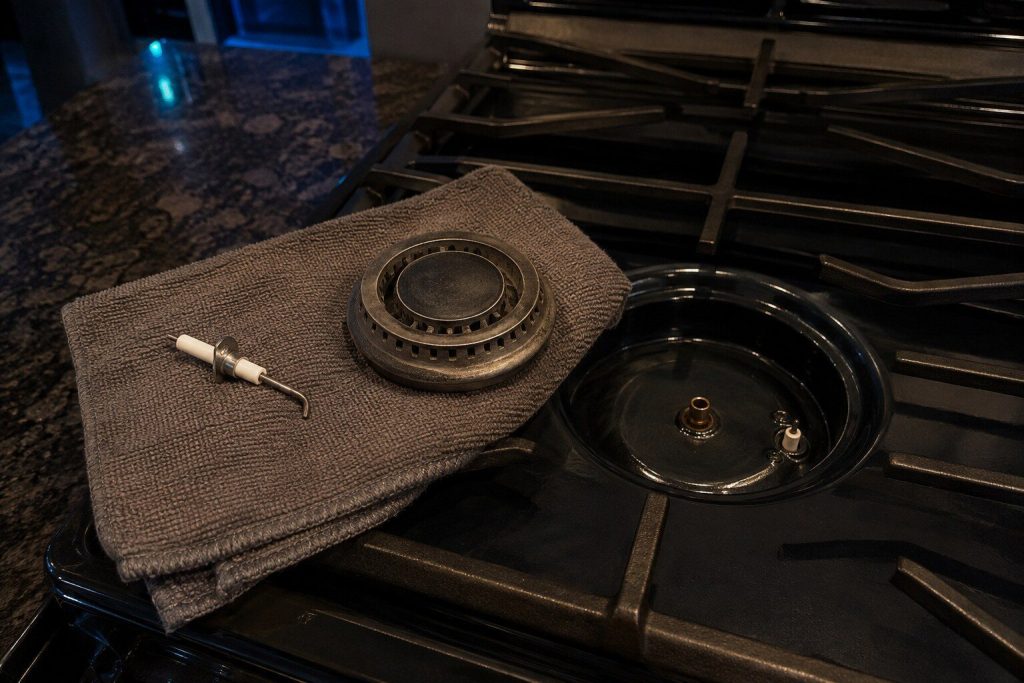
from $165 Gas burner and igniter repair
A gas burner that clicks endlessly, lights slowly or will not light at all is one of the few Whirlpool cooking problems the machine will not name for you. This is worth stating plainly: Whirlpool publishes 52 support pages for its gas cooktops and not a single code page among them. There is no reading to look up here. It is done with eyes, a meter and a manometer.
- No published codes on this appliance — this one is diagnosed, not read
- Endless clicking is usually moisture or a misplaced burner cap, not a part
- Flame color and shape are read as the diagnostic they are
-
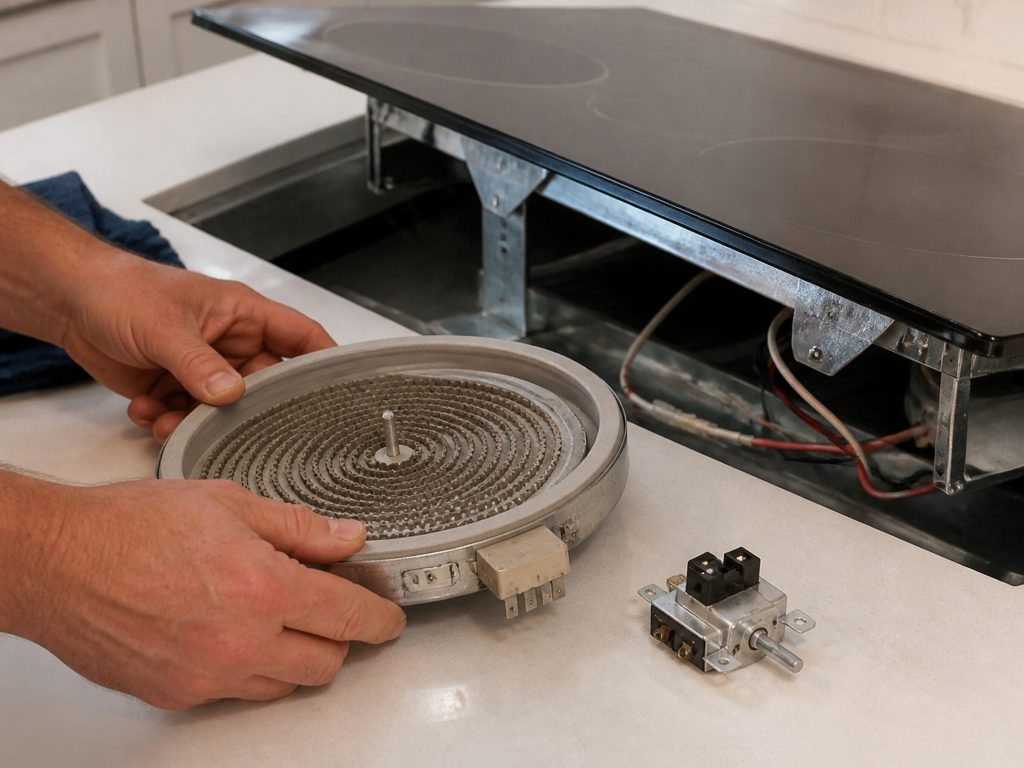
from $175 Electric cooktop element repair
A radiant element that has stopped, or that runs at one heat regardless of the setting, is usually the element or the switch behind it, and on this make there is a very good chance the cooktop has already said which. Whirlpool publishes 83 code pages for its electric cooktops — including readings tied to specific burner positions — which is more diagnostic detail than most makes give on any appliance.
- This make codes individual burner positions, not just a general error
- The connector under the glass is checked, because that is where these usually fail
- Cracked glass is a replacement conversation and we say so directly
-
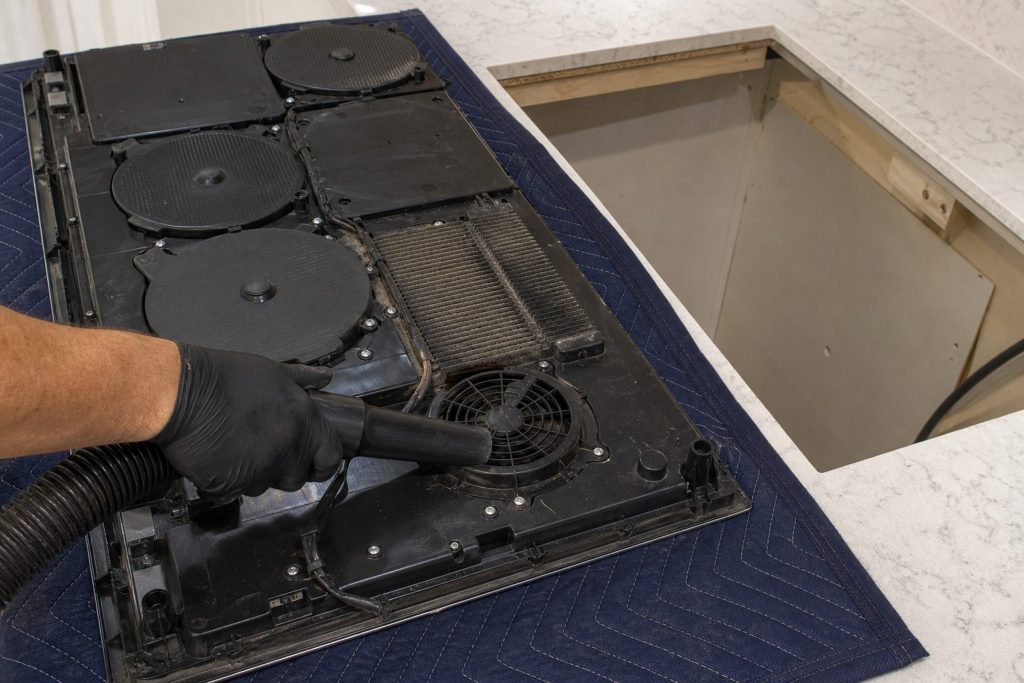
from $245 Induction cooktop repair
Induction is a different appliance under the same glass: coils, an inverter and a cooling fan, rather than a resistance element. It is also the cooking appliance most often reported broken when it is not, because a pan that is not ferrous or a pan too small for the zone produces exactly the behavior of a failure. Whirlpool publishes 40 code pages for these, including readings for overheating and for cookware problems.
- This make publishes a reading for unsuitable or missing cookware, and it means it
- An induction top fitted over a drawer with no clearance overheats and shuts itself down
- Where a replacement top costs less than the inverter board, you will hear that
-
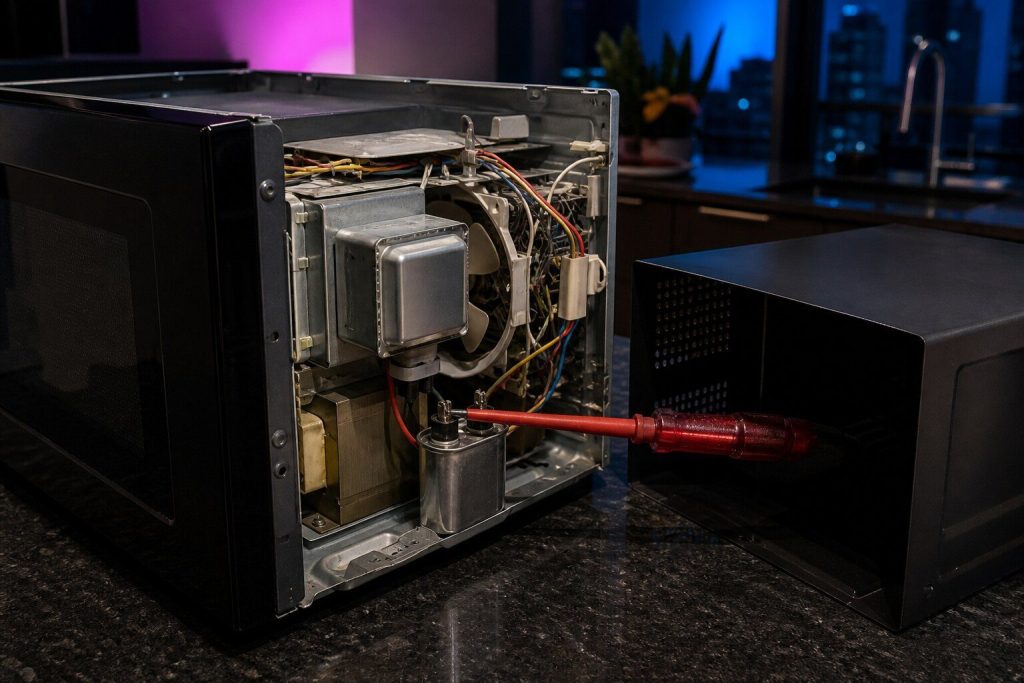
from $165 Microwave repair
A microwave that runs but does not heat is nearly always the high-voltage circuit, and it is the one appliance in this list that stores enough energy to be dangerous long after it is unplugged. Whirlpool publishes 67 code pages for its over-the-range machines and nine for its countertop ones, so on this make there is usually a reading to start from.
- Built-in and over-the-range machines, where the repair is worth doing
- The capacitor is discharged before anything is touched, every time
- On a countertop machine we will tell you when replacement is the better answer
-
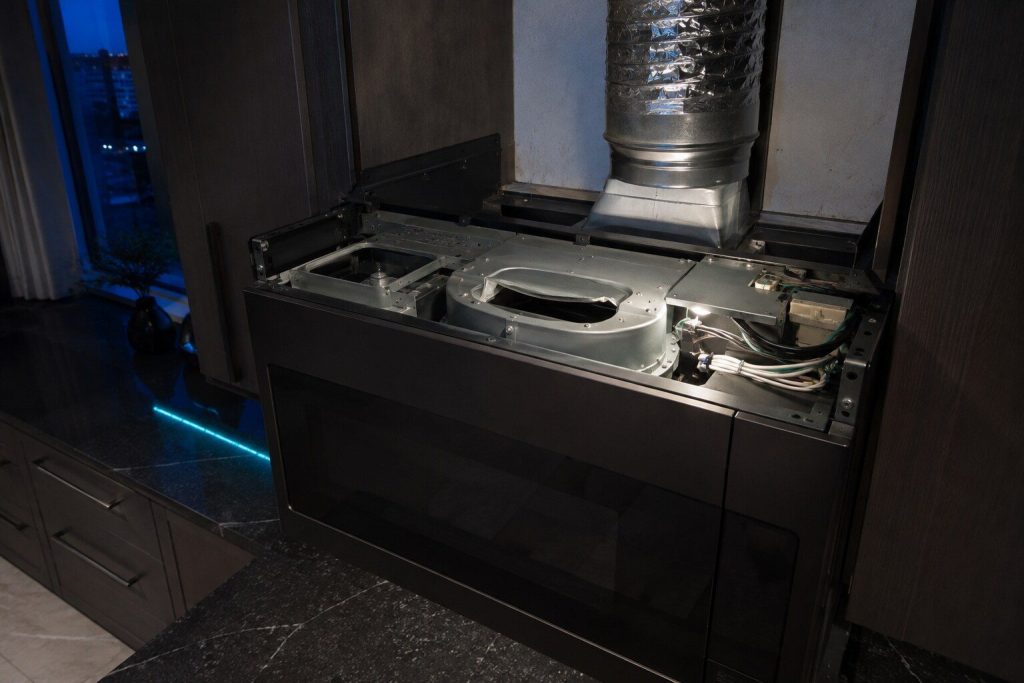
from $145 Over-the-range microwave vent service
The ventilation half of these machines is the half nobody thinks about until a pan of oil fills the kitchen with smoke. In South Florida condominiums a great many of them were never ducted outside at all: they push the air back into the room through a charcoal filter, and once that filter is saturated the machine is doing precisely nothing for the room. Which arrangement you have decides what maintenance even means here.
- First question: does this one vent outside, or back into your kitchen?
- The metal grease filters wash; the charcoal behind them has a life measured in months
- Airflow checked at the grille rather than judged by how loud the machine is
-
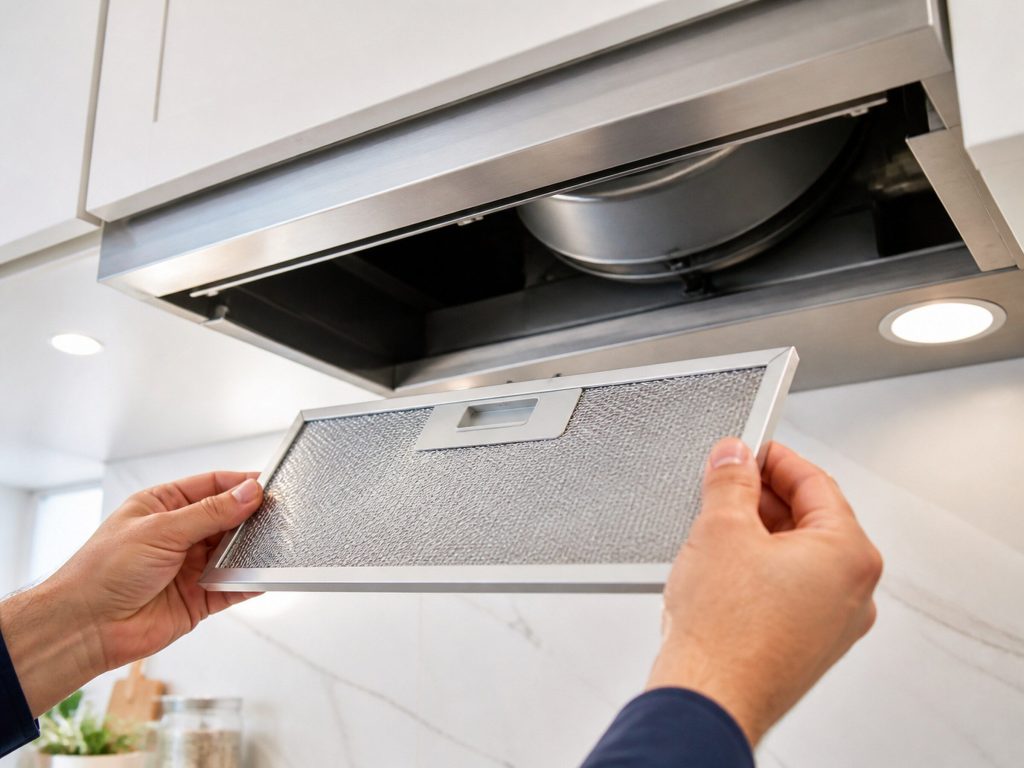
from $145 Range hood repair
A hood that does not move air is either an electrical problem or a duct problem, and Whirlpool gives you very little to go on: this make publishes 43 support pages across its vent hoods and downdrafts, with two code entries in the entire branch. So this one is diagnosed rather than read, and that includes the retractable downdraft units, which have a motor and a track as well as a fan.
- Almost no published codes on this appliance, so it is measured and inspected
- Motor, capacitor, switch and lights, then the duct
- Retractable downdraft units have a lift mechanism that fails separately from the fan
Where it says nothing
On the cold side, we measure instead
The same base publishes no code pages at all for a top-freezer refrigerator, none for an upright freezer and none for a gas cooktop. On a French door cabinet it publishes 24 out of 156 pages, and on a side-by-side, nine out of 140. So the refrigeration jobs on this list are written as measurement rather than as translation: temperature in both compartments, air at the vents, frost on the evaporator, current at the compressor, and the door seal this climate takes apart faster than any other part of the machine. A page that promised to read your refrigerator’s mind would be promising something this make does not publish.
Before you book
Three minutes that change the visit
Both halves of the code
- Watch the display for a few seconds before writing anything down. A Whirlpool alternates between the two halves of its code, and half a code is not an address.
- Photograph it twice, once on each half. Nobody remembers which came first, and the order is worth having.
- Say which appliance it is on. The same characters are a different report on a washer, a dryer and a range, and they are different pages here.
- Do not cut the power first. The display clears and the condition does not, and the code is the most useful thing a first visit can start from.
If it is a refrigerator or a freezer
- There may be no code to find. This make publishes none at all for a top-freezer cabinet, and nine pages in total for a side-by-side.
- Tell us which indicator lights are on instead — cooling off, door alarm, air filter, H2O. On this side of the house those do most of the reporting.
- Put a glass of water in the fresh food compartment overnight and a thermometer in it. A measured temperature beats a description of one.
- Look under the crisper drawers for water. A blocked defrost drain puts it there long before it reaches the floor.
By appliance
Or start from the appliance
Eleven cards, and each one says what a repair on that appliance actually involves on this make — including the three where the maker publishes nothing at all.
-
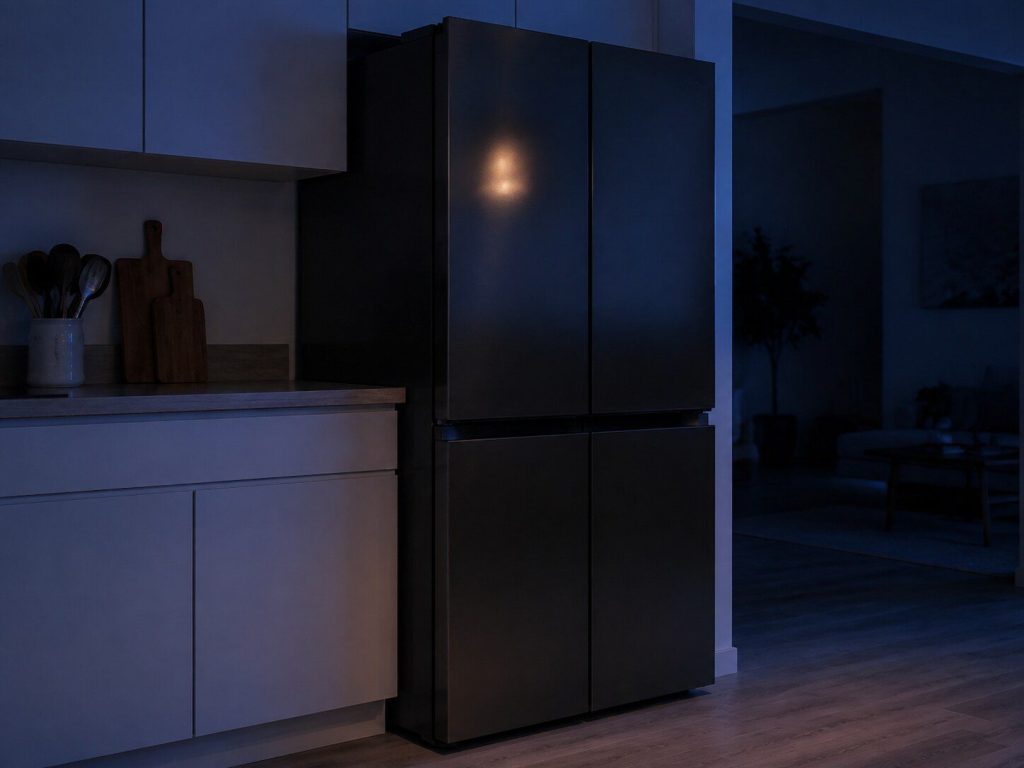
French door · side-by-side · top freezer · quad door · all-refrigerator Refrigerators
This is the most common refrigerator in South Florida and the least documented appliance Whirlpool sells. Its own support base carries 156 pages on French door cabinets and 140 on side-by-side, but only 24 and 9 of those are code pages, and on the top-freezer cabinet — 82 pages — there are none at all. That is not an oversight in our research. It is how the make works: Whirlpool talks when it cooks and washes, and it goes quiet when it chills. So a refrigerator call here starts with measurement rather than with a display. Temperatures in both compartments, air at the vents, the state of the defrost circuit, and the door seal that this climate takes apart faster than any other part of the machine.
- French door, side-by-side, top freezer, quad door and all-refrigerator cabinets
- 24 code pages on French door, 9 on side-by-side, none on top freezer
- Indicator lights do most of the reporting: cooling off, door alarm, air filter, H2O
-
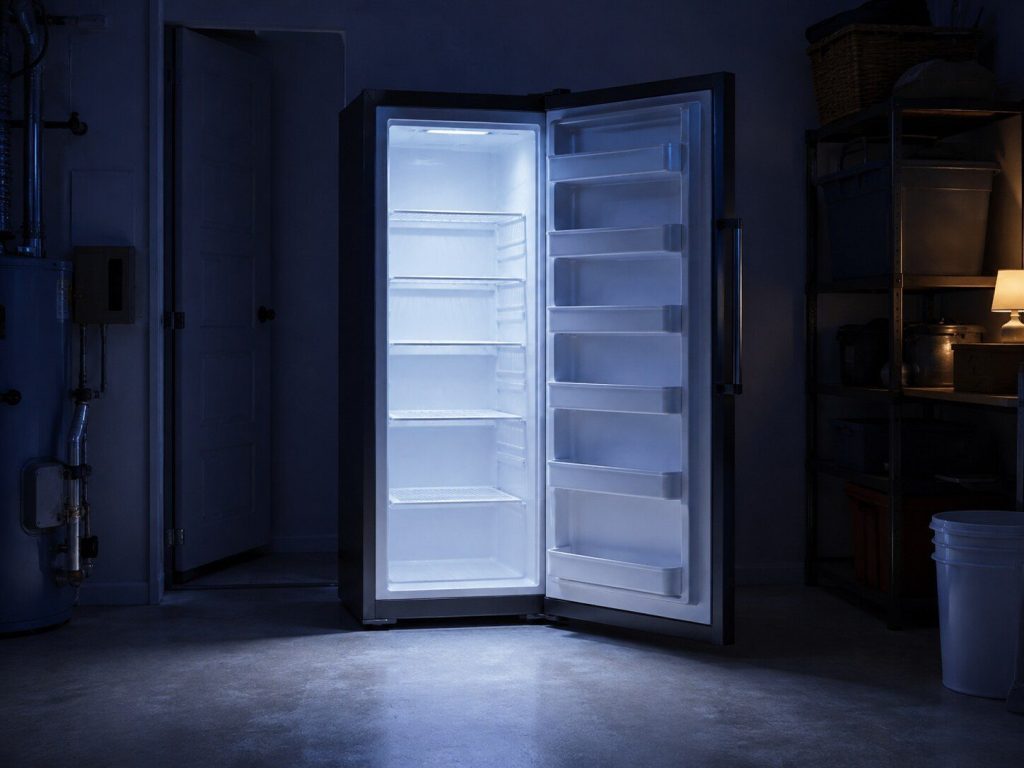
Upright · chest · convertible chest · the freezer side of a full-size cabinet Freezers
Whirlpool sells standalone freezers as its own product family and publishes 63 pages on the upright, 46 on the chest and 46 on the convertible chest freezer that can be switched to refrigeration. Not one of those 155 pages is a code page. There is no error code list for a Whirlpool freezer, because there is nothing on the front of most of them to display one. What Whirlpool writes about instead is exactly what goes wrong: 25 pages on operation, 11 on noise, 8 on cleaning, 5 on frost, 5 on doors and 3 on leaking. That is the real service list for this appliance, and it is the list we work through.
- Upright, chest, and convertible chest freezers that switch to refrigeration
- Zero code pages across 155 freezer pages — this machine reports by behavior
- Frost, door seal, temperature control and the defrost drain are the whole short list
-
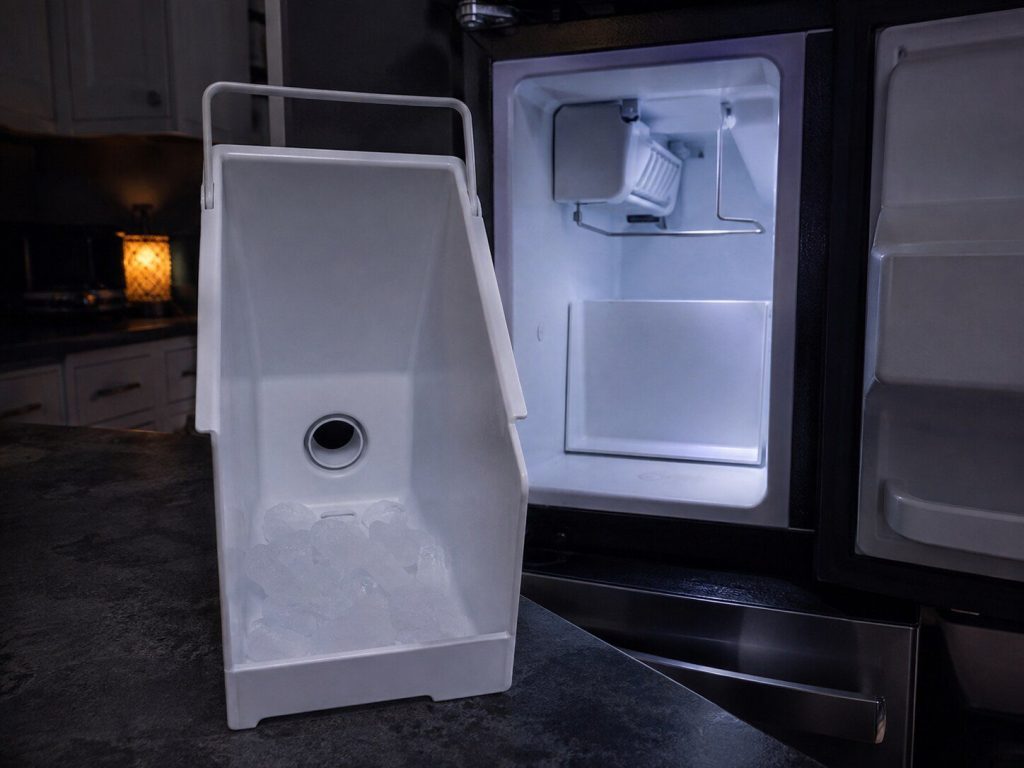
The ice maker inside the refrigerator, and the freestanding ice maker as its own machine Ice makers
Whirlpool treats ice as its own branch, with 110 pages under ice makers and a further set inside the refrigerator sections — 17 pages on ice concerns for the top-freezer cabinet alone. The split of that writing tells you what breaks: 14 pages on ice production, 13 on cleaning and maintenance, 10 on ice quality, 20 on operation and power, 7 on noise and 4 on leaking. There are four blinking-light pages for the freestanding machine — the cleaning light, the filter light and the service light — and no numbered code list anywhere. This is the appliance people call about most in a Miami summer, and it is the one the make explains with words rather than codes.
- The refrigerator's built-in ice maker, and Whirlpool's freestanding ice makers
- No numbered codes: three published indicator lights and 110 pages of plain guidance
- Ice production, ice quality and cleaning are where Whirlpool's own writing concentrates
-
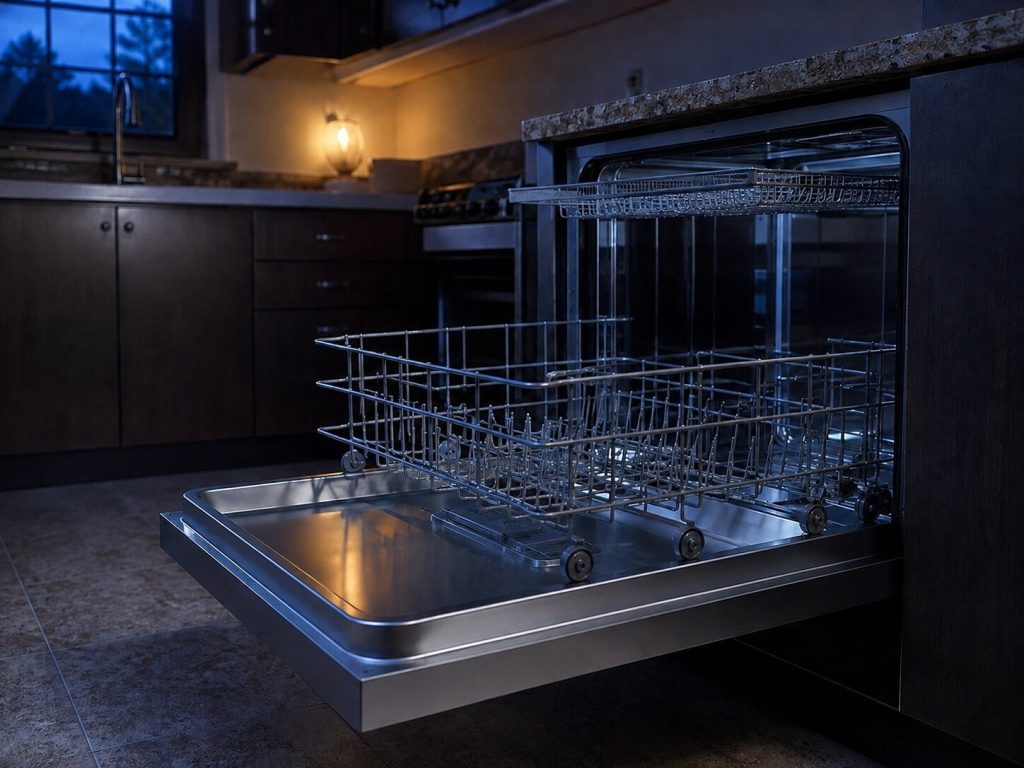
Built-in and portable dishwashers, with the F-and-E code set and the blinking-light set Dishwashers
The dishwasher is the one place in Whirlpool's kitchen where the codes are properly documented: 38 code pages for the built-in machine and 9 more for the portable, covering F1E1 through FAE4 and the H2O code, plus something most makes do not publish at all — the blink patterns. A Whirlpool dishwasher with no display reports by pausing between flashes, and Whirlpool publishes what those pauses mean, from 1 pause 1 through 10 pause 5. It also publishes the front status light, including what it means when it glows red. If your machine is blinking at you rather than showing a number, there is a real answer for it.
- Built-in and portable machines, 47 published code pages between them
- F1E1 to FAE4 and H2O, plus the flash-and-pause patterns for machines with no display
- The front status light, the clean light and the sanitize light each have a published meaning
-
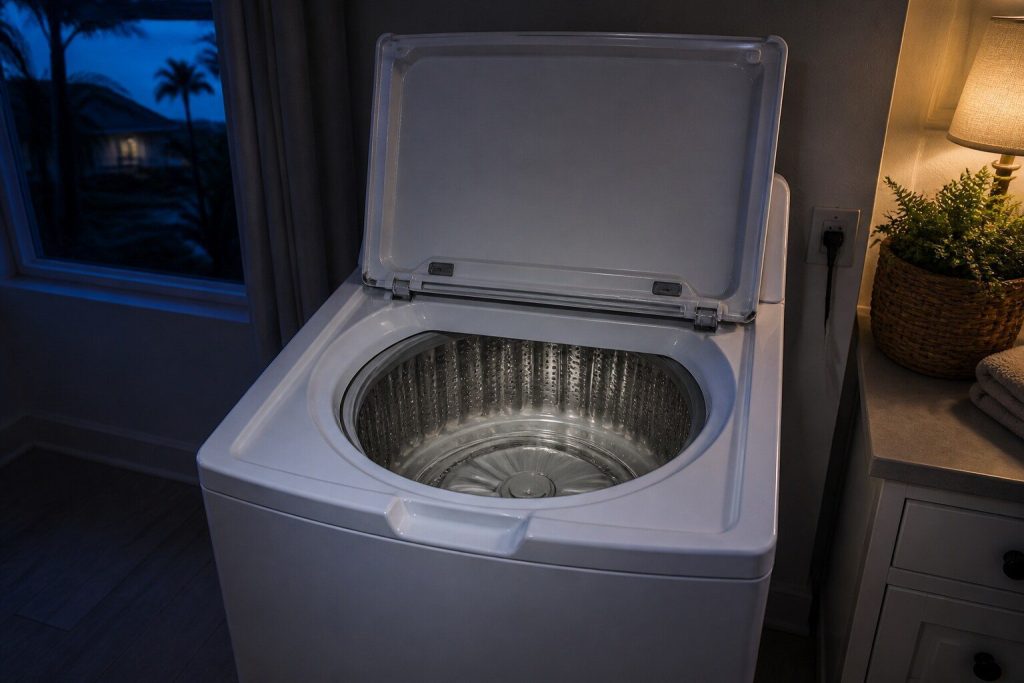
Top load · front load · compact front load · laundry tower · all-in-one washer dryer Washers
Laundry is the strongest part of this site, and the reason is measurable: Whirlpool's own support base carries 1,449 laundry pages, while the sister badge on the same control platforms publishes no laundry at all. For washers specifically there are 157 pages on the top loader with 68 code pages, 179 on the front loader with 59, 60 on the compact front loader, 204 on the laundry tower with 88, and a separate all-in-one washer dryer branch with 22 code pages of its own. That is five distinct machines with five distinct code lists, and the codes do not all carry the same meaning across them. Which machine the code came off is half the diagnosis.
- Top load, front load, compact front load, laundry tower and all-in-one machines
- Around 250 published washer code pages, and the code lists differ between shapes
- Sud, F8E1, F5E2, LF, Ld, dU, uL and the lid-lock lights are all published conditions
-
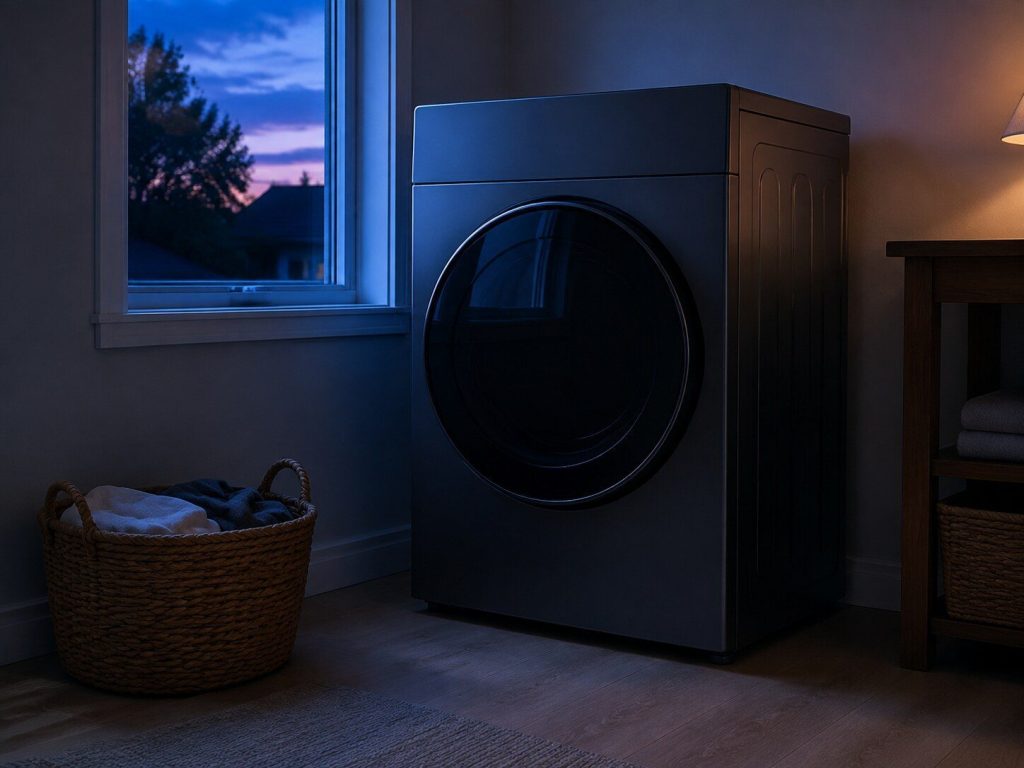
Vented electric · vented gas · compact heat pump · HybridCare · laundry tower Dryers
Whirlpool publishes 114 pages on the dryer with 55 of them code pages, another 47 on the compact heat pump machine, 35 on the HybridCare ventless dryer, and 92 more of general dryer material — and that is before the laundry tower and the all-in-one branches, which have their own. The published code set runs wide: E1, E2, E3, F01 and F02, the F1 and F2 families, F20 through F31, F70 through F78, FCE1, Loc, PF, and one that no other appliance has — AF, which Whirlpool documents as Check Vent. That single code is the most useful thing this make publishes, because in South Florida a restricted vent is the leading cause of a dryer that has stopped drying and the leading fire risk in the room.
- Vented electric and gas, plus ventless heat pump and HybridCare condensing machines
- 55 published code pages on the vented dryer alone, including AF or Check Vent
- A ventless machine has no duct to blame — the condenser and its drain replace it
-
Single and double wall ovens, electric and combination microwave-oven units Wall ovens
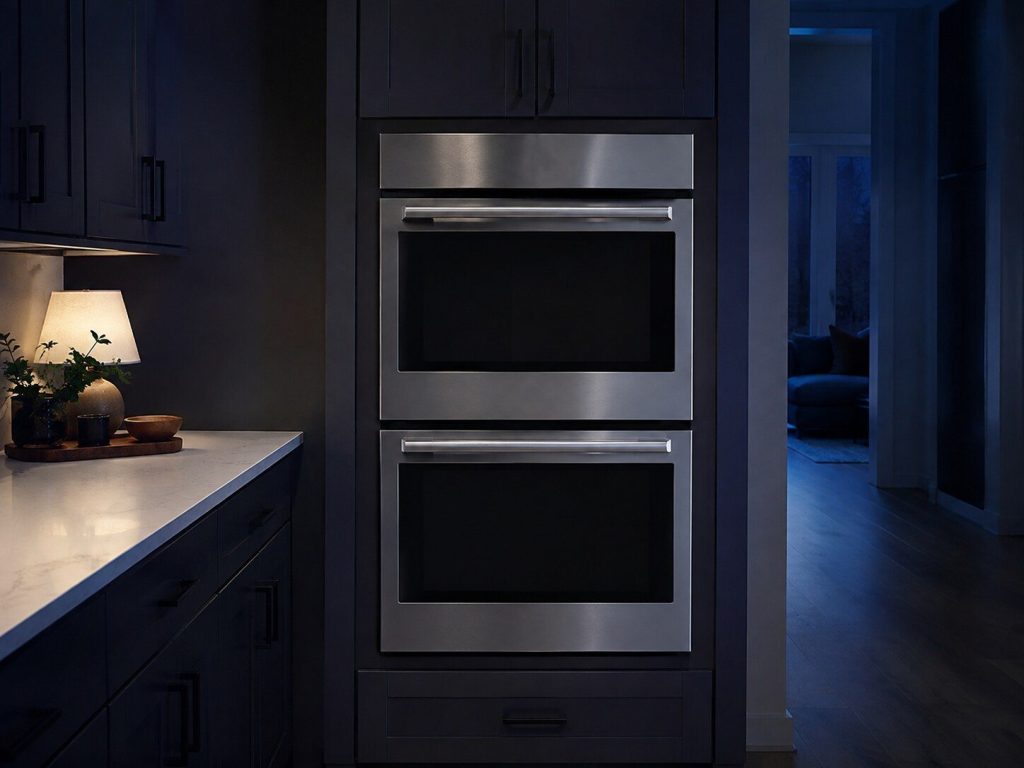
The wall oven is the most heavily documented appliance Whirlpool makes. Its support base carries 303 pages on wall ovens and 176 of them are code pages — more than any other branch, refrigeration included, and more than seven times what the entire freezer family gets. The published set is deep and it is specific: the F1 through F9 families with their E-suffixes, the FB, FC and FE codes, the C81 and C83 group, ES or E5, and the plain-language conditions like a locked door that will not release after a self-clean, Sabbath mode left on, and a control asking for the probe. When a Whirlpool oven has something to say, it says it clearly, and that changes what a first visit looks like.
- Single and double wall ovens, plus combination microwave-oven units
- 176 published code pages — the deepest documentation on the whole Whirlpool base
- Door lock after self-clean, Sabbath mode and probe messages are published conditions too
Free before paid
Several of these end without a part
A range showing LOC has its control lock on: hold START/ENTER for five seconds and it goes away. A cooktop showing Lock is the same feature under a different name, cleared by holding LOCK for three seconds — and it usually gets switched on by a sleeve while somebody wipes the glass. A range in demo mode answers every keypress and heats nothing, which is exactly what it was built to do on a shop floor. A washer showing Sud is not broken either: it has found too many suds to spin against, so it is adding water and extending the rinse by itself. We would rather tell you that on the phone than after a visit.
Before you call
Questions we are asked about the work
Do you charge for the diagnostic?
Yes. It is credited against the repair, so if you go ahead you pay it once and not twice. What it buys is the diagnosis itself. On this make that depends depends on which room you are standing in: in the laundry room or at the range the appliance has usually already said something, and on the cold side the visit is measurement from the first minute.
Can you quote over the phone?
A range, sometimes, if you have both halves of the code and the model number. What we will not do is quote a repair nobody has measured, and on a refrigerator we will not pretend to: this make publishes almost nothing for its cold cabinets, so a phone diagnosis there would be a guess with a price on it.
Is a Whirlpool worth repairing, or should I just replace it?
It is the question this badge gets asked more than any other, and it deserves arithmetic rather than a slogan. Most of these machines were not expensive to buy, so the repair has to clear a lower bar than it would on a built-in — but the parts are commodity parts, stocked here rather than ordered, which pushes the repair side of the sum down as well. A pump, a valve, a lid lock, an element, an igniter or a control lock is almost always worth doing. A tub, a sealed system or a second board on the same machine in the same year usually is not, and we will say so before the work rather than after.
Do you work on Maytag and Amana too?
Yes, and it is worth knowing why they turn up in the same conversation: they come out of the same corporation and run the same control platforms, which is why an F-and-E code looks familiar across them. This site is written about Whirlpool's own appliances and Whirlpool's own published pages, and nothing on it is borrowed from a badge next door.
How quickly can somebody come?
Usually within a day or two across Miami-Dade, Broward and Palm Beach. A refrigerator that has stopped cooling and a dryer that is running hot are treated as urgent; a hood that has lost a lamp is not, and we will tell you plainly which yours is.
In more detail
What is different about servicing this make
The commonest machine on the street
Whirlpool is the volume brand of its own corporation, and in South Florida that has practical consequences rather than sentimental ones. A drain pump, a lid lock, a water inlet valve, a bake element or a dryer belt for one of these is a stocked item at every supply house in Miami-Dade, and many of them fit dozens of model numbers. That is why a common failure here is usually one visit rather than two, and it is the largest single downward pressure on every figure on this site.
Talkative in two rooms, silent in a third
Measured from the maker’s own base: 176 code pages on wall ovens, 170 on ranges, 88 on the laundry tower, 83 on electric cooktops, 70 on top-load washers — and zero on gas cooktops, zero on top-freezer refrigerators, zero on upright freezers. This make talks when it cooks and washes and goes quiet when it chills. Every job on this list is written for the room it happens in, and the ones on the cold side start with instruments rather than with a display.
What we will not claim
We are an independent repair company. We are not affiliated with, endorsed by or acting for any manufacturer, and we warrant our own workmanship rather than anybody else’s. Parts are ordered OEM against your model number unless you ask otherwise, the scope and the price are agreed in writing before anything is opened, and where this make publishes nothing we say so rather than filling the gap in.
Tell us the appliance, the model number and both halves of the code.
Those three together are usually enough for us to name a likely part before anybody sets off. If it is a refrigerator or a freezer there may be no code at all — say which indicator lights are on instead.
This article is based on:
- Official manufacturer documentation
- Internal repair procedures
- Technician repair history
- Company quality standards