Appliance
Whirlpool dryers
Whirlpool publishes 114 pages on the dryer with 55 of them code pages, another 47 on the compact heat pump machine, 35 on the HybridCare ventless dryer, and 92 more of general dryer material — and that is before the laundry tower and the all-in-one branches, which have their own. The published code set runs wide: E1, E2, E3, F01 and F02, the F1 and F2 families, F20 through F31, F70 through F78, FCE1, Loc, PF, and one that no other appliance has — AF, which Whirlpool documents as Check Vent. That single code is the most useful thing this make publishes, because in South Florida a restricted vent is the leading cause of a dryer that has stopped drying and the leading fire risk in the room.
- 4 symptoms we are called out to
- From $89 diagnostic, credited to the repair
- 59 cities and neighborhoods covered
- OEM parts available on order
The short version
What this equipment is, for a repair
Configurations
Vented electric · vented gas · compact heat pump · HybridCare · laundry tower
Access
Planned before the visit, not discovered on arrival
Parts
OEM, available on order
Diagnostic
From $89, credited to the repair
What goes wrong with it
Symptoms we are called out to on Whirlpool dryers
Each one covers the likely causes in the order they are worth checking, and what to do in five minutes before booking anything.
-

Everything comes out warm and still damp Dryer takes two cycles to dry one load
This is the most common dryer call we take, and Whirlpool has a code for it that is unusually blunt. AF, printed on some machines as Check Vent, is restricted air flow, and the maker's own wording names a clogged lint screen or vent. A dryer does not dry clothes with heat. It dries them by moving hot air through them and taking the moisture out of the room.
- AF and Check Vent are the same code, and F4 E3 is the numbered version of it
- A dryer venting into a closet has nowhere to put the moisture it removes
- Long flexible ducting behind a machine pushed back into an alcove crushes flat
-
The drum turns, the load comes out cold and wet Dryer runs but does not heat
A dryer that tumbles without heating has usually lost one of two things: the heat itself, or half of its electrical supply. Whirlpool separates the two in its own table, and the difference decides whether the repair is inside the machine or at the breaker panel.
- F4 E4 and L2 are Whirlpool's low or no line voltage report — that one starts at the panel
- F4 E1 is the heater or the heater relays, and that one is inside the machine
- An electric dryer on a tripped half-breaker tumbles perfectly and heats nothing
-
The panel lights up and nothing happens when you press Start Dryer will not start
A Whirlpool dryer refuses to start for a short list of reasons, and it names most of them. The maker's own wording for ERR is that the door has not been completely closed and latched, and the dryer will not run until it is. Before anybody opens the machine, that sentence is worth taking literally.
- ERR on a Whirlpool dryer is the door, in the maker's own words
- Loc is the control lock — the panel works and refuses every button on purpose
- PF means the last cycle was interrupted by a power failure, which is a common summer story here
-
A thump, a squeal or a scrape that was not there last month Dryer has become noisy
A dryer is a drum on rollers turned by a belt, and every one of those parts announces itself differently when it wears. Whirlpool publishes three separate noise pages for its dryers, and the useful skill is telling a noise that needs a repair from one that means something is loose in the drum.
- A thump once per drum revolution is a roller or a flat spot, not a coin
- A squeal that rises with the drum is the belt or the idler pulley
- A rattle that changes when you tilt the machine is usually something in the blower
What we do on it
Repairs we carry out on Whirlpool dryers
Starting figures for this equipment in South Florida. The exact cost is confirmed after an on-site diagnostic — and this is not the whole list of what can go wrong, so call if your problem is not here.
-
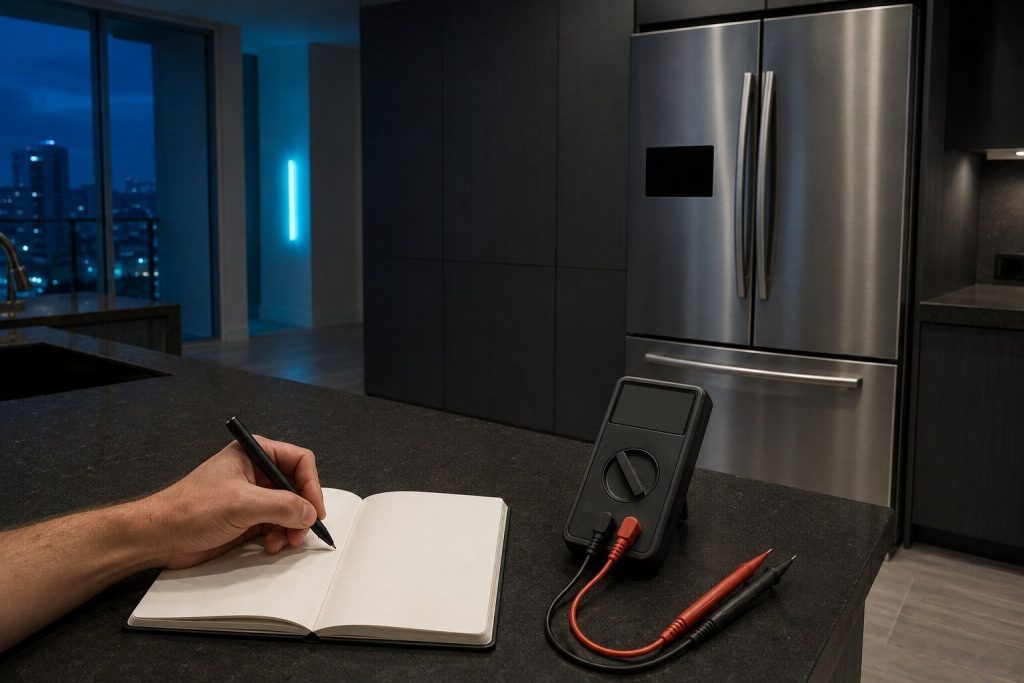
from $89 Diagnostic visit
One visit, one technician, one answer in writing. On a Whirlpool the first question is whether the appliance is talking, because this make is not evenly talkative. It publishes a separate page for every code on its ranges, its ovens, its cooktops, its washers and its dryers, and it publishes almost nothing of the kind for its refrigerators and freezers. Knowing which half of the house you are standing in changes how the visit starts.
- Whether this appliance talks at all decides how the visit starts
- Laundry and cooking almost always have a code; the cold side almost never does
- Whatever we find goes to you in writing, and the visit comes off the repair
-
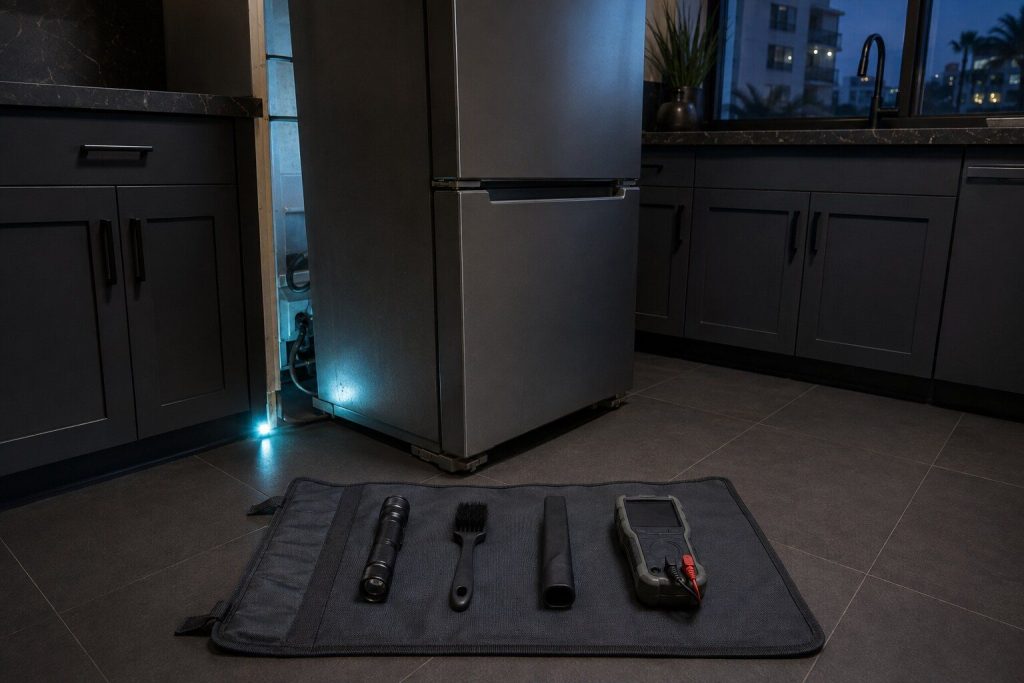
from $119 Appliance maintenance
Nothing on this list saves an owner more money and nothing is booked less often. Whirlpool builds appliances that will run for fifteen years in an ordinary house, and what usually ends them early is a maintenance item rather than a design one: a coil under a blanket of dust, a drain pump filter that has never once been opened, a duct that has closed a little further every year. This make publishes cleaning instructions for every one of those. Almost nobody has read them.
- One visit across everything you own, priced on time rather than per machine
- The washer drain pump filter, which is the most neglected part in South Florida
- You keep a written list of what is closest to failing
-
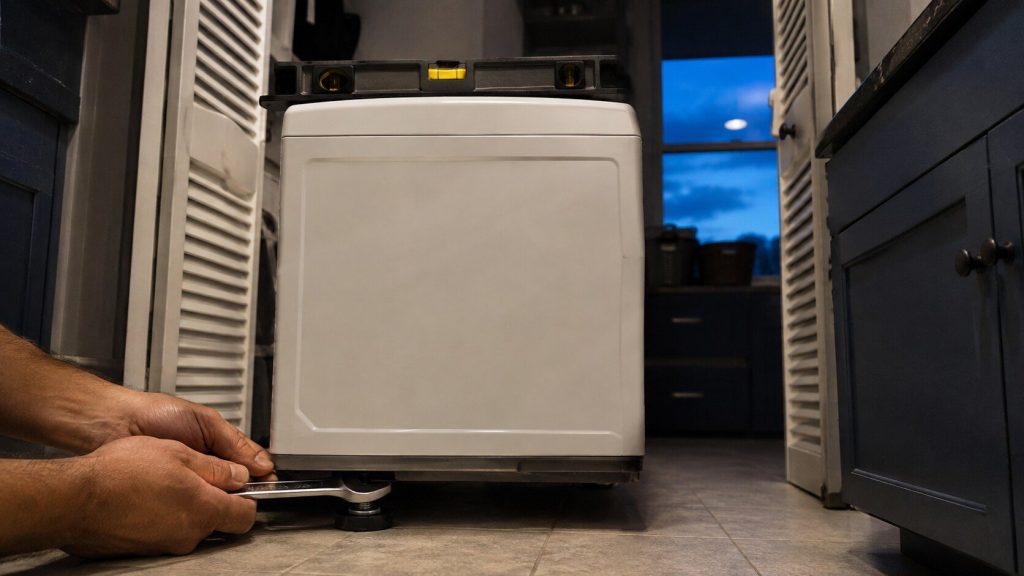
from $139 Appliance installation
Most installations on this make are replacements, and that is worth saying out loud. The owner has just weighed a two-hundred-dollar repair against a nine-hundred-dollar machine and chosen the machine. What decides whether the new one is still working in eight years is the hour after it arrives: whether the opening was measured, whether the duct behind it was cleared, whether anyone put a level on it. A delivery crew is not paid for that hour and does not stay for it.
- The hour after the delivery truck leaves, which is the hour nobody is paid for
- Leveling done with a level and the lock nuts tightened, on every machine that has feet
- Gas joints leak-tested and the result written down
-
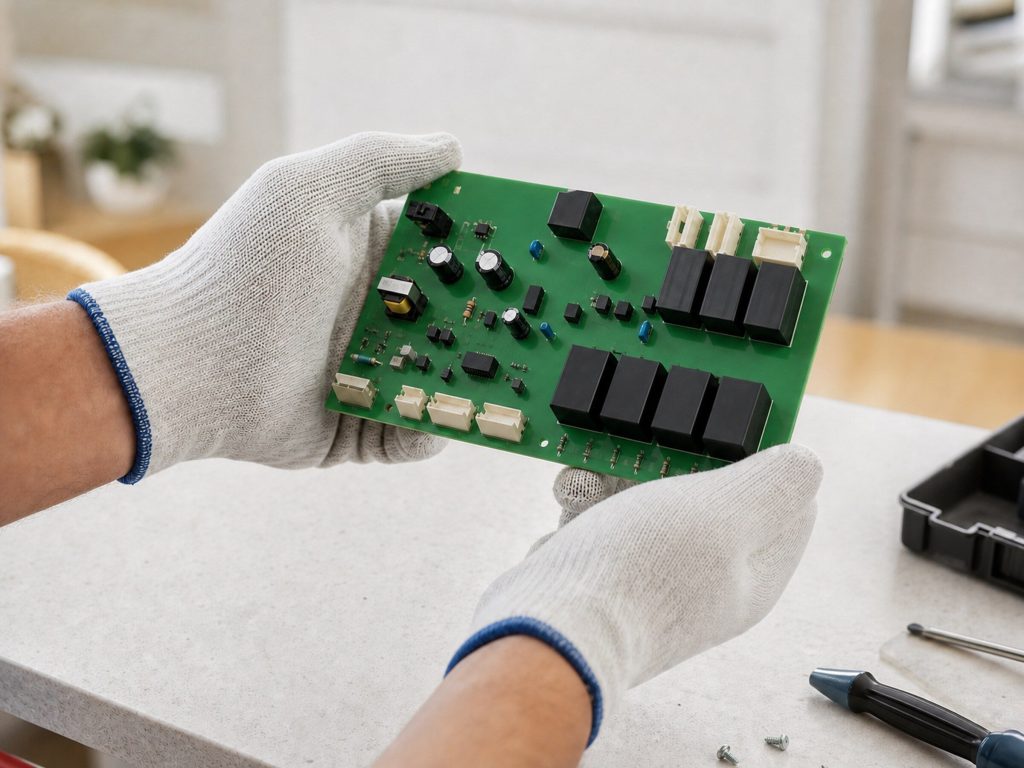
from $265 Appliance control board repair
The board is where a Whirlpool reports from, and it is also the part that gets blamed for everything else. Whirlpool runs the same control architecture across its whole line, which is why an F#E# code looks familiar on a range and on a washer — but a board that has died usually died of something, and replacing it without finding that something buys you a few months.
- A board that died usually died of something, and that something kills the next one too
- Browned connectors and pins backed out of a housing are cheap; boards are not
- Whirlpool revises these mid-production, so the order goes out against the serial
-
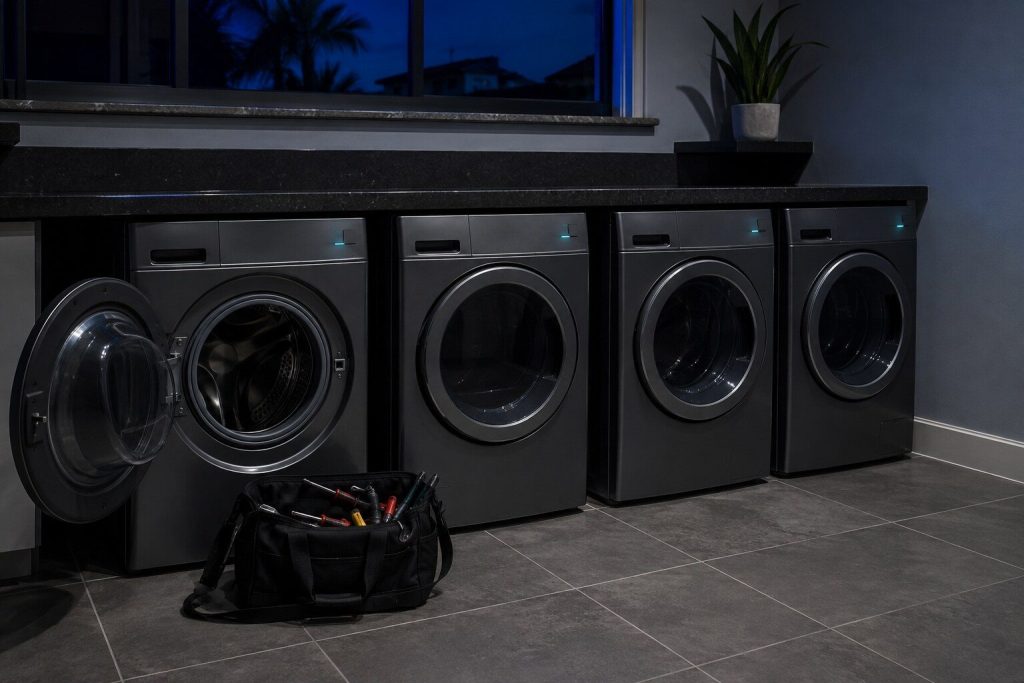
from $159 Commercial appliance repair
Whirlpool's commercial line is laundry, and that is the honest scope of this page. The make's own support base carries a commercial branch of 142 pages — coin and card washers and dryers — and nothing comparable for its kitchen appliances. So this is the work we take on in building laundry rooms, short-let blocks, small gyms and staff facilities: machines built on the domestic platforms, run at a duty cycle the domestic ones never see.
- This make's commercial equipment is laundry, so that is what this page covers
- A machine out of service costs the building money every day it stays out
- Coin and card mechanisms included, since that is what stops the revenue
-
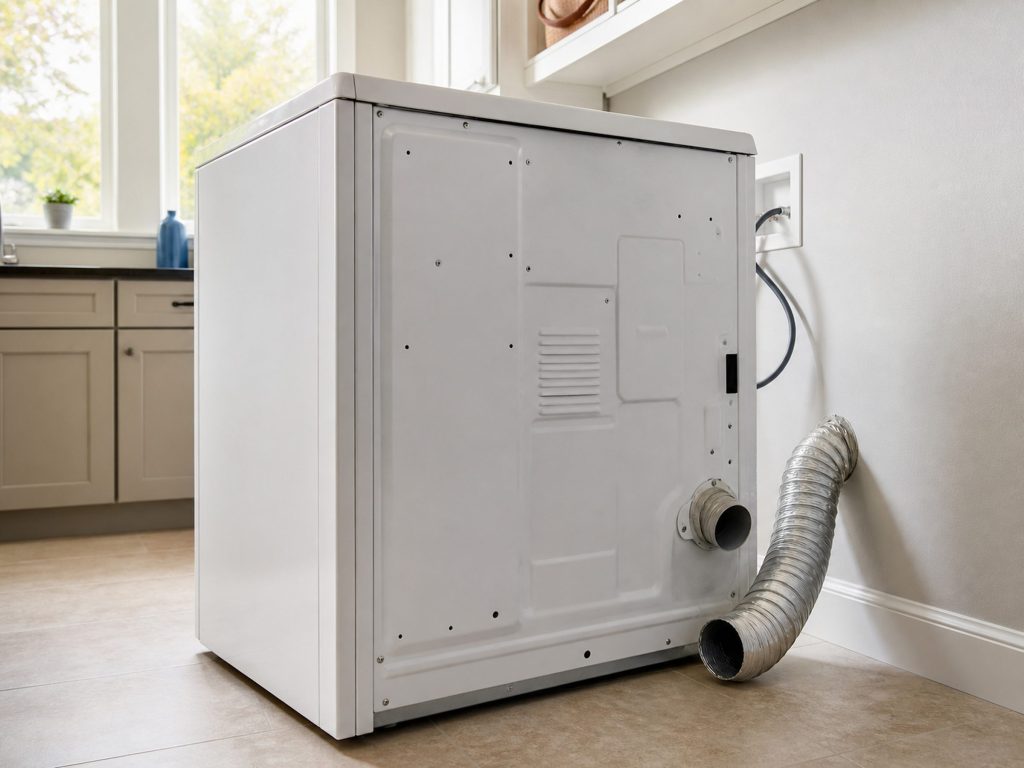
from $145 Dryer not heating repair
A dryer that tumbles without heat is one of four things, and on a Whirlpool the machine usually helps: this make publishes 55 code pages for its dryers, including a dedicated indication for restricted venting. That last one matters more here than anywhere, because in South Florida a blocked duct is the single most common reason a dryer stops heating.
- The vent is checked first, and it is the answer more often than any part
- This make reports restricted airflow itself rather than leaving you to guess
- Thermal cutoffs are never replaced without finding what opened them
-
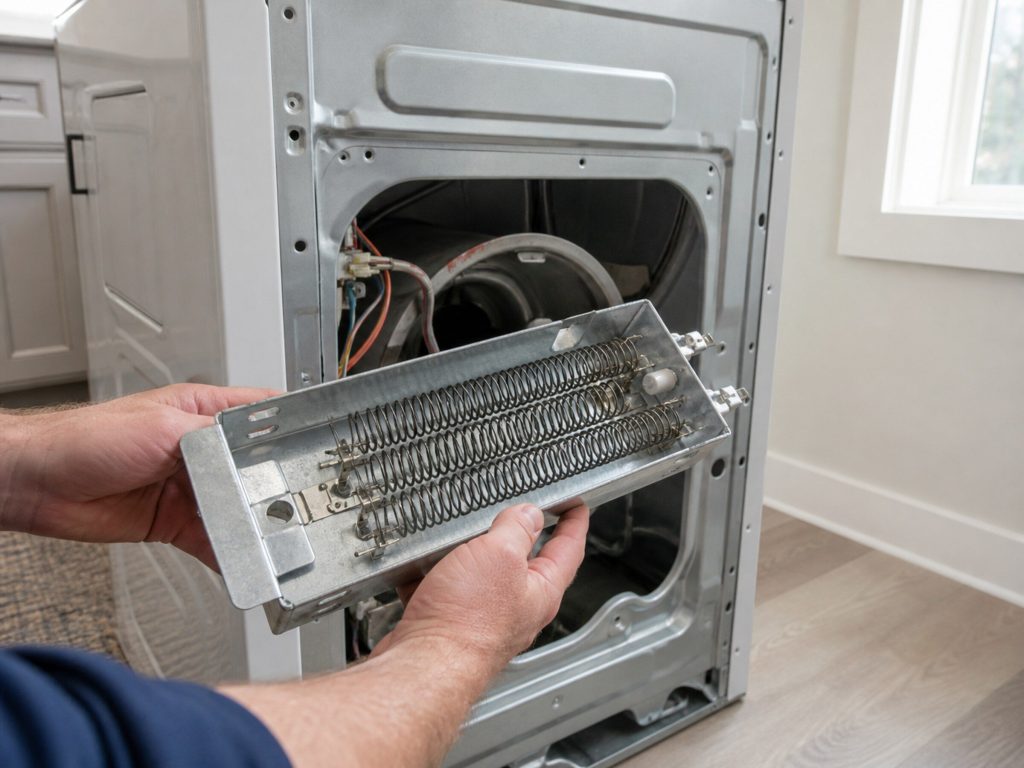
from $175 Dryer heating element replacement
On an electric Whirlpool the element sits in a housing on the back or the side of the drum, and when it fails it usually takes a thermal cutoff with it. Replacing the element alone is how this repair comes back in a fortnight, because the cutoff opened for a reason and the reason is nearly always airflow.
- Element, thermal cutoff and high-limit replaced as a set
- The vent is cleared in the same visit or the new element inherits the same problem
- A stocked part on this make, which keeps this to one visit
-
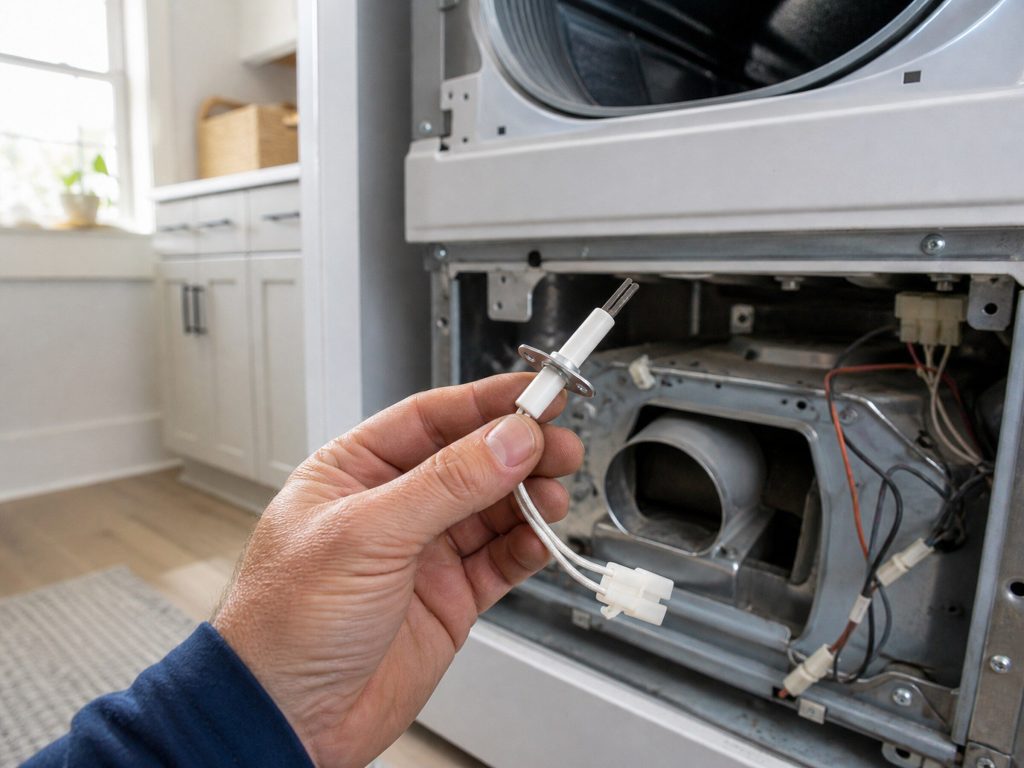
from $175 Gas dryer igniter and valve repair
A gas dryer that tumbles cold has a short, specific list: the igniter, the flame sensor, the gas valve coils and the safety devices around them. The failure is often intermittent — it lights on the third attempt, then on the fifth, then not at all — and an intermittent gas appliance is not something to live with.
- Igniter, flame sensor and valve coils tested as one circuit
- The gas connection is leak-tested afterwards and the result written down
- Intermittent ignition is treated as a repair now, not a wait-and-see
-
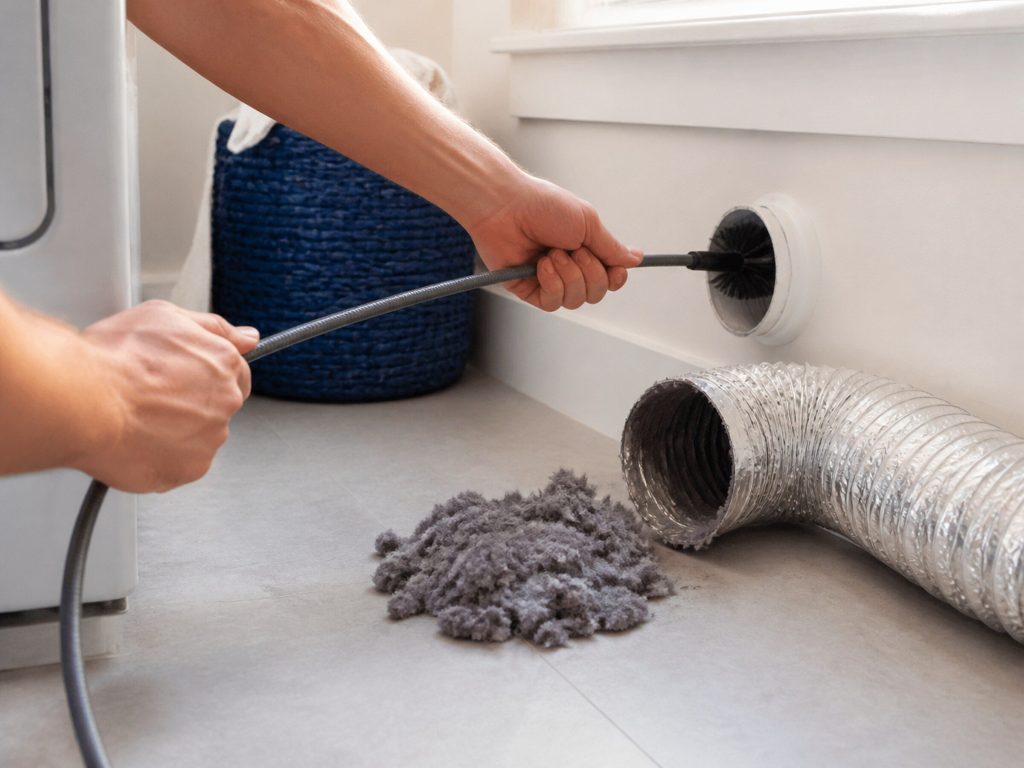
from $129 Dryer vent cleaning
This is a safety job before it is a performance job. Lint that has been packing into a duct for years is fuel sitting next to a heat source, and long drying times are the warning. On Whirlpool dryers the machine measures the restriction itself and reports it, which is a genuine advantage — most makes leave you to notice.
- The dryer reports its own restricted-vent condition on this make
- Duct, wall hood and the transition behind the machine, all three
- Drying time measured before and after
-
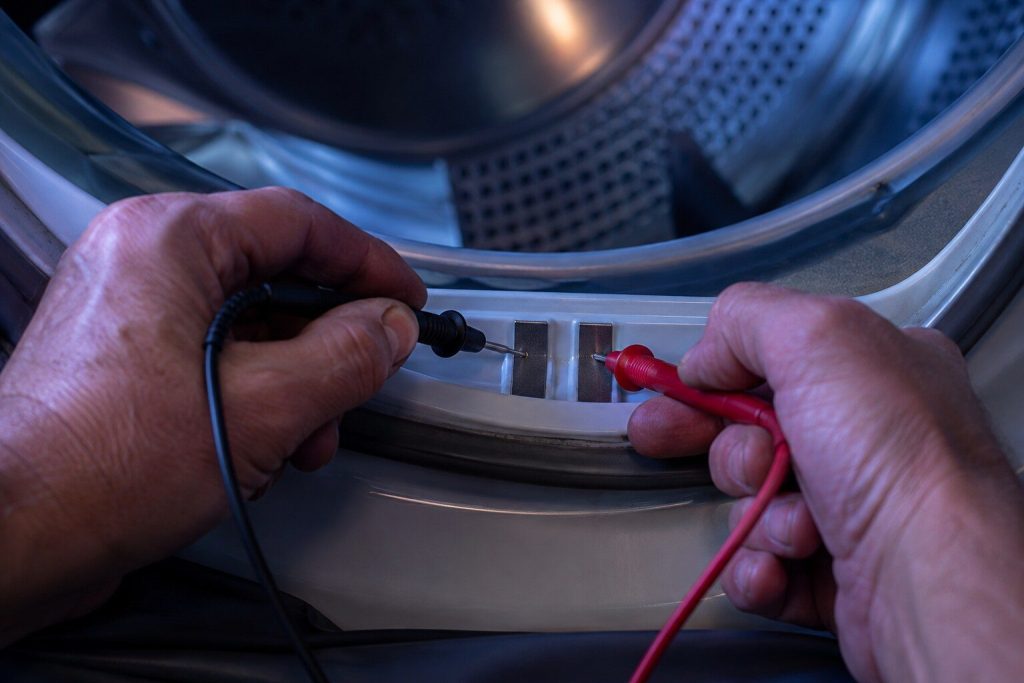
from $109 Dryer moisture sensor service
An automatic cycle stops when the load is dry, and it knows that from two metal strips inside the drum front. Softener residue insulates them, so the machine sees dry clothes that are still damp and shuts off early — or reads them as wet and runs for an hour. This is usually cleaning rather than a part, and it is priced that way.
- Cycles that end too soon or run far too long usually start here
- Often a cleaning job rather than a part
- The vent is checked with it, because both produce long cycles
-
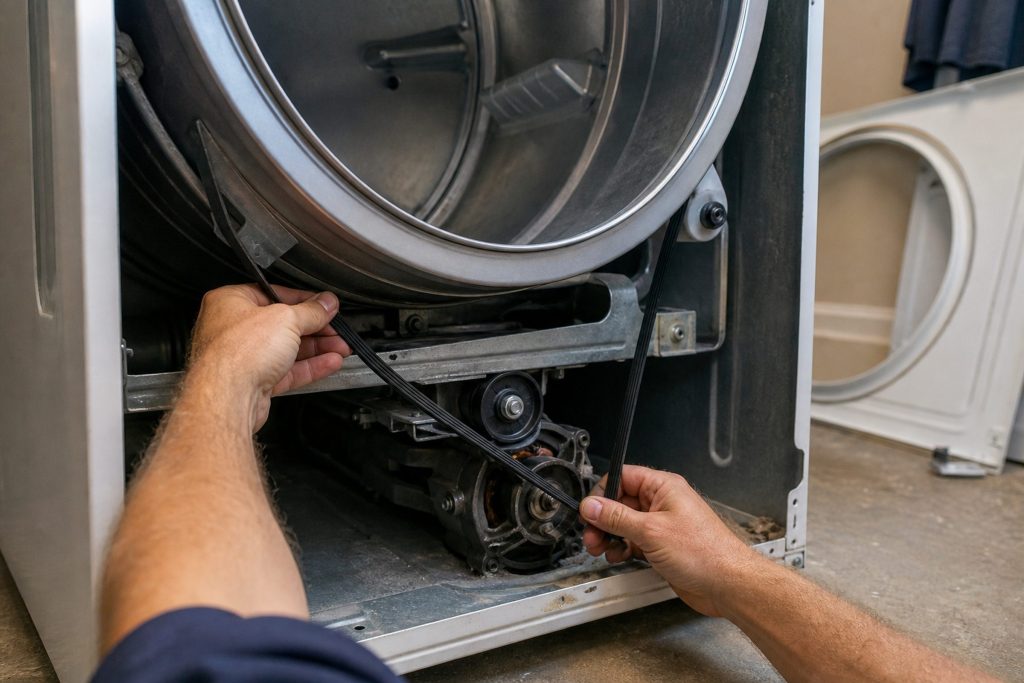
from $185 Dryer drum belt and roller repair
A dryer that hums but does not turn has usually broken its belt. A dryer that turns while sounding like a train has usually worn its rollers or its idler. Both are mechanical, both are audible long before they fail, and both are worth doing together because the machine has to be opened for either.
- Belt, idler, rollers and bearing done as one job
- Noise is the early warning and it is worth acting on
- The blower and duct are cleaned while the machine is open
-
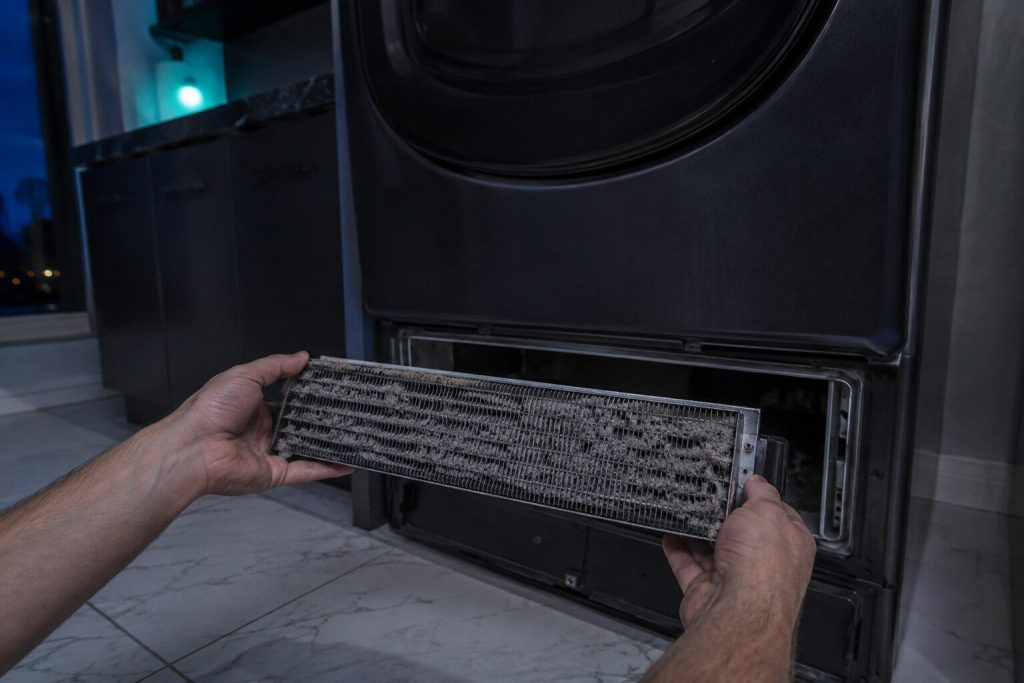
from $215 Heat pump dryer service
Ventless laundry is growing in South Florida condominiums because there is nowhere to put a duct, and Whirlpool has a compact heat pump dryer and a HybridCare line to serve it. These are not vented dryers without a vent. There is no element and no duct; there is a sealed refrigeration loop, a condenser that has to be cleaned, and a water tank or condensate drain that has to work.
- A sealed refrigeration circuit, not a heating element
- This make publishes its own separate code set for these machines
- Condenser and filter cleaning is real maintenance here, not an optional extra
-
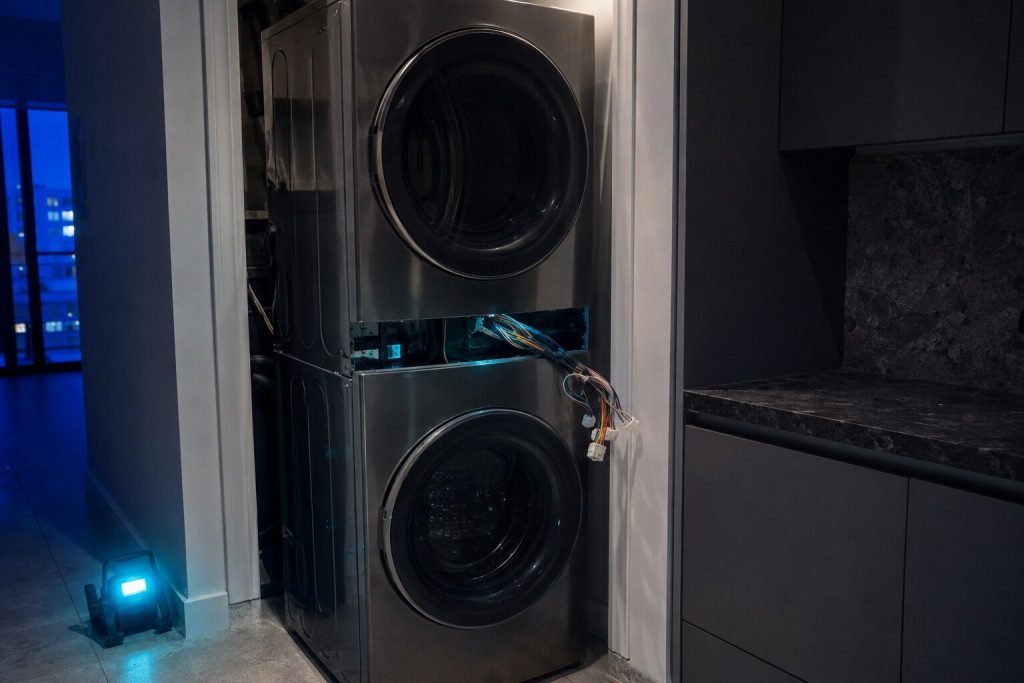
from $185 Laundry tower and stacked center repair
Two machines behind one panel, in a closet built exactly their size. Whirlpool's Laundry Tower and its stacked laundry centers together account for 310 pages of this make's own support base — more than its front-load washers — and they are their own repair discipline. The first task is always establishing which half has the problem, because on a shared control one half can report on behalf of the other.
- Which half has failed is established before anything is opened
- Access is planned first: these live in closets with no room to work
- This make publishes an extensive code set specifically for the Laundry Tower
-
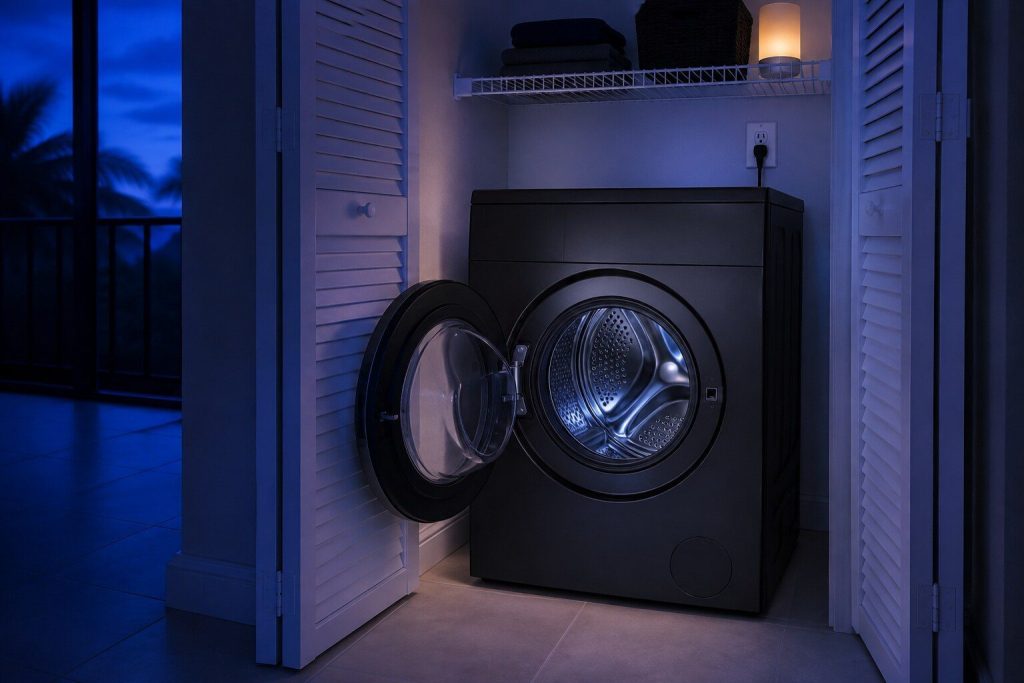
from $195 All-in-one washer and dryer repair
One drum that washes and then dries, in an apartment with a single water connection and no vent. Whirlpool publishes 129 pages for these machines with their own error code section, and they deserve it: the drying half is a condensing system that uses water, so a drain problem and a drying problem are the same problem more often than anyone expects.
- Washing and drying share one drum and one drain, so the diagnosis follows both
- This make publishes a dedicated code set for the all-in-one
- Long cycles are normal on these, and knowing that saves an unnecessary call
In more detail
About Whirlpool dryers
Three kinds of dryer, and they are not the same appliance
A vented dryer heats air, pushes it through the clothes and throws it outside. A heat pump dryer recirculates the same air through a refrigeration circuit that pulls the water out of it. A HybridCare machine sits between the two. Whirlpool documents all three and gives the compact heat pump machine its own section with its own codes, because a fix that makes sense on one is meaningless on another. The first question on any dryer call here is which of the three is in the room.
Why the vent is the story in South Florida
Whirlpool publishes AF as Check Vent, and in this city that code earns its place. Damp air makes lint stick to the inside of a duct instead of leaving with it, so the run silts up from the outside in and the machine slowly loses the airflow it needs to dry anything. The symptoms arrive in order: longer cycles, then a hot laundry room, then a machine that shuts itself down on the high-limit thermostat, then a blown thermal fuse. Every one of those is a repair, and every one of them has the same root. We check the duct on any no-heat or long-cycle call before quoting a part, because replacing the part without clearing the duct is selling the same repair twice. OEM parts are ordered against the model number, and exact cost is confirmed after the on-site diagnostic.
This article is based on:
- Official manufacturer documentation
- Internal repair procedures
- Technician repair history
- Company quality standards
Before you book
Questions about Whirlpool dryers
It runs a full cycle and the clothes are still damp.
On a vented machine this is airflow until proven otherwise, and Whirlpool agrees with that strongly enough to publish a code for it: AF, which its own pages label Check Vent. Pull the machine out and disconnect the duct at the back. If the clothes dry with the duct off, the restriction is in the run to the outside, not in the dryer. Then check the exterior flap, which seizes shut in this climate and packs solid behind it, and any flexible foil duct, which crushes behind the machine when it is pushed back into place. Only after airflow do you look at heat: the element, the gas valve coils, the thermal fuse and the cycling thermostat.
It heats sometimes and not others, or it stopped heating entirely.
A dryer that has stopped heating but still tumbles has power at one leg and not the other, or an open in the heat circuit. On an electric machine that is the heating element, the thermal fuse, the high-limit thermostat or a tripped half of a double breaker — and a breaker that looks on can still have failed on one side. On a gas machine it is the igniter, the flame sensor or the gas valve coils, in that order of likelihood. Important: the thermal fuse blows because the machine overheated, and it overheated because the vent was blocked. Replacing the fuse without clearing the vent buys you a few weeks.
Mine has no vent at all. What changes?
Everything downstream of the drum. The heat pump and HybridCare machines condense the moisture out of the air and either pump it to the drain or collect it in a drawer, so there is no duct to restrict and no exterior flap to seize. What replaces them is the condenser, which loads with lint and has to be cleaned on a schedule, and the drain path, which blocks. These machines also run cooler and longer by design — a two-hour cycle on a heat pump dryer is not a failure, it is how the technology works, and we say so rather than sell you a repair for it.
How often does the vent actually need cleaning here?
Once a year for a short straight run, and twice for a long one or one that climbs through a ceiling — which describes most condo installations in this city. Humidity makes lint pack rather than blow through, so a Miami duct loads faster than the same duct in a dry climate. Clean the lint screen every load, and wash it with soap once in a while, because dryer sheets leave a film on the mesh that you can feel but cannot see.
Where we do it
Across Miami-Dade, Broward, and Palm Beach
Same terms everywhere we go: an on-site diagnostic first, the price agreed in writing, and the exact figure confirmed once we have seen the unit.
Neighborhoods people ask for by name