Appliance
Whirlpool washers
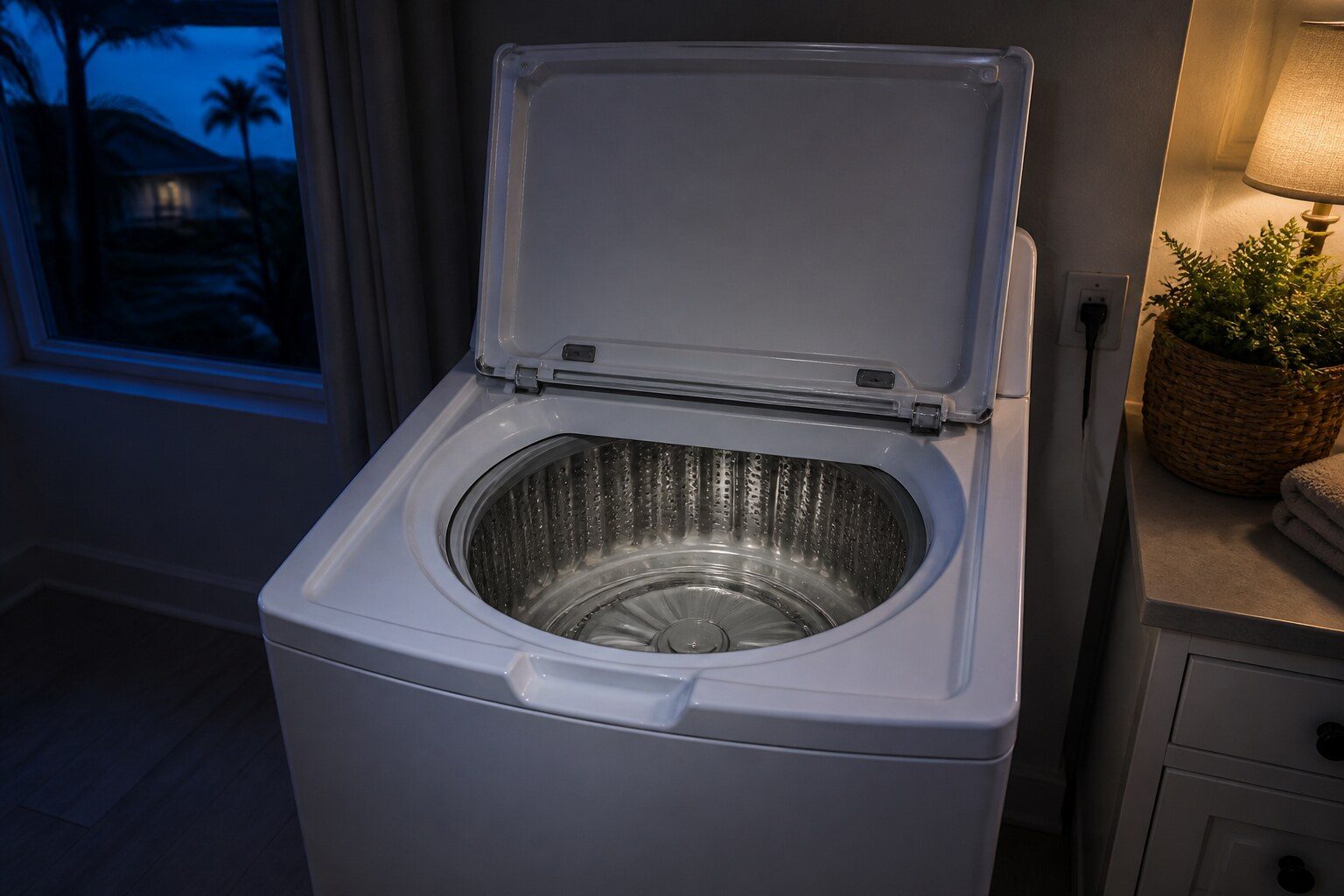
Laundry is the strongest part of this site, and the reason is measurable: Whirlpool's own support base carries 1,449 laundry pages, while the sister badge on the same control platforms publishes no laundry at all. For washers specifically there are 157 pages on the top loader with 68 code pages, 179 on the front loader with 59, 60 on the compact front loader, 204 on the laundry tower with 88, and a separate all-in-one washer dryer branch with 22 code pages of its own. That is five distinct machines with five distinct code lists, and the codes do not all carry the same meaning across them. Which machine the code came off is half the diagnosis.
- 6 symptoms we are called out to
- From $89 diagnostic, credited to the repair
- 59 cities and neighborhoods covered
- OEM parts available on order
The short version
What this equipment is, for a repair
Configurations
Top load · front load · compact front load · laundry tower · all-in-one washer dryer
Access
Planned before the visit, not discovered on arrival
Parts
OEM, available on order
Diagnostic
From $89, credited to the repair
What goes wrong with it
Symptoms we are called out to on Whirlpool washers
Each one covers the likely causes in the order they are worth checking, and what to do in five minutes before booking anything.
-
The cycle stopped and the drum is still full of water Washer will not drain
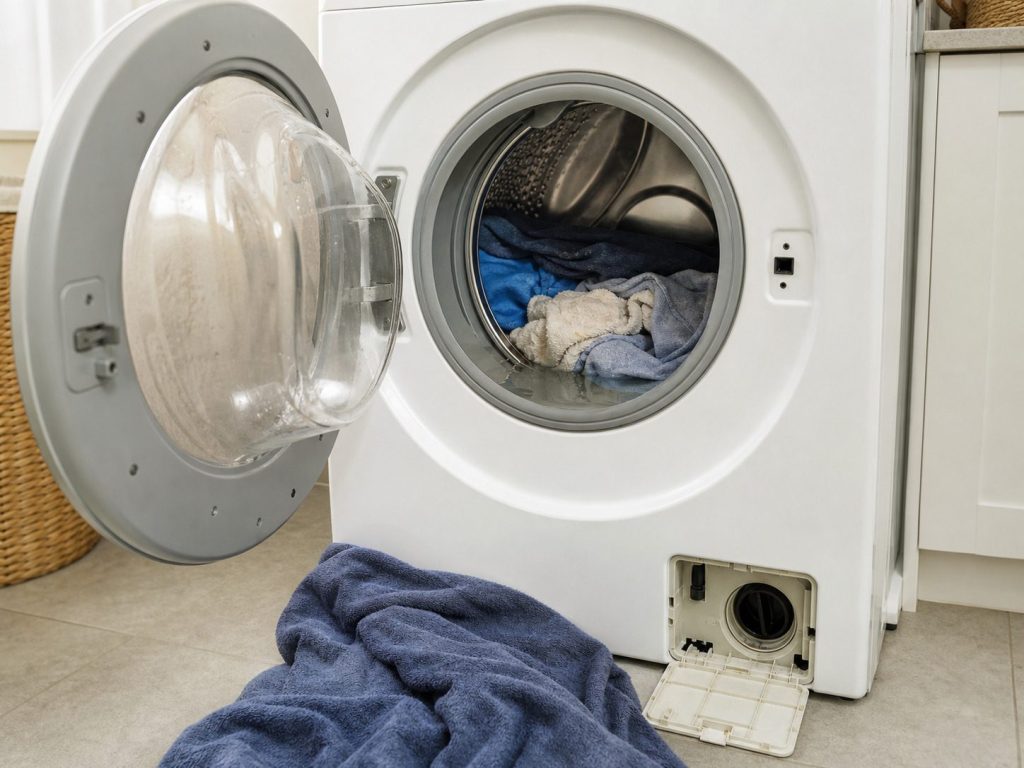
This is the one Whirlpool machine that tells you exactly what is wrong before anybody opens it. The washer times its own drain, and when the water has not gone in the time the cycle allowed, it stops and puts a name on the display. Read that name before you bail the drum out, because it is the difference between a coin in the pump and a control problem.
- Whirlpool's own label for a slow drain is a long drain, and it shows as Ld, F9 E1 or drn
- A drum still full at the end of a cycle is a pump or a hose question first, never a board question first
- The filter behind the lower access panel on a front-load machine is emptied over a towel, and there will be more water in it than anybody expects
-
The cycle finishes and the load comes out soaked Washer will not spin
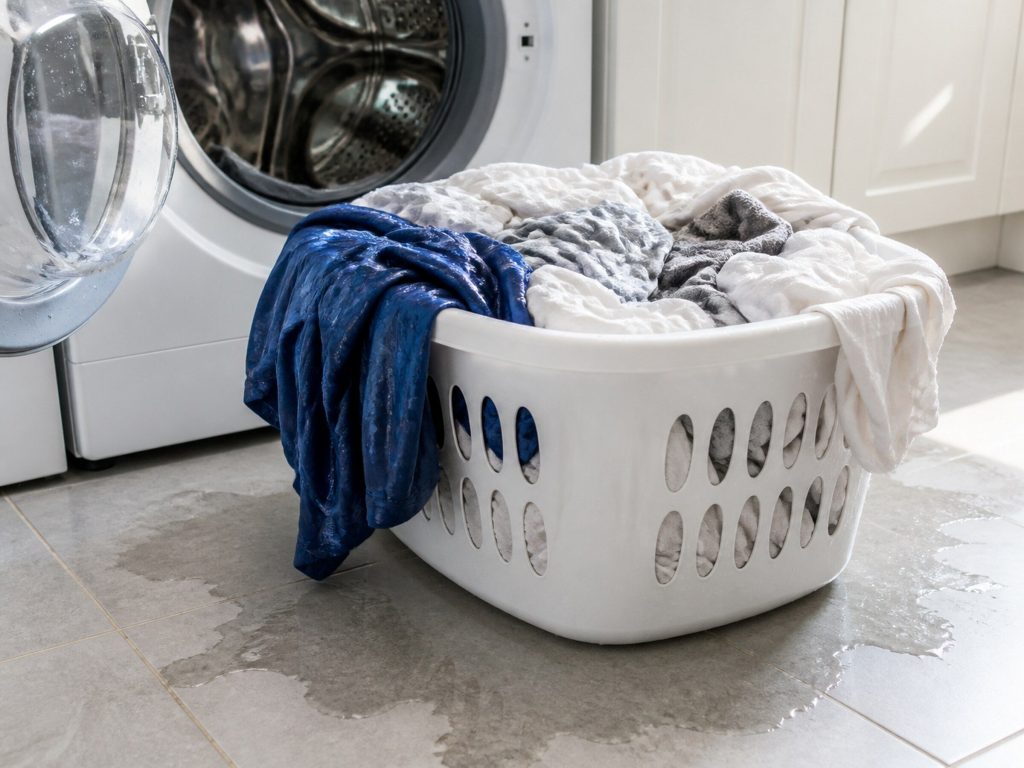
A load that comes out heavy and dripping has either not been spun or has been spun at a speed the machine chose for itself. Whirlpool machines lower the spin speed on their own when they cannot balance the drum, which is why a bath mat washed alone is the single commonest cause of this call, and the one that costs nothing.
- uL and oL are the machine telling you about the load, not about itself
- A top-load HE washer with no agitator balances by sensing weight, and one heavy item defeats it
- F7 E1 is a motor speed problem, and it is the point where the visit stops being free advice
-
Forty minutes on the display, three hours on the clock Washer cycle takes hours to finish
A Whirlpool washer does not run a fixed cycle. It measures, and it adds time whenever a measurement is not where it should be. So a cycle that keeps growing is the machine telling you it is repeating something — extra rinses to clear foam, extra fill attempts, extra drain attempts — and each of those has its own name in the maker's own table.
- The time on the display is an estimate the machine revises, not a countdown
- Sud is the most common reason a wash doubles in length, and the cause is usually the detergent
- A slow fill and a slow drain both add time before either shows a code
-
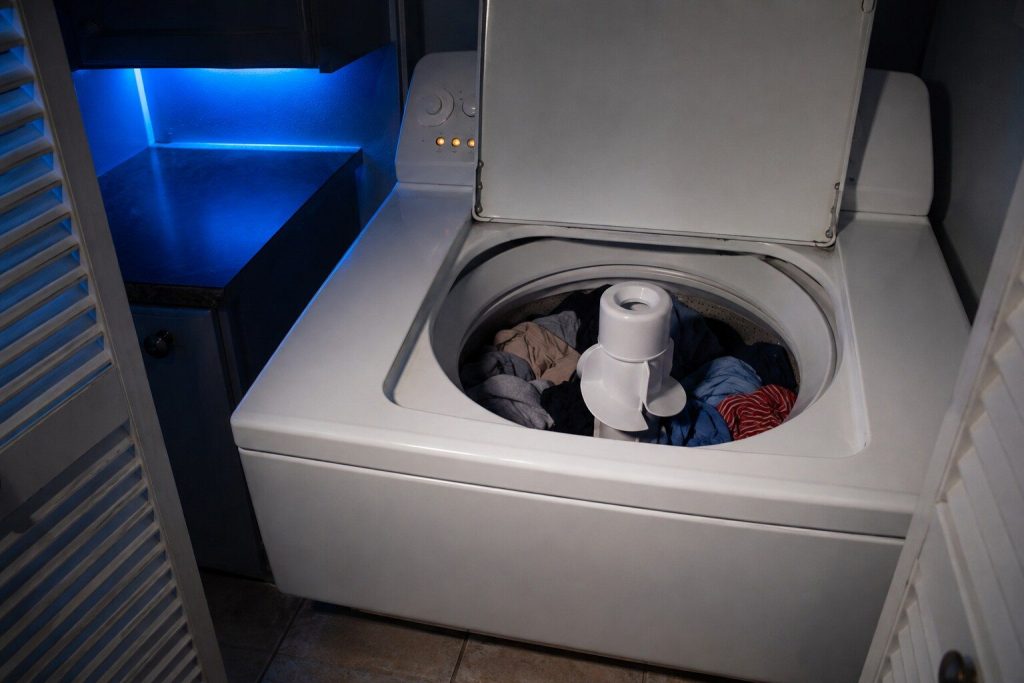
The cycle starts, the drum stays empty Washer will not fill, or fills too slowly
Whirlpool washers watch the water arriving and stop when it does not. The machine gives this one three different labels depending on how old it is and which control it has — LF, Lo FL and F8 E1 are one finding under three names, and the maker's own wording is that the washer is taking too long to fill or is not detecting the right amount of water coming in.
- LF, Lo FL and F8 E1 are the same condition, spelled three ways
- HC and F3 E2 mean the hot and cold hoses are on the wrong way around, which happens on every move
- The problem is on the wall more often than in the washer
-
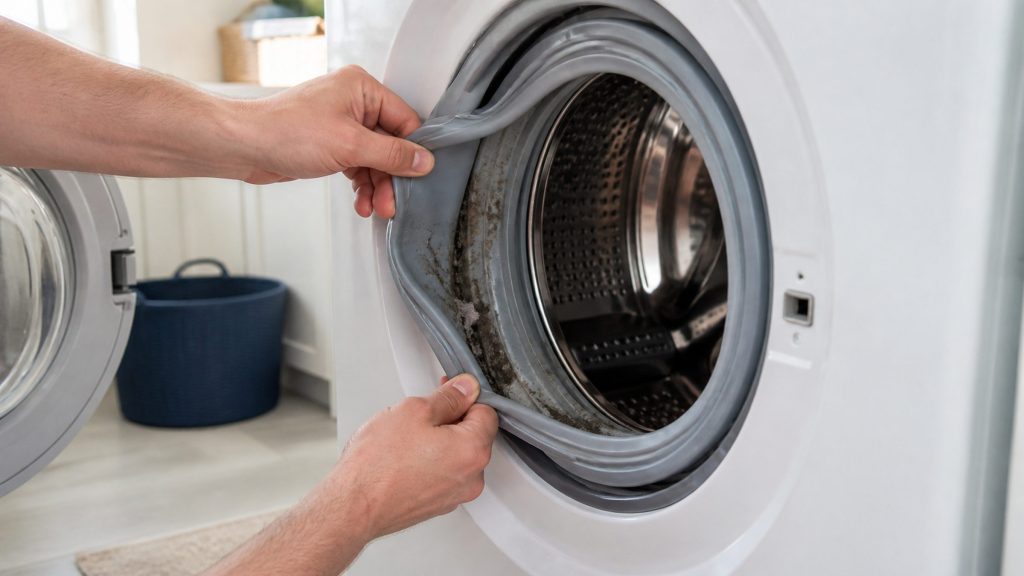
The laundry comes out of a clean machine smelling worse than it went in Washer smells musty
This is the most South Florida call on this whole site. A front-load washer holds a small amount of water in the door seal and the drain path by design, and nine humid months a year keeps a closed laundry closet at a temperature and a humidity where that water grows something. The machine is not broken. It is being asked to dry out in a room that never does.
- The odor lives in the door gasket and the dispenser, not in the drum
- A washer in a closed laundry closet in August never dries out between loads
- Whirlpool publishes a Clean Washer cycle and a CL reminder for exactly this
-
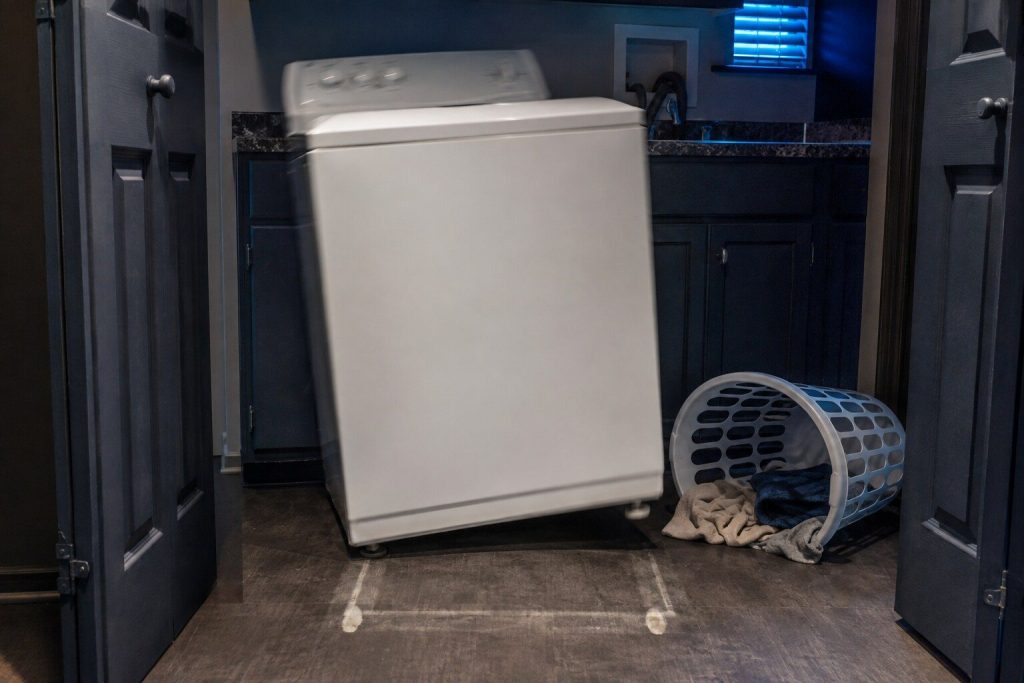
The whole laundry closet shakes at the end of every cycle Washer walks across the floor or bangs on spin
A washer that moves is telling you something specific: the drum is spinning a load it cannot balance, on a cabinet that is not sitting square. Whirlpool publishes three separate pages on vibration for a reason — it is a common report, and the first two causes are things anybody can check with their hands.
- Leveling comes first, and a washer over a tile floor moves out of level on its own
- A machine that bangs on every spin will eventually destroy its own suspension
- Shipping bolts left in a new front-loader produce a noise nobody forgets
What we do on it
Repairs we carry out on Whirlpool washers
Starting figures for this equipment in South Florida. The exact cost is confirmed after an on-site diagnostic — and this is not the whole list of what can go wrong, so call if your problem is not here.
-
from $89 Diagnostic visit
One visit, one technician, one answer in writing. On a Whirlpool the first question is whether the appliance is talking, because this make is not evenly talkative. It publishes a separate page for every code on its ranges, its ovens, its cooktops, its washers and its dryers, and it publishes almost nothing of the kind for its refrigerators and freezers. Knowing which half of the house you are standing in changes how the visit starts.
- Whether this appliance talks at all decides how the visit starts
- Laundry and cooking almost always have a code; the cold side almost never does
- Whatever we find goes to you in writing, and the visit comes off the repair
-
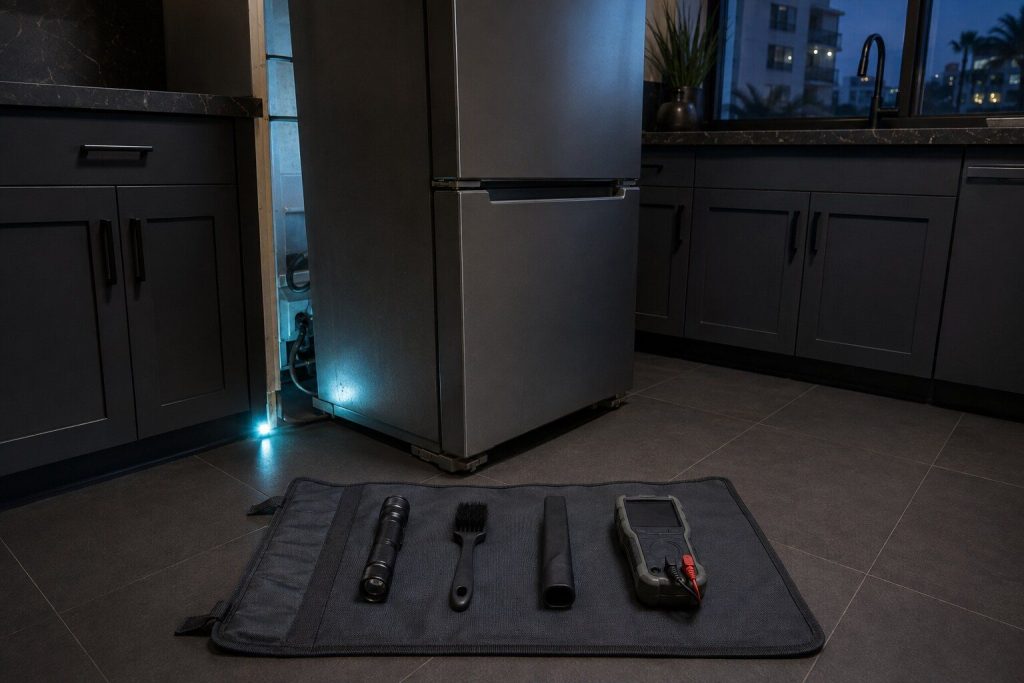
from $119 Appliance maintenance
Nothing on this list saves an owner more money and nothing is booked less often. Whirlpool builds appliances that will run for fifteen years in an ordinary house, and what usually ends them early is a maintenance item rather than a design one: a coil under a blanket of dust, a drain pump filter that has never once been opened, a duct that has closed a little further every year. This make publishes cleaning instructions for every one of those. Almost nobody has read them.
- One visit across everything you own, priced on time rather than per machine
- The washer drain pump filter, which is the most neglected part in South Florida
- You keep a written list of what is closest to failing
-
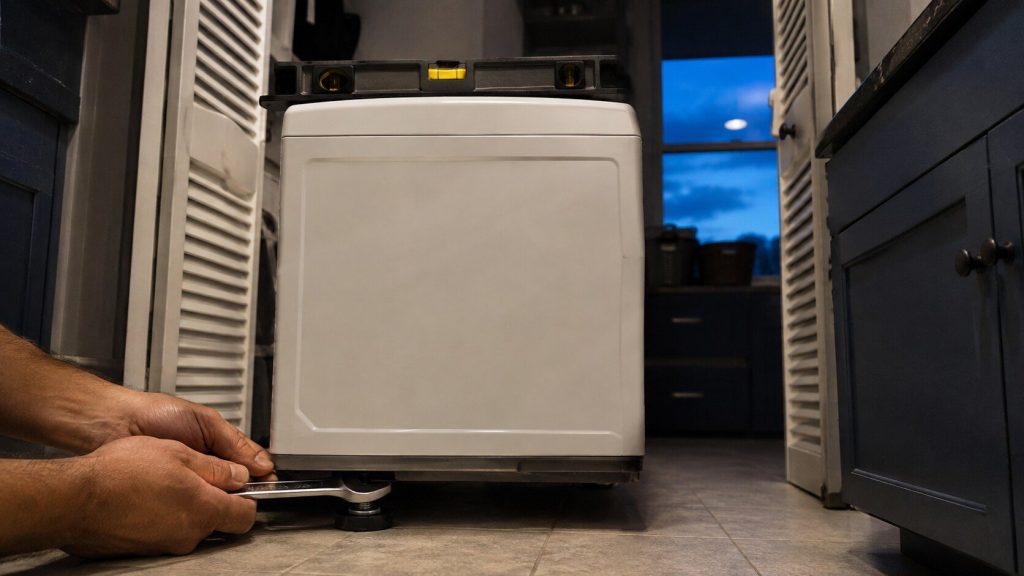
from $139 Appliance installation
Most installations on this make are replacements, and that is worth saying out loud. The owner has just weighed a two-hundred-dollar repair against a nine-hundred-dollar machine and chosen the machine. What decides whether the new one is still working in eight years is the hour after it arrives: whether the opening was measured, whether the duct behind it was cleared, whether anyone put a level on it. A delivery crew is not paid for that hour and does not stay for it.
- The hour after the delivery truck leaves, which is the hour nobody is paid for
- Leveling done with a level and the lock nuts tightened, on every machine that has feet
- Gas joints leak-tested and the result written down
-
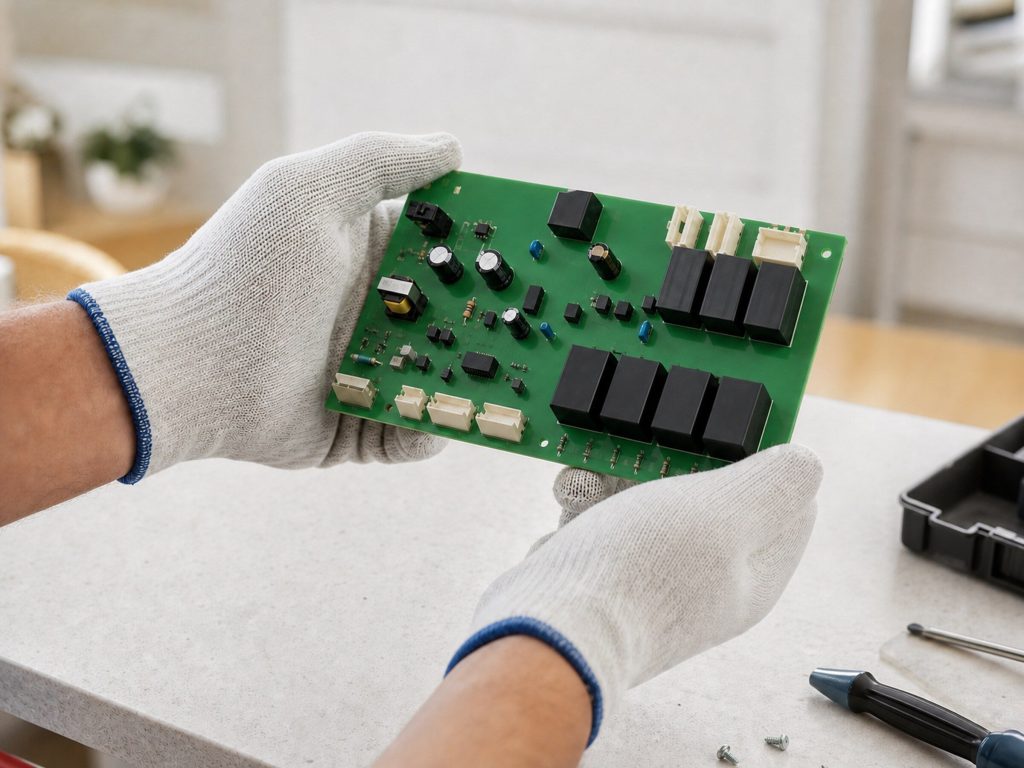
from $265 Appliance control board repair
The board is where a Whirlpool reports from, and it is also the part that gets blamed for everything else. Whirlpool runs the same control architecture across its whole line, which is why an F#E# code looks familiar on a range and on a washer — but a board that has died usually died of something, and replacing it without finding that something buys you a few months.
- A board that died usually died of something, and that something kills the next one too
- Browned connectors and pins backed out of a housing are cheap; boards are not
- Whirlpool revises these mid-production, so the order goes out against the serial
-
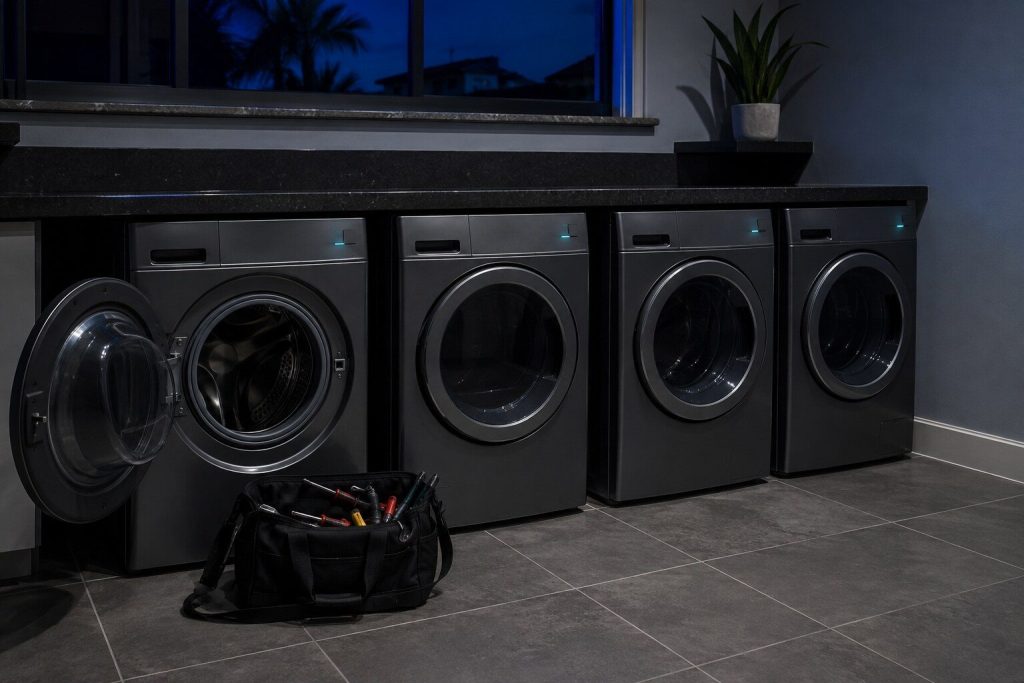
from $159 Commercial appliance repair
Whirlpool's commercial line is laundry, and that is the honest scope of this page. The make's own support base carries a commercial branch of 142 pages — coin and card washers and dryers — and nothing comparable for its kitchen appliances. So this is the work we take on in building laundry rooms, short-let blocks, small gyms and staff facilities: machines built on the domestic platforms, run at a duty cycle the domestic ones never see.
- This make's commercial equipment is laundry, so that is what this page covers
- A machine out of service costs the building money every day it stays out
- Coin and card mechanisms included, since that is what stops the revenue
-
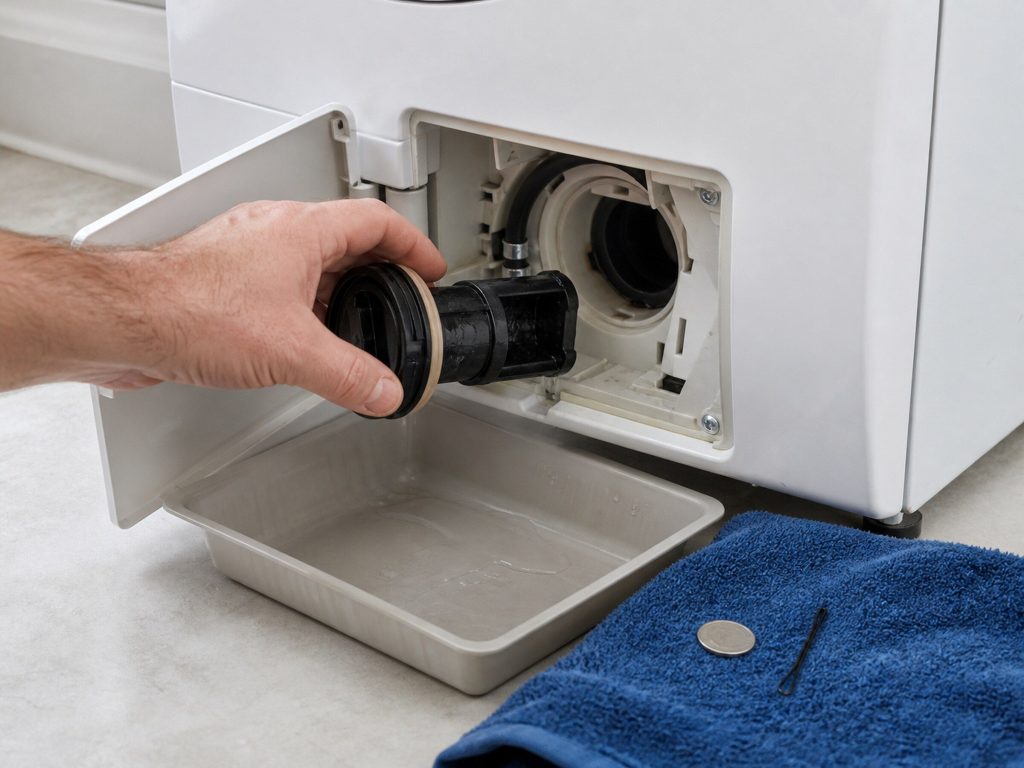
from $175 Washer drain pump replacement
The drain pump is the single most replaced part in Whirlpool laundry, and about half the time it did not need replacing at all. This make publishes a drain error, a long-drain code and its own page on cleaning the drain pump filter, and on a front loader that filter is behind a little door at the bottom right that most owners have never opened. What comes out of it is coins, hair clips and lint felted into a plug.
- Nobody condemns a pump on this make before that little door at the bottom is opened
- Whirlpool publishes both a drain code and a long-drain code, and they read differently
- Commodity part on the volume brand — it is in the van or half an hour away
-
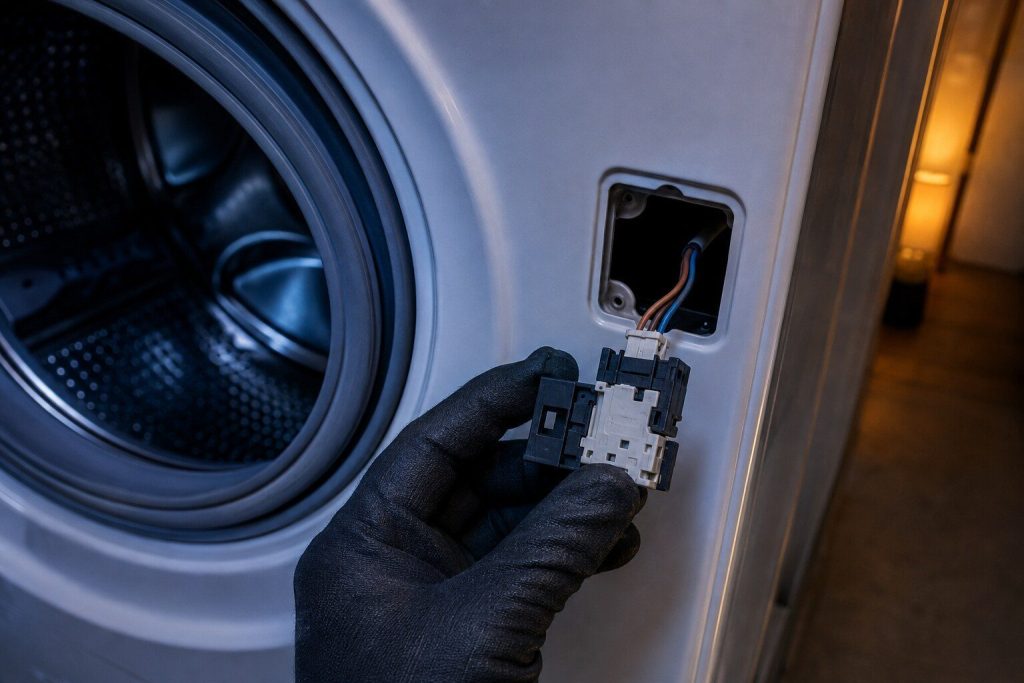
from $145 Washer door lock repair
A front-load Whirlpool will not fill until its door lock reports locked, and will not open until it reports unlocked, so a failing lock produces a machine that either refuses to start or holds your laundry hostage. Whirlpool publishes both cases — door will not lock, door will not unlock — as separate pages, along with the codes that accompany them.
- A machine that beeps and does nothing is usually here, not on the board
- This make publishes separate pages for will-not-lock and will-not-unlock
- The strike alignment is corrected, or the new lock fails the same way
-
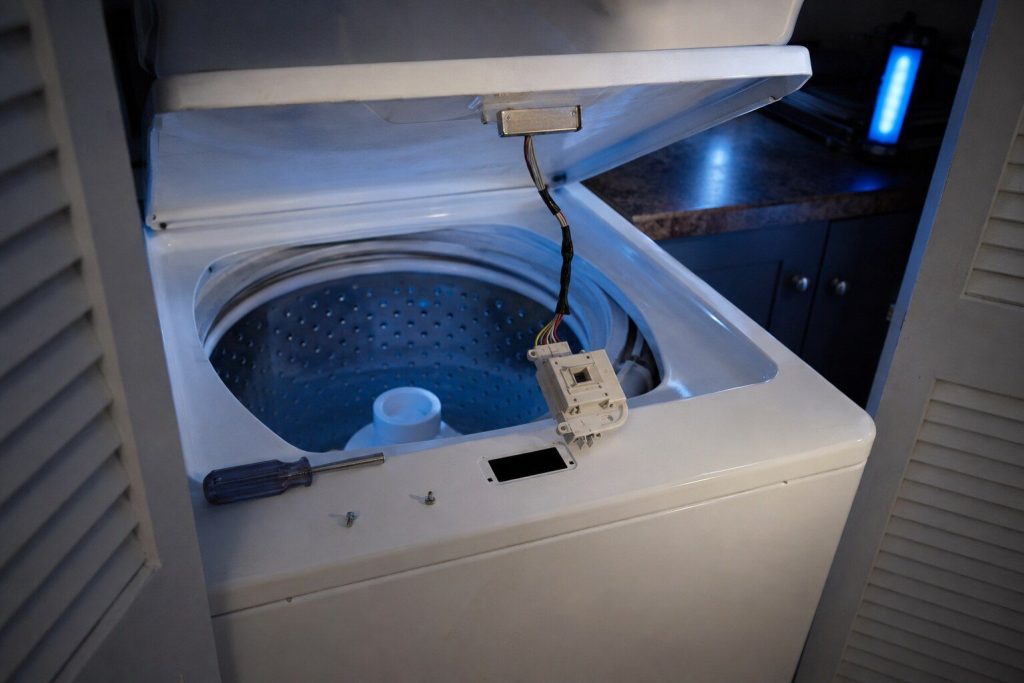
from $139 Washer lid lock and lid switch repair
Top loaders are half of Whirlpool's washer base — 157 support pages against 179 for front loaders — and their lid lock is a different part with a different failure than a front-load door lock. A modern Whirlpool top loader locks the lid before it agitates and will not spin with the lid unlocked, and this make publishes several separate lid-related readings for it, including a lid light that flashes on its own.
- A top loader that fills and then stops before spinning usually starts here
- This make publishes distinct lid-lock and lid-open readings, and they are not the same part
- The lid strike and the hinge are checked, because a sagging lid kills locks
-
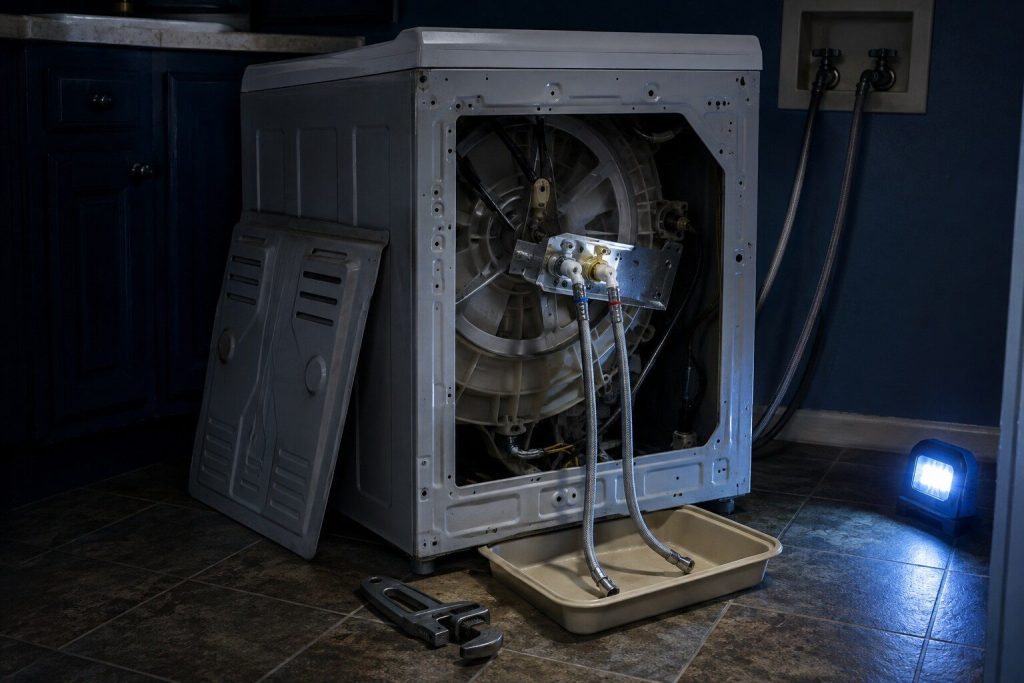
from $139 Washer water inlet valve repair
A washer that fills slowly, will not fill, or fills and drains at the same time is reporting on the water side, and Whirlpool is unusually explicit about it: this make publishes a long fill reading, a no-water-detected reading, a low-flow reading and a code specifically for the water supply. That is a great deal of published information for one circuit, and it is worth using before anything is opened.
- Screens, hoses and household pressure come before the valve
- This make names long fill and no water detected as separate readings
- Both hot and cold sides are tested, because one closed tap reads as a broken machine
-
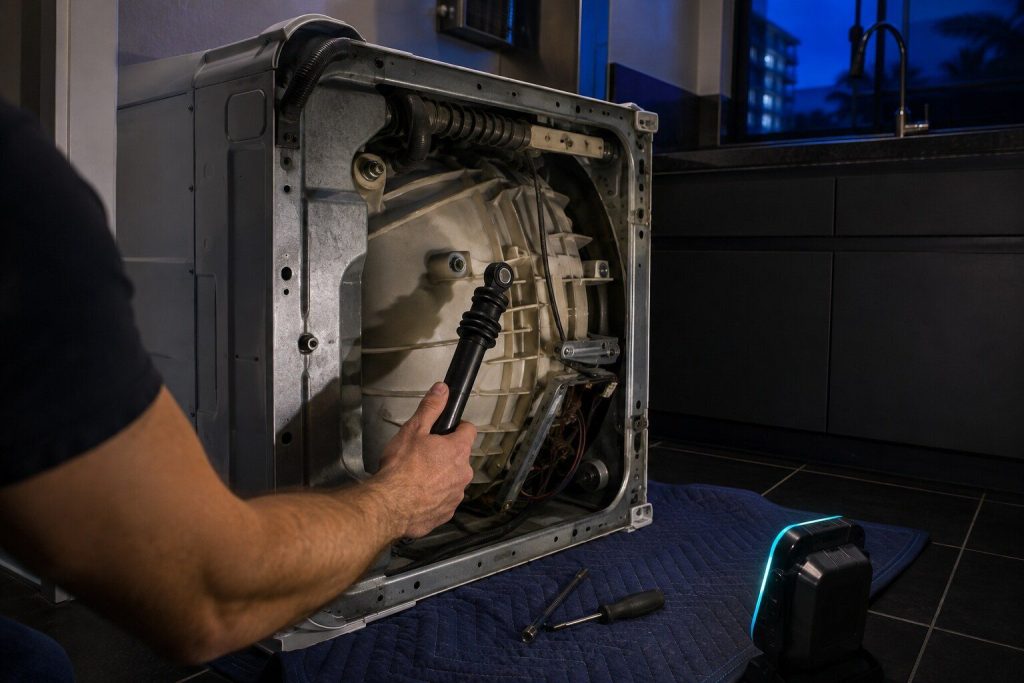
from $195 Washer not spinning and balance repair
A load that comes out soaked is not always a spin failure. Whirlpool machines abort or reduce spin deliberately when they cannot balance the drum, and this make publishes an unbalanced reading and an overload reading as separate things from an actual mechanical problem. Reading the difference correctly is what keeps this from becoming an unnecessary parts bill.
- Unbalanced and overloaded are published readings and they are not part failures
- Suspension, dampers and the shipping bolts are checked before the drive
- Leveling is part of the repair, not an afterthought
-
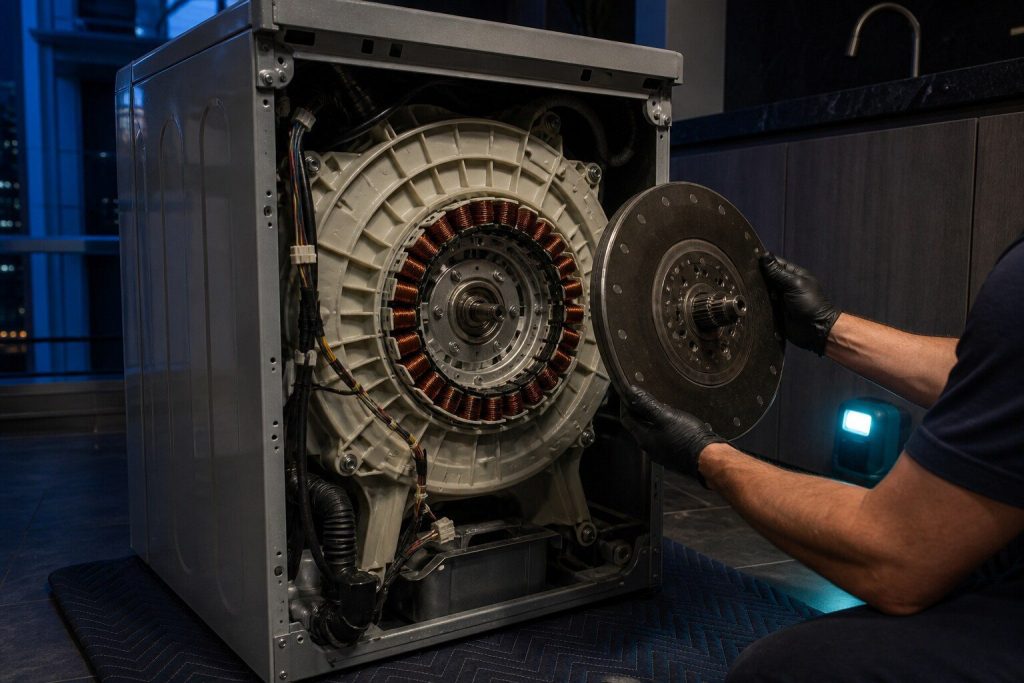
from $265 Washer motor and drive repair
The drive is what turns the drum, and on Whirlpool it takes more than one form: a direct-drive top loader with a shift actuator that decides between agitate and spin, and a belted front loader with a motor and a control. They fail differently and they cost differently, so the first job is establishing which machine is in front of us.
- Top-load and front-load drives are different jobs with different figures
- The shift actuator is a small part that mimics a large failure on a top loader
- Motor control and motor are tested separately
-
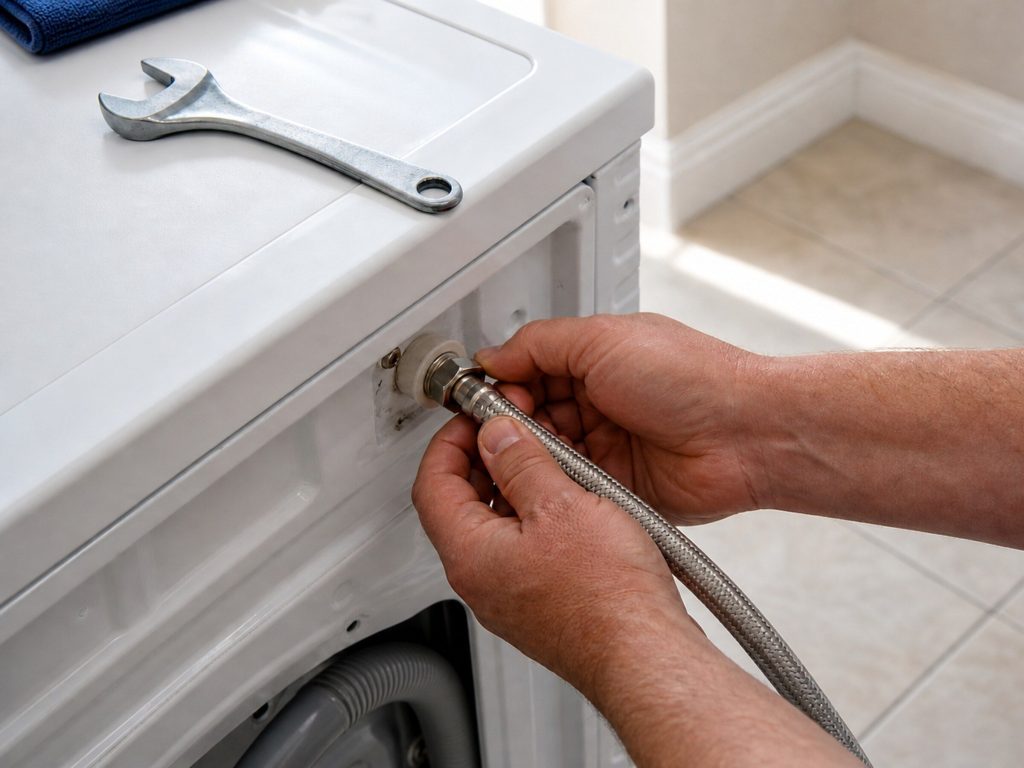
from $155 Washer leak repair
Whirlpool publishes leak pages by location — from the front, from underneath, from the back, from inside — and that is exactly the right way to think about it, because location names the part. A leak from the back is usually a hose connection. A leak from the front on a front loader is usually the door boot. They are not the same money.
- Whirlpool sorts its own leak pages by location, and that is the right instinct
- The door boot is the commonest front-load leak and it is a contained repair
- Detergent overdosing causes leaks that look like a broken machine
-
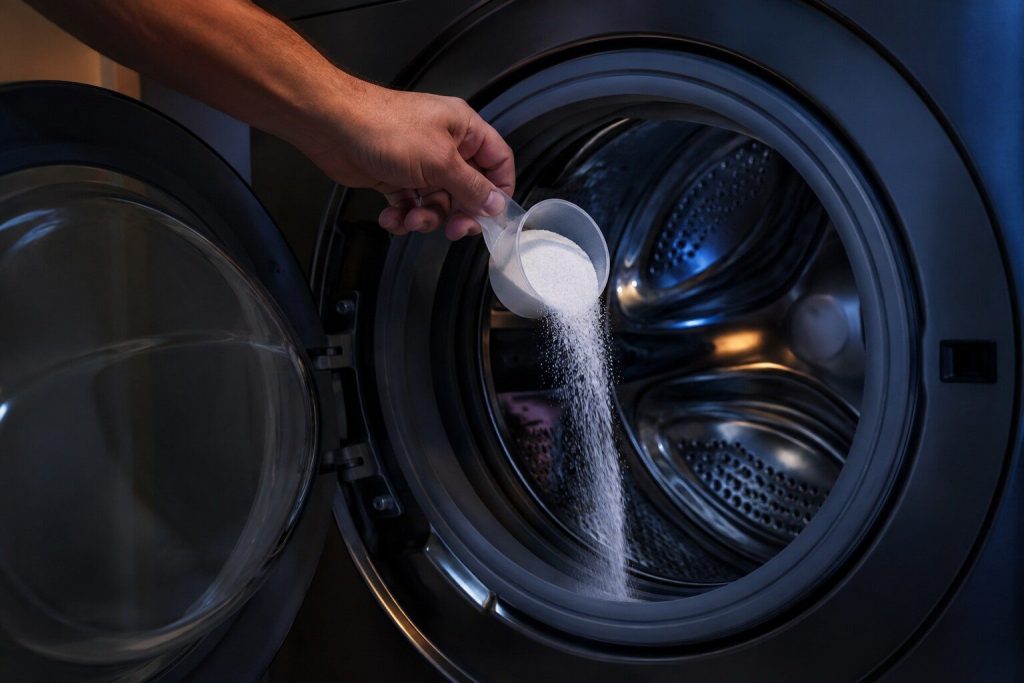
from $99 Washer excess suds service
This is one of the few repairs that usually ends without a part, and it is worth its own page because Whirlpool publishes a specific reading for it on both its top and front loaders. Too much detergent, or the wrong kind, produces a foam blanket that the machine cannot pump, so it pauses, adds rinses, extends the cycle, and eventually reports. The owner sees a slow machine and assumes a pump.
- A published reading on this make, not a guess about your detergent
- Long cycles and poor rinsing usually arrive together with this
- Ends with a purge and a dosing conversation more often than with a part
-
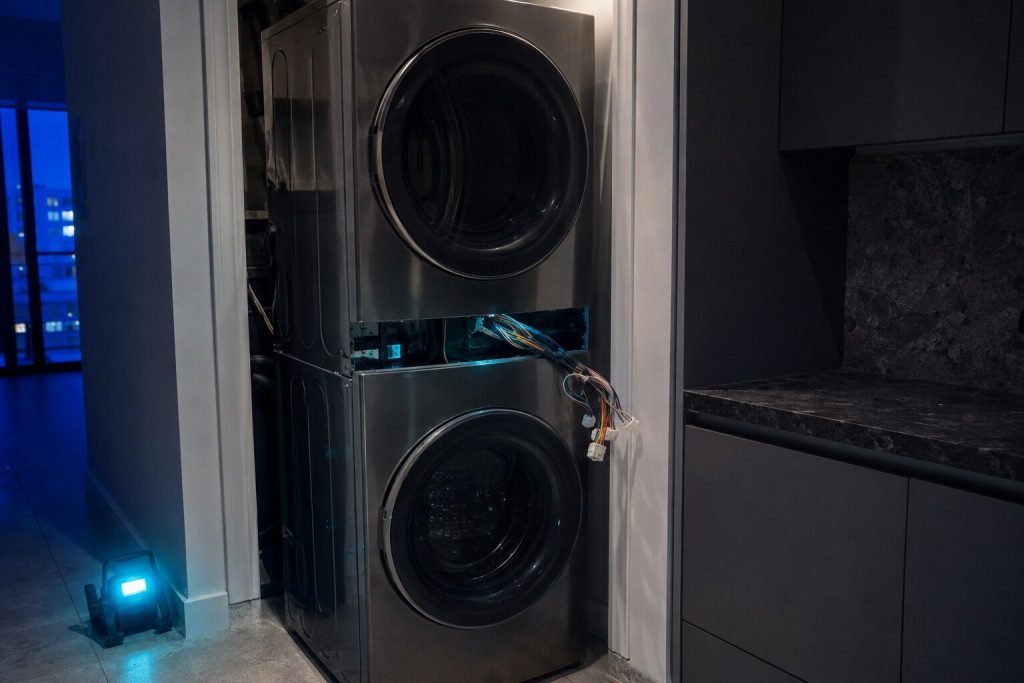
from $185 Laundry tower and stacked center repair
Two machines behind one panel, in a closet built exactly their size. Whirlpool's Laundry Tower and its stacked laundry centers together account for 310 pages of this make's own support base — more than its front-load washers — and they are their own repair discipline. The first task is always establishing which half has the problem, because on a shared control one half can report on behalf of the other.
- Which half has failed is established before anything is opened
- Access is planned first: these live in closets with no room to work
- This make publishes an extensive code set specifically for the Laundry Tower
-
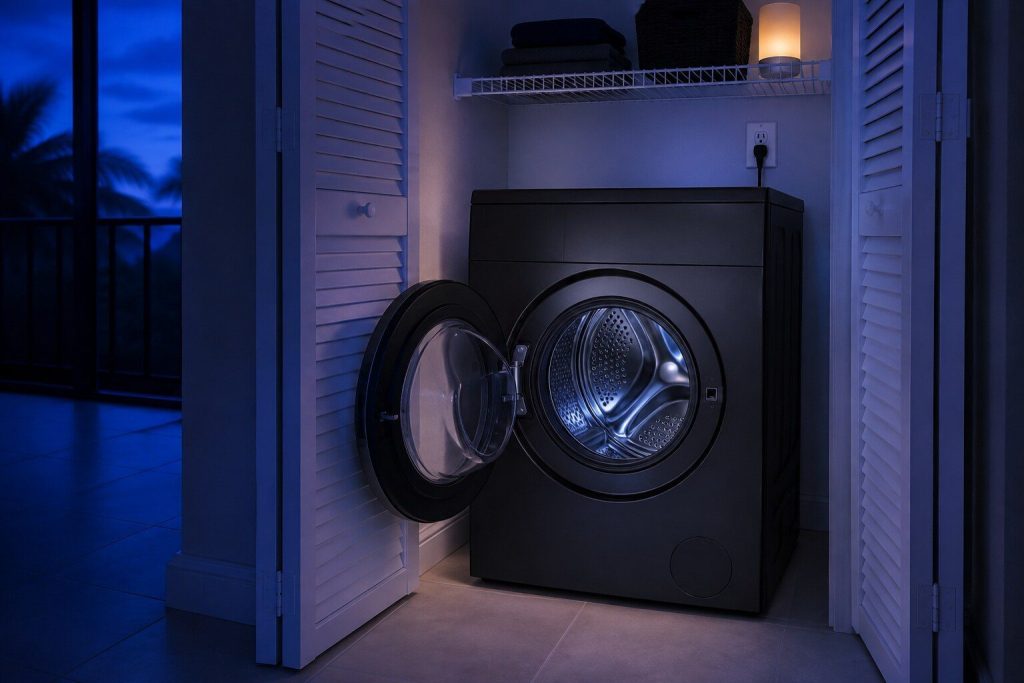
from $195 All-in-one washer and dryer repair
One drum that washes and then dries, in an apartment with a single water connection and no vent. Whirlpool publishes 129 pages for these machines with their own error code section, and they deserve it: the drying half is a condensing system that uses water, so a drain problem and a drying problem are the same problem more often than anyone expects.
- Washing and drying share one drum and one drain, so the diagnosis follows both
- This make publishes a dedicated code set for the all-in-one
- Long cycles are normal on these, and knowing that saves an unnecessary call
In more detail
About Whirlpool washers
Five machines, five code lists
Whirlpool's laundry branch is the largest single part of its support base, and it does not treat these machines as one product. The top load washer, the front load washer, the compact front loader, the laundry tower and the all-in-one washer dryer each have their own error code section, and the F-and-E pairs that look identical between them do not always point at the same part. On top of the numbered codes there is a whole published vocabulary of short words on the display — Sud, dU, drn, Ld, LdL, LdU, LF, oL, uL, Lid, PF, HC — and a set of light patterns for machines that never had a display to begin with. Reading the panel correctly is the first real step, and it is why we ask you to write down exactly what it says, spaces and all.
Why laundry is what this badge is for
Whirlpool is the volume brand of its own corporation, and nowhere is that more obvious than in a laundry room. These are the machines in the apartment buildings, the rental duplexes and the family houses across Miami-Dade, Broward and Palm Beach, and they are the machines whose pumps, lid locks, suspension rods, door boots and inlet valves are already on the van rather than five days away. That is not a small thing when the laundry has stopped on a Saturday. We order OEM parts against the model number, and exact cost is confirmed after the on-site diagnostic, which is credited toward the repair.
This article is based on:
- Official manufacturer documentation
- Internal repair procedures
- Technician repair history
- Company quality standards
Before you book
Questions about Whirlpool washers
It fills, washes, and then sits there full of water.
Whirlpool publishes a drain condition on every one of these machines, and on the top loader it appears as drn and as the Ld and LF codes around it. The sequence is the same regardless of shape. Look behind the machine for a drain hose that has been kinked against the wall or pushed too far down the standpipe. Then clean the pump filter, which on a front loader is behind a small door at the bottom right and on many top loaders is reached from underneath. Then run a drain and spin and listen: a pump that hums and moves nothing is blocked, and a pump that is silent has failed. The filter costs nothing and it is the single most productive ten minutes in laundry.
Sud or Sd keeps appearing and the cycle takes forever.
That one is published on both the top loader and the front loader, and it is almost always detergent rather than a failed part. These machines use very little water by design, and a normal dose of ordinary detergent in a high-efficiency machine produces a foam blanket the sensors read as a problem. The machine then adds rinses to clear it, which is why the cycle stretches. Use HE detergent, use about a tablespoon, and run a tub clean cycle to clear what is already in there. If Sud appears on a machine with correct detergent, the drain is slow and the suds are not clearing, and that is back to the pump and filter.
The lid lock light flashes, or the door will not open.
Whirlpool publishes several separate conditions here — a flashing lid light, a flashing lid lock, and the LdL and LdU codes — and they are different problems. A lock that will not engage stops the cycle before it starts; a lock that will not release strands you with a full machine. Cut power at the breaker for five minutes first, which releases most of them. If it returns, it is the lock assembly or the switch inside it, and both are parts. What is not worth doing is forcing a locked lid: the striker is plastic and the panel around it is not.
It walks across the floor on the spin.
Three things in order. Leveling first, and properly — all four feet in contact with the floor, the lock nuts tightened up against the cabinet, and no shimming with cardboard. Then the load, because one heavy item like a bath mat will move any machine ever built. Then the suspension: the struts on a front loader and the suspension rods on a top loader both go soft with age, and a machine that bangs on every load including balanced ones has worn them out. Whirlpool publishes an unbalance condition — uL and oL — for exactly this, and on the newer machines it will stop the spin rather than let the cabinet move.
Where we do it
Across Miami-Dade, Broward, and Palm Beach
Same terms everywhere we go: an on-site diagnostic first, the price agreed in writing, and the exact figure confirmed once we have seen the unit.
Neighborhoods people ask for by name