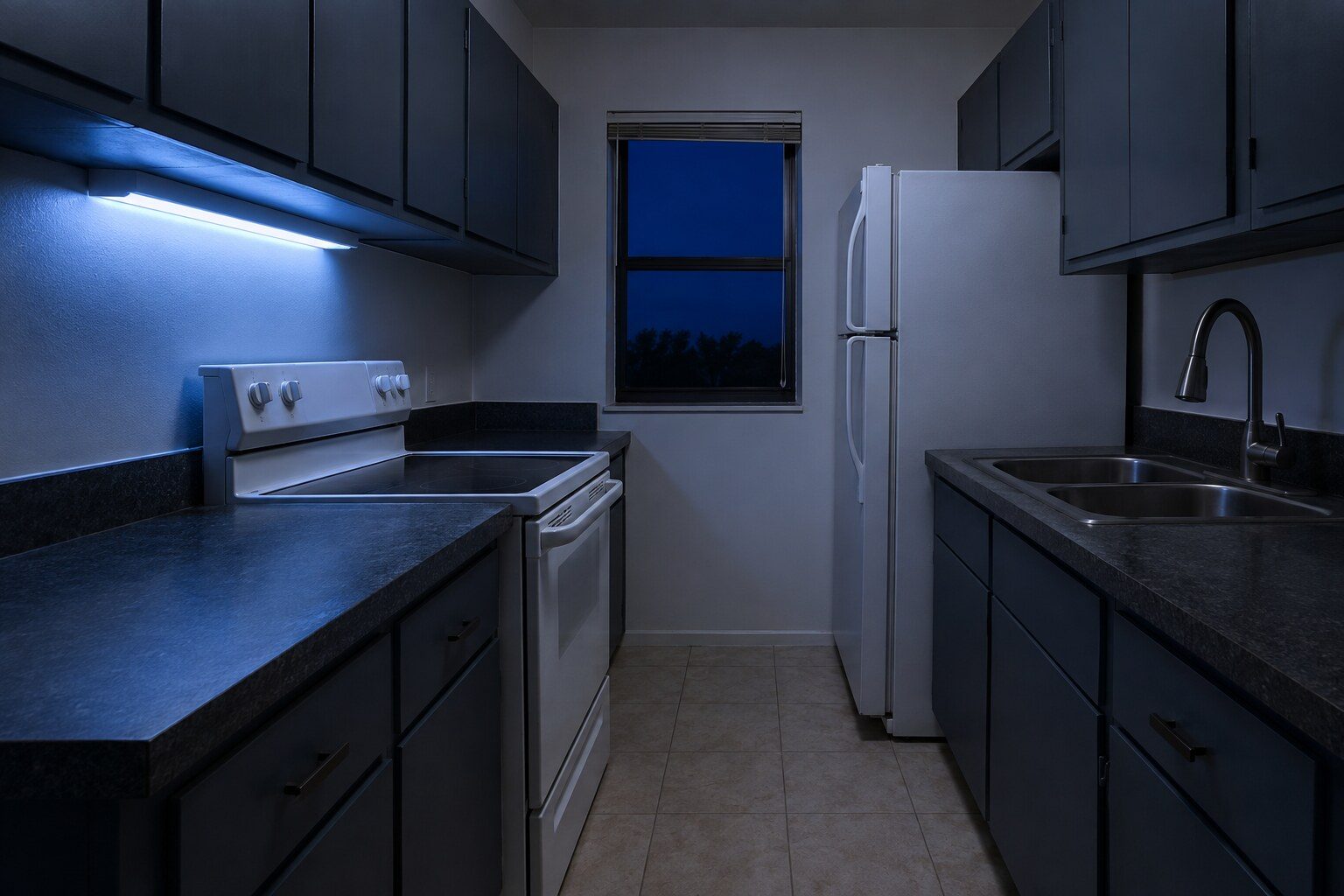
WhirlpoolRepair Miami

Miami-Dade · Broward · Palm Beach

Whirlpool repair in Miami, on the most common appliances in this city, not the most expensive.

This is the make in the rented condo, in the second kitchen, in the laundry closet behind a louvered door. Its parts are stocked in this county rather than ordered from anywhere, which is why an ordinary repair here is usually one visit and one figure. It is also unevenly talkative: at the range and in the laundry room it will normally tell you what is wrong, and at the refrigerator it will tell you almost nothing. We work differently in those two rooms, and this page says how.

  • 11 appliance types we cover on this make
  • 48 jobs with a published figure
  • 599 code pages read from the maker's own base
  • from $89 diagnostic, credited to the repair

Start from the appliance

What we repair

11 appliance types, and each card says what the work on that one actually involves — including the three where this make publishes no error codes at all and the page says so instead of pretending.

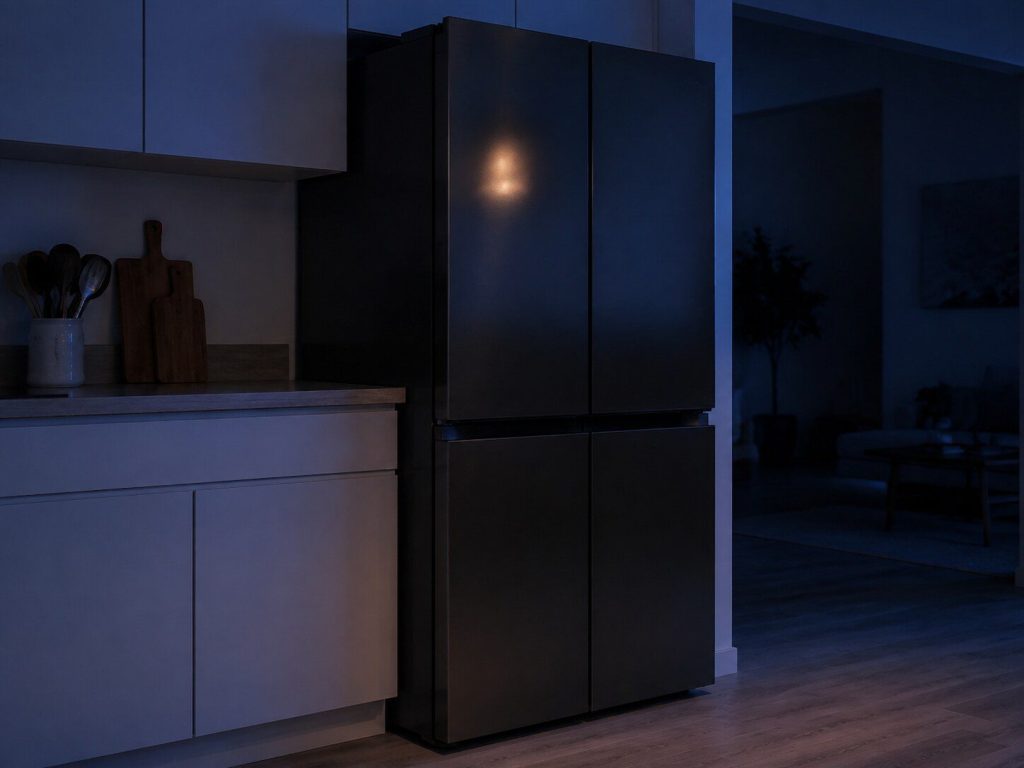
  • "A tall four-door French door refrigerator standing flush at the end of a run of flat slab-front kitchen cabinets" — freestanding rather than an integrated column, and the French door cabinet is the branch this make publishes most on
    French door · side-by-side · top freezer · quad door · all-refrigerator

    Refrigerators

    This is the most common refrigerator in South Florida and the least documented appliance Whirlpool sells. Its own support base carries 156 pages on French door cabinets and 140 on side-by-side, but only 24 and 9 of those are code pages, and on the top-freezer cabinet — 82 pages — there are none at all. That is not an oversight in our research. It is how the make works: Whirlpool talks when it cooks and washes, and it goes quiet when it chills. So a refrigerator call here starts with measurement rather than with a display. Temperatures in both compartments, air at the vents, the state of the defrost circuit, and the door seal that this climate takes apart faster than any other part of the machine.

    • French door, side-by-side, top freezer, quad door and all-refrigerator cabinets
    • 24 code pages on French door, 9 on side-by-side, none on top freezer
    • Indicator lights do most of the reporting: cooling off, door alarm, air filter, H2O
    Refrigerator repair
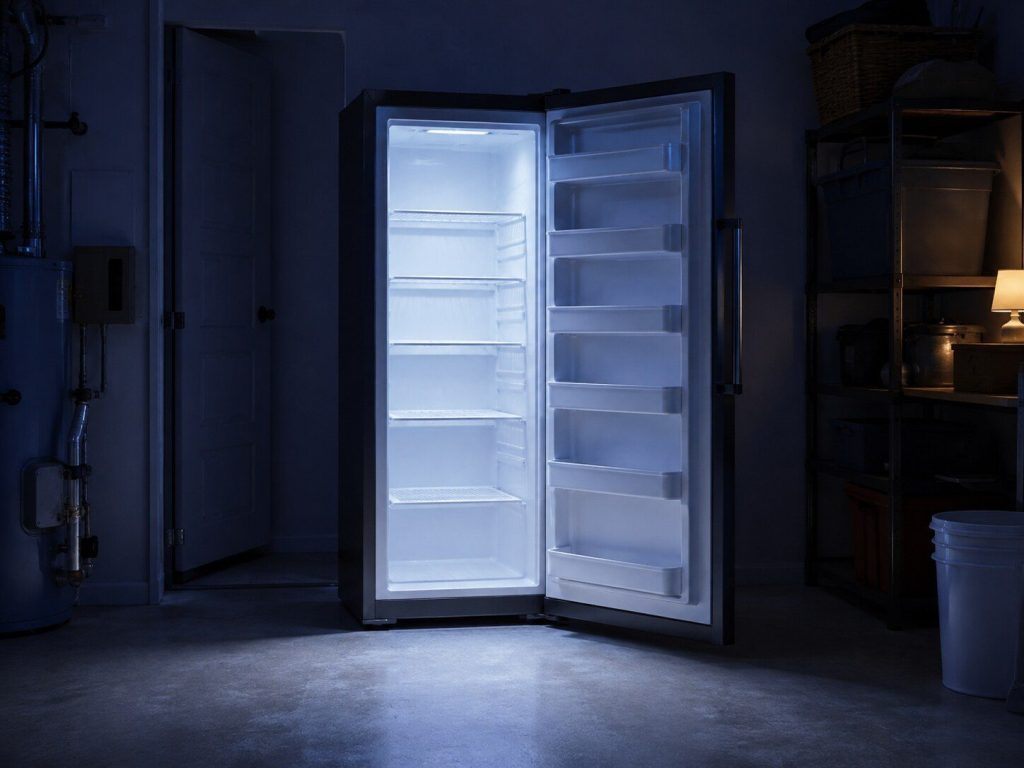
  • "A tall single-door upright freezer standing against the wall of a utility room with its door open" — the standalone upright, which is what this make's freezer branch actually is
    Upright · chest · convertible chest · the freezer side of a full-size cabinet

    Freezers

    Whirlpool sells standalone freezers as its own product family and publishes 63 pages on the upright, 46 on the chest and 46 on the convertible chest freezer that can be switched to refrigeration. Not one of those 155 pages is a code page. There is no error code list for a Whirlpool freezer, because there is nothing on the front of most of them to display one. What Whirlpool writes about instead is exactly what goes wrong: 25 pages on operation, 11 on noise, 8 on cleaning, 5 on frost, 5 on doors and 3 on leaking. That is the real service list for this appliance, and it is the list we work through.

    • Upright, chest, and convertible chest freezers that switch to refrigeration
    • Zero code pages across 155 freezer pages — this machine reports by behavior
    • Frost, door seal, temperature control and the defrost drain are the whole short list
    Freezer repair
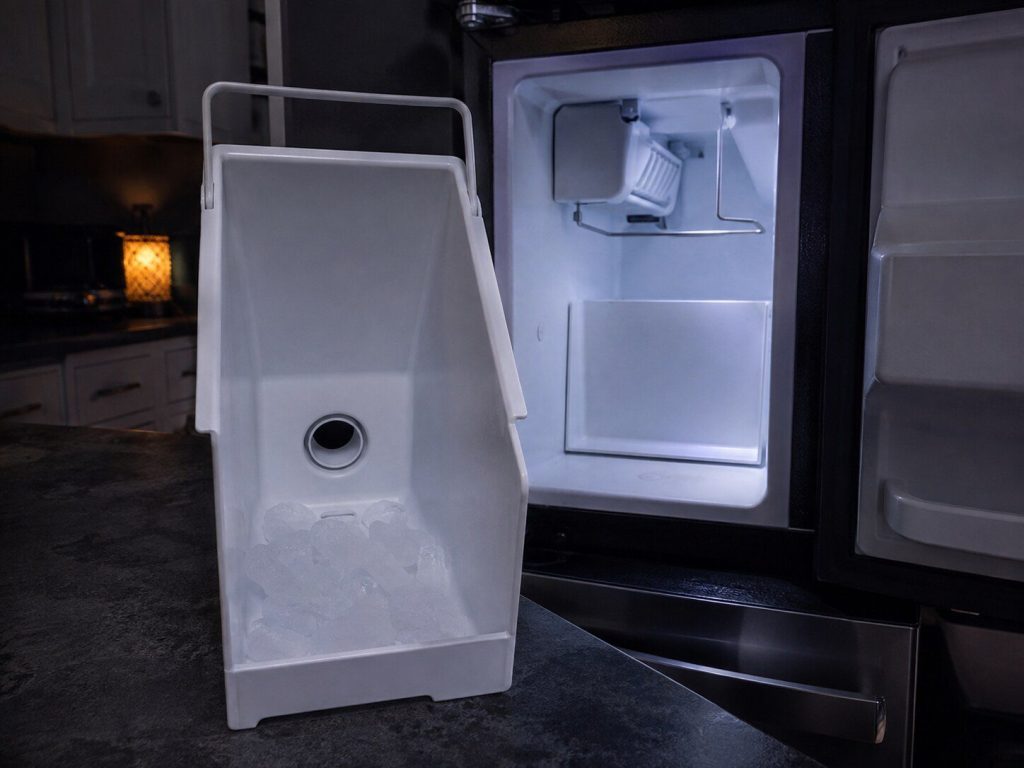
  • "A deep narrow white plastic ice storage bin ... lifted out and standing on a dark kitchen counter, with the empty ice compartment" — this make's ice maker lives inside the refrigerator, so the bin is the honest subject and not an undercounter bar machine
    The ice maker inside the refrigerator, and the freestanding ice maker as its own machine

    Ice makers

    Whirlpool treats ice as its own branch, with 110 pages under ice makers and a further set inside the refrigerator sections — 17 pages on ice concerns for the top-freezer cabinet alone. The split of that writing tells you what breaks: 14 pages on ice production, 13 on cleaning and maintenance, 10 on ice quality, 20 on operation and power, 7 on noise and 4 on leaking. There are four blinking-light pages for the freestanding machine — the cleaning light, the filter light and the service light — and no numbered code list anywhere. This is the appliance people call about most in a Miami summer, and it is the one the make explains with words rather than codes.

    • The refrigerator's built-in ice maker, and Whirlpool's freestanding ice makers
    • No numbered codes: three published indicator lights and 110 pages of plain guidance
    • Ice production, ice quality and cleaning are where Whirlpool's own writing concentrates
    Ice maker repair
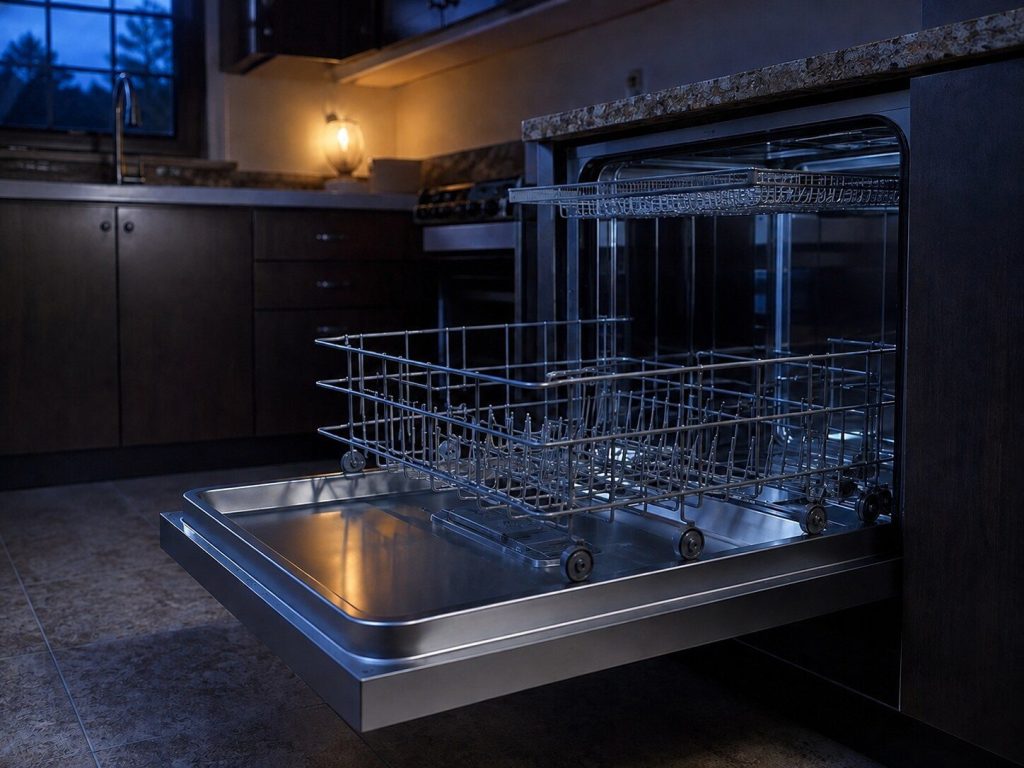
  • "A dishwasher door open to horizontal in a dark kitchen with the lower rack rolled halfway out" — a plain stainless door in a dark run, not the panel-ready integrated front every premium sister's library shows
    Built-in and portable dishwashers, with the F-and-E code set and the blinking-light set

    Dishwashers

    The dishwasher is the one place in Whirlpool's kitchen where the codes are properly documented: 38 code pages for the built-in machine and 9 more for the portable, covering F1E1 through FAE4 and the H2O code, plus something most makes do not publish at all — the blink patterns. A Whirlpool dishwasher with no display reports by pausing between flashes, and Whirlpool publishes what those pauses mean, from 1 pause 1 through 10 pause 5. It also publishes the front status light, including what it means when it glows red. If your machine is blinking at you rather than showing a number, there is a real answer for it.

    • Built-in and portable machines, 47 published code pages between them
    • F1E1 to FAE4 and H2O, plus the flash-and-pause patterns for machines with no display
    • The front status light, the clean light and the sanitize light each have a published meaning
    Dishwasher repair
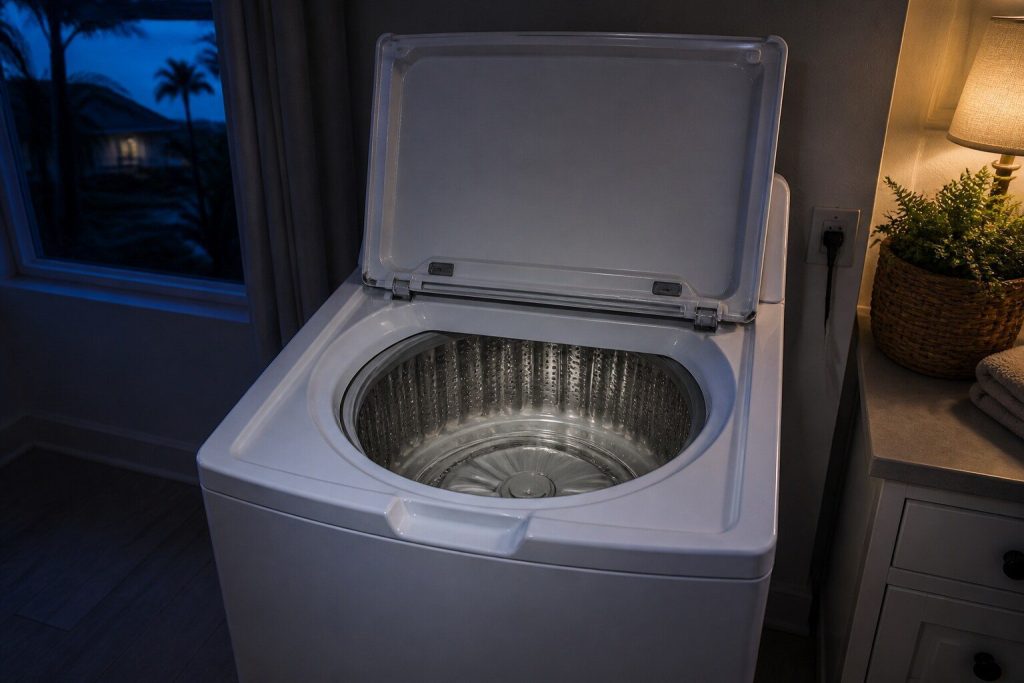
  • "A white top load washing machine seen from just above the front with its lid standing fully open on an empty stainless tub" — top load leads this page's own caption and is 157 of the 336 washer pages in this make's base
    Top load · front load · compact front load · laundry tower · all-in-one washer dryer

    Washers

    Laundry is the strongest part of this site, and the reason is measurable: Whirlpool's own support base carries 1,449 laundry pages, while the sister badge on the same control platforms publishes no laundry at all. For washers specifically there are 157 pages on the top loader with 68 code pages, 179 on the front loader with 59, 60 on the compact front loader, 204 on the laundry tower with 88, and a separate all-in-one washer dryer branch with 22 code pages of its own. That is five distinct machines with five distinct code lists, and the codes do not all carry the same meaning across them. Which machine the code came off is half the diagnosis.

    • Top load, front load, compact front load, laundry tower and all-in-one machines
    • Around 250 published washer code pages, and the code lists differ between shapes
    • Sud, F8E1, F5E2, LF, Ld, dU, uL and the lid-lock lights are all published conditions
    Washer repair
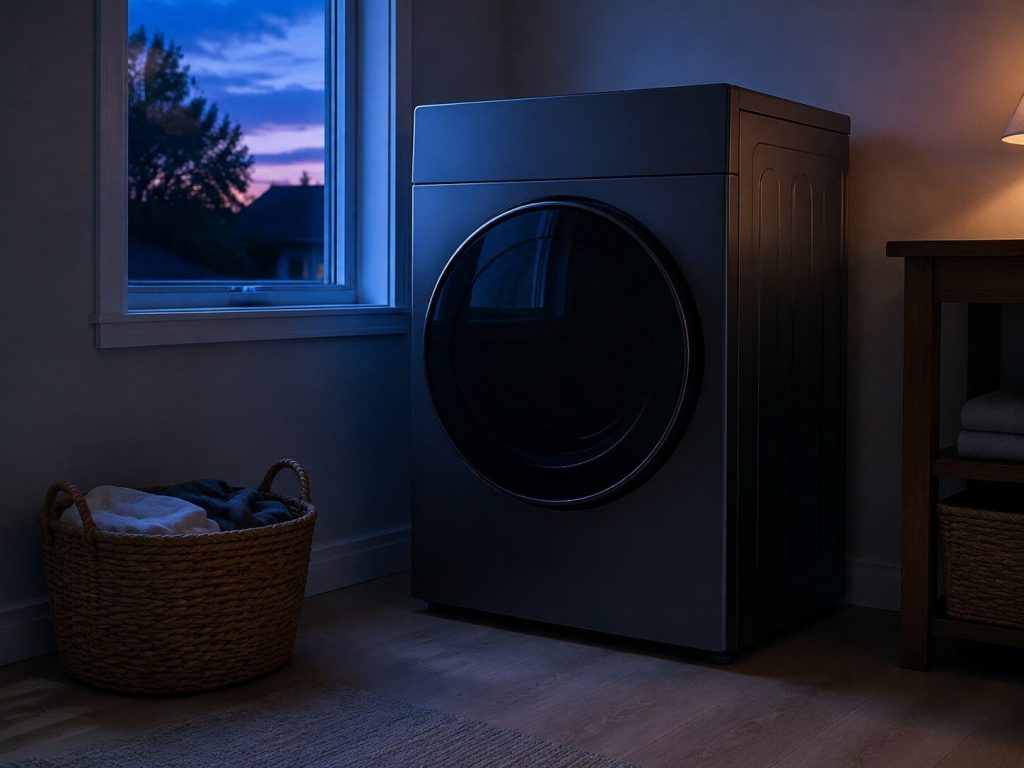
  • "A front-load dryer standing beside a small laundry-room window at dusk ... the deep blue light from the window falling across its flat front" — a dusk frame, which is what cobalt wants
    Vented electric · vented gas · compact heat pump · HybridCare · laundry tower

    Dryers

    Whirlpool publishes 114 pages on the dryer with 55 of them code pages, another 47 on the compact heat pump machine, 35 on the HybridCare ventless dryer, and 92 more of general dryer material — and that is before the laundry tower and the all-in-one branches, which have their own. The published code set runs wide: E1, E2, E3, F01 and F02, the F1 and F2 families, F20 through F31, F70 through F78, FCE1, Loc, PF, and one that no other appliance has — AF, which Whirlpool documents as Check Vent. That single code is the most useful thing this make publishes, because in South Florida a restricted vent is the leading cause of a dryer that has stopped drying and the leading fire risk in the room.

    • Vented electric and gas, plus ventless heat pump and HybridCare condensing machines
    • 55 published code pages on the vented dryer alone, including AF or Check Vent
    • A ventless machine has no duct to blame — the condenser and its drain replace it
    Dryer repair
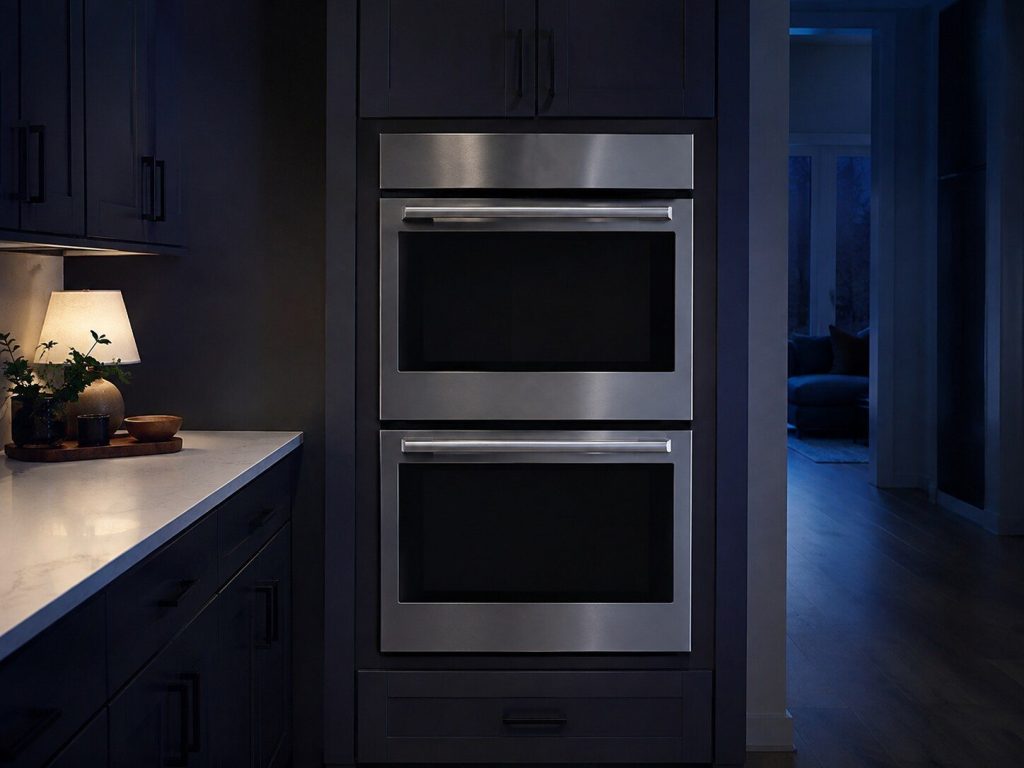
  • "A double wall oven built into a tall cabinet run, both doors closed, seen straight on ... in a dark kitchen" — this page is single and double wall ovens, and the double is the one that reads at a glance
    Single and double wall ovens, electric and combination microwave-oven units

    Wall ovens

    The wall oven is the most heavily documented appliance Whirlpool makes. Its support base carries 303 pages on wall ovens and 176 of them are code pages — more than any other branch, refrigeration included, and more than seven times what the entire freezer family gets. The published set is deep and it is specific: the F1 through F9 families with their E-suffixes, the FB, FC and FE codes, the C81 and C83 group, ES or E5, and the plain-language conditions like a locked door that will not release after a self-clean, Sabbath mode left on, and a control asking for the probe. When a Whirlpool oven has something to say, it says it clearly, and that changes what a first visit looks like.

    • Single and double wall ovens, plus combination microwave-oven units
    • 176 published code pages — the deepest documentation on the whole Whirlpool base
    • Door lock after self-clean, Sabbath mode and probe messages are published conditions too
    Wall oven repair
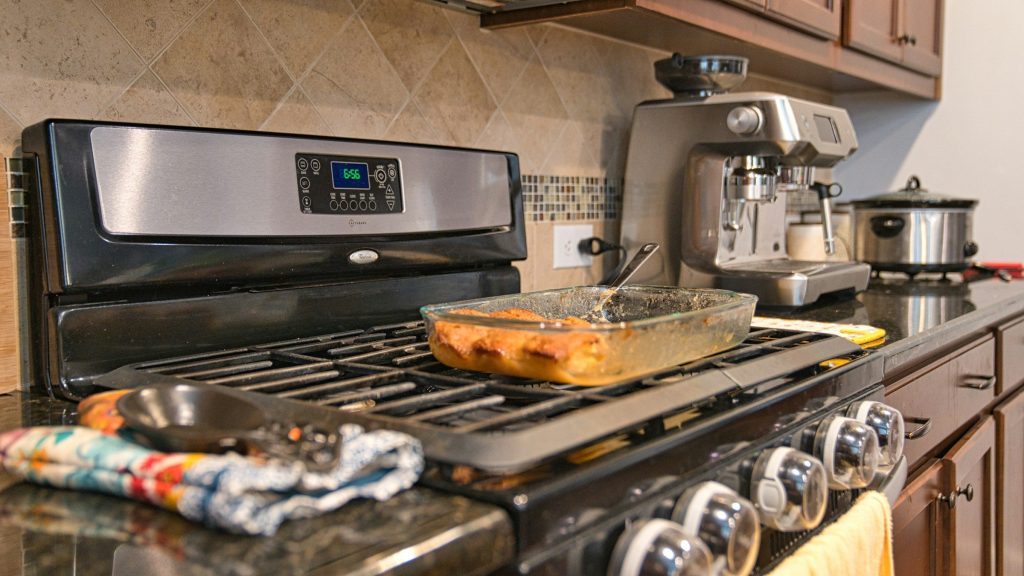
  • "a stainless gas range with cast grates in a kitchen of dark cabinets" — freestanding, gas, dark room: the deepest code branch this make has and the palette this site is in
    Freestanding and slide-in ranges, gas and electric, with the deepest code set on the site

    Ranges

    Whirlpool's range section is the largest single appliance branch it publishes: 359 pages, of which 170 are code pages. Second only to the wall oven, and it covers a code set most people have never seen documented — not just the F0 through F9 families and the FB, FC and FE codes, but the numeric families that begin with 1c, 1d, 3d, 4d and 9d, which appear on the newer connected controls and are unfamiliar to anyone who has only worked on older machines. Alongside those sit the plain-English conditions: Lo or Pre, Loc, PUSH or PSH, Sabbath mode, and the C81 to C83 group. This is the appliance Whirlpool talks about most, and it is the reason the code archive on this site is worth reading.

    • Freestanding and slide-in ranges, gas and electric, 359 published support pages
    • 170 code pages: the F families, the FB, FC and FE codes, and the 1c, 1d, 3d, 4d, 9d sets
    • Sabbath mode, Loc and PUSH or PSH are published control messages, not failures
    Range repair

South Florida

The climate is part of the diagnosis.

  • A laundry pair in a hallway closet The normal case on this make here is a stacked washer and dryer behind a louvered door, with no window and no air of its own. The dryer takes its air from the closet and gives the heat back to it, and the room climbs all cycle.
  • The second refrigerator nobody thinks about It stands in a garage that reaches a hundred degrees by afternoon and is asked to hold the same temperature as the one in the kitchen. Ordinary cabinets are not built for that ambient; garage-ready is a specification.
  • Storm season, and PF on the way back Whirlpool publishes this one for the supply itself, on the washer and the dryer, and a refrigerator that was filling reports PO on the same kind of afternoon. What we find is a machine that came back and stopped mid-cycle.
  • Humid air into a machine that is already wet A dryer here takes moisture out of clothes using air that arrived with plenty of its own. Every season it takes a little longer, and it gets reported the moment somebody counts. The duct and the room are measured first.
  • Salt, on parts meant to be cheap Near the water it reaches the condenser, the fixings and the burner hardware, on a machine built to an ordinary price. The corrosion is the same as anywhere; what differs is the arithmetic, because part and cabinet are closer in value.

If there is something on the display

599 code pages, and how to read one properly

Every code this make publishes for the appliances it publishes them for, read out of its own US support base and organized the way that base is: one page per code per appliance. Nothing here is invented. Where the maker prints a number and no mechanism behind it, the page prints that fact rather than a plausible guess.

One code, printed in two halves, in one room

Watch the display for ten seconds before you write anything down. It is the cheapest diagnostic step there is, and it is the one most often skipped.

The three shapes a report takes on this make

  • Two halves that alternate — F3 then E1, F5 then E2, F8 then E1.
  • A short word or a few letters that do not alternate — Sud, LF, PF, LOC, AF, UL.
  • No code at all, and indicator lights instead — cooling off, door alarm, air filter, H2O.

Five that are called in most often, and what they are really about

Sud Too many suds to spin against. The washer adds water and extends the rinse by itself, which looks exactly like a cycle that will not end.
F8E1 The washer is detecting no water flow at all. Walk the supply — faucet, hose, inlet screen — before anybody blames the valve.
LF A long fill on a washer. The same two letters on a heat pump dryer mean the lint filter has been taken out.
LOC The control lock is on and the machine is refusing everything. Five seconds on START/ENTER at a range, three on LOCK at a cooktop.
PF The cycle was interrupted by a power failure — something this county supplies free of charge several times a summer.

Each of those has a page here for each appliance it appears on, because on this platform the same characters really do mean different things in different rooms. Type both halves into the index and it will land you in the right one.

Photograph both halves before you cut the power. A reset clears the display and not the condition, and the code is the most useful thing a first visit can start from.

All 599 code pages

There are no code pages for a top-freezer refrigerator, an upright freezer or a gas cooktop, because this make publishes none. For those three the symptom pages are the whole diagnosis, and they are written as measurement rather than as translation.

How a visit goes

Measured, priced, then agreed — in that order

  1. 01

    You tell us the appliance and both halves

    The model number, the machine it is on, and the code character for character with the letter and the number that follows it. If it is a refrigerator or a freezer there may be nothing to read — then it is which indicator lights are on, and what a thermometer says in each compartment.

  2. 02

    We work differently in the two halves of the house

    At the range, the cooktop, the washer or the dryer we start from what the appliance has already said and confirm it with a meter. On the cold side there is nothing to start from, so the whole visit is instruments: temperatures, airflow, resistance across a sensor, current at the compressor. Both go into the report as numbers, so a second opinion has something to work from.

  3. 03

    You get the price before anything is opened

    Parts, availability and labor in writing. Nothing is ordered or fitted until you have agreed to it, and the diagnostic comes off the bill if you go ahead. If a second problem turns up while the machine is apart, it is priced rather than done.

  4. 04

    And on this make, sometimes we say do not

    These machines were not expensive to buy, so the repair has to clear a lower bar than it would on a built-in — and we are content for the answer to be no. A tub and a bearing set, a sealed system on a ten-year-old cabinet, a second control board in the same year: we would rather say that on the phone than present it after a visit.

What it costs

Every figure is a floor, and every floor has a page

48 jobs with a published starting figure and a page saying what moves it. On this badge the arithmetic runs both ways and we publish both: the machines were cheap to buy, which sets a lower bar for a repair, and their parts are stocked in this county rather than ordered, which lowers what the repair costs. Where the two do not meet, we say so.

Diagnostic visit

from $89

One visit, one answer in writing, and the fee comes off the work. What it buys depends on the room: in the laundry it starts from what the machine has already reported, and at the refrigerator it is measurement from the first minute.

Washer excess suds service

from $99

The lowest figure on the site and often no repair at all. A Sud reading is a machine finding more foam than it can spin against, and the cause is usually the detergent or the dose rather than a part.

Dryer vent cleaning

from $129

The job that resolves the most complaints for the least money, and the safety item on this whole list. The full duct run, the outside flap checked while it is going, and airflow measured before and after.

Refrigerator not cooling

from $145

The visit where this make gives a technician nothing to read, so it is instruments throughout. Before any of it, one free check: a cabinet can be lit, responsive and deliberately not cooling, with COOLING OFF on the display.

Laundry tower and stacked center repair

from $185

One control panel reporting for two machines, and the first part of the visit is establishing which half is talking. Almost always worth repairing: most of what a stacked unit costs is the space it fits and the install.

Washer motor and drive repair

from $265

The point where the repair-or-replace question becomes real, and where we will give you the figure and the reasoning rather than the sales pitch. On a machine that is otherwise sound it is worth doing; on one already facing a tub, it is not.

Every figure here is a starting point and a researched market band for South Florida, never a quote and never an invoice. The exact cost is confirmed after an on-site diagnostic and agreed with you in writing before anything is opened.

Every figure and what moves it

Where we work

Miami-Dade, Broward and Palm Beach, end to end

59 cities and neighborhoods, each with a page saying what we actually see there. Tell us where you are when you book and we will come back with the earliest slot we can genuinely keep.

Coverage is Miami-Dade, Broward and Palm Beach counties — the pages below are the places people search for by name, not the edge of where we drive.

The appliance, the model number, and both halves of the code.

A photograph of the display is ideal, and on this make two photographs are better: it alternates between the F half and the E half, and half a code narrows a problem to a family rather than to a part. If it is the refrigerator or the freezer there may be no code at all — tell us which indicator lights are on instead. You get the scope and the price in writing before anything is opened.

This article is based on:

  • Official manufacturer documentation
  • Internal repair procedures
  • Technician repair history
  • Company quality standards

Before you call

The questions we are asked most

Is it worth repairing, or should I just buy a new one?

It is the question this badge is asked more than any other, and it deserves arithmetic rather than a slogan. Three things settle it and none of them is the year on the plate. What the part is: a pump, a lid lock, a valve, an element, an igniter or a sensor is a stocked commodity here and cheap to fit, while a tub, a bearing set or a sealed system is neither. Whether the machine is built in: a wall oven, an over-the-range microwave or a stacked laundry tower carries an installation cost you would pay again on a replacement, so those are almost always worth repairing. And what else is already worn on it. We will give you the figure and the reasoning, and we are content for the answer to be no.

I wrote down F7 and nothing else. Is that enough?

It is a start and it is worth going back for the rest. The display alternates between the F half and the E half of one code, so what you have is half an address: it narrows the problem to a family, and on this platform a single family can cover a sensor, the wiring to it and the board reading it. Stand in front of the panel for ten seconds, photograph it twice — once on each half — and tell us which appliance it is on, because the same characters mean different things on a washer, a dryer and a range.

My refrigerator is running and it is not cold. What code should I look for?

Probably none, and that is the honest answer rather than a shrug. This make publishes no code list at all for a top-freezer cabinet and nine pages in total for a side-by-side. What these cabinets use instead are indicator lights — cooling off, door alarm, air filter, H2O — so tell us which of those are lit. Then do the one free check first: a Whirlpool can be lit, responsive and deliberately not cooling, with COOLING OFF on the display, and on the common panel LOCK and MEASURED FILL held together for three seconds turns it off and on again. After that it is measurement. Put a thermometer in a glass of water in each compartment overnight and give us both numbers.

The panel lights up and every button is ignored.

Check the control lock before anything else, because it costs nothing and it is the commonest false alarm on this make. A range or a wall oven showing LOC has it on, and holding START/ENTER for five seconds clears it. A cooktop showing Lock is the same feature under a different name, cleared by holding LOCK for three seconds — and it usually gets switched on by a sleeve while somebody wipes the glass. If the machine is a range that answers every keypress and simply never heats, that is demo mode, which is what it was built to do on a shop floor. We have driven to houses where one of those was the whole visit.

My dryer takes two cycles to dry one load.

In a South Florida laundry closet that is a duct problem far more often than a machine problem, and it is the cheapest thing on this site to put right. The run is usually long, often flexible, sometimes crushed behind the machine, and the outside flap corrodes half open and packs with lint. Whirlpool publishes AF for exactly this on some models — a restricted airflow reading — and plenty of machines simply run longer and say nothing at all. It is also the safety item on this whole list, which is why we measure airflow before and after rather than telling you it looks better.

Are you connected to Whirlpool?

No. We are an independent repair company working in Miami, not affiliated with, authorized by or endorsed by any manufacturer, and we warrant our own workmanship rather than anybody else's. What we have is 599 code pages, every one of them read out of Whirlpool's own US support base and quoting it where it is quoted, and 28 symptom pages — including three appliances where the maker publishes nothing at all and the page says so.

Call (305) 363-7702