Control lock. A range or a wall oven showing LOC, and a cooktop showing Lock, has the keypad locked out. Five seconds on START/ENTER for the range, three on LOCK for the cooktop, and it is over. Demo mode. A range set up for a shop floor answers every keypress and never heats. Suds. A washer showing Sud has found too many suds to spin against and is adding water to break them, which looks exactly like a cycle that will not end. Cooling turned off. A refrigerator can be lit, responsive and deliberately not cooling, with COOLING OFF on the display; on the common panel it is LOCK and MEASURED FILL held together for three seconds, in both directions. Between them these account for a real share of the calls we take.
28 symptoms · 599 code pages behind them
Start from what it is doing, because on the cold side that is all you get.
Most people do not have a code. On a Whirlpool refrigerator most people cannot have one: the make publishes no code list for a top-freezer cabinet and nine pages for a side-by-side. These pages start from the behavior instead, name the likely causes in the order they are worth checking, and link to the code the machine would show if it had one.
- 28 symptom pages
- 10 of them in the laundry room
- 5 on cabinets that barely report
- 599 code pages behind them
By symptom
What it is doing
Each page separates the checks that cost nothing from the ones that need a technician, and says which of this make's codes belong to it — or that none do.
-
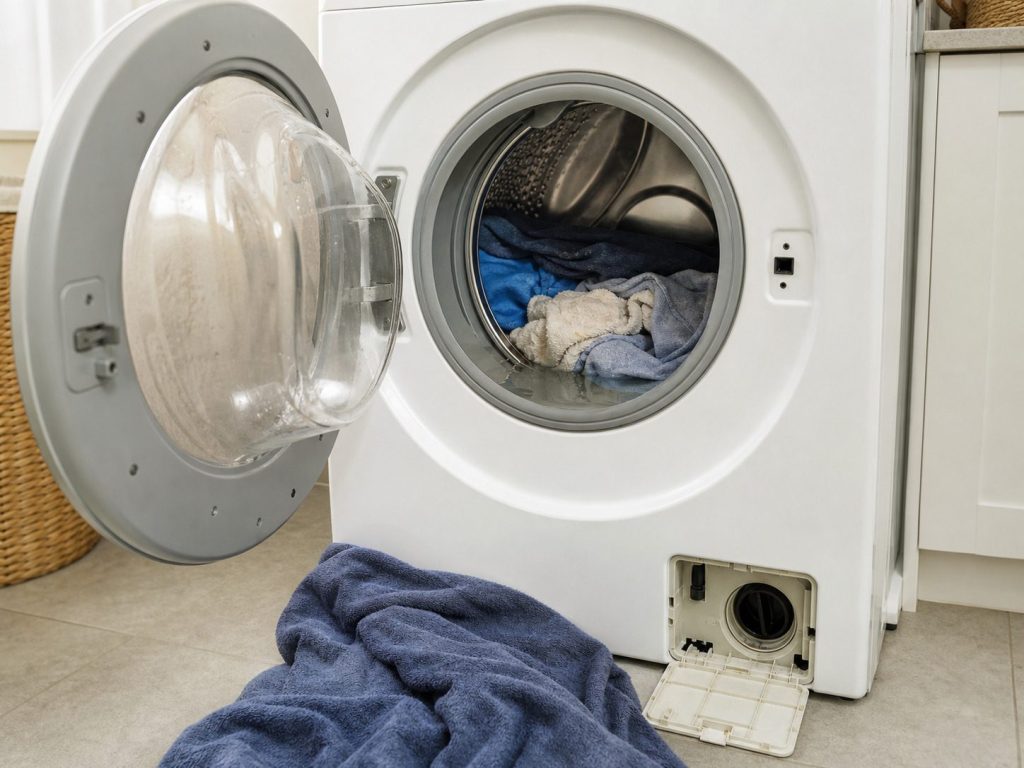
The cycle stopped and the drum is still full of water Washer will not drain
This is the one Whirlpool machine that tells you exactly what is wrong before anybody opens it. The washer times its own drain, and when the water has not gone in the time the cycle allowed, it stops and puts a name on the display. Read that name before you bail the drum out, because it is the difference between a coin in the pump and a control problem.
- Whirlpool's own label for a slow drain is a long drain, and it shows as Ld, F9 E1 or drn
- A drum still full at the end of a cycle is a pump or a hose question first, never a board question first
- The filter behind the lower access panel on a front-load machine is emptied over a towel, and there will be more water in it than anybody expects
-
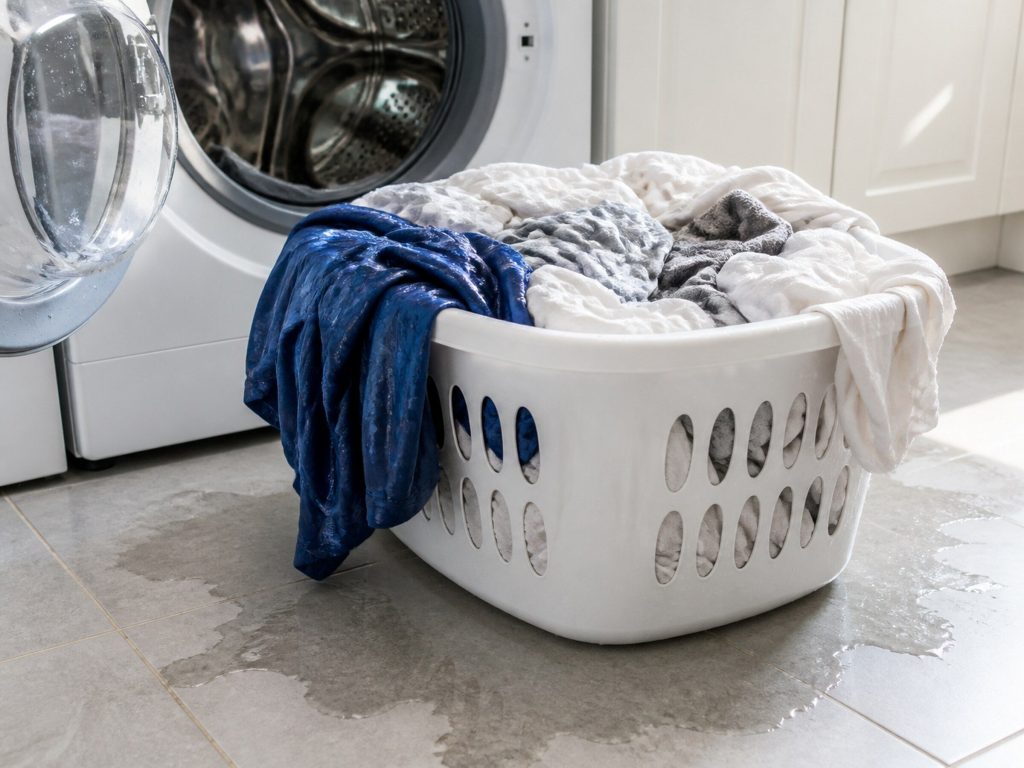
The cycle finishes and the load comes out soaked Washer will not spin
A load that comes out heavy and dripping has either not been spun or has been spun at a speed the machine chose for itself. Whirlpool machines lower the spin speed on their own when they cannot balance the drum, which is why a bath mat washed alone is the single commonest cause of this call, and the one that costs nothing.
- uL and oL are the machine telling you about the load, not about itself
- A top-load HE washer with no agitator balances by sensing weight, and one heavy item defeats it
- F7 E1 is a motor speed problem, and it is the point where the visit stops being free advice
-
Forty minutes on the display, three hours on the clock Washer cycle takes hours to finish
A Whirlpool washer does not run a fixed cycle. It measures, and it adds time whenever a measurement is not where it should be. So a cycle that keeps growing is the machine telling you it is repeating something — extra rinses to clear foam, extra fill attempts, extra drain attempts — and each of those has its own name in the maker's own table.
- The time on the display is an estimate the machine revises, not a countdown
- Sud is the most common reason a wash doubles in length, and the cause is usually the detergent
- A slow fill and a slow drain both add time before either shows a code
-
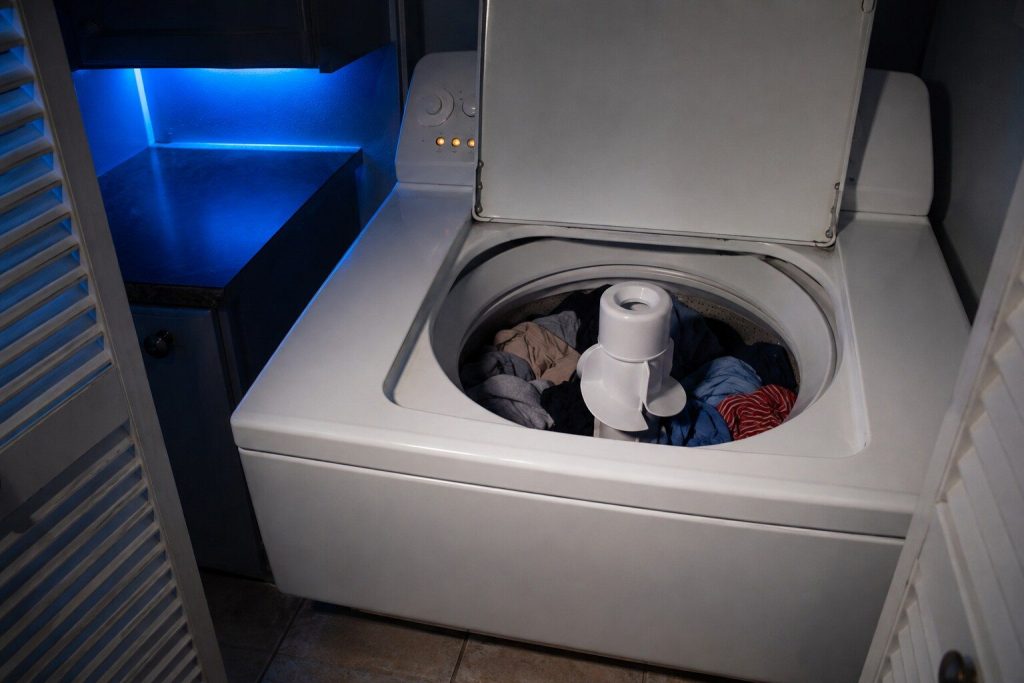
The cycle starts, the drum stays empty Washer will not fill, or fills too slowly
Whirlpool washers watch the water arriving and stop when it does not. The machine gives this one three different labels depending on how old it is and which control it has — LF, Lo FL and F8 E1 are one finding under three names, and the maker's own wording is that the washer is taking too long to fill or is not detecting the right amount of water coming in.
- LF, Lo FL and F8 E1 are the same condition, spelled three ways
- HC and F3 E2 mean the hot and cold hoses are on the wrong way around, which happens on every move
- The problem is on the wall more often than in the washer
-
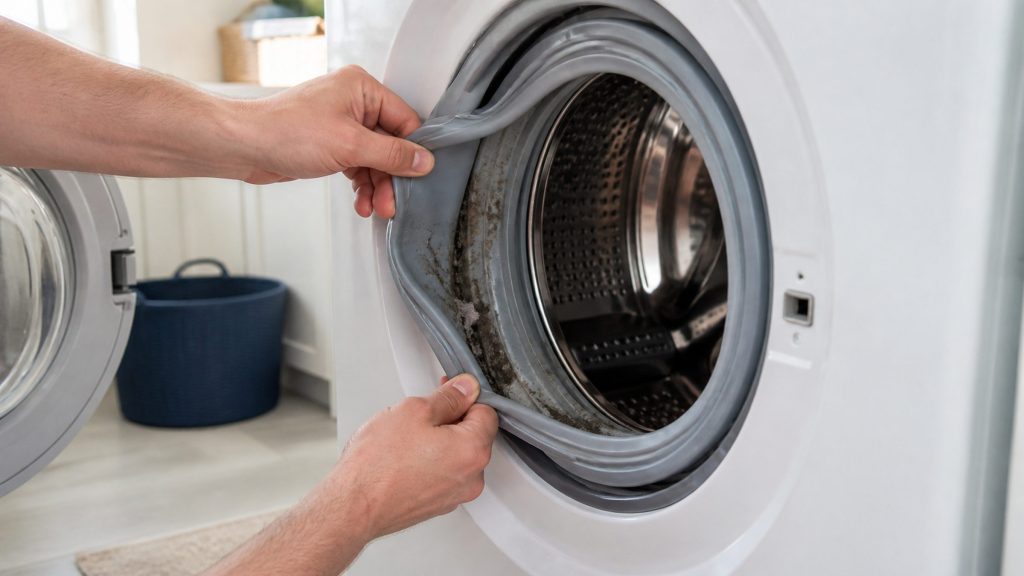
The laundry comes out of a clean machine smelling worse than it went in Washer smells musty
This is the most South Florida call on this whole site. A front-load washer holds a small amount of water in the door seal and the drain path by design, and nine humid months a year keeps a closed laundry closet at a temperature and a humidity where that water grows something. The machine is not broken. It is being asked to dry out in a room that never does.
- The odor lives in the door gasket and the dispenser, not in the drum
- A washer in a closed laundry closet in August never dries out between loads
- Whirlpool publishes a Clean Washer cycle and a CL reminder for exactly this
-
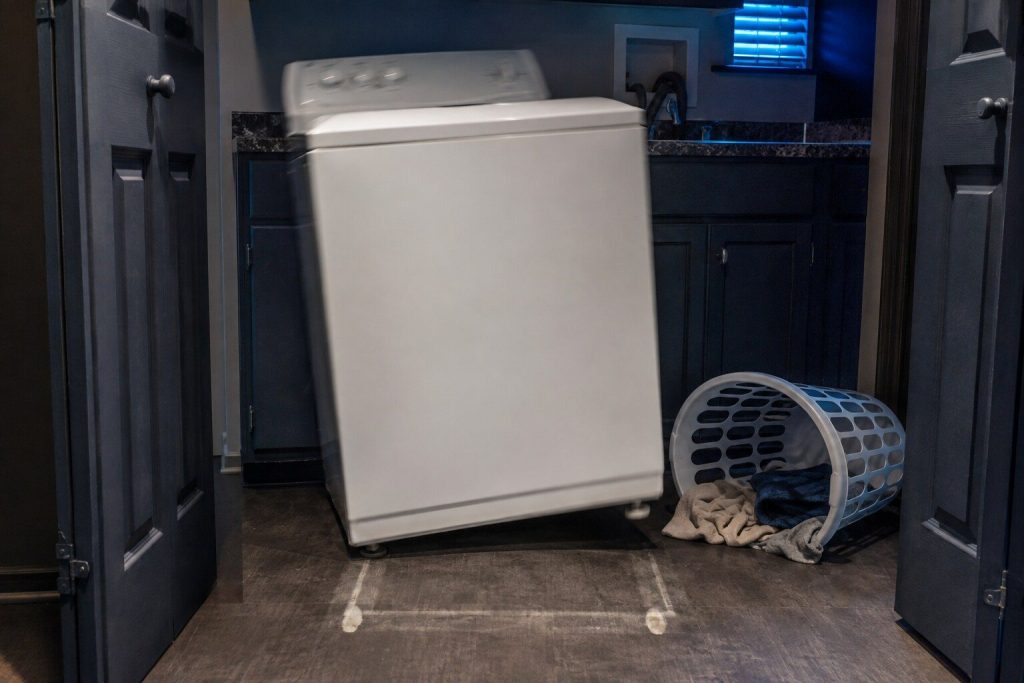
The whole laundry closet shakes at the end of every cycle Washer walks across the floor or bangs on spin
A washer that moves is telling you something specific: the drum is spinning a load it cannot balance, on a cabinet that is not sitting square. Whirlpool publishes three separate pages on vibration for a reason — it is a common report, and the first two causes are things anybody can check with their hands.
- Leveling comes first, and a washer over a tile floor moves out of level on its own
- A machine that bangs on every spin will eventually destroy its own suspension
- Shipping bolts left in a new front-loader produce a noise nobody forgets
-

Everything comes out warm and still damp Dryer takes two cycles to dry one load
This is the most common dryer call we take, and Whirlpool has a code for it that is unusually blunt. AF, printed on some machines as Check Vent, is restricted air flow, and the maker's own wording names a clogged lint screen or vent. A dryer does not dry clothes with heat. It dries them by moving hot air through them and taking the moisture out of the room.
- AF and Check Vent are the same code, and F4 E3 is the numbered version of it
- A dryer venting into a closet has nowhere to put the moisture it removes
- Long flexible ducting behind a machine pushed back into an alcove crushes flat
-
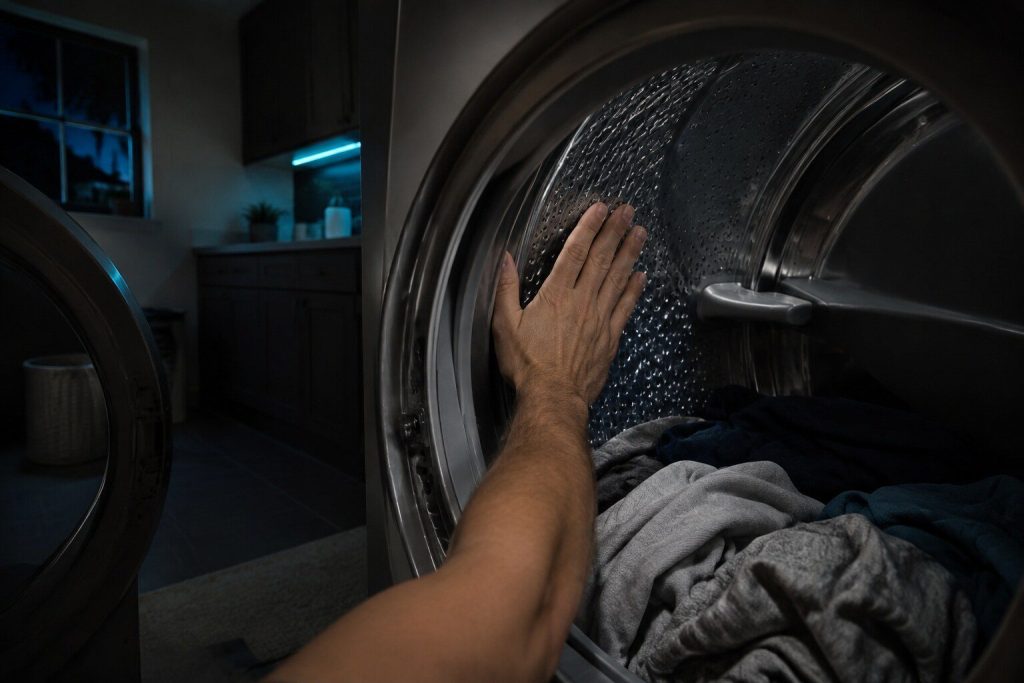
The drum turns, the load comes out cold and wet Dryer runs but does not heat
A dryer that tumbles without heating has usually lost one of two things: the heat itself, or half of its electrical supply. Whirlpool separates the two in its own table, and the difference decides whether the repair is inside the machine or at the breaker panel.
- F4 E4 and L2 are Whirlpool's low or no line voltage report — that one starts at the panel
- F4 E1 is the heater or the heater relays, and that one is inside the machine
- An electric dryer on a tripped half-breaker tumbles perfectly and heats nothing
-
The panel lights up and nothing happens when you press Start Dryer will not start
A Whirlpool dryer refuses to start for a short list of reasons, and it names most of them. The maker's own wording for ERR is that the door has not been completely closed and latched, and the dryer will not run until it is. Before anybody opens the machine, that sentence is worth taking literally.
- ERR on a Whirlpool dryer is the door, in the maker's own words
- Loc is the control lock — the panel works and refuses every button on purpose
- PF means the last cycle was interrupted by a power failure, which is a common summer story here
-
A thump, a squeal or a scrape that was not there last month Dryer has become noisy
A dryer is a drum on rollers turned by a belt, and every one of those parts announces itself differently when it wears. Whirlpool publishes three separate noise pages for its dryers, and the useful skill is telling a noise that needs a repair from one that means something is loose in the drum.
- A thump once per drum revolution is a roller or a flat spot, not a coin
- A squeal that rises with the drum is the belt or the idler pulley
- A rattle that changes when you tilt the machine is usually something in the blower
-
Water standing in the bottom when the cycle ends Dishwasher will not drain
Whirlpool's own label for this is Long Drain, and the machine reports it as F9 E1 — or, on a dishwasher with no display, as nine flashes of the Clean light, a pause, then one flash. Learning to read those two bursts turns a blinking light into the same information a display would have given you.
- F9 E1 and nine-pause-one are the same report on two generations of the same machine
- Water in the filter recess at the end of a cycle is normal; water covering the floor of the tub is not
- The air gap or the disposer connection is outside the dishwasher and causes this constantly
-
Film on the glasses, grit on the plates, the load coming out no better than it went in Dishwasher is not cleaning the dishes
This is rarely one thing. A Whirlpool dishwasher cleans with hot water, pressure and detergent that has to be released at the right moment, and all three can drift at once. Whirlpool codes the water temperature side of it as F4 E2 and the foam side as F6 E3, and everything else on this page is water reaching the dishes or not.
- Spray arms that will not turn freely are the first check and cost nothing
- F4 E2 is Whirlpool's heating error, and a dishwasher without heat cannot clean grease
- Dish soap instead of dishwasher detergent produces foam the machine reports as F6 E3
-
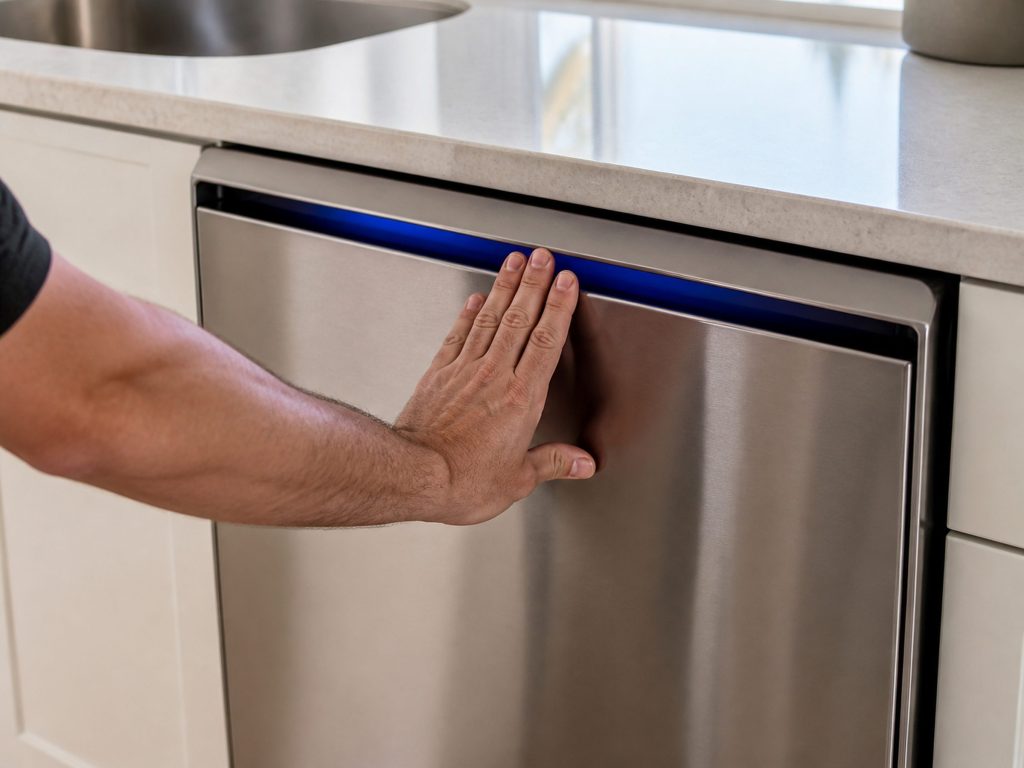
You press the cycle, the light comes on, and nothing happens Dishwasher will not start
A Whirlpool dishwasher that lights up and does nothing is usually either locked, waiting, or not being told to run at all. The maker publishes a small set of indicator behaviors that explain most of these, and one of them — the control lock — is not a problem at all.
- The Control light flashing three times means the buttons are locked, in Whirlpool's own wording
- A delayed start left set from last night makes a machine look completely dead
- The door latch has to be fully home before the control will accept anything
-
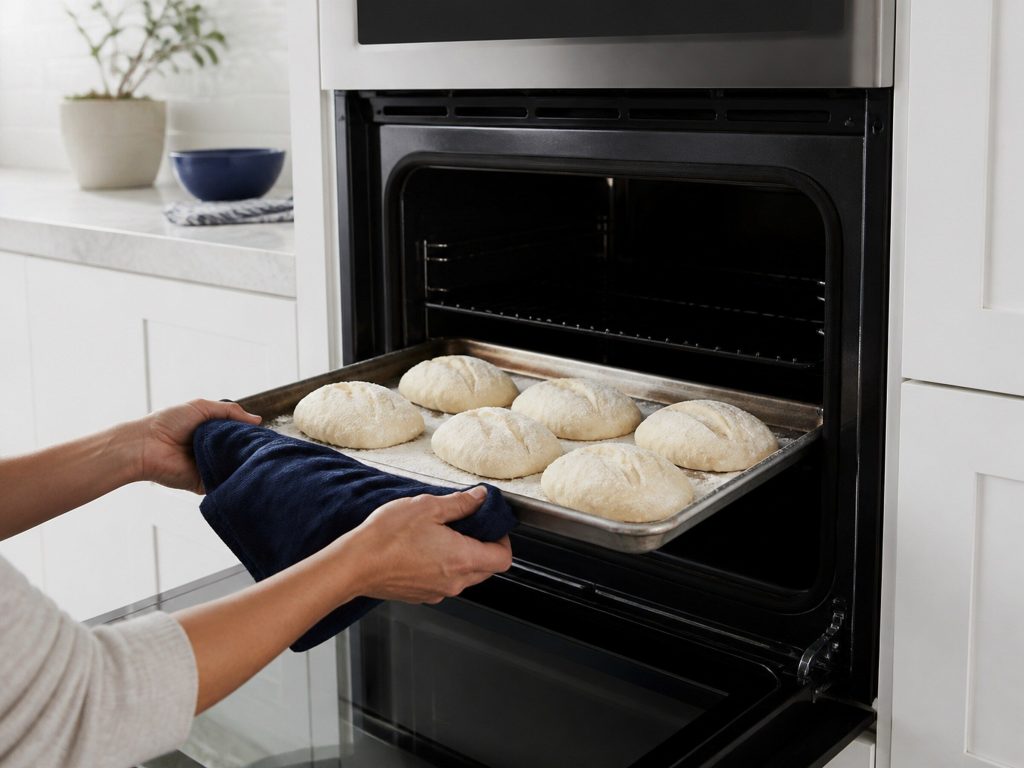
The cooktop works, the oven does nothing Oven will not heat
On a Whirlpool range the cooktop and the oven are close to independent, which is why burners that work perfectly tell you nothing about an oven that does not. This maker publishes more code pages for ranges and wall ovens than for anything else it builds, so an oven that will not heat and shows a code has already narrowed the job before anybody arrives.
- Working burners do not mean the oven has power — an electric oven needs both supply legs
- Whirlpool documents a demo mode for its ranges and wall ovens, and it disables heating on purpose
- A gas oven that clicks and never lights is a different repair from one that never clicks
-
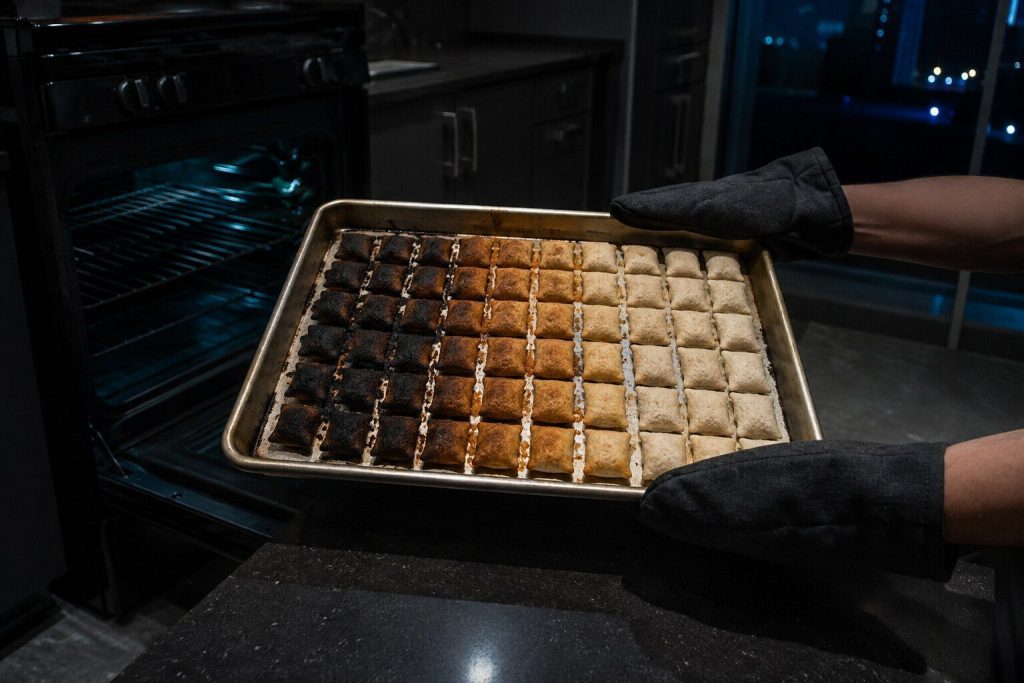
The dial says 350 and the baking says otherwise Oven runs hot or cold
Whirlpool takes this seriously enough to publish separate pages for an oven that is too hot, an oven that is too cold, and — importantly — for each of those both before and after calibration. That distinction is the whole diagnosis: an oven that is out by a consistent amount is a calibration question, and an oven that is out by a different amount every time is not.
- Whirlpool publishes separate pages for too hot and too cold, calibrated and not yet calibrated
- A consistent error is adjustable; an inconsistent one is a sensor or a control
- An oven thermometer costs very little and settles the argument before anybody is called
-
The clean cycle finished hours ago and the door is still shut Oven door will not unlock
An oven locks its own door during self-clean and will not release it until the cavity has cooled below a temperature the control decides on. Most of these calls are somebody trying to open it too early. The rest are a lock motor or a switch that has stopped confirming its position, and Whirlpool codes that.
- A self-clean cycle keeps the door locked for a long time after the cycle itself has ended
- Whirlpool publishes a Displaying an H page for its ranges — the display is reporting a state
- Cutting the power does not unlock the door; it usually just clears the display
-
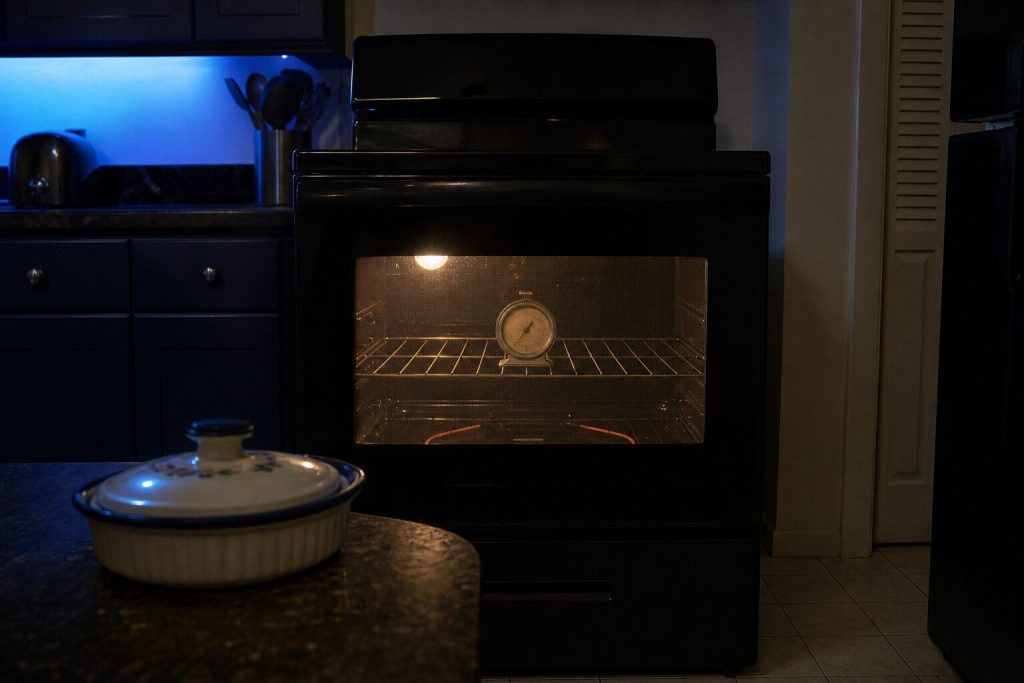
The tone comes twenty minutes later than it used to Oven takes a long time to preheat
Whirlpool publishes its own pages on long preheat times, which tells you how often it gets reported. A preheat that has grown from twelve minutes to thirty rarely means the oven has stopped working. It means one of the things that makes heat is doing less of the work, or one of the things that holds heat is letting it out.
- A preheat that has grown gradually is wear; one that changed overnight is a part
- On a two-element electric oven, one element failing leaves an oven that still heats slowly
- A door gasket that no longer seals costs preheat time before it costs anything else
-
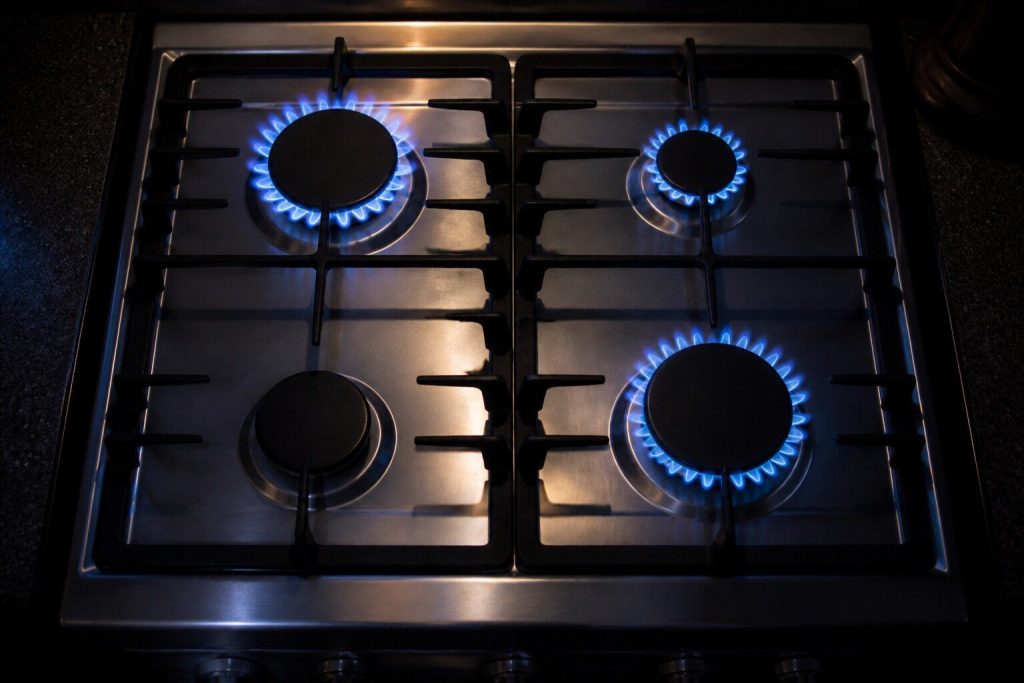
It clicks and clicks and nothing happens Gas burner will not light
Whirlpool's gas cooktop branch is the one place in its whole support base where there is not a single code page. Fifty-two pages about gas cooktops and no error codes at all, because these burners are not electronically supervised the way an oven is. The machine will not tell you anything here. Everything on this page is looked at rather than read.
- Zero code pages in Whirlpool's entire gas cooktop branch — this diagnosis is visual
- A burner cap seated a fraction out of place stops ignition completely
- Clicking with no flame and no clicking at all are two different repairs
-
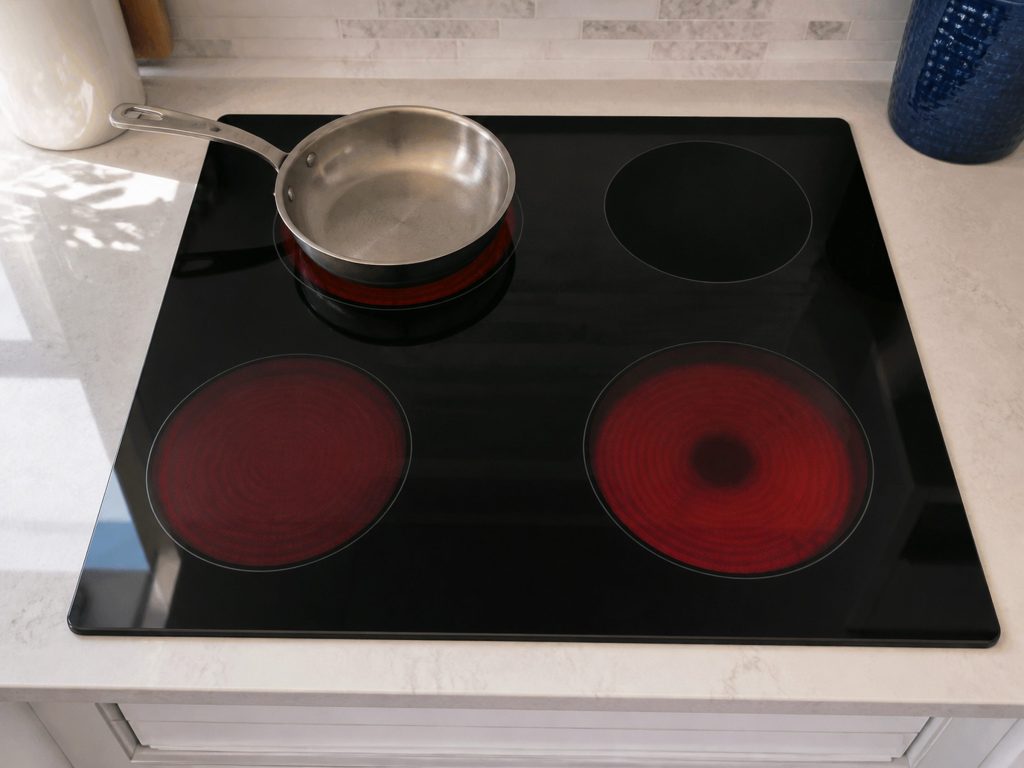
One zone stays cold while the rest work Electric cooktop element will not heat
Whirlpool publishes 83 code pages for its electric cooktops, which is more than it publishes for its entire refrigeration range. So an electric cooktop with a display and a dead zone will often name the problem, and F6 E0 — a loss of communication between the keypad and the user interface control, in the maker's own words — is one of the ones worth knowing.
- 83 code pages for electric cooktops against zero for gas — this half of the branch does talk
- F6 E0 is Whirlpool's loss of communication between the keypad and its control
- A hot surface indicator that never goes out is a sensor report, not a hot cooktop
-
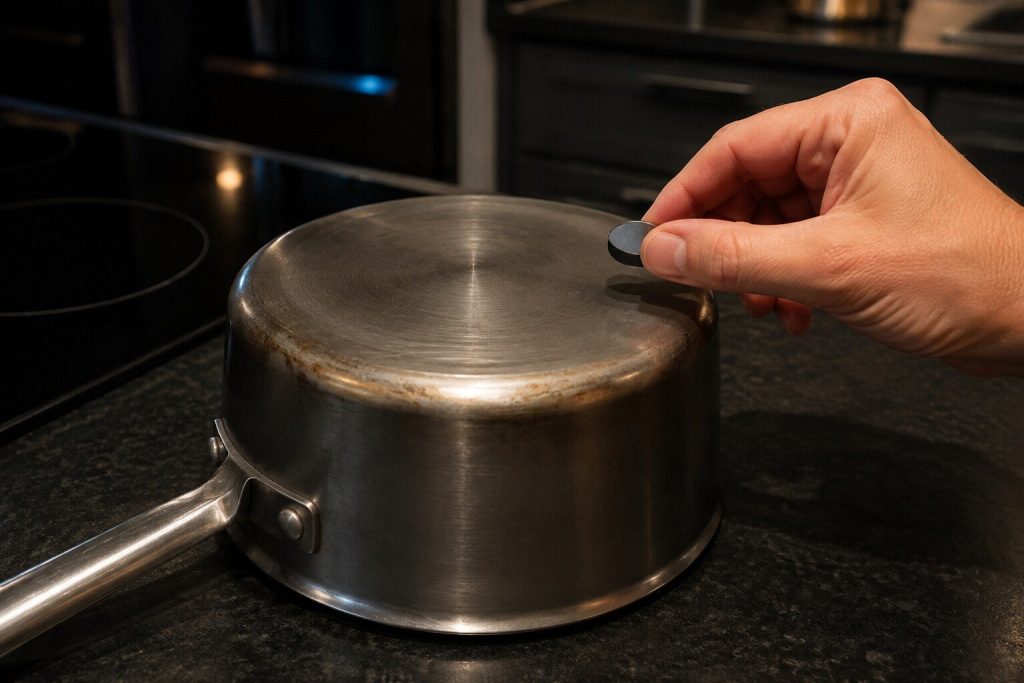
The zone beeps, shows a symbol and switches itself off Induction cooktop will not recognize the pan
Induction heats the pan, not the surface, so a pan the cooktop cannot work with is not a problem the cooktop can solve. Whirlpool publishes this as U u, and its wording is specific: the symbol appears if the pot is not suitable for induction cooking, is not positioned correctly, or is not the right size for the zone selected. If no pot is detected within thirty seconds, the zone switches off.
- U u is a message about the pan, and the maker says so in as many words
- A magnet on the base of the pan settles the suitability question in one second
- Whirlpool's induction F codes publish the reset and not the meaning — nobody should pretend otherwise
-
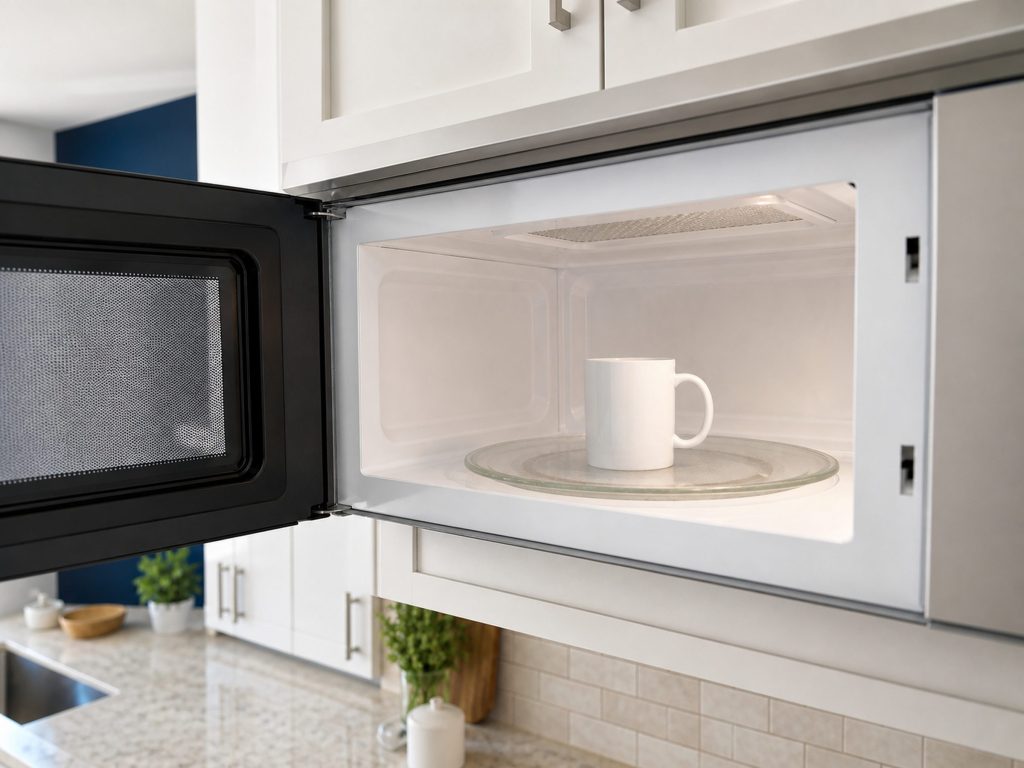
The plate turns, the light is on, the food is cold Microwave runs but does not heat
A microwave that lights, turns and counts down while heating nothing has a high-voltage problem, and this is the one appliance on this site where we would rather you did not open anything at all. Whirlpool's own code table for these is deep — 226 code pages across its microwave branch — and several of the codes point at exactly this.
- A microwave holds a lethal charge in its capacitor after it is unplugged — this one is not a home repair
- E21 is Whirlpool's thermal sensor circuit reported open; F4 E1 is the cavity temperature sensor
- The one safe test is a cup of water and a clock
-
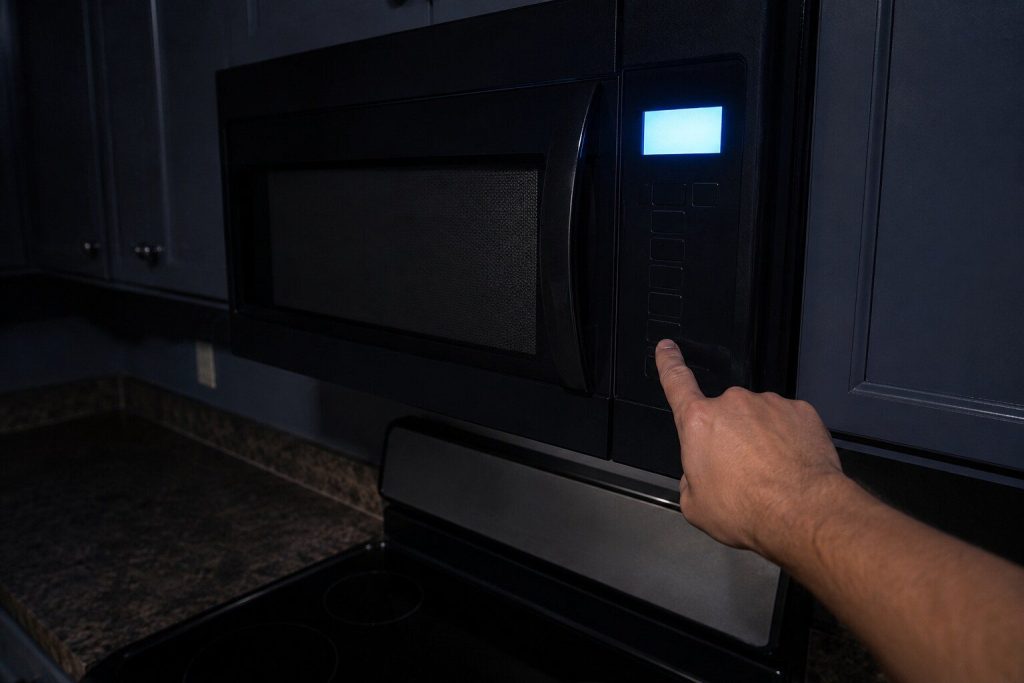
The display is lit and the keypad ignores you Microwave buttons do not respond
Whirlpool separates the touchpad from the board behind it in its own code table, and that is the distinction that matters here. Its wording for F2 is that the keypad reported a problem to the control board, and for F2 E1 that there may be a problem with the user interface or keypad or the associated wiring. A lit display with a dead keypad is a specific finding, not a general failure.
- F2 and F2 E1 are Whirlpool's keypad codes, and they point at the panel rather than the board
- A control lock left on looks exactly like a dead keypad
- Whirlpool publishes a control panel bubbling page — a swollen membrane holds keys down
-
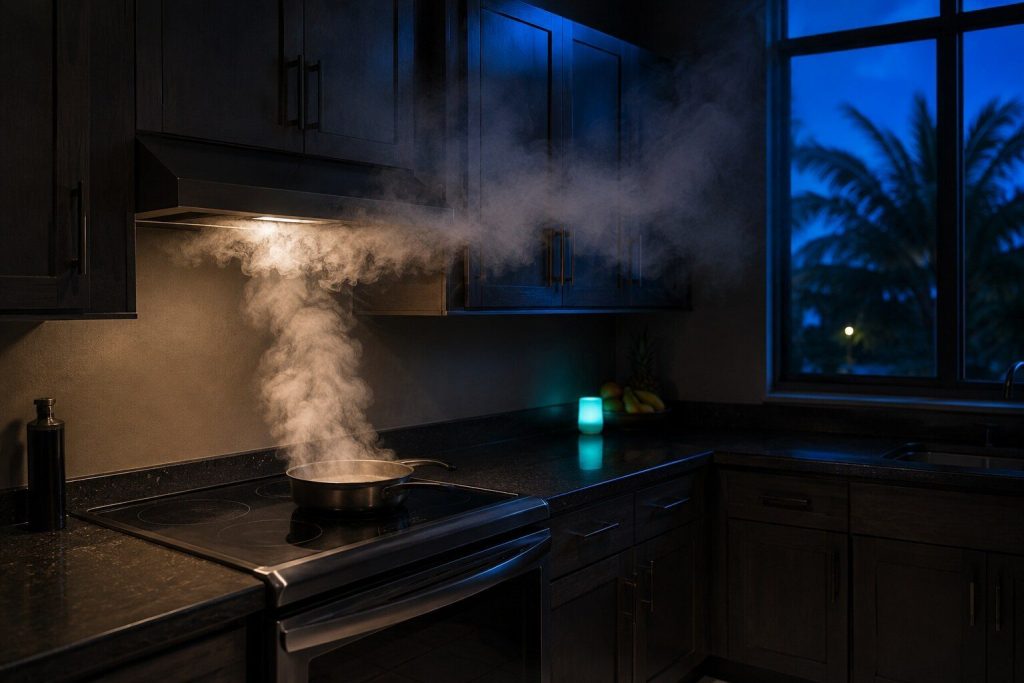
The fan runs and the kitchen still fills up Range hood is not clearing the smoke
Whirlpool's ventilation branch publishes pages titled Fan Not Working, Lights Not Working, Nothing Works and Not Removing Smoke or Odor — and not one error code anywhere in it. A hood is a motor, a filter and a duct. Nothing measures itself and nothing reports, so this diagnosis is made with a hand, a light and a look at the roof line.
- No codes at all in Whirlpool's ventilation branch — this is looked at, not read
- A grease filter that has never been washed halves the airflow before anything fails
- A hood that recirculates is not a hood that vents, and many South Florida kitchens have the first
-
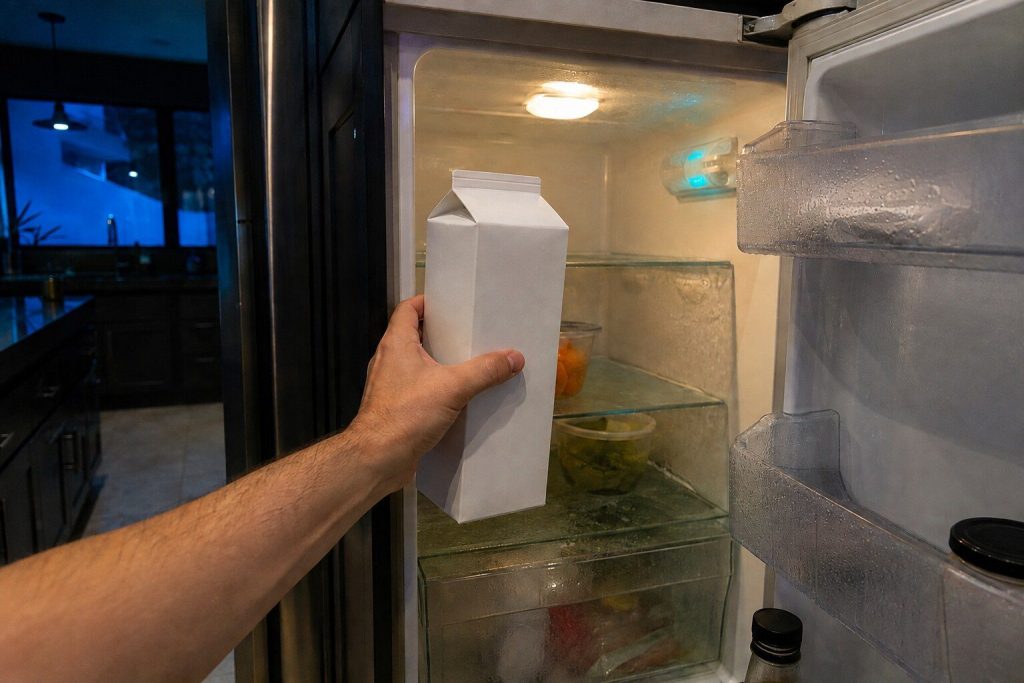
The lights are on, the panel looks normal, and the food is warm Refrigerator is not cooling
This is where Whirlpool goes quiet. Its top-freezer branch publishes 82 pages and not one error code; its side-by-side branch publishes 140 pages and nine. Where an F code does appear on a refrigerator, the maker publishes the fact that an F is flashing and, on the pages behind it, does not publish what each one means. So this diagnosis is measured, not read.
- Whirlpool publishes almost no refrigerator codes, and does not publish meanings for the F codes it does show
- PO is one of the few real messages: the power was off long enough to matter
- A condenser in a Miami garage is doing a much harder job than the design assumed
-
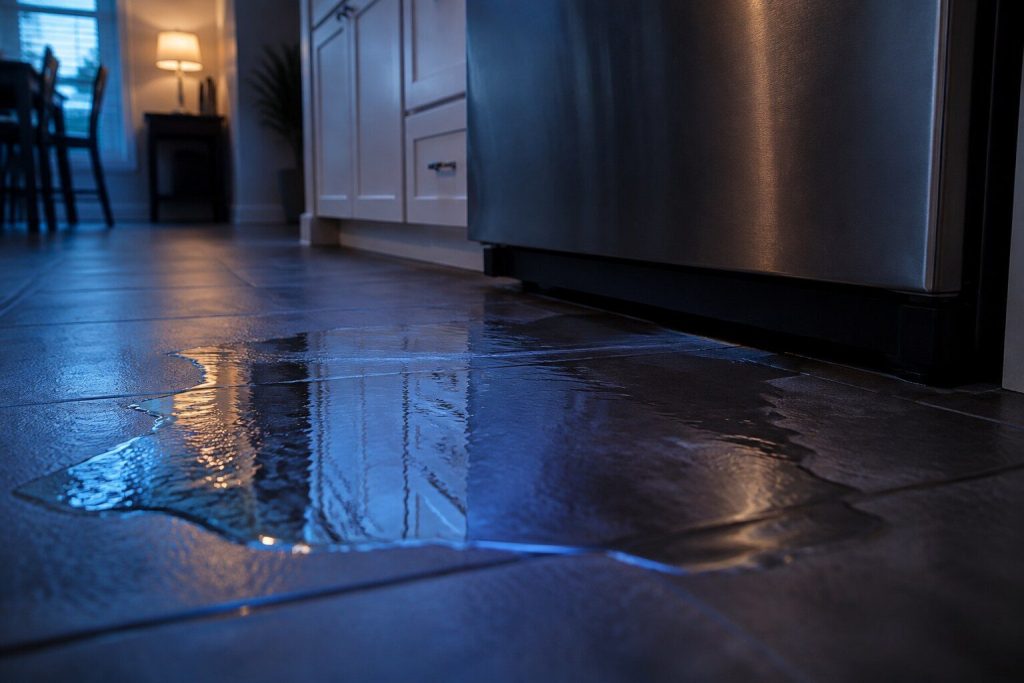
A puddle that comes back however often you wipe it Water on the floor under the refrigerator
There are only a few places the water can come from, and telling them apart is mostly a question of where it appears and whether it is clean. Whirlpool publishes seven separate leaking pages across its refrigeration branch and no code for any of them, so this one is found by looking rather than by reading a display.
- Water inside the cabinet and water on the floor are usually two different problems
- A blocked defrost drain shows up as ice under the crisper drawers first
- In this humidity, condensation from a poor door seal reads exactly like a leak
-
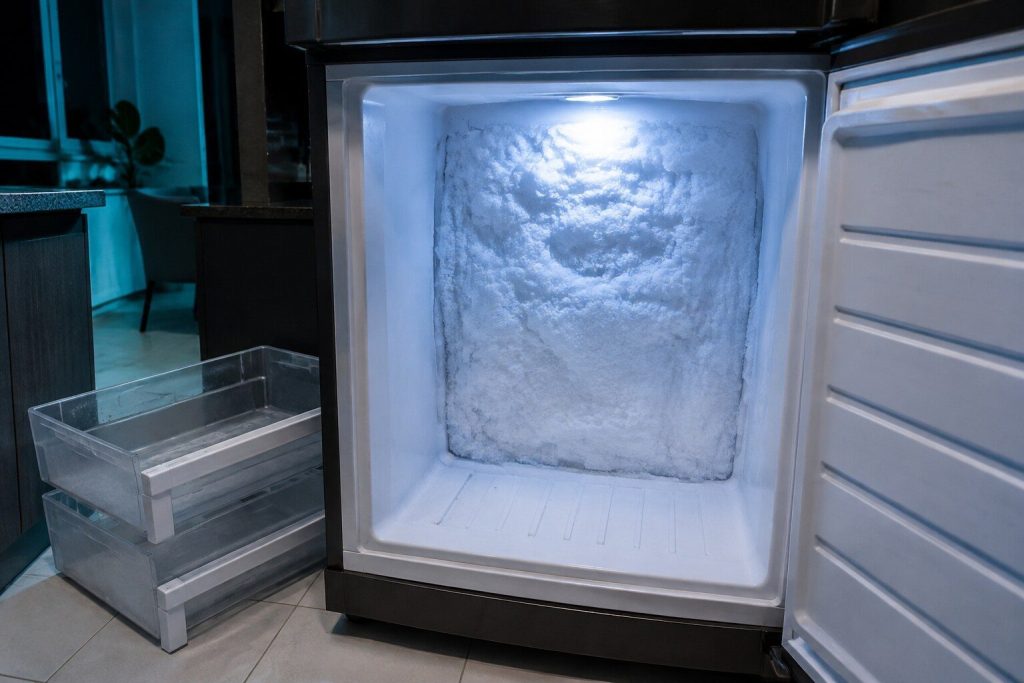
Ice on the back wall, water beading on the doors Frost inside, or the outside is sweating
Whirlpool publishes five pages on frosting and condensation across its refrigeration branch and no code for any of it, which is fair: these are things you see rather than things the machine measures. In South Florida both of them are more common than the design assumed, because both are driven by the amount of water in the air around the appliance.
- Frost on the freezer back wall is the defrost circuit; frost on the food is a door habit
- Condensation on the outside of the doors is humidity, not a malfunction
- The paper test on the seal takes ten seconds and settles a lot of these
-
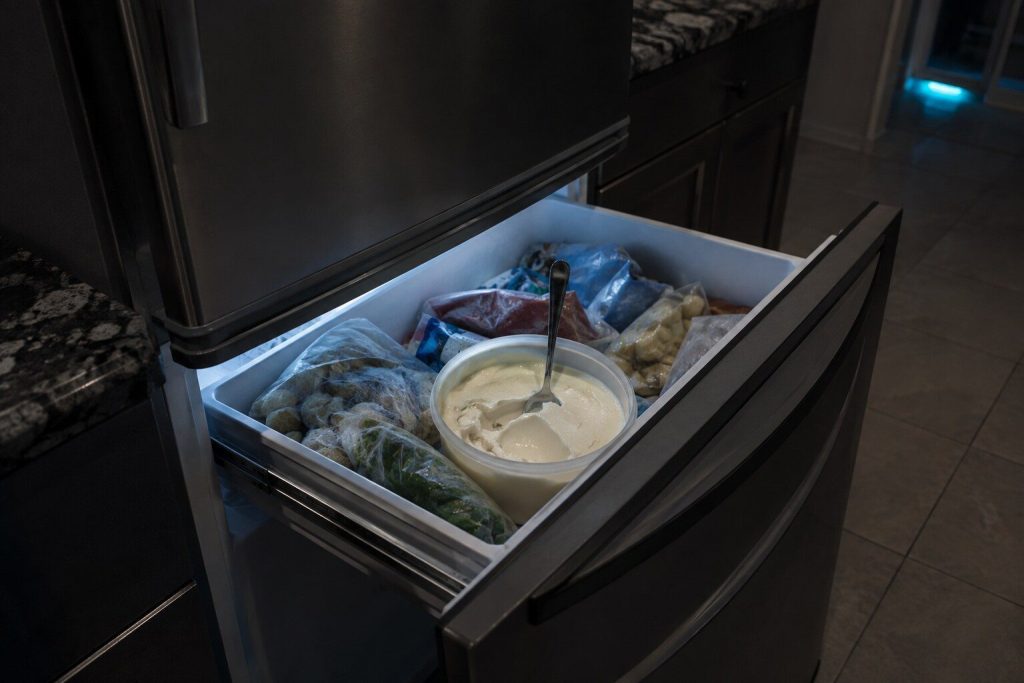
Ice cream soft, ice cubes hollow, meat starting to give Freezer is not keeping things frozen
Whirlpool's upright freezer branch publishes 63 pages and not a single error code. There is nothing to look up, and the compartment cannot tell you what is wrong. What it does tell you is a temperature, and the difference between 5 degrees and 20 degrees decides whether this is tonight's problem or next week's appointment.
- Zero code pages in Whirlpool's entire upright freezer branch — this one is all measurement
- Ice cream softens several degrees before anything else does; it is an early warning
- A compartment loaded up to its rear vents starves itself of the air it needs
-
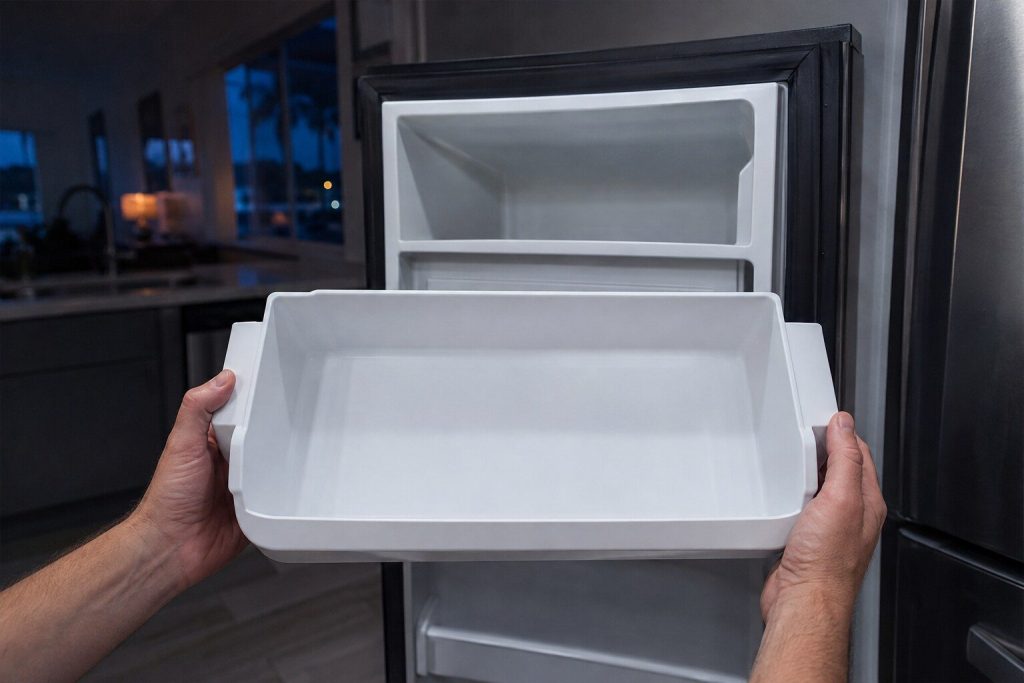
The bin is empty and nothing has changed Ice maker has stopped making ice
An ice maker is a small machine with one job and several ways to be interrupted, and Whirlpool publishes 20 pages across ice production, low production and ice quality without a code for any of it. What it does publish is a filter status light — and the note that it does not reset by itself when the filter is changed, which explains a good number of these calls.
- Production drops before it stops, so slow small cubes are the early warning
- The H2O filter light does not clear itself after a filter change — it is reset by hand
- The fill tube freezing is the classic version of this in a humid kitchen

Where the symptom page is the whole diagnosis
Three appliances with nothing to translate
A top-freezer refrigerator, an upright freezer and a gas cooktop: this make publishes 82, 63 and 52 support pages for them respectively and not one code page among the three. On those the symptom page is not a way in to a code table — it is the diagnosis, written as measurement. Temperature in each compartment, airflow at the vents, frost on the evaporator, current at the compressor. On a gas cooktop it is the igniter, the spark module, the burner cap seated straight and the port that has silted up, none of which reports anything to anybody. Saying that plainly is worth more than borrowing a table from the appliance next door.
Before you book
Write it down before you cut the power
Both halves of the code
- Watch the display for a few seconds before writing anything down. A Whirlpool alternates between the two halves of its code, and half a code is not an address.
- Photograph it twice, once on each half. Nobody remembers which came first, and the order is worth having.
- Say which appliance it is on. The same characters are a different report on a washer, a dryer and a range, and they are different pages here.
- Do not cut the power first. The display clears and the condition does not, and the code is the most useful thing a first visit can start from.
If it is a refrigerator or a freezer
- There may be no code to find. This make publishes none at all for a top-freezer cabinet, and nine pages in total for a side-by-side.
- Tell us which indicator lights are on instead — cooling off, door alarm, air filter, H2O. On this side of the house those do most of the reporting.
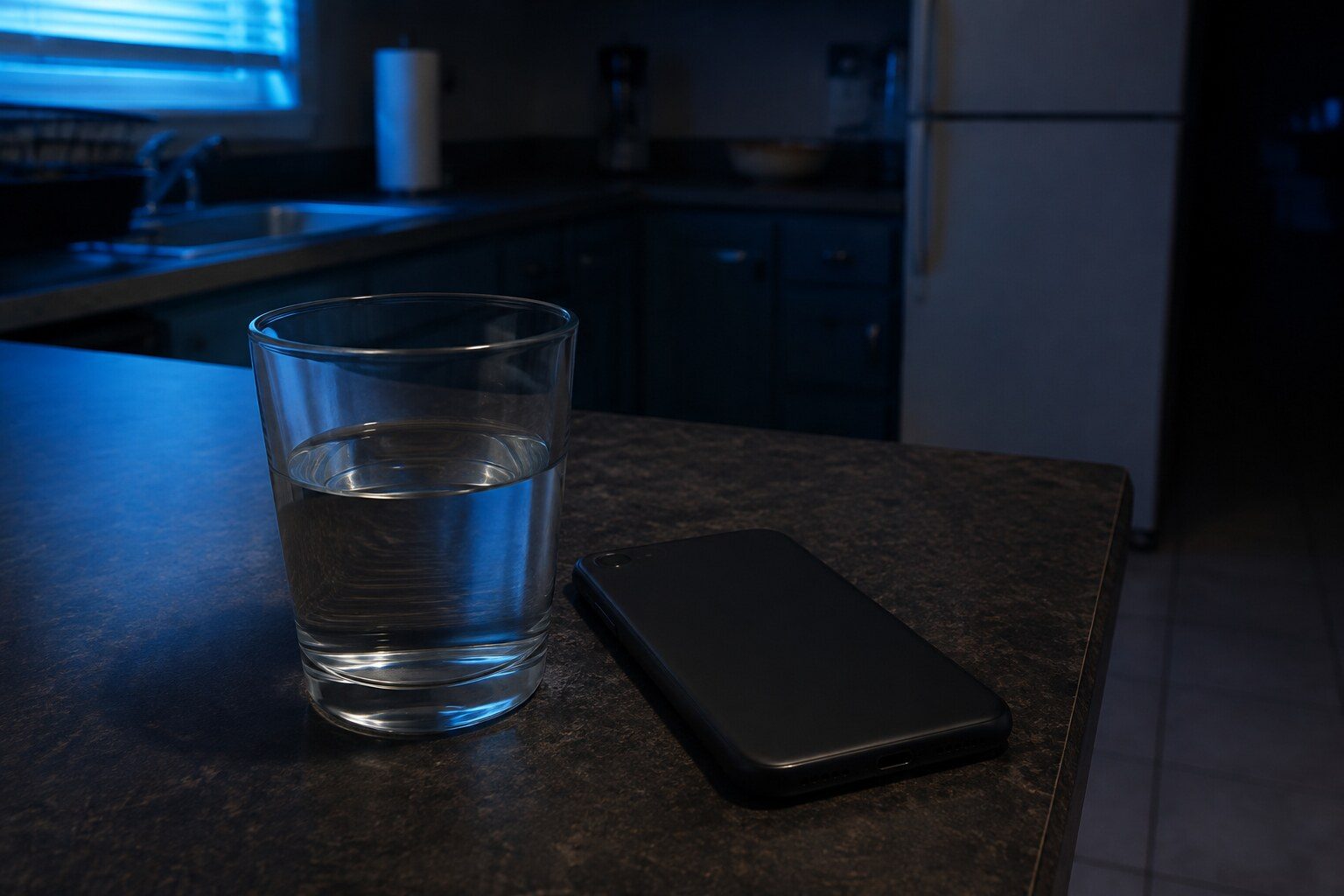
- Put a glass of water in the fresh food compartment overnight and a thermometer in it. A measured temperature beats a description of one.
- Look under the crisper drawers for water. A blocked defrost drain puts it there long before it reaches the floor.
By code
Or look the code up directly
One page per code per appliance, because the same characters are not the same repair on a washer and on a range.
-
Cooktop error code C81 OR C83
Whirlpool cooktop error code C81 OR C83: This is the code that is almost never the appliance. Which machines can raise it, what the maker publishes about it, and what to do next.
What this one means -
Cooktop error code C82
Whirlpool cooktop error code C82: The lid chain is four things in order: the striker enters the lock, the lock drives its bolt, a switch confirms the movement, and the control hears the confirmation inside a short window. Which machines can raise it, what the maker publishes about it, and what to do next.
What this one means
-
Cooktop error code E2
Whirlpool cooktop error code E2: Whirlpool publishes this code with the subsystem it belongs to and its own reset procedure, and it does not publish a mechanism behind it. Which machines can raise it, what the maker publishes about it, and what to do next.
What this one means -
Cooktop error code E90
Whirlpool cooktop error code E90: Whirlpool documents this code and publishes no mechanism behind it — its own page carries the number, the appliance and a power-cycle procedure, and nothing else. Which machines can raise it, what the maker publishes about it, and what to do next.
What this one means -
Cooktop error code E91
Whirlpool cooktop error code E91: Whirlpool documents this code and publishes no mechanism behind it — its own page carries the number, the appliance and a power-cycle procedure, and nothing else. Which machines can raise it, what the maker publishes about it, and what to do next.
What this one means -
Cooktop error code E92
Whirlpool cooktop error code E92: Whirlpool documents this code and publishes no mechanism behind it — its own page carries the number, the appliance and a power-cycle procedure, and nothing else. Which machines can raise it, what the maker publishes about it, and what to do next.
What this one means -
Cooktop error code E93
Whirlpool cooktop error code E93: Whirlpool documents this code and publishes no mechanism behind it — its own page carries the number, the appliance and a power-cycle procedure, and nothing else. Which machines can raise it, what the maker publishes about it, and what to do next.
What this one means
Worth doing first
Watch the display for ten seconds before you write anything down
Whirlpool’s own dryer documentation puts it plainly: a code beginning with F appears alternating between F# and E#. The panel shows you one half, then the other, in the same window. That is why so many people arrive with half a code — they wrote down what was on the glass when they looked. Stand there for a full cycle of it, photograph both halves, and you have an address instead of a fragment.
Before you call
Questions about reading a symptom
There is no code at all. Is that worse?
Not usually, and on this make it is often just normal. Whirlpool publishes almost nothing for its refrigerators and freezers, so an absence of code there tells you nothing about how serious it is. Elsewhere a symptom with no code usually points at something mechanical — a blocked duct, a loaded filter, a seal that has stopped sealing — which is generally the cheaper half of this trade.
I only caught half the code. Is that enough?
Sometimes, and it is worth going back for the other half anyway. The display alternates between the two halves, so half a code narrows it to a family rather than to a part — and on this platform one family can cover a sensor, the wiring to it and the board reading it. Ten seconds in front of the panel is the cheapest diagnostic step there is.
The code cleared by itself. Should I still call?
Note both halves somewhere before you forget them, then watch whether it comes back. A code that arrived with a power event and never returns is not a repair — this make publishes PF for exactly that, a cycle interrupted by a power failure. One that reappears, even a week later, is the same condition, and an intermittent problem is a cheaper thing to catch than a settled one.
Can I keep using it meanwhile?
It depends entirely on what it is doing. A hood whose lamp has gone is a cosmetic wait. A dryer that smells hot, or a microwave that runs on its own, is not — that one comes out of the wall today. We will say plainly which of those yours is when you call.
In more detail
Why the symptom comes before the code on this make
The code archive is no use until you have a code
An error code is excellent information, and on a Whirlpool it is unevenly available. In the laundry room and at the range you will usually have one. At the refrigerator you usually will not, and that is the make rather than a gap in this research: zero code pages for a top-freezer cabinet, zero for an upright freezer, nine for a side-by-side. These pages start where the owner actually is — in front of a machine doing something — and turn that into something a technician can act on.
What this climate changes
Nine wet months a year is hard on door seals, defrost drains and dryer ducts, and those three sit behind a large share of the calls we take here. A gasket that would last a decade inland hardens sooner; a defrost drain ices sooner and puts water under the crisper rather than on the floor where you would see it; a dryer vent hood corrodes half open and packs with lint, and the machine simply runs longer instead of complaining. None of that is a defect in the appliance. It is what this coast does to an appliance that is working.
Tell us what it is doing, and what the panel shows.
If there is a code, watch it alternate and give us both halves. If it is the refrigerator, tell us which indicator lights are on and what a thermometer says in each compartment.
This article is based on:
- Official manufacturer documentation
- Internal repair procedures
- Technician repair history
- Company quality standards