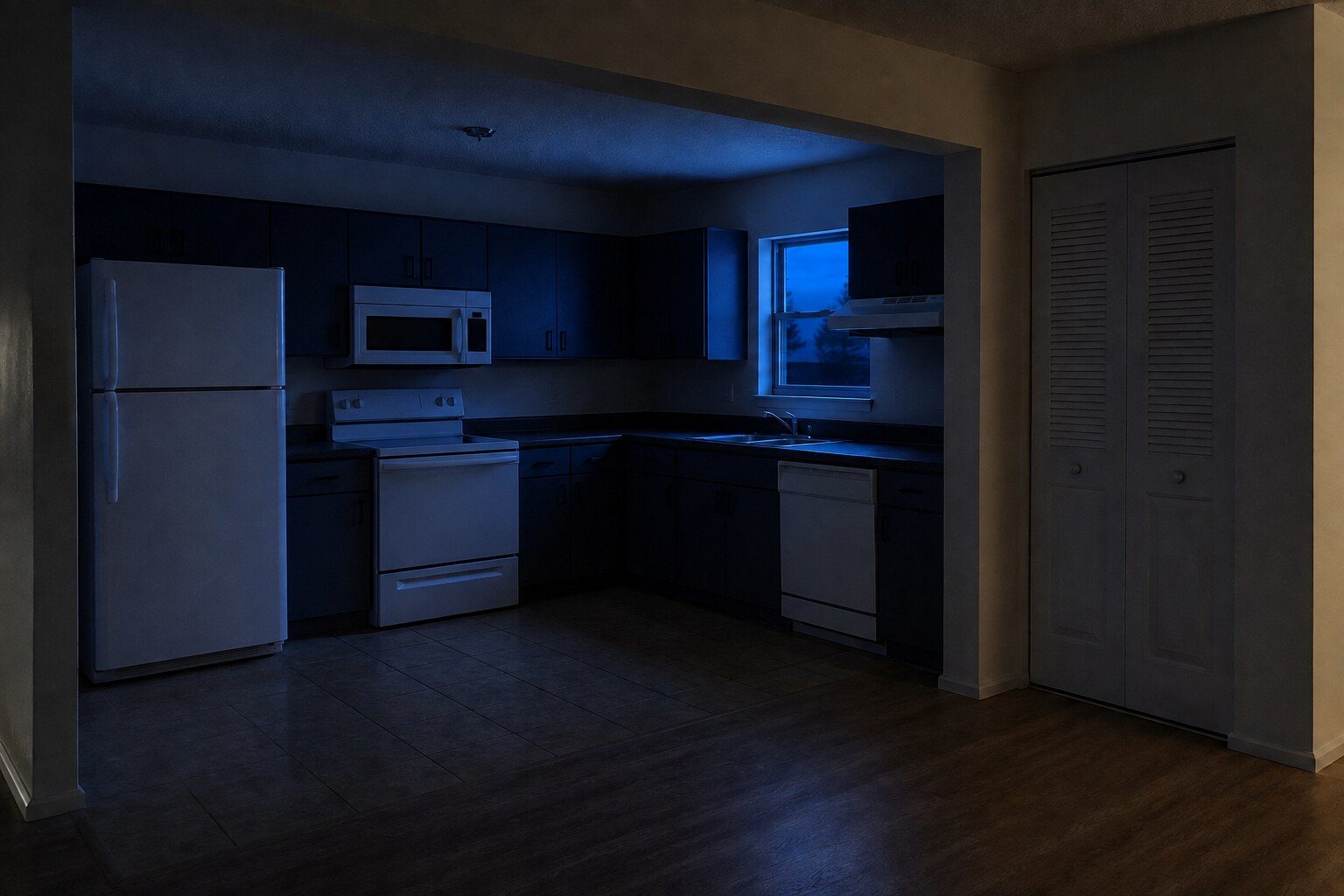
Stand in front of a Whirlpool range or a Whirlpool washer and it will normally tell you something: this make publishes 170 code pages for its ranges, 176 for its wall ovens, 83 for its electric cooktops, 88 for the laundry tower and 70 for top-load washers. Stand in front of the refrigerator and it will not. There are 24 code pages across 156 French door pages, nine across 140 side-by-side pages, and none at all for a top-freezer cabinet or an upright freezer. The refrigerator, freezer and cooktop cards below are written around that rather than despite it, and the gas cooktop card says the same thing for the same reason: 52 pages in the maker’s base and not one of them a code.
11 appliances · 28 symptoms
Eleven appliances, and an honest answer about each of them.
Whirlpool's own US support base runs to 4,647 pages: 1,537 on cooking, 1,449 on laundry, 1,131 on refrigeration. It is not spread evenly, and neither is this list. Some of these cards are about reading what the machine is telling you. Three of them are about measuring, because on those the make publishes nothing to read.
- 11 appliances on this badge
- 4,647 pages in the maker's own support base
- 1,449 of them about laundry
- 3 appliances with no published codes at all
By appliance
Eleven cards
Each one says what the appliance is on this make, what tends to go wrong with it in this climate, and whether there is a code table behind it or not.
-
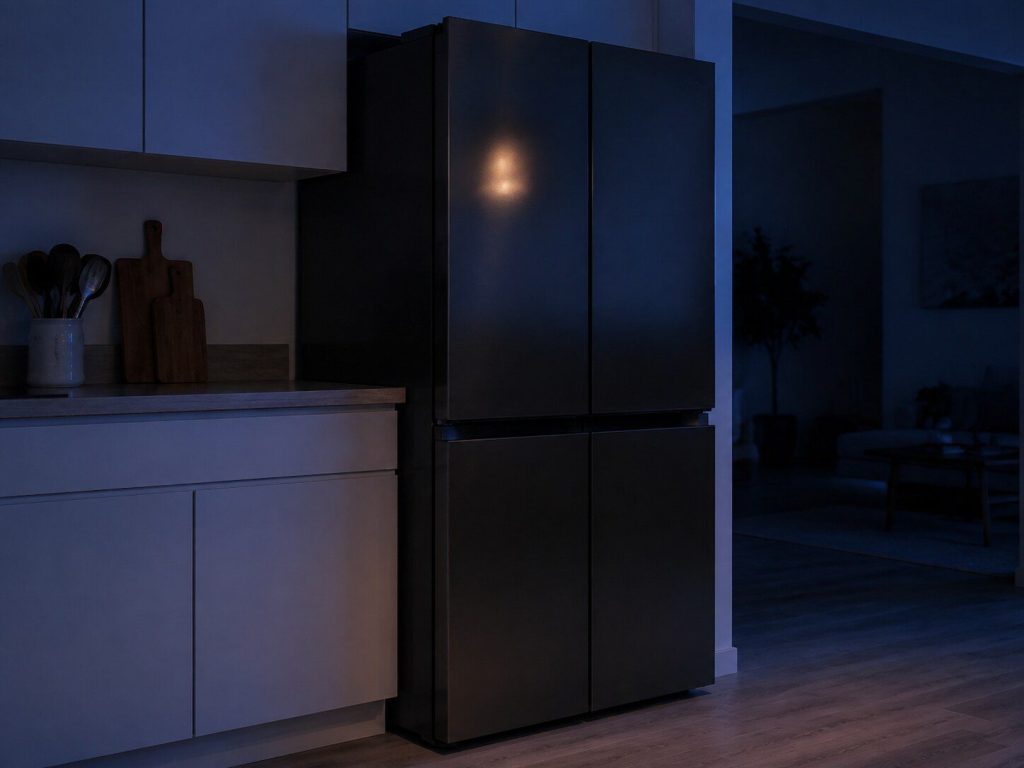
French door · side-by-side · top freezer · quad door · all-refrigerator Whirlpool refrigerator
This is the most common refrigerator in South Florida and the least documented appliance Whirlpool sells. Its own support base carries 156 pages on French door cabinets and 140 on side-by-side, but only 24 and 9 of those are code pages, and on the top-freezer cabinet — 82 pages — there are none at all. That is not an oversight in our research. It is how the make works: Whirlpool talks when it cooks and washes, and it goes quiet when it chills. So a refrigerator call here starts with measurement rather than with a display. Temperatures in both compartments, air at the vents, the state of the defrost circuit, and the door seal that this climate takes apart faster than any other part of the machine.
- French door, side-by-side, top freezer, quad door and all-refrigerator cabinets
- 24 code pages on French door, 9 on side-by-side, none on top freezer
- Indicator lights do most of the reporting: cooling off, door alarm, air filter, H2O
-
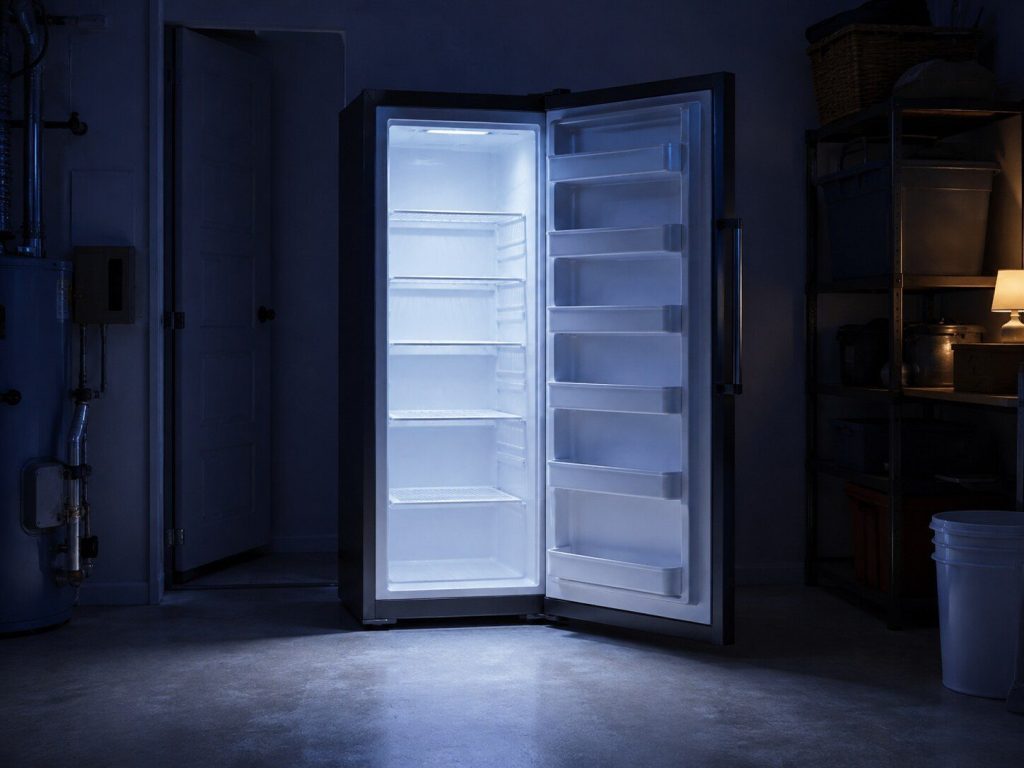
Upright · chest · convertible chest · the freezer side of a full-size cabinet Whirlpool freezer
Whirlpool sells standalone freezers as its own product family and publishes 63 pages on the upright, 46 on the chest and 46 on the convertible chest freezer that can be switched to refrigeration. Not one of those 155 pages is a code page. There is no error code list for a Whirlpool freezer, because there is nothing on the front of most of them to display one. What Whirlpool writes about instead is exactly what goes wrong: 25 pages on operation, 11 on noise, 8 on cleaning, 5 on frost, 5 on doors and 3 on leaking. That is the real service list for this appliance, and it is the list we work through.
- Upright, chest, and convertible chest freezers that switch to refrigeration
- Zero code pages across 155 freezer pages — this machine reports by behavior
- Frost, door seal, temperature control and the defrost drain are the whole short list
-
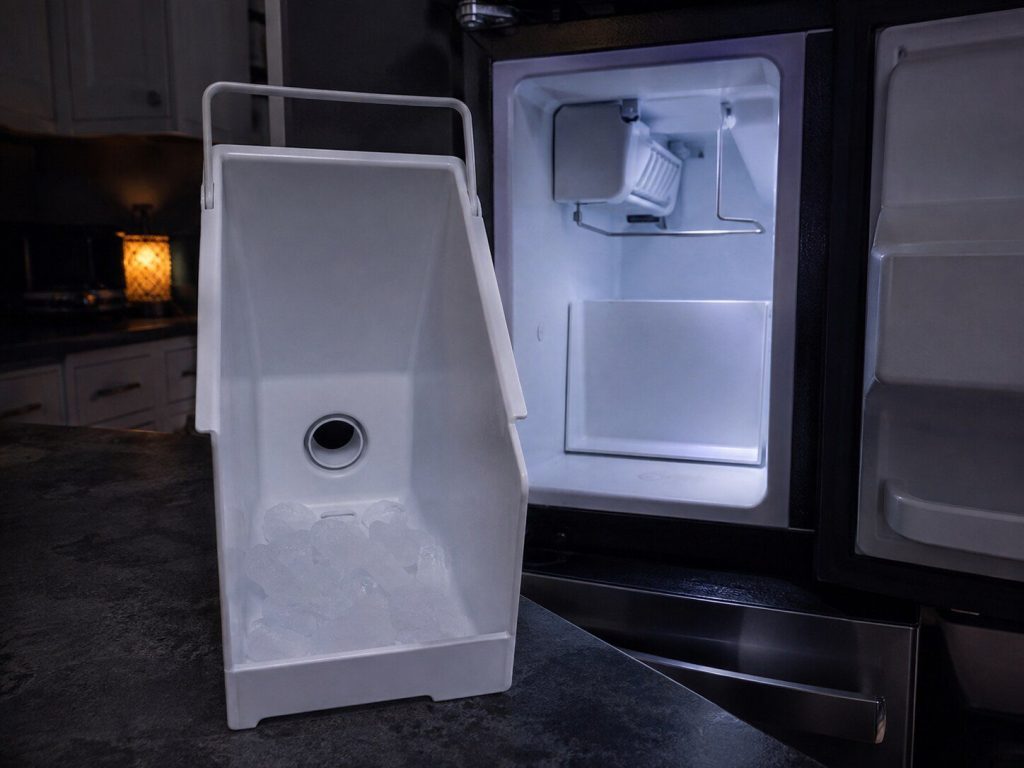
The ice maker inside the refrigerator, and the freestanding ice maker as its own machine Whirlpool ice maker
Whirlpool treats ice as its own branch, with 110 pages under ice makers and a further set inside the refrigerator sections — 17 pages on ice concerns for the top-freezer cabinet alone. The split of that writing tells you what breaks: 14 pages on ice production, 13 on cleaning and maintenance, 10 on ice quality, 20 on operation and power, 7 on noise and 4 on leaking. There are four blinking-light pages for the freestanding machine — the cleaning light, the filter light and the service light — and no numbered code list anywhere. This is the appliance people call about most in a Miami summer, and it is the one the make explains with words rather than codes.
- The refrigerator's built-in ice maker, and Whirlpool's freestanding ice makers
- No numbered codes: three published indicator lights and 110 pages of plain guidance
- Ice production, ice quality and cleaning are where Whirlpool's own writing concentrates
-
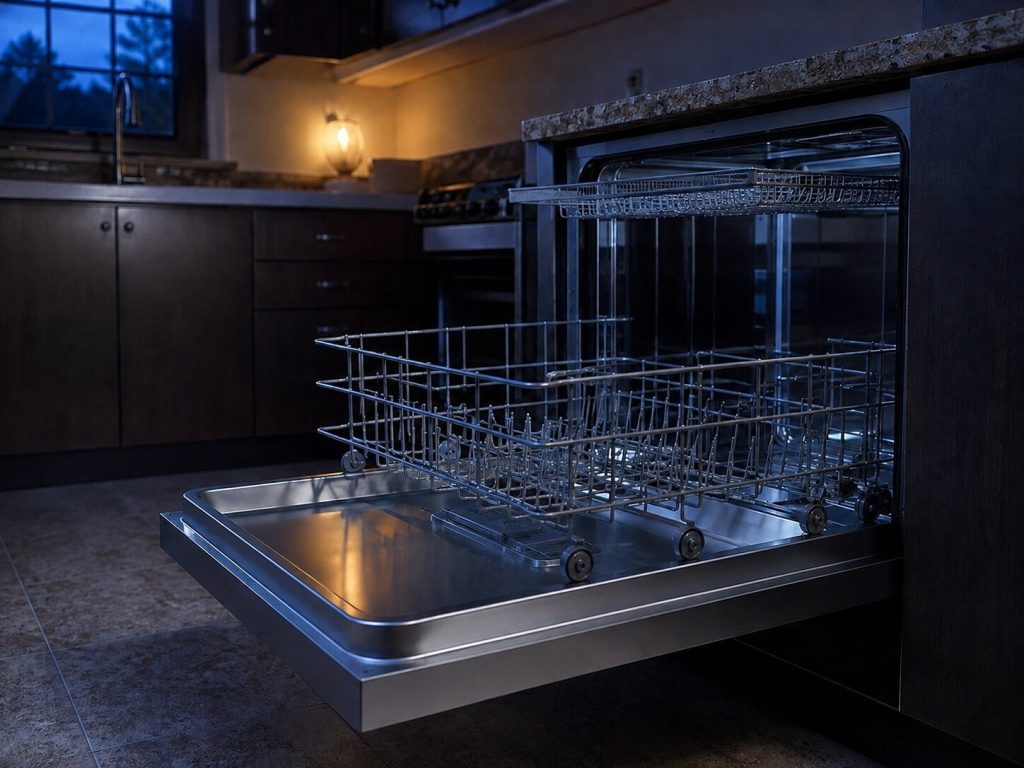
Built-in and portable dishwashers, with the F-and-E code set and the blinking-light set Whirlpool dishwasher
The dishwasher is the one place in Whirlpool's kitchen where the codes are properly documented: 38 code pages for the built-in machine and 9 more for the portable, covering F1E1 through FAE4 and the H2O code, plus something most makes do not publish at all — the blink patterns. A Whirlpool dishwasher with no display reports by pausing between flashes, and Whirlpool publishes what those pauses mean, from 1 pause 1 through 10 pause 5. It also publishes the front status light, including what it means when it glows red. If your machine is blinking at you rather than showing a number, there is a real answer for it.
- Built-in and portable machines, 47 published code pages between them
- F1E1 to FAE4 and H2O, plus the flash-and-pause patterns for machines with no display
- The front status light, the clean light and the sanitize light each have a published meaning
-
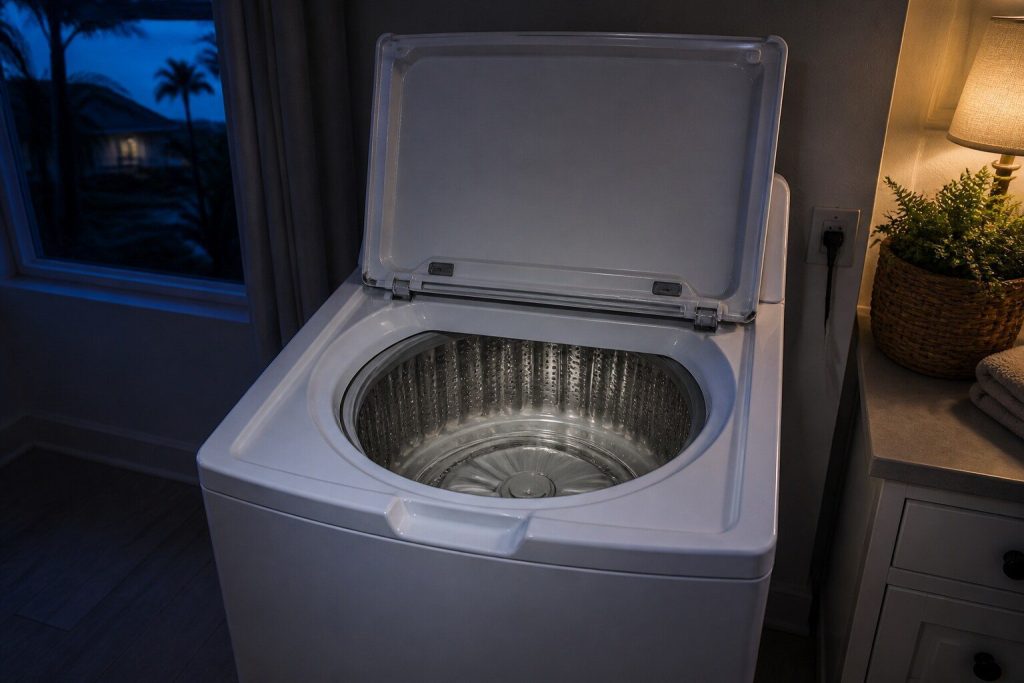
Top load · front load · compact front load · laundry tower · all-in-one washer dryer Whirlpool washer
Laundry is the strongest part of this site, and the reason is measurable: Whirlpool's own support base carries 1,449 laundry pages, while the sister badge on the same control platforms publishes no laundry at all. For washers specifically there are 157 pages on the top loader with 68 code pages, 179 on the front loader with 59, 60 on the compact front loader, 204 on the laundry tower with 88, and a separate all-in-one washer dryer branch with 22 code pages of its own. That is five distinct machines with five distinct code lists, and the codes do not all carry the same meaning across them. Which machine the code came off is half the diagnosis.
- Top load, front load, compact front load, laundry tower and all-in-one machines
- Around 250 published washer code pages, and the code lists differ between shapes
- Sud, F8E1, F5E2, LF, Ld, dU, uL and the lid-lock lights are all published conditions
-
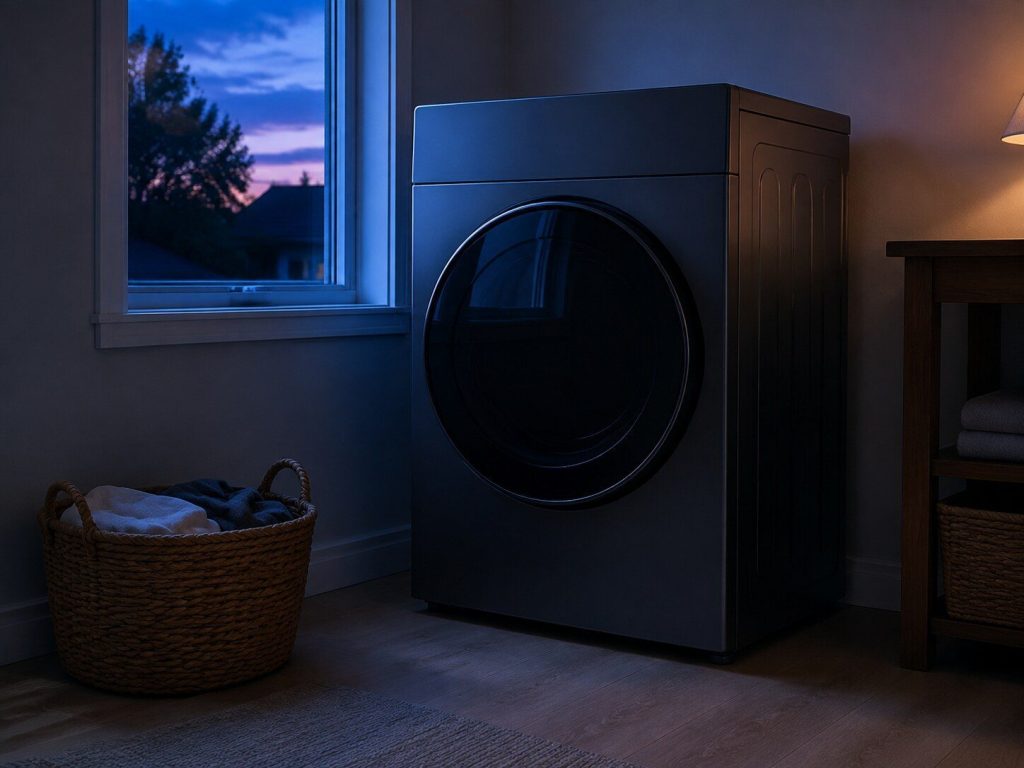
Vented electric · vented gas · compact heat pump · HybridCare · laundry tower Whirlpool dryer
Whirlpool publishes 114 pages on the dryer with 55 of them code pages, another 47 on the compact heat pump machine, 35 on the HybridCare ventless dryer, and 92 more of general dryer material — and that is before the laundry tower and the all-in-one branches, which have their own. The published code set runs wide: E1, E2, E3, F01 and F02, the F1 and F2 families, F20 through F31, F70 through F78, FCE1, Loc, PF, and one that no other appliance has — AF, which Whirlpool documents as Check Vent. That single code is the most useful thing this make publishes, because in South Florida a restricted vent is the leading cause of a dryer that has stopped drying and the leading fire risk in the room.
- Vented electric and gas, plus ventless heat pump and HybridCare condensing machines
- 55 published code pages on the vented dryer alone, including AF or Check Vent
- A ventless machine has no duct to blame — the condenser and its drain replace it
-
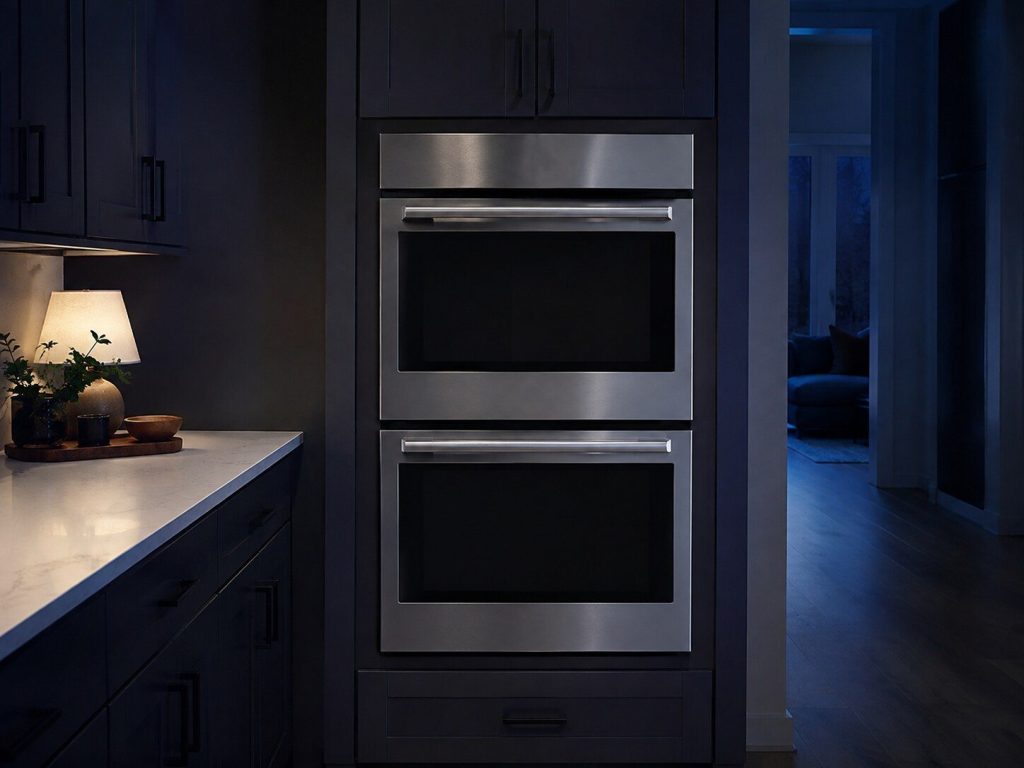
Single and double wall ovens, electric and combination microwave-oven units Whirlpool wall oven
The wall oven is the most heavily documented appliance Whirlpool makes. Its support base carries 303 pages on wall ovens and 176 of them are code pages — more than any other branch, refrigeration included, and more than seven times what the entire freezer family gets. The published set is deep and it is specific: the F1 through F9 families with their E-suffixes, the FB, FC and FE codes, the C81 and C83 group, ES or E5, and the plain-language conditions like a locked door that will not release after a self-clean, Sabbath mode left on, and a control asking for the probe. When a Whirlpool oven has something to say, it says it clearly, and that changes what a first visit looks like.
- Single and double wall ovens, plus combination microwave-oven units
- 176 published code pages — the deepest documentation on the whole Whirlpool base
- Door lock after self-clean, Sabbath mode and probe messages are published conditions too
-
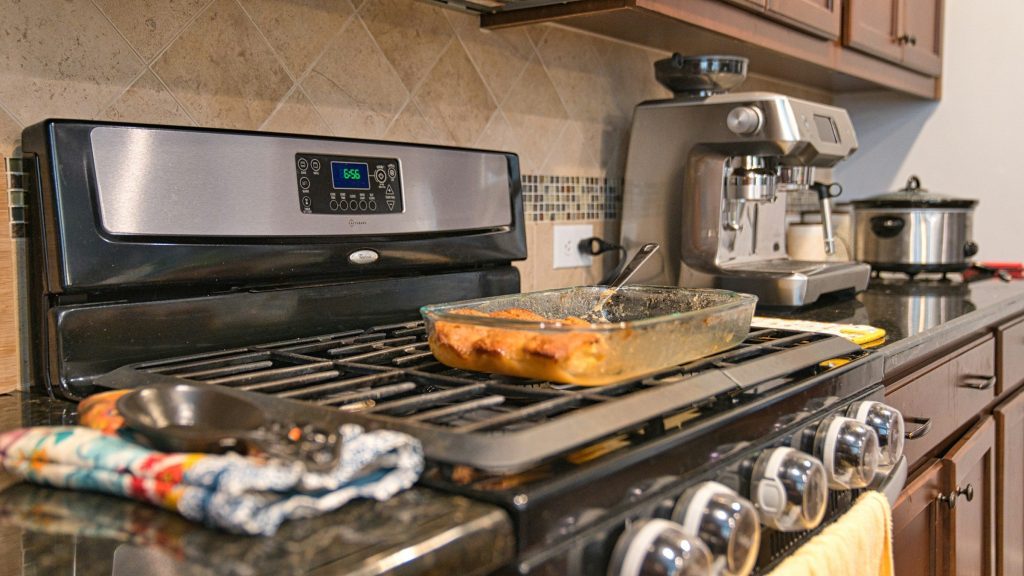
Freestanding and slide-in ranges, gas and electric, with the deepest code set on the site Whirlpool range
Whirlpool's range section is the largest single appliance branch it publishes: 359 pages, of which 170 are code pages. Second only to the wall oven, and it covers a code set most people have never seen documented — not just the F0 through F9 families and the FB, FC and FE codes, but the numeric families that begin with 1c, 1d, 3d, 4d and 9d, which appear on the newer connected controls and are unfamiliar to anyone who has only worked on older machines. Alongside those sit the plain-English conditions: Lo or Pre, Loc, PUSH or PSH, Sabbath mode, and the C81 to C83 group. This is the appliance Whirlpool talks about most, and it is the reason the code archive on this site is worth reading.
- Freestanding and slide-in ranges, gas and electric, 359 published support pages
- 170 code pages: the F families, the FB, FC and FE codes, and the 1c, 1d, 3d, 4d, 9d sets
- Sabbath mode, Loc and PUSH or PSH are published control messages, not failures
-
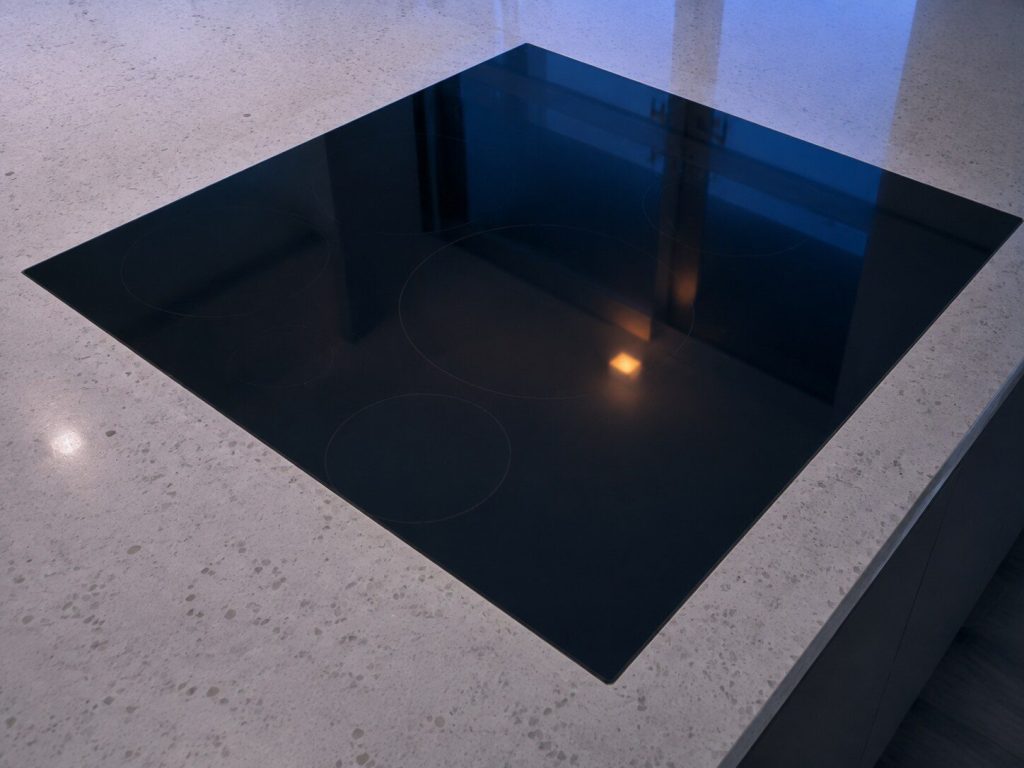
Electric radiant · induction · gas — and only two of the three publish codes Whirlpool cooktop
The three kinds of Whirlpool cooktop are documented completely differently, and the gap is the most useful thing to know before you call anyone. The electric radiant cooktop has 114 pages with 83 code pages. The induction cooktop has 64 pages with 40. The gas cooktop has 52 pages and zero code pages — not a short list, none at all. Its pages are about surface burners, flame problems, ignition, venting and cleaning, because a gas cooktop has almost no electronics to report anything. So on a gas cooktop the diagnosis is done at the burner, and on the electric and induction ones it usually starts at the display.
- Electric radiant, induction, and gas — 230 published support pages between them
- 83 code pages on electric, 40 on induction, and none whatsoever on gas
- FC LF, FC RF, FC LR and FC RR name the element by its position on the cooktop
-
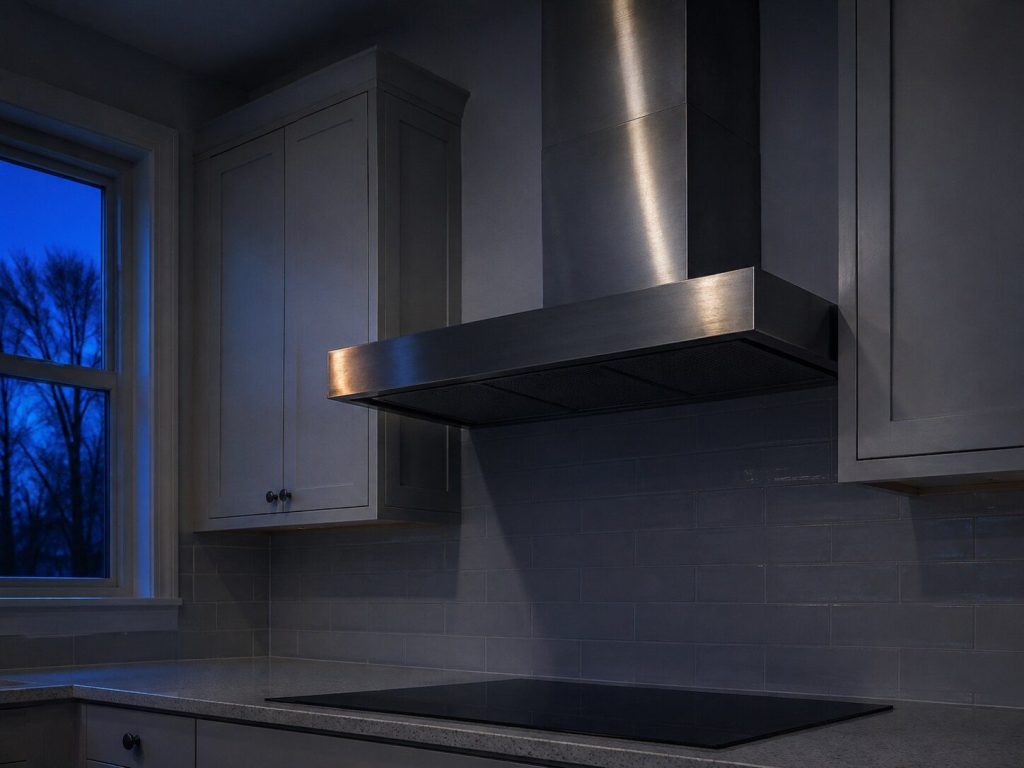
Wall-mount and under-cabinet hoods, retractable downdraft vents, and the OTR microwave Whirlpool range hood
Whirlpool documents ventilation lightly and honestly: 43 pages across its vent hoods and the retractable downdraft vent, of which exactly two are code pages — a C in the display and an F in the display. Everything else is operation, noise and cleaning, which is a fair reflection of what a hood actually is. There are no sensors to disagree with each other, so there is nothing much to report. It is also worth saying that in a great many Whirlpool kitchens in this city the ventilation is not a hood at all but an over-the-range microwave doing the same job, and that machine has 67 published code pages of its own.
- Wall-mount and under-cabinet hoods, plus Whirlpool's retractable downdraft vent
- Two published code pages in the entire ventilation branch: C displayed and F displayed
- Ducted or recirculating decides what a working hood is even supposed to do
-
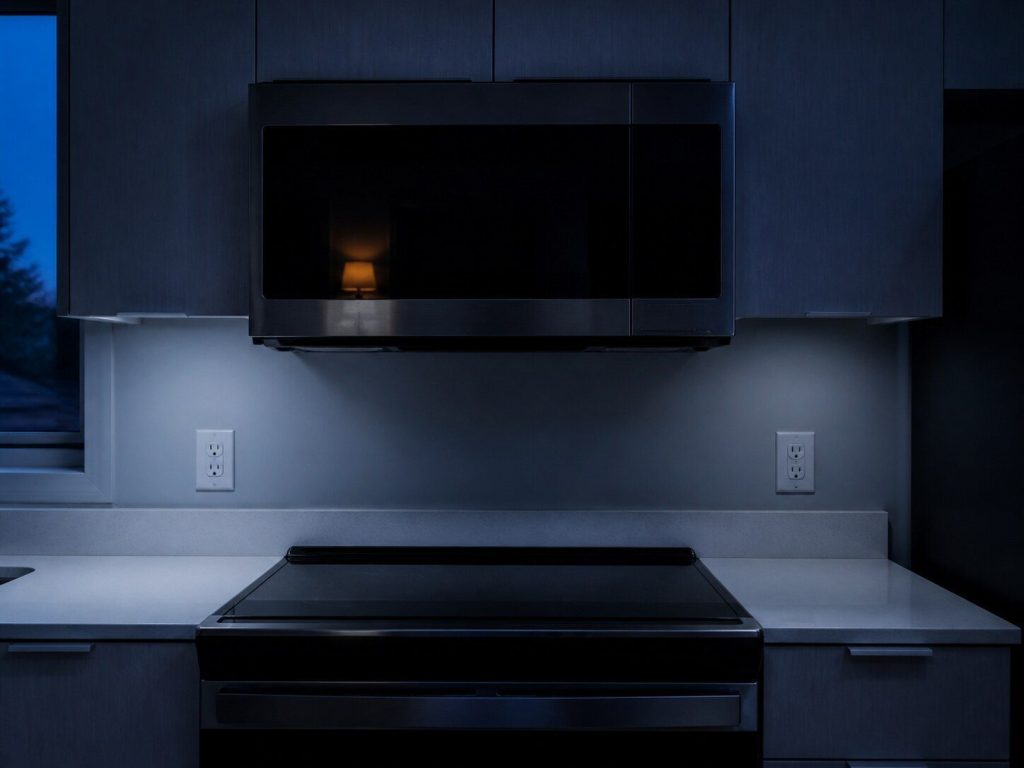
Built-in · over-the-range · countertop · combination microwave-oven units Whirlpool microwave
The microwave is the quiet surprise in Whirlpool's documentation. The over-the-range machine has 135 pages with 67 code pages and the countertop has 66 with 9 — 76 code pages in total, which is more than the whole refrigeration branch manages. And the codes carry real meanings rather than numbers: Whirlpool's own pages say that E21 is the thermal sensor circuit reporting open to the control board, that E23 means the oven did not reach preheat temperature within thirty minutes, that F2H1 and F2H2 point at the vent fan and light switch on the lower left front side panel, and that F3C points at the cavity temperature thermistor.
- Built-in, over-the-range, countertop and combination microwave-oven units
- 235 published code pages, and Whirlpool's own text names the part behind most of them
- E24 is documented as an overheat condition of 500F, which is a stop-using-it code
The one this site is best at
Laundry, which the premium badges do not have
Whirlpool builds a full laundry line and documents it heavily — top-load and front-load washers, gas and electric dryers, a heat pump dryer, a stacked laundry tower, an all-in-one that washes and dries in one drum, and a commercial laundry range. The washer and dryer cards here carry more detail than anything else on the site because the maker’s base carries more detail on them than on anything else it publishes. It is also where this climate does its work: a laundry closet with a louvered door and a long duct run above a dropped ceiling is a Miami problem, and it turns up as a dryer that needs two cycles rather than as anything the machine reports.
Before you book
Two things worth having ready
The model number, off the appliance
- Refrigerators: on the inside wall of the fresh food compartment, usually near the crisper.
- Top-load washers: under the lid. Front-load washers and dryers: in the door opening, or on the back panel.
- Ranges: on the frame behind the storage drawer, or on the oven door frame.
- Dishwashers: on the edge of the door, visible only when it is open.
Both halves of the code
- Watch the display for a few seconds before writing anything down. A Whirlpool alternates between the two halves of its code, and half a code is not an address.
- Photograph it twice, once on each half. Nobody remembers which came first, and the order is worth having.
- Say which appliance it is on. The same characters are a different report on a washer, a dryer and a range, and they are different pages here.
- Do not cut the power first. The display clears and the condition does not, and the code is the most useful thing a first visit can start from.
The work itself
Or start from the job
Every job we take on this badge, with what it involves and the figure it starts from.
-
from $89 Diagnostic visit
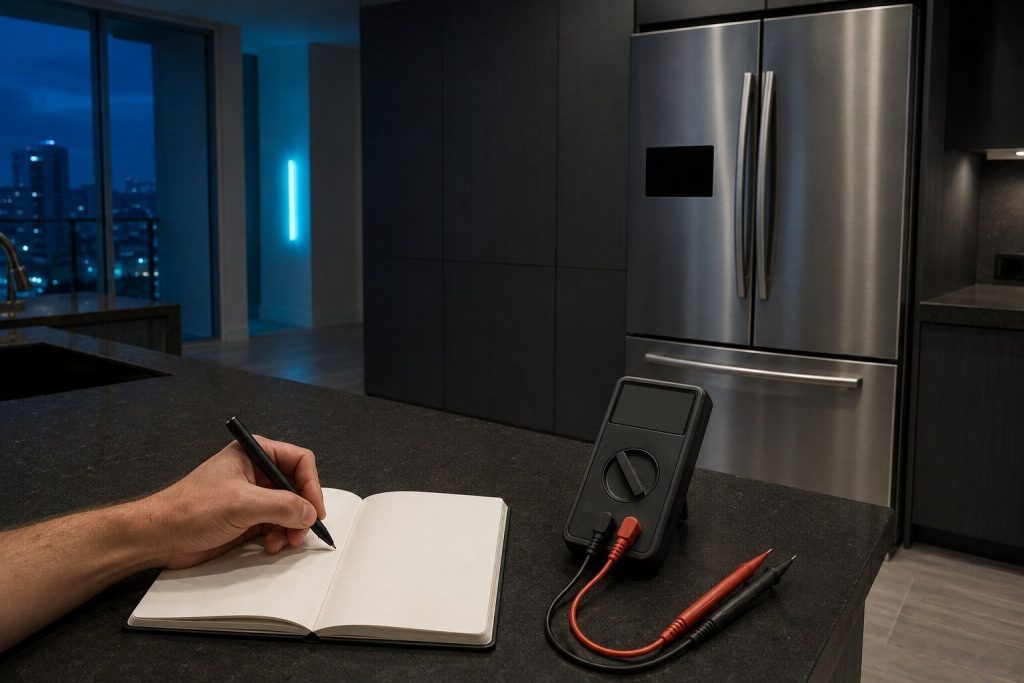
One visit, one technician, one answer in writing. On a Whirlpool the first question is whether the appliance is talking, because this make is not evenly talkative. It publishes a separate page for every code on its ranges, its ovens, its cooktops, its washers and its dryers, and it publishes almost nothing of the kind for its refrigerators and freezers. Knowing which half of the house you are standing in changes how the visit starts.
- Whether this appliance talks at all decides how the visit starts
- Laundry and cooking almost always have a code; the cold side almost never does
- Whatever we find goes to you in writing, and the visit comes off the repair
-
from $119 Appliance maintenance
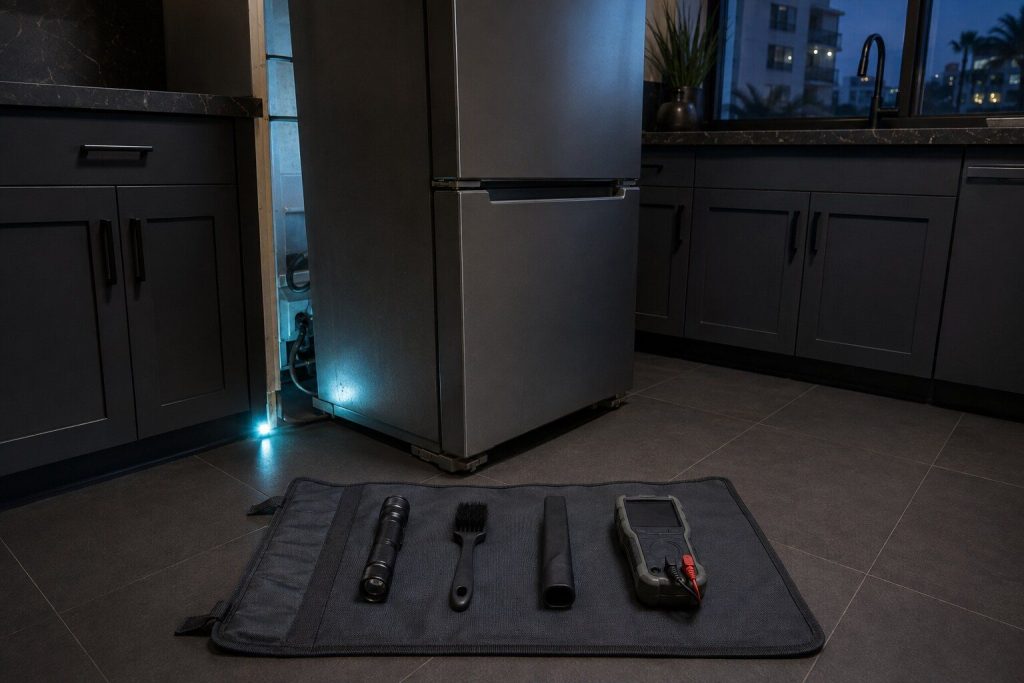
Nothing on this list saves an owner more money and nothing is booked less often. Whirlpool builds appliances that will run for fifteen years in an ordinary house, and what usually ends them early is a maintenance item rather than a design one: a coil under a blanket of dust, a drain pump filter that has never once been opened, a duct that has closed a little further every year. This make publishes cleaning instructions for every one of those. Almost nobody has read them.
- One visit across everything you own, priced on time rather than per machine
- The washer drain pump filter, which is the most neglected part in South Florida
- You keep a written list of what is closest to failing
-
from $139 Appliance installation
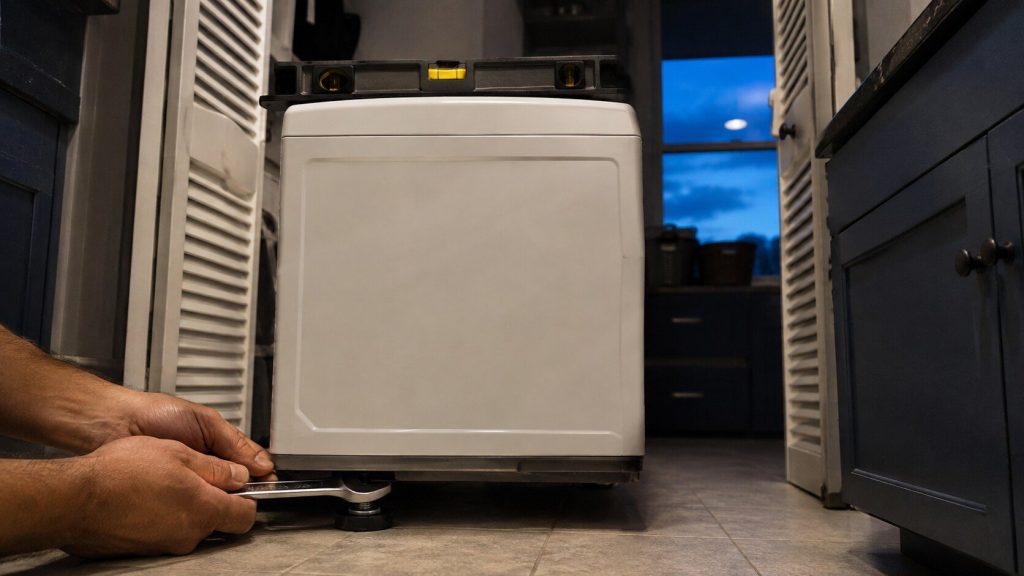
Most installations on this make are replacements, and that is worth saying out loud. The owner has just weighed a two-hundred-dollar repair against a nine-hundred-dollar machine and chosen the machine. What decides whether the new one is still working in eight years is the hour after it arrives: whether the opening was measured, whether the duct behind it was cleared, whether anyone put a level on it. A delivery crew is not paid for that hour and does not stay for it.
- The hour after the delivery truck leaves, which is the hour nobody is paid for
- Leveling done with a level and the lock nuts tightened, on every machine that has feet
- Gas joints leak-tested and the result written down
-
from $265 Appliance control board repair
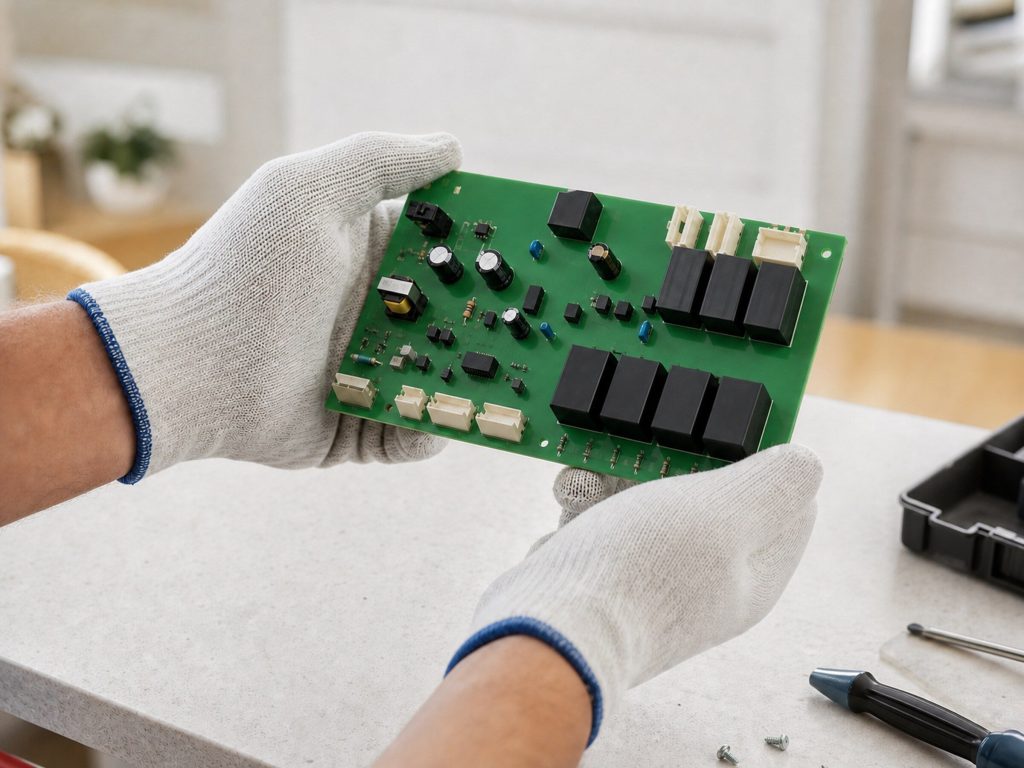
The board is where a Whirlpool reports from, and it is also the part that gets blamed for everything else. Whirlpool runs the same control architecture across its whole line, which is why an F#E# code looks familiar on a range and on a washer — but a board that has died usually died of something, and replacing it without finding that something buys you a few months.
- A board that died usually died of something, and that something kills the next one too
- Browned connectors and pins backed out of a housing are cheap; boards are not
- Whirlpool revises these mid-production, so the order goes out against the serial
-
from $159 Commercial appliance repair
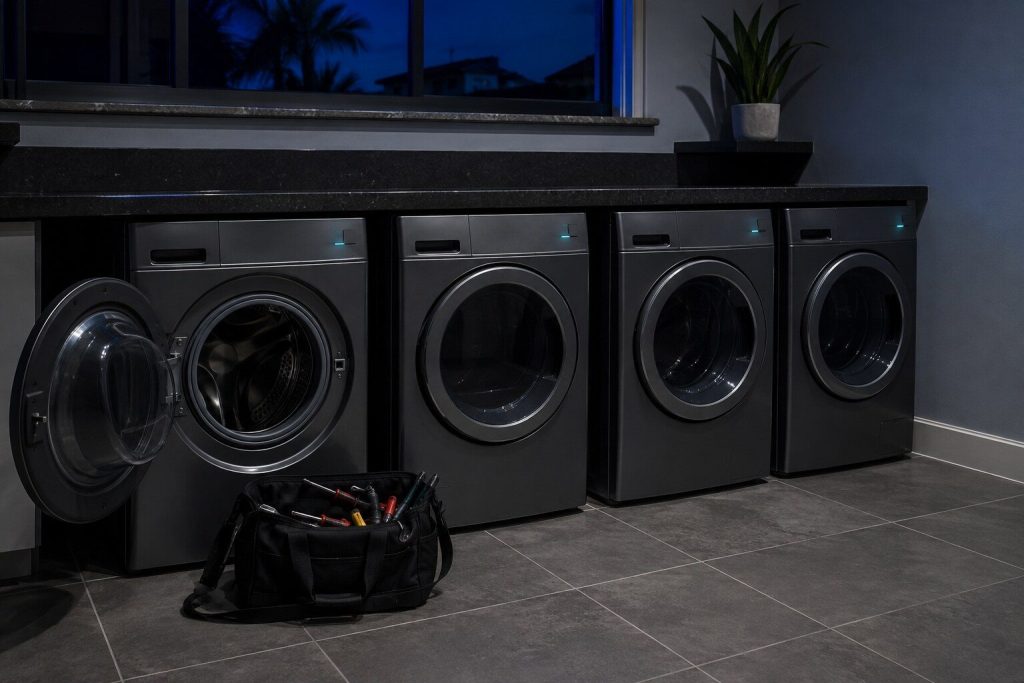
Whirlpool's commercial line is laundry, and that is the honest scope of this page. The make's own support base carries a commercial branch of 142 pages — coin and card washers and dryers — and nothing comparable for its kitchen appliances. So this is the work we take on in building laundry rooms, short-let blocks, small gyms and staff facilities: machines built on the domestic platforms, run at a duty cycle the domestic ones never see.
- This make's commercial equipment is laundry, so that is what this page covers
- A machine out of service costs the building money every day it stays out
- Coin and card mechanisms included, since that is what stops the revenue
-
from $225 Commercial ice machine repair
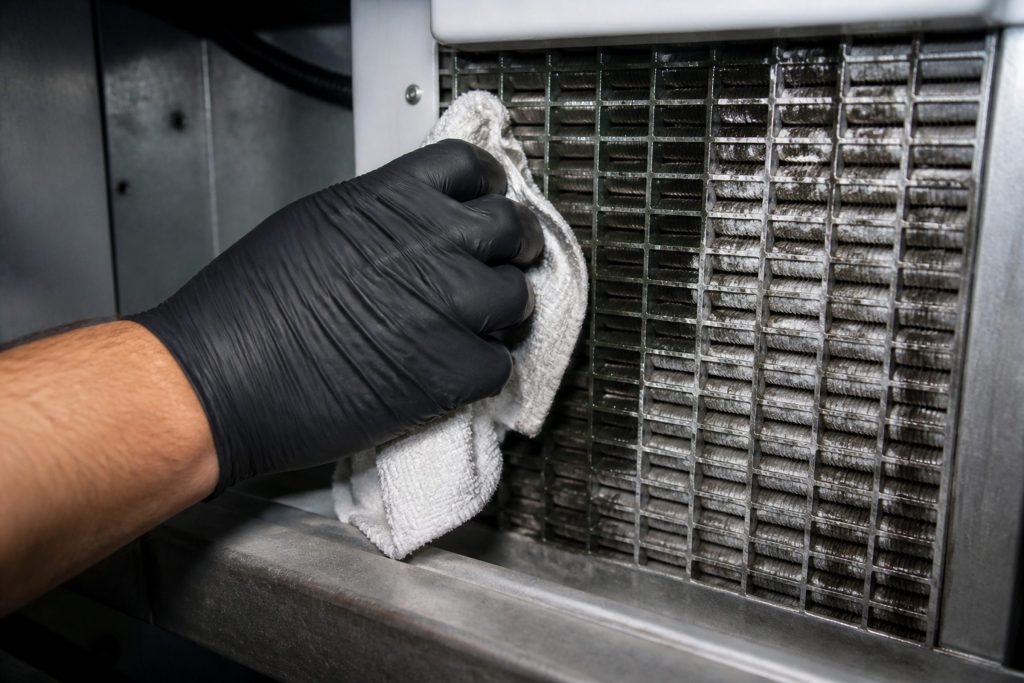
A machine that makes ice for a bar, a clinic or a break room is a different animal from the module inside a refrigerator. It has its own sealed system, its own water circuit, its own drain, and it fails in this climate for reasons that are mostly about water and heat rather than about the machine. Whirlpool's freestanding ice makers report through indicator lights rather than a code display, so the diagnosis is measurement.
- Sealed system, water circuit and drain treated as three separate questions
- Scale and the local water supply are the first suspects here, not the last
- Cleaning and sanitizing done properly as part of the repair
-
from $145 Refrigerator not cooling repair
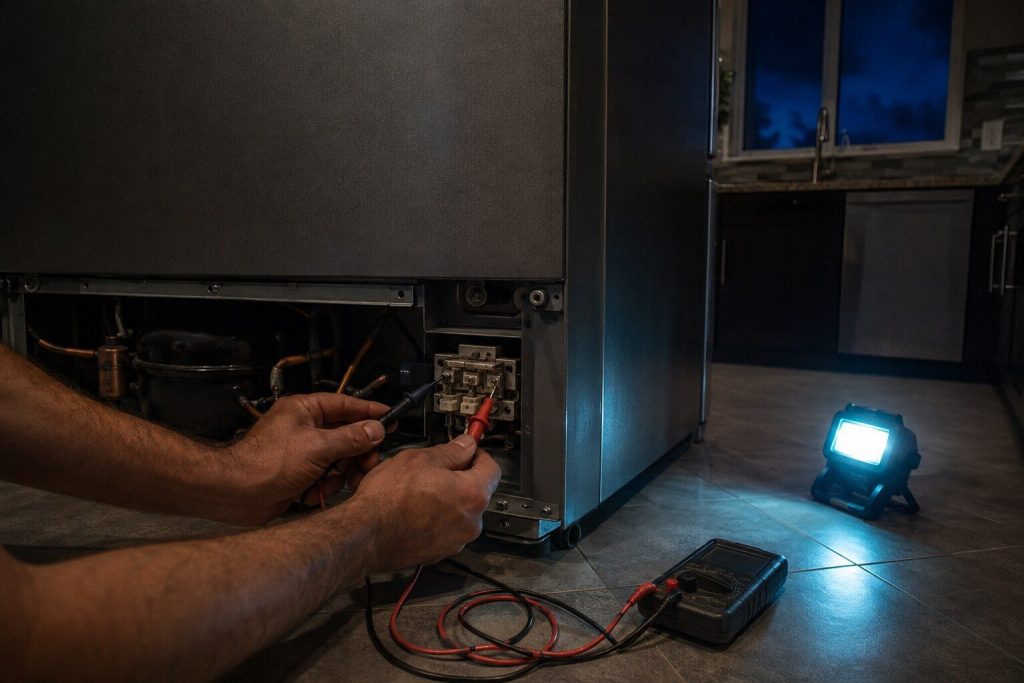
A Whirlpool that has stopped cooling will not name the part for you. This make publishes 24 code pages across its French door line, nine on side-by-side and none whatsoever on top freezers, so a warm cabinet arrives as a warm cabinet and nothing else. In practice that makes the first hour measurement — temperatures in both compartments, airflow at the vents, current at the compressor — and it makes anybody who names a part before that hour a guesser.
- Measured, not read: on most of this make's cabinets there is no code to look up
- The causes that cost nothing come first — groceries against a vent, a door held ajar, a coil under dust
- Sealed-system work is quoted only after gauges, and on an old cabinet we will say when it is not worth doing
Worth knowing
The compartment next door is an instrument
On a cabinet with no code table, the other compartment is the best measurement you have and it is free. A freezer holding while the fresh food side drifts says something quite different from both of them warming together: the first points at air moving between the compartments, the second at the sealed system or at the defrost circuit. Put a thermometer in a glass of water in each side overnight, and tell us both numbers when you call. It is worth more than any description of how cold it feels.

Before you call
Questions about the equipment
Do you work on every Whirlpool appliance?
Everything on this page: refrigerators, freezers, ice makers, dishwashers, washers, dryers, ovens, ranges, cooktops, range hoods and microwaves. We do not take on water heaters, air conditioning or anything outside the kitchen and the laundry room, which are different trades with different licensing.
There is no series name on my machine. Have I got a basic model?
No — there is no series name because this make does not sell one. Whirlpool publishes no product lines, no premium tier and no badge above the badge. What varies between two of these machines is capacity, the control panel and the feature list, and none of that changes what a repair is. Anyone quoting you differently for a Whirlpool because of the name on it is quoting the name.
Mine is out of warranty. Is that the end of it?
It is the beginning of the actual decision, and it is the commonest one on this badge. What matters is which part has gone, not which year it is. An element, an igniter, a pump, a lid lock, a door seal or a thermistor is worth doing on a machine well into its second decade, because the part is a stocked commodity here. A sealed system, a tub or a second control board in the same year is a conversation, and we will have it before the work.
Is a built-in harder than a freestanding machine?
Sometimes, and it is fair to say why. The electrical and thermal work is identical. What differs is getting to it — a wall oven has to be unfastened from the cabinetry and walked out onto a stand before anybody reaches its back, and an over-the-range microwave hangs off a wall plate over a cooking surface. That is why the same repair carries a different figure on a range and on a wall oven.
In more detail
What this make is, and what that changes
The most common kitchen on the street
Every make has a position and this one’s is volume. Whirlpool is not the badge on the most expensive kitchen in the building; it is the badge on the most kitchens in the building, and on a coast full of rentals, condos and second homes that is a real advantage rather than an apology. It means the parts are commodity parts. It means a technician has seen this exact assembly this month rather than this year. And it means the repair-or-replace arithmetic is a genuine question instead of a formality, which is why this site answers it out loud on the cost pages instead of steering every call toward a repair.
What we counted before writing any of it
4,647 pages in the maker’s own US support base, read from its own sitemap: 1,537 on cooking, 1,449 on laundry, 1,131 on refrigeration. Of those, 1,108 carry a code or an indicator light table, and they are not evenly distributed — 176 on wall ovens and 170 on ranges against zero on top-freezer refrigerators, zero on upright freezers and zero on gas cooktops. One branch listed in the maker’s own sitemap, 224 pages of built-in microwave, answers 404 at every URL; it was withdrawn and left in the index, we measured it by request rather than assuming, and nothing on this site cites it.
Tell us the appliance and the model number.
With those two we can usually say what is likely before anybody sets off, and bring the part rather than come back for it.
This article is based on:
- Official manufacturer documentation
- Internal repair procedures
- Technician repair history
- Company quality standards