Appliance
Whirlpool ice makers
Whirlpool treats ice as its own branch, with 110 pages under ice makers and a further set inside the refrigerator sections — 17 pages on ice concerns for the top-freezer cabinet alone. The split of that writing tells you what breaks: 14 pages on ice production, 13 on cleaning and maintenance, 10 on ice quality, 20 on operation and power, 7 on noise and 4 on leaking. There are four blinking-light pages for the freestanding machine — the cleaning light, the filter light and the service light — and no numbered code list anywhere. This is the appliance people call about most in a Miami summer, and it is the one the make explains with words rather than codes.
- 1 symptoms we are called out to
- From $89 diagnostic, credited to the repair
- 59 cities and neighborhoods covered
- OEM parts available on order
The short version
What this equipment is, for a repair
Configurations
The ice maker inside the refrigerator, and the freestanding ice maker as its own machine
Access
Planned before the visit, not discovered on arrival
Parts
OEM, available on order
Diagnostic
From $89, credited to the repair
What goes wrong with it
Symptoms we are called out to on Whirlpool ice makers
Each one covers the likely causes in the order they are worth checking, and what to do in five minutes before booking anything.
-
The bin is empty and nothing has changed Ice maker has stopped making ice
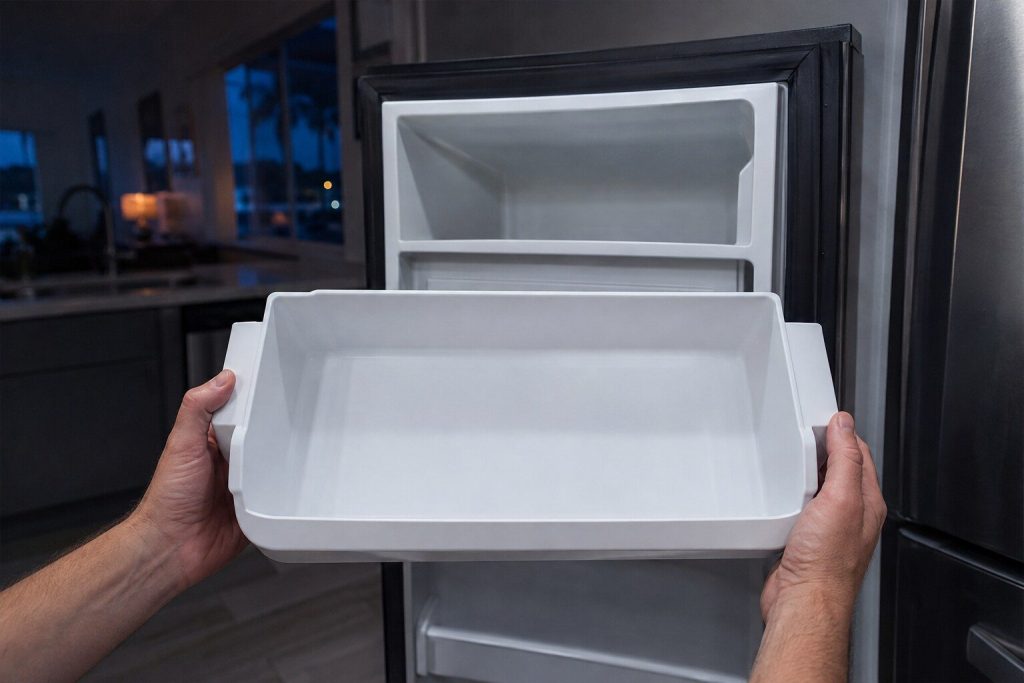
An ice maker is a small machine with one job and several ways to be interrupted, and Whirlpool publishes 20 pages across ice production, low production and ice quality without a code for any of it. What it does publish is a filter status light — and the note that it does not reset by itself when the filter is changed, which explains a good number of these calls.
- Production drops before it stops, so slow small cubes are the early warning
- The H2O filter light does not clear itself after a filter change — it is reset by hand
- The fill tube freezing is the classic version of this in a humid kitchen
What we do on it
Repairs we carry out on Whirlpool ice makers
Starting figures for this equipment in South Florida. The exact cost is confirmed after an on-site diagnostic — and this is not the whole list of what can go wrong, so call if your problem is not here.
-
from $89 Diagnostic visit
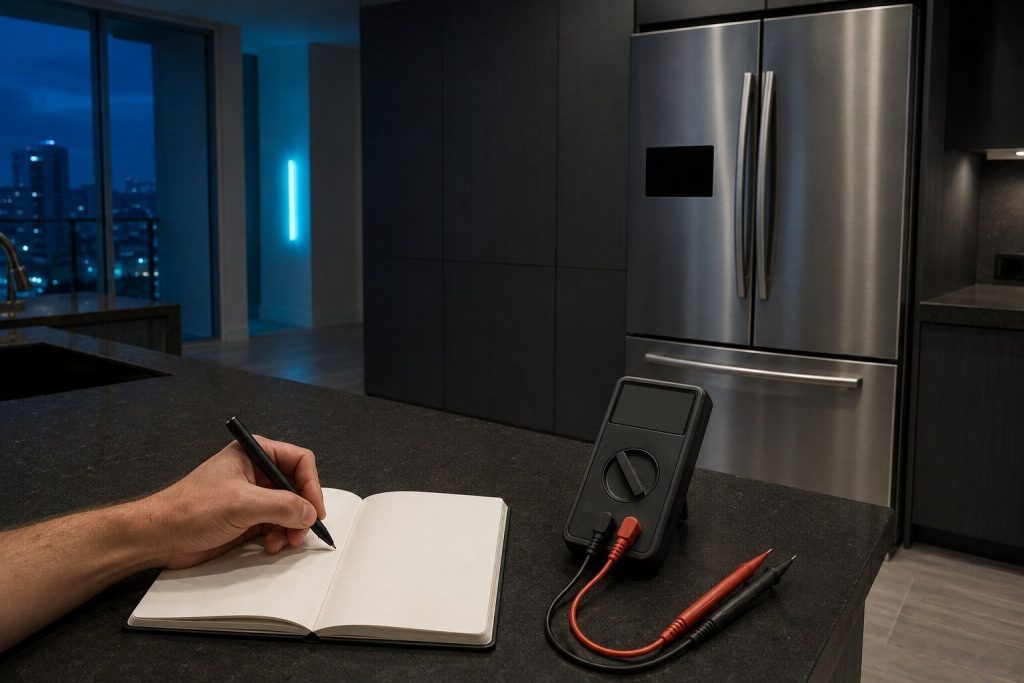
One visit, one technician, one answer in writing. On a Whirlpool the first question is whether the appliance is talking, because this make is not evenly talkative. It publishes a separate page for every code on its ranges, its ovens, its cooktops, its washers and its dryers, and it publishes almost nothing of the kind for its refrigerators and freezers. Knowing which half of the house you are standing in changes how the visit starts.
- Whether this appliance talks at all decides how the visit starts
- Laundry and cooking almost always have a code; the cold side almost never does
- Whatever we find goes to you in writing, and the visit comes off the repair
-
from $119 Appliance maintenance
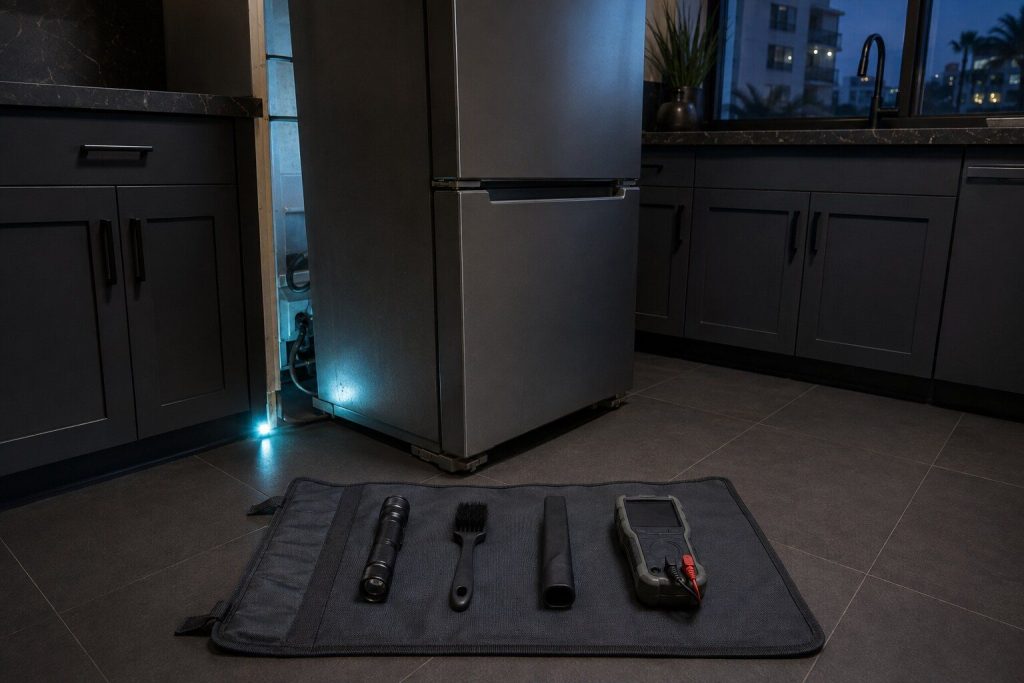
Nothing on this list saves an owner more money and nothing is booked less often. Whirlpool builds appliances that will run for fifteen years in an ordinary house, and what usually ends them early is a maintenance item rather than a design one: a coil under a blanket of dust, a drain pump filter that has never once been opened, a duct that has closed a little further every year. This make publishes cleaning instructions for every one of those. Almost nobody has read them.
- One visit across everything you own, priced on time rather than per machine
- The washer drain pump filter, which is the most neglected part in South Florida
- You keep a written list of what is closest to failing
-
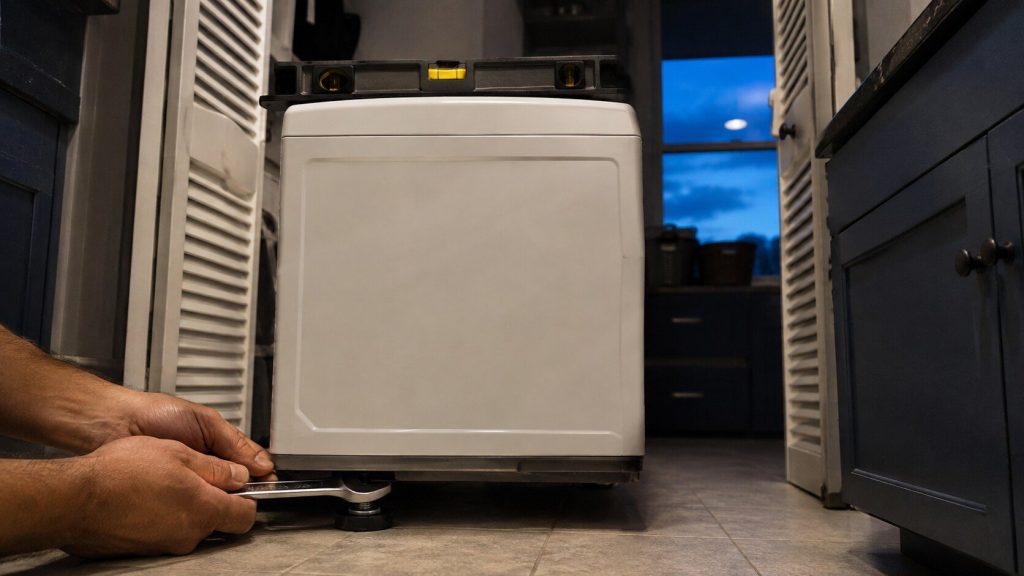
from $139 Appliance installation
Most installations on this make are replacements, and that is worth saying out loud. The owner has just weighed a two-hundred-dollar repair against a nine-hundred-dollar machine and chosen the machine. What decides whether the new one is still working in eight years is the hour after it arrives: whether the opening was measured, whether the duct behind it was cleared, whether anyone put a level on it. A delivery crew is not paid for that hour and does not stay for it.
- The hour after the delivery truck leaves, which is the hour nobody is paid for
- Leveling done with a level and the lock nuts tightened, on every machine that has feet
- Gas joints leak-tested and the result written down
-
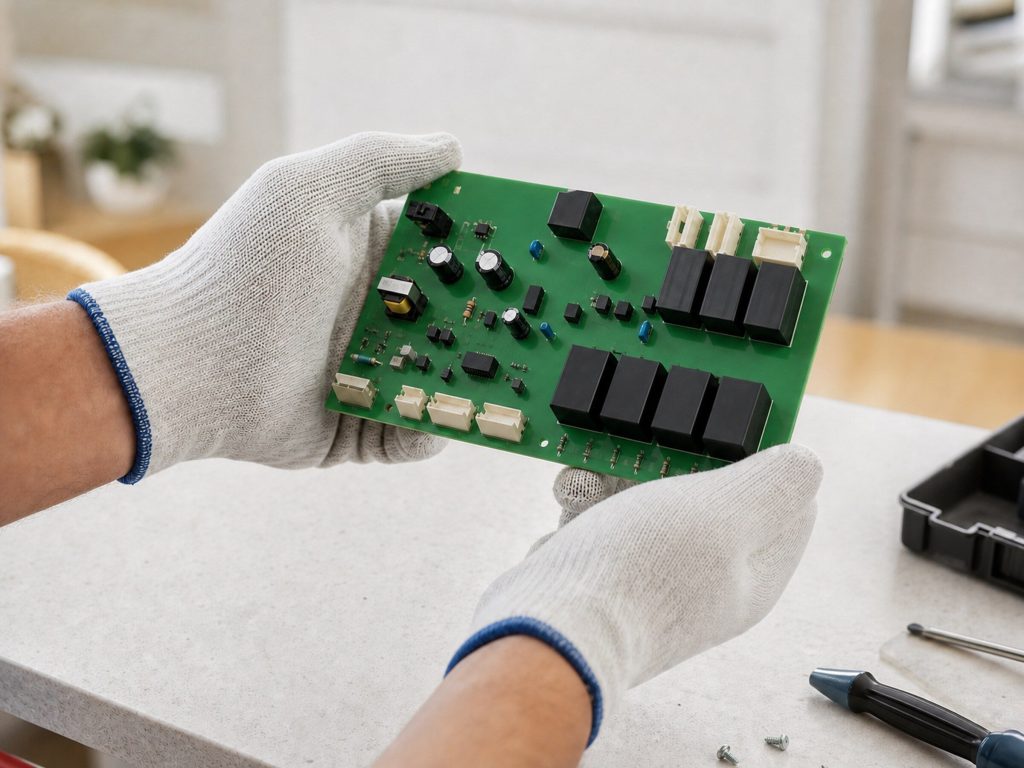
from $265 Appliance control board repair
The board is where a Whirlpool reports from, and it is also the part that gets blamed for everything else. Whirlpool runs the same control architecture across its whole line, which is why an F#E# code looks familiar on a range and on a washer — but a board that has died usually died of something, and replacing it without finding that something buys you a few months.
- A board that died usually died of something, and that something kills the next one too
- Browned connectors and pins backed out of a housing are cheap; boards are not
- Whirlpool revises these mid-production, so the order goes out against the serial
-
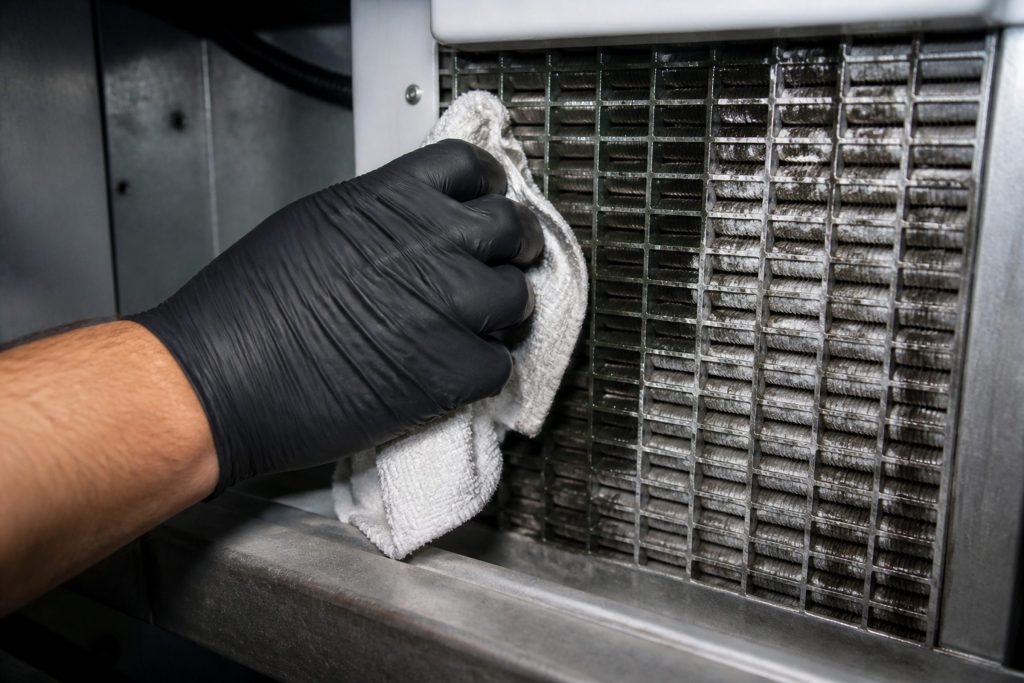
from $225 Commercial ice machine repair
A machine that makes ice for a bar, a clinic or a break room is a different animal from the module inside a refrigerator. It has its own sealed system, its own water circuit, its own drain, and it fails in this climate for reasons that are mostly about water and heat rather than about the machine. Whirlpool's freestanding ice makers report through indicator lights rather than a code display, so the diagnosis is measurement.
- Sealed system, water circuit and drain treated as three separate questions
- Scale and the local water supply are the first suspects here, not the last
- Cleaning and sanitizing done properly as part of the repair
-
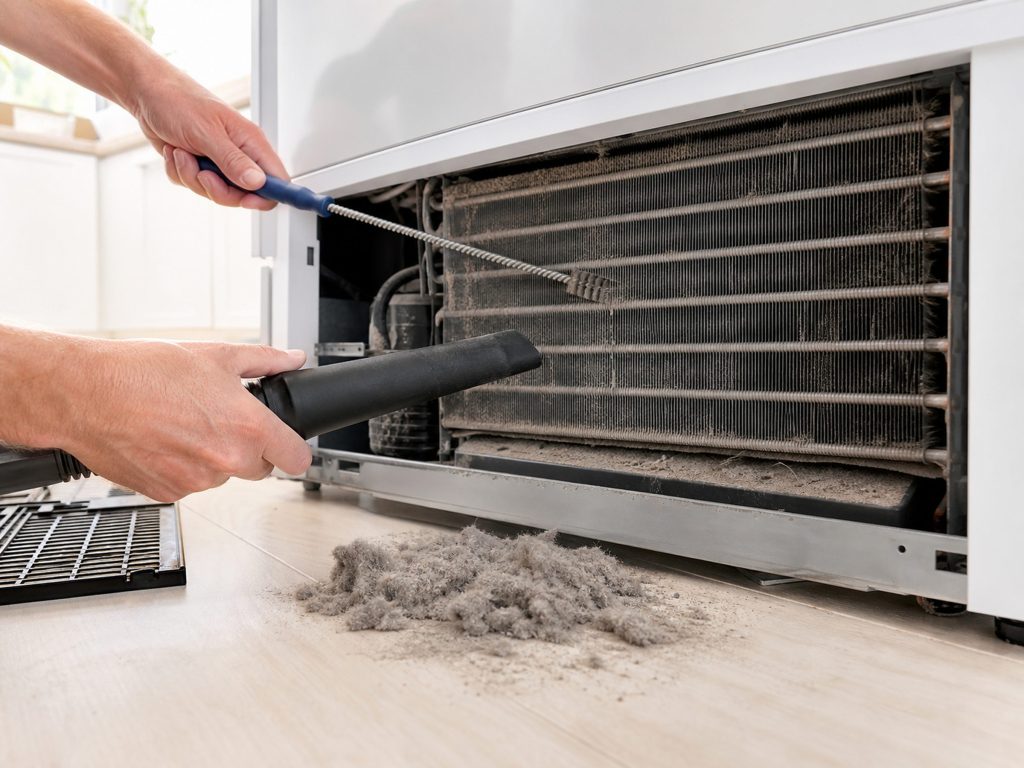
from $115 Condenser cleaning service
Nothing on a Whirlpool will ever tell you the coil is blocked. This make publishes a cleaning-the-condenser page for its top-freezer refrigerators and not one code page for them, so the condition is invisible until the compressor is running almost continuously and the ice cream starts going soft. The machines that need this most are the ordinary ones — the top-freezer in a rental condominium that has not been pulled away from the wall since the day it was delivered.
- There is no code for a blocked coil on this make, so somebody has to go and look
- Top-freezer and side-by-side cabinets, where a toe grille hides most of the coil
- Compressor run time recorded on the visit, so next year has something to compare with
-
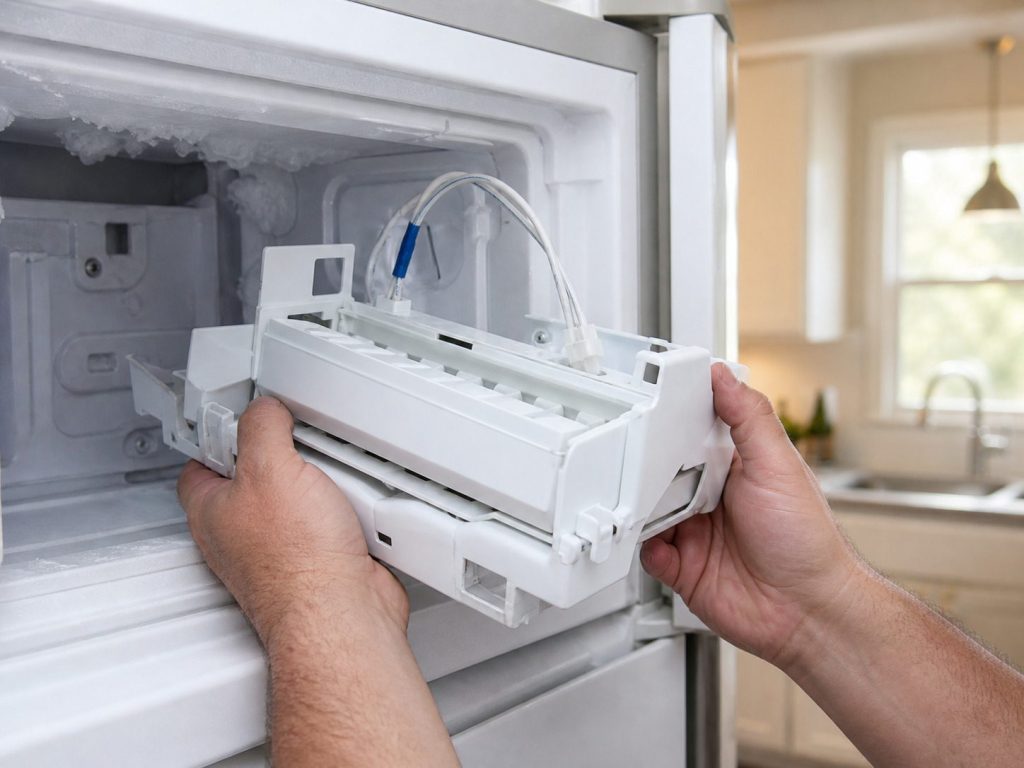
from $145 Ice maker repair
The ice maker is the part of a refrigerator that gets used hardest and understood least. On this make the module is a self-contained assembly with a motor, a thermostat, a heater and a fill switch, and it fails in ways that mimic each other: no ice, small ice, hollow ice, or a bin full of one solid block. Whirlpool has a separate support page for each of those, and they are not the same repair.
- No ice, thin ice and clumped ice are three different problems
- Freezer temperature is checked first, because the module will not cycle if it is too warm
- The module usually comes out as an assembly, which keeps the job contained
-
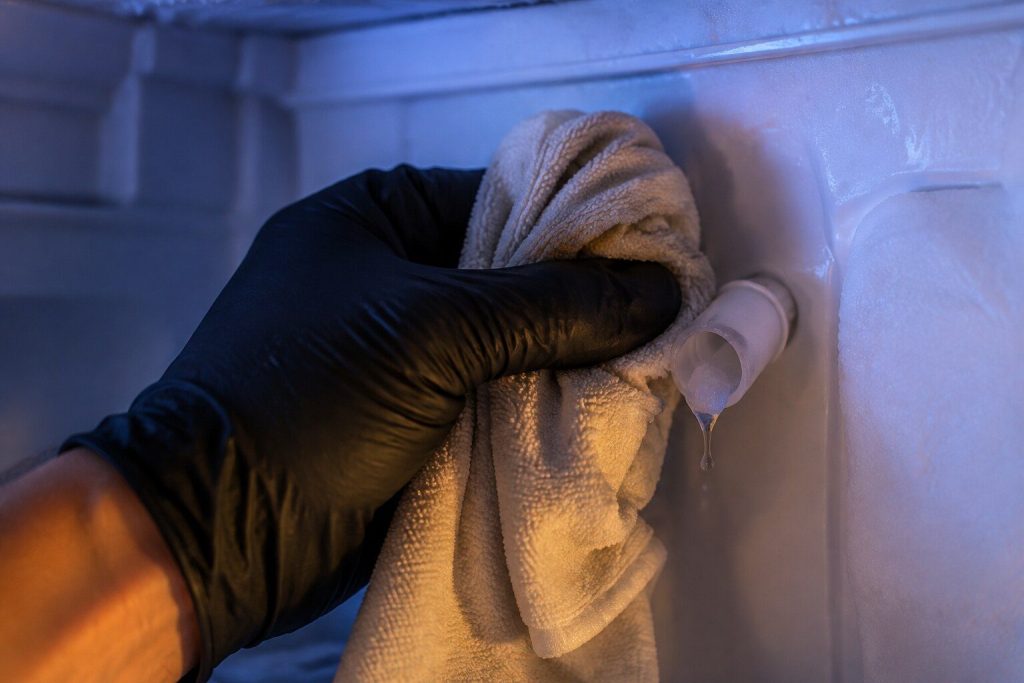
from $125 Ice maker water line and fill valve service
Most ice complaints on this make are water complaints. The fill valve, the saddle or shutoff at the wall, the line behind the machine and the fill tube into the mold are a short chain with a lot of ways to restrict. In this climate the fill tube also ices at the mouth, which produces a machine that makes ice for six hours and then stops.
- Thin, hollow or short-filled cubes point at water, not at the module
- A fill tube that ices at the mouth is a defrost-side symptom and is treated as one
- Supply pressure at the machine is measured rather than assumed
In more detail
About Whirlpool ice makers
Two different machines wearing one name
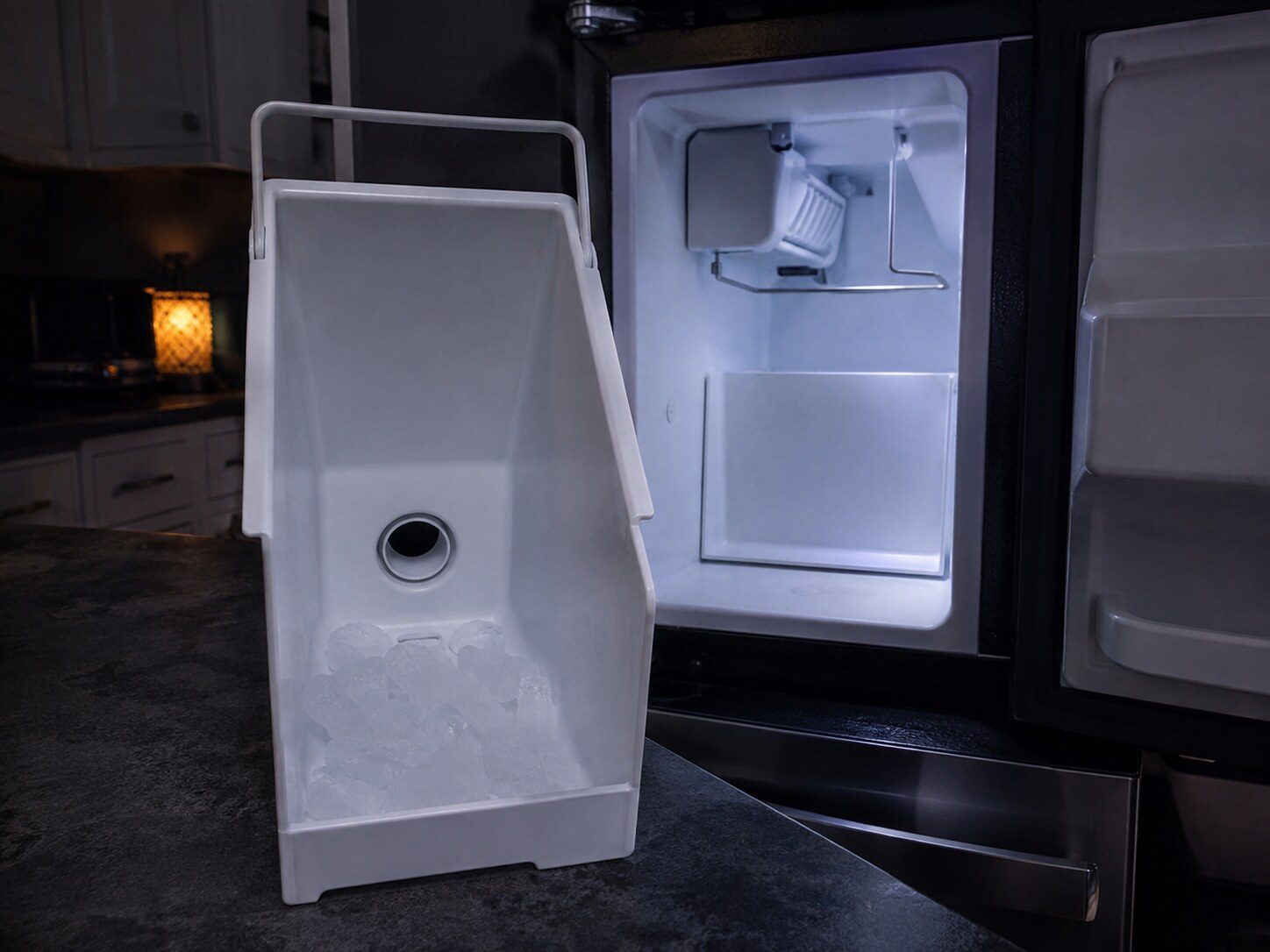
The ice maker inside a Whirlpool refrigerator is a module: a fill valve, a mold, a heater to release the cubes, a motor to sweep them out and a bail arm or sensor to stop when the bin is full. The freestanding ice maker is a small refrigeration system of its own, with a pump, a water reservoir and a condenser that has to breathe. They fail in different ways and only the second has any indicator lights worth reading.
Why this is the summer call in South Florida
Ice demand here is not seasonal, it is relentless, and it exposes a machine that is only just keeping up. A refrigerator ice maker is specified to produce a certain amount per day at a certain freezer temperature and a certain water pressure. Take any one of those away — a filter at the end of its life, a freezer set two degrees warm, a supply line pinched behind the cabinet when it was pushed back into place — and production drops without anything actually failing. That is why the first thing we do here is measure the fill rather than replace the module. When the module genuinely has failed, it is a stocked part on this make, which is one of the practical advantages of owning the most common refrigerator on the street.
This article is based on:
- Official manufacturer documentation
- Internal repair procedures
- Technician repair history
- Company quality standards
Before you book
Questions about Whirlpool ice makers
It makes ice, but not enough for a household in July.
Start with water, not with the ice maker. A refrigerator ice maker fills on a timed valve, so anything that slows the water slows production: a filter past its life, a supply line kinked behind the cabinet, a saddle valve barely open, or low pressure at the tap. Then temperature — an ice maker will not harvest until the freezer is genuinely cold, and a freezer packed to the vents is not. In this city there is also the plain arithmetic of a door that opens twenty times an evening, which is a machine spending its whole day recovering rather than a machine that is broken.
The ice tastes bad or the cubes are cloudy and small.
Whirlpool devotes ten pages to ice quality alone, which tells you how common this is. Cloudy and small usually means the fill is short, so it is the same water checks as above. Taste is almost always the filter or the storage: ice sitting in an open bin absorbs whatever else is in the freezer, and a bin that has not been emptied in a month tastes like the freezer. Replace the filter on schedule, dump the bin, and give it two days before you judge it.
There is a service light on the freestanding machine.
Whirlpool publishes three lights for that machine and no numeric codes: a cleaning light, a filter light and a service light. The first two are maintenance reminders and clear when the job is done and the reset is held. The service light is the machine asking for a technician, and it does not tell you why — which is exactly the point at which measurement replaces reading. On a freestanding machine the usual answers are the water pump, the condenser coil packed with dust, or the sensor that decides when the harvest happens.
Where we do it
Across Miami-Dade, Broward, and Palm Beach
Same terms everywhere we go: an on-site diagnostic first, the price agreed in writing, and the exact figure confirmed once we have seen the unit.
Neighborhoods people ask for by name