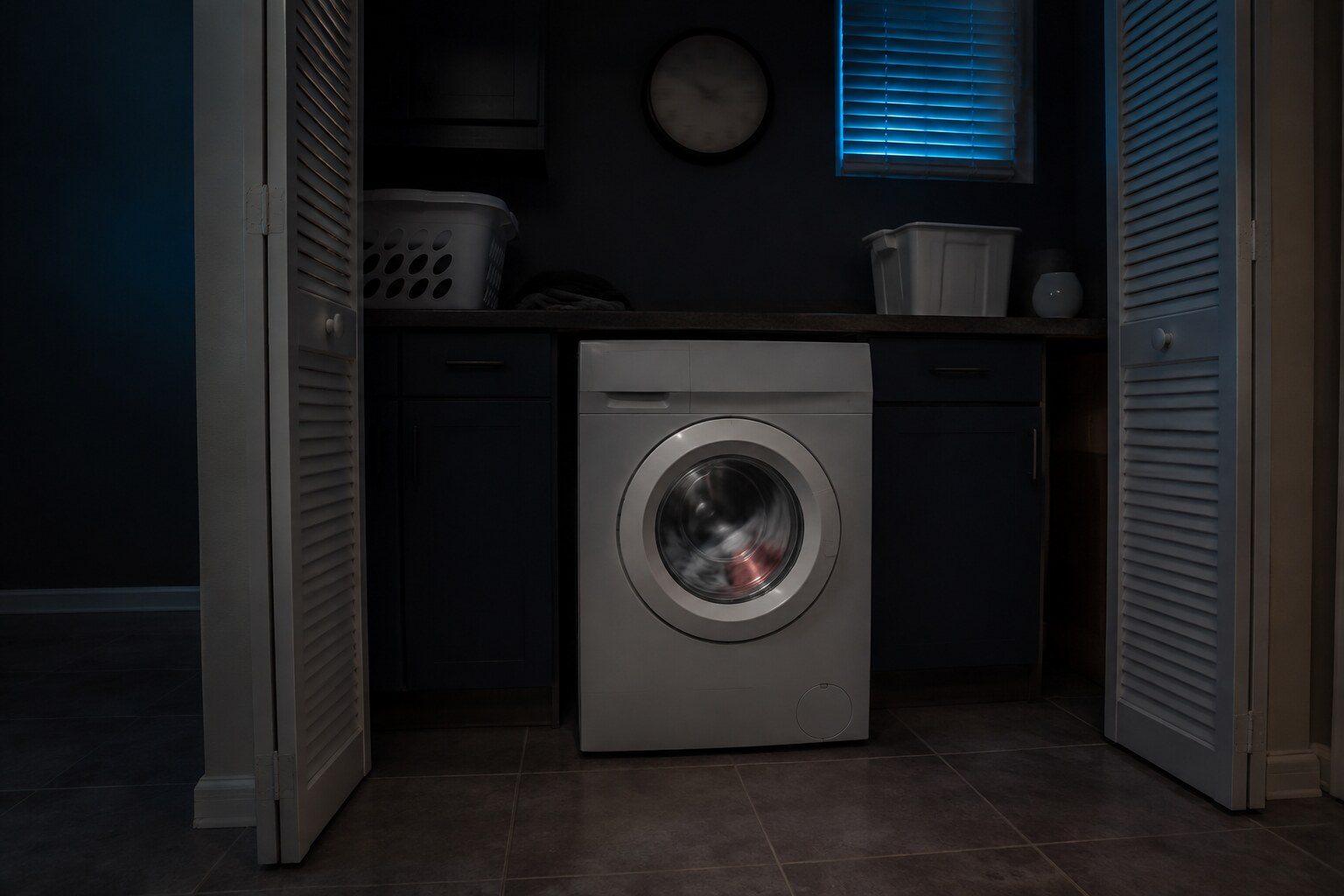
- “The time on the display is an estimate the machine revises, not a countdown”
- “Sud is the most common reason a wash doubles in length, and the cause is usually the detergent”
- “A slow fill and a slow drain both add time before either shows a code”
Symptom
Whirlpool washer cycle takes hours to finish
A Whirlpool washer does not run a fixed cycle. It measures, and it adds time whenever a measurement is not where it should be. So a cycle that keeps growing is the machine telling you it is repeating something — extra rinses to clear foam, extra fill attempts, extra drain attempts — and each of those has its own name in the maker's own table.
- From $89 diagnostic, credited to the repair
- 59 cities and neighborhoods covered
- OEM parts available on order
- In writing the price, before anything is opened
Five ordinary causes
What this usually turns out to be
Cheapest and commonest first, which is also the order we check them in. They sit hundreds of dollars apart, and only the unit settles which one is yours.
-
Detergent dose or type
Sud and F0 E2 are Whirlpool's two labels for the same finding. The machine adds rinses until the foam is gone, and it will not spin until it is.
Diagnostic visit from $89 -
A slow fill
LF, Lo FL and F8 E1 all mean the washer is taking too long to fill. Half-closed supply valves behind a machine that was moved are common.
Diagnostic visit from $89 -
A restricted inlet screen
The screens in the inlet valve catch grit from the supply. On older buildings in this area they silt up and the fill halves in speed.
Appliance maintenance from $119 -
A drain that is only just coping
Water that leaves slowly gets a second drain attempt every time. The cycle grows for weeks before it finally stops with a code.
Washer drain pump replacement from $175 -
The water level sensing
F3 E1 is Whirlpool's code for a washer that cannot read its own water level, and a machine that cannot measure has to keep trying.
Appliance control board repair from $265
In five minutes
Before you call anybody
None of it needs tools, and all of it makes the visit shorter.
-
01
Time the fill
A normal fill is minutes, not tens of minutes. Stand there once with the lid open and you will know whether the water side is the problem.
-
02
Look for foam through the door
On a front-loader, foam still visible at the top of the glass during the rinse is the whole diagnosis.
-
03
Check both supply valves are fully open
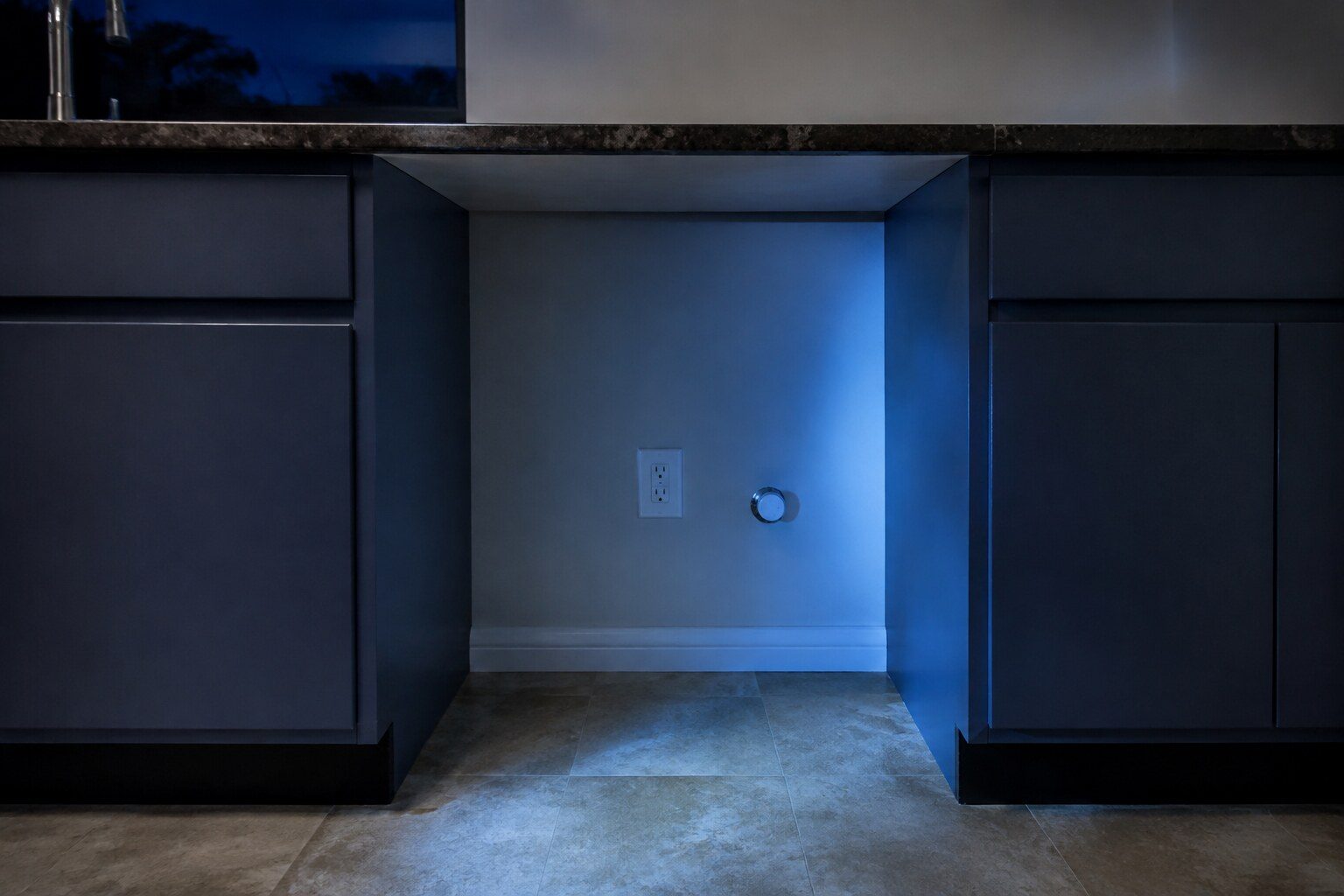
Hand-tight is not open. This is the first thing to go wrong after a machine has been pulled out for a floor repair.
-
04
Run the Clean Washer cycle if CL is showing
Whirlpool shows CL after about thirty cycles as a maintenance reminder. It is not a problem, and clearing it removes one thing from the list.
How it shows up
What people describe when they call
A shortcut
Narrow it down before anybody arrives
A description of the behaviour leaves a few possible causes. A code names the subsystem before anybody opens anything, which is why it is worth photographing before it clears.
If there is no code at all
The data plate is inside the cabinet, upper left wall or behind the grille. All models
In more detail
About Whirlpool washer cycle takes hours to finish
Cut the detergent in half and watch what happens
This sounds too simple to be the answer and it is the answer more often than anything else on the page. Whirlpool's own wording for Sud is too many suds in the drum: the washer cannot spin water out through foam, so it runs extra rinses to clear it and the cycle takes much longer than it should. Use the high-efficiency detergent the machine asks for, use about a tablespoon for a normal load, and skip the fabric softener for a few washes. If the cycle time comes back to normal, the machine was working correctly the whole time and telling you so.
What it usually means, by the kind of machine
Whirlpool sells one appliance in several forms — a top-loader with an agitator and one without, a front-loader, a stacked pair, a laundry tower and an all-in-one; a vented dryer, a ventless one and a heat pump — and the same behavior points at different things on each of them. A top-load washer has no drain pump filter to open and a front-loader does, which is the whole first hour of the same complaint on two machines.
- Top-load HE — Fills to what it senses rather than to a line, so a load that absorbs water unevenly gets a longer sensing stage. Normal on a first wash of new towels, not normal every time.
- Front load — Uses the least water of any layout, which makes it the most sensitive to a heavy detergent dose. Whirlpool's suds routine on these machines can add most of an hour on its own.
- All-in-one washer dryer — Washes and dries in one drum, so a long total time is expected. Judge the wash stage on its own before deciding anything is wrong.
The display is an estimate, and the machine keeps changing its mind
People read the number on a Whirlpool washer as a countdown and it was never that. The control sets an estimate from the cycle you chose, then revises it as it senses the load, the fill, the foam and the drain. Every repeated stage pushes the number up. That is why a wash can show fifty-eight minutes for twenty minutes in a row: it is not stuck, it is adding as fast as it is counting down. Understanding that turns a mysterious problem into a short list of measurable stages.
The South Florida version of this call
Two local things make long cycles more common here than they need to be. The first is detergent habit — people wash more loads in a hot, humid climate, and the dose creeps up with the load count. The second is what the water carries: inlet screens in this area silt up faster than the manuals assume, and a slow fill is invisible until somebody times it. Neither of those is a broken washer, and both are worth ruling out before anything is opened.
This article is based on:
- Official manufacturer documentation
- Internal repair procedures
- Technician repair history
- Company quality standards
Before you book
Questions about Whirlpool washer cycle takes hours to finish
Is a three-hour wash damaging the machine?
Not directly, but it is running the pump and the motor far more than the cycle intended, and a machine that repeats its drain every wash is wearing a pump out early. It is worth fixing for that reason alone.
The Clean Washer light keeps coming on.
That is a counter, not a problem. Whirlpool shows it after roughly thirty cycles to remind you to run the tub-cleaning routine. Run it, clear it, and in this climate it is worth doing whether or not the light asks.
Where we do it
Across Miami-Dade, Broward, and Palm Beach
Same terms everywhere we go: an on-site diagnostic first, the price agreed in writing, and the exact figure confirmed once we have seen the unit.
Neighborhoods people ask for by name