Common Problems
A Dryer That Needs Two Cycles Is Telling You About Air, Not Heat
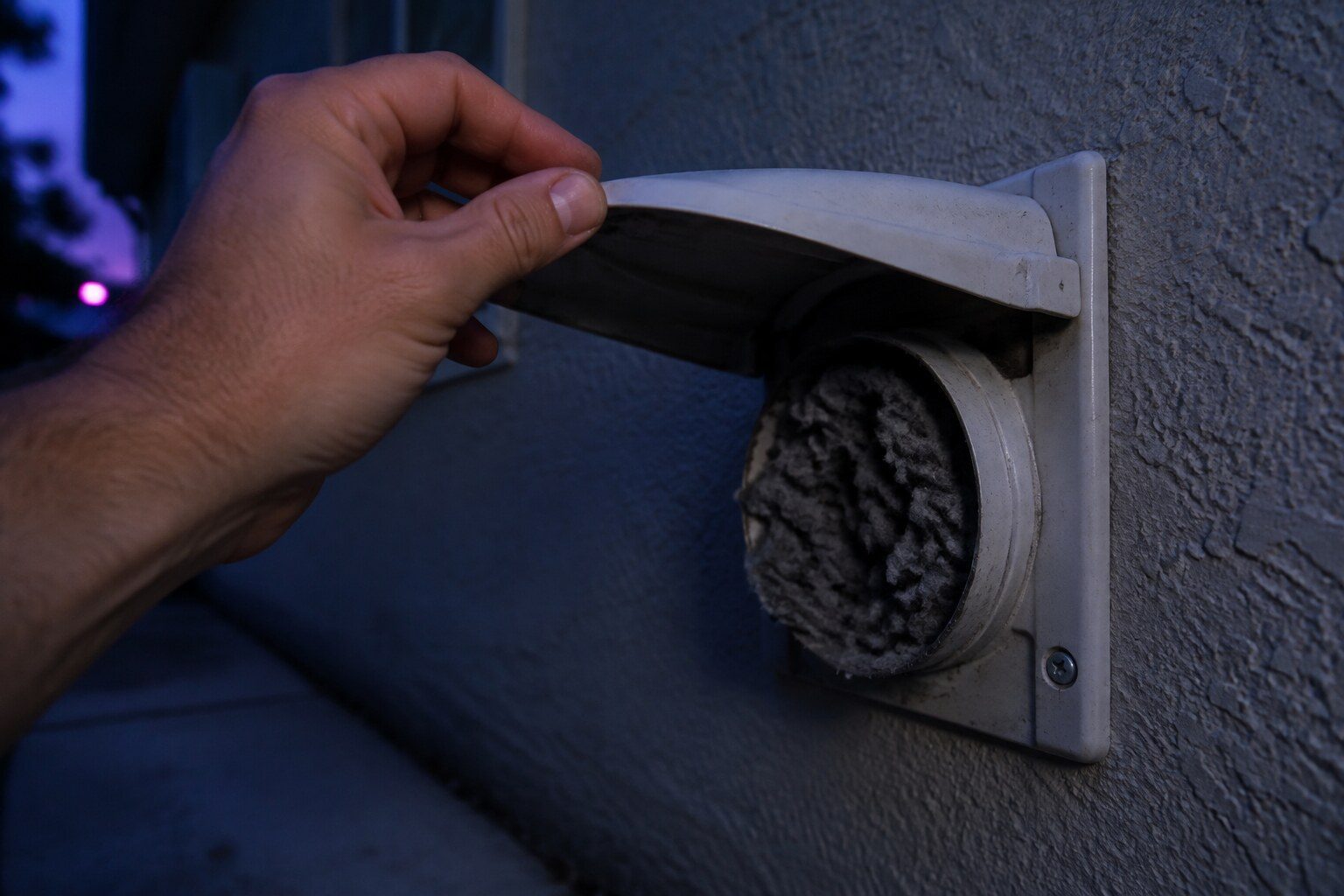
A dryer does not dry with heat alone. It heats air, passes it through the tumbling load to pick up moisture, and pushes that wet air outside. If the air cannot leave freely, the moisture stays in the drum and the clothes stay damp no matter how hot the machine gets. Four places restrict it, and they are worth checking in this order. The lint screen, which can be filmed over with softener residue and look perfectly clean. The housing the screen drops into, which packs with lint that never comes out on its own. The flexible length behind the machine, worst at the elbow immediately behind it where the bend is sharpest. And the flap on the outside wall, which is the one that decides everything and the one nobody looks at. Run the machine on air fluff, go outside, and put your hand in front of the flap. Strong steady air means the run is clear. Weak air, or a flap that barely opens, is your answer.
The full guide
Whirlpool dryer taking too long to dry: follow the air, not the heat
A dryer is a fan with a heater in front of it. The heat does not dry anything on its own. It warms the air so the air can hold more water, and then that air has to leave the building carrying the water with it.
Break the leaving part and the drying stops, no matter how hot the drum gets. That is why the classic complaint here is hot clothes that are still damp, and why replacing a heating element on this symptom is usually money spent on the wrong half of the machine.
The four places, in the order they block
The lint screen. Everybody cleans it and almost nobody tests it. Softener and dryer sheets leave a film across the mesh, and a filmed screen looks clean while passing very little air. The test takes ten seconds: hold it under a running tap. Water should go straight through. If it beads, scrub the screen with warm soapy water and a soft brush.
The housing the screen drops into. Lint gets past the screen every load, a small amount at a time, and it settles in the slot. Nothing removes it but a vacuum crevice tool pushed as far down as it will go. On a machine that has been in a rental for six years, this is often the single biggest restriction in the whole run.
The flexible length behind the machine. The elbow immediately behind the dryer is the sharpest bend in the system and the lint arriving there is the wettest, so it sticks. Add a machine pushed hard back against a closet wall, crushing its own duct flat, and you have the second most common answer.
The flap on the outside wall. This is the one that decides. It gets painted over, screened over by somebody keeping insects out, glued shut by years of lint, or occupied. A perfect duct behind a closed flap is a closed duct.
The one test worth doing before anything else
Run the machine on air fluff, with no heat, and walk outside to the wall flap.
The flap should swing fully open, and there should be enough air behind it to feel clearly on the back of your hand. That is what a healthy run does.
Weak air, or a flap that only trembles, tells you the restriction is somewhere between the drum and the wall, and it is worth finding before anybody quotes for a part. ## Why a condo laundry closet starts at a disadvantage
A dryer in a house usually vents through the wall it is standing against. A dryer in a South Florida laundry closet very often does not.
The closet is interior. The duct leaves the back of the machine, turns, runs horizontally through the ceiling or along a soffit, and turns again to reach an outside wall. Every one of those bends costs the fan as much as several feet of straight duct would.
That matters because it changes what cleaning can do. A short straight run has margin: it works fine dirty and beautifully clean. A long run with two elbows has no margin at all. It works when it is perfectly clean and stops working the moment it is not, which is exactly the experience of a dryer that seemed fine for a year and then started needing two cycles.
If the run is marginal, the honest answer is that the duct route is the problem and no part on the machine will fix it. Rigid metal duct instead of flexible, and one fewer bend if the building allows it, is worth more than anything in the cabinet.
And the humidity, which is not a small factor here
The dryer draws its air from the room it stands in. In a closed laundry closet in August, that air is already carrying most of the water it can hold.
Air that arrives half loaded picks up less from the clothes before it saturates, so the same machine with the same duct genuinely takes longer in summer than in January. Leaving the closet door open through the cycle is free and it makes a measurable difference.
When it is not the air
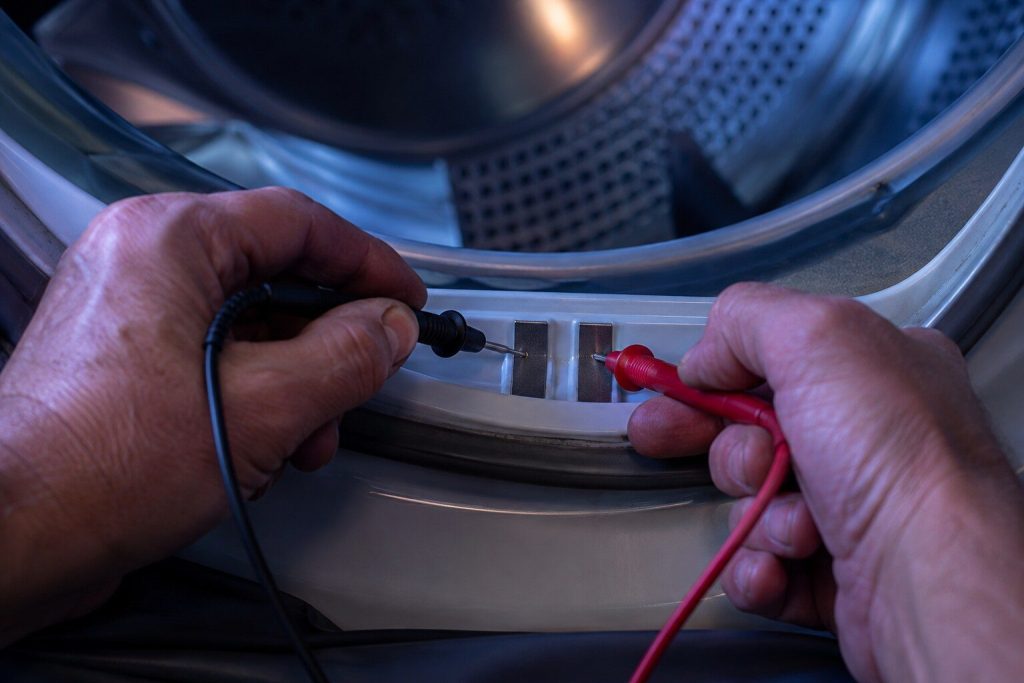
Two things look like this and are not. A dryer that runs completely cold is a heat problem rather than an airflow one, and it has its own page. A dryer that stops early believing a wet load is finished is usually the moisture sensor: a pair of metal strips inside the drum, which a coating of softener residue makes read wet clothes as dry.
If it turns out to be a repair
What this leads to, and what it costs
Every job on this site is priced the same way: an on-site diagnostic first, the figure agreed in writing before anybody starts.
-
Everything comes out warm and still damp Dryer takes two cycles to dry one load
This is the most common dryer call we take, and Whirlpool has a code for it that is unusually blunt. AF, printed on some machines as Check Vent, is restricted air flow, and the maker's own wording names a clogged lint screen or vent. A dryer does not dry clothes with heat. It dries them by moving hot air through them and taking the moisture out of the room.
- AF and Check Vent are the same code, and F4 E3 is the numbered version of it
- A dryer venting into a closet has nowhere to put the moisture it removes
- Long flexible ducting behind a machine pushed back into an alcove crushes flat
-
from $129 Dryer vent cleaning
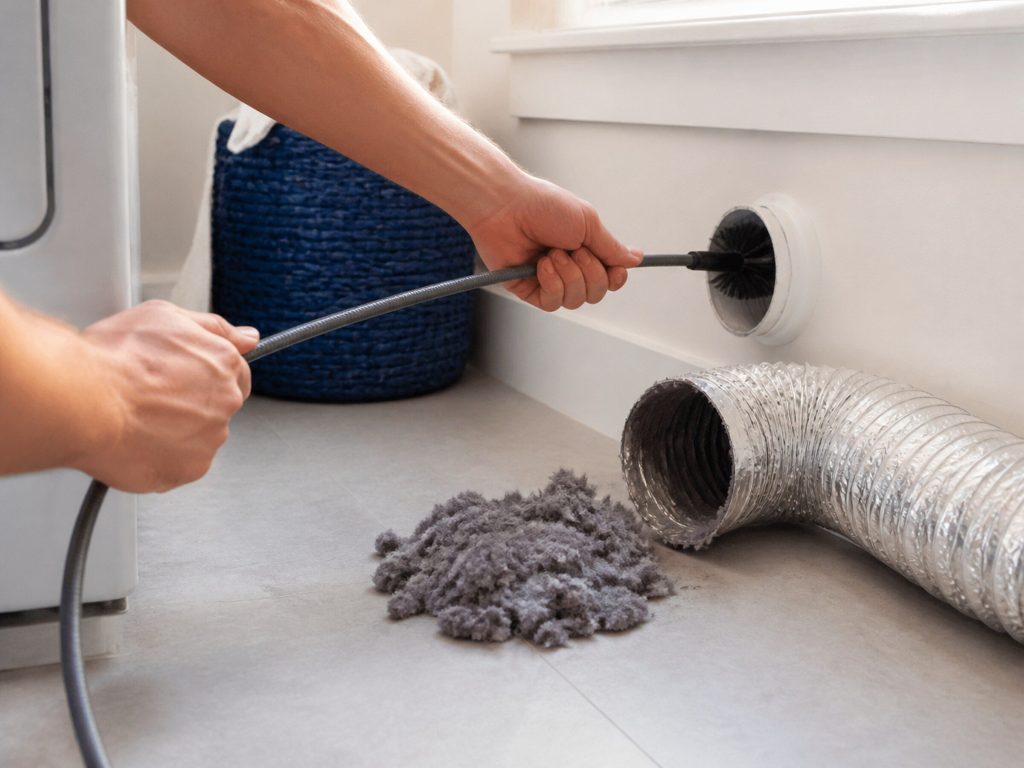
This is a safety job before it is a performance job. Lint that has been packing into a duct for years is fuel sitting next to a heat source, and long drying times are the warning. On Whirlpool dryers the machine measures the restriction itself and reports it, which is a genuine advantage — most makes leave you to notice.
- The dryer reports its own restricted-vent condition on this make
- Duct, wall hood and the transition behind the machine, all three
- Drying time measured before and after
-
from $109 Dryer moisture sensor service
An automatic cycle stops when the load is dry, and it knows that from two metal strips inside the drum front. Softener residue insulates them, so the machine sees dry clothes that are still damp and shuts off early — or reads them as wet and runs for an hour. This is usually cleaning rather than a part, and it is priced that way.
- Cycles that end too soon or run far too long usually start here
- Often a cleaning job rather than a part
- The vent is checked with it, because both produce long cycles
Questions people ask about this
The clothes come out hot but still damp.
That is the signature of restricted air rather than lost heat. The heater is working, the drum is hot, and the water has nowhere to go, so it condenses back into the load. A dryer that has lost its heat produces cold damp clothes instead, and that is a different page.
I clean the lint screen every single load.
Then check what the screen is made of rather than what is on it. Liquid fabric softener and dryer sheets leave a film across the mesh that is nearly invisible and blocks air well. Run water onto the screen from a tap. It should pass straight through. Water that sits in beads is a screen that needs scrubbing with warm soapy water and a brush.
How much duct is too much?
Every elbow costs you as much as several feet of straight run, which is why a laundry closet that vents sideways through two bends and then along a wall is working near its limit before anything is dirty. That is worth knowing because it changes what cleaning can achieve. A marginal run cleaned perfectly still dries slowly, and the fix is the route rather than the machine.
Does the humidity here really matter?
Yes, and more than people expect. The air the dryer draws in is the air in the room. In a closed South Florida laundry closet in August that air is already carrying a lot of water, so it can pick up less from the clothes before it is saturated. Leaving the closet door open, or making sure the room has a way to draw drier air, measurably shortens cycles.
Common Problems
More guides like this one
-
A Washer That Walks: Telling the Load Apart From the Floor
Two different problems arrive as the same sentence. A five-minute test with three towels separates them, and the answer often turns out to be the floor rather than the machine.
Read more -
A Washer Stopped Full of Water: Top-Load and Front-Load Are Not the Same Job
A Whirlpool washer not draining water is two different machines with two different answers: a front-loader has a pump filter the maker tells you to clean, and a top-loader does not.
Read more -
A Whirlpool Washer That Sits on Sensing, and What It Is Actually Doing
Sensing is not a pause before the wash. It is a measurement, and a machine that will not leave it is reporting that one of the three things it measures did not come back.
Read more
Tell us the model number and what it is doing.
This article is based on:
- Official manufacturer documentation
- Internal repair procedures
- Technician repair history
- Company quality standards