Common Problems
A Washer Stopped Full of Water: Top-Load and Front-Load Are Not the Same Job
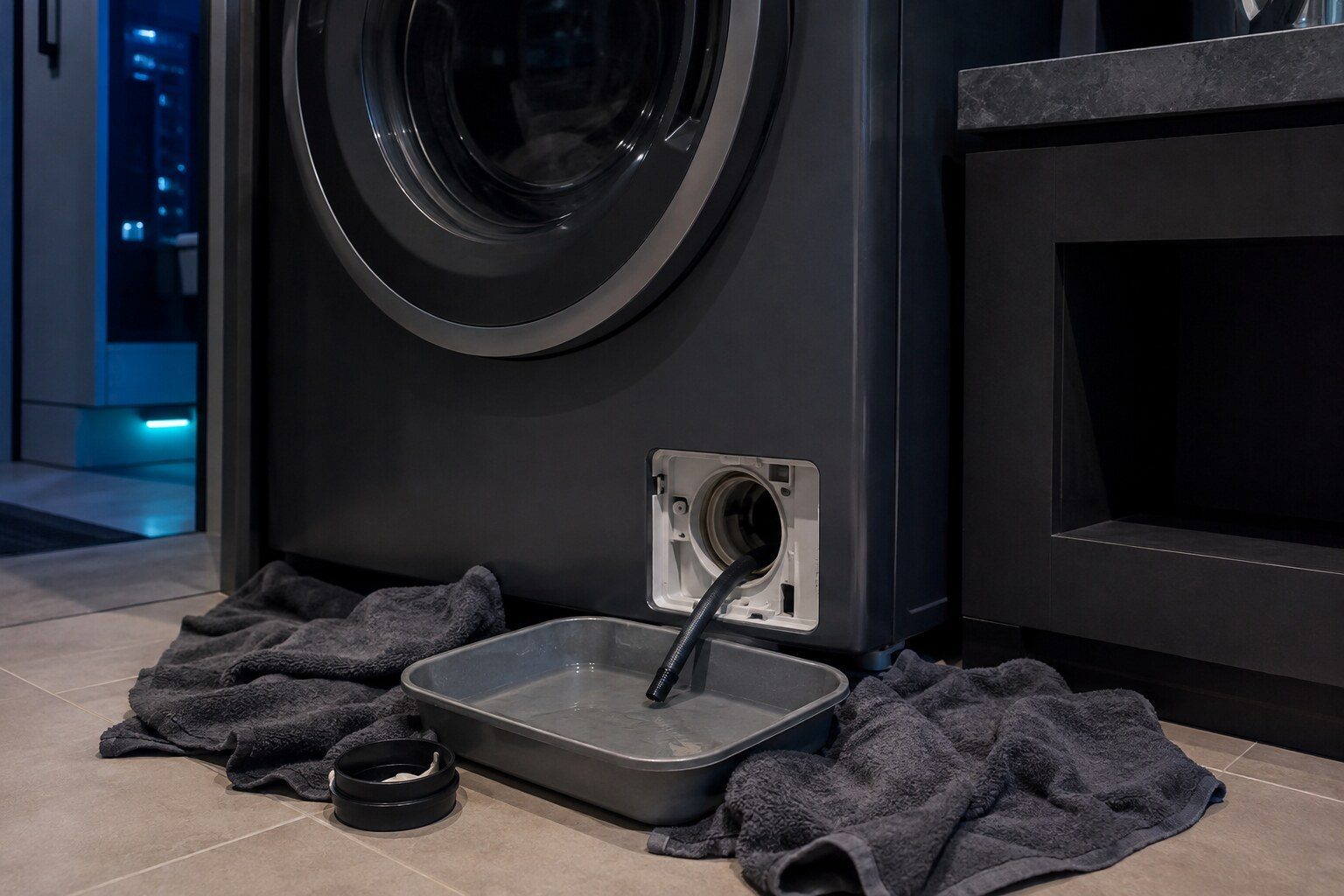
It depends on which machine you own, and the maker's own documentation is what splits it. For front-loading Whirlpool washers there is a drain pump filter behind a small flap at the bottom front, and Whirlpool publishes a Cleaning the Drain Pump Filter page for the full-size front load washer, the compact front load washer and the all-in-one washer dryer. Put a shallow tray and towels down, use the short drain hose beside the filter to let the water out a little at a time, and only unscrew the filter itself when nothing more comes out. For top-loading Whirlpool washers there is no such thing. Whirlpool's Cleaning and Maintenance branch for the top load washer covers the dispenser, the interior, the exterior, odor and winter storage, and publishes no drain pump filter page, because there is no owner-accessible filter to publish one about. On a top-loader the water leaves through the drain hose, and the checks are the hose, the standpipe and the pump.
The full guide
A Whirlpool washer not draining water at the end of a cycle is not one problem. It is two machines with two different answers, and which one you own decides everything that follows.
Whirlpool washer not draining water: two machines, two jobs
Almost every article on this subject is written about a front-loading machine and then handed to everybody. That is where the wasted evening comes from: somebody with a top-loader spends an hour looking for a filter door their machine does not have.
Whirlpool's own support base makes the split for us. For front-loading machines, Whirlpool publishes a procedure called Cleaning the Drain Pump Filter. It appears four times across three products: the full-size front load washer, the compact front load washer, and the all-in-one washer dryer, which also has a page combining the filter with draining residual water. It is documented because you are expected to do it.
For top-loading machines, that page does not exist. The Cleaning and Maintenance branch for the Whirlpool top load washer covers the dispenser, the interior, the exterior, the Clean Washer light, odor, moving the machine and winter storage. There is no drain pump filter page, because there is no filter behind a flap for an owner to open.
That absence is the useful fact. It is not a gap in the documentation.
If you have a front-loader
The job is real and it takes about twenty minutes, and the order matters more than the skill.
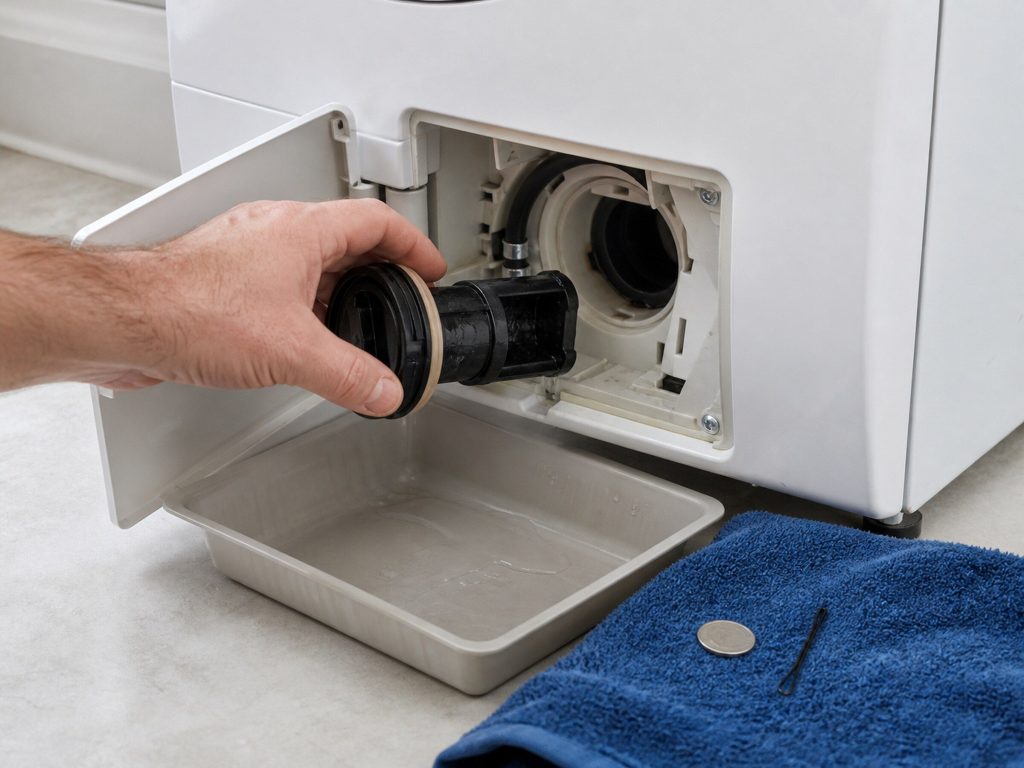
The filter sits behind a small flap at the bottom of the front panel, usually toward one side, and it levers open with a coin. It catches what would otherwise reach the pump: coins, hairpins, tissue, buttons, the occasional key.
Everything in the drum is behind it. Unscrew it on a full machine and several gallons come out across the floor in about four seconds, which in a second-floor condo laundry closet is not only your problem.
So: a shallow baking tray and a stack of towels on the floor first. Then the short drain hose that sits beside the filter on most of these machines. Pull it out, take the cap off, let a quart run into the tray, cap it, empty the tray, and repeat until nothing more comes.
Only then unscrew the filter. Rinse it under a tap with a brush. Feel around inside the housing carefully, because a shard of glass gets in there as easily as a nickel. Check the impeller behind it turns freely with a finger.
Refit it finger tight. A cross-threaded filter is a new leak on top of an old problem, and it is the most common avoidable second call after somebody has cleaned one themselves.
If you have a top-loader
There is nothing to open, and that is the whole message.
Water leaves a Whirlpool top load washer through the pump and out the drain hose into the standpipe. The checks are all behind and under the machine rather than in front of it.
Bail it first. A jug and a bucket will take a full tub down to an inch or two, and that gets your laundry out and keeps the situation from becoming a floor problem while you work.
Then the hose. Pull the machine forward. Look for a crush or a sharp kink where it was pushed back into place, which in a laundry closet is nearly always the first thing you find. Check how far the hose goes down the standpipe. Pushed too deep, it siphons, and the tub refills as fast as the pump empties it.
Then the standpipe itself. Take the hose out and pour a gallon down it. If it disappears, the drain is fine and the machine is the problem. If it backs up, no work on the appliance will help and you want a plumber rather than us. Five minutes, and it settles which trade you need.
Then listen to the pump. Start a drain or spin cycle and put your ear near the bottom of the machine. A hum with nothing moving is a pump that is blocked or seized. Silence is a pump that is not running, which is either the pump or what drives it.
What people go looking for and will not find
Search for a Whirlpool top-loader drain problem and somebody will tell you to find the coin trap. Whirlpool does not document one on these machines, and taking the cabinet apart to look for it is how a drain problem becomes two problems.
If a coin has gone through on a top-loader it usually reaches the pump, and it usually announces itself as a rattle or a grinding before it announces itself as standing water. That is a pump job, and a small one on this make, which is the genuine advantage of owning the most common washer in the state: the parts are stocked rather than ordered.
If it turns out to be a repair
What this leads to, and what it costs
Every job on this site is priced the same way: an on-site diagnostic first, the figure agreed in writing before anybody starts.
-
The cycle stopped and the drum is still full of water Washer will not drain
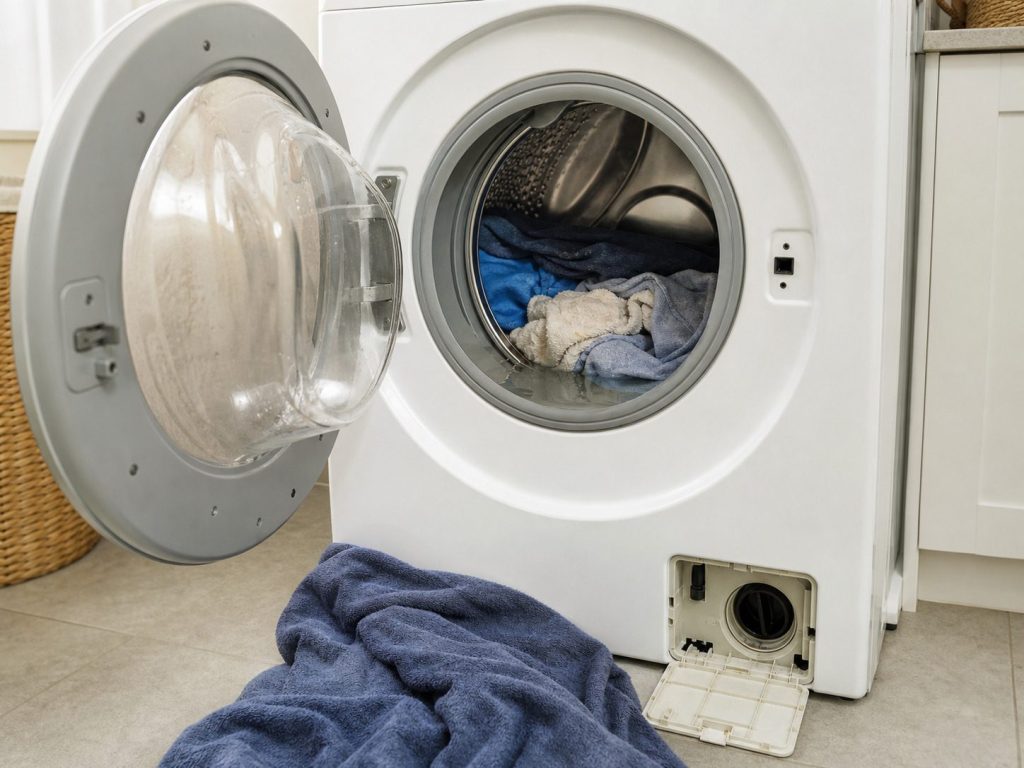
This is the one Whirlpool machine that tells you exactly what is wrong before anybody opens it. The washer times its own drain, and when the water has not gone in the time the cycle allowed, it stops and puts a name on the display. Read that name before you bail the drum out, because it is the difference between a coin in the pump and a control problem.
- Whirlpool's own label for a slow drain is a long drain, and it shows as Ld, F9 E1 or drn
- A drum still full at the end of a cycle is a pump or a hose question first, never a board question first
- The filter behind the lower access panel on a front-load machine is emptied over a towel, and there will be more water in it than anybody expects
-
from $175 Washer drain pump replacement
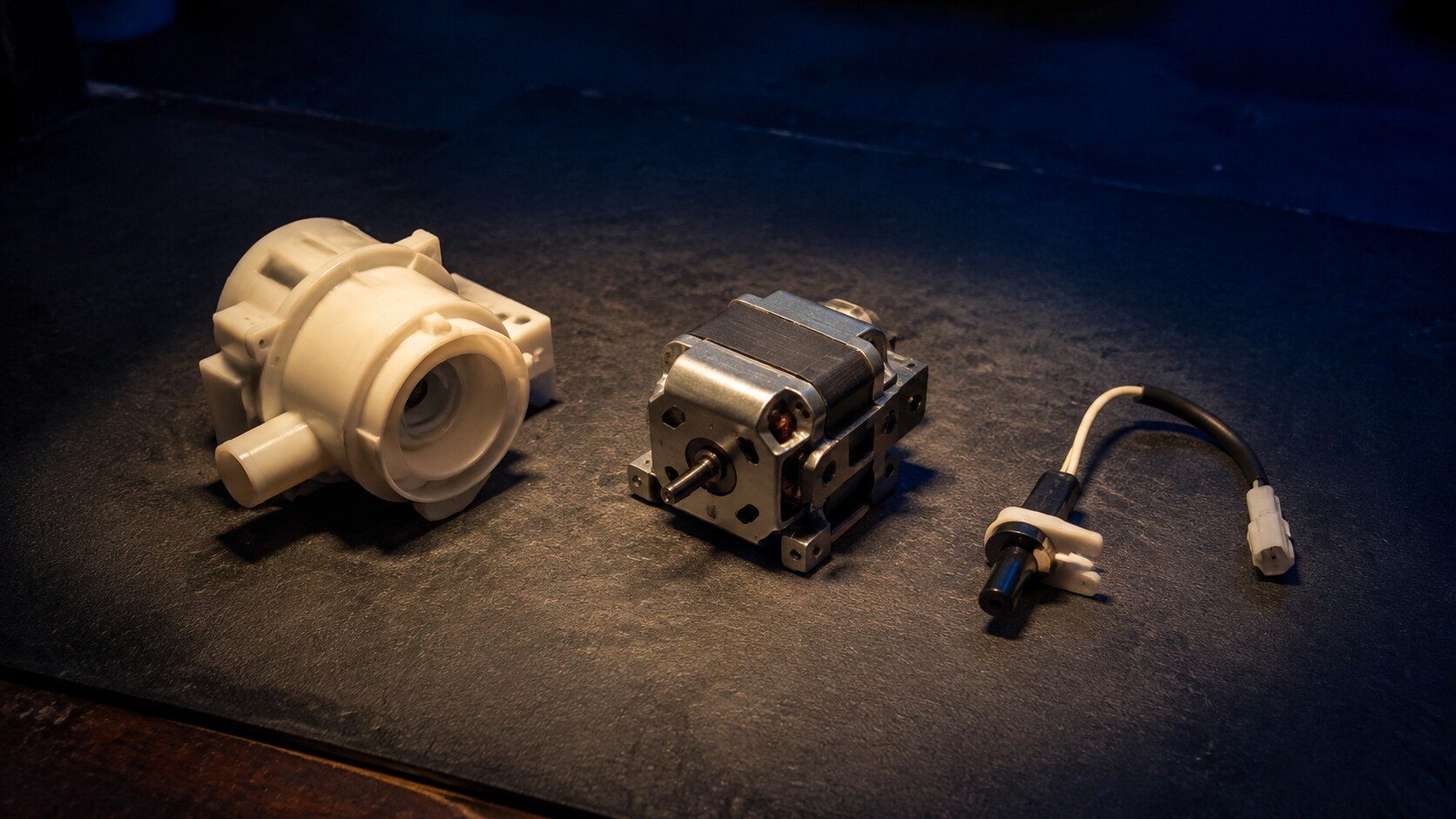
The drain pump is the single most replaced part in Whirlpool laundry, and about half the time it did not need replacing at all. This make publishes a drain error, a long-drain code and its own page on cleaning the drain pump filter, and on a front loader that filter is behind a little door at the bottom right that most owners have never opened. What comes out of it is coins, hair clips and lint felted into a plug.
- Nobody condemns a pump on this make before that little door at the bottom is opened
- Whirlpool publishes both a drain code and a long-drain code, and they read differently
- Commodity part on the volume brand — it is in the van or half an hour away
-
from $155 Washer leak repair
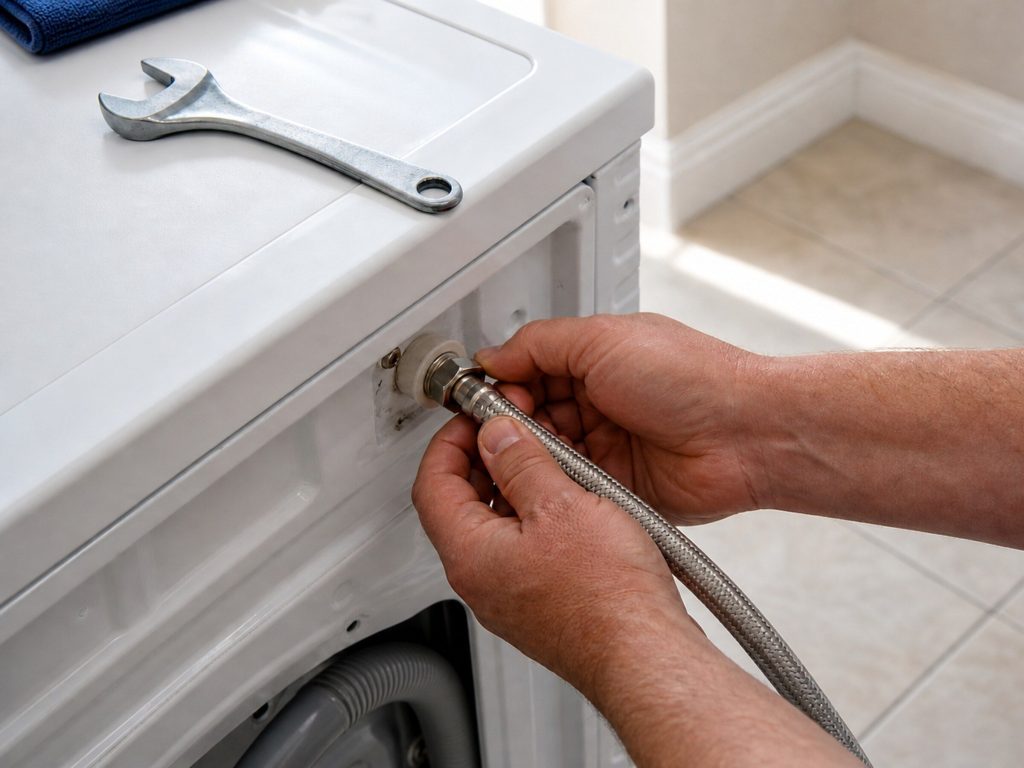
Whirlpool publishes leak pages by location — from the front, from underneath, from the back, from inside — and that is exactly the right way to think about it, because location names the part. A leak from the back is usually a hose connection. A leak from the front on a front loader is usually the door boot. They are not the same money.
- Whirlpool sorts its own leak pages by location, and that is the right instinct
- The door boot is the commonest front-load leak and it is a contained repair
- Detergent overdosing causes leaks that look like a broken machine
Questions people ask about this
What to do when Whirlpool washer won't drain and the door is locked shut?
A front-loader will not release a door it believes has water behind it, and it is right to refuse. Switch the machine off at the outlet for five minutes, which discharges the board and clears most interlocks. If it still holds, drain it through the filter hose first and try again. Never force a front-load door with a full drum.
I have a top-loader. Where is the coin trap?
There is not one to find, and looking for it is the reason people take panels off machines that did not need it. Whirlpool does not document an owner-serviceable filter or trap on its top load washers. Things small enough to get past the basket go to the pump, which is why a top-loader that has swallowed a coin usually announces it as a noise rather than as a blockage.
It drained fine the next morning. Is it fixed?
Probably moved rather than fixed. A partial restriction clears itself under a full load and comes back, usually at a worse moment. On a front-loader, open the filter while the machine is empty and convenient. On a top-loader, check the hose and the standpipe before it happens again.
How do I get the water out if nothing works at all?
Bail it. On a top-loader a jug and a bucket empties the tub down to the last inch or two, which is enough to get the laundry out and enough to stop a leak turning into a floor. On a front-loader use the filter drain hose. Siphoning through the drain hose into a low bucket also works if the machine is above the bucket.
Common Problems
More guides like this one
-
A Washer That Walks: Telling the Load Apart From the Floor
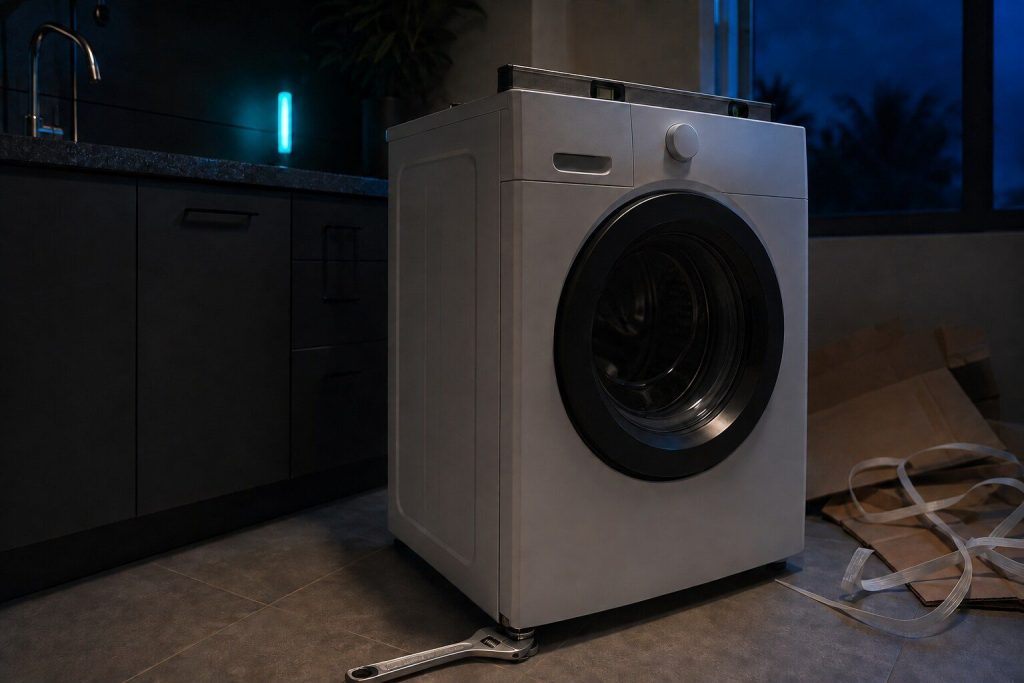
Two different problems arrive as the same sentence. A five-minute test with three towels separates them, and the answer often turns out to be the floor rather than the machine.
Read more -
A Whirlpool Washer That Sits on Sensing, and What It Is Actually Doing
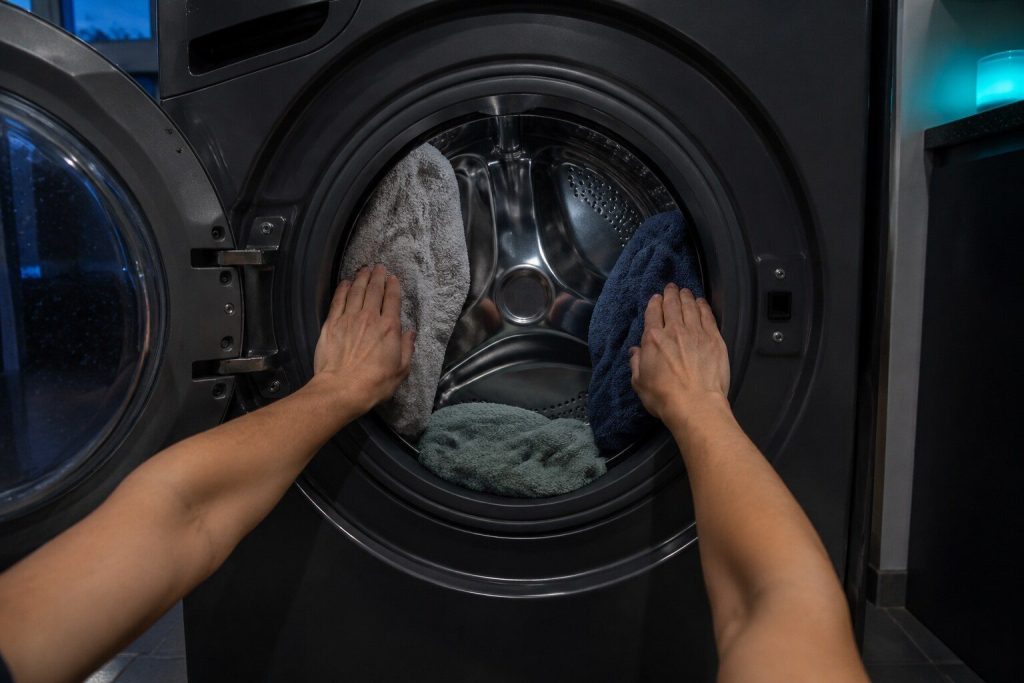
Sensing is not a pause before the wash. It is a measurement, and a machine that will not leave it is reporting that one of the three things it measures did not come back.
Read more -
The Lid Lock Light Is Flashing and the Washer Will Not Start
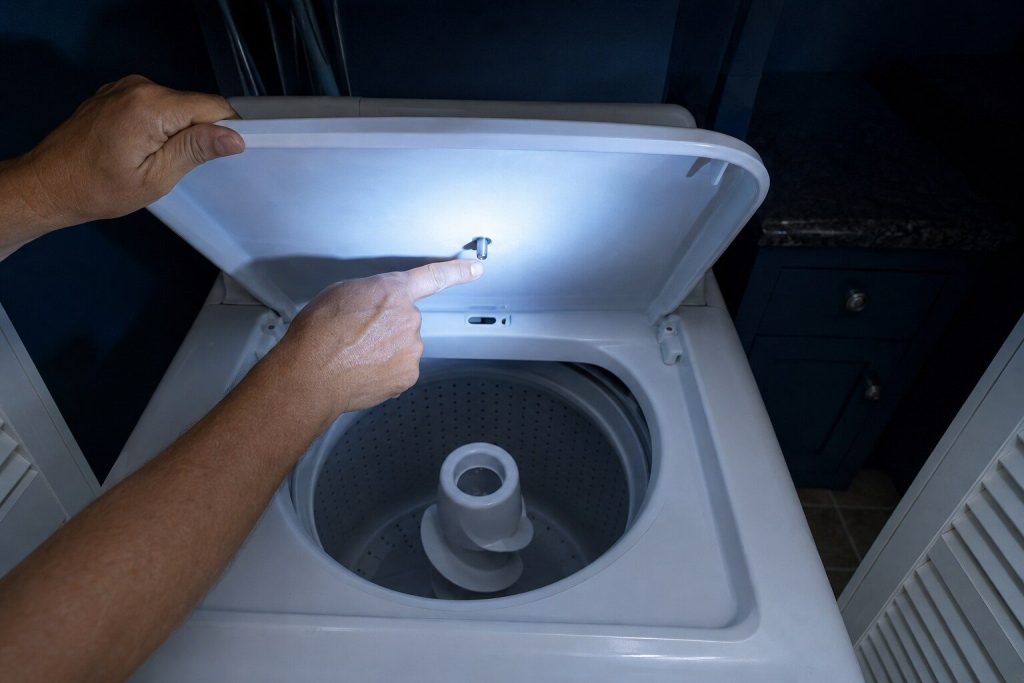
A flashing lock is not a broken lock. It is the machine saying it tried to lock and never got the confirmation back, and two of the four things in that chain cost nothing.
Read more
Tell us the model number and what it is doing.
This article is based on:
- Official manufacturer documentation
- Internal repair procedures
- Technician repair history
- Company quality standards