Common Problems
A Whirlpool Washer That Sits on Sensing, and What It Is Actually Doing
Sensing is a measurement, not a wait. The machine locks the lid or door, admits a small amount of water, turns the basket a few times and reads how hard the load is to move. From that it decides how much more water to add and how long the cycle will run, which is why the time on the display only becomes honest after sensing finishes. A machine that will not leave sensing has failed to complete one of three readings. It could not confirm the lid or door is locked, so it will not turn the basket. It could not get water, because a faucet is part closed, an inlet screen is silted or a hose is kinked. Or it could not move the load, because one heavy item or an overpacked basket gives a reading the control will not accept. Check the lock, then both faucets, then redistribute the load. Those three cost nothing and settle most of these.
The full guide
Why is my Whirlpool washer stuck on sensing
Because sensing is not a pause. It is the machine taking a measurement, and it will not move on until the measurement comes back.
Whirlpool's own support base carries a page called Using Auto Sensing Cycle for its top-load washers, and another called Sense and Wash Flashing. That the maker publishes both tells you something: this is a normal operating state that people reasonably mistake for a stall.
What the machine is measuring
A modern Whirlpool washer does not fill to a line. It works out how much water this particular load needs, and it does that by handling the load.
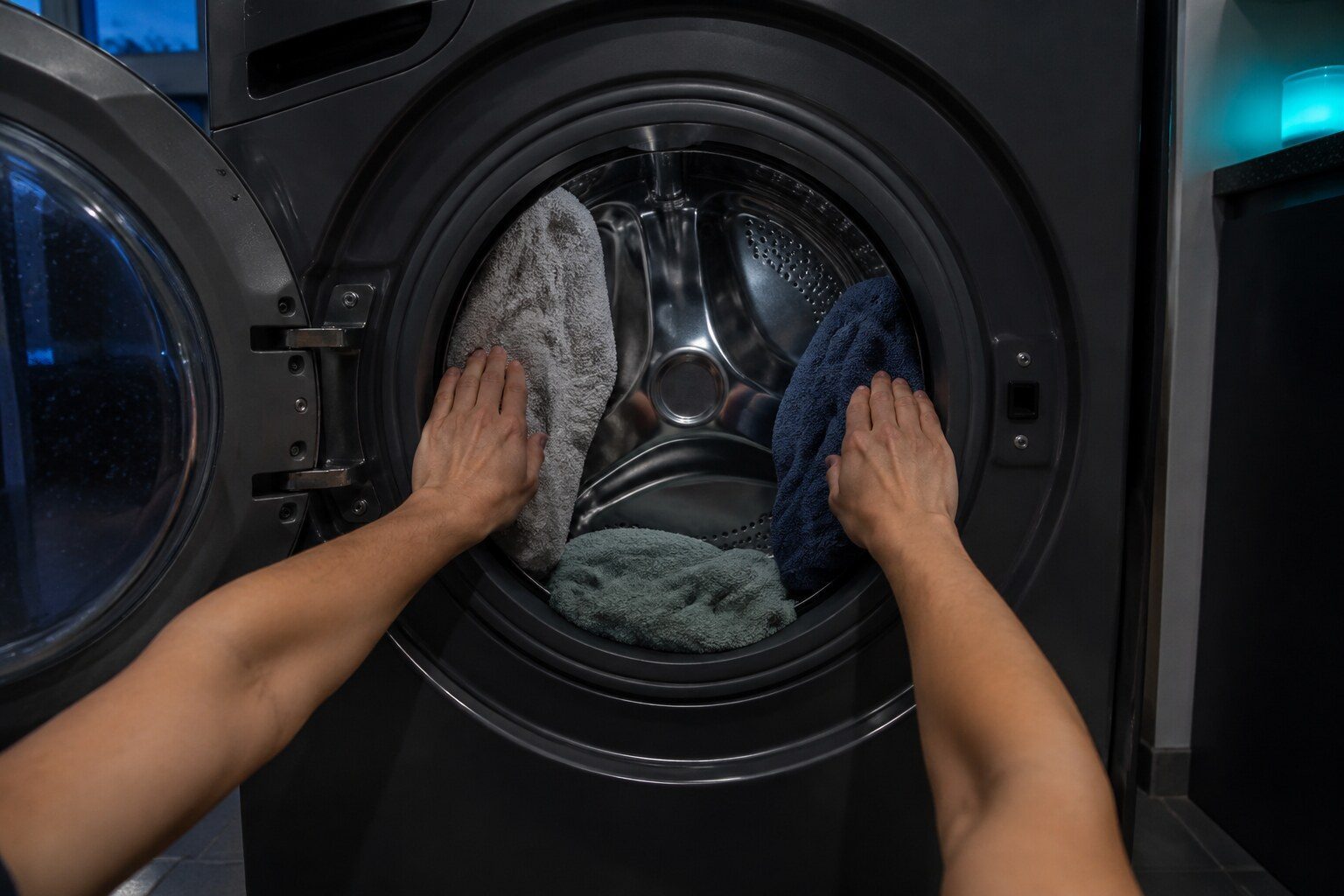
The sequence is short. The lid or door locks. A small amount of water goes in. The motor turns the basket a few times in both directions, and the control watches how much effort that took. Wet fabric is heavy and it drags, and the drag is a good proxy for how much fabric is in there. The control turns that reading into a water level and a cycle length.
That is why the number on the display changes. Forty minutes becomes an hour and twenty, and people take it as the machine breaking down. It is the opposite. The first figure was a guess for an average load, the second is arithmetic for the load in the basket.
Two to four minutes is normal. A bulky item takes longer, because it soaks unevenly and needs several passes.
The three things that stall it
Sensing needs three conditions, and each one fails differently.
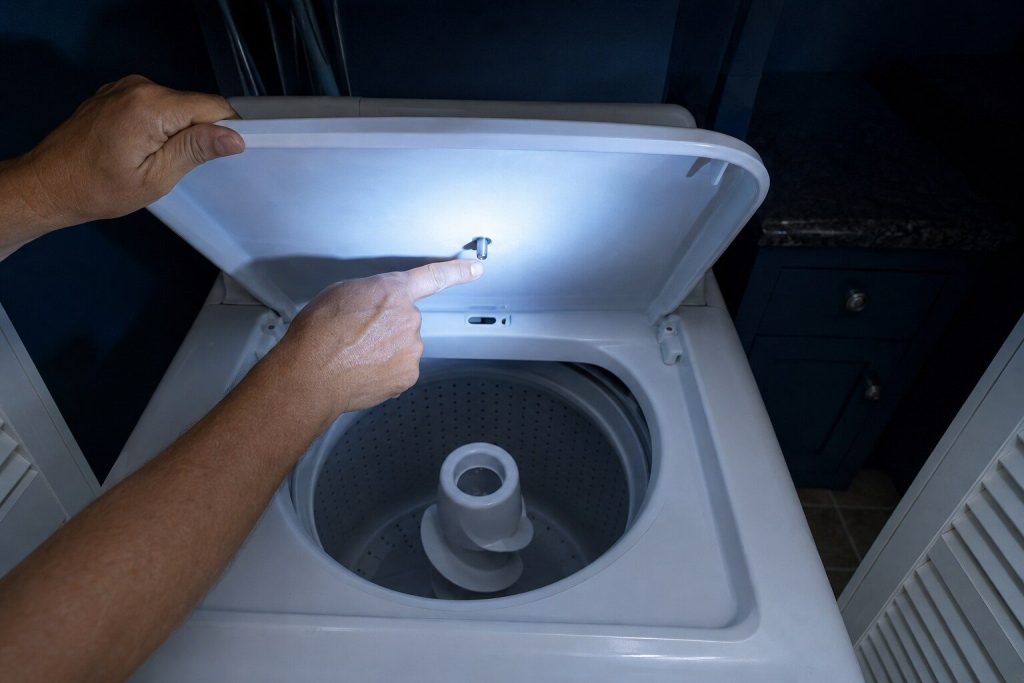
It cannot lock. The basket does not turn until the machine has confirmation that the lid or door is secured, and confirmation means a switch reporting back, not a lid that looks shut. A flashing lock light rather than a steady one is that report failing to arrive. Nothing further in the cycle can happen, so the machine sits where it is.
It cannot fill. The measurement depends on adding a known amount of water in a known time. If the water arrives slowly, the level is never reached inside the window the control allows, and the machine keeps trying. Four things do this: a faucet only part open, a fill hose crushed behind a machine pushed back into a laundry closet, a silted inlet screen, and low pressure at the connection.
Open both faucets, not the one you think the cycle needs. These machines mix hot and cold to reach a target temperature, so a hot tap that was closed for a plumbing job stalls a cold wash.
That list is not ours. On its compact front-load washers Whirlpool publishes an indicator named Water tap is closed, and the causes it names are a closed faucet, a kinked inlet hose, water pressure that is too low, and clogged mesh filters in the inlet hose. Different machine, same four things, and the maker thought them common enough to give a light of their own.
It cannot move the load. One heavy bath sheet on its own is the classic. It absorbs water on one side of the basket, drags unevenly on every rotation, and returns a reading the control will not commit to. So it measures again. Add two or three similar items and the same machine runs through in three minutes.
The other end of the same problem is a basket packed to the rim, which is what happens in a rental where the machine is small and the household is not.
The order to work through
The order is worth following exactly, because it goes from free to expensive.
- Watch the lock light through the first minute. Flashing rather than steady is a different problem.
- Open both faucets fully.
- Pull the machine forward and look at the fill hoses for a crush or a kink.
- Close the faucets, unscrew the hoses, and check the inlet screens for silt.
- Spread the load evenly. Add items to a single heavy one.
- Run it again and watch whether the water level rises at all.
Step six decides. Water rising slowly is a supply problem. Water not rising with the faucets open is the inlet valve. Water rising normally and the basket still not committing is the sensing circuit or the drive.
What this is not
A cycle that gets through sensing and then takes three hours is a different complaint, usually rinse and spin repeating because the load will not balance. A machine that fills endlessly and drains at the same time is a third thing again. This page is only about the two minutes at the start, which is the part of the cycle almost nobody has had explained to them.
If it turns out to be a repair
What this leads to, and what it costs
Every job on this site is priced the same way: an on-site diagnostic first, the figure agreed in writing before anybody starts.
-
Forty minutes on the display, three hours on the clock Washer cycle takes hours to finish
A Whirlpool washer does not run a fixed cycle. It measures, and it adds time whenever a measurement is not where it should be. So a cycle that keeps growing is the machine telling you it is repeating something — extra rinses to clear foam, extra fill attempts, extra drain attempts — and each of those has its own name in the maker's own table.
- The time on the display is an estimate the machine revises, not a countdown
- Sud is the most common reason a wash doubles in length, and the cause is usually the detergent
- A slow fill and a slow drain both add time before either shows a code
-
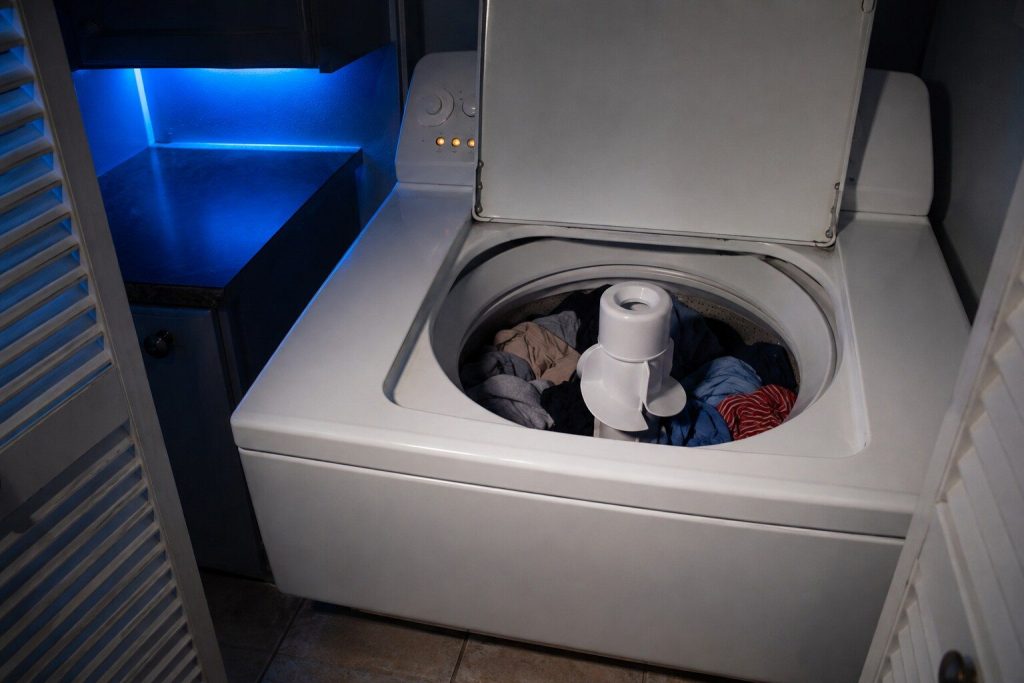
The cycle starts, the drum stays empty Washer will not fill, or fills too slowly
Whirlpool washers watch the water arriving and stop when it does not. The machine gives this one three different labels depending on how old it is and which control it has — LF, Lo FL and F8 E1 are one finding under three names, and the maker's own wording is that the washer is taking too long to fill or is not detecting the right amount of water coming in.
- LF, Lo FL and F8 E1 are the same condition, spelled three ways
- HC and F3 E2 mean the hot and cold hoses are on the wrong way around, which happens on every move
- The problem is on the wall more often than in the washer
-
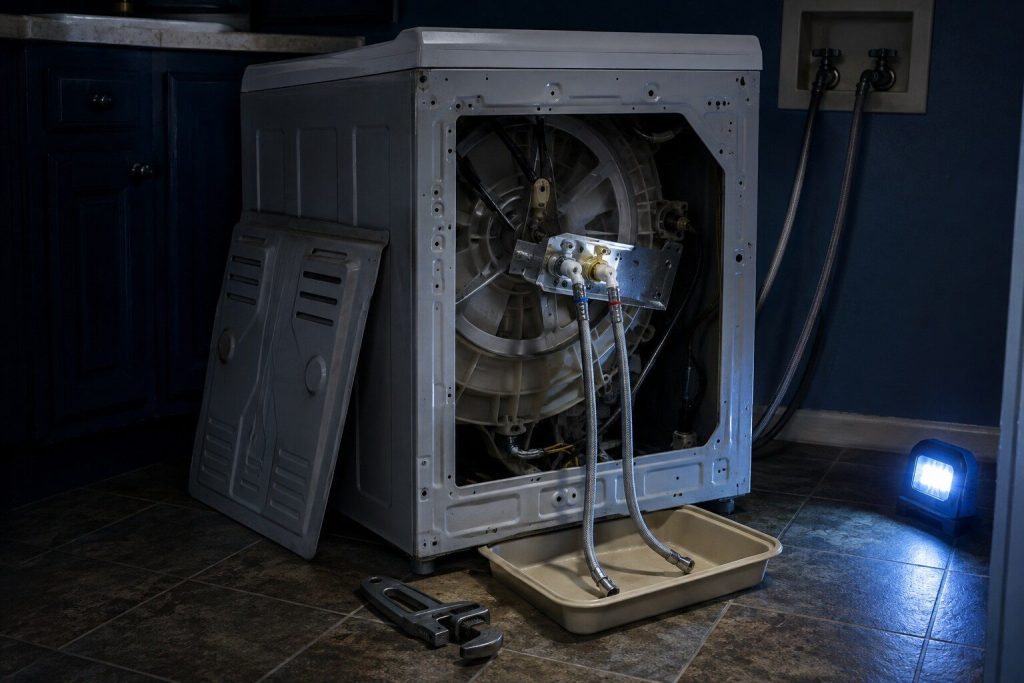
from $139 Washer water inlet valve repair
A washer that fills slowly, will not fill, or fills and drains at the same time is reporting on the water side, and Whirlpool is unusually explicit about it: this make publishes a long fill reading, a no-water-detected reading, a low-flow reading and a code specifically for the water supply. That is a great deal of published information for one circuit, and it is worth using before anything is opened.
- Screens, hoses and household pressure come before the valve
- This make names long fill and no water detected as separate readings
- Both hot and cold sides are tested, because one closed tap reads as a broken machine
-
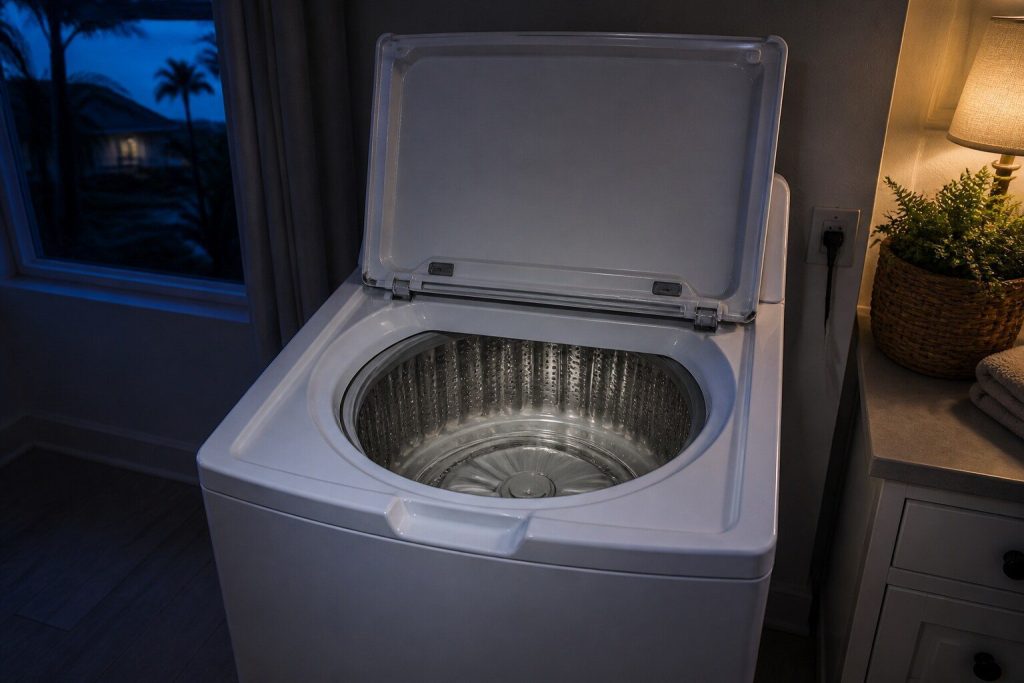
Top load · front load · compact front load · laundry tower · all-in-one washer dryer Washers
Laundry is the strongest part of this site, and the reason is measurable: Whirlpool's own support base carries 1,449 laundry pages, while the sister badge on the same control platforms publishes no laundry at all. For washers specifically there are 157 pages on the top loader with 68 code pages, 179 on the front loader with 59, 60 on the compact front loader, 204 on the laundry tower with 88, and a separate all-in-one washer dryer branch with 22 code pages of its own. That is five distinct machines with five distinct code lists, and the codes do not all carry the same meaning across them. Which machine the code came off is half the diagnosis.
- Top load, front load, compact front load, laundry tower and all-in-one machines
- Around 250 published washer code pages, and the code lists differ between shapes
- Sud, F8E1, F5E2, LF, Ld, dU, uL and the lid-lock lights are all published conditions
Questions people ask about this
How long is sensing supposed to take?
Two to four minutes on an ordinary load, and longer on a bulky one, because a duvet takes several fill and tumble passes before the reading settles. Ten minutes without the water level changing is no longer sensing. It is the machine repeating a measurement it cannot complete.
The display said 40 minutes and now it says 1 hour 20.
That is normal and it is the clearest evidence sensing is working. The first number is an estimate for a typical load. The second is the real number for the load in the basket, calculated after the measurement. A machine that never revises the number has often not finished measuring.
One heavy towel stalls it every time. Is that a problem?
It is the design working against a load it was not built for. A single dense item soaks up water on one side of the basket and drags unevenly, and the control keeps re-measuring rather than committing. Add two or three similar items so the load reads as a load. If the machine then runs normally, nothing is broken.
Would a low water pressure problem look like this?
Yes, and it is common in older South Florida buildings where the laundry connection is at the end of a long run. The machine gives itself a fixed window to reach a level. Water arriving slowly means the level is never reached in time, so it stays in the measuring phase. Time a gallon jug at the faucet with the hose off to find out.
Common Problems
More guides like this one
-
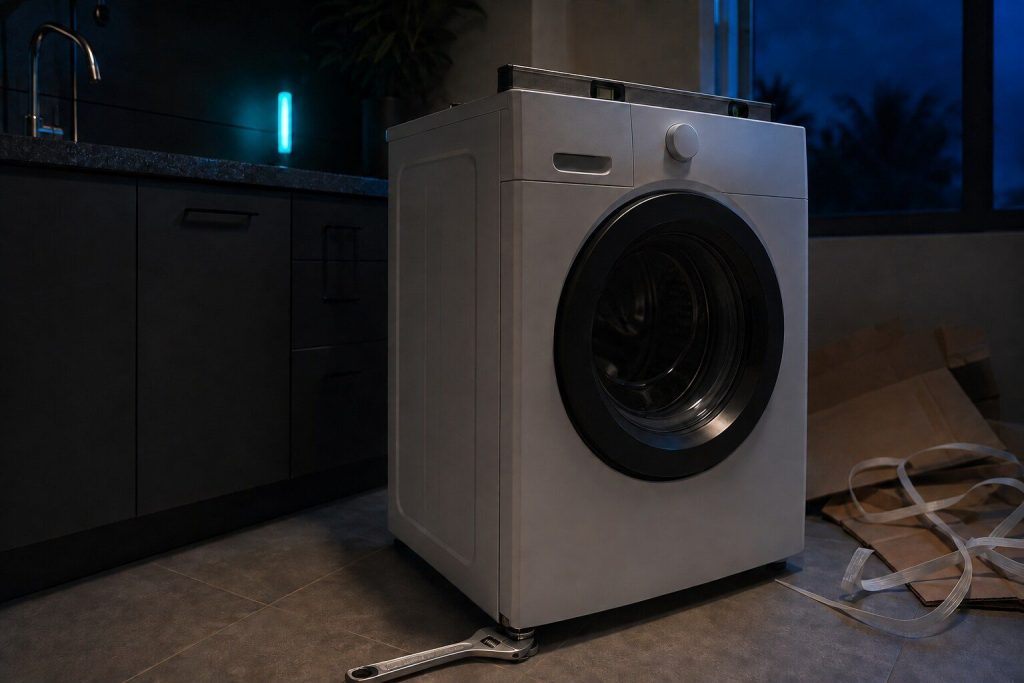
A Washer That Walks: Telling the Load Apart From the Floor
Two different problems arrive as the same sentence. A five-minute test with three towels separates them, and the answer often turns out to be the floor rather than the machine.
Read more -
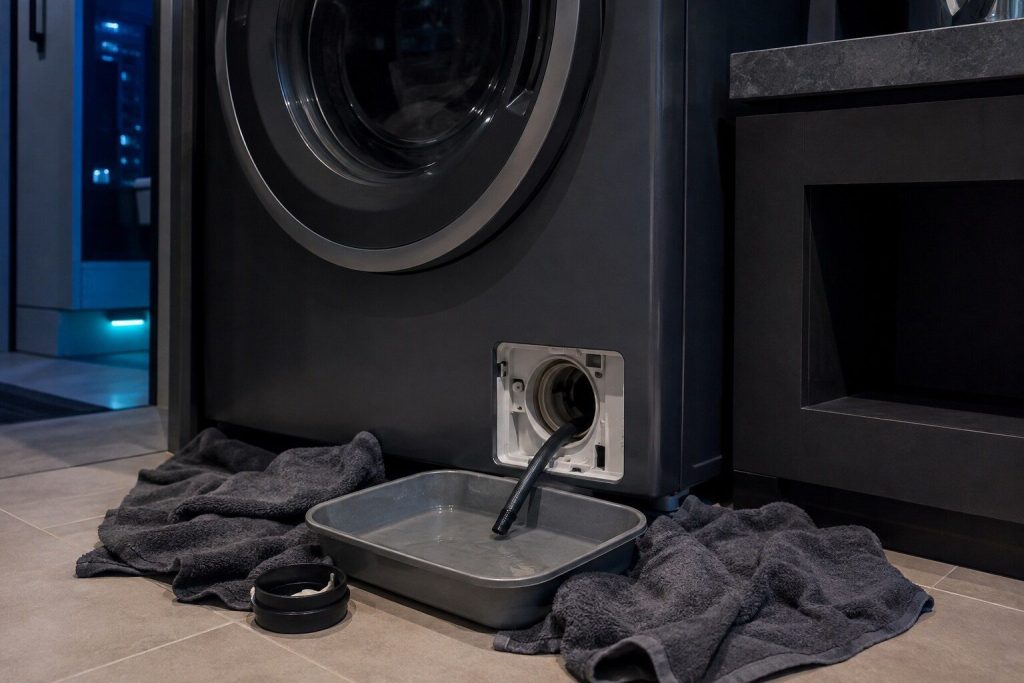
A Washer Stopped Full of Water: Top-Load and Front-Load Are Not the Same Job
A Whirlpool washer not draining water is two different machines with two different answers: a front-loader has a pump filter the maker tells you to clean, and a top-loader does not.
Read more -
The Lid Lock Light Is Flashing and the Washer Will Not Start
A flashing lock is not a broken lock. It is the machine saying it tried to lock and never got the confirmation back, and two of the four things in that chain cost nothing.
Read more
Tell us the model number and what it is doing.
This article is based on:
- Official manufacturer documentation
- Internal repair procedures
- Technician repair history
- Company quality standards