Common Problems
A Dryer That Tumbles Cold: What to Check, in Order, and What Not to Replace
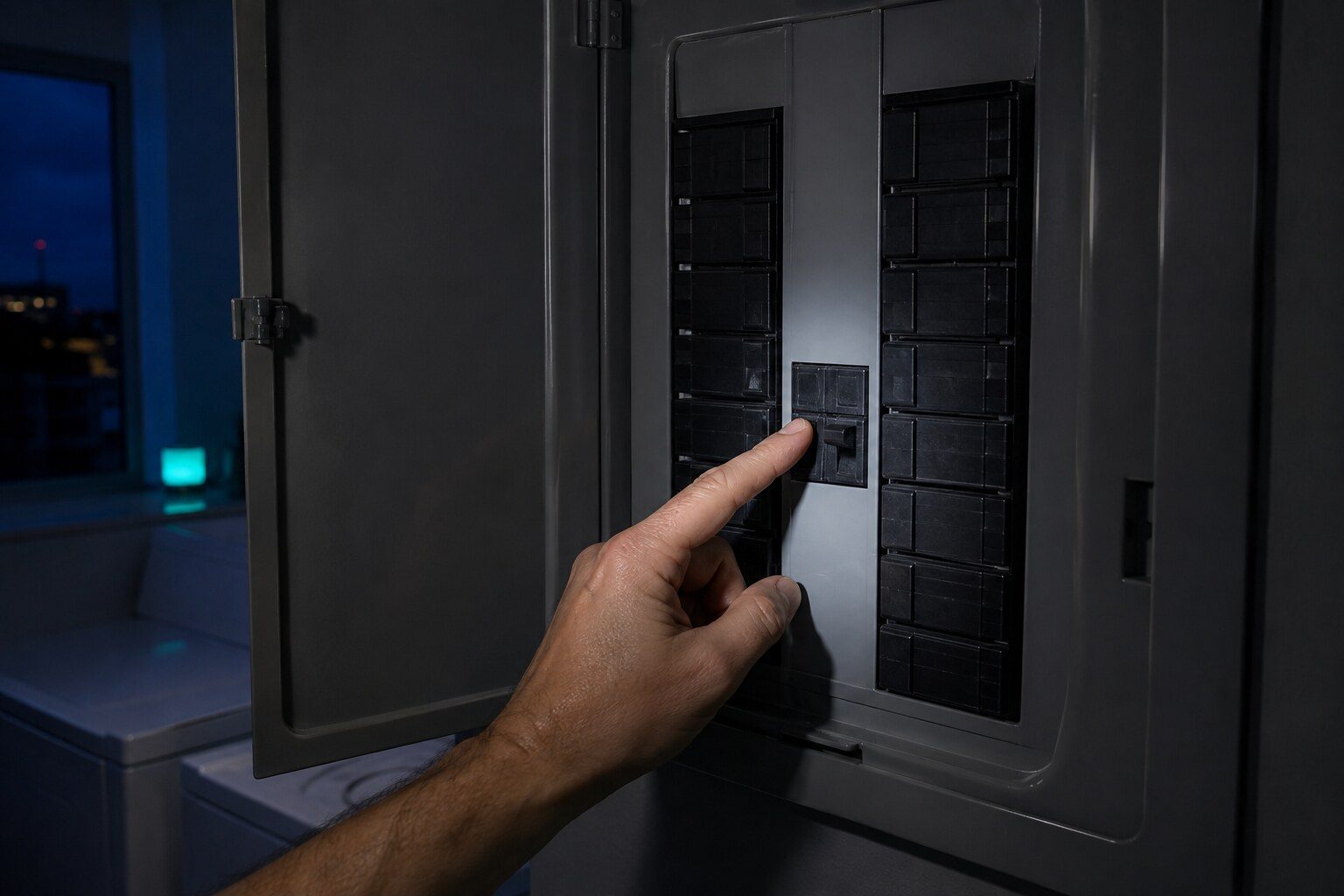
Start at the breaker panel, because it is free and it is common. An electric dryer runs its motor, drum light and controls from one 120-volt leg and heats from both legs of a 240-volt supply. Lose one leg and everything visible keeps working while the machine never warms. Find the dryer's double breaker and switch it fully off, then fully on. Do not inspect it, because a half-tripped double breaker usually looks completely normal from the front. If that does not solve it, the shortlist is short: the thermal fuse, the thermostats and the heating element on an electric machine, or the igniter on a gas one. The important part is what an opened thermal fuse means. It is a one-time device that opens because the machine got hotter than it was designed to, and on a vented dryer that is almost always a restricted duct. Fitting a new fuse without clearing the duct means doing the same job again, usually within a couple of months.
The full guide
Whirlpool dryer not heating but running: the free check comes first
Go to the breaker panel before you touch the machine.
An electric dryer is fed by two 120-volt legs. The motor, the drum light and the control run off one of them. The heating element needs both. So when one leg disappears, every visible thing keeps working perfectly and the machine simply never gets warm.
It is the most convincing failure in a laundry room and one of the cheapest to resolve. Find the dryer's breaker, which is a double with two handles joined, and switch it fully off and then fully on.
Do not inspect it. A half-tripped double breaker usually looks completely normal from the front, which is why this has to be done by hand rather than by eye. A loose connection at the outlet or a worn cord does the same thing, which is common in a rental where the machine has been moved in and out a few times.
If it heats after that, you are finished and it cost nothing.
The thermal fuse is a message, not a part
This is the paragraph that matters most on this page, and it is the one most often skipped.
A thermal fuse is a one-time safety device. A link inside opens permanently at a set temperature and never closes again. It is not a thermostat, which cycles thousands of times over the life of the machine and is meant to.
So a fuse that has opened is a statement: the inside of this dryer got hotter than the manufacturer allowed. Two devices in front of it, the cycling thermostat and the high limit, failed to stop the climb. The last line of protection did its job and took the machine out of service.
On a vented dryer, heat cannot leave because air cannot leave, and air cannot leave because the duct is restricted. Fit a new fuse and put the machine back with the duct untouched, and it will open again, usually within a couple of months, with a machine running hot in between.
Any repair on this symptom that does not include looking at the whole duct run is not finished. Not the first three feet. The whole run, and the flap on the outside wall, which corrodes half open and then packs solid behind.
Then the element, and the thermostats with it
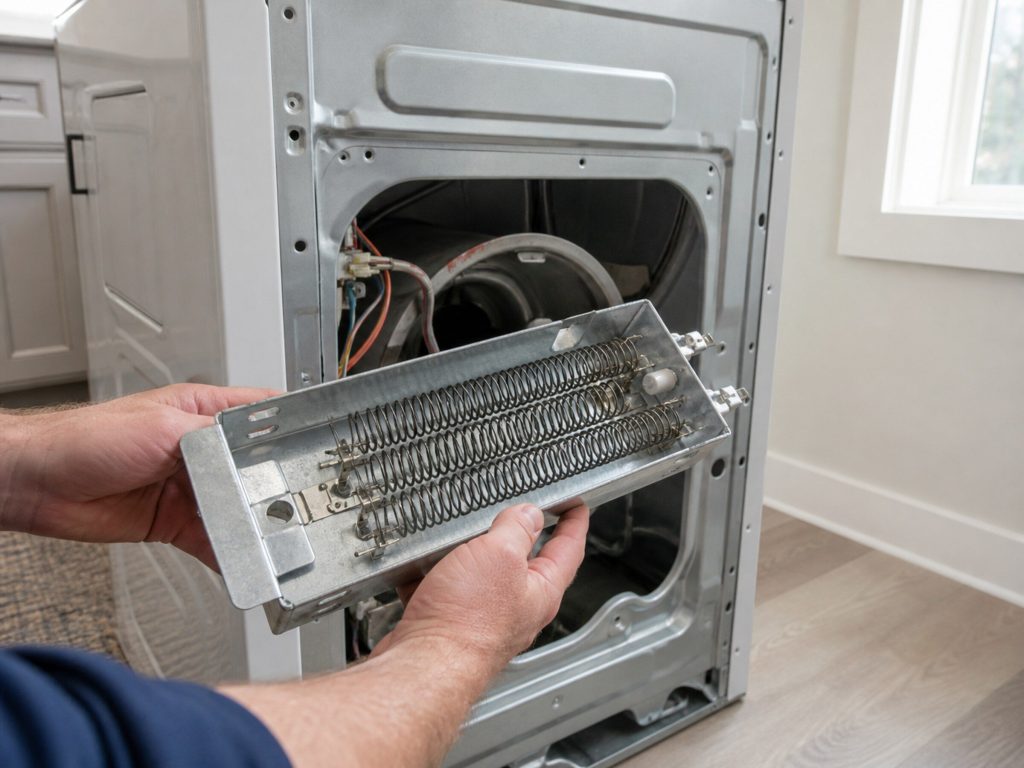
On an electric Whirlpool dryer the element is a coil of resistance wire inside a metal can at the back of the cabinet. It fails open, which is measurable rather than a matter of opinion.
The thermostats sit alongside it and age in the same heat. That is why the sensible repair on a machine that has been overheating replaces the group rather than one item at a time. Piecemeal here means a second visit, and the parts are cheap enough that it is not a close call.
The one genuine advantage of owning the most common dryer in South Florida is exactly this. A Whirlpool element, fuse or thermostat set is a stocked part rather than something ordered against a model number and waited for, and availability is what usually decides whether a repair is worth doing at all.
On a gas dryer, look at the igniter
Gas machines produce the same cold tumble by a different route, and the part that ages is the igniter.
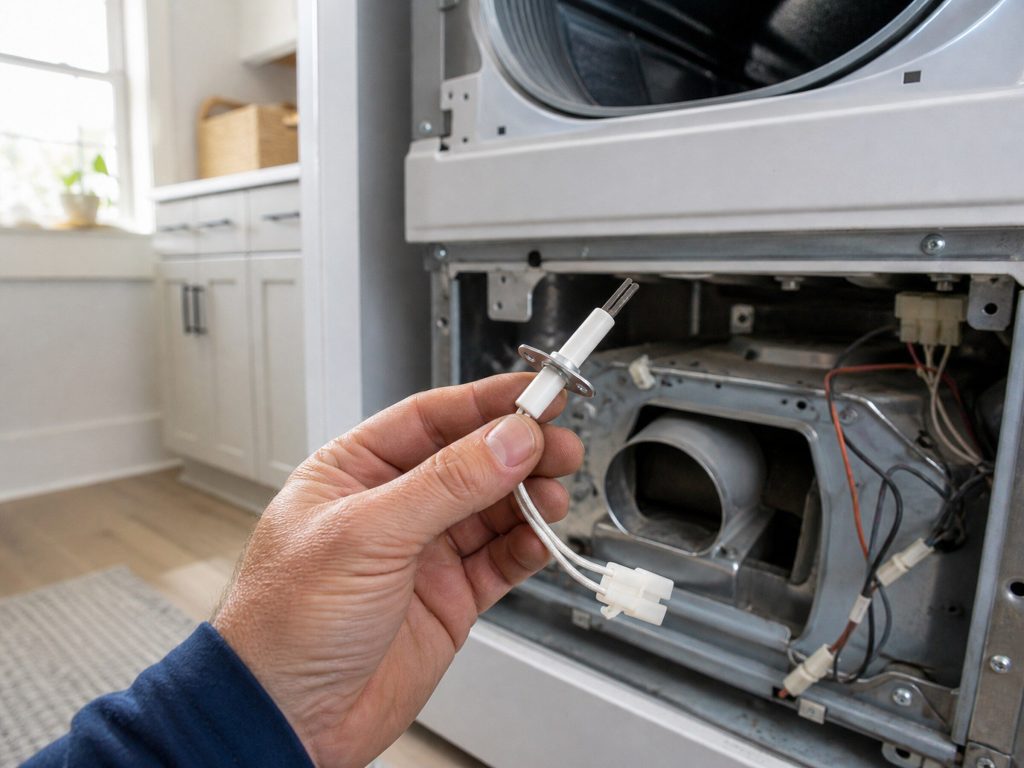
The safety valve on a gas dryer is opened by the current the igniter draws. Not by a separate command, by the draw itself. So an igniter that has weakened over years will still glow, brightly enough to look completely healthy, and still never open the valve.
"It glows, so it must be fine" is the most common wrong conclusion in this repair. Watch a full attempt through the lower vent: a bright orange glow, then flame within about a minute. A glow that fades away with no flame is the diagnosis.
Gas dryers here are mostly in older houses rather than in condo laundry closets, which are almost always electric. Worth knowing which you have before anybody arrives: different parts, different visit.
What this page is not about
If the dryer gets warm and simply takes forever, that is airflow rather than heat, and it is a separate page. Hold onto the distinction:
- Tumbles completely cold. Supply, thermal fuse, thermostats, element. On gas, the igniter. This page.
- Warm but slow, or hot and still damp. The screen, the housing, the duct, the wall flap. The other one.
They overlap in one place, which is why the duct comes first here too: the machine that ran restricted for months is the machine that opens its fuse.
If it turns out to be a repair
What this leads to, and what it costs
Every job on this site is priced the same way: an on-site diagnostic first, the figure agreed in writing before anybody starts.
-
The drum turns, the load comes out cold and wet Dryer runs but does not heat
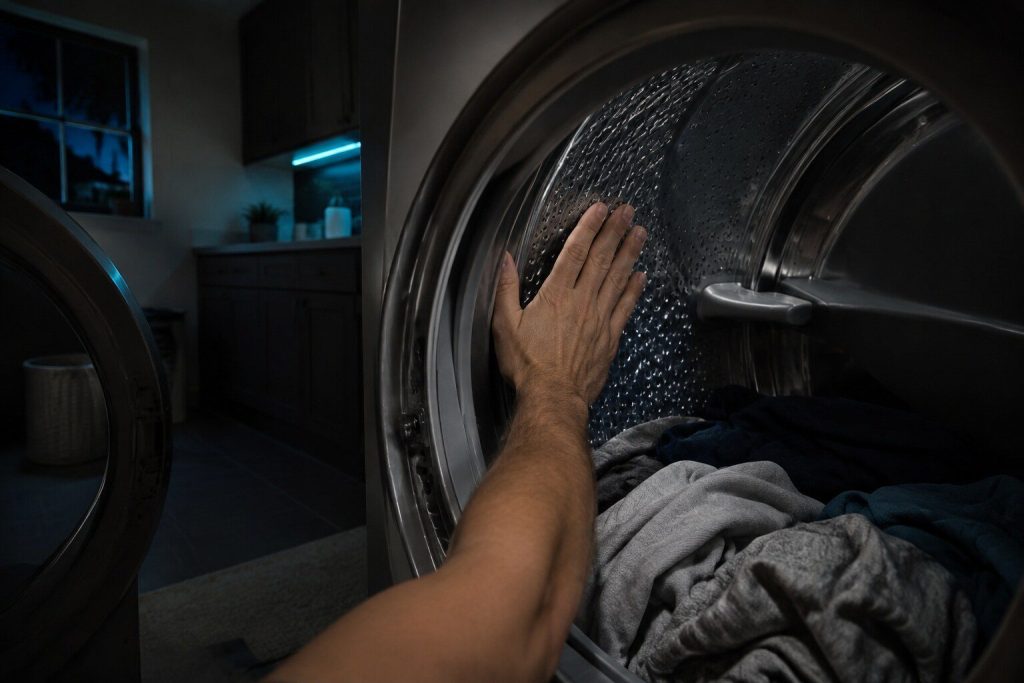
A dryer that tumbles without heating has usually lost one of two things: the heat itself, or half of its electrical supply. Whirlpool separates the two in its own table, and the difference decides whether the repair is inside the machine or at the breaker panel.
- F4 E4 and L2 are Whirlpool's low or no line voltage report — that one starts at the panel
- F4 E1 is the heater or the heater relays, and that one is inside the machine
- An electric dryer on a tripped half-breaker tumbles perfectly and heats nothing
-
from $175 Dryer heating element replacement
On an electric Whirlpool the element sits in a housing on the back or the side of the drum, and when it fails it usually takes a thermal cutoff with it. Replacing the element alone is how this repair comes back in a fortnight, because the cutoff opened for a reason and the reason is nearly always airflow.
- Element, thermal cutoff and high-limit replaced as a set
- The vent is cleared in the same visit or the new element inherits the same problem
- A stocked part on this make, which keeps this to one visit
-
from $175 Gas dryer igniter and valve repair
A gas dryer that tumbles cold has a short, specific list: the igniter, the flame sensor, the gas valve coils and the safety devices around them. The failure is often intermittent — it lights on the third attempt, then on the fifth, then not at all — and an intermittent gas appliance is not something to live with.
- Igniter, flame sensor and valve coils tested as one circuit
- The gas connection is leak-tested afterwards and the result written down
- Intermittent ignition is treated as a repair now, not a wait-and-see
-
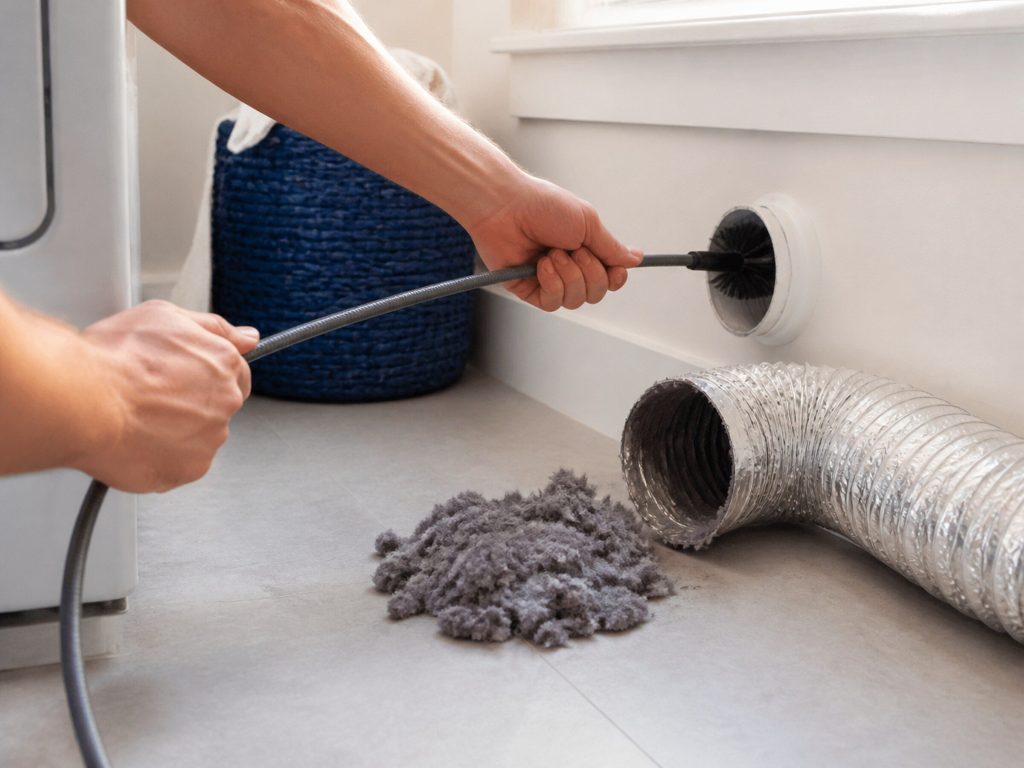
from $129 Dryer vent cleaning
This is a safety job before it is a performance job. Lint that has been packing into a duct for years is fuel sitting next to a heat source, and long drying times are the warning. On Whirlpool dryers the machine measures the restriction itself and reports it, which is a genuine advantage — most makes leave you to notice.
- The dryer reports its own restricted-vent condition on this make
- Duct, wall hood and the transition behind the machine, all three
- Drying time measured before and after
Questions people ask about this
It worked perfectly yesterday.
That fits a supply problem much better than an element, which usually gives some warning. Switch the double breaker fully off and on. If it heats afterwards, look at what else shares that circuit and whether the breaker itself feels warm. A breaker that trips repeatedly is reporting something worth listening to rather than something to keep resetting.
Somebody told me to just fit a new thermal fuse.
That is half a repair and it is the half that does not last. The fuse opened because the inside of the machine passed a temperature the manufacturer set as the limit. Two thermostats in front of it failed to stop the climb. Replace the fuse, leave the duct packed, and the new one opens too. Clearing the duct is not an upsell here, it is the actual repair.
Is it worth repairing, or should I replace the dryer?
On this make, usually repair, and the reason is the parts. A fuse, a thermostat set, an element or an igniter for a Whirlpool dryer is a stocked item on the van rather than something ordered against a model number and waited for. The rest of a dryer is very simple machinery. Where the arithmetic turns is a machine that also needs a drum, a bearing and a belt at the same time.
Mine is gas. Does any of this apply?
The breaker check does, because a gas dryer still runs its motor and controls on electricity. After that the paths separate. On gas the part that ages is the igniter, and the trap is that a weak igniter still glows brightly while no longer drawing enough current to open the valve. It is measured rather than judged by eye, which is why glowing is not proof.
Common Problems
More guides like this one
-
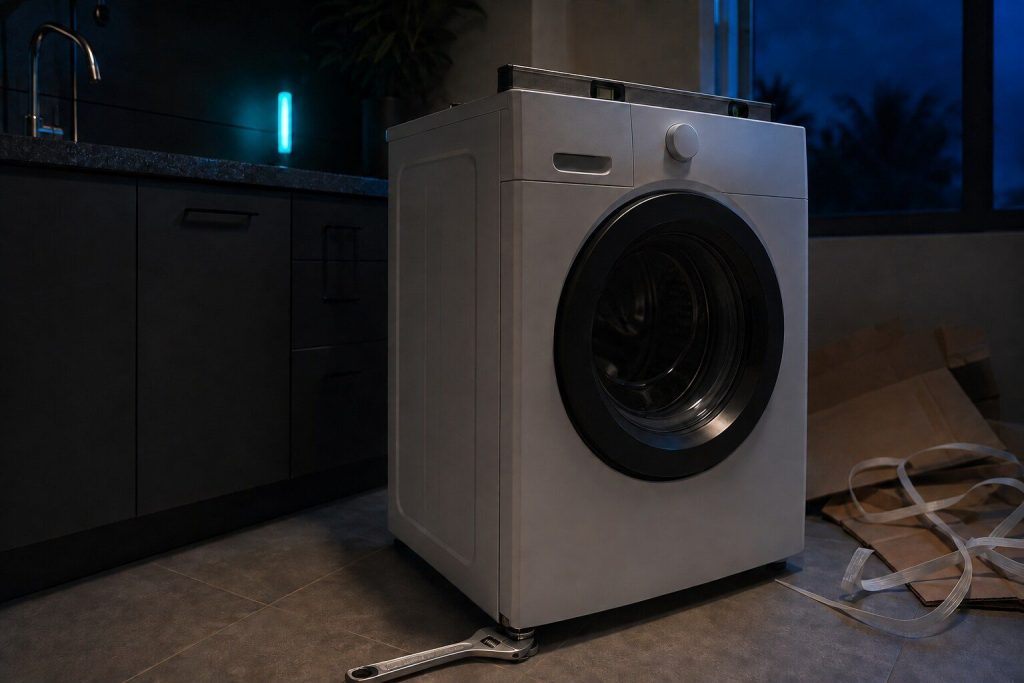
A Washer That Walks: Telling the Load Apart From the Floor
Two different problems arrive as the same sentence. A five-minute test with three towels separates them, and the answer often turns out to be the floor rather than the machine.
Read more -
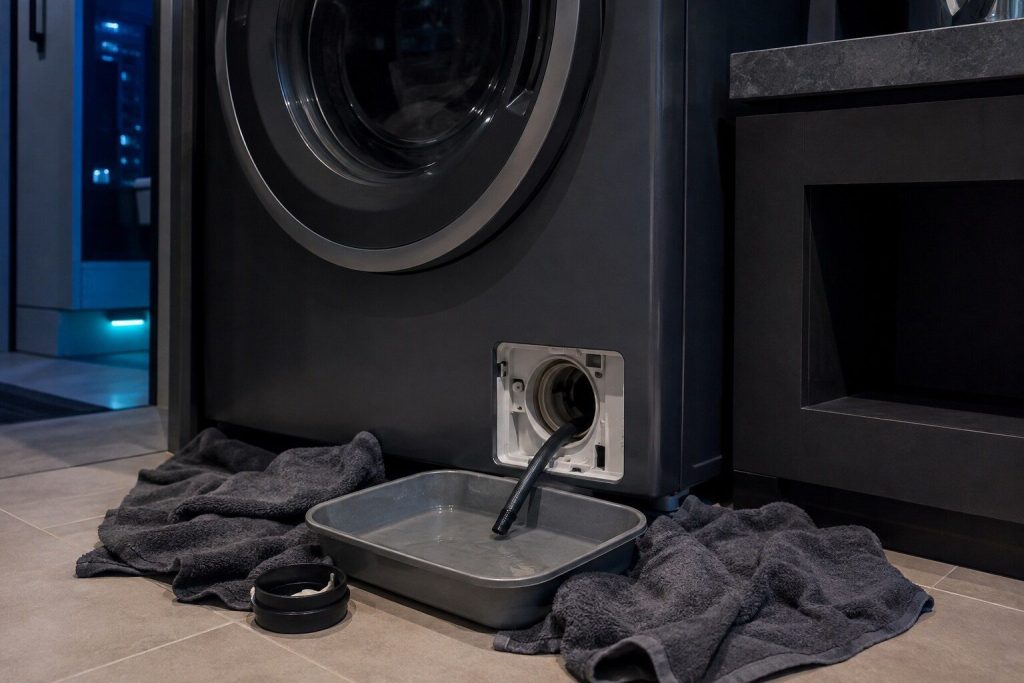
A Washer Stopped Full of Water: Top-Load and Front-Load Are Not the Same Job
A Whirlpool washer not draining water is two different machines with two different answers: a front-loader has a pump filter the maker tells you to clean, and a top-loader does not.
Read more -
A Whirlpool Washer That Sits on Sensing, and What It Is Actually Doing
Sensing is not a pause before the wash. It is a measurement, and a machine that will not leave it is reporting that one of the three things it measures did not come back.
Read more
Tell us the model number and what it is doing.
This article is based on:
- Official manufacturer documentation
- Internal repair procedures
- Technician repair history
- Company quality standards