Troubleshooting
F2E1, F5E3, F9E1: How to Read a Whirlpool Code Instead of Looking It Up
A Whirlpool F#E# code is two numbers doing two different jobs. The F is a function number and it names which system inside the appliance reported: on the maker's own range pages F1 is the oven control, F2 is the user interface or keypad, F3 is the oven temperature sensor, F5 is the door latch assembly and door switch, F6 is the oven control and appliance manager, F8 is the cooling fan and airflow, and F9 is the door latch and lock switch. The E is the error number and it says what that system reported. Because the F half is the one that names the hardware, F2E1 and F2E0 are relatives of each other and F1E1 is a stranger despite sharing a digit. Whirlpool organizes its own site the same way, in folders called Starts with F1, Starts with F2, Starts with F3, which is the structure printed out loud. Two cautions. The second half is not always a number, because the base also publishes F6 EA, FC E1 and FC RR. And the same table appears under more than one badge in Whirlpool Corp, so the code names the subsystem and only the model number names the machine.
The full guide
Why a Whirlpool error code list is the wrong thing to look for
Search for a Whirlpool error code list and you get a wall of numbers, most of them for an appliance you do not own. Whirlpool's own support base publishes 170 code pages for ranges, 176 for wall ovens, 83 for electric cooktops and 88 for laundry towers. Nobody reads that. Nobody should.
The codes are not a list. They are a structure, and the structure takes about two minutes to learn.
The two halves
F2E1 is not one thing with four characters. It is two numbers doing two different jobs.
The F number is a function number. It names which system inside the appliance reported the problem. It is the half that points at hardware.
The E number is an error number. It says what that system reported.
So F2E1 and F2E0 are relatives — same system, different report. F1E1 has nothing to do with either of them, despite sharing a digit with one and a shape with both. That single fact stops more wrong parts being ordered than any table does.
The F numbers, in Whirlpool's own words
This is not deduced. It is what the maker's own range and wall oven pages say the code is about, and the same sentence is repeated across every E under that F.
| F | What Whirlpool's page names |
|---|---|
| F0 | The control could not recognize what type of problem occurred |
| F1 | The oven control, or the associated wiring |
| F2 | The user interface or keypad, the control, or the wiring |
| F3 | The oven temperature sensor, the control, or the wiring |
| F5 | The oven door latch assembly, the door switch, or the wiring |
| F6 | The oven control, the appliance manager, or the wiring |
| F8 | An airflow restriction, or the oven cooling fan |
| F9 | The oven door latch and the door lock switch |
Read that column top to bottom and it stops being a code table. It is a tour of the appliance: the brain, the keypad, the thermometer, the lock, the fan.
The proof that this is the intended reading is the way Whirlpool files its own pages. The folders on its site are called Starts with F1, Starts with F2, Starts with F3. The maker groups by the first half, because the first half is the one that means something.
There is a blunter piece of proof on the laundry side. Whirlpool publishes a page titled simply F#E#, and its text describes the format rather than a code: if a code beginning with an F appears in the display, alternating between F# and E#, the control has detected a problem that requires service. Note the word *alternating*. On several of these panels the two halves are shown one after the other rather than together, which is why people report half a code — they read the first frame and looked away.
Where the shape bends
Three honest warnings, because a rule you trust too far is worse than no rule.
The second half is not always a digit. The base publishes F6 EA and F8 EA on ranges, FC E1 and FC E4 on cooktops, and on cooktops it also publishes FC RR and FC LF — right rear and left front, a position rather than a number. Whirlpool's wording for those two names the hotplate in that position.
Older controls are written differently. The same range branch carries F01 through F06, F1-1 through F1-L, and four-character codes such as 1c1c, 3d21 and 9d61. Those are real entries. Copy what you see rather than what you expect to see.
The F numbers belong to their own appliance. F3 on a range is published against the oven temperature sensor. Do not carry that across to a washer. Read the shape everywhere; read the meaning inside one branch.
The part nobody is told
Whirlpool Corp runs the same control platforms across several badges it owns, and it publishes the same code tables for them — the same code at the same path on matching support sites.
That has a practical consequence at nine in the evening. If your search for a Whirlpool code lands on a page under a sibling brand in the same corporation, that is usually the manufacturer's own text, not a stranger's guess. It is worth reading. It is also worth knowing why: the table is shared because the control is shared.
Which leads to the limit of the whole method. The code names a subsystem across a platform. It does not name your machine, your generation, or the part number that fits it. Only the model number does that, and that is why the first question anybody sensible asks is not what the display says but what is printed on the tag.
On a range, the tag is usually behind the storage drawer or on the frame at the door opening. On a wall oven it is on the frame with the door open. Photograph it once and it is never a problem again.
What to do with the code you have
Whirlpool's own instruction for most of these pages is the same and it is worth respecting once: cut the power at the breaker for a full minute, restore it, and watch the display for a minute to see whether the code returns.
That is a test rather than a repair. It sorts an event from a condition. A code that clears and stays cleared was a supply interruption or a moment of confusion, which in South Florida in August is a real category. A code that comes straight back has been re-detected, and now the F half has already told you which half of the appliance is involved.
At that point there are two useful sentences to have ready: the code, exactly as written, and the model number. Together they are most of a diagnosis, and they are the difference between one visit and two.
If it turns out to be a repair
What this leads to, and what it costs
Every job on this site is priced the same way: an on-site diagnostic first, the figure agreed in writing before anybody starts.
-
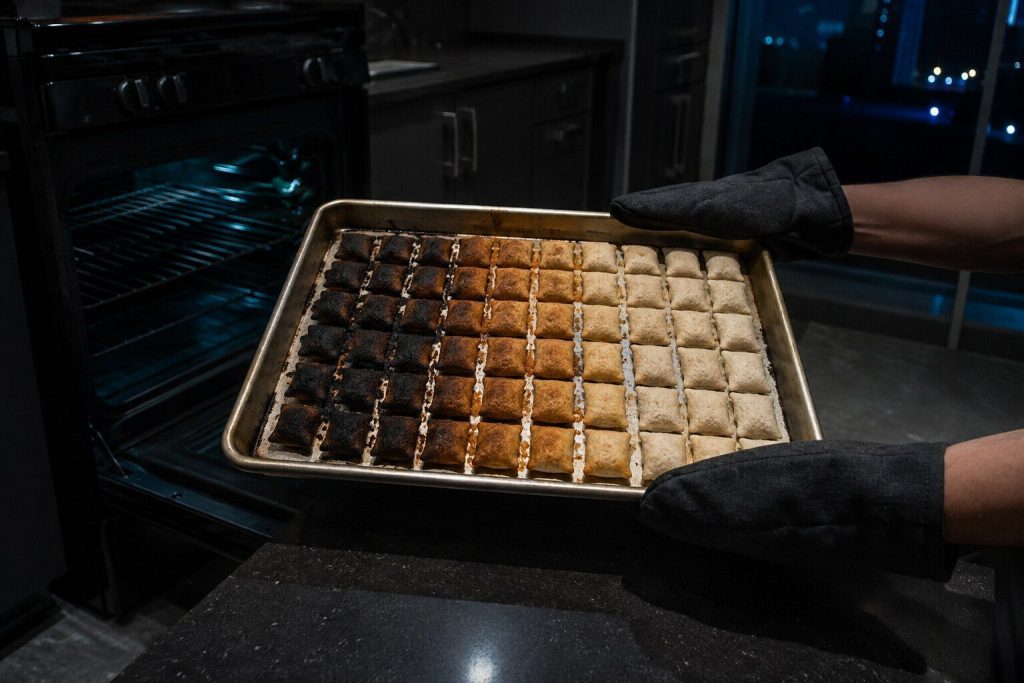
The dial says 350 and the baking says otherwise Oven runs hot or cold
Whirlpool takes this seriously enough to publish separate pages for an oven that is too hot, an oven that is too cold, and — importantly — for each of those both before and after calibration. That distinction is the whole diagnosis: an oven that is out by a consistent amount is a calibration question, and an oven that is out by a different amount every time is not.
- Whirlpool publishes separate pages for too hot and too cold, calibrated and not yet calibrated
- A consistent error is adjustable; an inconsistent one is a sensor or a control
- An oven thermometer costs very little and settles the argument before anybody is called
-
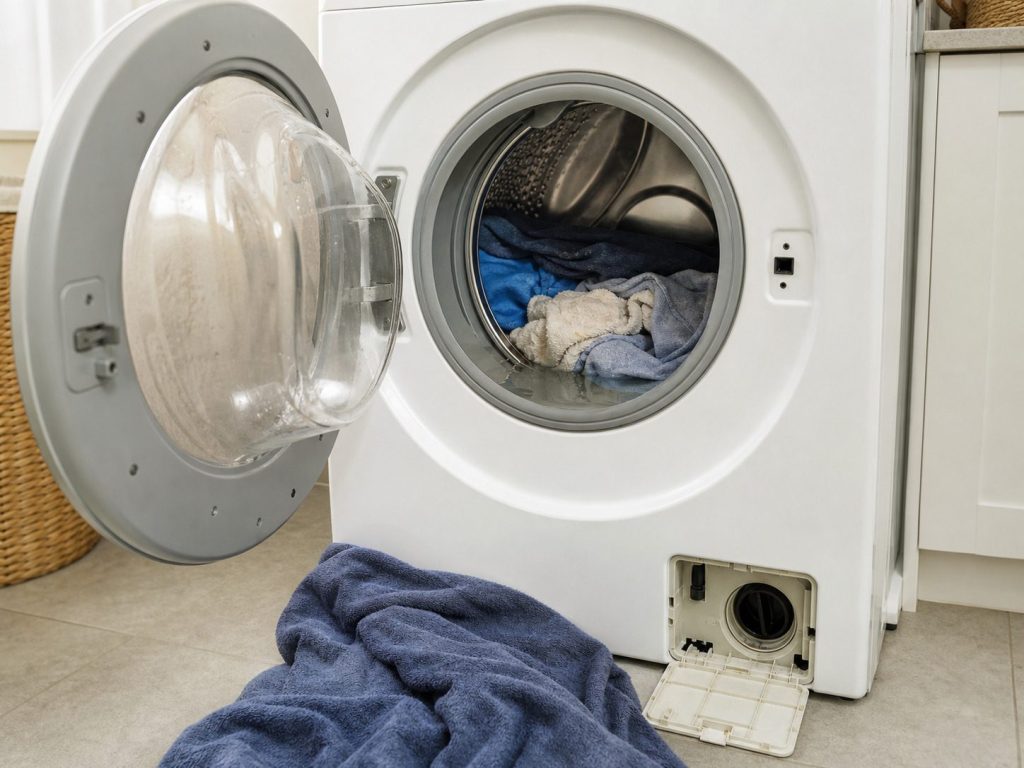
The cycle stopped and the drum is still full of water Washer will not drain
This is the one Whirlpool machine that tells you exactly what is wrong before anybody opens it. The washer times its own drain, and when the water has not gone in the time the cycle allowed, it stops and puts a name on the display. Read that name before you bail the drum out, because it is the difference between a coin in the pump and a control problem.
- Whirlpool's own label for a slow drain is a long drain, and it shows as Ld, F9 E1 or drn
- A drum still full at the end of a cycle is a pump or a hose question first, never a board question first
- The filter behind the lower access panel on a front-load machine is emptied over a towel, and there will be more water in it than anybody expects
-
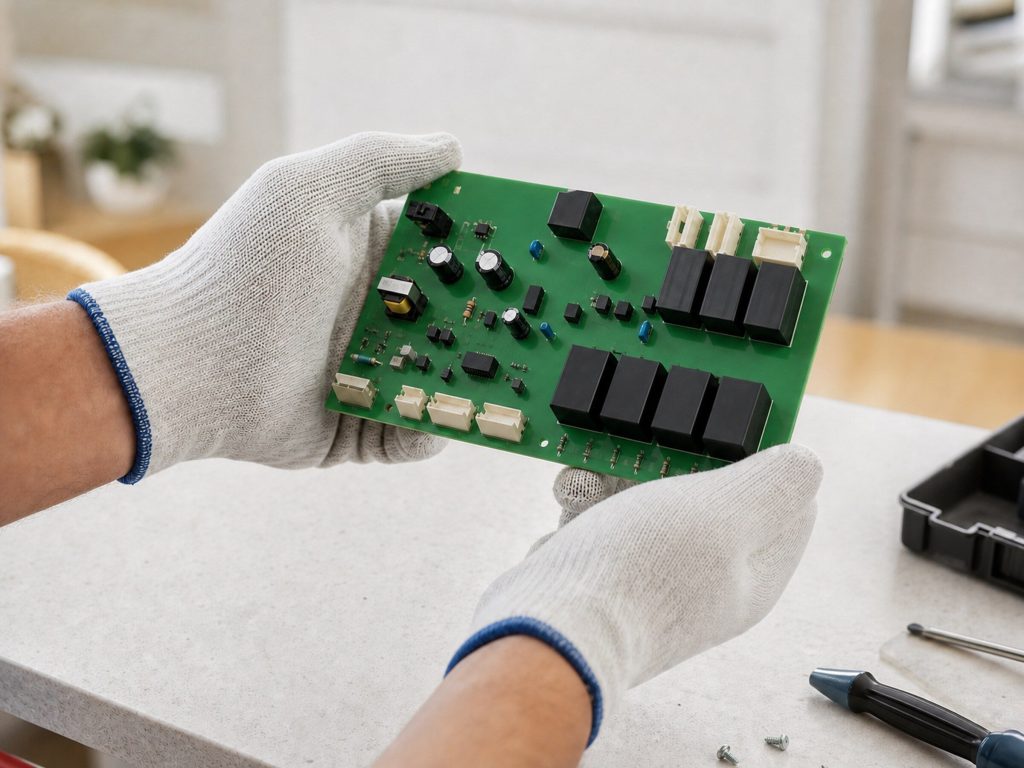
from $265 Appliance control board repair
The board is where a Whirlpool reports from, and it is also the part that gets blamed for everything else. Whirlpool runs the same control architecture across its whole line, which is why an F#E# code looks familiar on a range and on a washer — but a board that has died usually died of something, and replacing it without finding that something buys you a few months.
- A board that died usually died of something, and that something kills the next one too
- Browned connectors and pins backed out of a housing are cheap; boards are not
- Whirlpool revises these mid-production, so the order goes out against the serial
-
from $89 Diagnostic visit
One visit, one technician, one answer in writing. On a Whirlpool the first question is whether the appliance is talking, because this make is not evenly talkative. It publishes a separate page for every code on its ranges, its ovens, its cooktops, its washers and its dryers, and it publishes almost nothing of the kind for its refrigerators and freezers. Knowing which half of the house you are standing in changes how the visit starts.
- Whether this appliance talks at all decides how the visit starts
- Laundry and cooking almost always have a code; the cold side almost never does
- Whatever we find goes to you in writing, and the visit comes off the repair
Questions people ask about this
Why do I find my code on a KitchenAid or Maytag page?
Because it is the same text. Whirlpool Corp runs the same control platforms across several of its badges and publishes the same code tables for them, at matching addresses on matching support sites. A result under a sibling name is usually the maker's own wording rather than somebody's guess, which is useful to know at nine in the evening. It is also the reason a code alone is never a diagnosis: the table is shared, and the machine in your kitchen is not.
My code has no E in it at all.
Several generations are in service and they are not written the same way. Whirlpool's own range pages carry F01 through F06, F1 through F9, F1-1 through F1-L, F0 E0 through F8 EA, and four-character codes such as 1c1c, 3d21 and 9d61. Write down exactly what the display shows, character for character, including a leading zero and including anything that looks like a typing error. 9d61 looks wrong and is a real entry.
Does the same F number mean the same thing on my washer?
Not reliably, and this is the limit of the method. The F number names a function within that appliance's own control, so F3 on a range is published against the oven temperature sensor while the laundry side has its own list. Read the shape across appliances and read the meaning within one. The way to be sure is the appliance branch on the maker's own site, not a general list.
The maker's page just says reset the power. Is that all there is?
It is the first move and it is deliberate. Most of these pages instruct one full minute at the circuit breaker, then a minute of watching to see whether the code returns. That is a test, not a repair. A code that clears and never comes back was an event. A code that returns immediately has been re-detected by the machine, and at that point the F half has already told you which part of the appliance to look at.
Troubleshooting
More guides like this one
-
The Panel Is Lit and No Button Does Anything. That Is a Feature.
A locked panel is lit and unresponsive. A dead one is dark. That single distinction settles most of these calls before anybody is booked.
Read more -
Your Refrigerator Has No Code to Give You. Measure Instead.
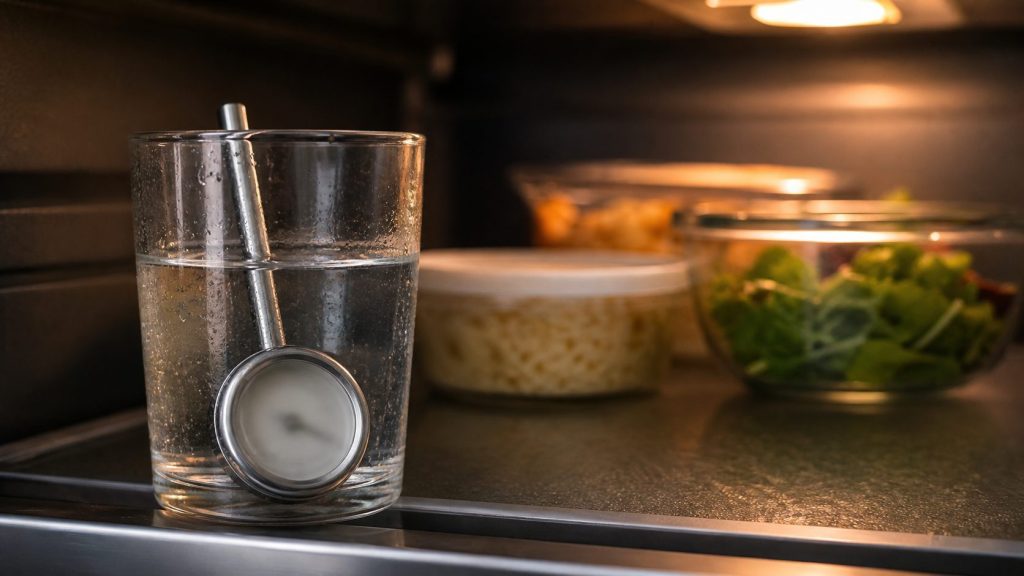
The maker publishes 176 code pages for wall ovens and none at all for a top-freezer refrigerator. This is the page that says so, and then gives you the three measurements that take their place.
Read more -
The Oven Door Is Locked. Which of the Three Things Does That Mean?
Three unrelated conditions arrive as the same sentence, and the fix for one of them makes another worse. The question order that tells them apart takes a minute.
Read more
Tell us the model number and what it is doing.
This article is based on:
- Official manufacturer documentation
- Internal repair procedures
- Technician repair history
- Company quality standards