Troubleshooting
Your Refrigerator Has No Code to Give You. Measure Instead.
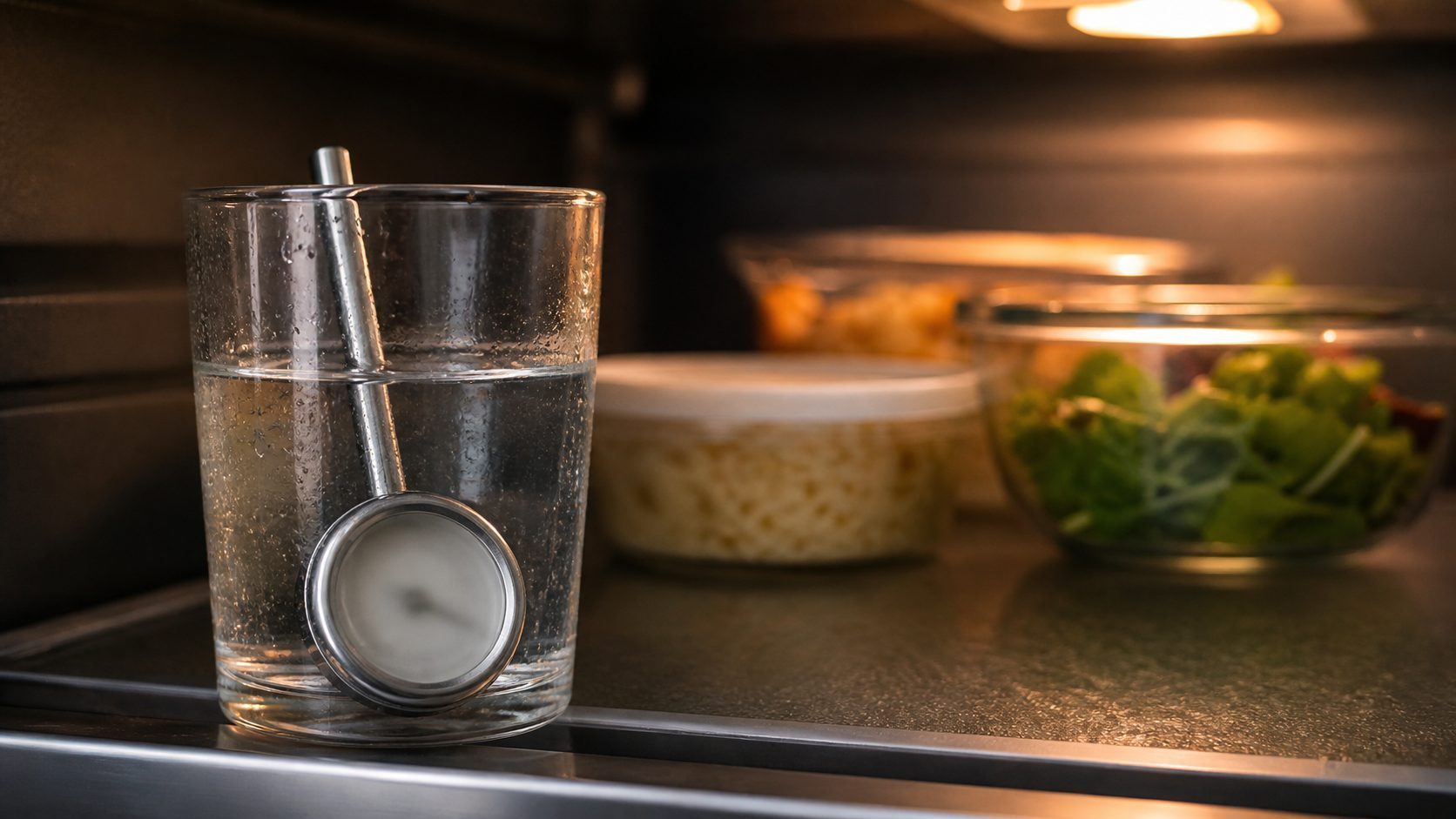
Counted across Whirlpool's own US support base: 176 code pages for wall ovens, 170 for ranges, 88 for laundry towers, 83 for electric cooktops. For refrigeration the numbers collapse. Twenty-four pages in the French door code branch, nine for side-by-side, and none at all for top-freezer refrigerators, upright freezers or chest freezers. Worse for anyone searching, the thirteen numbered F code pages the French door branch does carry all print the same text, and that text does not say what any of them means. It says the letter F is flashing, reset the power for one minute, and if it persists, schedule service. So a refrigerator diagnosis on this make is measured rather than read. Three measurements do most of it. A thermometer in a glass of water on the middle shelf, read after several hours, tells you which compartment is failing and by how much. A hand held at the freezer vent while the machine runs tells you whether cold air is being delivered or only made. And a temperature sensor tested against stirred ice water tells you whether the control is being told the truth. Each ends in a conclusion rather than a number.
The full guide
Whirlpool refrigerator error codes: the measurement behind this page
We counted. Across Whirlpool's own US support base, the branch that publishes code pages for wall ovens has 176 of them, ranges 170, built-in microwaves 159, laundry towers 88, electric cooktops 83.
Then refrigeration:
| Branch | Pages in the code section |
|---|---|
| French door refrigerator | 24 |
| Side-by-side refrigerator | 9 |
| Top-freezer refrigerator | 0 |
| Upright freezer | 0 |
| Chest freezer | 0 |
This make talks when it cooks and washes, and it goes quiet when it chills. Any page that promises you Whirlpool refrigerator error codes is promising something the manufacturer does not deliver, and we would rather say that than pad a table out with guesses.
It is thinner even than the numbers look
The nine side-by-side pages are an index, five indicator lights, a water filter reset, the power outage message and one code — a flashing letter F.
The French door branch has 24, and 13 of those are numbered F codes: F3 E1, F3 E2, F3 E4, F3 E8, F3 E9, F3 EC, F4 E1, F6 E1, F8 E1, F8 E2, F8 E3, F8 E8, F8 EC.
Open all thirteen and they carry the same paragraph. It says the letter F is flashing on the display, reset the power for one minute, make sure the cooling function is on, and if the problem persists, schedule service. Not one of them says what the code means.
That is the honest state of the evidence. The codes exist. The meanings are not published.
What replaces them
Three measurements. Each one ends in a conclusion rather than a number, and they go in this order because that is the order of cost.
One: two thermometers, several hours
Put a thermometer in a glass of water on a middle shelf in the fresh food compartment, and another between the packages in the freezer — not against a wall, not on the floor of the compartment. Water and frozen food hold a reading; air swings every time the door opens.
Read both in the morning. What you are after is not a single figure but a shape:
- Freezer right, fresh food warm. The cold is being made and not delivered. On these cabinets there is one evaporator and it lives in the freezer, so this is an airflow question — the fan that moves the air, the damper that meters it, or ice over the coil blocking the path.
- Both drifting together, slowly. The machine is making less cold than it should. Condenser, seals, or the room it stands in.
- Both warm, and the cabinet is silent. Different job, and a faster one.
Two: a hand at the vent
Open the freezer while the machine is running and hold the back of your hand at the vents. You are not judging temperature. You are judging movement.
Air moving means the evaporator fan is turning and the path is open. No movement, with the compressor clearly running, means cold is being made and stopped somewhere on the way. That is one sentence and it separates two entirely different repairs.
Do it with the door switch held or taped, because on many cabinets the fan stops when the door opens and you will be feeling nothing and concluding the worst.
Three: the sensor against ice water
This is the one that matters commercially. A temperature sensor is among the cheapest parts in the appliance and a sealed system is the most expensive, and a drifted sensor produces the symptoms of the expensive one: a cabinet that runs constantly, or barely at all, while everything looks healthy.
A glass of stirred ice and water is a reference you can trust, because it sits very close to 32 degrees Fahrenheit and costs nothing. Power off at the breaker first, always.
What decides it is not one number. It is whether the reading moves smoothly as the sensor warms in your hand. A value that does not move is a failed sensor. A value that moves smoothly but sits consistently wrong is a drifted one, and that is the failure that leaves the appliance looking fine and the food not.
The messages this make does explain
Three of them, and they are worth knowing precisely because they are the exceptions.
PO is the power outage indicator. Whirlpool's page says it appears when the supply has been off and the freezer temperature has risen to 18 degrees Fahrenheit or higher, sounds three times, and clears when acknowledged.
The temperature alarm is published with numbers: the fresh food side above 48 degrees or the freezer above 15 degrees, for longer than an hour and a half.
Cooling off is a setting, not an error, and the display says so. On a side-by-side the published method is holding two marked keys together for three seconds, which is exactly the sort of thing that gets done by accident with an elbow.
What to have ready when you call
Not a code. On this appliance there usually is not one.
The two temperatures and how long they had settled. Whether air moves at the vent. Whether there is frost visible at the back panel of the freezer. The model number from the tag inside the fresh food compartment.
Four facts, all free, all gathered before anyone knocks — and on a make that publishes no refrigerator code meanings, they are worth more than any list you will find with the badge on it.
If it turns out to be a repair
What this leads to, and what it costs
Every job on this site is priced the same way: an on-site diagnostic first, the figure agreed in writing before anybody starts.
-
The lights are on, the panel looks normal, and the food is warm Refrigerator is not cooling
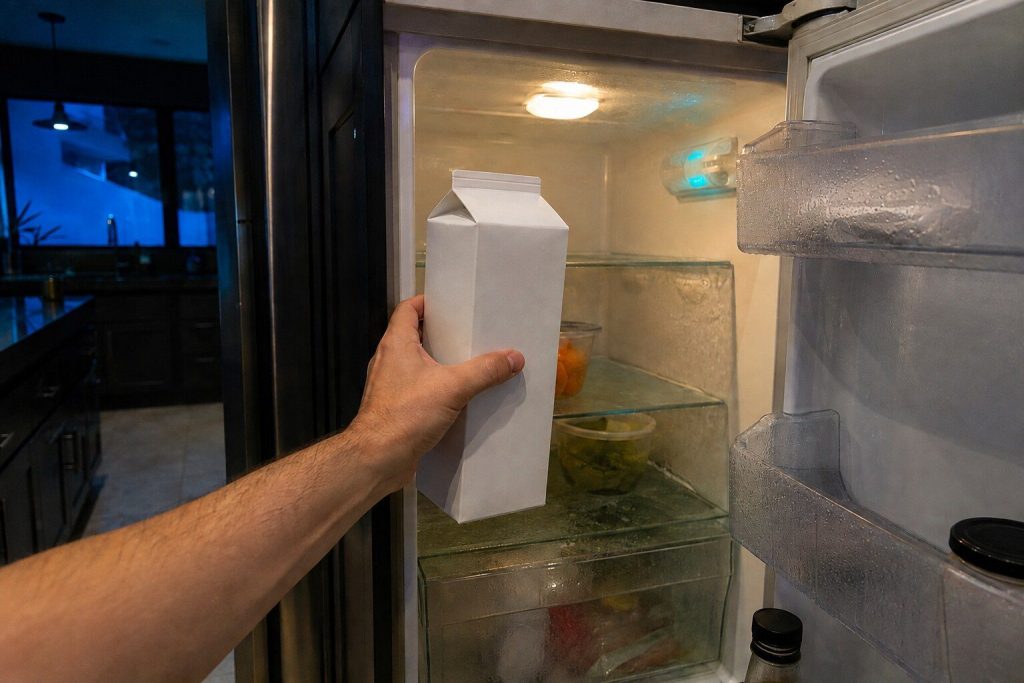
This is where Whirlpool goes quiet. Its top-freezer branch publishes 82 pages and not one error code; its side-by-side branch publishes 140 pages and nine. Where an F code does appear on a refrigerator, the maker publishes the fact that an F is flashing and, on the pages behind it, does not publish what each one means. So this diagnosis is measured, not read.
- Whirlpool publishes almost no refrigerator codes, and does not publish meanings for the F codes it does show
- PO is one of the few real messages: the power was off long enough to matter
- A condenser in a Miami garage is doing a much harder job than the design assumed
-
Ice cream soft, ice cubes hollow, meat starting to give Freezer is not keeping things frozen
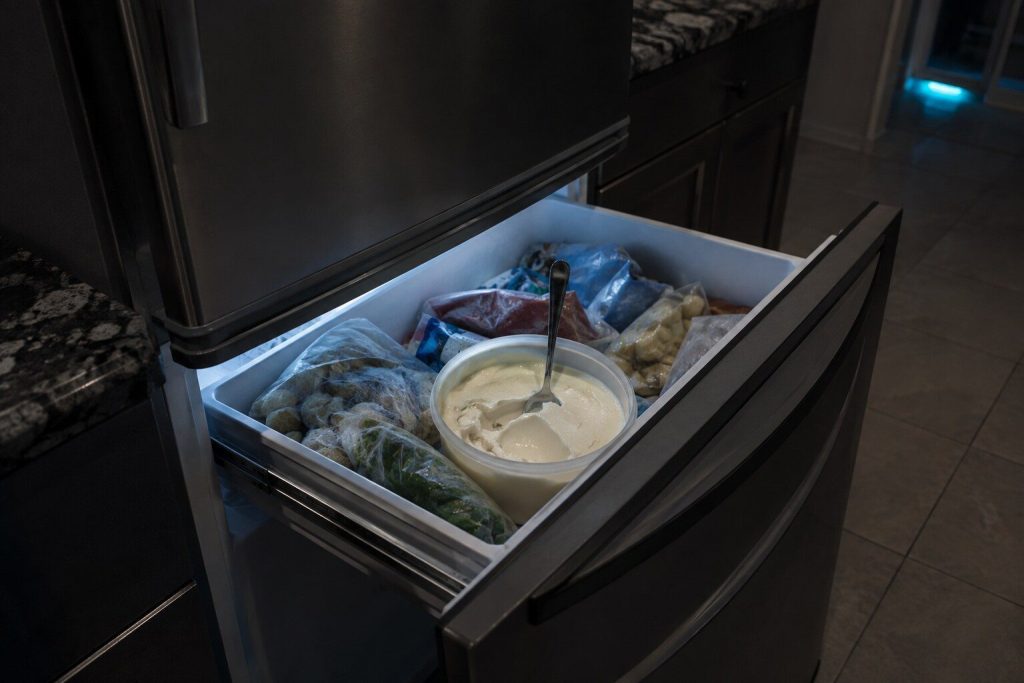
Whirlpool's upright freezer branch publishes 63 pages and not a single error code. There is nothing to look up, and the compartment cannot tell you what is wrong. What it does tell you is a temperature, and the difference between 5 degrees and 20 degrees decides whether this is tonight's problem or next week's appointment.
- Zero code pages in Whirlpool's entire upright freezer branch — this one is all measurement
- Ice cream softens several degrees before anything else does; it is an early warning
- A compartment loaded up to its rear vents starves itself of the air it needs
-
from $145 Refrigerator not cooling repair
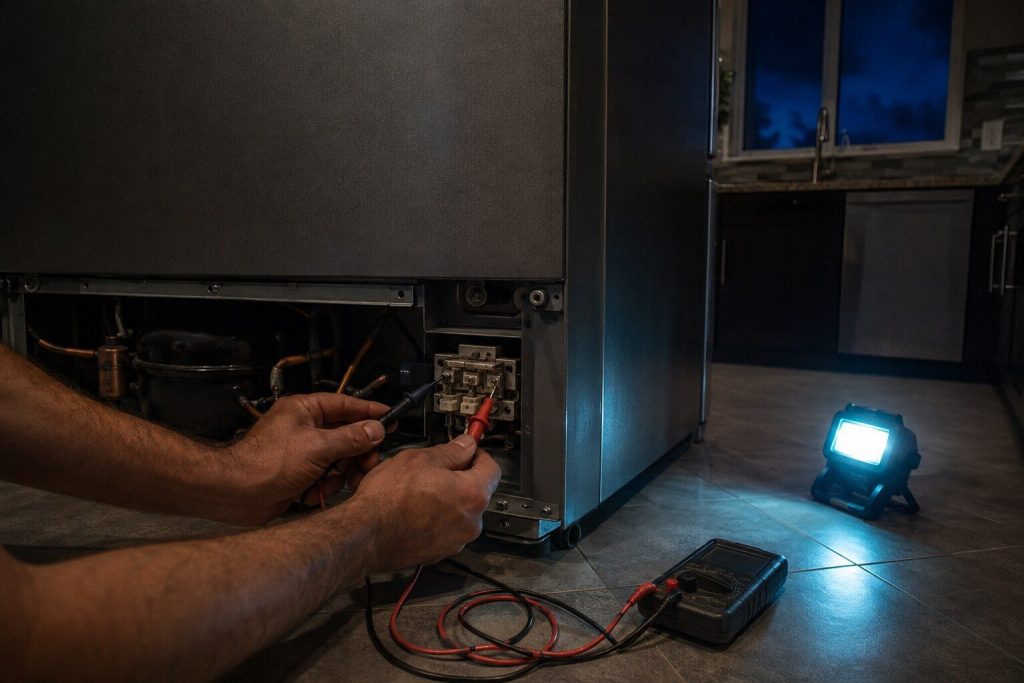
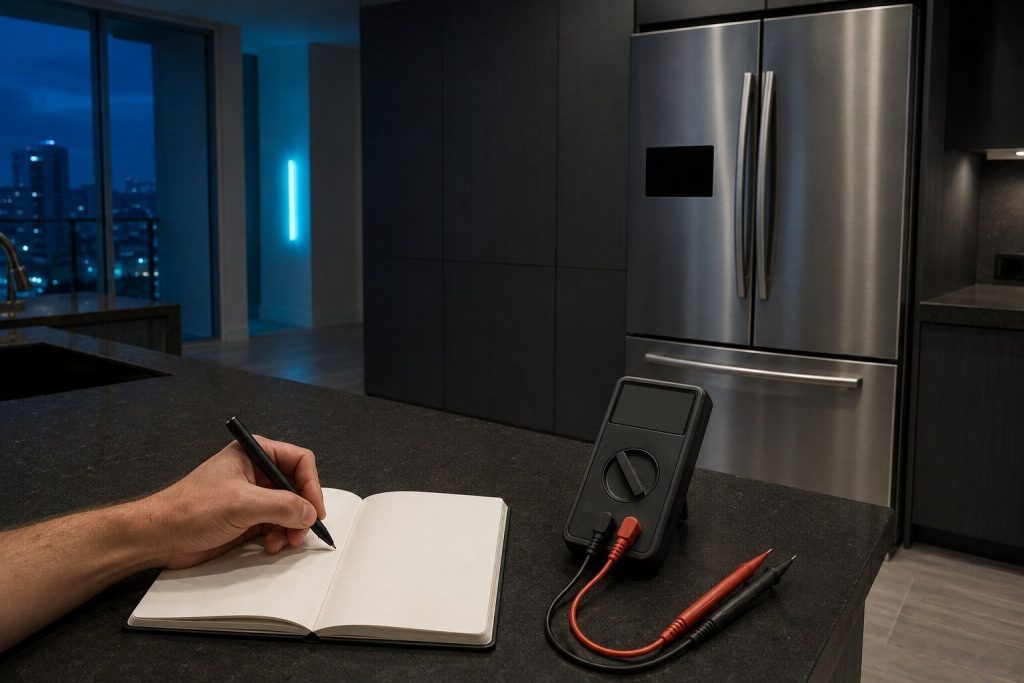
A Whirlpool that has stopped cooling will not name the part for you. This make publishes 24 code pages across its French door line, nine on side-by-side and none whatsoever on top freezers, so a warm cabinet arrives as a warm cabinet and nothing else. In practice that makes the first hour measurement — temperatures in both compartments, airflow at the vents, current at the compressor — and it makes anybody who names a part before that hour a guesser.
- Measured, not read: on most of this make's cabinets there is no code to look up
- The causes that cost nothing come first — groceries against a vent, a door held ajar, a coil under dust
- Sealed-system work is quoted only after gauges, and on an old cabinet we will say when it is not worth doing
-
from $89 Diagnostic visit
One visit, one technician, one answer in writing. On a Whirlpool the first question is whether the appliance is talking, because this make is not evenly talkative. It publishes a separate page for every code on its ranges, its ovens, its cooktops, its washers and its dryers, and it publishes almost nothing of the kind for its refrigerators and freezers. Knowing which half of the house you are standing in changes how the visit starts.
- Whether this appliance talks at all decides how the visit starts
- Laundry and cooking almost always have a code; the cold side almost never does
- Whatever we find goes to you in writing, and the visit comes off the repair

Questions people ask about this
Is my refrigerator too old to have codes?
Age is not the reason. A machine bought this year with a full touch display can still be in a branch the maker publishes no code meanings for, because the silence is by product line rather than by generation. The cooking side of the same corporation publishes hundreds of code pages. Refrigeration was simply not documented the same way, and no amount of searching will produce a table that was never written.
The display is showing a flashing F. What is it?
Whirlpool publishes that the letter F flashes and publishes what to do about it, which is to cut power for one minute and to make sure cooling is switched on. It does not publish what the F stands for. That is worth saying plainly rather than dressing up: anybody who tells you the exact meaning of a flashing F on this make is quoting something other than the manufacturer. Note the code, do the reset once, and if it returns, the measurements below are what actually decide the job.
PO came up on the display. Is that a failure?
No, and it is one of the few refrigeration messages this maker does explain. PO is the power outage indicator. Whirlpool's own page says it appears when the power supply has been off and the freezer temperature has risen to 18 degrees Fahrenheit or higher, with an alert tone three times, and that it clears when you acknowledge it. It is a report about the food, not about the machine, and in storm season it is the single most useful thing the panel does.
How long should I let a measurement run before I trust it?
Several hours at least, and overnight is better. A compartment that has just been opened, restocked or defrosted is not telling you anything about itself yet. Every one of these measurements is a comparison over time, and the commonest way people misdiagnose their own refrigerator is by reading it twenty minutes after they last stood in front of it with the door open.
Troubleshooting
More guides like this one
-
The Panel Is Lit and No Button Does Anything. That Is a Feature.
A locked panel is lit and unresponsive. A dead one is dark. That single distinction settles most of these calls before anybody is booked.
Read more -

The Oven Door Is Locked. Which of the Three Things Does That Mean?
Three unrelated conditions arrive as the same sentence, and the fix for one of them makes another worse. The question order that tells them apart takes a minute.
Read more -
F2E1, F5E3, F9E1: How to Read a Whirlpool Code Instead of Looking It Up
The code is two numbers doing two different jobs. Learn which job each one does and you stop looking codes up one at a time, because the next one reads itself.
Read more
Tell us the model number and what it is doing.
This article is based on:
- Official manufacturer documentation
- Internal repair procedures
- Technician repair history
- Company quality standards