Troubleshooting
The Oven Door Is Locked. Which of the Three Things Does That Mean?
Start with one question: does the door physically open. If the controls are locked but the door still swings, that is control lock, which is a keypad setting and locks nothing mechanical on most models. Whirlpool publishes the method as touching and holding Start or Enter for five seconds, with LOC on the display. If the door will not open at all, the next question is whether a clean cycle has run. A high-temperature self-clean cycle locks the door and the control will not release it until the cavity has cooled below the temperature it is watching for, which on a well-insulated oven is hours after the cycle itself ended, not minutes. That is the answer for most of these calls and the answer is time. Only when the oven is completely cold and the door is still latched is this a repair, and then it is one of three parts: the motor that drives the latch, the switch that reports where the latch is, or a door that has dropped out of alignment on its hinges. Whirlpool codes that part of it. Its range pages publish F5 E0, F5 E1 and F5 E3 against the oven door latch assembly and door switch, and F9-1, F9-2 and F9-3 against the oven door latch and door lock switch. Do not pry. A latched door levered open takes the hinges and sometimes the frame with it.
The full guide
Whirlpool oven door locked how to unlock: ask one question first
Three unrelated conditions arrive on the phone as the same sentence, and the fix for one of them makes another worse. So before anything else:
Does the door physically open?
If it swings and only the buttons are dead, nothing is locked mechanically. If it will not move at all, that is a latch, and a latch has two possible reasons.
Case one: the controls are locked and the door is not
Whirlpool's own wording is that the lock feature shuts down the control pads to avoid unintended use of the oven. On its range pages the published method is to touch and hold Start or Enter for five seconds: a single tone sounds and LOC appears on the display.
Two details from the same page are worth having. LOC also appears whenever any command pad is pressed while the control is locked — so a display that flashes LOC at you is the machine answering rather than ignoring. And the oven cannot be locked while it is in use, which quietly rules the feature out on a machine that is mid-cycle.
The word on the display differs between makers, and on this one it is LOC. Repeat the same hold to clear it. Most people let go at two seconds.
Case two: the oven is still hot from a clean cycle
This is the majority of these calls by a wide margin, and it is not a problem.
A high-temperature clean cycle takes the cavity far above cooking temperature, and the door is locked for the duration because an oven at that temperature is genuinely dangerous to open. The control will not release the latch until the cavity has cooled below the point it is watching for — and that point is reached hours after the cycle itself has ended, not minutes.
A well-insulated oven is designed to hold heat. In a closed kitchen in August it holds it for longer still. An owner who ran a clean cycle after dinner and wants the oven at ten in the evening is looking at an appliance that is working exactly as designed.
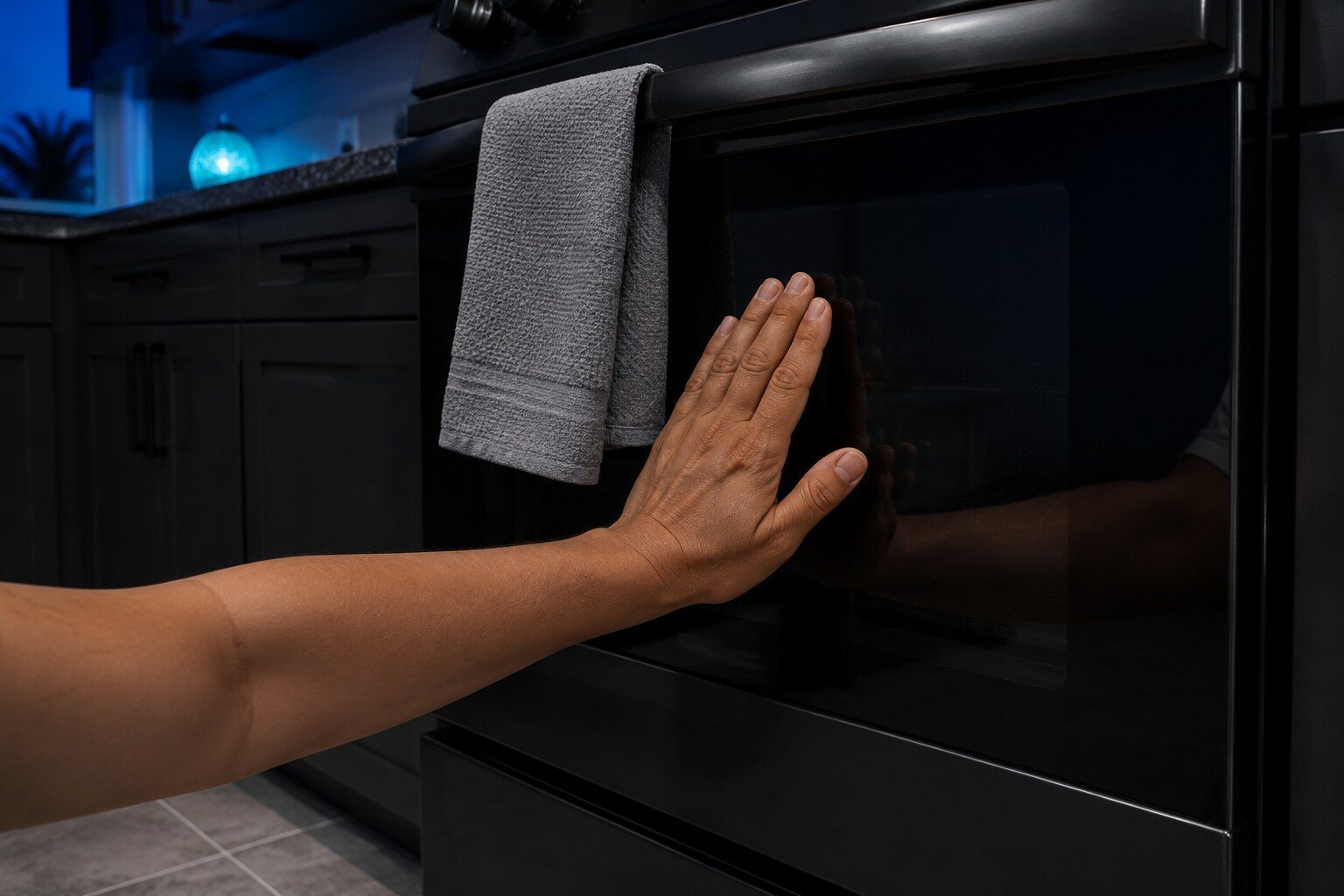
How to check without guessing: hold a hand near the oven vent, not on the door glass. The glass sheds heat quickly and feels cool while the cavity behind it is still well above the release threshold. Warm air at the vent means wait.
Whirlpool publishes both a high-temperature self-clean cycle and a low-temperature water-based cleaning cycle, documented separately, and which one an oven has depends on the model rather than the badge. That is a thing to confirm on your own machine.
Case three: the latch has genuinely stopped
Only one test qualifies a door for this: the oven is completely cold and the door is still latched.
There are three parts behind it.
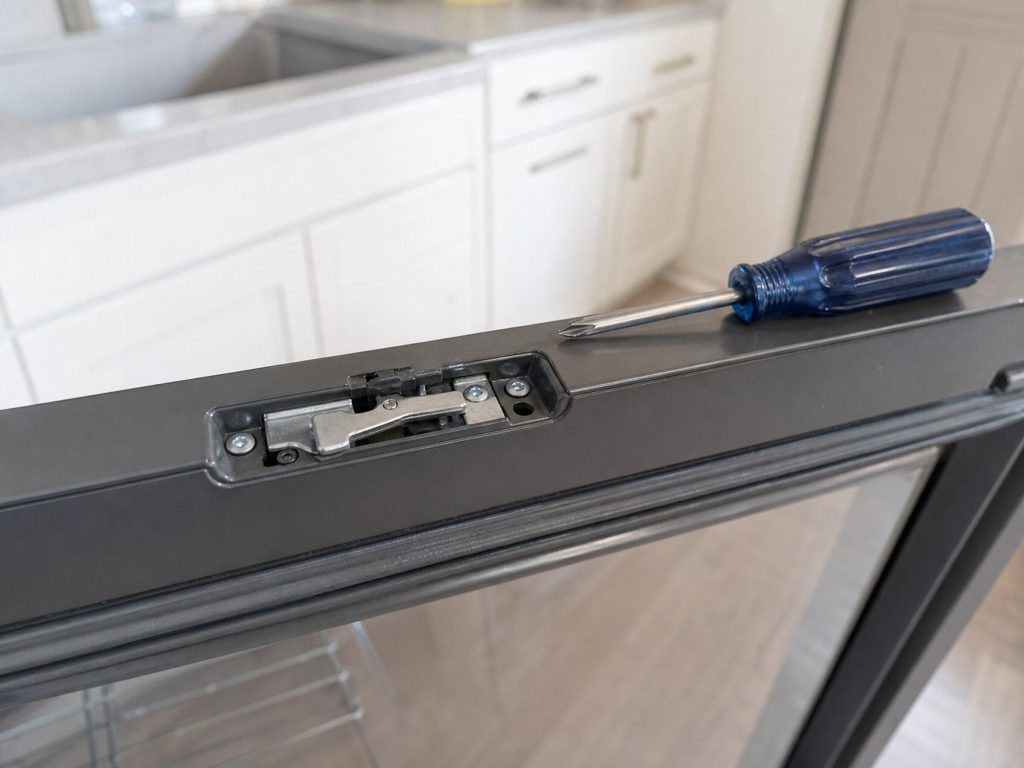
The lock motor. It drives the latch across and back. When it stalls part way, the control cannot confirm either position, so it holds everything where it is. On a range that has been self-cleaned regularly, this is the part that wears out first.
The switch that reports the latch position. The latch can be physically clear with a switch that never said so, and the oven goes on believing it is locked. Nothing is stuck. Something is not being reported.
A door out of alignment. A hinge that has dropped puts the latch out of line with its keeper, so the mechanism binds. Common on a range that has had weight leaned on an open door.
What the codes say, and what they do not
Whirlpool's range branch publishes codes for this and the wording is specific. F5 E0 names the oven door latch assembly, the door switch, or the associated wiring. F5 E1 and F5 E3 name the main oven door latch assembly and the door switch. F9-1, F9-2 and F9-3 name the oven door latch and the door lock switch.
Notice what those pages give you and what they do not. They name the assembly. They do not tell you whether it is the motor, the switch or the alignment — that is measured with the panel off. A code here narrows a repair to a subsystem, which is worth having, and stops short of naming a part, which is worth knowing.
Note the code before you cut power. The display clears at the breaker and the condition does not.
The one thing not to do
Do not lever at a latched door.
The hinges on these are under spring tension and the door is heavy. A latch worth a small part becomes a door, a pair of hinges, a bent frame and sometimes a control, and that is a repair several times the size of the one you started with.
If the oven is cold, the reset has been tried once, and the door is still shut, it wants somebody with the top panel off — not a screwdriver in the gap.
If it turns out to be a repair
What this leads to, and what it costs
Every job on this site is priced the same way: an on-site diagnostic first, the figure agreed in writing before anybody starts.
-
The clean cycle finished hours ago and the door is still shut Oven door will not unlock
An oven locks its own door during self-clean and will not release it until the cavity has cooled below a temperature the control decides on. Most of these calls are somebody trying to open it too early. The rest are a lock motor or a switch that has stopped confirming its position, and Whirlpool codes that.
- A self-clean cycle keeps the door locked for a long time after the cycle itself has ended
- Whirlpool publishes a Displaying an H page for its ranges — the display is reporting a state
- Cutting the power does not unlock the door; it usually just clears the display
-
from $155 Self-clean and oven door lock repair
The self-clean cycle takes the cavity to a temperature that nothing else in the house reaches, and it is also the cycle that finds every weak component in the oven. Doors that will not unlock afterwards, locks that jam mid-cycle and controls that report during a clean are common enough that Whirlpool publishes on them, and it is a repair worth doing properly.
- A door locked shut after a clean cycle is a repair, not a wait
- The motor, the switches and the control are treated as one circuit
- What the clean cycle damaged is checked at the same time
-
from $175 Oven door and hinge repair
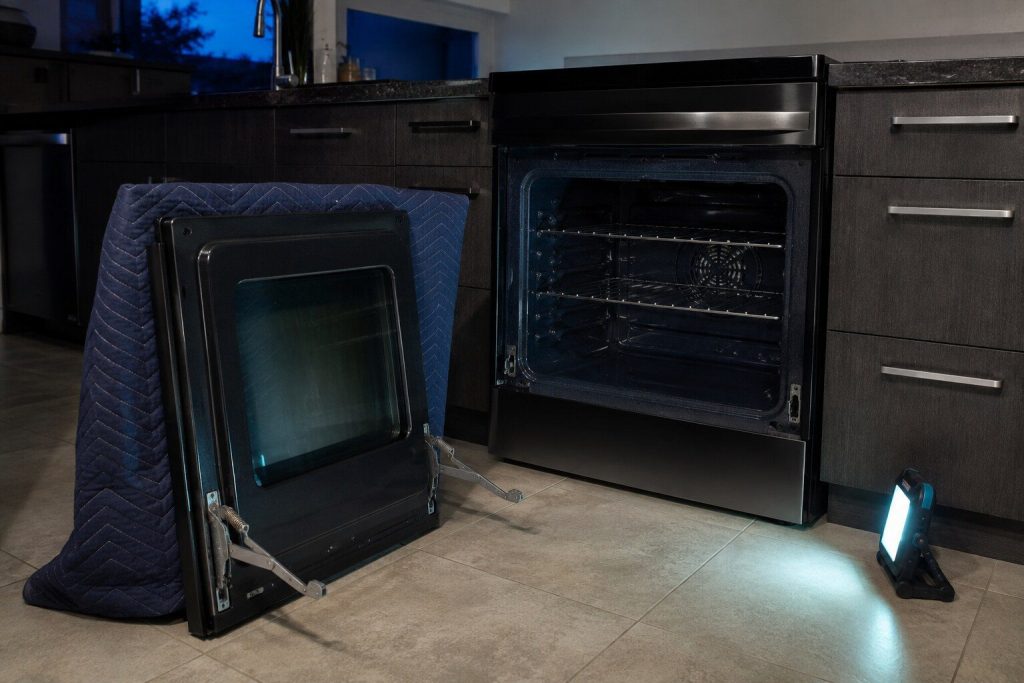
An oven door is a heavy assembly of two or three glass panels, a pair of spring hinges and a seal, and every one of those parts has a job in keeping heat where it belongs. A door that does not close square wastes heat, browns unevenly, and can leave the front of the range hot enough to be a genuine hazard in a house with children.
- A door out of alignment costs heat, evenness and safety
- Hinges are replaced in pairs, because one worn hinge means both are worn
- The gasket is inspected and renewed while the door is off
Questions people ask about this
The clean cycle finished four hours ago and it is still locked.
Feel for heat at the vent rather than on the door glass, because the glass sheds heat faster than the cavity does. If there is still warm air coming out, the control is behaving correctly and there is nothing to do but wait. A well-insulated oven that ran a high-temperature cycle in a closed Florida kitchen can take most of an evening. If it is stone cold at the vent and still latched, that is the point where it becomes a repair.
Will cutting the power unlock it?
Usually not, and it is worth understanding why before you try. The latch is driven by a motor, and cutting power stops the motor wherever it is rather than releasing it. What the reset does do is clear a control that has lost track of the latch position, so it is worth one attempt once the oven is cold: breaker off for a full minute, back on, then leave it half an hour before deciding anything.
Does the low-temperature clean cycle lock the door too?
Whirlpool publishes two different oven cleaning approaches, a high-temperature self-clean cycle and its low-temperature water-based cycle, and they are documented separately. Which one your oven has is in its own manual and on the maker's page for your model. It matters here because the locking behavior belongs to the cycle rather than to the badge, and it is the sort of thing worth checking on your own machine rather than assuming from a general article.
Can I take the door off to get at it?
Not while it is latched, and that is the whole point. The hinges are under spring tension and the removal procedure assumes an open door. Forcing a latched one is how a lock motor worth a fraction of a service call becomes a door, a pair of hinges and a bent frame. If the oven is cold and the latch has not released, it wants a person with the panel off, not leverage.
Troubleshooting
More guides like this one
-
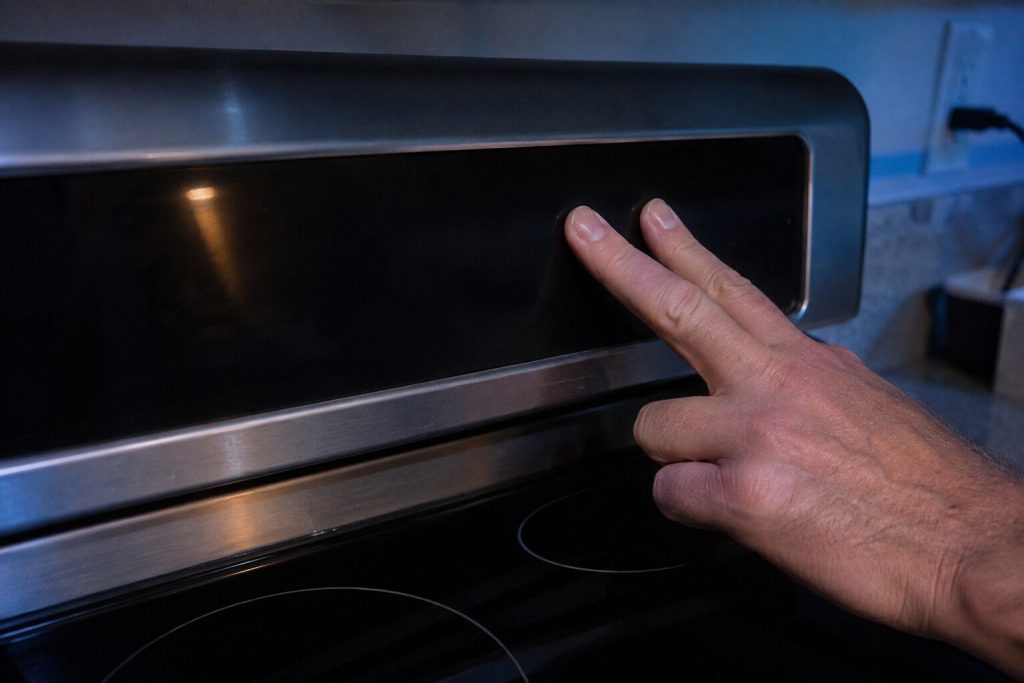
The Panel Is Lit and No Button Does Anything. That Is a Feature.
A locked panel is lit and unresponsive. A dead one is dark. That single distinction settles most of these calls before anybody is booked.
Read more -
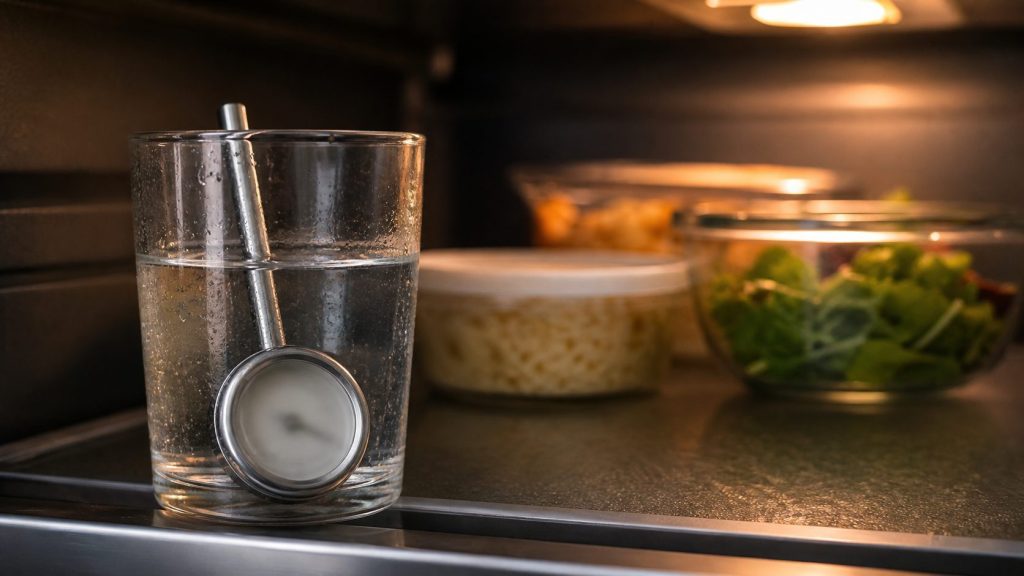
Your Refrigerator Has No Code to Give You. Measure Instead.
The maker publishes 176 code pages for wall ovens and none at all for a top-freezer refrigerator. This is the page that says so, and then gives you the three measurements that take their place.
Read more -
F2E1, F5E3, F9E1: How to Read a Whirlpool Code Instead of Looking It Up
The code is two numbers doing two different jobs. Learn which job each one does and you stop looking codes up one at a time, because the next one reads itself.
Read more
Tell us the model number and what it is doing.
This article is based on:
- Official manufacturer documentation
- Internal repair procedures
- Technician repair history
- Company quality standards