Troubleshooting
The Panel Is Lit and No Button Does Anything. That Is a Feature.
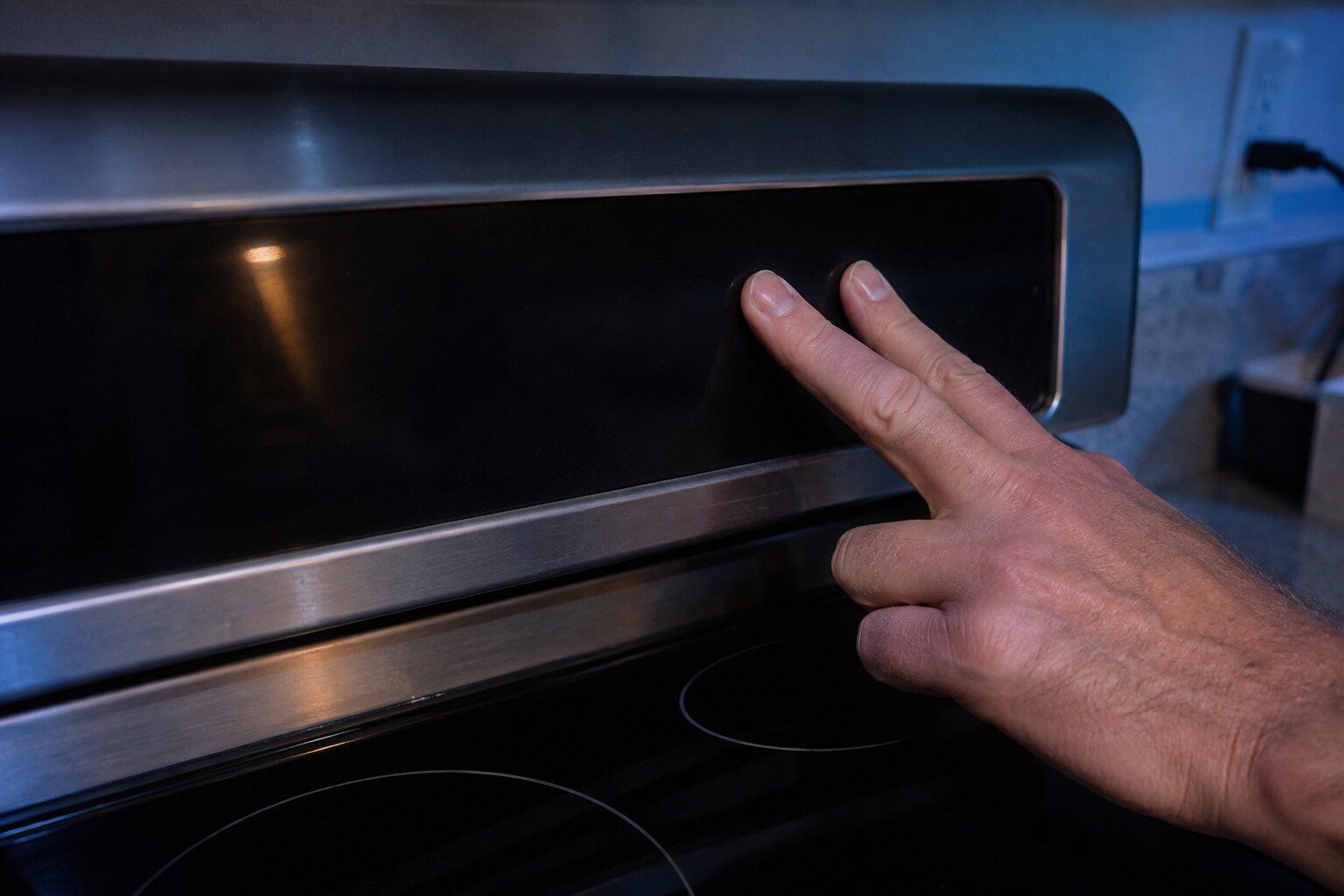
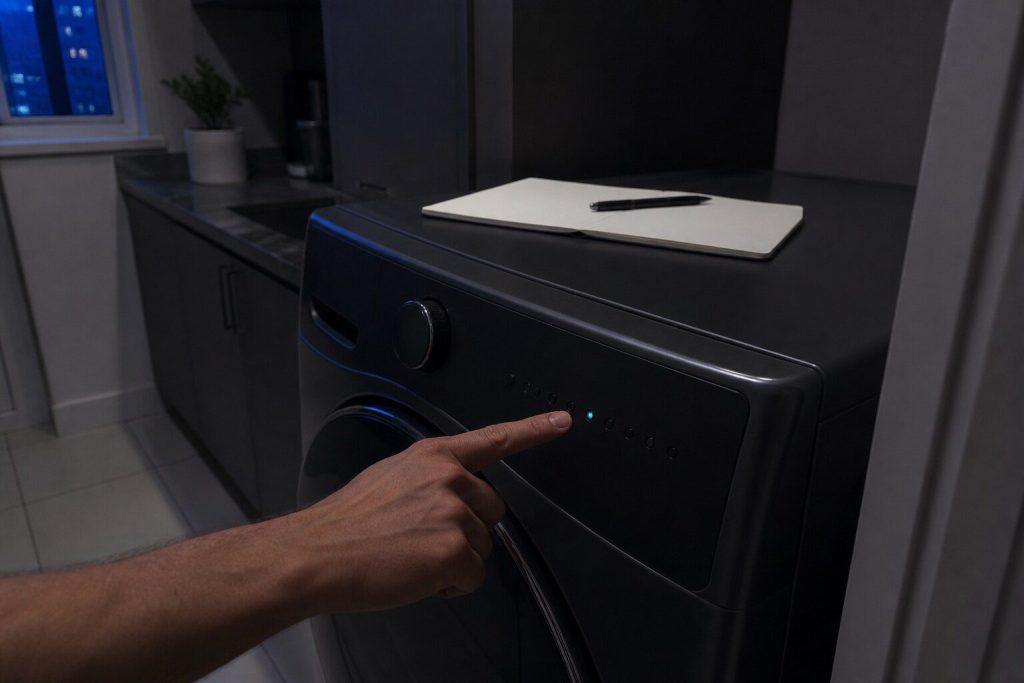
Look at the display first. A panel that is lit and ignores every key is almost always control lock, which is a feature that disables the buttons on purpose so a cycle cannot be started by a leaning shoulder or a child. A panel that is dark is a different problem entirely and belongs to power rather than to the control. Control lock is switched on by holding a key rather than tapping it, which is exactly what somebody does while wiping a panel down, and it is switched off the same way. Holding is the part people get wrong: three to five seconds, and most give up at two. Where the key sits varies by model, so treat these as most-often rather than rules. Whirlpool publishes the range as holding Start or Enter for five seconds, with LOC appearing on the display and reappearing whenever any pad is pressed. It publishes the cooktop as holding the padlock key for three seconds. It publishes the dishwasher as holding the marked button or buttons for three seconds, and notes that sleep mode may have to be woken first. On laundry the lock lives with the cycle and option keys. Two other published conditions look identical: Sabbath mode, which disables every key except Start, Cancel and Off, and condensation on the panel of a machine in a humid laundry closet.
The full guide
Whirlpool washer control panel not responding: look at the light first
We settle this one on the phone most weeks and nobody comes out.
There is a single question that decides everything, and it takes two seconds:
- Is the panel lit and ignoring you? That is control lock, almost every time. It is a feature. It is working correctly.
- Is the panel dark? That is a power problem, and it is a different page and a different call.
Everything below is about the first case.
Control lock is not an error and it does not announce itself
The point of the feature is that a machine cannot be started by a leaning shoulder, a curious child or a dishtowel dropped across the panel. Whirlpool's own wording for its ovens is that the lock shuts down the control pads to avoid unintended use.
The trouble is how it gets switched on. It is engaged by holding a key rather than tapping one, and holding a key for three seconds is precisely what somebody does while wiping a panel down.
So it goes on by accident constantly, and then it stays on, because it survives the power being switched off and on. That last detail is what convinces an owner the appliance is broken.
Where the key hides, appliance by appliance
Every row here says most often, on purpose. The panels differ by model and a guide that promised one key would be wrong on half the line.
Range and wall oven. Whirlpool publishes the method plainly: touch and hold Start or Enter for five seconds, a single tone sounds, and LOC appears on the display. It also publishes something quietly useful — LOC reappears whenever any command pad is pressed while the control is locked. That is not the machine ignoring you. That is the machine answering.
Cooktop. Usually a dedicated key with a padlock symbol, and the published method is holding LOCK for three seconds. The maker also notes that the behavior depends on when the lock was set: locked with the cooktop off, nothing turns on at all; locked with it on, every keypad is disabled except Power and Off.
Dishwasher. Commonly Start or Cancel, held for three seconds, with a red lock indicator. Whirlpool adds the step nobody thinks of: sleep mode may need clearing first, with Start or Cancel or by opening and closing the door.
Washer and dryer. Usually with the option and cycle keys rather than on a key of its own, marked with a small padlock. On one of the maker's dryers the page is unusually exact and worth quoting as the pattern: hold the control lock key for three seconds, and the display counts down 3, 2, 1 before it clears. That countdown is the answer to everybody who let go at two seconds. On the all-in-one machines the setting lives under the Tools menu, which is a different search entirely, and the same laundry branch publishes Loc or Lc as the code for a control lock that is simply enabled.
Three things that look exactly like a lock
Sabbath mode. This is the impostor nobody expects, and Whirlpool documents it in detail. When it is set, tones are silenced, the display stops reporting temperature changes, and every key is disabled except Start, Cancel and Off. An owner who does not know the setting exists is looking at a lit, silent, unresponsive panel with no lock symbol on it.
Demo mode. Everything on the panel behaves normally and the appliance does not heat. The maker publishes it for ranges, wall ovens and microwaves, and describes it as intended for a sales floor. It gets left on more often than it should.
Condensation. This is the South Florida one, and it is published: Whirlpool has a page called condensation on controls or display for its dryers. A capacitive panel cannot tell a film of moisture from a finger. In a closed laundry closet with a louvered door, nine humid months a year, this is a real cause rather than a curiosity. Dry the panel with a cloth, leave the closet door open for an hour and try again before you call anybody.
When it is genuinely the panel
Two findings move this out of the free category, and both come from pressing every key rather than jabbing at one.
A pattern. One row dead, one key that never responds, one key that fires without being touched. A lock disables the panel as a whole, so a pattern is the keypad rather than the setting. Whirlpool publishes a page for the electric range where an indicator flashes because one or more keys are permanently pressed, and its own instruction is to clear anything left on the control area and wipe the surface — which occasionally is the whole repair.
A raised or bubbled area over a key. On over-the-range microwaves particularly, steam from the cooktop below works its way behind the membrane and lifts it. The maker publishes a control panel bubbling page. That is a part, not a setting.
What to say when you call
Three sentences, and they decide whether anybody needs to come at all: whether the display is lit, whether a lock symbol or LOC is showing, and which keys respond and which do not.
Thirty seconds of looking ends a startling share of these.
If it turns out to be a repair
What this leads to, and what it costs
Every job on this site is priced the same way: an on-site diagnostic first, the figure agreed in writing before anybody starts.
-
The display is lit and the keypad ignores you Microwave buttons do not respond
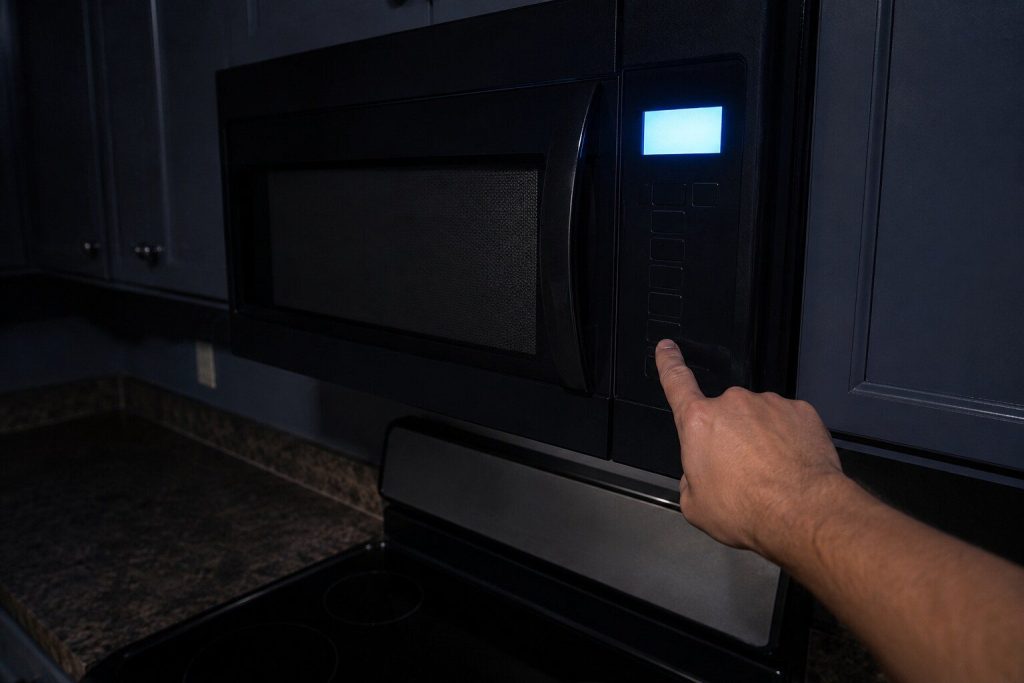
Whirlpool separates the touchpad from the board behind it in its own code table, and that is the distinction that matters here. Its wording for F2 is that the keypad reported a problem to the control board, and for F2 E1 that there may be a problem with the user interface or keypad or the associated wiring. A lit display with a dead keypad is a specific finding, not a general failure.
- F2 and F2 E1 are Whirlpool's keypad codes, and they point at the panel rather than the board
- A control lock left on looks exactly like a dead keypad
- Whirlpool publishes a control panel bubbling page — a swollen membrane holds keys down
-
You press the cycle, the light comes on, and nothing happens Dishwasher will not start
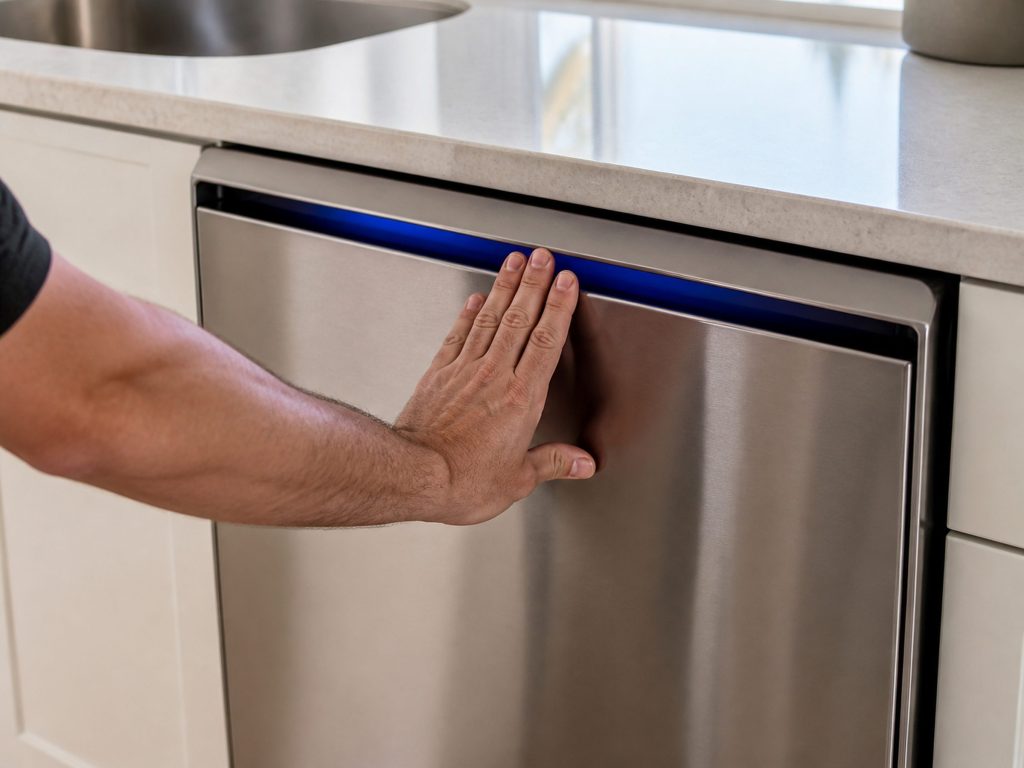
A Whirlpool dishwasher that lights up and does nothing is usually either locked, waiting, or not being told to run at all. The maker publishes a small set of indicator behaviors that explain most of these, and one of them — the control lock — is not a problem at all.
- The Control light flashing three times means the buttons are locked, in Whirlpool's own wording
- A delayed start left set from last night makes a machine look completely dead
- The door latch has to be fully home before the control will accept anything
-
The panel lights up and nothing happens when you press Start Dryer will not start
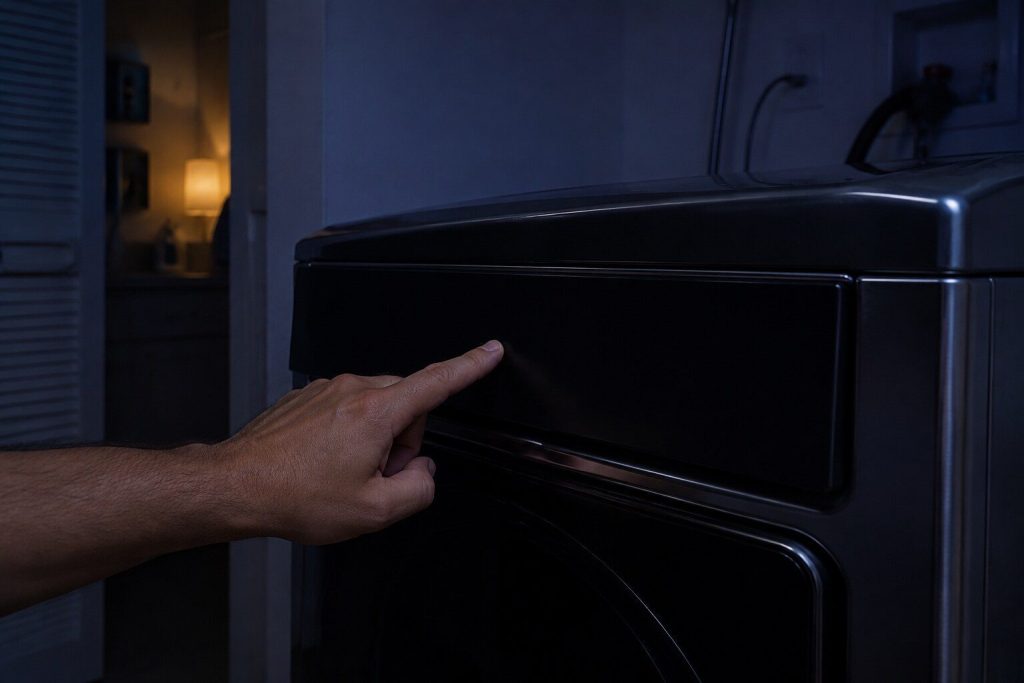
A Whirlpool dryer refuses to start for a short list of reasons, and it names most of them. The maker's own wording for ERR is that the door has not been completely closed and latched, and the dryer will not run until it is. Before anybody opens the machine, that sentence is worth taking literally.
- ERR on a Whirlpool dryer is the door, in the maker's own words
- Loc is the control lock — the panel works and refuses every button on purpose
- PF means the last cycle was interrupted by a power failure, which is a common summer story here
-
from $89 Diagnostic visit
One visit, one technician, one answer in writing. On a Whirlpool the first question is whether the appliance is talking, because this make is not evenly talkative. It publishes a separate page for every code on its ranges, its ovens, its cooktops, its washers and its dryers, and it publishes almost nothing of the kind for its refrigerators and freezers. Knowing which half of the house you are standing in changes how the visit starts.
- Whether this appliance talks at all decides how the visit starts
- Laundry and cooking almost always have a code; the cold side almost never does
- Whatever we find goes to you in writing, and the visit comes off the repair
Questions people ask about this
I held the key and nothing happened.
Hold it longer, and hold it without moving your finger. Three seconds is longer than it feels when you are annoyed at an appliance, and a capacitive pad reads a finger that slides as several short presses rather than one long one. If the machine is asleep, wake it first: the maker notes for its dishwashers that sleep mode may need clearing with Start or Cancel, or by opening and closing the door, before control lock will respond at all.
Which key is it on my washer?
It varies by model, and any guide that promises one key is confidently wrong on half the line. Look along the panel for a small padlock symbol printed beside or below a key — it is usually one of the option or cycle keys rather than a button of its own. If nothing is marked, the control guide that came with the machine names it, and it is the one thing worth digging that booklet out for.
The panel lights but only some keys work.
That is a different finding and a more useful one. A lock disables the panel as a whole, so a pattern — one row dead, one key that never responds, one that responds without being touched — points at the keypad itself. On the microwave side the maker publishes a control panel bubbling page for exactly this, where steam gets behind the membrane and holds a key permanently pressed. Press every key and note which respond before you call.
Does cutting the power clear a control lock?
No, and this is what convinces people the machine is broken. The setting is stored, so it survives the breaker being switched off and on and comes back locked. That is deliberate — a child lock that forgot itself in a power cut would not be much of a child lock. Cutting power is still worth one attempt for other reasons, but if a lit panel is still dead afterward, go back to holding the key.
Troubleshooting
More guides like this one
-
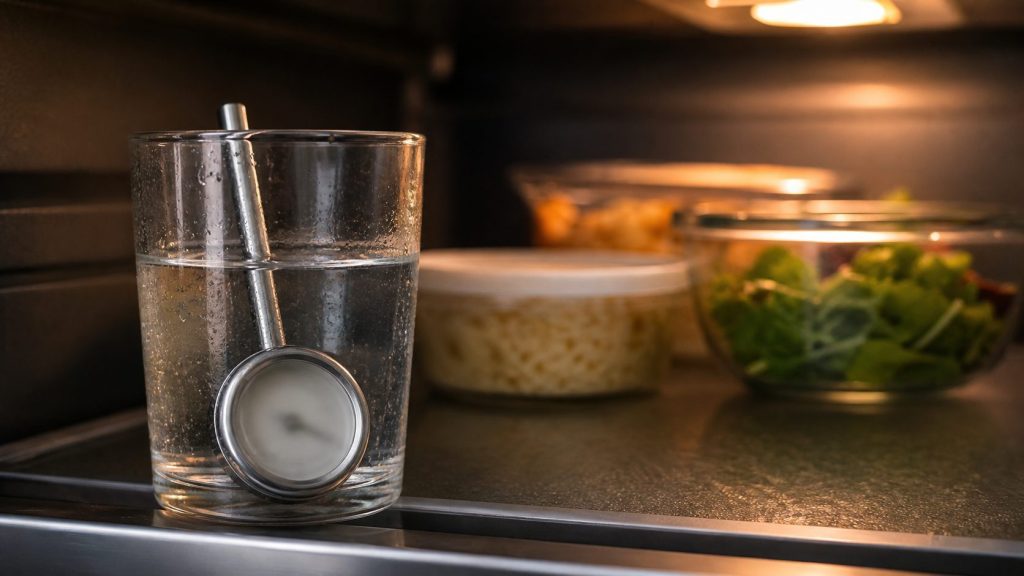
Your Refrigerator Has No Code to Give You. Measure Instead.
The maker publishes 176 code pages for wall ovens and none at all for a top-freezer refrigerator. This is the page that says so, and then gives you the three measurements that take their place.
Read more -
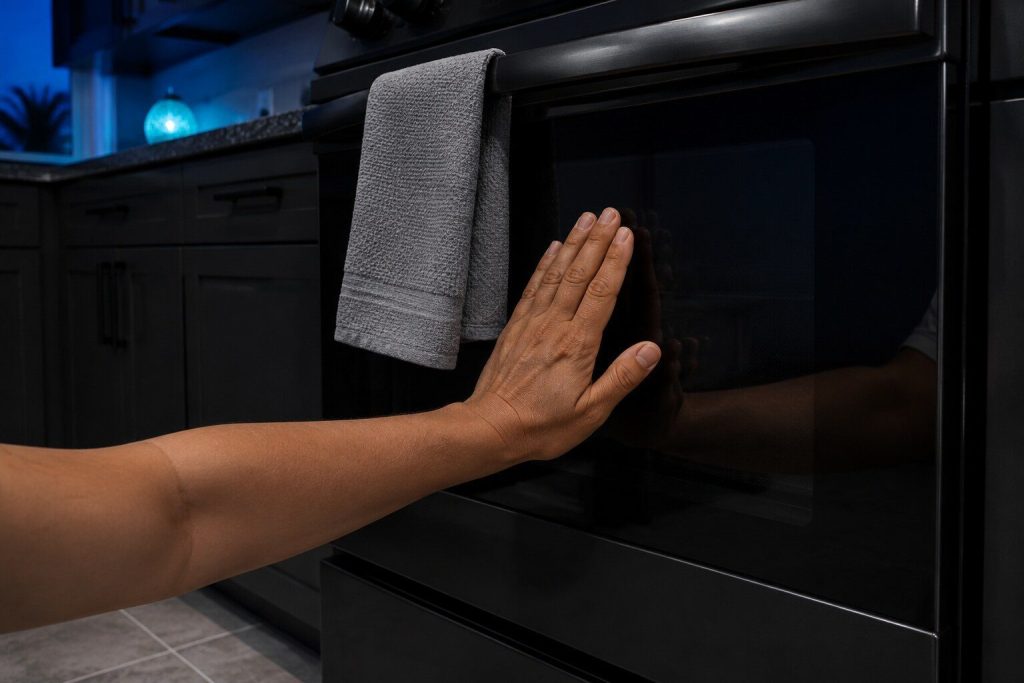
The Oven Door Is Locked. Which of the Three Things Does That Mean?
Three unrelated conditions arrive as the same sentence, and the fix for one of them makes another worse. The question order that tells them apart takes a minute.
Read more -
F2E1, F5E3, F9E1: How to Read a Whirlpool Code Instead of Looking It Up
The code is two numbers doing two different jobs. Learn which job each one does and you stop looking codes up one at a time, because the next one reads itself.
Read more
Tell us the model number and what it is doing.
This article is based on:
- Official manufacturer documentation
- Internal repair procedures
- Technician repair history
- Company quality standards