Troubleshooting
Storm Season: What a Reset Fixes After the Power Comes Back, and What It Does Not
To reset a Whirlpool oven after a power outage, turn its circuit breaker fully off, leave it off for one full minute, turn it back on, then press Cancel and set the time of day. One minute matters: a quick flick leaves enough charge in the control for it to hold the state it was in, which is why so many resets appear not to work. Whirlpool's own pages instruct exactly this for most of its range and wall oven codes, and it publishes a separate page saying that after a power interruption the display will show the time, or 12:00, or POWER LOSS, and that pressing Cancel clears it. That is not a failure. It is an appliance waiting to be told what time it is. Three conditions a reset cannot touch, and they are the reason this page exists. A breaker that trips again when the oven starts heating. A code that returns immediately after a proper reset, which means the machine has re-detected it rather than remembered it. And a burning smell with an element glowing unevenly, which means switch it off at the breaker and stop using it today.
The full guide
How to reset Whirlpool oven after power outage
Three steps and the third is the one people skip.
Switch the breaker fully off. On an electric range or wall oven that is a double breaker, and both halves have to go. A breaker that has tripped often sits in a middle position that looks closed, so push it firmly to OFF first.
Leave it off for one full minute. Time it on a phone. This is not superstition — it is what Whirlpool prints on page after page of its own support base, and there is a reason underneath it that the next section explains.
Switch it on, press Cancel, and set the clock. The maker publishes a page for exactly this display: after a power interruption or failure the panel shows the time, or 12:00, or POWER LOSS. Cancel clears it. Set the time of day and a great many storm-season appliances are simply finished.
Why a quick flick changes nothing
The control board has capacitors on it, and their job is to hold a small charge so a momentary dip does not scramble the appliance mid-cycle. That is a good design, and in this situation it works against you.
For the few seconds after the supply goes, the board is still powered by what it stored. It keeps its state, it keeps whatever condition it had latched, and when the power comes back it simply carries on being confused.
A full minute drains it. That is the whole trick, and it is why the same person can report that resetting does nothing and then have it work first time.
What the reset is actually clearing
Not damage. Three specific things.
A control that came back confused. A brownout is harder on electronics than a clean outage — the supply sags rather than stopping, and a board running on low voltage can latch a state that no longer describes anything real. The reset erases it.
A stale message on the display. The panel is showing what it decided during the event. Whirlpool's own instruction for a great many of its codes is a reset followed by a minute of watching, precisely because the message often outlives the reason for it.
Settings that are waiting for the clock. Delay start, timed bake, the cycle end tone. Until the control knows the time of day, several of these behave oddly or refuse, and it presents as a broken oven.
The other column, which is the point of this page
Three conditions no reset will ever touch. If you are looking at one of them, stop resetting.
The breaker trips again when the oven heats. Not when it is switched on — when it starts drawing current for an element. That is a protective device doing its job against a real electrical problem, and resetting it repeatedly is the one response that turns a protected situation into an unprotected one.
A code returns immediately after a proper reset. That is the difference between remembering and re-detecting. A machine that finds the same condition again in the first minute has measured it, not recalled it, and on this make the first half of the code already names which system found it.
A burning smell, or an element glowing unevenly. Bright spots, a blister, a section that stays dark. That is not a storm-damaged control. Switch it off at the breaker and leave it off.
The rest of the kitchen, in the order worth doing
The refrigerator first, because food is the thing with a deadline. Whirlpool publishes a page on what to do during a power outage, and its side-by-side and French door panels publish PO — the power outage indicator, which appears when the freezer has risen to 18 degrees Fahrenheit or higher. Acknowledge it at the panel and it clears. Decide about the contents before you decide about the appliance.
The dishwasher takes the same treatment as the oven — Whirlpool publishes a page on cycling its power to reset the controls. Expect it to want the cycle restarted from the beginning.
The washer likewise, and the maker publishes a reset page for it. A machine that stopped mid-cycle with water in it will usually want a drain and spin before anything else.
The microwave shows a flashing clock and needs the time set, and the built-in branch publishes that same power-loss message.
One habit worth forming here
In this city, in August, the useful thing to do the moment the power comes back is not to press buttons. It is to write down what each appliance is showing before you touch anything.
The display clears at the breaker and the condition does not. Ten seconds with a phone camera in front of each panel is the difference between a diagnosis and a shrug, and it costs nothing at all.
If it turns out to be a repair
What this leads to, and what it costs
Every job on this site is priced the same way: an on-site diagnostic first, the figure agreed in writing before anybody starts.
-
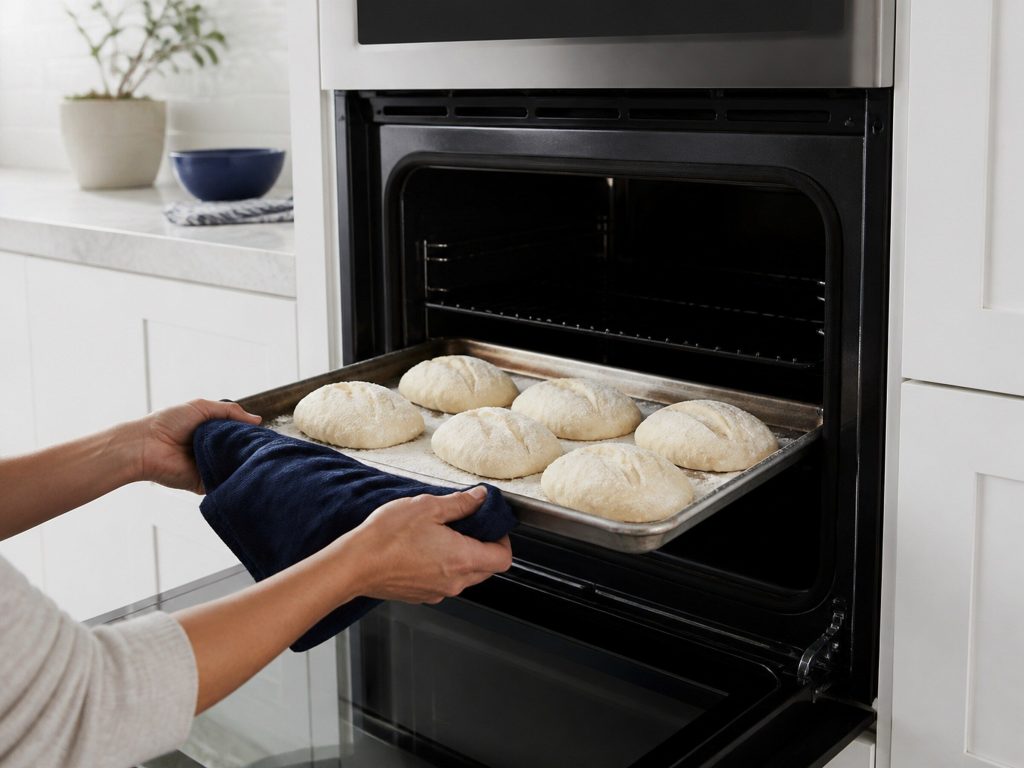
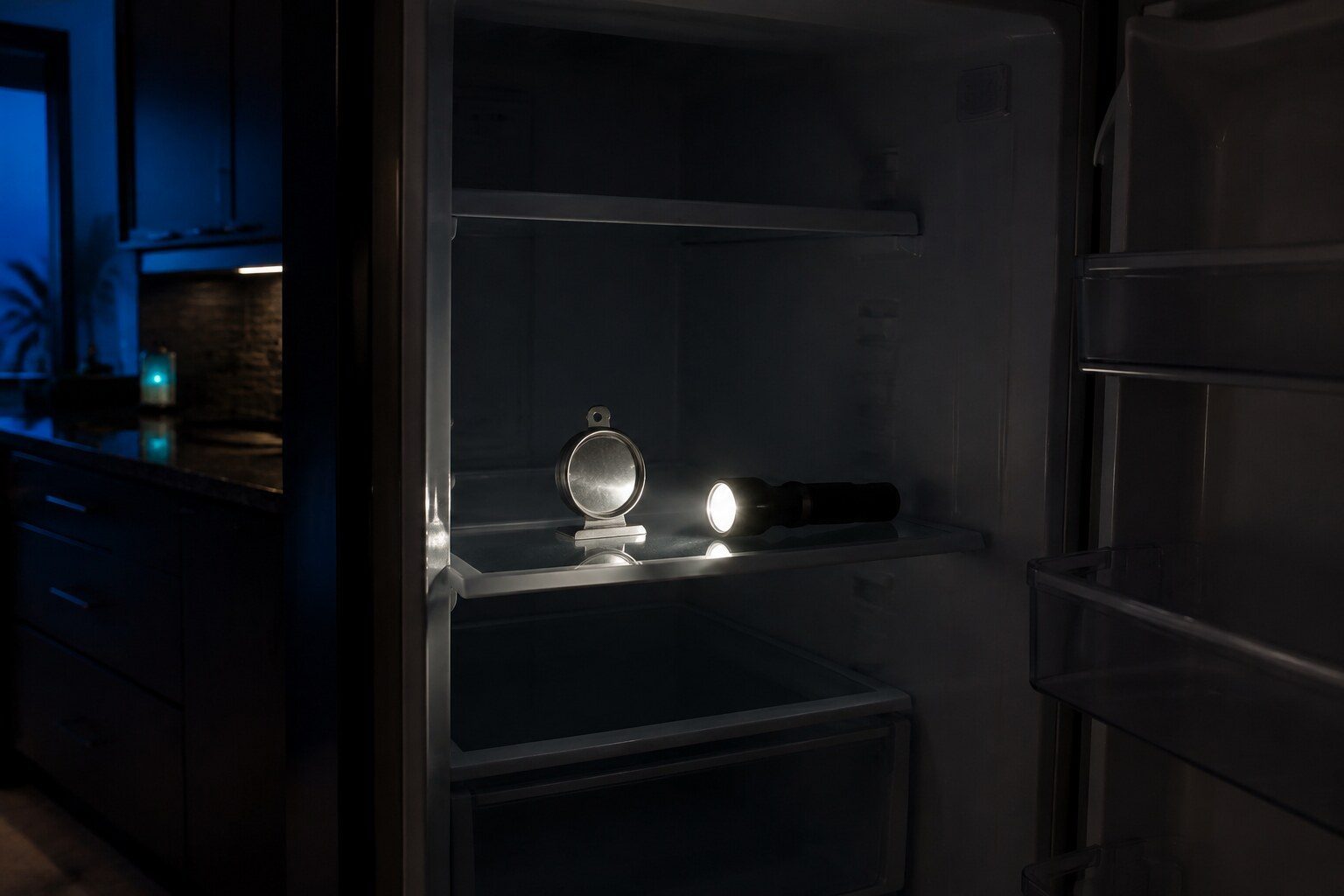
The cooktop works, the oven does nothing Oven will not heat
On a Whirlpool range the cooktop and the oven are close to independent, which is why burners that work perfectly tell you nothing about an oven that does not. This maker publishes more code pages for ranges and wall ovens than for anything else it builds, so an oven that will not heat and shows a code has already narrowed the job before anybody arrives.
- Working burners do not mean the oven has power — an electric oven needs both supply legs
- Whirlpool documents a demo mode for its ranges and wall ovens, and it disables heating on purpose
- A gas oven that clicks and never lights is a different repair from one that never clicks
-
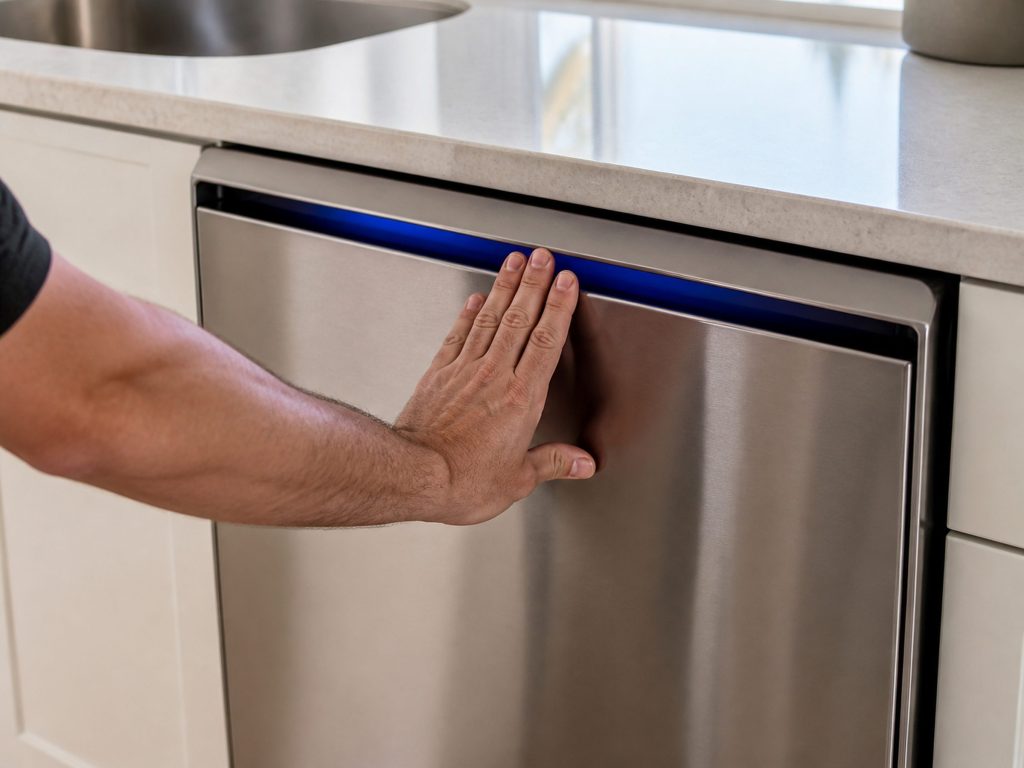
You press the cycle, the light comes on, and nothing happens Dishwasher will not start
A Whirlpool dishwasher that lights up and does nothing is usually either locked, waiting, or not being told to run at all. The maker publishes a small set of indicator behaviors that explain most of these, and one of them — the control lock — is not a problem at all.
- The Control light flashing three times means the buttons are locked, in Whirlpool's own wording
- A delayed start left set from last night makes a machine look completely dead
- The door latch has to be fully home before the control will accept anything
-
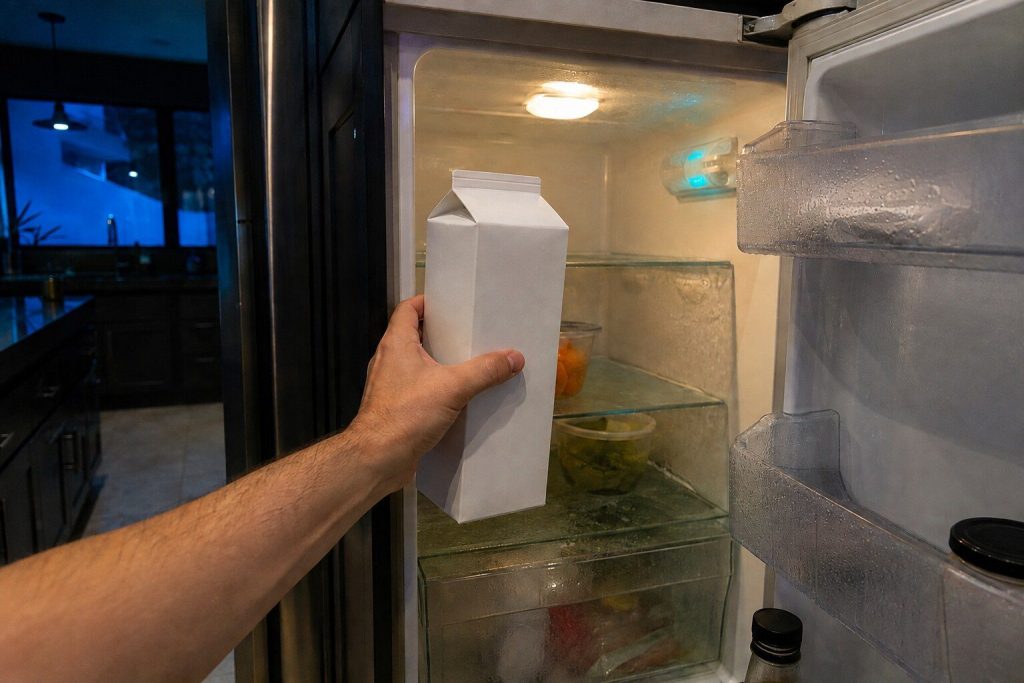
The lights are on, the panel looks normal, and the food is warm Refrigerator is not cooling
This is where Whirlpool goes quiet. Its top-freezer branch publishes 82 pages and not one error code; its side-by-side branch publishes 140 pages and nine. Where an F code does appear on a refrigerator, the maker publishes the fact that an F is flashing and, on the pages behind it, does not publish what each one means. So this diagnosis is measured, not read.
- Whirlpool publishes almost no refrigerator codes, and does not publish meanings for the F codes it does show
- PO is one of the few real messages: the power was off long enough to matter
- A condenser in a Miami garage is doing a much harder job than the design assumed
-
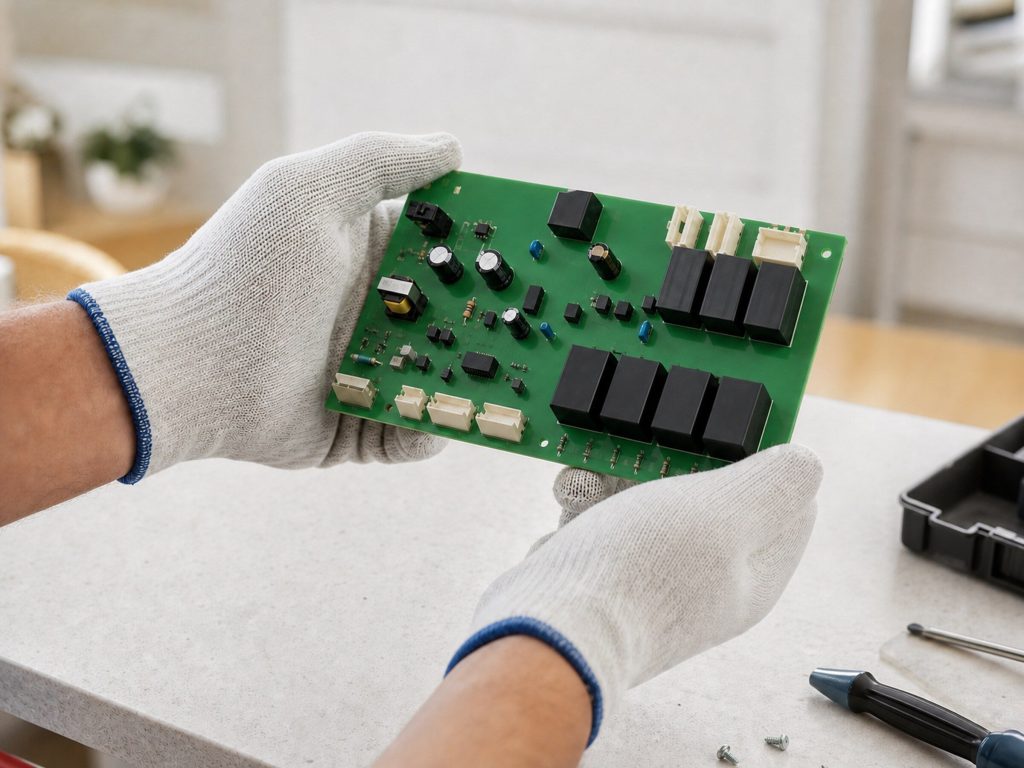
from $265 Appliance control board repair
The board is where a Whirlpool reports from, and it is also the part that gets blamed for everything else. Whirlpool runs the same control architecture across its whole line, which is why an F#E# code looks familiar on a range and on a washer — but a board that has died usually died of something, and replacing it without finding that something buys you a few months.
- A board that died usually died of something, and that something kills the next one too
- Browned connectors and pins backed out of a housing are cheap; boards are not
- Whirlpool revises these mid-production, so the order goes out against the serial
Questions people ask about this
Is one minute really necessary, or will a few seconds do?
One minute, and Whirlpool prints it that way on page after page: power the unit down for one minute, power it up, then watch it for one minute. The control has capacitors that hold charge for a while after the supply goes, and while they hold it, the board keeps the state it was in. A three-second flick resets the lights and not the logic, which is exactly why people conclude a reset does not work on their machine.
The refrigerator says PO. Do I reset that too?
No. PO is the power outage indicator and it is doing its job. Whirlpool's page says it appears when the supply has been off and the freezer temperature has risen to 18 degrees Fahrenheit or higher, sounds three times, and clears when you acknowledge it at the panel. It is a report about the food, not the machine. Read it, decide what in the freezer is still safe, then clear it.
The oven panel lights up and nothing heats since the storm.
Check the double breaker before anything else. An electric oven needs both legs of its supply, and the control runs on one of them. Half a supply gives you a lit panel, a working clock, a light in the cavity and no heat at all, which reads exactly like a dead oven. Switch the double breaker fully off, then fully on. Half-tripped breakers often look closed.
Should I unplug the appliance instead of using the breaker?
Either, and unplug where you can reach it, because it is unambiguous. A breaker in a Florida condo panel is often shared or mislabeled, and switching off what you think is the oven while the oven stays live is a common and frustrating half hour. If the plug is behind a fitted cabinet, the breaker is fine, and Whirlpool's own wording offers both.
Troubleshooting
More guides like this one
-
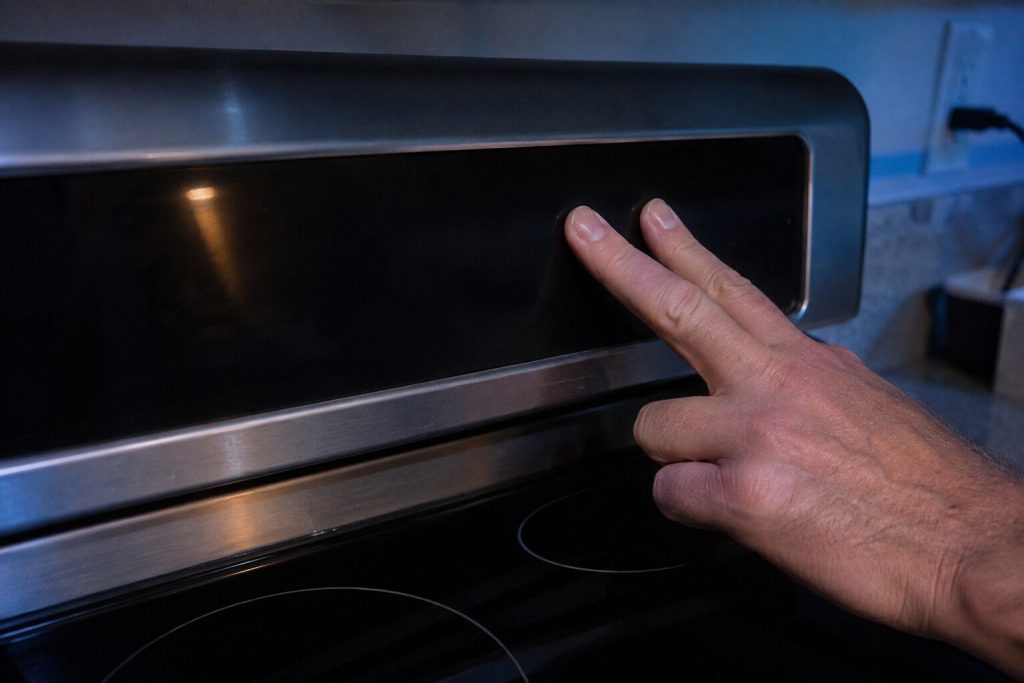
The Panel Is Lit and No Button Does Anything. That Is a Feature.
A locked panel is lit and unresponsive. A dead one is dark. That single distinction settles most of these calls before anybody is booked.
Read more -
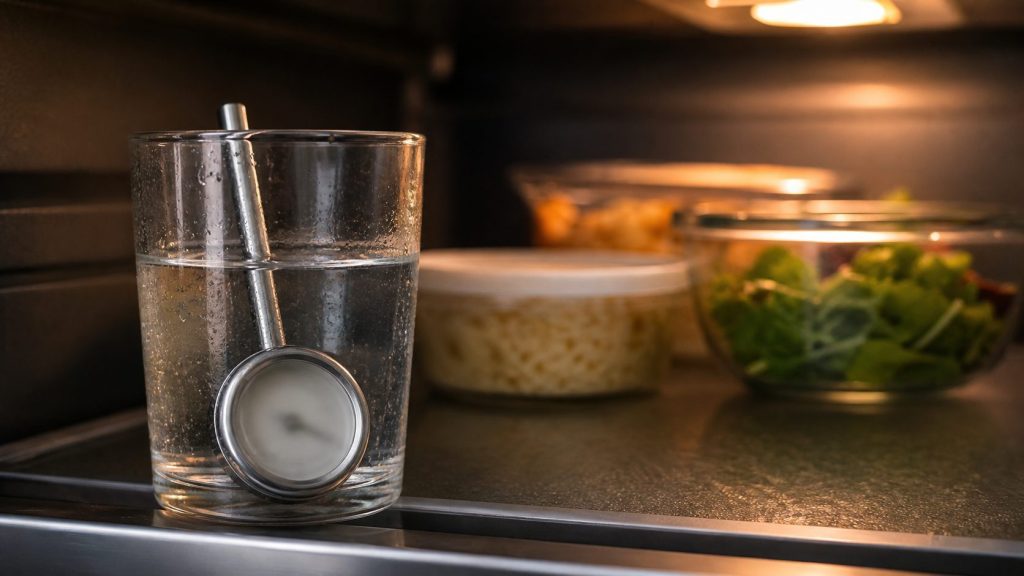
Your Refrigerator Has No Code to Give You. Measure Instead.
The maker publishes 176 code pages for wall ovens and none at all for a top-freezer refrigerator. This is the page that says so, and then gives you the three measurements that take their place.
Read more -
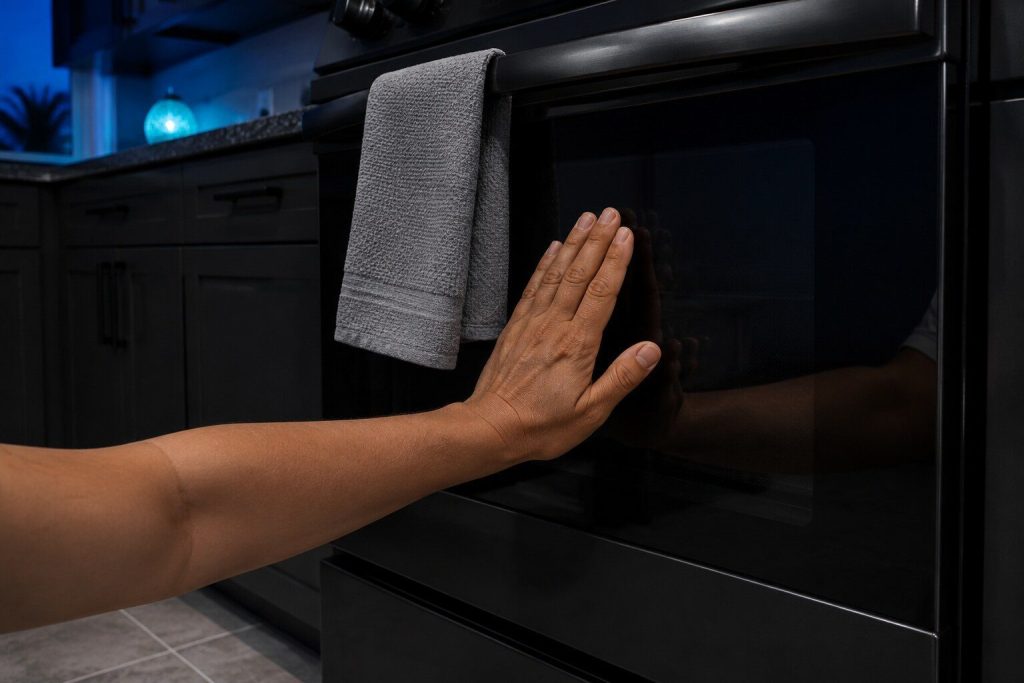
The Oven Door Is Locked. Which of the Three Things Does That Mean?
Three unrelated conditions arrive as the same sentence, and the fix for one of them makes another worse. The question order that tells them apart takes a minute.
Read more
Tell us the model number and what it is doing.
This article is based on:
- Official manufacturer documentation
- Internal repair procedures
- Technician repair history
- Company quality standards