Common Problems
A Whirlpool Microwave That Runs and Does Not Heat: The Honest Arithmetic
Put a plain cup of cold water in the middle of the cavity, run the machine on full power for one minute, and feel it. Water that is noticeably warm means the machine is producing power and the complaint is about time or quantity. Water exactly as cold as it went in confirms the high-voltage circuit, and nothing else in the machine has to be wrong for that, which is why the turntable, the light and the fan all carry on normally. What follows is the part a service page cannot say. The repair is worth doing or it is not, and on this make that is decided by where the machine sits. A countertop unit rarely justifies high-voltage work against the price of a new one. An over-the-range unit nearly always does, because it is also the kitchen's ventilation and most of what was paid for is the cabinet fit, the trim and the duct rather than the microwave. The opening above a range is a size to be matched, not a size to shop for.
The full guide
Whirlpool microwave not heating but light works: one cup of water
Put a plain glass or mug of cold water, about a cup, in the middle of the cavity. Run the machine on full power for one minute. Feel the water.
Noticeably warm. The machine is producing microwave power. Whatever the complaint is, it is about time, quantity or expectation.
Exactly as cold as it went in. That is a diagnosis, and a narrow one.
Use a plain glass without gold or silver decoration, and do not run the machine empty to test it. An empty cavity proves nothing and is hard on the magnetron.
Why everything else keeps working
A microwave is two nearly separate machines sharing one cabinet.
The first is everything you can see. Turntable motor, interior lamp, cooling fan, touch panel, clock. All of it runs on ordinary household voltage.
The second is a high-voltage circuit where a transformer steps that voltage up enormously, and a capacitor, a diode and a magnetron turn it into the energy that heats food. The two halves share a control board and very little else.
So a machine that turns, lights, counts down and beeps while leaving the food cold is not a puzzle. It is the second half, and only the second half. The turntable turning is evidence rather than a contradiction.
The reason there is no code on the display
This is where Whirlpool's own documentation is worth reading closely, because it says something by omission.
The maker publishes a long list of error codes for its over-the-range microwaves: codes beginning with E, a large family beginning with F, a set for connectivity, and named conditions for the control lock, the door state and demo mode. Two of the E codes concern the oven sensor circuit and an overheat condition, which shows how specific the reporting gets.
Nothing in that list reports lost cooking power. There is no sensor in the machine that measures how much energy reaches the food, so there is nothing to report.
That matters practically. People wait for a code before calling, assuming a machine this talkative would say something. This failure is silent by design, and a blank display in the middle of an otherwise chatty panel is not evidence that nothing is wrong.
Four parts, four very different numbers
The symptom is the same for all of them, which is the whole problem with a phone quote.
- The magnetron. The expensive answer, and the one people assume.
- The high-voltage diode. Much cheaper, fails often, identical symptom.
- The capacitor. Likewise.
- The transformer. Less common, and it usually announces itself with a smell before it announces itself with cold food.
Any number given before somebody has measured is a guess, and on this failure it is usually a guess in the wrong direction.
The arithmetic, said plainly
This matters more here than on almost any other appliance, because Whirlpool is the make people actually own rather than the one in a magazine, and the machine in question is often not worth what the repair costs.
A countertop machine. Parts and labor together frequently approach the price of a new machine of similar output. We will say so rather than sell the work. There is no version of this trade where talking somebody into a bad decision is good business.
An over-the-range machine. Nearly always worth repairing, and the reason is that it is not only a microwave. It is the kitchen's ventilation, it is trimmed into a cabinet run, and it is sized to clear the cooktop underneath. Replacing one means matching a width, a depth and a finish, then redoing an installation at head height over a range. That is a project. The repair is an appointment.
A rental or a condo kitchen. Worth adding, because it is most of what we see. An over-the-range unit in a rental is usually the only ventilation the kitchen has, and a landlord replacing it is buying an installation as well as an appliance.
The one thing that is never a wait-and-see
If the machine starts by itself when the door is closed, unplug it now.
That is a failed door interlock. The switch that proves the door is shut has stuck closed, and the safety chain that stops microwaves being produced into a room has lost part of itself. It is a small inexpensive part and it is a safety part, and a microwave that can run on its own does not stay on the counter while anybody thinks about it.
And the thing not to do
Do not open the case. This is the one appliance where we say that without qualification.
The capacitor inside stores a charge that can be lethal, and it holds it long after the machine has been unplugged. Every internal job on a microwave begins with discharging it deliberately, with the right tool, and that is not a step to improvise on a kitchen counter.
If it turns out to be a repair
What this leads to, and what it costs
Every job on this site is priced the same way: an on-site diagnostic first, the figure agreed in writing before anybody starts.
-
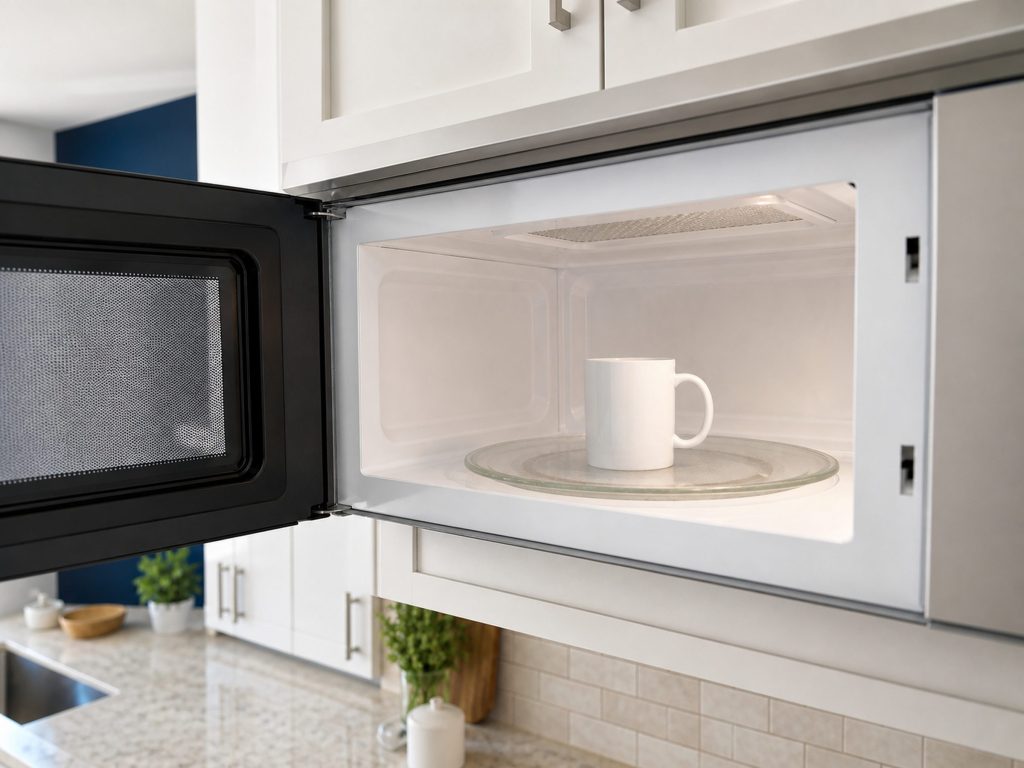
The plate turns, the light is on, the food is cold Microwave runs but does not heat
A microwave that lights, turns and counts down while heating nothing has a high-voltage problem, and this is the one appliance on this site where we would rather you did not open anything at all. Whirlpool's own code table for these is deep — 226 code pages across its microwave branch — and several of the codes point at exactly this.
- A microwave holds a lethal charge in its capacitor after it is unplugged — this one is not a home repair
- E21 is Whirlpool's thermal sensor circuit reported open; F4 E1 is the cavity temperature sensor
- The one safe test is a cup of water and a clock
-
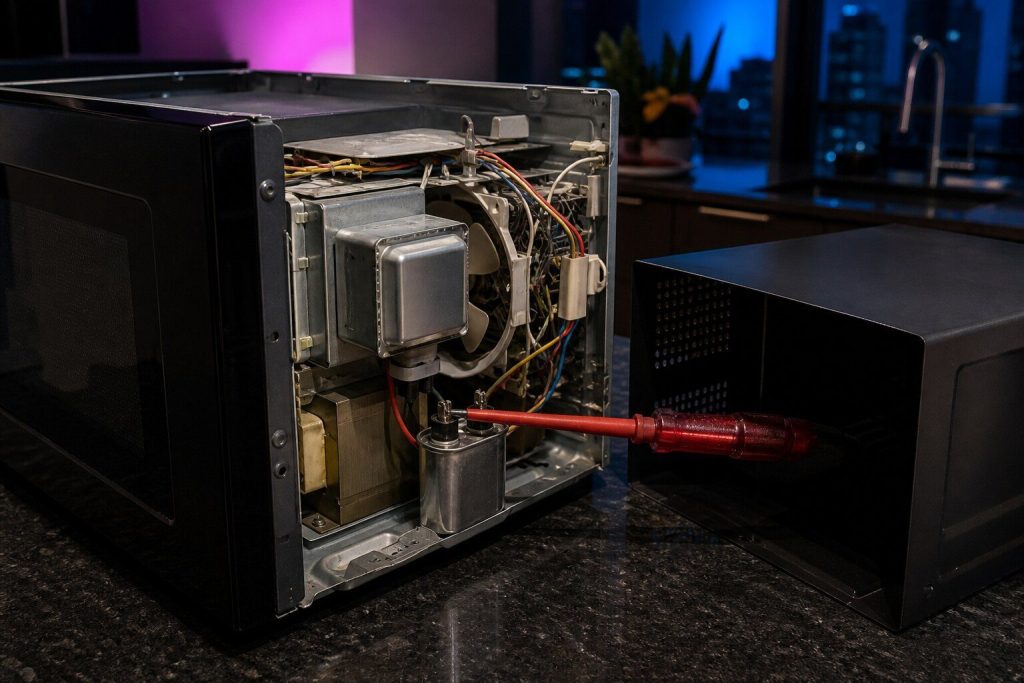
from $165 Microwave repair
A microwave that runs but does not heat is nearly always the high-voltage circuit, and it is the one appliance in this list that stores enough energy to be dangerous long after it is unplugged. Whirlpool publishes 67 code pages for its over-the-range machines and nine for its countertop ones, so on this make there is usually a reading to start from.
- Built-in and over-the-range machines, where the repair is worth doing
- The capacitor is discharged before anything is touched, every time
- On a countertop machine we will tell you when replacement is the better answer
-
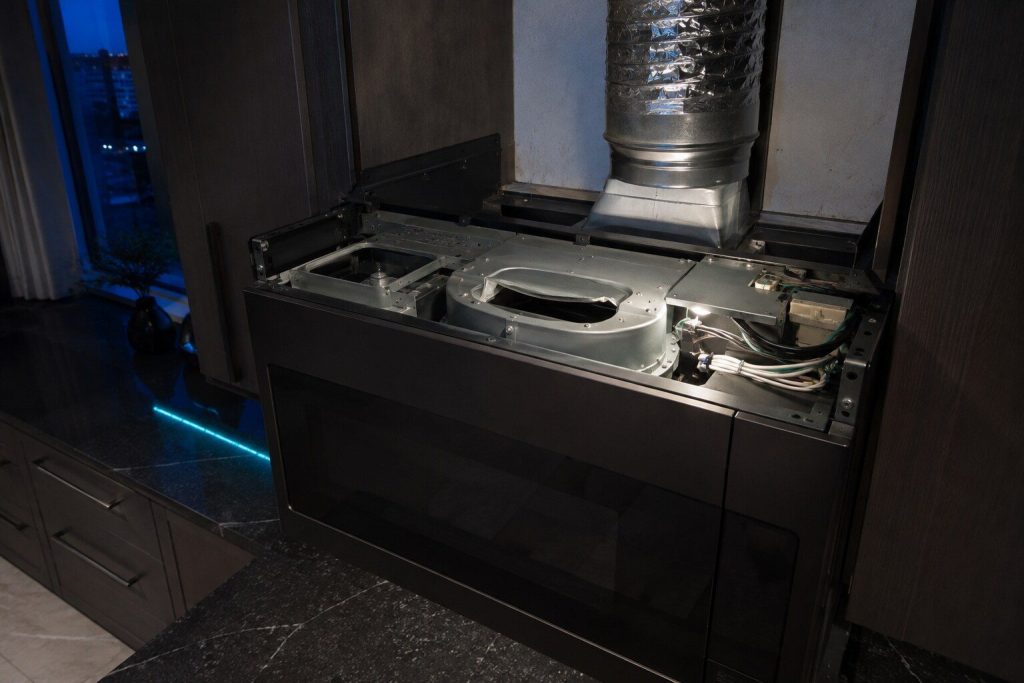
from $145 Over-the-range microwave vent service
The ventilation half of these machines is the half nobody thinks about until a pan of oil fills the kitchen with smoke. In South Florida condominiums a great many of them were never ducted outside at all: they push the air back into the room through a charcoal filter, and once that filter is saturated the machine is doing precisely nothing for the room. Which arrangement you have decides what maintenance even means here.
- First question: does this one vent outside, or back into your kitchen?
- The metal grease filters wash; the charcoal behind them has a life measured in months
- Airflow checked at the grille rather than judged by how loud the machine is

Questions people ask about this
Whirlpool microwave not heating but light works. What is the one-minute test?
A plain glass or mug of cold water, about a cup, in the middle of the cavity. Full power, one minute, then feel the water. Noticeably warm means the machine is producing microwave power and the complaint is about speed or quantity. Exactly as cold as it went in is a specific diagnosis rather than a vague one, and it points at one circuit. Do not run the machine empty to test it, which proves nothing and is hard on the magnetron.
Why is there no error code for it?
Because the machine has no way to tell. Whirlpool publishes a long list of codes for its over-the-range microwaves, covering sensor circuits, overheat conditions, control lock, door state, connectivity and demo mode. Nothing in that list reports lost cooking power, and there is no sensor anywhere in the machine that measures how much energy is reaching the food. A blank display in the middle of a working panel is the normal state for this failure, and it is not evidence that nothing is wrong.
Which part actually failed?
One of four, and they cost very different amounts. The magnetron is the expensive answer and the one people assume. The high-voltage diode is much cheaper and fails often with an identical symptom, and so does the capacitor. The transformer is less common and usually announces itself with a smell. Because the symptom does not name the part, a number given over the phone here is a guess, and it is usually a guess in the wrong direction.
Is it dangerous to keep using it?
A machine that runs and produces nothing is producing nothing to leak. The dangerous case is the reverse: a door that no longer seals, or a machine that starts by itself when the door is closed. That second one is a failed door interlock and it comes out of service the same day. What is dangerous in every case is opening the case yourself. The capacitor stores a charge that can be lethal and holds it long after the machine has been unplugged.
Should I just replace the whole thing?
It depends entirely on how it is installed, and this is the part worth being blunt about. A countertop machine can be replaced for something close to what the repair costs, and we will tell you that rather than sell you the work. An over-the-range machine is a different calculation, because you are also buying the cabinet opening, the trim, the duct connection and the fact that it clears the cooktop underneath it. Replacing one means matching a width and a depth and redoing an installation above a range, which is a job in itself.
It heats, but much more slowly than it used to.
That is usually not the magnetron, which tends to work or not work rather than fade. Slow heating is more often low supply voltage, a circuit shared with something heavy, or a replacement machine of lower wattage than the one it stood in for. On an over-the-range unit it is also worth checking the grease filters and the vent, because a machine cooling itself badly will reduce its own output to protect itself.
Common Problems
More guides like this one
-
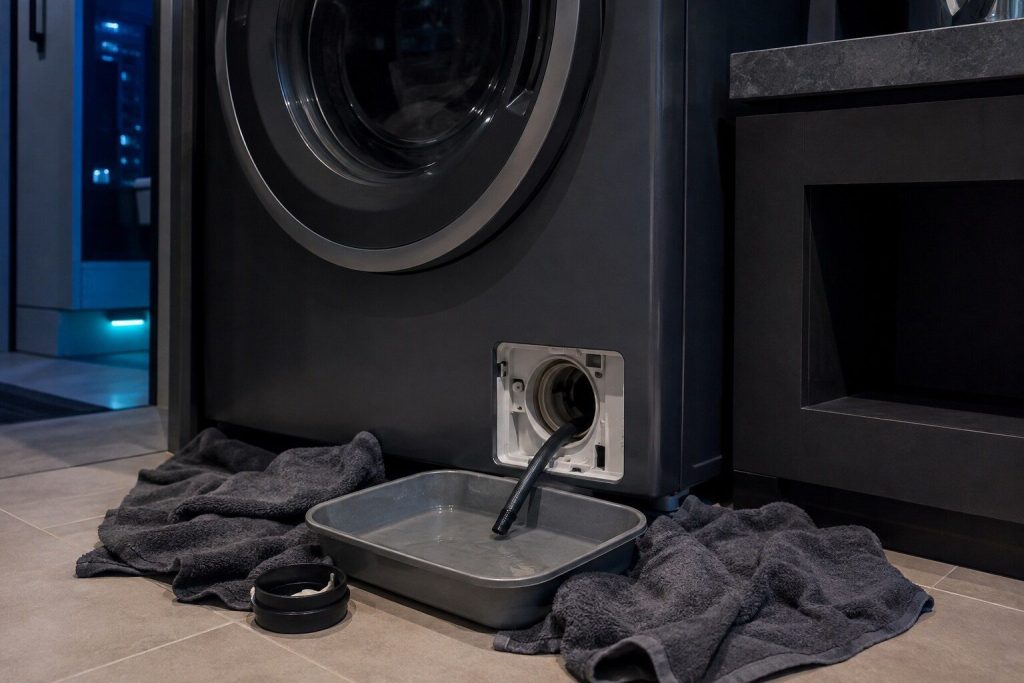
A Washer Stopped Full of Water: Top-Load and Front-Load Are Not the Same Job
A Whirlpool washer not draining water is two different machines with two different answers: a front-loader has a pump filter the maker tells you to clean, and a top-loader does not.
Read more -
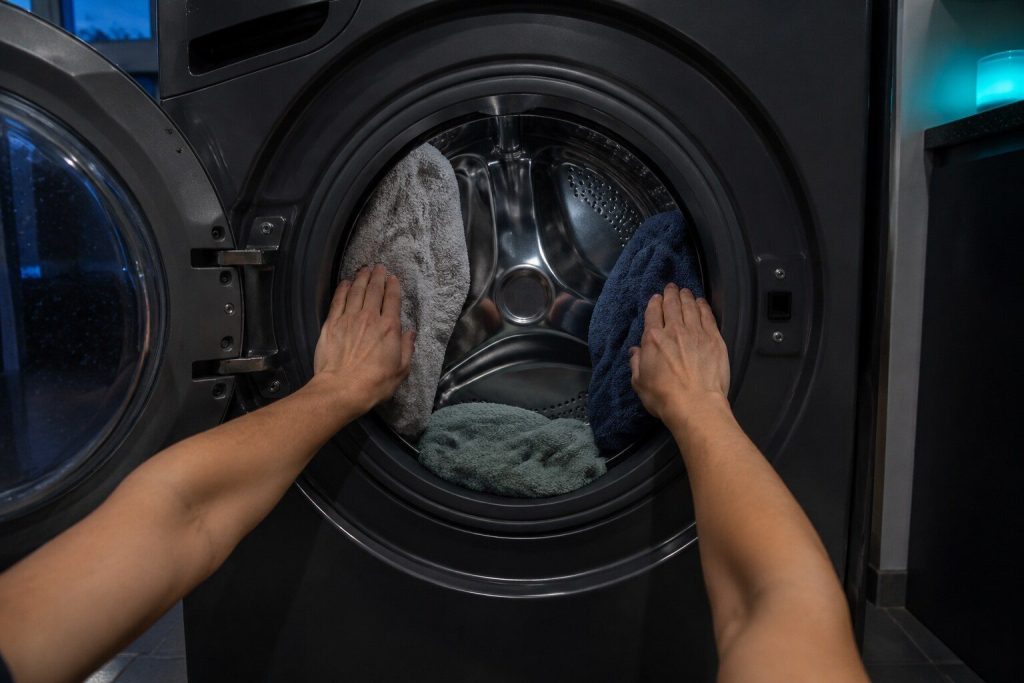
A Whirlpool Washer That Sits on Sensing, and What It Is Actually Doing
Sensing is not a pause before the wash. It is a measurement, and a machine that will not leave it is reporting that one of the three things it measures did not come back.
Read more -
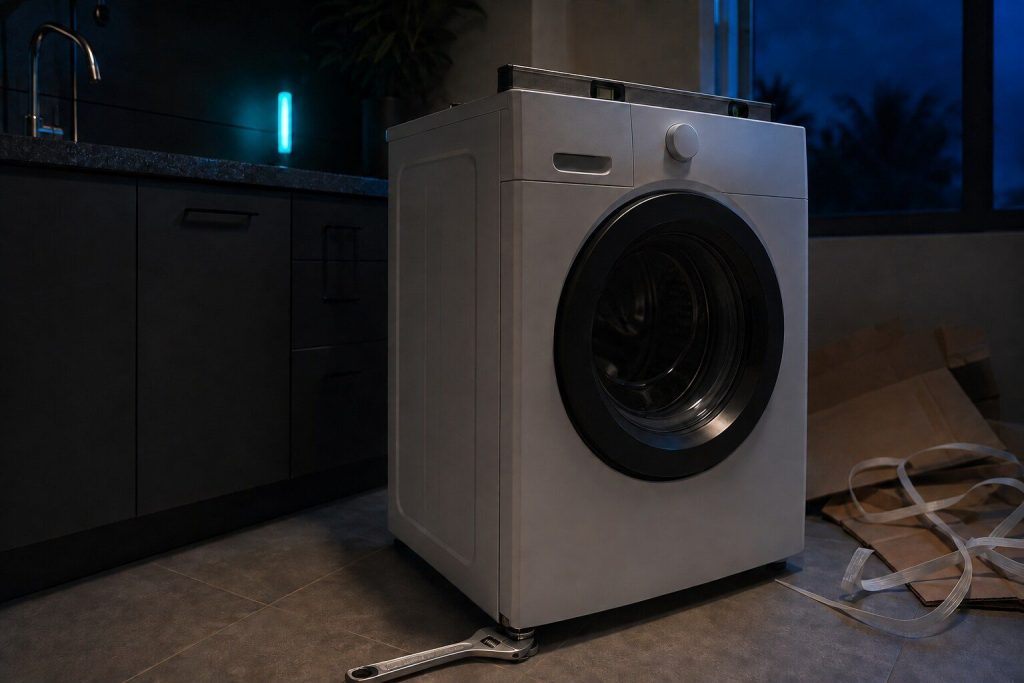
A Washer That Walks: Telling the Load Apart From the Floor
Two different problems arrive as the same sentence. A five-minute test with three towels separates them, and the answer often turns out to be the floor rather than the machine.
Read more
Tell us the model number and what it is doing.
This article is based on:
- Official manufacturer documentation
- Internal repair procedures
- Technician repair history
- Company quality standards