Common Problems
The Lid Lock Light Is Flashing and the Washer Will Not Start
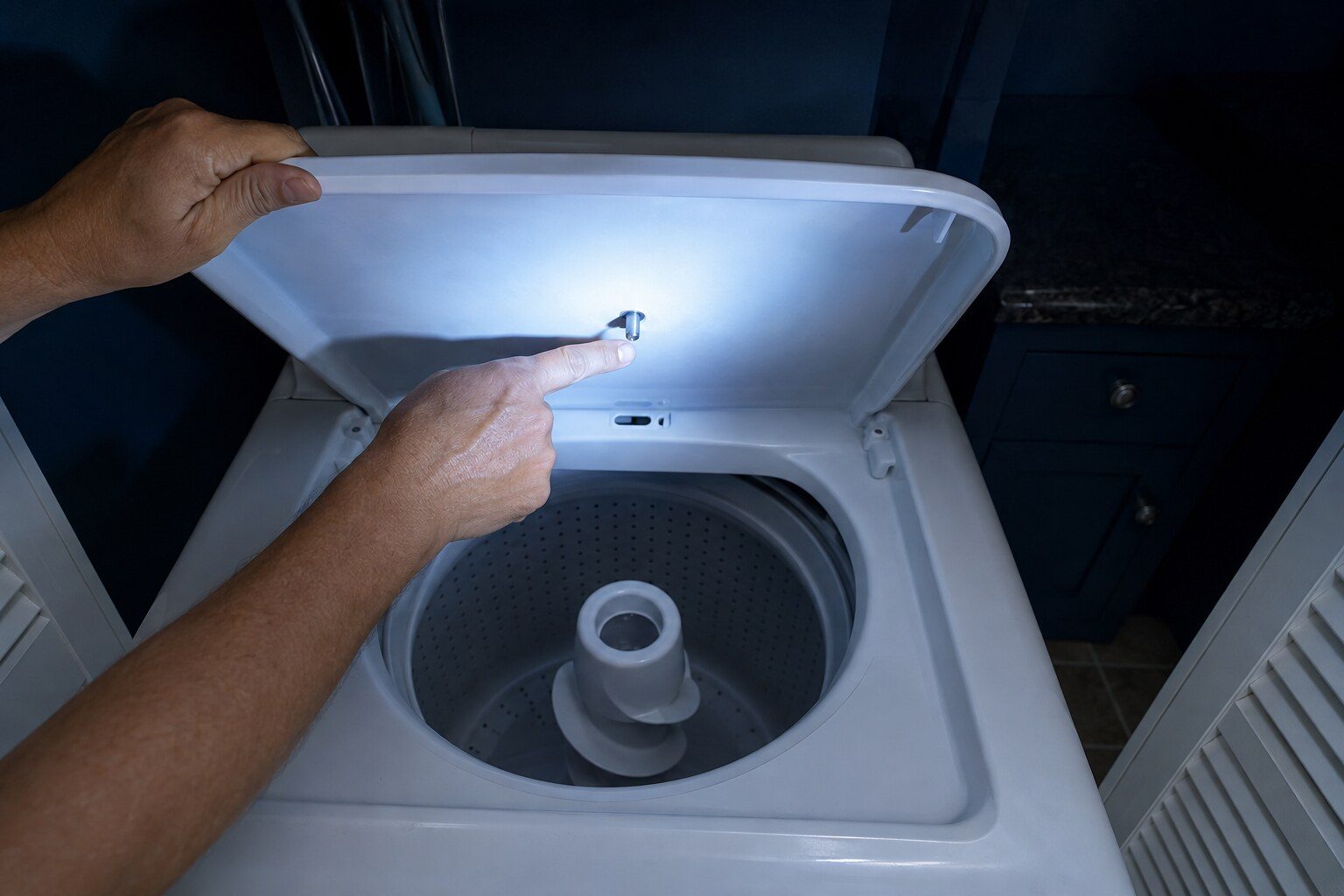
A flashing lid lock means the machine attempted to lock and did not receive confirmation that it succeeded. That is a report about a chain, not a verdict on one part. Four things have to happen in order. The lid has to close far enough for the striker on its underside to enter the slot in the lock housing. The lock has to drive its bolt across. A switch inside the lock has to close and tell the control it moved. And the control has to see that within the short window it allows. Break any link and the light flashes and the cycle never starts. Start with the two free checks. Look at the striker, the metal tongue on the underside of the lid, because one bent by somebody leaning or sitting on the lid will not enter the slot cleanly. Then check the machine is sitting level and not rocking, since a cabinet twisted a few millimeters out of square holds the lid a few millimeters off the lock.
The full guide
Whirlpool washer won't start lid lock flashing: what the light is reporting
A steady lock light is a machine getting on with its job. A flashing one is a machine saying it tried something and did not get an answer.
That distinction is the whole page. People read a flashing lock as "the lock is broken" and go looking for a part number. The machine is reporting a broken chain, and the lock assembly is one of four links in it.
Whirlpool publishes three separate pages about the lid for its top load washers: Lid Lock Flashing, Lid Not Latching, and Lid Locked and won't open. Three symptoms, one mechanism.
The four things that have to happen
The striker has to enter the lock. On the underside of the lid there is a small metal tongue. When the lid closes, that tongue drops into a slot in the lock housing on the cabinet. Nothing else can happen until it does.
The lock has to drive its bolt. A small motor or solenoid moves a bolt across the striker, holding the lid shut. This is the part you hear as a click.
A switch has to confirm the movement. The bolt moving is not enough. A switch inside the assembly has to close and tell the control board that it happened. This is the difference between a lock and a locked lid, and it is the link that fails most quietly.
The control has to see it in time. There is a short window, and confirmation that arrives late did not arrive.
Break any of the four and the light flashes and the cycle does not begin.
Listen to one attempt, and you have halved the problem
Close the lid. Press start. Do not do anything else, just listen.
A click, then flashing. The lock is moving and the confirmation is not coming back. That points at the switch inside the assembly, or at the wiring between the assembly and the control.
Silence, then flashing. The lock is not being driven at all. That points at the assembly itself, its harness, or the control.
Almost nobody does this, and it is thirty seconds that tells a technician more than any description of the light.
The two free checks, and why the first one is so common
The striker. Open the lid and look at the underside. That metal tongue is a small piece of steel on a plastic lid, and it lives in a household. People lean on the lid to reach a shelf, put a laundry basket on it, and in a rental, sit on it.
Bend it a few degrees and it no longer drops cleanly into the slot. The lid looks shut and sounds shut. It is a couple of millimeters off, and the lock has nothing to grab.
Look into the slot in the lock housing while the lid is open. A coin, a shirt button or the corner of a pod wrapper stops the bolt moving, and a flashlight finds it.
The machine rocking. This is the one nobody connects. Press down firmly on two opposite top corners of the cabinet, then on the other two. If it moves at all, one foot is not carrying weight, and a cabinet resting on three feet is a cabinet slightly twisted. A few millimeters of twist at a front corner is a few millimeters of misalignment where the lid meets the lock.
That is why "it works if I press down on the lid" is such a useful sentence. The geometry is close but not close enough, and the correction is at the feet or the striker rather than in a parts catalog.
The reset that is worth doing before ordering anything
Switch the machine off at the outlet, or at its breaker, for five minutes. Not the power button on the panel.
A control that lost power partway through a cycle can hold a lock state it will not clear on its own, and a genuine power interruption is common enough here in August to make this worth doing before anything is decided. It also discharges the board, which releases most interlocks.
The one thing not to do
Do not defeat the lock to get a load finished.
The lid lock exists so that a basket turning at spin speed is not reachable. A machine with a bypassed lock will spin with the lid up, and there is no version of a laundry emergency that justifies that in a household with anybody small in it.
If the light is flashing, the lock is doing what it was designed to do: refusing a cycle it cannot make safe. The repair is a small inexpensive assembly on this make, and it is worth waiting for.
If it turns out to be a repair
What this leads to, and what it costs
Every job on this site is priced the same way: an on-site diagnostic first, the figure agreed in writing before anybody starts.
-
The cycle starts, the drum stays empty Washer will not fill, or fills too slowly
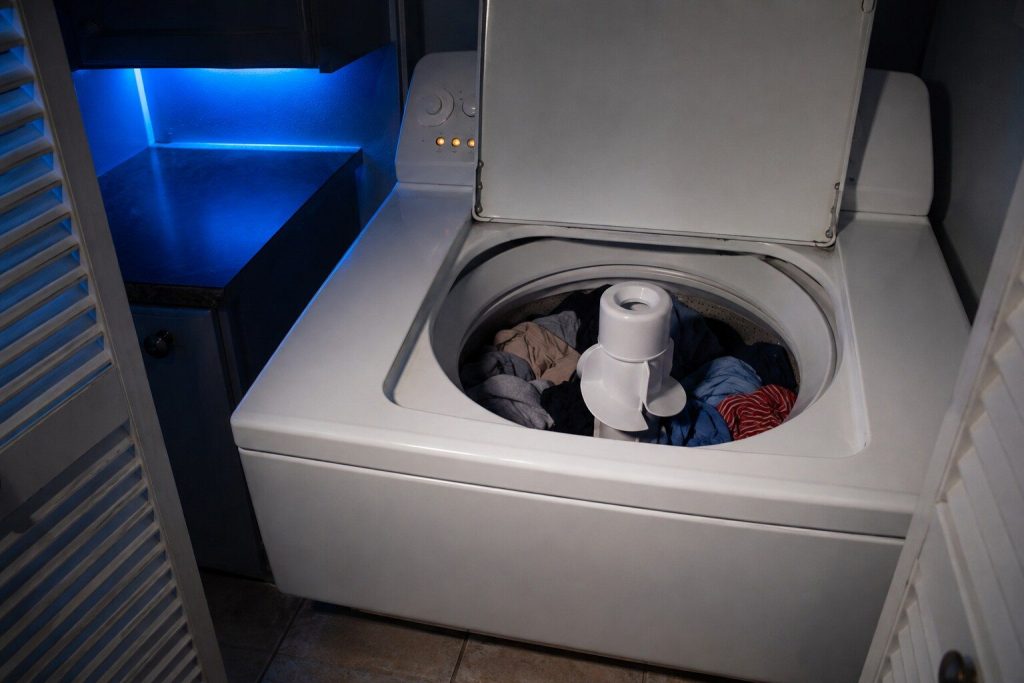
Whirlpool washers watch the water arriving and stop when it does not. The machine gives this one three different labels depending on how old it is and which control it has — LF, Lo FL and F8 E1 are one finding under three names, and the maker's own wording is that the washer is taking too long to fill or is not detecting the right amount of water coming in.
- LF, Lo FL and F8 E1 are the same condition, spelled three ways
- HC and F3 E2 mean the hot and cold hoses are on the wrong way around, which happens on every move
- The problem is on the wall more often than in the washer
-
from $139 Washer lid lock and lid switch repair
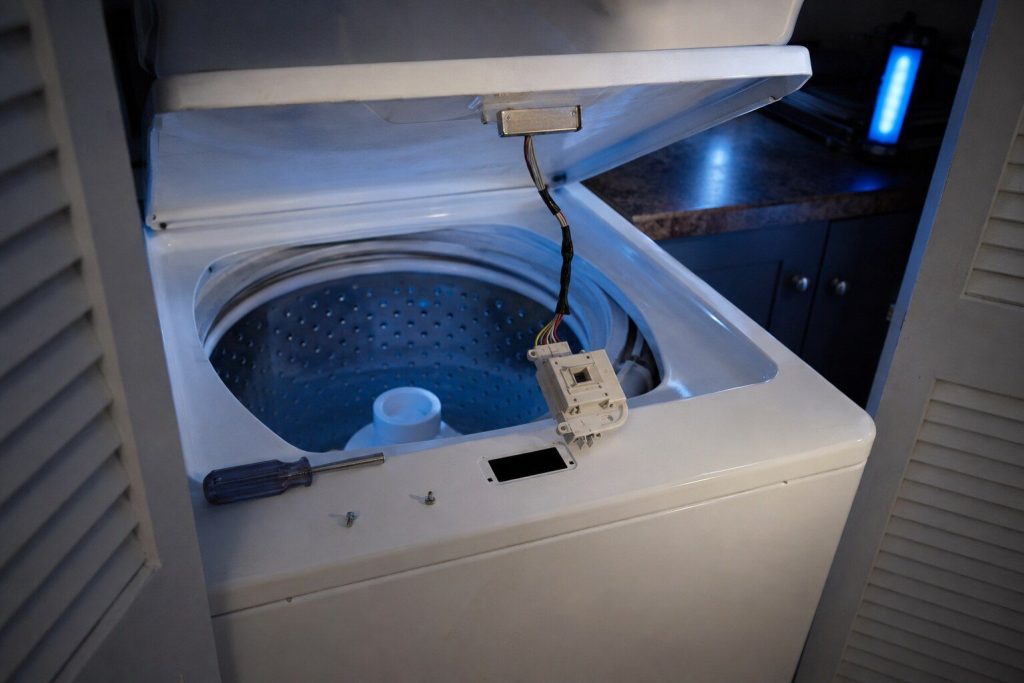
Top loaders are half of Whirlpool's washer base — 157 support pages against 179 for front loaders — and their lid lock is a different part with a different failure than a front-load door lock. A modern Whirlpool top loader locks the lid before it agitates and will not spin with the lid unlocked, and this make publishes several separate lid-related readings for it, including a lid light that flashes on its own.
- A top loader that fills and then stops before spinning usually starts here
- This make publishes distinct lid-lock and lid-open readings, and they are not the same part
- The lid strike and the hinge are checked, because a sagging lid kills locks
-
from $145 Washer door lock repair
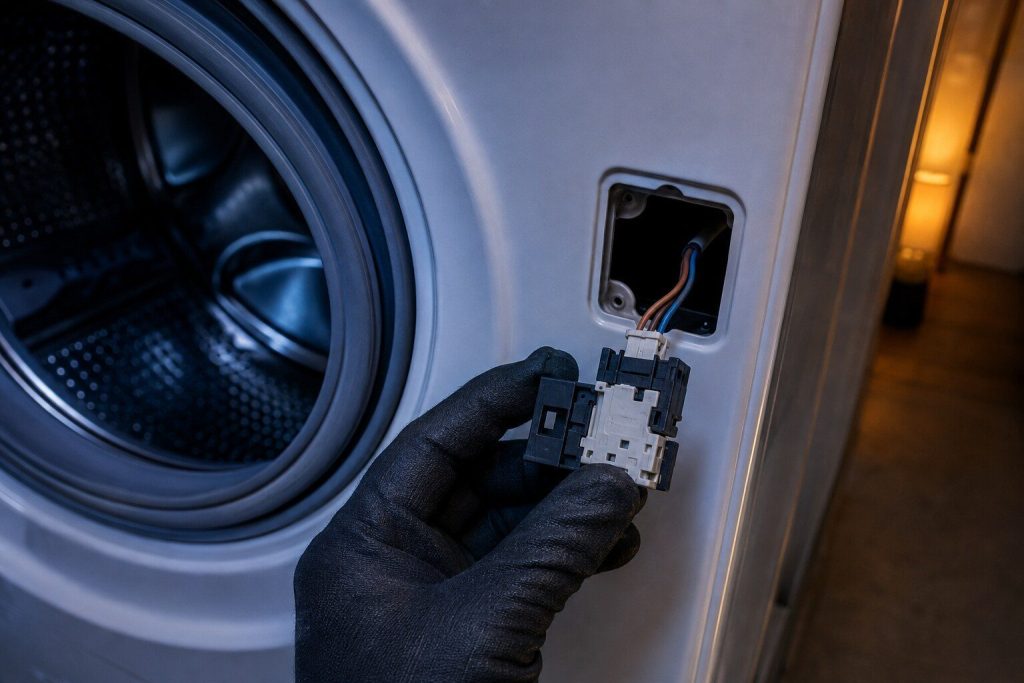
A front-load Whirlpool will not fill until its door lock reports locked, and will not open until it reports unlocked, so a failing lock produces a machine that either refuses to start or holds your laundry hostage. Whirlpool publishes both cases — door will not lock, door will not unlock — as separate pages, along with the codes that accompany them.
- A machine that beeps and does nothing is usually here, not on the board
- This make publishes separate pages for will-not-lock and will-not-unlock
- The strike alignment is corrected, or the new lock fails the same way

Questions people ask about this
Can I bypass the lid lock to get a load finished?
No, and this is one where we do not soften it. The lock is what stops a basket spinning at speed with the lid open. Defeating it puts a fast-moving basket within reach of a hand, and on a machine in a household with children it is not a decision to make for one load of laundry. Whirlpool publishes three separate pages around the lid on its top load washers, which tells you how much of the machine's safety sits there.
The lid lock is flashing and the lid is now stuck shut.
That is a related but different state, and Whirlpool publishes a page for it as well. Switch the machine off at the outlet for a few minutes, which lets the control release. If there is water in the tub the machine may hold the lid deliberately until it drains, which is the lock behaving correctly rather than failing.
It works if I press down on the lid.
Then you have found it, and it is a mechanical alignment problem rather than an electrical one. Either the striker has been bent, the lock housing has shifted, or the cabinet is out of square because the machine is rocking. Pressing the lid closes the last couple of millimeters that the machine cannot close on its own.
How long does the locking take?
A second or two, with an audible click. It happens at the start of the cycle and again after each pause. If you hear the attempt and then the flashing starts, the lock is moving and the switch is not reporting. If you hear nothing at all, the lock is not being driven, which points at the lock assembly or the wiring to it.
Common Problems
More guides like this one
-
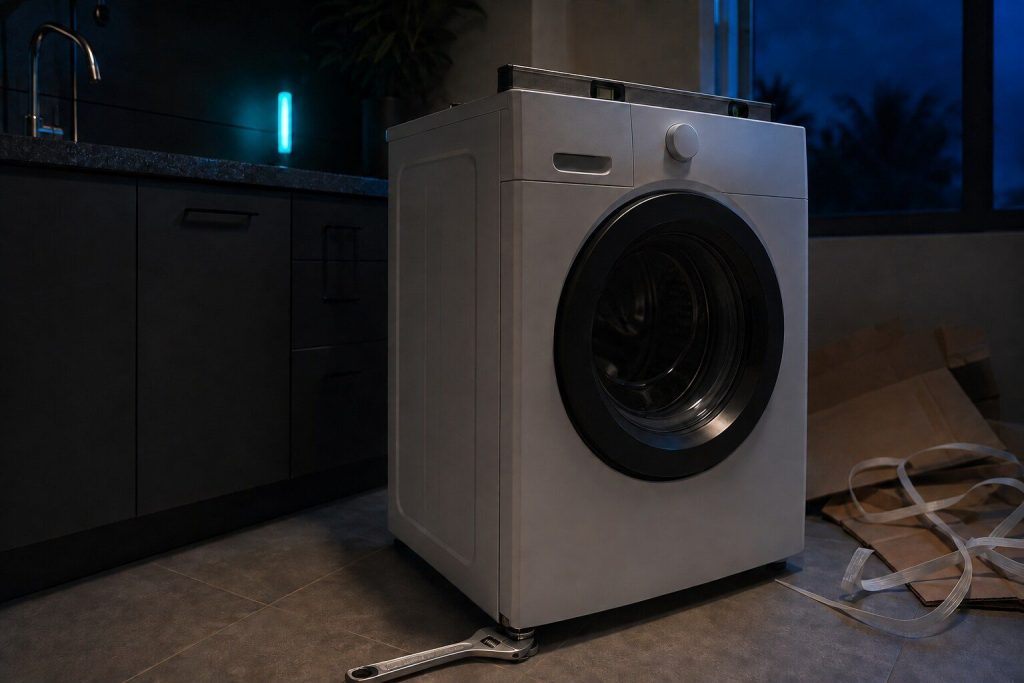
A Washer That Walks: Telling the Load Apart From the Floor
Two different problems arrive as the same sentence. A five-minute test with three towels separates them, and the answer often turns out to be the floor rather than the machine.
Read more -
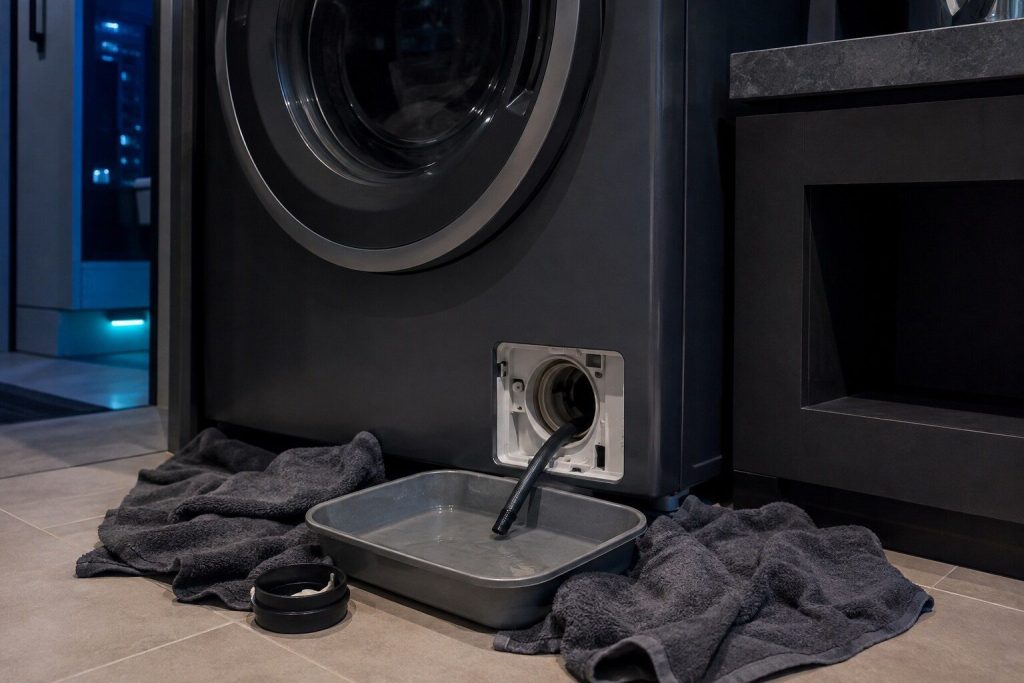
A Washer Stopped Full of Water: Top-Load and Front-Load Are Not the Same Job
A Whirlpool washer not draining water is two different machines with two different answers: a front-loader has a pump filter the maker tells you to clean, and a top-loader does not.
Read more -

A Whirlpool Washer That Sits on Sensing, and What It Is Actually Doing
Sensing is not a pause before the wash. It is a measurement, and a machine that will not leave it is reporting that one of the three things it measures did not come back.
Read more
Tell us the model number and what it is doing.
This article is based on:
- Official manufacturer documentation
- Internal repair procedures
- Technician repair history
- Company quality standards