Common Problems
The Freezer Is Fine and the Refrigerator Is Warm: Where the Cold Comes From
On most of this maker's refrigerators there is one evaporator coil and it sits behind the back panel of the freezer. The fresh food compartment has no cooling of its own. It is chilled by air blown out of the freezer through a duct and metered by a damper. That single piece of layout answers the complaint. If the freezer is holding temperature, the compressor, the refrigerant and the coil are all working, so nothing on the making side has failed. The problem is on the delivery side, and there are three candidates. The evaporator fan, which blows the air and is the part you can usually hear or fail to hear. The damper, which is a small motorized flap that meters how much of that air reaches the fresh food side. And frost over the coil itself, built up over weeks because the defrost circuit stopped clearing it, which slowly seals the air path while the freezer stays cold because it is sitting next to the ice. Whirlpool publishes almost no codes for this appliance, so the answer comes from two thermometers, a hand at the vent and a look behind the freezer back panel.
The full guide
Why is my Whirlpool refrigerator not cooling but freezer works
Because there is only one place cold is made, and it is not in the refrigerator.
On most of this maker's cabinets — French door, side-by-side, top freezer — there is a single evaporator coil, and it sits behind the back panel of the freezer. The fresh food compartment has no coil, no fan of its own and no separate cooling system. It is chilled by air blown out of the freezer, along a duct, through a flap called a damper that meters how much gets through.
Once you know that, the complaint stops being mysterious and becomes almost easy.
What a cold freezer already proves
A great deal, and this is the useful half of the news.
If the freezer is holding temperature, the compressor is running, the refrigerant charge is intact and the coil is getting cold. Those are the expensive parts of this appliance and they have just tested themselves in front of you.
So the failure is not in making cold. It is in delivering it. That rules out the sealed system, which is the repair everybody is afraid of, and points at three much smaller things.
Suspect one: the fan
The evaporator fan sits with the coil behind the freezer back panel and its whole job is to push cold air out of that space and into the duct.
When it stops, the coil still gets cold and the freezer still holds — better than it should, in fact, because it is sitting right next to the ice. The fresh food compartment gets nothing.
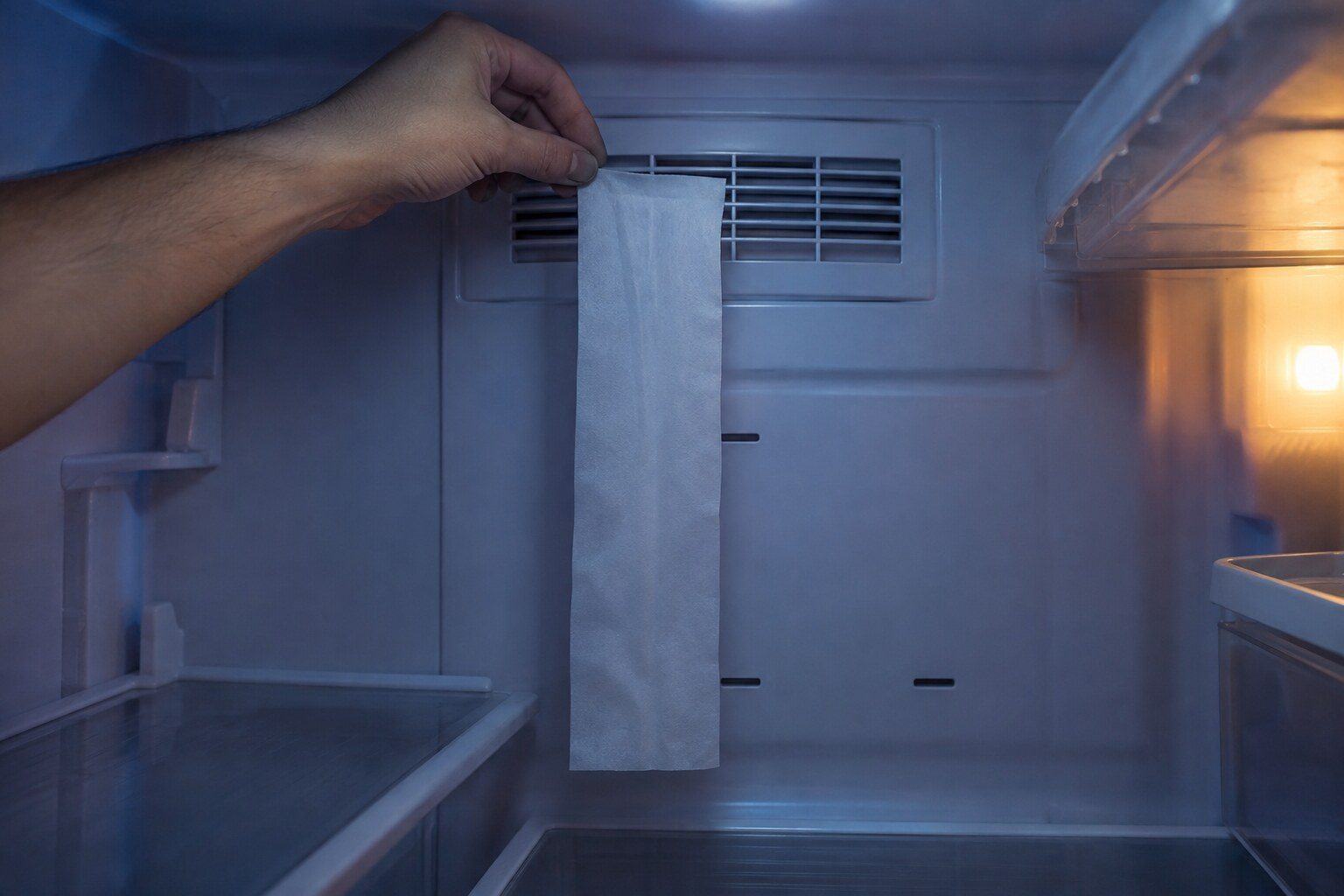
The check is a hand, not a tool. Open the freezer, hold the door switch in with a finger or a piece of tape so the machine does not shut the fan off, and put the back of your hand at the vents. You are feeling for movement, not for cold. A cabinet that is clearly running with no air at the vent has told you which part to name.
Do the same at the fresh food side, where the vent is usually high at the back or in the wall between the two compartments. Air at the freezer vent and none here is the damper's story rather than the fan's.
Suspect two: the damper
The damper is a small motorized flap in the duct between the compartments. It opens when the fresh food side calls for cold and closes when it does not.
Stuck closed, it produces precisely this complaint with everything else in perfect order. Stuck open, it produces the opposite one — a fresh food compartment that freezes the lettuce — and that is worth knowing because people describe it as a completely different problem.
It is not something to force. A flap that will not move is a flap with a reason, and levering at one in a duct you cannot see the far end of is how a small part becomes a panel.
Suspect three: frost over the coil
This is the slow one and it is the most common of the three in this climate.
Every one of these cabinets defrosts itself on a schedule, because a coil below freezing in a house at eighty percent humidity collects ice from the air that comes in every time a door opens. When the defrost circuit stops running that cycle, the ice is never cleared, and each day adds a little more.
For weeks, nothing happens. The freezer is fine. Then the ice reaches the point where it seals the airway, and the fresh food side starts drifting up while the freezer stays hard. That is why this failure always feels sudden and never is.
What to look for: frost visible through the freezer vents, a rear panel with ice around its edges, or a solid white sheet where you would expect plain plastic. A light even film is normal here. A sheet is not.
The check that costs nothing but a day
If you want to be certain before anybody comes out, defrost it deliberately.
Move the food, switch the machine off at the breaker, prop both doors open and put towels down. Give it a full day — a coil packed with ice takes far longer to clear than the inside of the cabinet looks like it should.
Then run it and watch for a week. A fresh food side that comes back and stays right has told you the airway was iced. When it ices up again a few weeks later, that is not bad luck. That is the defrost circuit confirming the diagnosis, and it is the repair.
What this make will not tell you
Almost nothing arrives on the display. Whirlpool publishes 176 code pages for wall ovens and none at all for top-freezer refrigerators, and the F codes its French door branch does list do not come with published meanings.
So this diagnosis is made with two thermometers, the back of a hand and a look behind a panel — and the three findings that come out of it are worth more on the phone than any code would have been.
If it turns out to be a repair
What this leads to, and what it costs
Every job on this site is priced the same way: an on-site diagnostic first, the figure agreed in writing before anybody starts.
-
The lights are on, the panel looks normal, and the food is warm Refrigerator is not cooling
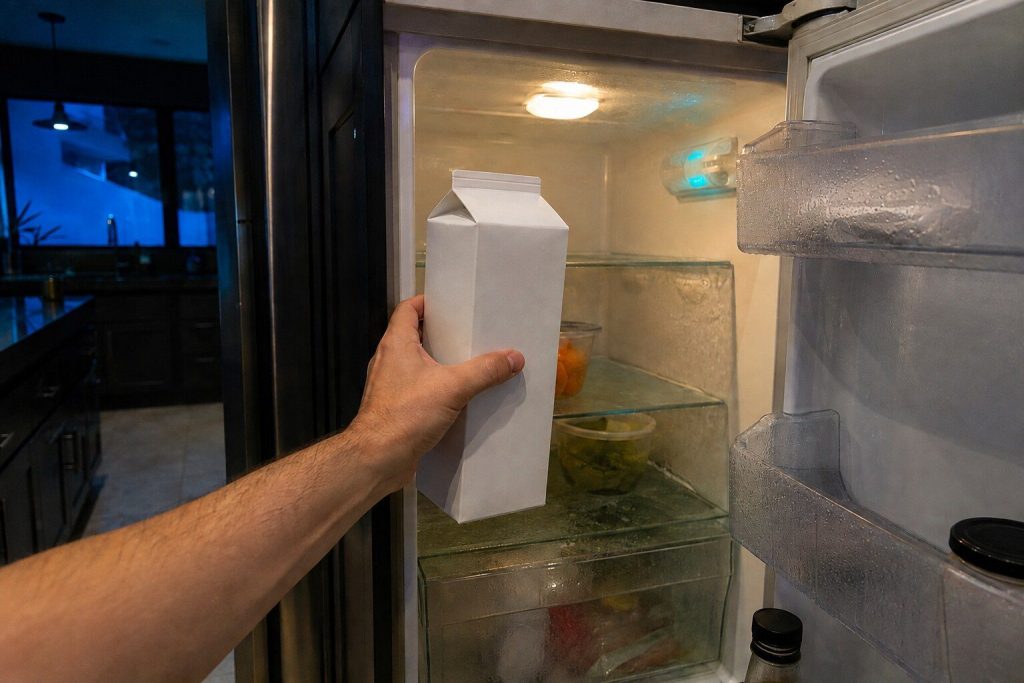
This is where Whirlpool goes quiet. Its top-freezer branch publishes 82 pages and not one error code; its side-by-side branch publishes 140 pages and nine. Where an F code does appear on a refrigerator, the maker publishes the fact that an F is flashing and, on the pages behind it, does not publish what each one means. So this diagnosis is measured, not read.
- Whirlpool publishes almost no refrigerator codes, and does not publish meanings for the F codes it does show
- PO is one of the few real messages: the power was off long enough to matter
- A condenser in a Miami garage is doing a much harder job than the design assumed
-
Ice on the back wall, water beading on the doors Frost inside, or the outside is sweating
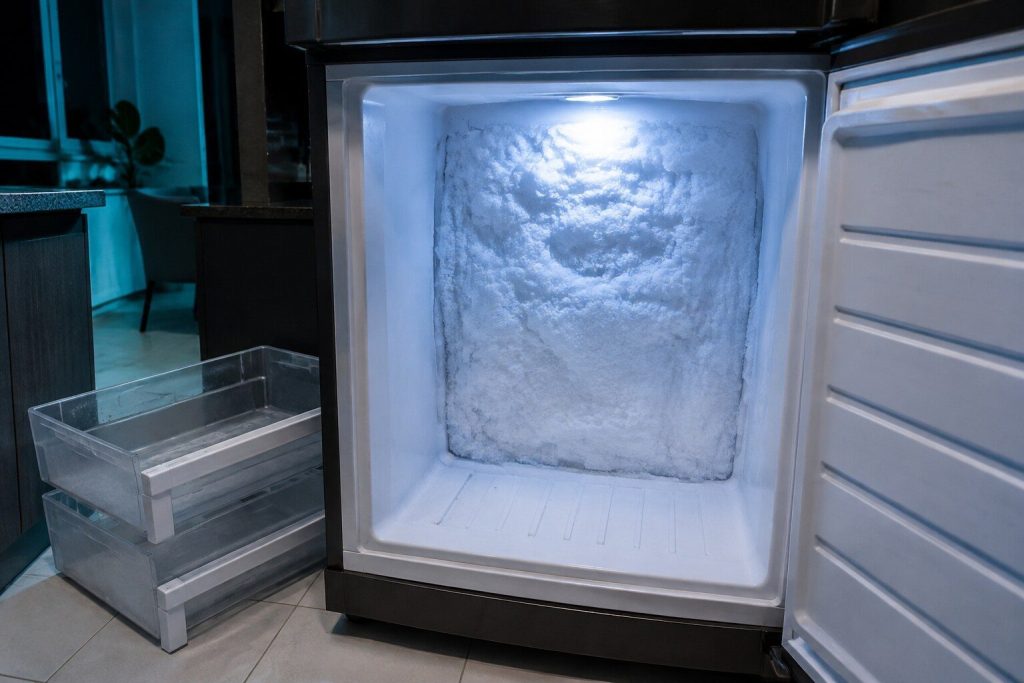
Whirlpool publishes five pages on frosting and condensation across its refrigeration branch and no code for any of it, which is fair: these are things you see rather than things the machine measures. In South Florida both of them are more common than the design assumed, because both are driven by the amount of water in the air around the appliance.
- Frost on the freezer back wall is the defrost circuit; frost on the food is a door habit
- Condensation on the outside of the doors is humidity, not a malfunction
- The paper test on the seal takes ten seconds and settles a lot of these
-
from $155 Evaporator fan repair
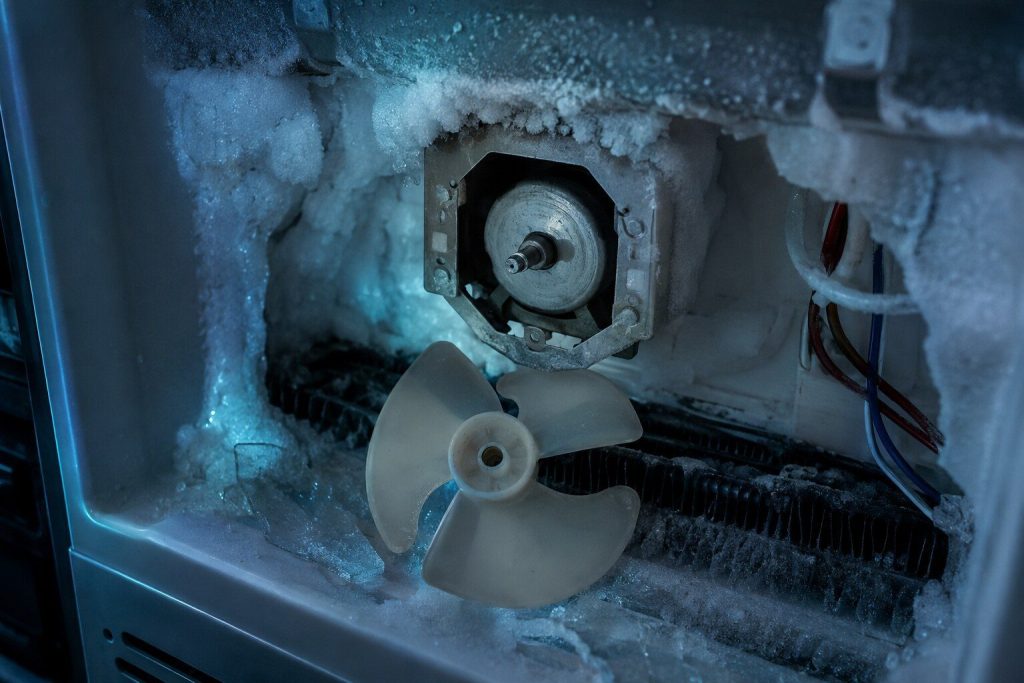
The fan behind the freezer wall moves all the cold air in the cabinet, including the air the fresh food side gets. When it stops, the freezer often stays acceptable and the refrigerator warms up, which is why this repair is so often mistaken for a refrigerant problem. In this climate the usual reason it stopped is ice, not a dead motor, and that changes what has to be fixed.
- A warm fresh food side with a cold freezer usually starts here
- Ice on the blade is a defrost problem wearing a fan problem's symptoms
- Freezer contents come out and the coil usually has to thaw before anyone can reach it
-
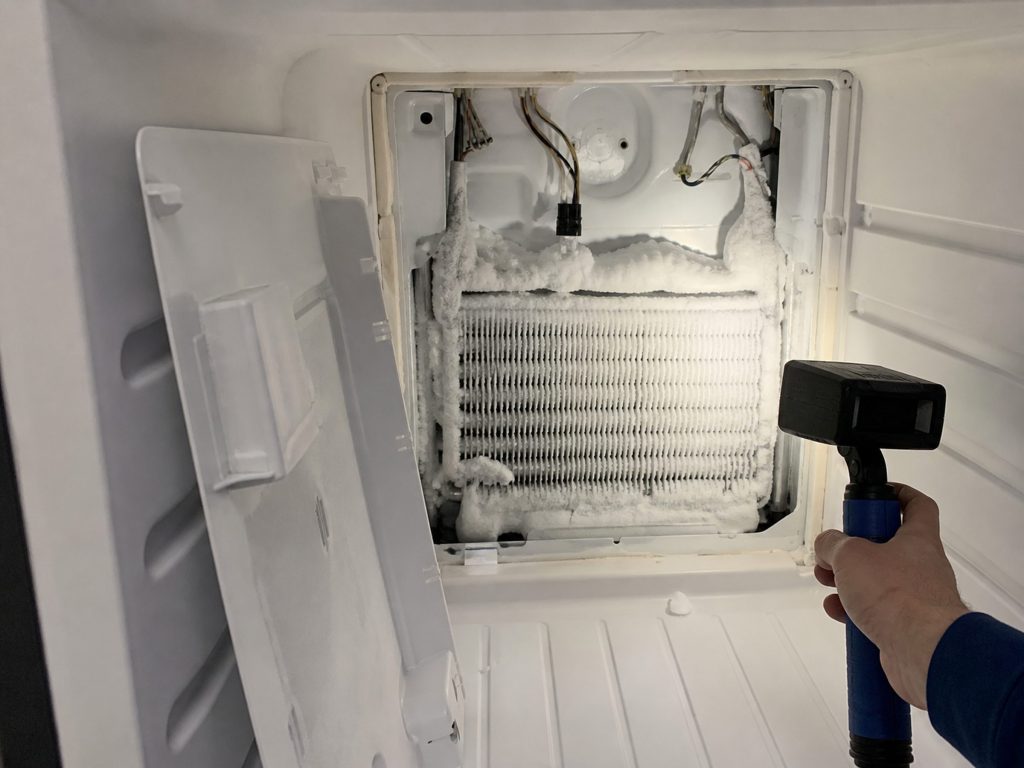
from $165 Defrost system repair
Ice builds across the evaporator a little at a time, and for the first two weeks the cabinet hides it by running longer. Then the fresh food side starts creeping up while the freezer still looks perfectly normal, and by the time anyone picks up the phone the coil is a solid block. Nothing on the panel of a Whirlpool will have said so: this make publishes no code pages at all for its top-freezer refrigerators or its upright freezers, so what you get instead is a frost pattern and a meter.
- No published reading for this on most of this make's cabinets — it is read off the coil
- Heater, bimetal terminator, and either a mechanical timer or the board, depending on age
- The thaw is hours of the visit and it happens before any part is fitted
Questions people ask about this
Should I turn the refrigerator colder to compensate?
It rarely helps and it often makes things worse. The control is already asking for cold it is not receiving, so a lower setpoint mostly means the machine runs longer, which drives the freezer colder still and, if the cause is frost, builds it faster. Set both compartments back to the middle of their range and spend the effort on finding out whether air is moving instead.
Why is the freezer so cold when the refrigerator is warm?
Because it is next to the coil and the fresh food side is at the end of a duct. When less air leaves the freezer, less cold leaves with it, so the compartment holding the coil gets colder than it should while the compartment fed by the duct drifts up. Ice cream harder than usual over a warm refrigerator is a genuinely useful observation, and it points at the delivery side rather than away from it.
There is frost on the back wall of the freezer. Is that the cause?
It is a strong lead. A light even film is normal in a humid house. A solid sheet, or a rear panel you can see ice through, means the defrost circuit is not clearing the coil on schedule, and every defrost it misses adds to what is already there. That is the failure that takes weeks to arrive and about a day to look obvious in hindsight.
Can I just defrost it and carry on?
You can, and it is worth doing to confirm the diagnosis. Empty both compartments, switch the machine off at the breaker and leave the doors open for a day with towels down. If the fresh food side comes back and stays right for a week, the airway was iced and the defrost circuit is the repair. If it ices up again within a few weeks, that is confirmation rather than bad luck, and running it as a routine is running a compressor against a blocked coil.
Common Problems
More guides like this one
-
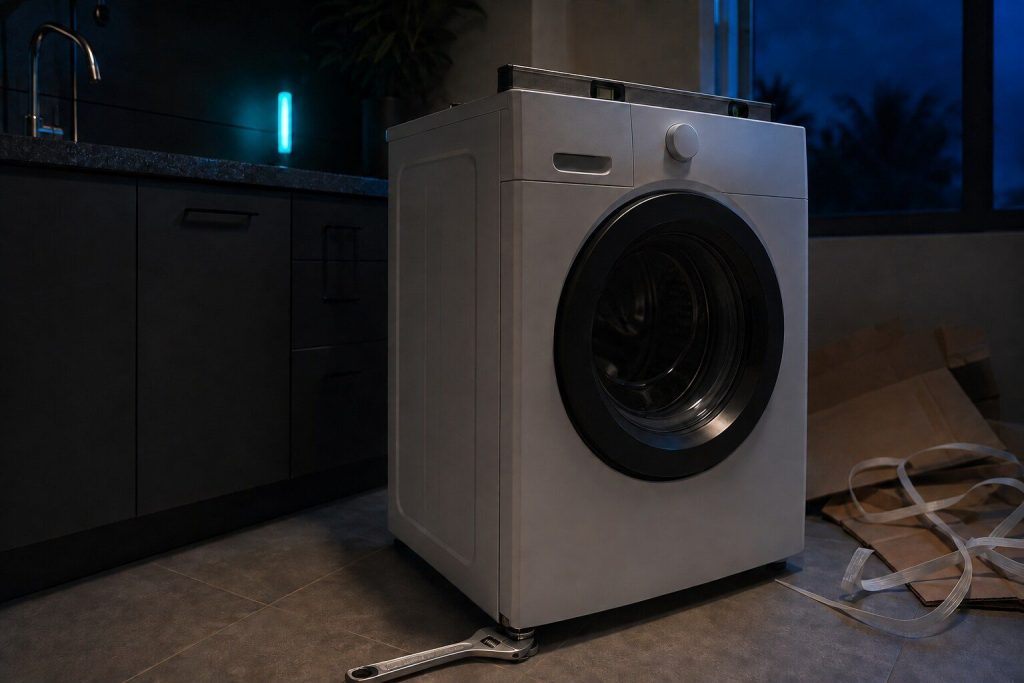
A Washer That Walks: Telling the Load Apart From the Floor
Two different problems arrive as the same sentence. A five-minute test with three towels separates them, and the answer often turns out to be the floor rather than the machine.
Read more -
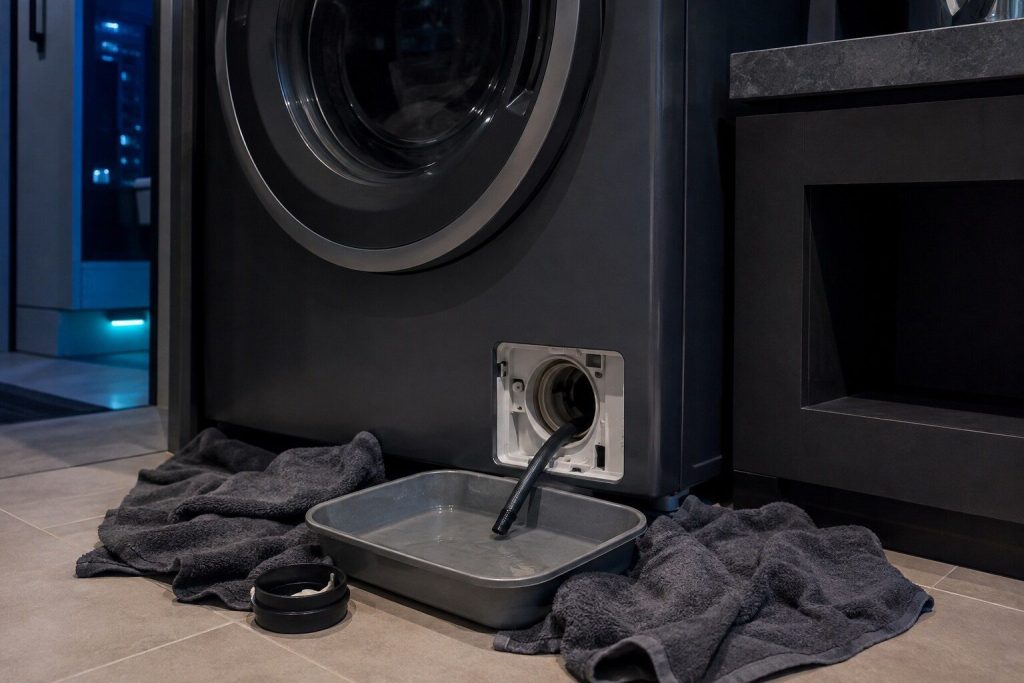
A Washer Stopped Full of Water: Top-Load and Front-Load Are Not the Same Job
A Whirlpool washer not draining water is two different machines with two different answers: a front-loader has a pump filter the maker tells you to clean, and a top-loader does not.
Read more -
A Whirlpool Washer That Sits on Sensing, and What It Is Actually Doing
Sensing is not a pause before the wash. It is a measurement, and a machine that will not leave it is reporting that one of the three things it measures did not come back.
Read more
Tell us the model number and what it is doing.
This article is based on:
- Official manufacturer documentation
- Internal repair procedures
- Technician repair history
- Company quality standards