
Cost Expectations
What It Costs to Fix a Whirlpool Dryer, Job by Job
A dryer is the least expensive major appliance in the house to repair, and the spread across the jobs is wide enough that one average number would be useless. At the cheap end sit the airflow and sensing jobs: a vent cleaning from $129, a moisture sensor service from $109, a dryer not heating repair from $145. In the middle, the parts that wear: a heating element from $175, a gas igniter and valve from $175. At the top, the mechanical jobs: drum, belt and rollers from $185, a stacked laundry center or tower from $185, and a heat pump dryer from $215. A diagnostic visit is from $89 and is credited toward the work. Every figure is a from, and the exact cost is confirmed on site in writing before anything is opened. The sentence that saves the most money on this appliance is not in the table. The most common dryer repair is not a repair — it is the duct. A machine quoted a heating element is very often a machine nobody measured the airflow on, and in a South Florida condominium with a long closet run, restricted airflow is the normal condition rather than the exception.
The full guide
Whirlpool dryer repair cost: a wide spread, and one number would hide it
A dryer is the cheapest major appliance in the house to put right. It is also the one where the gap between the smallest job and the largest is widest, so an average figure tells you nothing useful.
Here is the ledger.
| job | from | what it involves |
|---|---|---|
| diagnostic visit | $89 | credited toward the repair |
| dryer vent cleaning | $129 | the whole run, not the first three feet |
| moisture sensor service | $109 | the sensor bars and what the control does with them |
| dryer not heating repair | $145 | protectors, thermostats, wiring, control output |
| heating element replacement | $175 | element out, and the reason it died addressed |
| gas igniter and valve repair | $175 | igniter, flame sensor, gas valve coils |
| drum, belt and roller repair | $185 | drum out, belt, rollers, idler, glides |
| laundry tower or stacked center | $185 | two machines behind one panel |
| heat pump dryer service | $215 | a sealed circuit rather than an element |
Every one of those is a from. The exact cost is confirmed on site, in writing, before anything is opened, ordered or charged.
The sentence that saves the most money on this appliance
The most common dryer repair is not a repair. It is the duct.
A dryer dries by moving hot air through the load and out of the building, carrying the water with it. If the air cannot leave, nothing else in the machine can do its job. The heat has nowhere to go, the moisture stays in the drum, and the load comes out damp after two cycles.
An owner describes that as *it is not heating properly*. It is heating perfectly. The heat is not going anywhere.
So a machine gets quoted a heating element, the element is replaced, and six months later it fails again — because the reason the first one died has not changed. A thermal protector that opens is not a part that failed. It is the appliance telling you the airflow is wrong, and replacing it without fixing the cause is buying the same message twice.
Before you buy any part for a dryer that will not dry, have the airflow measured. From $129 that is a vent cleaning; if it turns out to be an element after all, you have lost nothing, because the measurement had to happen either way.
Why this matters more in South Florida than almost anywhere
Three local conditions, all of them working against the duct.
The laundry closet. Condominiums and townhouses here put the pair in a closet in the middle of the floor plan, and the duct then runs across a ceiling, through a wall, and up. Twenty and thirty feet of run with four elbows in it is normal. Every elbow is worth several feet of straight duct in resistance.
Flexible foil. Behind a very large number of machines in this city there is a crushed length of foil or vinyl hose, folded double because the machine was pushed back too far. Rigid or semi-rigid metal, kept as short and straight as the room allows, is worth more to a dryer than any part in the table above.
Humidity. Air that is already carrying a great deal of water has less room for more of it. The same machine, the same load, and a longer cycle nine months of the year. That is not a problem to repair — it is the reason the duct has to be right here, because there is no margin to lose.
What the diagnostic buys, and why it is credited
From $89, and on a dryer it is measurement rather than inspection: airflow through the whole run, temperatures, continuity through the protectors, the sensor bars, and the control's output to the element or the burner.
That work decides which line of the table you are on, and the same work has to happen whether the answer is a $129 duct or a $185 drum job. It comes off the bill when the repair goes ahead, so you pay it once.
If the answer is that the machine is not worth repairing, the diagnostic is what you paid to find that out — and that is a much better trade than paying for a part to discover the same thing.
Three names for two things
Nearly every argument about these fees starts with vocabulary, so it is worth ten lines.
A trip charge pays for getting a technician and a stocked van to your address. A diagnostic fee pays for finding out what is wrong. Service call fee is used to mean either, or both, depending on who is speaking.
Then the same money gets arranged three ways. Stated and credited, so both numbers are visible. Folded in, advertised as no diagnostic fee, with the visit inside the repair price. Or conditional — free if you go ahead, charged if you decline.
None of those is dishonest. All three add up to a similar total. The reason to know the difference is that a headline comparison between two of them is meaningless.
Ask one question: if I decline the repair, what do I owe you. That single answer makes any two quotes comparable.
When to stop repairing a dryer
Later than most people expect, because this is a simple machine built by the largest appliance maker in the country, and the parts sit in every van in Miami-Dade.
A single job on a ten- or twelve-year-old Whirlpool dryer is nearly always worth doing. An element, a belt, a set of rollers, a thermostat — these are not close calls.
Where it changes is when two large jobs arrive together. A drum and bearing job plus a control, on a machine past twelve, with a door seal that has gone hard and a cabinet that has been living in a humid closet since it was new: that is most of the price of a new dryer, spent on a machine that will need the next thing shortly.
We will tell you that on the visit. On a dryer it is a rare conversation — the arithmetic on this appliance almost always favors the repair — but when it applies we would rather say it in the first hour than sell you a part.
The two jobs that are not repairs at all
Worth naming, because they get paid for as repairs every week in this city.
The duct. Covered above, and it is the single most valuable thing you can have done to a dryer.
The lint screen. Every load. And once a year, wash the screen in warm water with a little detergent and a brush — fabric softener leaves an invisible film on the mesh that halves the airflow through it while looking perfectly clean. Hold it up: if water sits on the mesh instead of running straight through, that is your film, and no part in the machine can compensate for it.
If it turns out to be a repair
What this leads to, and what it costs
Every job on this site is priced the same way: an on-site diagnostic first, the figure agreed in writing before anybody starts.
-
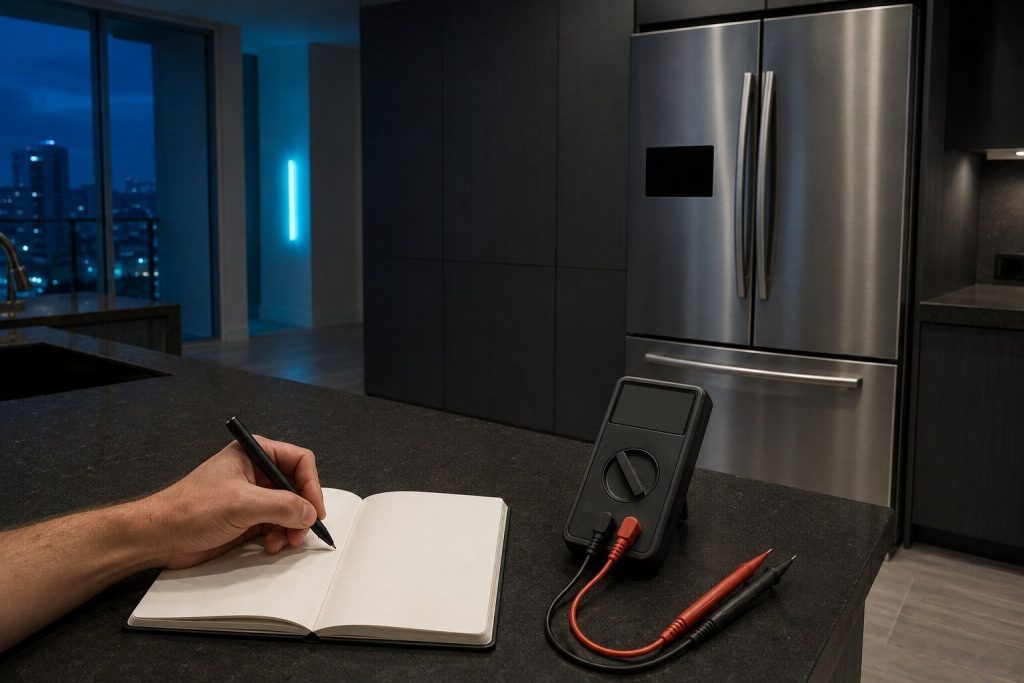
from $89 Diagnostic visit
One visit, one technician, one answer in writing. On a Whirlpool the first question is whether the appliance is talking, because this make is not evenly talkative. It publishes a separate page for every code on its ranges, its ovens, its cooktops, its washers and its dryers, and it publishes almost nothing of the kind for its refrigerators and freezers. Knowing which half of the house you are standing in changes how the visit starts.
- Whether this appliance talks at all decides how the visit starts
- Laundry and cooking almost always have a code; the cold side almost never does
- Whatever we find goes to you in writing, and the visit comes off the repair
-
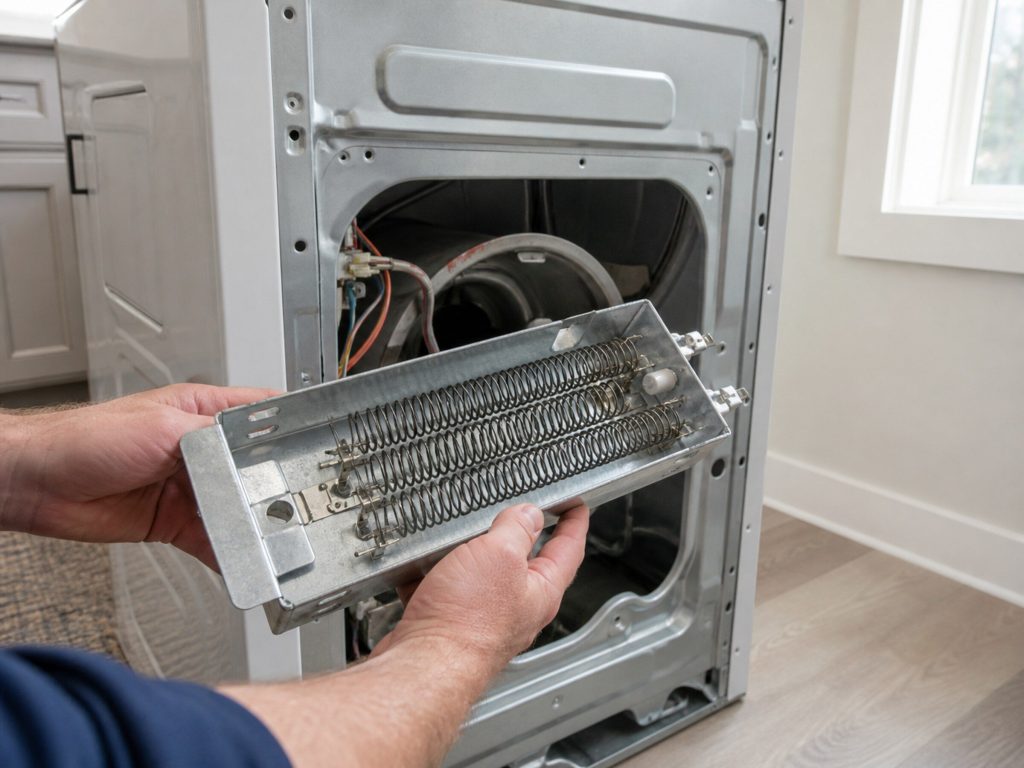
from $175 Dryer heating element replacement
On an electric Whirlpool the element sits in a housing on the back or the side of the drum, and when it fails it usually takes a thermal cutoff with it. Replacing the element alone is how this repair comes back in a fortnight, because the cutoff opened for a reason and the reason is nearly always airflow.
- Element, thermal cutoff and high-limit replaced as a set
- The vent is cleared in the same visit or the new element inherits the same problem
- A stocked part on this make, which keeps this to one visit
-
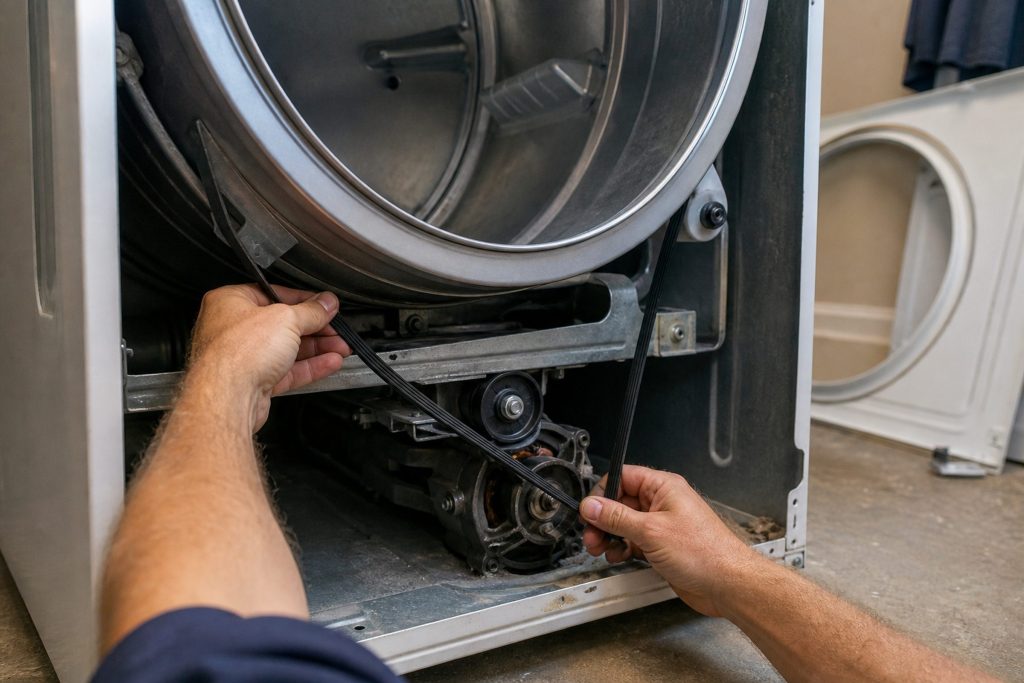
from $185 Dryer drum belt and roller repair
A dryer that hums but does not turn has usually broken its belt. A dryer that turns while sounding like a train has usually worn its rollers or its idler. Both are mechanical, both are audible long before they fail, and both are worth doing together because the machine has to be opened for either.
- Belt, idler, rollers and bearing done as one job
- Noise is the early warning and it is worth acting on
- The blower and duct are cleaned while the machine is open
-

from $129 Dryer vent cleaning
This is a safety job before it is a performance job. Lint that has been packing into a duct for years is fuel sitting next to a heat source, and long drying times are the warning. On Whirlpool dryers the machine measures the restriction itself and reports it, which is a genuine advantage — most makes leave you to notice.
- The dryer reports its own restricted-vent condition on this make
- Duct, wall hood and the transition behind the machine, all three
- Drying time measured before and after

Questions people ask about this
What is a fair whirlpool dryer repair cost for a machine that will not heat?
The band runs from $145 for the repair itself, and from $175 where the heating element is the part that has to be replaced. What decides which of those you are in is measurement, not guesswork: an element, a thermal protector, a gas igniter and a control all produce the same complaint. Ask what was measured before you agree to a part. On a gas machine the igniter and valve work is from $175 and the diagnosis is different again.
Why does the same job get quoted so differently by different companies?
Usually because the same money is arranged in different ways rather than because one is cheaper. A stated diagnostic fee credited toward the repair shows you two numbers. No diagnostic fee means the visit is inside the repair price. A fee that is free only if you go ahead is a fee with an incentive attached to the diagnosis. All three are legitimate, which is exactly why comparing the headline figure does not work. One question settles it: if I decline the repair, what do I owe you.
When is a dryer not worth repairing?
Later than for almost anything else in the house, because the machine is simple and the parts are common. The honest line is roughly this: past twelve years, needing a mechanical job and a control together, on a machine that also has a tired drum seal, and you are into a large part of the price of a new one. A single job on a ten-year-old Whirlpool dryer is almost always worth doing. Two large jobs at once on the same machine usually is not, and we say so on the visit rather than after.
What does the diagnostic actually buy on a dryer?
From $89, and on this appliance it buys measurement rather than a look. Airflow through the whole duct run rather than the first three feet, temperatures at the element or burner, continuity through the protectors, and a check of the sensor bars. That is the work that decides between a $129 vent cleaning and a $175 element, and it is credited toward whichever one you end up with.
Is a stacked pair more expensive to fix?
From $185, and the extra is diagnosis and access rather than parts. There are two machines behind one control panel, so establishing which of them is complaining has to happen before anything is opened. In a laundry closet the pair often has to be separated to reach anything at all, and that is real time before the repair starts.
Cost Expectations
More guides like this one
-
Repair or Replace a Whirlpool Washer: the Arithmetic on a Volume Brand
A six-hundred to eleven-hundred dollar machine, and two forces pulling the decision in opposite directions. Only two repairs actually approach the price of it.
Read more -
“It Needs a New Control Board”: When That Is True, and When It Is Not
The board is the part most often blamed by somebody who has not measured anything. Three questions to ask before you agree to the quote.
Read more
Tell us the model number and what it is doing.
This article is based on:
- Official manufacturer documentation
- Internal repair procedures
- Technician repair history
- Company quality standards