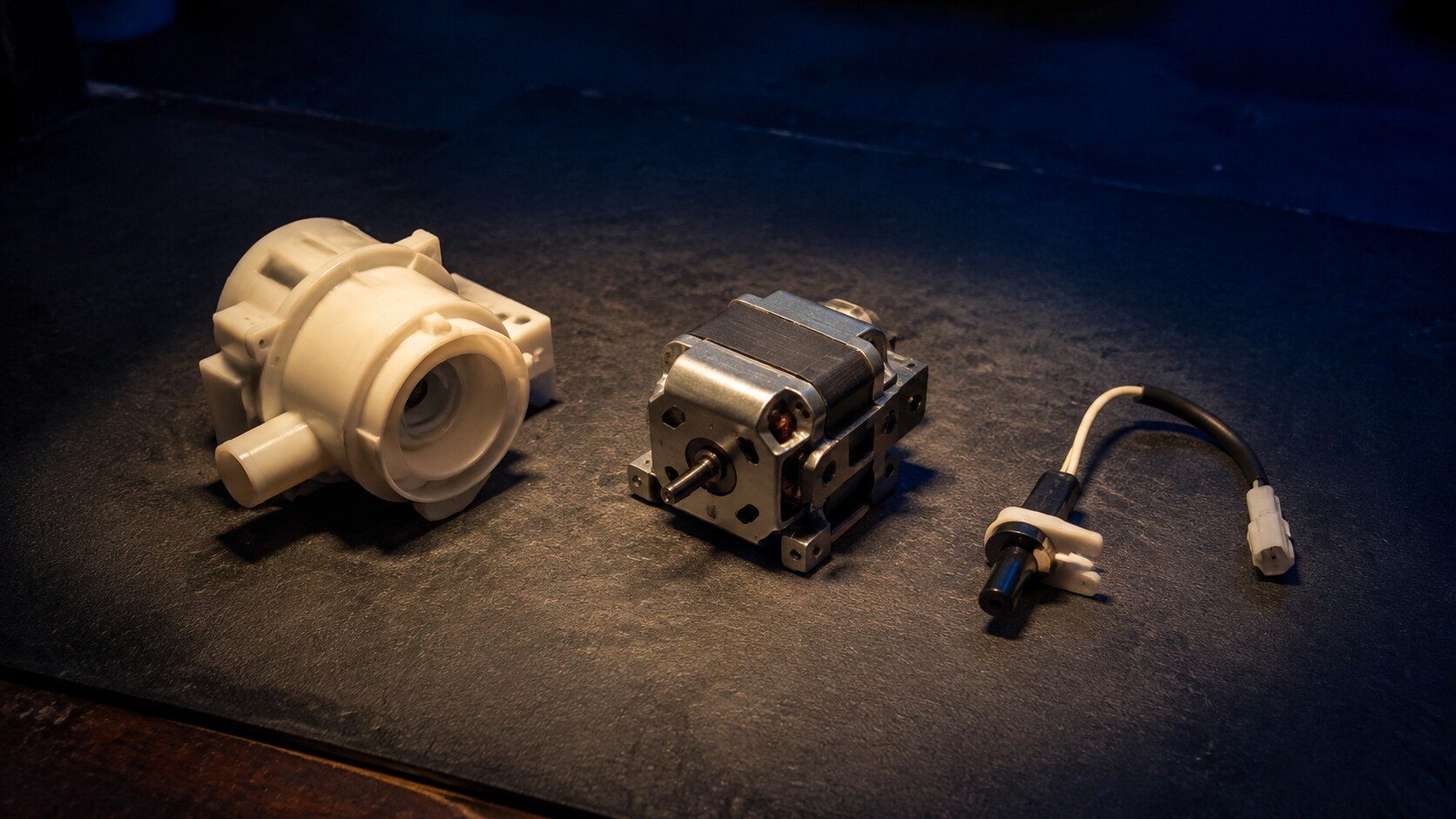
Cost Expectations
“It Needs a New Control Board”: When That Is True, and When It Is Not
Control board work on this make is from $265, against an oven temperature sensor service from $125 and an oven not heating repair from $155 — and that gap is the reason this guide exists. A board is a reasonable diagnosis in three situations. When the output stays dead with the load disconnected, so the thing the board drives has been taken out of the argument. When it is dead on every cycle that uses that output rather than on one program. And when the sensor feeding it has been read and reads correctly. It is an unreasonable diagnosis when none of those has been done, because a control board sits between what it reads and what it drives, and a dead element looks exactly the same from the kitchen whichever of the three has given up. The sensor, the element and the wiring to them each cost a fraction of the board and each fail considerably more often. There is one piece of good news specific to this make: Whirlpool Corp runs the same control platforms across several of its badges, so these boards are common parts rather than rare ones, and the same board costs less here than it does under a premium badge on an identical platform. Every figure is a from and the exact cost is confirmed on site in writing before anything is opened.
The full guide
Whirlpool oven control board replacement cost, and the sentence that comes before it
Control board work on this make is from $265. An oven temperature sensor service is from $125. An oven not heating repair is from $155. A diagnostic visit is from $89 and comes off whichever of those you end up with.
Every one of those is a from, and the exact cost is confirmed on site, in writing, before anything is opened, ordered or charged.
The gap between the first figure and the other two is the entire reason for this page. More owners of this make ask about a board than about any other part, and the board is the part most often named by somebody who has not measured anything.
What a control board actually is
Not the brain of the appliance in any mysterious sense. It is the middle of three links.
It reads something. A temperature sensor, a thermostat, a lid or door switch, a pressure sensor.
It decides. Compares what it read against what the cycle wants.
It switches something. A heating element, a water valve, a motor, a door lock, a fan.
That is the whole job. And the important consequence is this: a dead output looks identical from the kitchen whichever of the three links has given up. The oven does not heat. The pump does not run. The lock never releases. One complaint, three possible origins, and only one of them is expensive.
That is why the board gets blamed. It is the only one of the three that an owner cannot see.
Three things that make a board a reasonable answer
Ask these. A technician who has genuinely diagnosed a board answers all three without pausing.
One: is it still dead with the load disconnected? Disconnect the element, the valve or the motor and check whether the board is producing an output at all. This is the test that takes the driven part out of the argument, and it is the one most often skipped.
Two: is it dead on every cycle that uses that output? A bake element that does nothing on bake but works on broil is not a dead output — it is a circuit, a relay or a setting. An output that fails on one program and works on the others is very rarely the board.
Three: has the sensor feeding it been read, and did it read correctly? A control acting on a sensor that is lying is behaving perfectly. Replacing it changes nothing, because the new one will be told the same lie.
If the answer to all three is yes, the board is a fair diagnosis and the figure is a fair figure.
If nobody can answer them, what has been diagnosed is the symptom, not the part.
The parts that fail far more often, and cost far less
In order of how often we actually find them.
The oven temperature sensor. A resistance element in a probe at the back of the cavity. It drifts, it goes open, and the control does exactly what it is told to do with the wrong number. From $125, and it produces the whole family of complaints people describe as *the oven has gone strange* — running hot, running cold, never reaching temperature, or shutting the cycle down.
The element itself. Bake and broil elements fail visibly more often than any electronics in the appliance. A break in one, or a short to ground, is common and unmistakable when somebody actually looks.
The wiring and connectors between them. A scorched terminal where an element connects is a routine finding, and it is exactly the sort of thing a board gets blamed for. The connection carries real current; connections that warm up get worse rather than better.
None of those is a board. All of them produce the same complaint as one.
What this make does differently, and it is in your favor
Worth knowing before you hear a number.
Whirlpool Corp runs the same control platforms across several of its badges. The same code appears on the same page path on the maker's support sites for more than one name in the corporation, and the boards behind them are shared or closely related.
Two useful consequences.
Availability. These are common parts rather than rare ones, which shortens the wait and means a board job on this make is far less likely to turn into a machine standing open for a fortnight.
Price. The identical platform under a premium badge costs more than it does under this one. Being the volume brand of its own corporation is worth real money at exactly this moment.
Read the code before anyone reads it to you
One more thing that belongs on this page, because it is where the wrong diagnosis often starts.
Whirlpool publishes a page for its codes, and the codes on the cooking appliances are the part of this make's documentation that is genuinely thorough — there are more published code pages for wall ovens and ranges than for anything else in the base. The code on your display has a page of its own written by the people who built the machine.
Two rules for using it. Read the page for your exact code, character for character, on the appliance you actually have. And do not accept a meaning that is not on that page — most of the confident code interpretations circulating online are somebody's guess reprinted enough times to look official.
A code that names a sensor circuit is not a code that names a board, and knowing the difference before the visit changes the conversation.
When a board is not worth doing at all
The honest end of this page.
On a freestanding range — a machine that cost six hundred to eleven hundred dollars new — a board on an appliance past about ten years, with something else already tired, is a large fraction of a replacement spent on a machine that will ask again. We say so on the visit rather than after, and the diagnostic is what you paid to find that out.
On a wall oven the arithmetic frequently goes the other way, because replacing it means the cabinet opening as well as the appliance, and a board is cheap against a joiner.
On a washer or a dryer, see the same rule as the range: the board is one of the dearest parts in the machine, and past ten years it is usually the point at which we stop recommending repairs.
That is the difference this page is for. The question is never only what a control board costs. It is whether it is the part that is broken, and whether this machine is the one to spend it on.
If it turns out to be a repair
What this leads to, and what it costs
Every job on this site is priced the same way: an on-site diagnostic first, the figure agreed in writing before anybody starts.
-
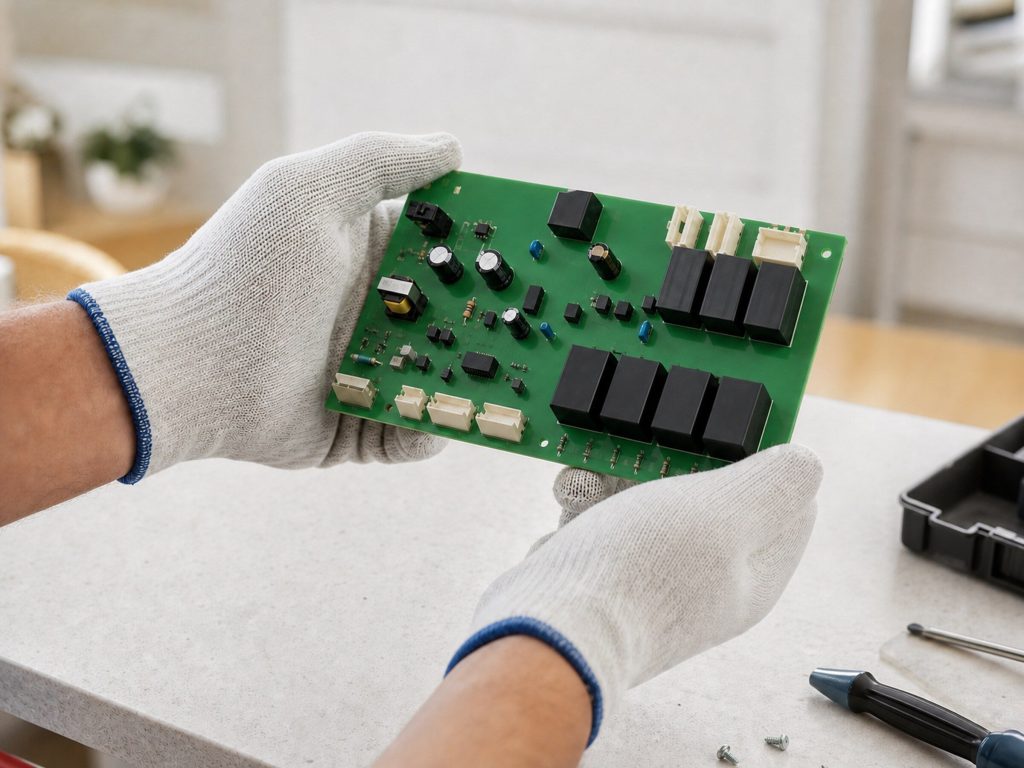
from $265 Appliance control board repair
The board is where a Whirlpool reports from, and it is also the part that gets blamed for everything else. Whirlpool runs the same control architecture across its whole line, which is why an F#E# code looks familiar on a range and on a washer — but a board that has died usually died of something, and replacing it without finding that something buys you a few months.
- A board that died usually died of something, and that something kills the next one too
- Browned connectors and pins backed out of a housing are cheap; boards are not
- Whirlpool revises these mid-production, so the order goes out against the serial
-
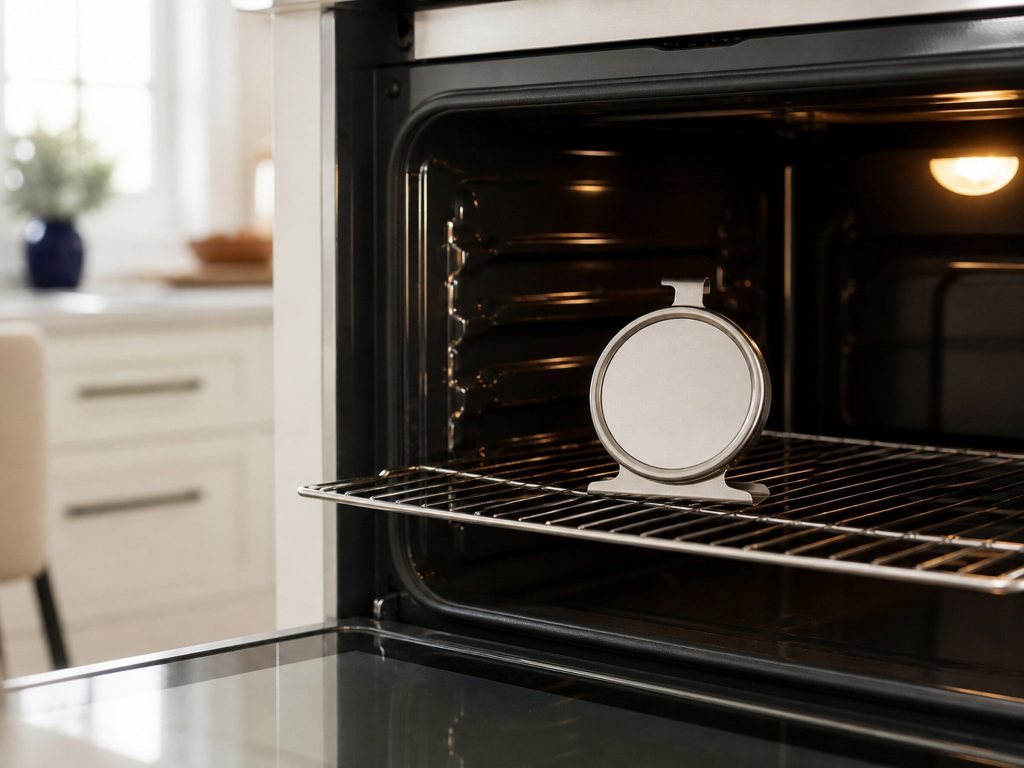
from $125 Oven temperature calibration and sensor service
An oven that runs hot, runs cold or swings wildly is usually reporting the truth about its own sensor. This is a small part with a large effect: everything the control does depends on what the sensor says the cavity is doing, and a sensor that has drifted takes the whole oven with it. It is also the repair most often confused with a bad element.
- Baking badly with no code is a sensor question before it is an element one
- The oven is measured against an independent probe, not against its own display
- Calibration offset is set and documented
-
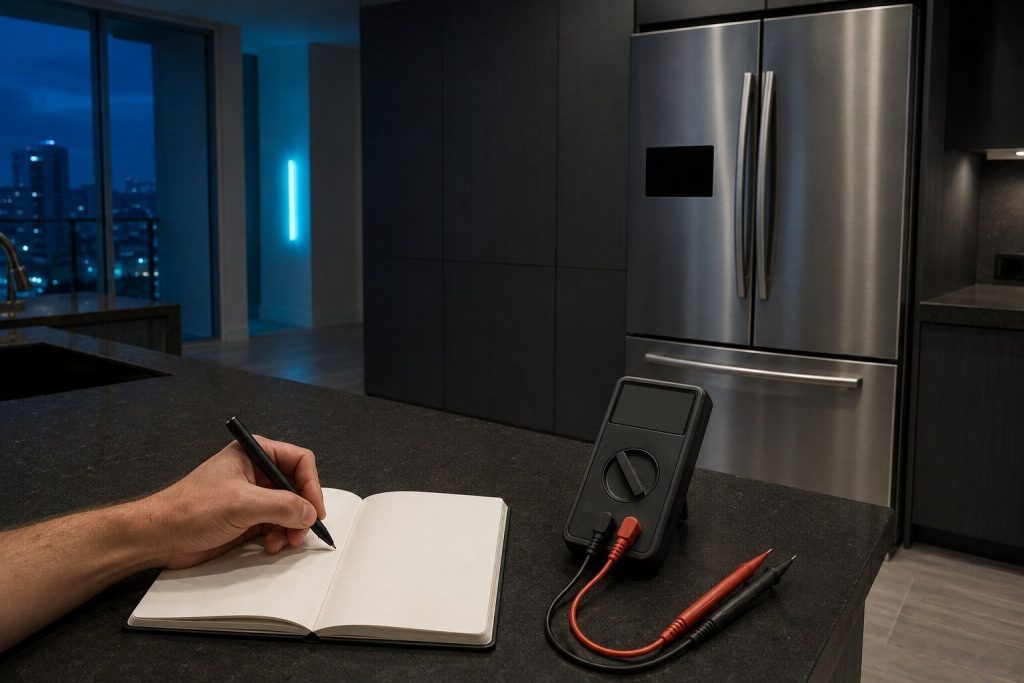
from $89 Diagnostic visit
One visit, one technician, one answer in writing. On a Whirlpool the first question is whether the appliance is talking, because this make is not evenly talkative. It publishes a separate page for every code on its ranges, its ovens, its cooktops, its washers and its dryers, and it publishes almost nothing of the kind for its refrigerators and freezers. Knowing which half of the house you are standing in changes how the visit starts.
- Whether this appliance talks at all decides how the visit starts
- Laundry and cooking almost always have a code; the cold side almost never does
- Whatever we find goes to you in writing, and the visit comes off the repair
Questions people ask about this
Is a whirlpool oven control board replacement cost of a few hundred dollars reasonable?
From $265 is the band for the work on this make, and whether it is reasonable depends entirely on what was measured first. The board is a fair diagnosis when the output is dead with the load disconnected, dead on every cycle that uses it, and the sensor feeding it reads correctly. If none of that was done, the figure is not the problem — the diagnosis is. Ask what was measured before you agree to the part.
What are the three questions to ask?
One: is it still dead with the load disconnected? That takes the element, valve or motor out of the argument. Two: is it dead on every cycle that uses that output, or only on one program? A single misbehaving program is far more often a setting, a lockout or a sensor than a board. Three: has the sensor feeding it been read, and did it read correctly? Any technician who has genuinely diagnosed a board can answer all three without hesitating.
Which parts fail more often than the board?
The oven temperature sensor, first and by a distance, and a sensor service is from $125. Then the bake or broil element itself, which fails visibly more often than any electronics in the appliance. Then the wiring and connectors to both — a scorched terminal at an element is a common finding and it is what a board gets blamed for. An oven not heating repair covering those starts at $155.
Should I replace the board myself to save money?
Two problems with it, and neither is difficulty. The first is that a board fitted to a machine whose real problem was a shorted element usually fails again, so the money buys one repair and one lesson. The second is that boards are frequently non-returnable once fitted, so a wrong guess is not recoverable. If the three questions have honest answers, fitting one is a straightforward job. If they have not been asked, the part is a gamble regardless of who installs it.
When is a board simply not worth doing?
On an appliance past about ten years where the board is a large fraction of what a replacement machine costs, and something else is already tired. On a Whirlpool range — a six-hundred to eleven-hundred dollar machine rather than a five-figure built-in — that arithmetic arrives sooner than owners expect, and we would rather say so on the visit than sell the part. On a wall oven the answer often goes the other way, because a replacement means the cabinet opening as well as the appliance.
Cost Expectations
More guides like this one
-
Repair or Replace a Whirlpool Washer: the Arithmetic on a Volume Brand
A six-hundred to eleven-hundred dollar machine, and two forces pulling the decision in opposite directions. Only two repairs actually approach the price of it.
Read more -
What It Costs to Fix a Whirlpool Dryer, Job by Job
The cheapest major appliance in the house to repair, with a wide spread — and the most common dryer repair is not a repair at all.
Read more
Tell us the model number and what it is doing.
This article is based on:
- Official manufacturer documentation
- Internal repair procedures
- Technician repair history
- Company quality standards