Common Problems
A Washer That Walks: Telling the Load Apart From the Floor
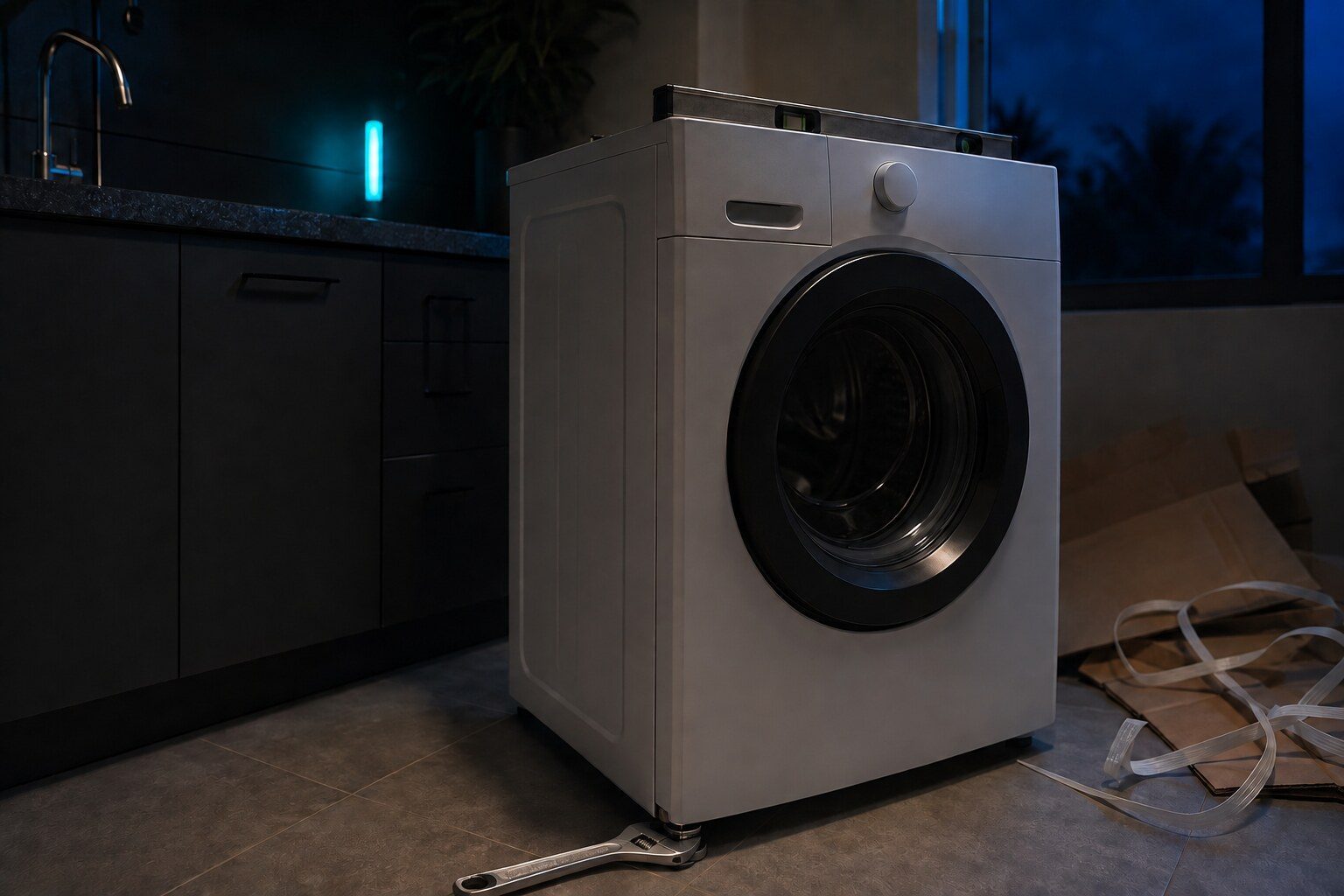
Run the test before you touch anything. Put three or four similar towels in, spread evenly around the basket, and run a spin-only or drain and spin cycle. A machine that spins quietly has no mechanical problem at all, and what you have been fighting is the loading: one heavy item, a load that migrated to one side, or a basket packed past what it can balance. A machine that still walks with an even load has a leveling or suspension problem, and the checks go in that order. All four feet firmly on the floor with no rocking on the diagonals, then the rear feet, then the shipping bolts if the machine is new, then the suspension. The last part of the answer is not the machine at all. A washer on a wooden platform in a second-floor laundry closet will amplify a wobble that a concrete slab downstairs would absorb completely, and the same machine can be acceptable in one apartment and unbearable in another.
The full guide
What causes my Whirlpool washer to shake violently: run this first
Three or four similar towels. Spread them evenly around the basket. Run a spin-only or drain-and-spin cycle. Stand and watch.
That test separates the two problems that arrive as the same sentence, and it costs nothing.
It spins quietly. Nothing is wrong with the machine. What you have is a loading habit, and no part will fix it.
It still walks. Now it is worth opening the toolbox, and the order below goes from free to expensive.
Why one heavy item is so much worse than a full load
A washer balances by having enough separate items to redistribute themselves as the basket turns. One dense thing has nothing to balance against. It sits on one side, and the force it produces grows with the square of the spin speed, which is why a load that seemed fine through the wash goes berserk in the last two minutes.
Whirlpool takes this seriously enough to publish a page on it. Under Vibration for its top load washers there is one called Vibration when washing a single item, sitting alongside the general out-of-balance page. The maker's answer and ours are the same: give it company.
A bath mat with a rubber backing is the worst single item in a South Florida laundry closet, because it absorbs water on one face and holds it. Jeans are second. A single pillow floats, which produces its own version of the same problem.
Level is not the test. Rock is.
People check with a level, find it reads true, and conclude the machine is set up correctly. That is the wrong test.
A washer can read perfectly level and still have one foot barely touching the floor, because a floor is not a plane and a cabinet is stiff. The moment the basket pushes sideways, the machine tips onto three feet and drops back. That is a rock, and it is what produces the banging.
Test it by hand. Press down firmly on two opposite top corners, then on the other two. Any movement at all is too much. The correction goes to the foot that lifts: lower it until the rocking stops.
Then lock it. Most feet have a locknut that tightens up against the underside of the cabinet, and a foot that is left free to turn will vibrate itself back out over a few months. A machine that was fine when it was installed and is not fine now is very often exactly this and nothing else.
Rear feet on many top-loaders are self-adjusting: you tilt the machine forward onto its front feet, set it back down, and they find their own height. Doing that after moving a machine is worth thirty seconds.
The floor is part of the machine
This is the part that gets left out, and in Miami it explains more calls than the suspension does.
A washer standing on a concrete slab is standing on something that will not move. Whatever the machine does, the slab absorbs. The same machine on a wooden platform in a second-floor laundry closet, or on a raised pedestal, is standing on something with its own flex and its own resonance. It does not just transmit the vibration, it can amplify it at particular speeds.
So the same model can be quietly acceptable in a ground-floor townhouse and genuinely alarming in the apartment above. Nothing is wrong with it. It is in a worse place.
Two things help. Shimming the platform so it does not flex under the machine's own weight is the first, and it does more than most people expect. Moving the machine so its feet sit over the platform's joists rather than between them is the second.
When it is the machine after all
If the load is even, the feet are locked down, the floor is solid and it still walks, the machine has a suspension problem.
On a top-loader that means the suspension rods that hang the tub, which wear and stop damping, and which are replaced as a set of four rather than one at a time. On a front-loader it means the shock absorbers under the drum, replaced in pairs for the same reason. Both are inexpensive stocked parts on this make.
One thing that is not this page: a machine that roars on spin like a jet taking off, rather than banging and moving. That is a bearing, it is a much larger job, and it is worth knowing before anybody starts pricing suspension parts.
If it turns out to be a repair
What this leads to, and what it costs
Every job on this site is priced the same way: an on-site diagnostic first, the figure agreed in writing before anybody starts.
-
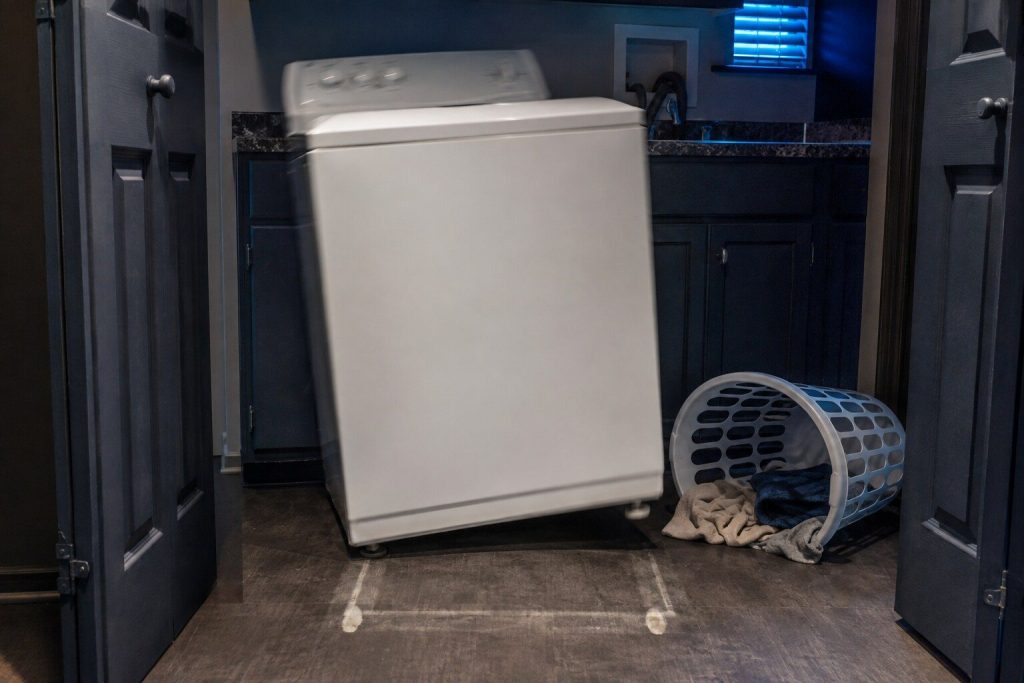
The whole laundry closet shakes at the end of every cycle Washer walks across the floor or bangs on spin
A washer that moves is telling you something specific: the drum is spinning a load it cannot balance, on a cabinet that is not sitting square. Whirlpool publishes three separate pages on vibration for a reason — it is a common report, and the first two causes are things anybody can check with their hands.
- Leveling comes first, and a washer over a tile floor moves out of level on its own
- A machine that bangs on every spin will eventually destroy its own suspension
- Shipping bolts left in a new front-loader produce a noise nobody forgets
-
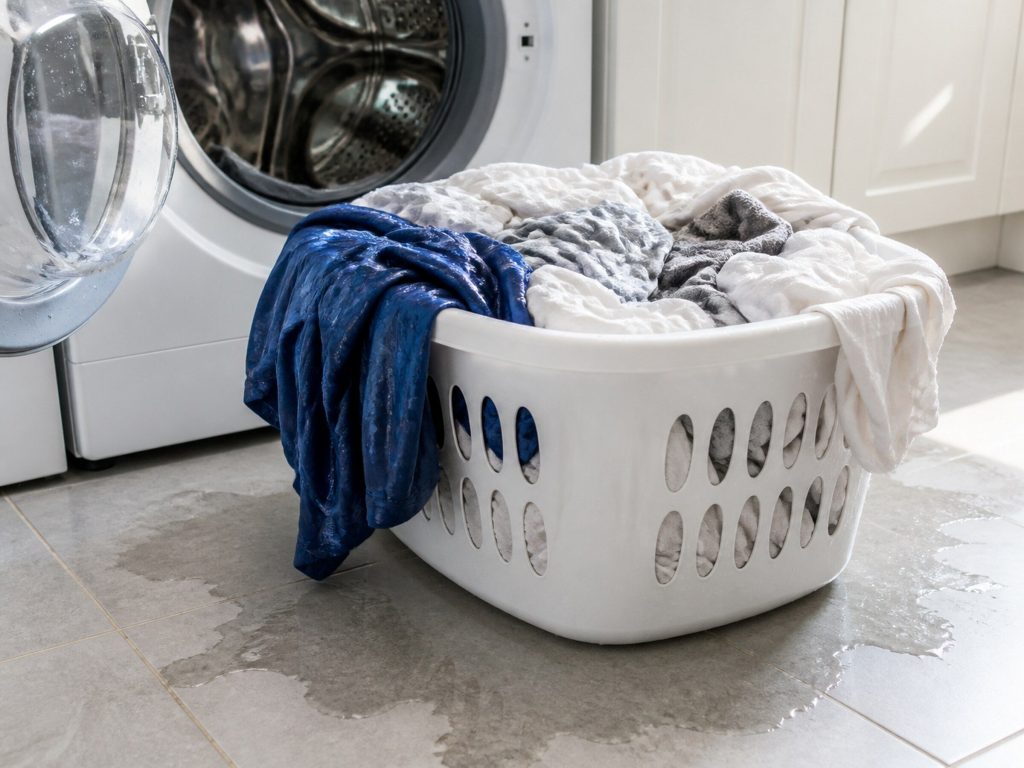
The cycle finishes and the load comes out soaked Washer will not spin
A load that comes out heavy and dripping has either not been spun or has been spun at a speed the machine chose for itself. Whirlpool machines lower the spin speed on their own when they cannot balance the drum, which is why a bath mat washed alone is the single commonest cause of this call, and the one that costs nothing.
- uL and oL are the machine telling you about the load, not about itself
- A top-load HE washer with no agitator balances by sensing weight, and one heavy item defeats it
- F7 E1 is a motor speed problem, and it is the point where the visit stops being free advice
-
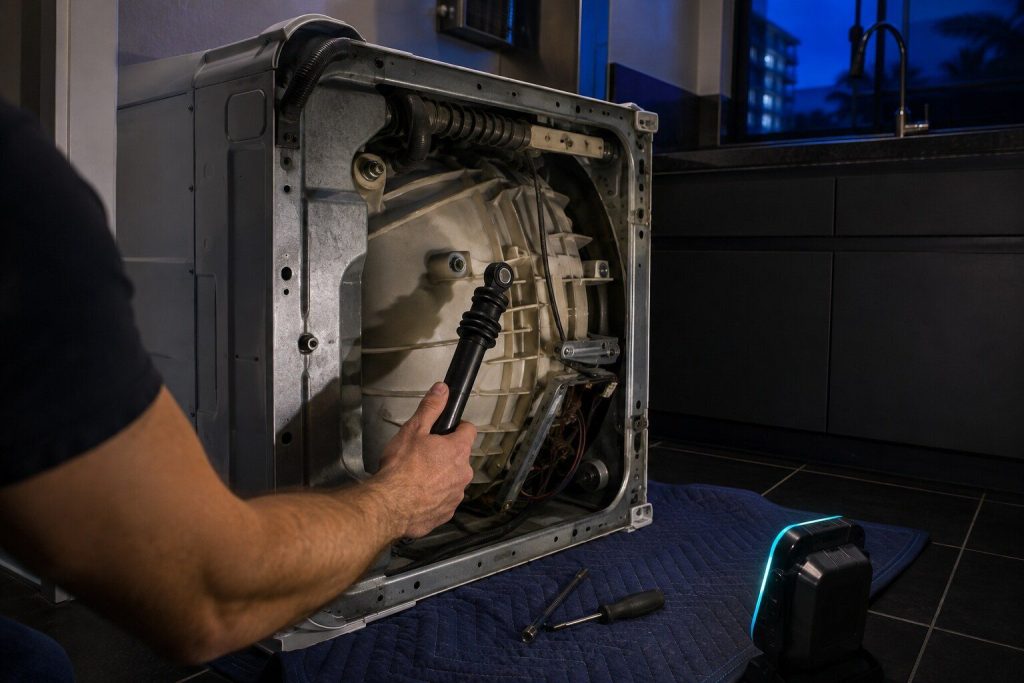
from $195 Washer not spinning and balance repair
A load that comes out soaked is not always a spin failure. Whirlpool machines abort or reduce spin deliberately when they cannot balance the drum, and this make publishes an unbalanced reading and an overload reading as separate things from an actual mechanical problem. Reading the difference correctly is what keeps this from becoming an unnecessary parts bill.
- Unbalanced and overloaded are published readings and they are not part failures
- Suspension, dampers and the shipping bolts are checked before the drive
- Leveling is part of the repair, not an afterthought

Questions people ask about this
It only does it on the fast spin.
That is expected and it is how the physics works. An off-center mass produces a force that grows with the square of the speed, so a small imbalance that is invisible at wash speed becomes violent at final spin. It means the imbalance is small, not that the problem is imaginary.
Washing one pair of jeans makes it jump across the closet.
A single dense item is the hardest load there is, and Whirlpool publishes a page on exactly that case under Vibration for its top load washers. One item has nothing to balance against. Add two or three similar things, or use a cycle intended for a small load, and the same machine behaves.
The machine is level. I checked with a phone app.
Level and stable are different tests, and stable is the one that matters. A machine can read level and still rock, because one foot is not carrying weight. Press down on two opposite top corners, then the other two. Any movement means a foot is short, and the shim or the adjustment goes to the foot that lifts.
Is it worth repairing a washer that walks?
Usually yes, and the reason is that most of these are not repairs. Leveling is free, a load habit is free, and a set of suspension rods or shock absorbers on this make is an inexpensive stocked part rather than an order. Where the arithmetic changes is a machine with a worn bearing, which is a much bigger job, and that one announces itself as a roar on spin rather than as a walk.
Common Problems
More guides like this one
-
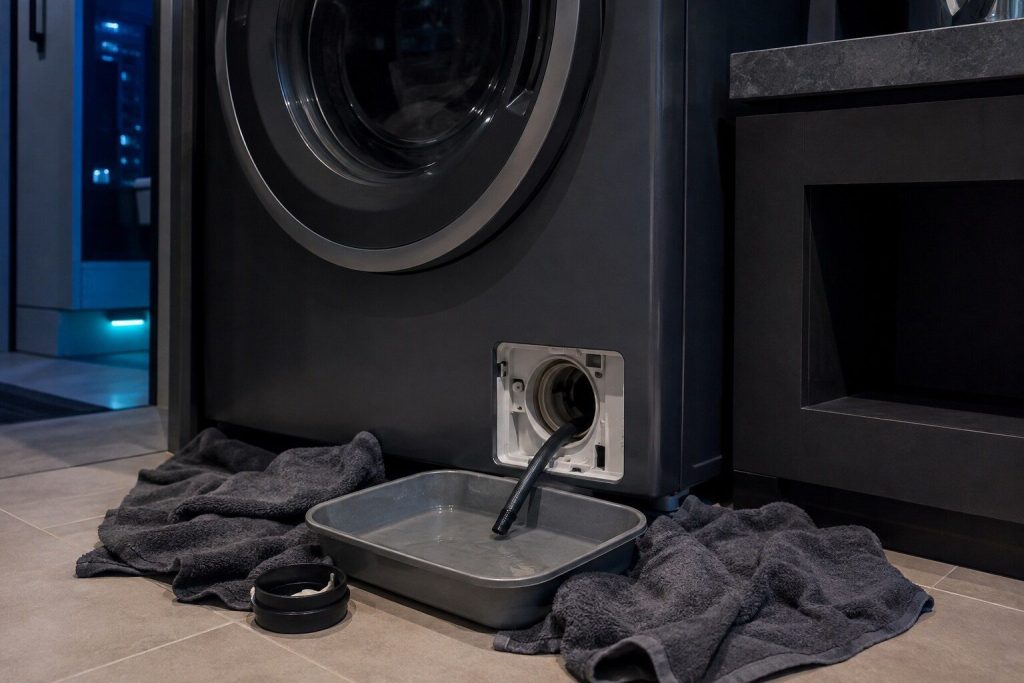
A Washer Stopped Full of Water: Top-Load and Front-Load Are Not the Same Job
A Whirlpool washer not draining water is two different machines with two different answers: a front-loader has a pump filter the maker tells you to clean, and a top-loader does not.
Read more -

A Whirlpool Washer That Sits on Sensing, and What It Is Actually Doing
Sensing is not a pause before the wash. It is a measurement, and a machine that will not leave it is reporting that one of the three things it measures did not come back.
Read more -
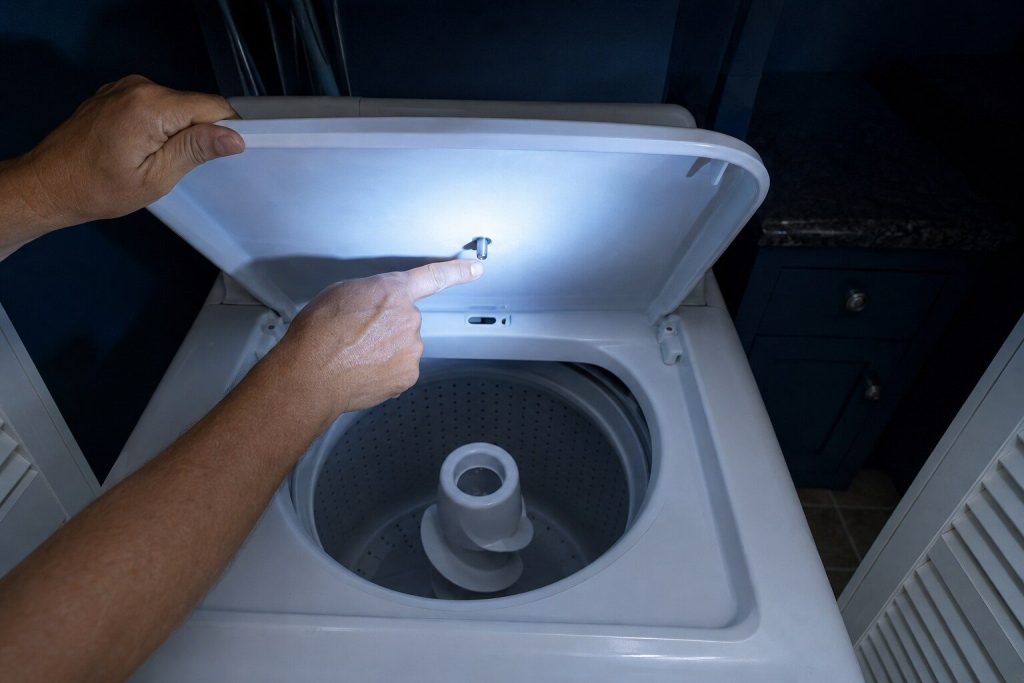
The Lid Lock Light Is Flashing and the Washer Will Not Start
A flashing lock is not a broken lock. It is the machine saying it tried to lock and never got the confirmation back, and two of the four things in that chain cost nothing.
Read more
Tell us the model number and what it is doing.
This article is based on:
- Official manufacturer documentation
- Internal repair procedures
- Technician repair history
- Company quality standards