Maintenance & Prevention
How Often a Whirlpool Washer Actually Needs Cleaning in Florida
The machine asks for itself. Whirlpool publishes a Clean Washer light that comes on after a set number of cycles rather than after a set number of days, so a household doing ten loads a week reaches it far sooner than one doing three. Treat the request as a floor rather than a target here, because the count assumes an average climate and South Florida is not one. The calendar that works is four intervals. After every wash, leave the door and the dispenser drawer ajar and move wet laundry out promptly, which does more than any product. Every month, run the Clean Washer cycle with the drum completely empty and a tub cleaner or a measured dose of bleach, and then wipe the door seal fold by hand, because the cycle flushes the drum and the fold is outside it. Every few months, take the dispenser out and wash the housing it slides into. Once a year, look at the hoses and the machine's leveling. Two of those places are where the smell actually lives and neither is in the drum: the fold at the bottom of the rubber door seal, and the back of the dispenser housing.
The full guide
How often should I clean my Whirlpool washer
Monthly, and the machine will usually ask for itself before that.
Whirlpool publishes a Clean Washer light on its washers, and the important thing about it is what it counts. It is triggered by a number of cycles, not a number of days. A household running ten loads a week reaches the count in a few weeks. A retired couple running three loads a week can go two months without seeing it.
That is a sensible design for an average climate. South Florida is not an average climate, and the thing doing the damage here is time spent damp rather than loads run.
So: treat the count as a floor. Put the cleaning on a calendar and let the light be a second opinion.
What the humidity actually changes
A front-loading washer has two design features that make it excellent at washing and vulnerable to smelling.
It uses very little water, which is the point, and which also means detergent residue is more concentrated and less of it is flushed away.
And it seals with a folded rubber boot. Whirlpool publishes a page on exactly this — water remaining in the door seal of a front load washer — because a spoonful of water sitting in the fold at the bottom of the door opening is normal and expected behavior, not a leak.
In a dry climate, that water evaporates between loads. In a laundry closet with a louvered door and no air movement, in a house that sits at high humidity nine months of the year, it does not. What grows there is a biofilm, and it takes weeks rather than seasons.
The four intervals
After every wash. Leave the door ajar and pull the dispenser drawer out an inch. Move wet laundry out as soon as the cycle ends. This interval is free, takes no time, and matters more than the other three combined.
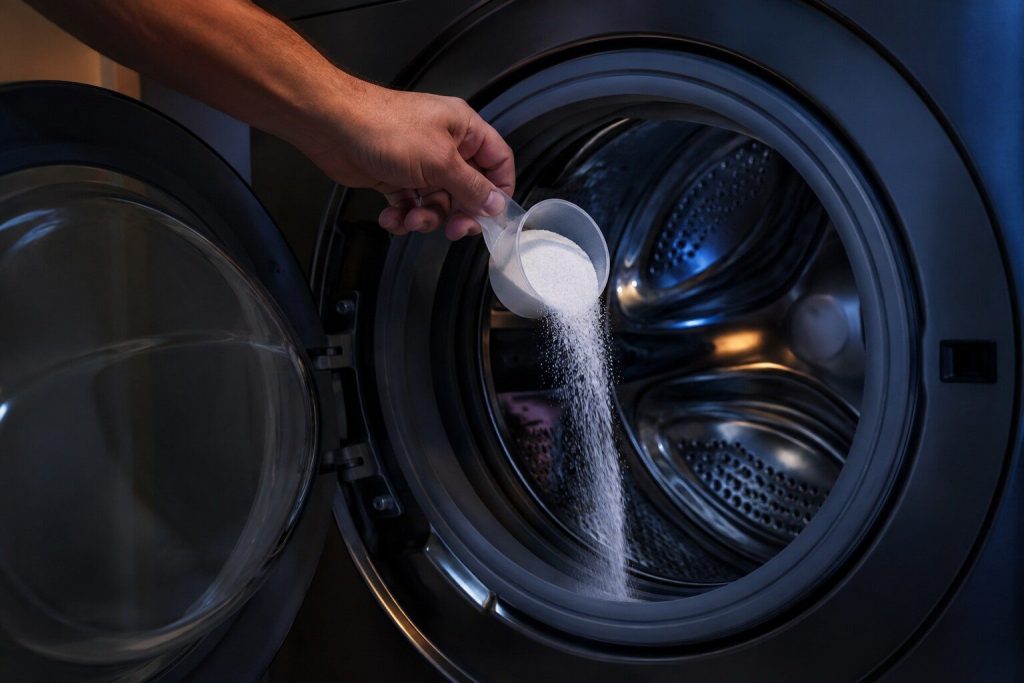
Every month. Run the Clean Washer cycle with the drum completely empty — no laundry at all, not one towel — and a tub cleaner tablet or a measured dose of bleach. It runs long and hot and flushes the drum and the sump with far more water than a wash.
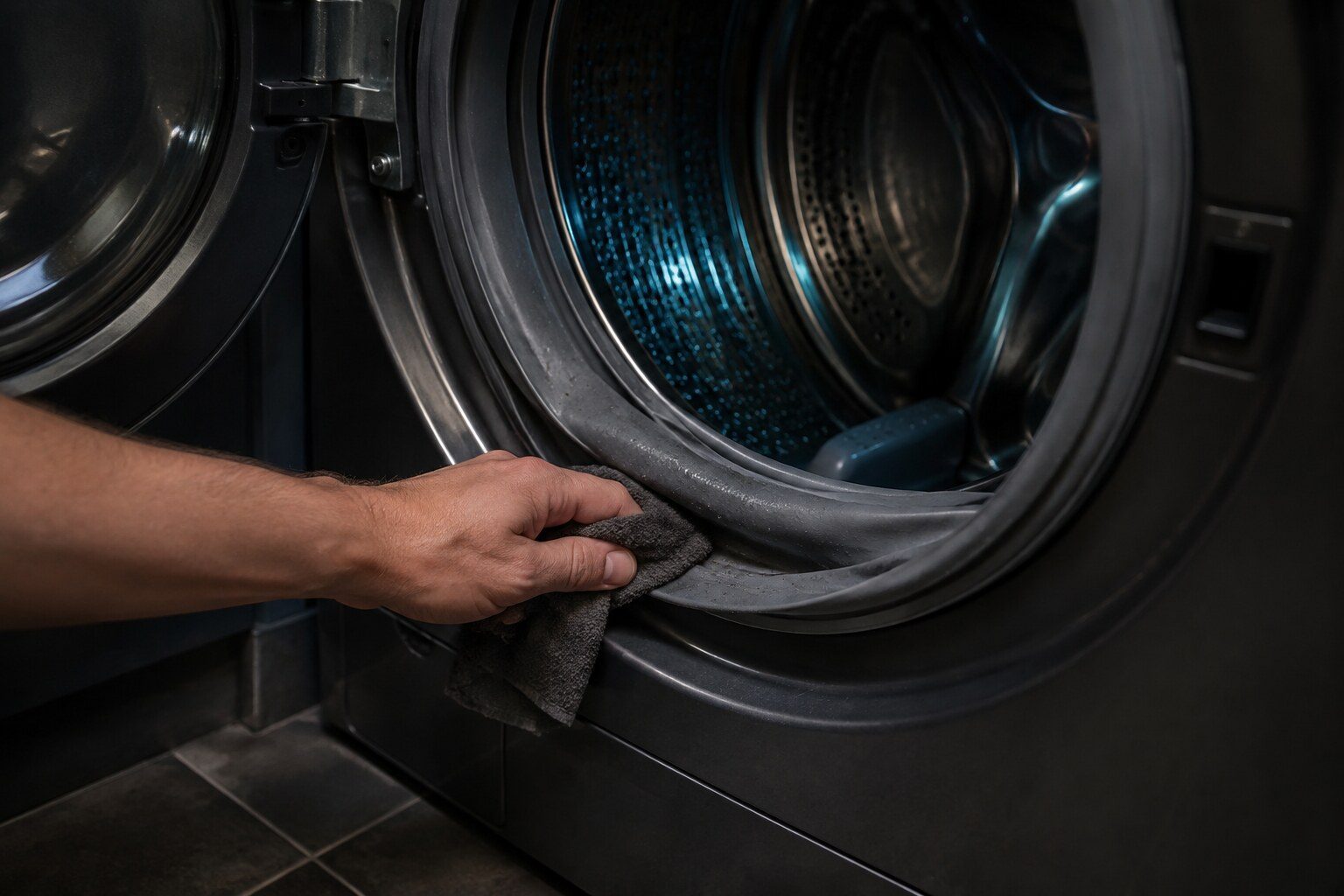
Then, while the machine is still warm, wipe the seal. This is the part that is not optional and the part everybody skips.
Every few months. Pull the dispenser out and wash it in the sink, including the housing it slides into. Whirlpool publishes cleaning pages for the drawer on the front-load side and for the dispenser on the top-load side, which tells you something about how often it needs doing.
Once a year. Look behind the machine. Fill hoses go hard and crack, and a washer that has walked a little sits off its leveling and works harder than it should.
What the cycle cannot reach
This is the sentence that saves people three wasted clean cycles.
The maintenance cycle flushes the drum. The smell lives in the fold of the seal, which is outside the drum, and in the back of the dispenser housing, which the water only passes through.
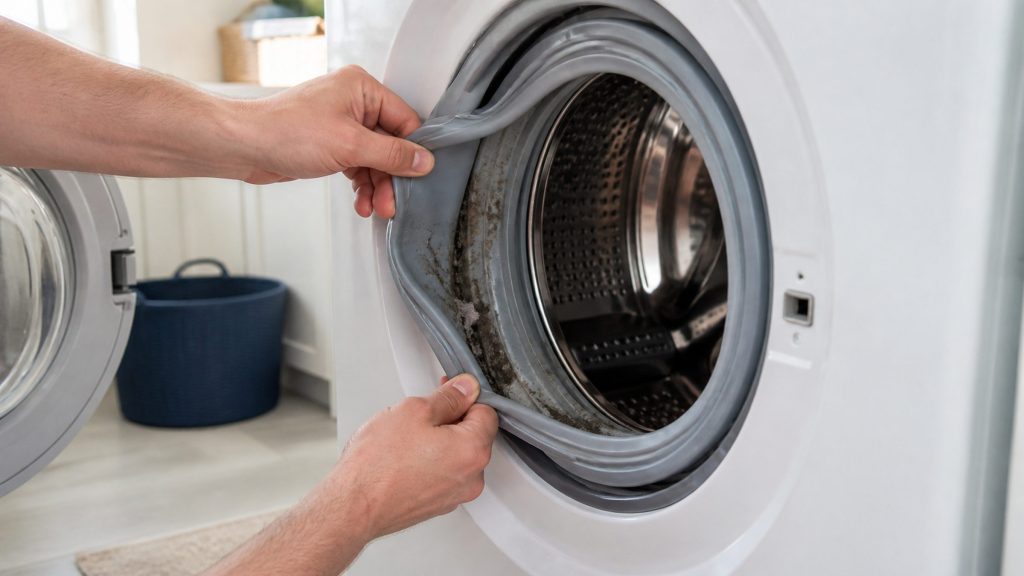
Neither is reached by any cycle, at any temperature, with any product in it. Both are reached by a cloth in about four minutes: roll the rubber lip back all the way around and wipe the underside of it, expecting the cloth to come out gray, and then pull the drawer and wash the recess behind it.
Run the cycle and skip that, and the machine is clean where you cannot smell it and dirty where you can.
The published asymmetry between the two machines
Worth knowing before you go looking for instructions that do not exist.
Whirlpool's front-load branch publishes a page on cleaning the door seal. So does its laundry tower branch and its all-in-one. The top-load branch publishes none — its whole cleaning and maintenance section is the dispenser, the interior, the exterior, moving the machine, removing odor, and winter storage.
That is not an oversight. A top loader has no boot gasket, so it does not have the part that causes most of the trouble. It still wants the monthly cycle and the dispenser cleaned, and its residue problem tends to sit in the outer tub rather than at the door.
The winter storage page, incidentally, is one you can safely ignore in Miami-Dade.
The detergent problem underneath all of it
Most households use roughly twice what they should.
A high-efficiency machine uses a fraction of the water an old one did and needs a corresponding fraction of the soap. The excess does not rinse away — it accumulates in the tub, the seal and the dispenser, and it holds moisture, which is what feeds everything on this page.
If the machine has started reporting excess suds and adding rinse time to its own cycles, that is not a failure. It is the washer telling you the same thing this page is.
If it turns out to be a repair
What this leads to, and what it costs
Every job on this site is priced the same way: an on-site diagnostic first, the figure agreed in writing before anybody starts.
-
The laundry comes out of a clean machine smelling worse than it went in Washer smells musty
This is the most South Florida call on this whole site. A front-load washer holds a small amount of water in the door seal and the drain path by design, and nine humid months a year keeps a closed laundry closet at a temperature and a humidity where that water grows something. The machine is not broken. It is being asked to dry out in a room that never does.
- The odor lives in the door gasket and the dispenser, not in the drum
- A washer in a closed laundry closet in August never dries out between loads
- Whirlpool publishes a Clean Washer cycle and a CL reminder for exactly this
-
from $119 Appliance maintenance
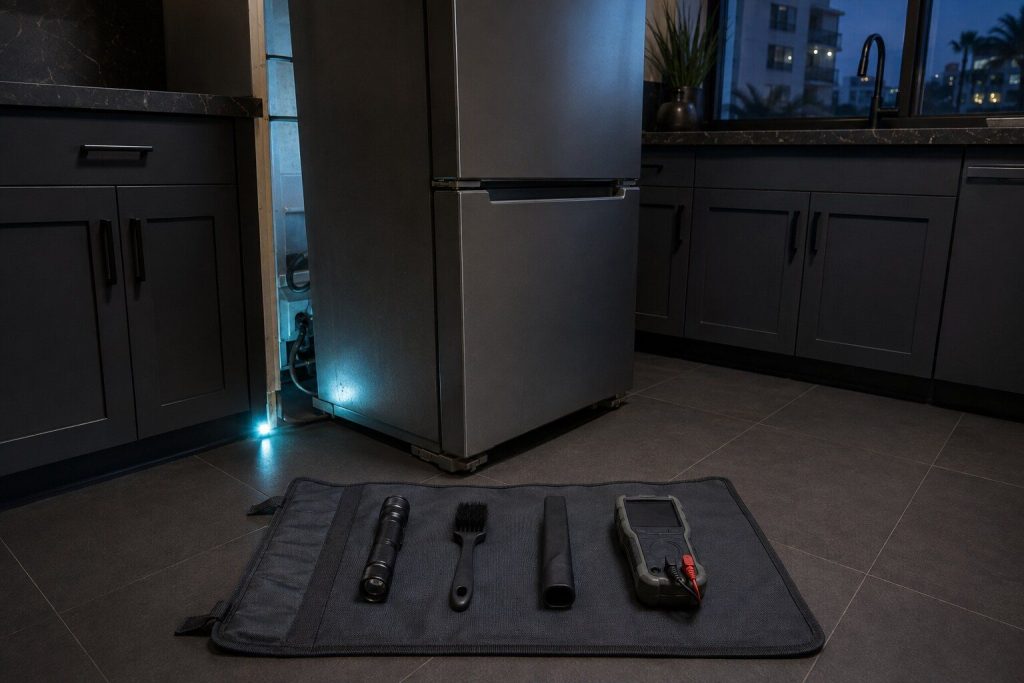
Nothing on this list saves an owner more money and nothing is booked less often. Whirlpool builds appliances that will run for fifteen years in an ordinary house, and what usually ends them early is a maintenance item rather than a design one: a coil under a blanket of dust, a drain pump filter that has never once been opened, a duct that has closed a little further every year. This make publishes cleaning instructions for every one of those. Almost nobody has read them.
- One visit across everything you own, priced on time rather than per machine
- The washer drain pump filter, which is the most neglected part in South Florida
- You keep a written list of what is closest to failing
-
from $99 Washer excess suds service
This is one of the few repairs that usually ends without a part, and it is worth its own page because Whirlpool publishes a specific reading for it on both its top and front loaders. Too much detergent, or the wrong kind, produces a foam blanket that the machine cannot pump, so it pauses, adds rinses, extends the cycle, and eventually reports. The owner sees a slow machine and assumes a pump.
- A published reading on this make, not a guess about your detergent
- Long cycles and poor rinsing usually arrive together with this
- Ends with a purge and a dosing conversation more often than with a part
Questions people ask about this
How often should I clean my Whirlpool washer if the light has not come on yet?
Monthly, and do not wait for it. The reminder counts cycles, so it is measuring how much work the machine has done rather than how long moisture has been sitting in it — and in a laundry closet at eighty percent humidity, time is the thing that matters. A household that washes twice a week can go two months without triggering the count while the door seal has been damp the entire time. Put it on the calendar and let the light be a second opinion.
Can I run a load during the clean cycle to save time?
No, and it defeats the purpose. The cycle is flushing residue out of the drum and the sump with more water and more heat than a normal wash, and anything absorbent in there soaks it back up and holds it. It also runs hotter than a wash cycle, which is hard on fabric. Empty means empty, including the one towel people always try.
Does a top loader need this as much as a front loader?
Less, and the maker's own documentation shows the difference. The front-load branch publishes a page on cleaning the door seal, because a front loader seals with a folded rubber boot that holds a little water after every wash. The top-load branch has no such page at all — its whole cleaning section is the dispenser, the interior, the exterior, moving the machine and removing odor. A top loader still needs the maintenance cycle and the dispenser cleaned. It simply does not have the one part that causes most of the trouble.
Bleach or a tub cleaner tablet?
Either. Whirlpool publishes guidance on both, including a page on cleaning washers with its own branded tablet. A tablet is tidier and harder to overdo. Bleach is cheaper and needs measuring rather than pouring, because more of it does not clean better and does shorten the life of the seals it sits against. What matters far more than the choice is doing it at all, and then wiping the seal afterward.
Why does the laundry smell and the machine does not?
Because the biofilm is not where you are smelling. It grows in the fold of the door seal and in the back of the dispenser housing, both of which stay damp and neither of which gets air. The drum dries and smells of nothing. Then a load of towels sits against the seal for two minutes on its way out, and the smell leaves in the laundry. That is why three clean cycles in a row often change nothing and one wipe with a cloth does.
Is leaving the door open actually enough on its own?
It is the single most useful habit on this page. Biofilm needs standing moisture, and a drum and a seal that dry between loads do not grow one. Leave the door ajar, pull the dispenser drawer out an inch, and where the laundry closet has a door, leave that open too. In a household with small children a washer door left open is a hazard worth weighing, and where it is safe it beats every product sold for the purpose.
Maintenance & Prevention
More guides like this one
-
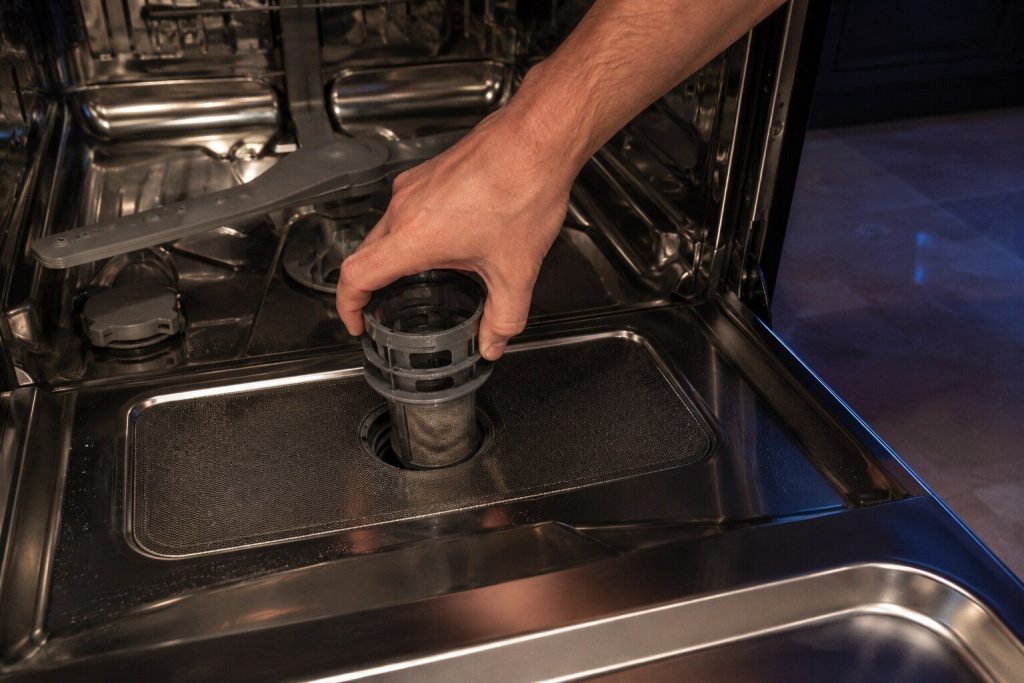
The Filter Whirlpool Files Under Not Draining, and What That Tells You
Poor cleaning and poor draining have one cause in common, and it twists out by hand. Nobody told the owners of the newer machines that a chore had appeared.
Read more -
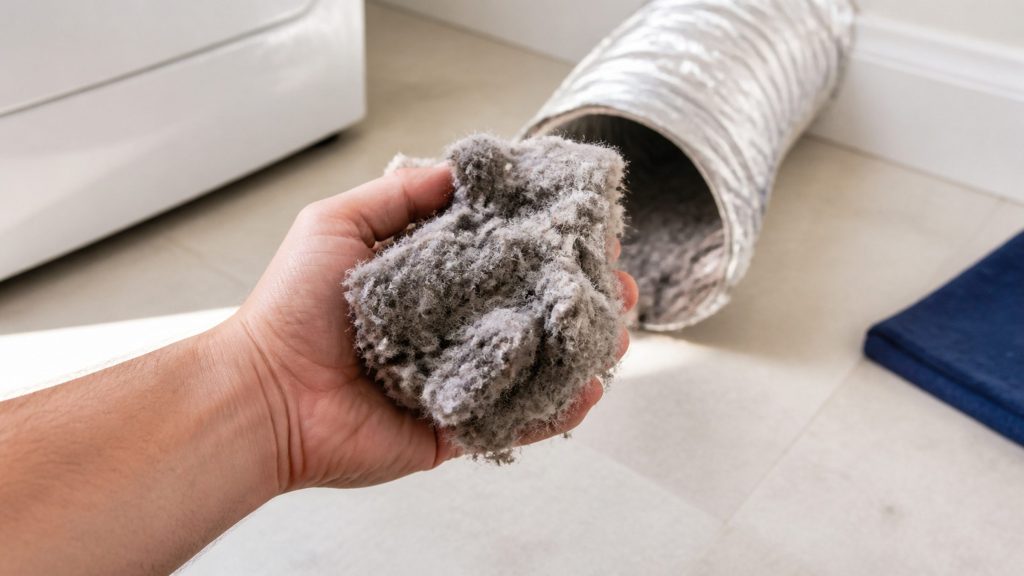
You Clean the Lint Screen Every Load. That Is Not the Part That Blocks.
The screen catches what it catches. The rest goes down the duct, which is why a machine with a spotless screen can still be starving for air.
Read more -
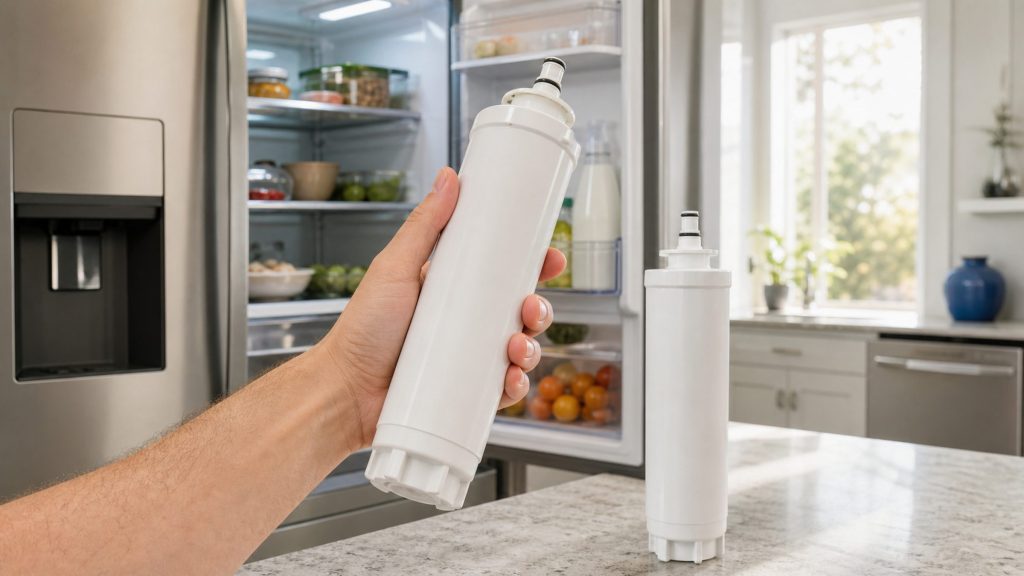
How Long a Whirlpool Refrigerator Water Filter Really Lasts in South Florida
Six months is the label, and the label assumes water that is not this. The half nobody publishes is what the machine does for the day after you change it.
Read more
Tell us the model number and what it is doing.
This article is based on:
- Official manufacturer documentation
- Internal repair procedures
- Technician repair history
- Company quality standards