Maintenance & Prevention
You Clean the Lint Screen Every Load. That Is Not the Part That Blocks.
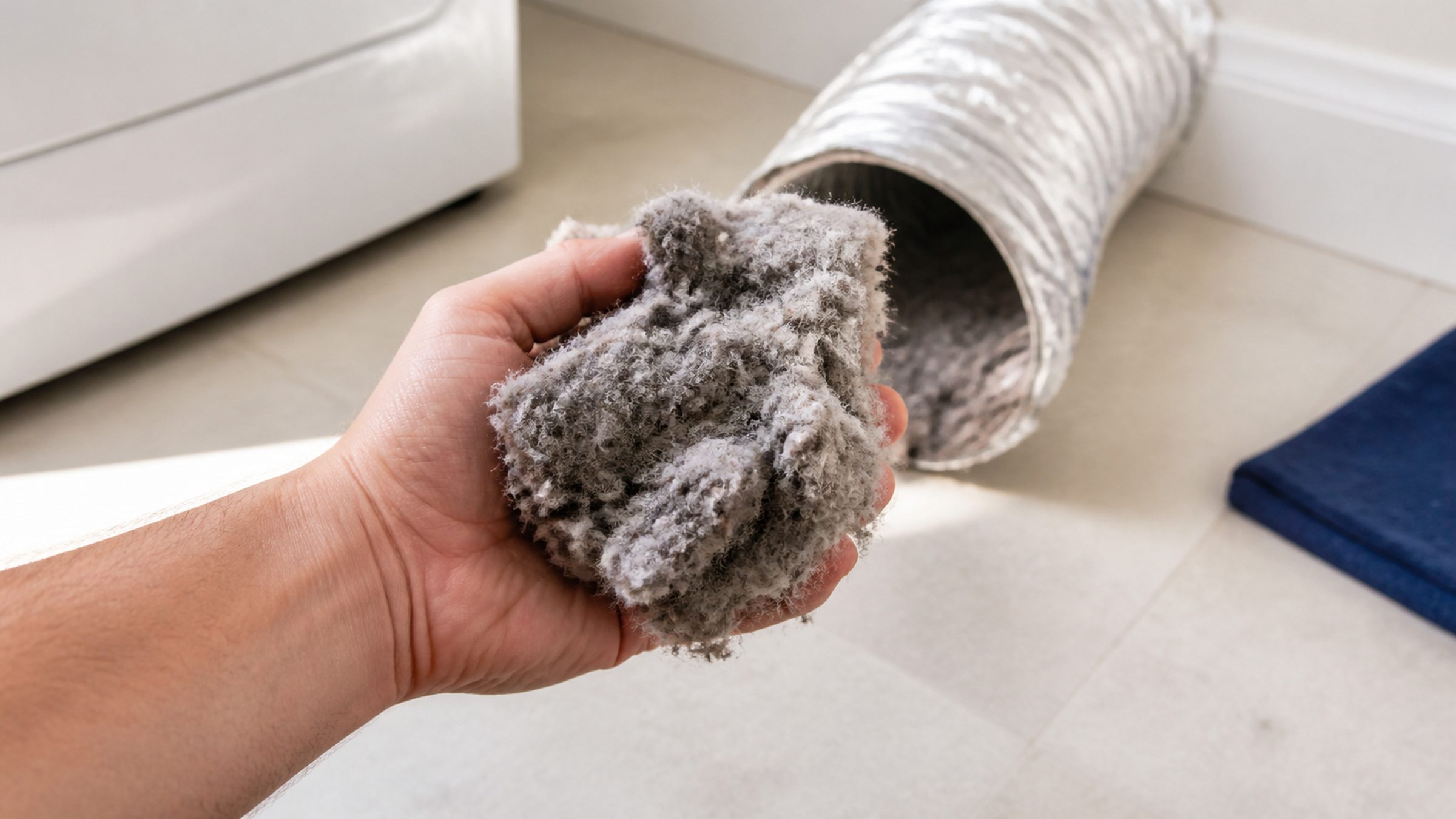
Three separate jobs on three separate intervals, and only the first one is the lint screen. Every load, pull the screen and clear it with your fingers, and once a month wash it under a running tap: if water sits on the mesh instead of running through, there is a film of fabric softener across it and the screen is restricting air while looking perfectly clean. Once a year, vacuum the housing the screen drops into, because what gets past the mesh settles there and never leaves on its own. And on a schedule, deal with the duct run and the flap outside, which is the part nobody owns and the part that actually blocks. In South Florida the flap is the place to start: a louvre painted shut, glued closed with damp lint, or covered by a screen somebody fitted to keep lizards out, restricts the entire run from the far end where nobody looks. Whirlpool takes this seriously enough to publish a page on ordering a vent testing kit, a video on checking the outside exhaust hood, and a video on checking for crushed venting, and it reports a restricted run as AF or Check Vent.
The full guide
How to clean Whirlpool dryer lint trap, and why that is not the whole job
Pull the screen, roll the lint off with your fingers, put it back. Every load. That takes eight seconds and it is genuinely worth doing.
It is also about a fifth of the maintenance this machine needs, and the least important fifth for the problem people actually have.
A dryer does not dry clothes with heat. It dries them by moving hot air through them and carrying the moisture away. Everything about its performance depends on that air leaving freely. The screen is the first thing in the path and the only thing anybody cleans.
Three jobs, three intervals, three different things being protected
The screen, every load. This protects the load and the drum. A screen buried in lint means damp clothes and a long cycle today.
The housing beneath the screen, once a year. This protects the airflow. Whatever gets past the mesh — and plenty does — settles in the slot the screen drops into, and it does not leave on its own. A narrow vacuum crevice tool reaches it in two minutes, and what comes out of a housing that has never been done is not a small amount.
The duct run and the flap outside, on a schedule. This protects the house. It is the part nobody bought, nobody owns and nobody looks at, and it is the part that blocks.
The screen that looks clean and is not
Fabric softener and dryer sheets leave a residue, and over months that residue builds into a film across the mesh. It is invisible. It does not come off with a finger. And it can cut the airflow through a screen badly while the screen looks spotless.
The test takes ten seconds. Hold the screen under a running tap. Water should pass straight through as though the screen were not there. Water that beads on the surface or pools in the frame is a screen that is restricting air.
Scrub it with a soft brush and a little dish soap, rinse it, and let it dry completely before it goes back in. Once a month is plenty.
One caution from the maker, and it is worth respecting. Whirlpool's own instruction for clearing the lint itself is to roll it off dry with your fingers, and it says not to rinse or wash the screen to remove lint, because wet lint is much harder to get off. Those two things are not in conflict: lint comes off dry, every load, and the wash is an occasional job for the invisible film, after which the screen goes nowhere near the machine until it is bone dry.
Why the outside flap comes first in this market
Most guides put the duct run first. In South Florida, go outside first.
The flap at the end of the run is a small hinged louvre or hood, and it is supposed to swing open under the air the dryer pushes and fall shut when it stops. Four things stop that happening here, and we find all four regularly:
- Painted shut during an exterior repaint, which nobody notices because nobody watches a dryer vent.
- Matted closed with damp lint. The air leaving a dryer here is warm and wet, going into air that is already near saturated, so the lint arrives damp and sticks rather than blowing clear.
- Screened over. Somebody fitted mesh to keep lizards, wasps or geckos out. It packs solid within a season.
- Nested in. Birds find a warm, sheltered tube irresistible, and a nest in the last three feet of a run is a complete blockage with an intact-looking flap in front of it.
A perfect duct behind a closed flap is a closed duct. That is why this check comes first: it is free, it takes a minute, and it finds the problem more often than anything else on the page.
Set the dryer running on an air-only cycle, walk outside, and look. The flap should stand fully open with enough air behind it to feel on the back of your hand.
What the machine says about it
Whirlpool reports a restricted run rather than leaving you to guess. Its dryer branch files the code under a page named, in the maker's own words, AF or "Check Vent" — the vent is in the title of the error page, which is about as direct as a manufacturer gets.
It also publishes, in the same dryer section, a page on how to check venting, a page on the vent possibly being blocked or restricted, a page on ordering a vent testing kit, and videos on checking for crushed venting and on checking the outside exhaust hood.
An appliance manufacturer that publishes a testing kit for a duct is telling you plainly which part of this it expects to be the problem.
The one thing that is not optional
Everything above is about drying times and electricity bills. This last part is not.
A duct packed with lint is a duct packed with fuel, sitting behind a heat source, in a closet with a door that stays shut. That is the reason the interval on the duct is a schedule rather than a suggestion, and the reason a dryer that has started taking two cycles is worth looking at this week rather than next season.
If it turns out to be a repair
What this leads to, and what it costs
Every job on this site is priced the same way: an on-site diagnostic first, the figure agreed in writing before anybody starts.
-
from $129 Dryer vent cleaning
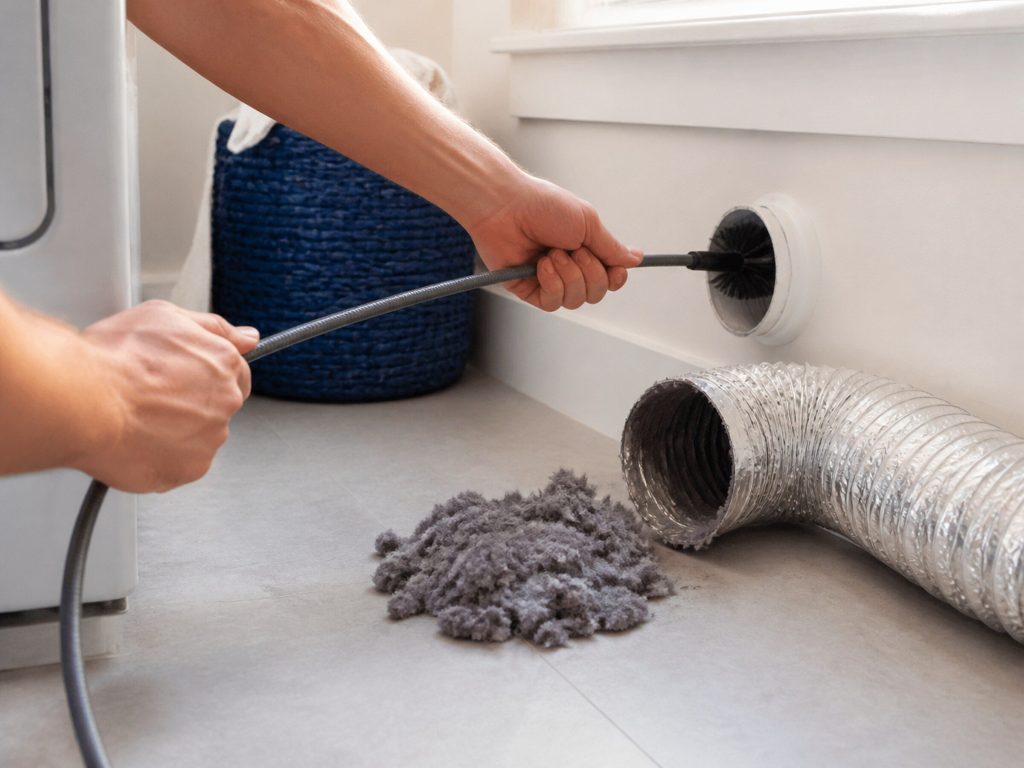
This is a safety job before it is a performance job. Lint that has been packing into a duct for years is fuel sitting next to a heat source, and long drying times are the warning. On Whirlpool dryers the machine measures the restriction itself and reports it, which is a genuine advantage — most makes leave you to notice.
- The dryer reports its own restricted-vent condition on this make
- Duct, wall hood and the transition behind the machine, all three
- Drying time measured before and after
-

Everything comes out warm and still damp Dryer takes two cycles to dry one load
This is the most common dryer call we take, and Whirlpool has a code for it that is unusually blunt. AF, printed on some machines as Check Vent, is restricted air flow, and the maker's own wording names a clogged lint screen or vent. A dryer does not dry clothes with heat. It dries them by moving hot air through them and taking the moisture out of the room.
- AF and Check Vent are the same code, and F4 E3 is the numbered version of it
- A dryer venting into a closet has nowhere to put the moisture it removes
- Long flexible ducting behind a machine pushed back into an alcove crushes flat
-
from $119 Appliance maintenance
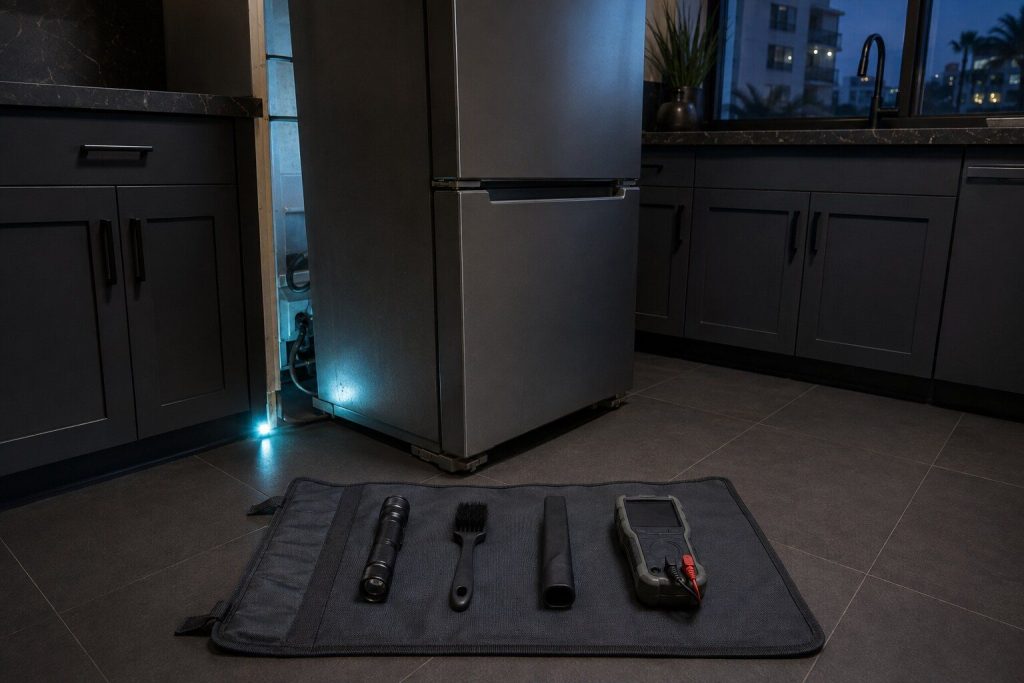
Nothing on this list saves an owner more money and nothing is booked less often. Whirlpool builds appliances that will run for fifteen years in an ordinary house, and what usually ends them early is a maintenance item rather than a design one: a coil under a blanket of dust, a drain pump filter that has never once been opened, a duct that has closed a little further every year. This make publishes cleaning instructions for every one of those. Almost nobody has read them.
- One visit across everything you own, priced on time rather than per machine
- The washer drain pump filter, which is the most neglected part in South Florida
- You keep a written list of what is closest to failing
-
Vented electric · vented gas · compact heat pump · HybridCare · laundry tower Dryers
Whirlpool publishes 114 pages on the dryer with 55 of them code pages, another 47 on the compact heat pump machine, 35 on the HybridCare ventless dryer, and 92 more of general dryer material — and that is before the laundry tower and the all-in-one branches, which have their own. The published code set runs wide: E1, E2, E3, F01 and F02, the F1 and F2 families, F20 through F31, F70 through F78, FCE1, Loc, PF, and one that no other appliance has — AF, which Whirlpool documents as Check Vent. That single code is the most useful thing this make publishes, because in South Florida a restricted vent is the leading cause of a dryer that has stopped drying and the leading fire risk in the room.
- Vented electric and gas, plus ventless heat pump and HybridCare condensing machines
- 55 published code pages on the vented dryer alone, including AF or Check Vent
- A ventless machine has no duct to blame — the condenser and its drain replace it
Questions people ask about this
My screen is always clean, so why is the dryer still slow?
Because the screen is a strainer and not a filter. It catches the fibers big enough to catch and lets the fine stuff through with the air, and that fine stuff is what packs a duct. A screen you clear every load and a duct nobody has touched since the building went up is the normal condition of a dryer that takes two cycles, and the screen being spotless is what convinces the owner it cannot be a vent problem.
What does the water test actually show?
Whether the mesh is open. Fabric softener and dryer sheets leave a residue that builds into a film across the screen, and that film is invisible and does not come off with a finger. Hold the screen under a running tap: water should pass straight through as if the screen were not there. Water that beads or pools on top is a screen that is blocking air while looking clean. Scrub it with a soft brush and a little dish soap, rinse, and let it dry completely before it goes back.
How often does the duct itself need doing?
It depends on the run rather than the calendar, so look before you decide. A short straight run out through a wall behind the machine is a different proposition from a twenty-foot run with three elbows to a roof outlet, and a laundry closet in a condo is usually the second one. The honest guide is to check the outside flap seasonally and to have the run cleared when the flap is not opening fully or when drying times have crept up. Whirlpool publishes a page on how to check venting, and a video on checking for crushed venting, which is worth ten minutes.
Someone put a screen over the outside vent. Is that a problem?
It is one of the most common restrictions we find in this market, and it packs solid within a season. A mesh fine enough to stop a lizard or a wasp is fine enough to catch damp lint, and once the first layer mats across it, everything behind it stops moving. A dryer outlet is meant to close with a flap when the dryer is off, not to be screened. If something is getting in, the answer is a proper hooded flap rather than mesh over the opening.
Maintenance & Prevention
More guides like this one
-
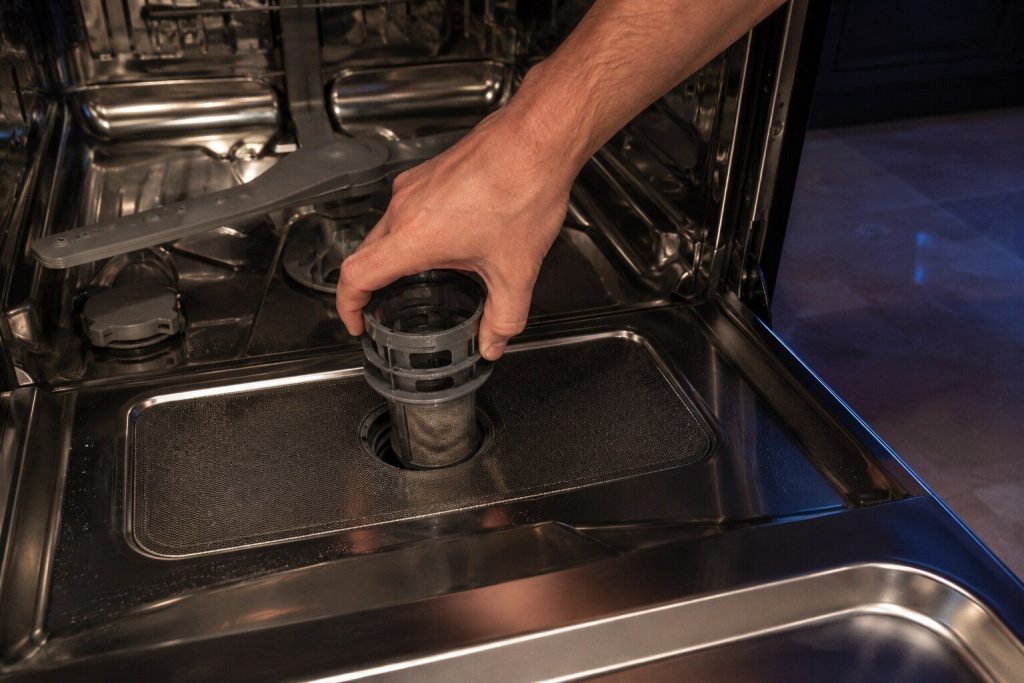
The Filter Whirlpool Files Under Not Draining, and What That Tells You
Poor cleaning and poor draining have one cause in common, and it twists out by hand. Nobody told the owners of the newer machines that a chore had appeared.
Read more -

How Long a Whirlpool Refrigerator Water Filter Really Lasts in South Florida
Six months is the label, and the label assumes water that is not this. The half nobody publishes is what the machine does for the day after you change it.
Read more -
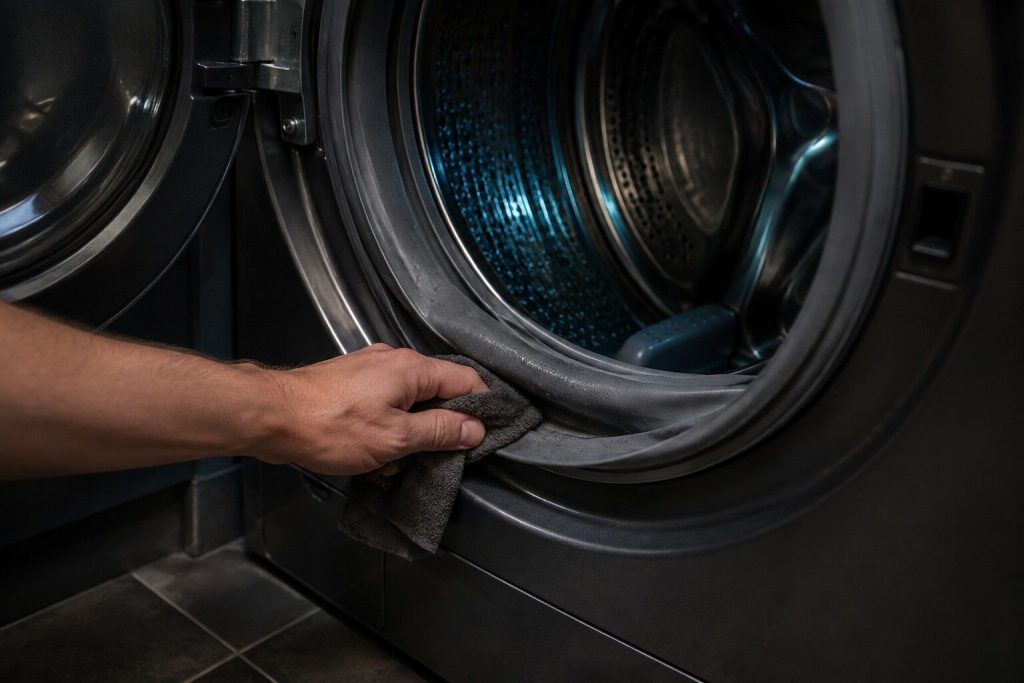
How Often a Whirlpool Washer Actually Needs Cleaning in Florida
The machine asks on a load count, not a calendar. In this climate the count is a floor rather than a target, and the two places that matter are not in the drum at all.
Read more
Tell us the model number and what it is doing.
This article is based on:
- Official manufacturer documentation
- Internal repair procedures
- Technician repair history
- Company quality standards