Maintenance & Prevention
How Long a Whirlpool Refrigerator Water Filter Really Lasts in South Florida
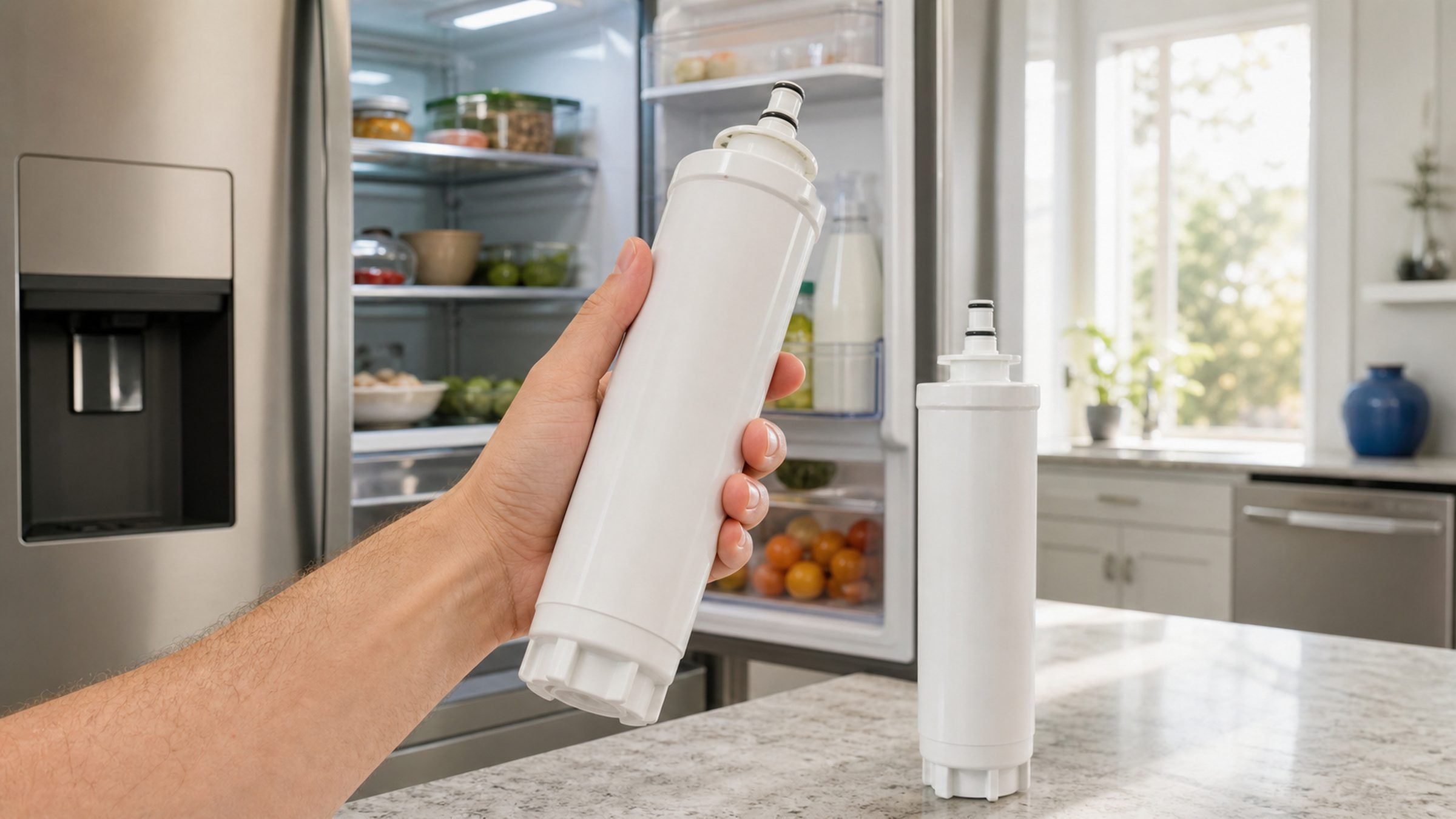
Whirlpool rates most of its refrigerator water filters at six months or about two hundred gallons, whichever arrives first, and in South Florida the gallons almost always arrive first. Hardness and sediment load a cartridge faster than the rating assumes, and a household that drinks from the door rather than the tap can pass two hundred gallons inside four months. A realistic interval here is four months for a family that uses the dispenser as its drinking water, and six for a couple who use it lightly. What matters more than the interval is what happens afterward, because Whirlpool's own support base carries more pages about the aftermath of a filter change than about the change itself: purging the line, a status light that will not reset, a cartridge that will not go in, a cartridge stuck in the housing, and a new filter that dispenses nothing. All five get read as a broken refrigerator and none of them is one. The status light is the point that catches most owners. It counts elapsed time and water drawn. It does not measure the cartridge, so it has to be reset by hand after a change, and a light still glowing above a brand-new filter means nothing at all.
The full guide
How often should I change my Whirlpool refrigerator filter? Start with the number on the box
Whirlpool rates most of its refrigerator water filters at six months or about two hundred gallons, whichever comes first.
Two numbers, because a cartridge can be finished two different ways. It can be used up by volume, which is what a household that drinks from the door does to it. Or it can simply be old — carbon sitting in warm water for months does not stay the way it left the factory.
In South Florida, the gallons usually arrive before the months do.
Why the rating is optimistic in this city
The rating assumes an average American water supply. Ours is not average in the two ways that matter to a cartridge.
Hardness. The water here carries a heavy mineral load, and while a refrigerator filter is not a softener, everything it does happen to catch loads it faster.
Sediment. Older buildings, long risers, and the ordinary disturbance of a system in a coastal city put fine material through the line that a cartridge has to hold.
Add the third thing, which is behavior rather than water: in a hot climate people drink from the dispenser. A family of four filling bottles from the door rather than the tap goes through two hundred gallons a great deal faster than a couple who use it for the occasional glass.
A working interval here: four months for a household that drinks from the door, six for a light one. If you want it exact, put a strip of tape on the inside of the door with the date on it. The appliance is not going to tell you.
The light counts. It does not measure.
This is the part that generates the most calls, and it is worth understanding before it happens to you.
The filter status indicator on a Whirlpool is a counter. It watches elapsed time and dispensed volume and turns amber, then red, when the total reaches the point where a cartridge is statistically due. There is no sensor in the housing. Nothing in the machine has looked at your filter.
Two consequences follow, and both surprise people.
A new filter does not clear the light. It has to be reset by hand — Whirlpool publishes the procedure, and publishes a second page for the case where the reset does not take. A red indicator above a cartridge fitted yesterday is a light that nobody reset, not a refrigerator with a problem.
A cleared light does not mean a good filter. If your water arrives with more sediment than the counter assumes, the cartridge is finished before the count is. The dispenser will tell you before the panel does: flow drops first.
What the make's own support base is actually full of
Look at what Whirlpool publishes about filters, and the shape of the real problem shows up immediately.
There is one page about buying a replacement. There are pages about purging the water line after replacing the filter, a status light that will not reset, a cartridge that will not install, a cartridge stuck in the housing, a filter that is damaged or leaking, a new filter that dispenses nothing at all, and flushing the water system.
The maker's documentation is mostly about the day after the change, not the change. That matches what comes through on the phone almost exactly.
So this guide is mostly about the day after, too.
The three hours after a change
Air. A new cartridge is full of air and it puts air into the line behind it. The dispenser spits, the stream breaks up, and the ice maker — which has to fill a tray within a time limit — will not fill a tray it cannot fill cleanly.
Draw several gallons through the dispenser into a jug until the flow is smooth and quiet. This is the step people skip, and it is the single most common cause of *it worked until I changed the filter*.
Time. Then leave the ice maker alone for a full day. A domestic ice maker produces a couple of pounds in twenty-four hours. Nothing about ice is judged in twenty minutes.
The seat. A cartridge a few millimeters short of its stop is the classic slow leak, and it is a bad one because it weeps only when the dispenser is used. That irregular timing sends people looking at the defrost drain for months. Turn it firmly to the stop, then run the dispenser for thirty seconds with a flashlight on the housing.
Nothing on this refrigerator is going to name the problem for you
Worth saying plainly, because it explains why the checks above are manual.
Whirlpool documents its cooking and laundry appliances heavily and its refrigeration lightly. Across the make's own base there are twenty-four code pages for French door refrigerators, nine for side-by-side, and none at all for top-freezer models or upright freezers. There is no error code for a loaded filter on any of them, and there is no code for a restricted line.
The filter status light is the whole of the reporting, and as established, it is a calendar rather than an instrument.
That is not a criticism of the make. It is the reason a water problem on this appliance is diagnosed by drawing water and watching, and why a five-dollar strip of tape with a date on it is genuinely better information than the panel.
Third-party cartridges
Certified ones exist and plenty are perfectly good. The problem we see is rarely filtration. It is fit.
A cartridge whose O-rings are marginally the wrong size will go in, will turn, and will weep. On some housings a slightly wrong cartridge does not open the internal valve fully, which gives you the other classic complaint: a new filter, and nothing comes out.
If something starts leaking or stops dispensing after a change, take the cartridge out of the argument before looking anywhere else. Fit a known-good one and watch the housing for a day.
Two jobs worth doing on the same afternoon
Look behind the machine. The supply line, the shut-off valve, and whatever the previous owner used to connect them. A saddle valve that has been weeping onto a floor for a year is a much larger repair than the one it started as, and in a condominium it is somebody else's ceiling.
Flush the system, not just the filter. If the refrigerator has been standing unused — a rental between tenants, a second home shut for the summer — the water in it has been sitting warm in a plastic line for months. Whirlpool publishes a flushing procedure for exactly this, and after a long vacancy it is worth more than the new cartridge is.
If flow does not come back after a fresh cartridge and a proper purge, the restriction is upstream of the filter, and that is where we start looking.
If it turns out to be a repair
What this leads to, and what it costs
Every job on this site is priced the same way: an on-site diagnostic first, the figure agreed in writing before anybody starts.
-
from $109 Water dispenser and filter service
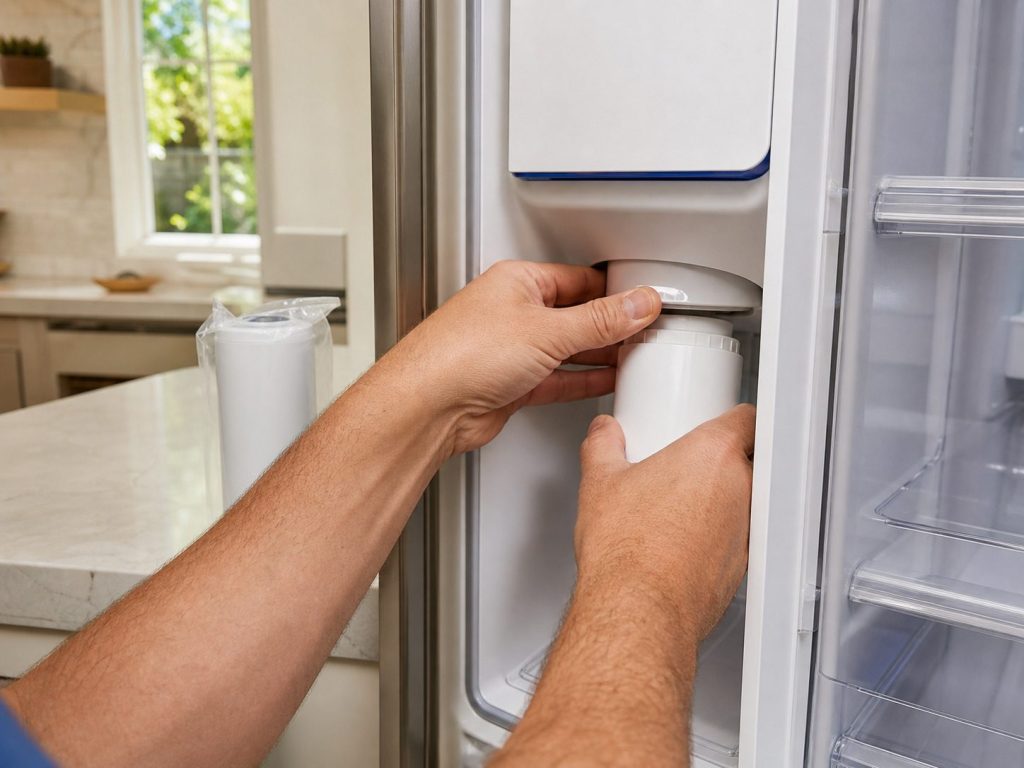
The dispenser is a short circuit with a lot of failure points: a valve, a line, a tank, a filter head and a switch, most of it routed through a door hinge that flexes every time you open it. Whirlpool documents the H2O indicator and the filter status light that will not reset, and those two pages between them cover a lot of what people call a dead dispenser.
- Slow water is usually the filter or a frozen line, not the valve
- The filter status light and the actual filter life are two different things
- Genuine filters ordered against the model, because the housings are not universal
-
The bin is empty and nothing has changed Ice maker has stopped making ice
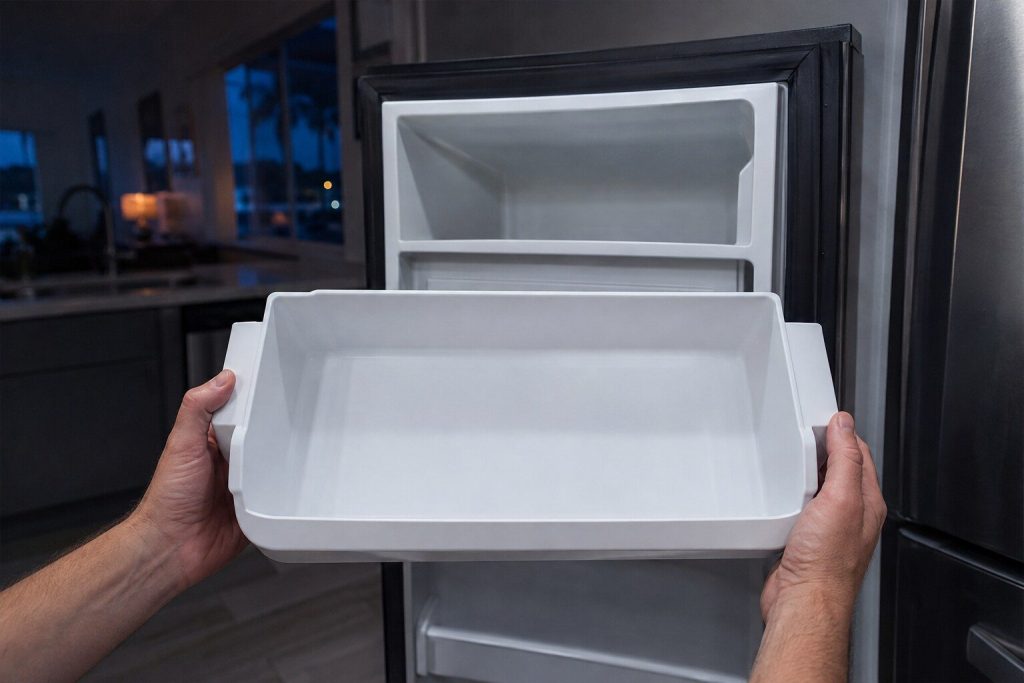
An ice maker is a small machine with one job and several ways to be interrupted, and Whirlpool publishes 20 pages across ice production, low production and ice quality without a code for any of it. What it does publish is a filter status light — and the note that it does not reset by itself when the filter is changed, which explains a good number of these calls.
- Production drops before it stops, so slow small cubes are the early warning
- The H2O filter light does not clear itself after a filter change — it is reset by hand
- The fill tube freezing is the classic version of this in a humid kitchen
-
from $119 Appliance maintenance
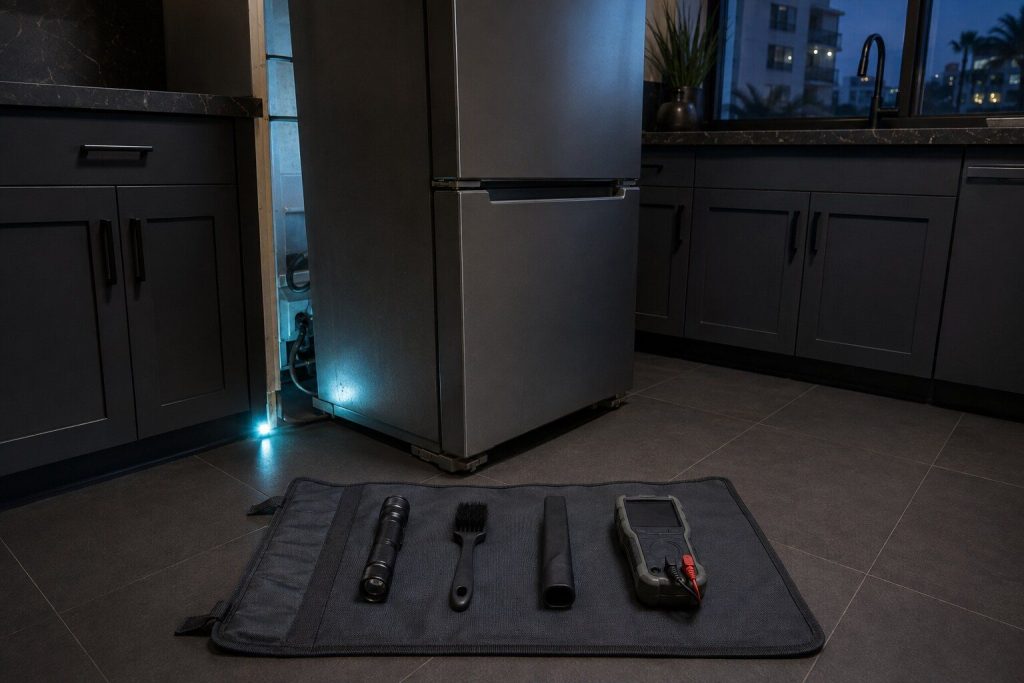
Nothing on this list saves an owner more money and nothing is booked less often. Whirlpool builds appliances that will run for fifteen years in an ordinary house, and what usually ends them early is a maintenance item rather than a design one: a coil under a blanket of dust, a drain pump filter that has never once been opened, a duct that has closed a little further every year. This make publishes cleaning instructions for every one of those. Almost nobody has read them.
- One visit across everything you own, priced on time rather than per machine
- The washer drain pump filter, which is the most neglected part in South Florida
- You keep a written list of what is closest to failing
Questions people ask about this
How often should i change my whirlpool refrigerator filter if nobody drinks from the door?
Then the months matter more than the gallons and six is a fair interval. The reason the rating carries two numbers is that a filter can be exhausted two ways: by volume, which is what a heavy-drinking household does to it, and by time sitting in warm water, which is what a lightly used one does. In a Miami kitchen a cartridge that has been in the housing for a year has not been idle, whatever the counter says.
The status light is still on after I fitted a new filter.
That is expected and it is not a problem with the refrigerator. The indicator counts rather than measures, so it has no way of knowing a cartridge was changed. Whirlpool publishes a reset procedure for it, and a separate page for the case where the reset does not take. Hold the filter or reset button until the indicator changes, and if it will not, the light is the only thing wrong.
There is no ice since I changed the filter.
Very common and usually nothing is broken. A new cartridge puts air into the line, and an ice maker that cannot fill a tray cleanly will not try. Draw several gallons through the dispenser until the flow stops spitting, check that the cartridge is turned fully home, and give the machine a full day before deciding anything. If there is still no ice after that with water running normally, the next thing to look at is the fill tube.
The old filter will not come out.
A stuck cartridge is common enough that the make publishes a page on it. Do not lever it with a screwdriver. Turn the water off at the supply first, then work it with steady rotation rather than force, and if it is a push-in type give it a firm press inward before pulling. A cartridge cracked in the housing turns a ten-minute job into a wet afternoon.
Does a loaded filter make the water unsafe?
No. A carbon cartridge that has reached the end of its life stops improving the water rather than beginning to spoil it. What goes wrong is flow, and the appliance behaves as though something has failed: slow dispensing, small or hollow cubes, then no ice. The water itself is what came out of the tap.
Maintenance & Prevention
More guides like this one
-
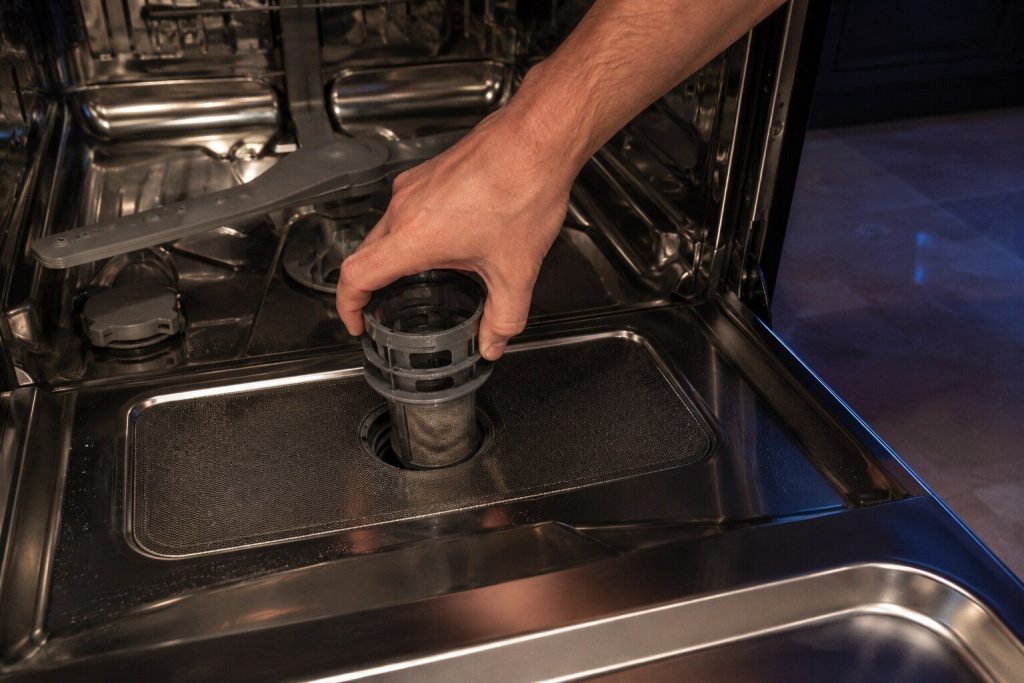
The Filter Whirlpool Files Under Not Draining, and What That Tells You
Poor cleaning and poor draining have one cause in common, and it twists out by hand. Nobody told the owners of the newer machines that a chore had appeared.
Read more -
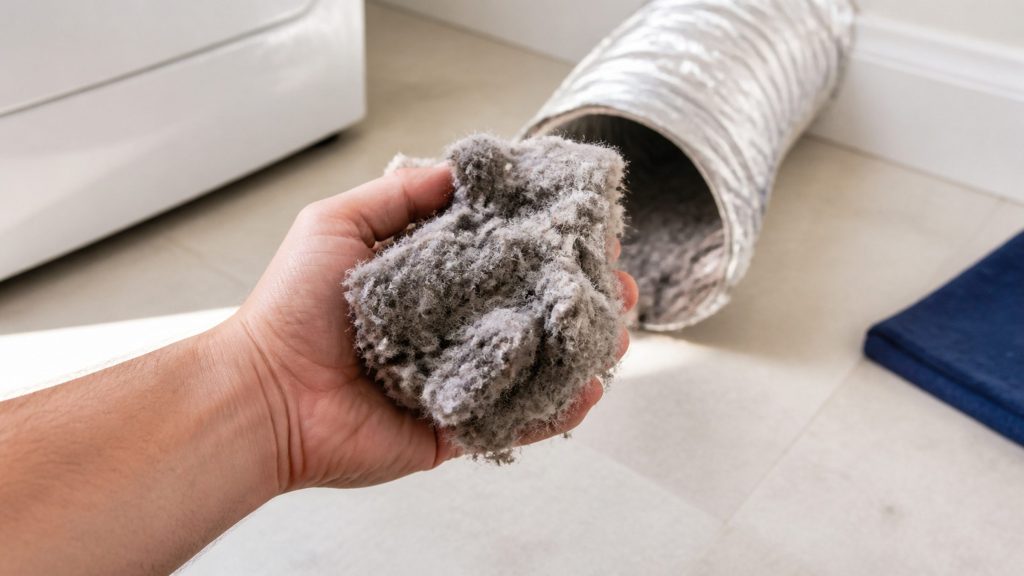
You Clean the Lint Screen Every Load. That Is Not the Part That Blocks.
The screen catches what it catches. The rest goes down the duct, which is why a machine with a spotless screen can still be starving for air.
Read more -
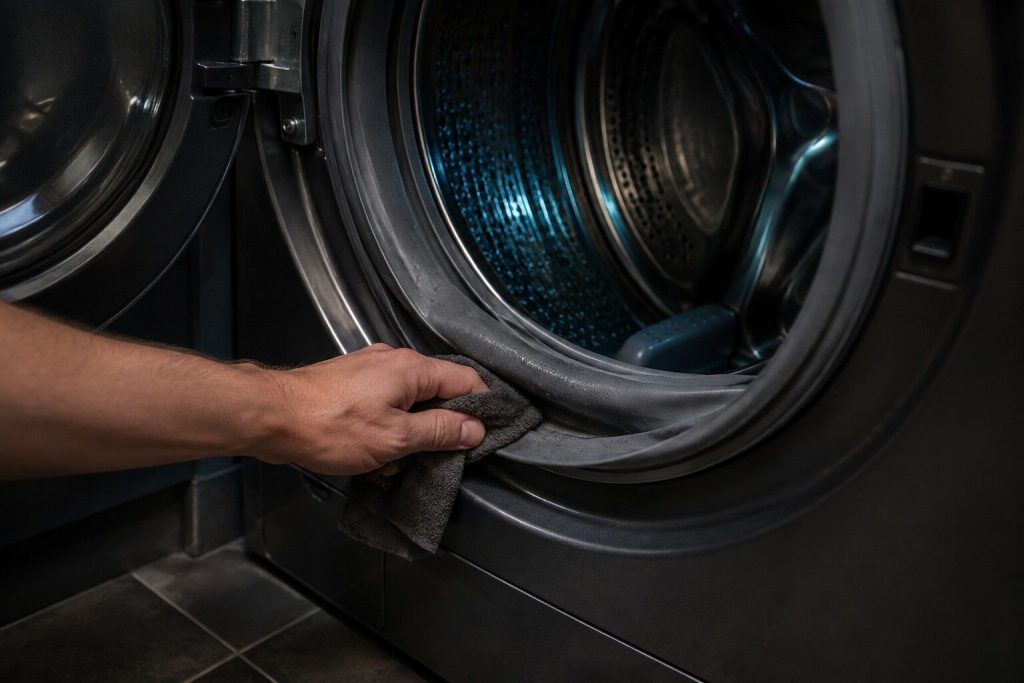
How Often a Whirlpool Washer Actually Needs Cleaning in Florida
The machine asks on a load count, not a calendar. In this climate the count is a floor rather than a target, and the two places that matter are not in the drum at all.
Read more
Tell us the model number and what it is doing.
This article is based on:
- Official manufacturer documentation
- Internal repair procedures
- Technician repair history
- Company quality standards