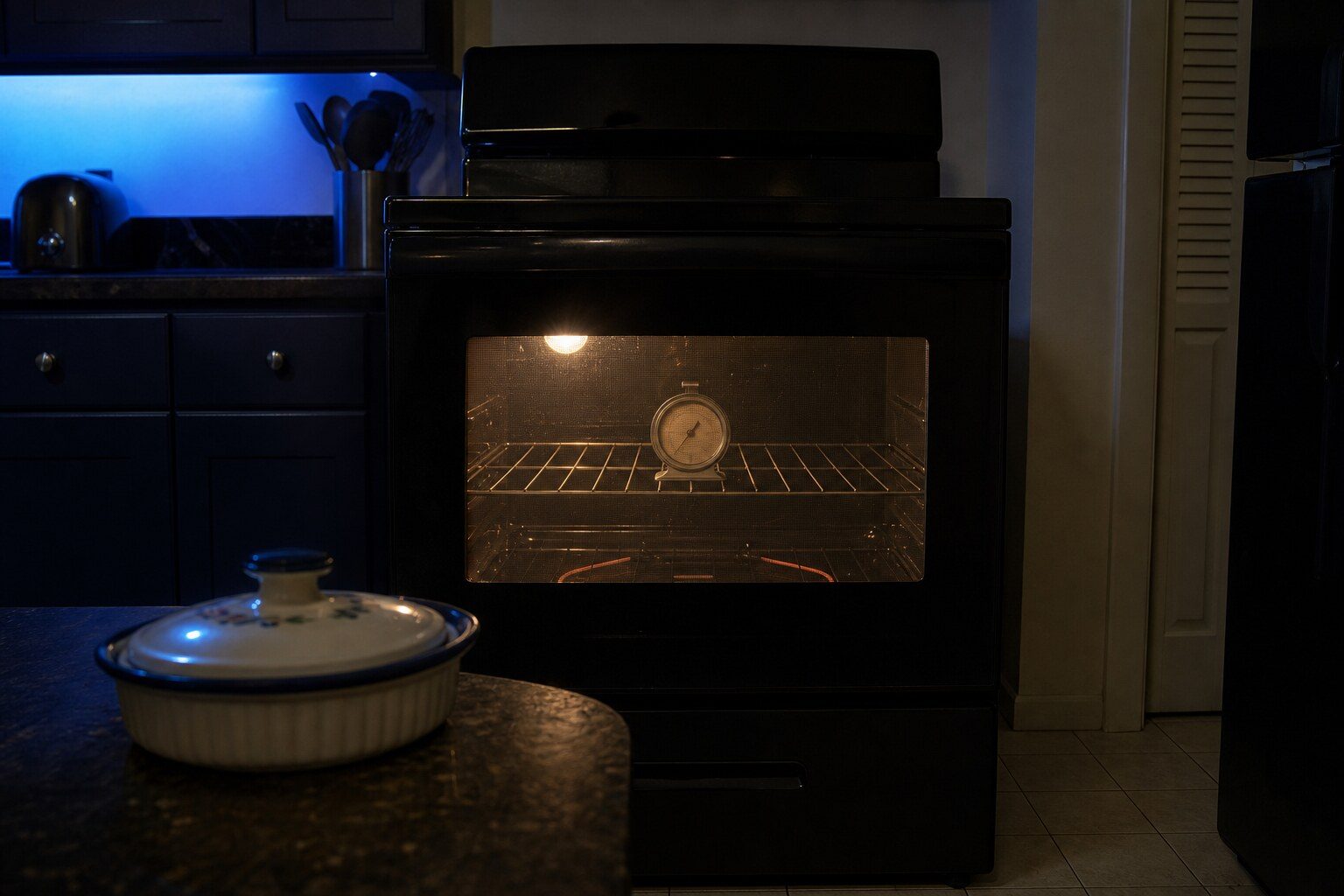
- “A preheat that has grown gradually is wear; one that changed overnight is a part”
- “On a two-element electric oven, one element failing leaves an oven that still heats slowly”
- “A door gasket that no longer seals costs preheat time before it costs anything else”
Symptom
Whirlpool oven takes a long time to preheat
Whirlpool publishes its own pages on long preheat times, which tells you how often it gets reported. A preheat that has grown from twelve minutes to thirty rarely means the oven has stopped working. It means one of the things that makes heat is doing less of the work, or one of the things that holds heat is letting it out.
- From $89 diagnostic, credited to the repair
- 59 cities and neighborhoods covered
- OEM parts available on order
- In writing the price, before anything is opened
Five ordinary causes
What this usually turns out to be
Cheapest and commonest first, which is also the order we check them in. They sit hundreds of dollars apart, and only the unit settles which one is yours.
-
One element doing all the work
Bake alone, or broil alone. The oven still gets there and takes far longer, and it usually browns unevenly too.
Oven not heating repair from $155 -
A door seal that has gone tired
Heat leaving as fast as it is made. Nine humid months and a lot of use flatten a gasket, and this is the cheap end of the list.
Oven door and hinge repair from $175 -
A weak gas igniter
On a gas oven, an igniter that takes longer to reach temperature delays every burner cycle. The oven works and it is always behind.
Gas burner and igniter repair from $165 -
The temperature sensor reading high
The control heats to what it is told. A sensor reading a few degrees high makes an oven that is slow and also cold.
Oven temperature calibration and sensor service from $125 -
A blocked vent path on a built-in
A wall oven that cannot vent heats slowly and cooks the control behind the panel. Worth checking on any built-in installation.
Appliance installation from $139
In five minutes
Before you call anybody
None of it needs tools, and all of it makes the visit shorter.
-
01
Watch both elements during preheat
Even glow along the whole length of each. A dark stretch is a failing element even when the oven still heats.
-
02
Do the paper test on the door
All the way around the seal, not just at the handle. The corners go first.
-
03
Compare with an oven thermometer
Slow to the tone and correct at the thermometer is a sensor question. Slow and cold is a heating question.
-
04
Check the racks are not overloaded
Stone slabs and full racks of cast iron absorb an enormous amount of heat. Preheat empty when you are measuring.
How it shows up
What people describe when they call
A shortcut
Narrow it down before anybody arrives
A description of the behaviour leaves a few possible causes. A code names the subsystem before anybody opens anything, which is why it is worth photographing before it clears.
If there is no code at all
The data plate is inside the cabinet, upper left wall or behind the grille. All models
In more detail
About Whirlpool oven takes a long time to preheat
Time it properly, twice
Time a preheat to 350 with the oven empty and nothing on the racks, and write the number down. Do it again the next day. A consistent, repeatable time tells us something a vague impression cannot, and a preheat that is consistently long is a measurement rather than a complaint. While it is heating, look through the door at the elements: on an electric oven both should glow evenly along their length. One dark section, or an element that never glows at all during preheat, has answered the question for you.
What it usually means, by the kind of machine
Whirlpool sells one appliance in several forms — a top-loader with an agitator and one without, a front-loader, a stacked pair, a laundry tower and an all-in-one; a vented dryer, a ventless one and a heat pump — and the same behavior points at different things on each of them. A top-load washer has no drain pump filter to open and a front-loader does, which is the whole first hour of the same complaint on two machines.
- Freestanding range — Preheat on these uses both elements on most models. One failing is the classic cause of a slow but functioning oven.
- Wall oven — Built into a cabinet run, so the vent path matters. A wall oven whose vent is blocked by a trim kit or a drawer above it takes longer and runs hotter at the control.
- Convection models — A convection preheat should be faster, not slower. If yours got slower after a fan started making noise, treat that as one problem rather than two.
Slow is a real report, not a fussy one
People apologize for calling about an oven that still works, and they should not. A slow preheat is usually the first visible stage of something that ends as a no-heat call, and it is much cheaper to deal with at this stage. An element with a failing section, an igniter losing its glow, a gasket that has flattened — all three are ordinary parts on a Whirlpool and all three get worse. Booking while the oven still cooks means choosing the day rather than having it chosen for you.
What we measure on the visit
We read the cavity temperature against what the control believes, check both elements or the burner and igniter, and read the door seal and hinge. Where it is a calibration question we will say so and adjust rather than sell a part. Where the sensor is reading wrong we will show you the difference between what the oven thinks and what the cavity is doing, because that is the sort of finding that should be demonstrated rather than asserted.
This article is based on:
- Official manufacturer documentation
- Internal repair procedures
- Technician repair history
- Company quality standards
Before you book
Questions about Whirlpool oven takes a long time to preheat
Does opening the door during preheat matter?
More than people expect. A wall of hot air leaves in a second and the element starts again. If you are timing a preheat to compare it, keep the door shut and judge it by the tone.
It only started after we lost power in a storm.
Worth mentioning when you book. A control that came through a surge can behave differently without failing outright, and the timing is a useful clue that would otherwise take a while to find.
Where we do it
Across Miami-Dade, Broward, and Palm Beach
Same terms everywhere we go: an on-site diagnostic first, the price agreed in writing, and the exact figure confirmed once we have seen the unit.
Neighborhoods people ask for by name