Safety & Risks
The Oven Smells of Gas When It Is Switched Off
The question is not how strong the smell is. It is when it arrives. A faint smell of gas for a second or two as a burner lights, gone once the flame is established, is unburned gas from the pause between the valve opening and the spark taking, and it is ordinary. A smell of gas with the appliance switched off is not ordinary at any strength, because nothing should be releasing gas when nothing is burning. That places it on the supply side rather than in the cooking part of the appliance: the flexible connector behind the range, the shut-off valve, the union at either end, or a burner valve that is not seating shut. What to do is done in order and it is not a diagnosis. Touch no electrical switch, either on or off, because a switch sparks in both directions. Light nothing. Open a door on the way past if it is on your way. Get everybody out, including yourself. Then call the gas utility or the fire department from outside the building, not from inside it. That is where our job stops and theirs starts. An appliance company is who you call after the supply has been declared sound, not before, and no reputable one will tell you otherwise.
The full guide
Gas smell from oven when off: the timing is the diagnosis
Almost every page written about this argues about strength. *A faint smell. A strong smell. Just a whiff.*
Strength is the one thing you cannot judge. The nose stops reporting an odorant within a minute or two of standing in it, which means the longer you stay in the kitchen deciding how bad it is, the less you can tell.
When the smell arrives is something anybody can answer accurately, and it separates two completely different situations.
The one that is ordinary
A burner is lit by opening a valve and making a spark. Those two things do not happen in the same instant. There is a short pause where gas is flowing and nothing is burning it, and the gas from that pause goes into the room.
A faint smell for a second or two as a burner lights, gone once the flame is established, is that. It is expected on a gas appliance and it is not a problem.
Three things turn it back into a problem:
It lingers after the burner is alight. Then gas is escaping somewhere other than the burner port.
The burner takes several seconds and lights with a thump. That is a larger volume of gas accumulating before ignition, and it is an ignition problem, not a normal delay.
It has to be lit twice, or it goes out and relights during cooking. The flame supervision is not doing its job.
All three of those are appliance work, and they are ours. Gas burner and igniter repair is from $165, a diagnostic visit is from $89 and is credited toward the work, and the exact cost is confirmed on site, in writing, before anything is opened.
The one that is not ordinary, at any strength
A smell of gas with the appliance switched off.
Nothing is lit. Nothing is running. No burner is calling for gas, no valve has been asked to open, and there is no ignition sequence in progress. In that state, nothing in the appliance should be releasing gas at all.
So a smell in that state does not tell you the oven is faint or slight or getting old. It tells you gas is escaping, and it puts the escape on the supply side — the part of the installation that is upstream of the cooking.
In practice that means one of a small number of places:
The flexible connector behind the range. Ranges get pulled out to clean and pushed back in. A connector that has been flexed forty times over a decade, or kinked against a wall, is an ordinary finding.
The shut-off valve at the wall, and the unions at either end of the connector. Threaded joints, and joints move.
A burner valve that is not seating shut. Inside the appliance, but doing its leaking while the appliance is off, which is why it belongs on this list rather than on the ignition one.
Which of those it is, is settled by somebody with a gas detector. It is not settled by soapy water on a joint you can reach, and it is definitely not settled by sniffing.
What to do, in this order
The order is the safety content. Read it before you need it.
Touch nothing electrical, in either direction. This is the instruction people get wrong, because switching something *off* feels like the safe move. A switch sparks when it makes contact and when it breaks it. That covers the wall switch, the plug, the ventilation hood, the kitchen light, a phone in the room, the doorbell, and the garage door opener on the way out.
Light nothing. No burner to test it. No match. Nothing.
Open a door or a window if it is on your way past. If it is not on your way, keep walking.
Get everybody out. Including yourself, and including the part of you that wants to have one more sniff by the range to be sure.
Call the gas utility or the fire department from outside the building. Not from the kitchen, not from the hallway. From outside, or from a neighbor's.
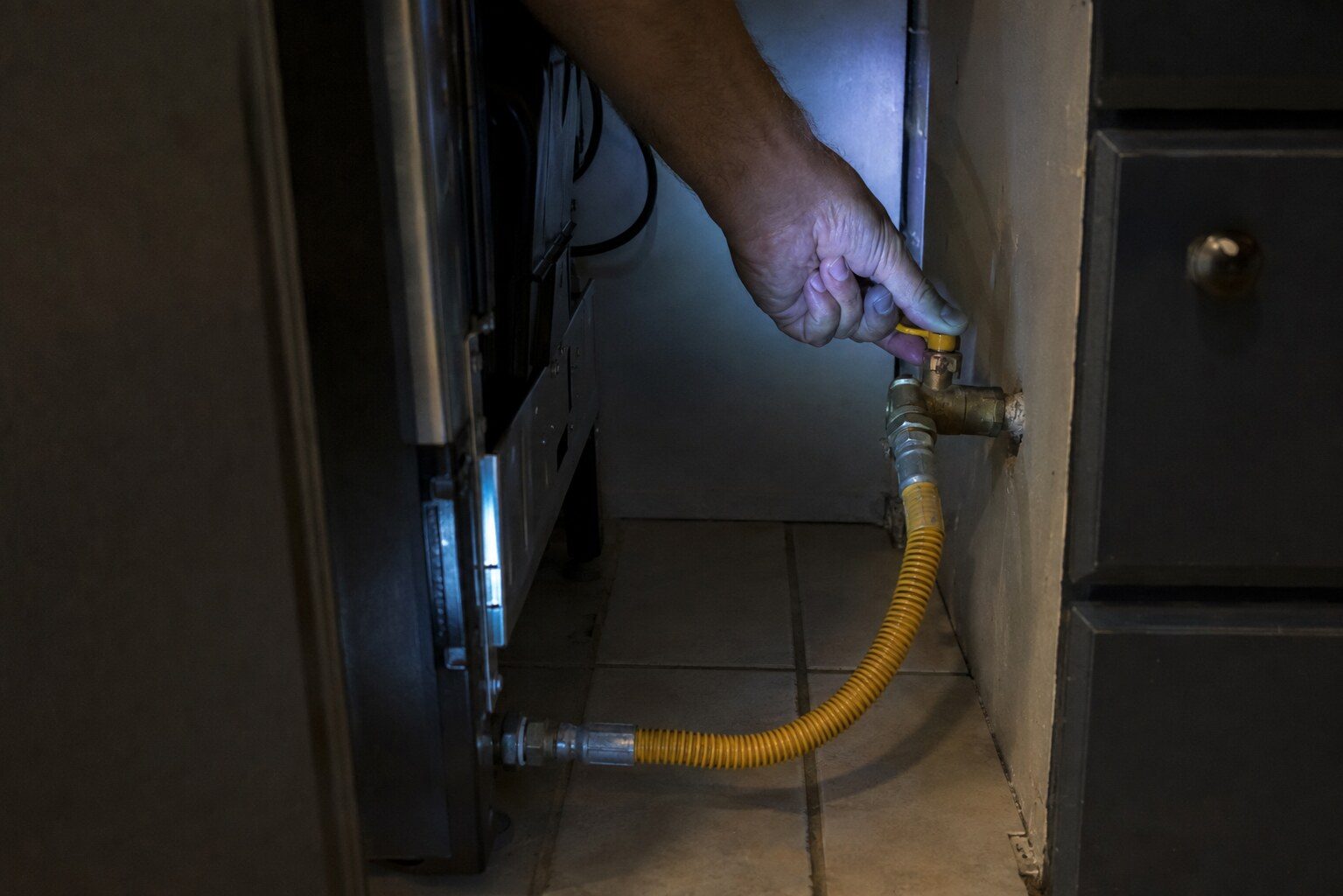
If you can reach the shut-off valve at the wall without touching anything electrical and without staying in the room, closing it is worth doing. If reaching it means anything more than that, leave it. The people you are calling will do it, and it is one of the things they arrive prepared for.
Where our job stops, and where it starts again
We say this plainly because a company that blurs it is a company to be careful of.
Before the supply has been declared sound, this is not an appliance call. No appliance technician should be booking a visit for a house where gas is smelled with everything off, and no appliance technician should be asking you to wait until tomorrow morning. The utility and the fire department come out for this and they do not charge you for being wrong.
After they have looked, it is ours again. If they trace it to a burner valve that is not seating, that is a repair. If they find the connector or the valve at the wall, that is a plumber or the utility's own crew. If they find nothing and the smell comes back, we look at the appliance side with a detector, in the same order.
The smells this make does document, and why none of them is this
Worth knowing, because it stops one worry turning into four.
Whirlpool publishes pages for a set of smells that are genuinely ordinary, and they are all recognizable: odors and smells from a newly installed range or oven, which is the manufacturing residue curing off the first few times it gets hot. Odors and smoke in the oven, which is spilled food. A hot tar or petroleum-like odor and a melted plastic or charred food odor, both of which have a page of their own.
Every one of those has a source you can name and every one of them fades. There is no page anywhere in that base saying a smell of gas with the appliance off is normal, because it is not.
Also worth knowing: the gas cooktop branch of this make's own support base is the quietest one in it. There are dozens of pages and no published error codes at all for gas cooktops. Nothing on the appliance is going to name this problem for you, put a number on the display, or send an alert to a phone.
Your nose is the whole detection system, which is precisely why the odorant is in the gas — and why a smell with everything off is treated as real the first time, not the third.
If it turns out to be a repair
What this leads to, and what it costs
Every job on this site is priced the same way: an on-site diagnostic first, the figure agreed in writing before anybody starts.
-
It clicks and clicks and nothing happens Gas burner will not light
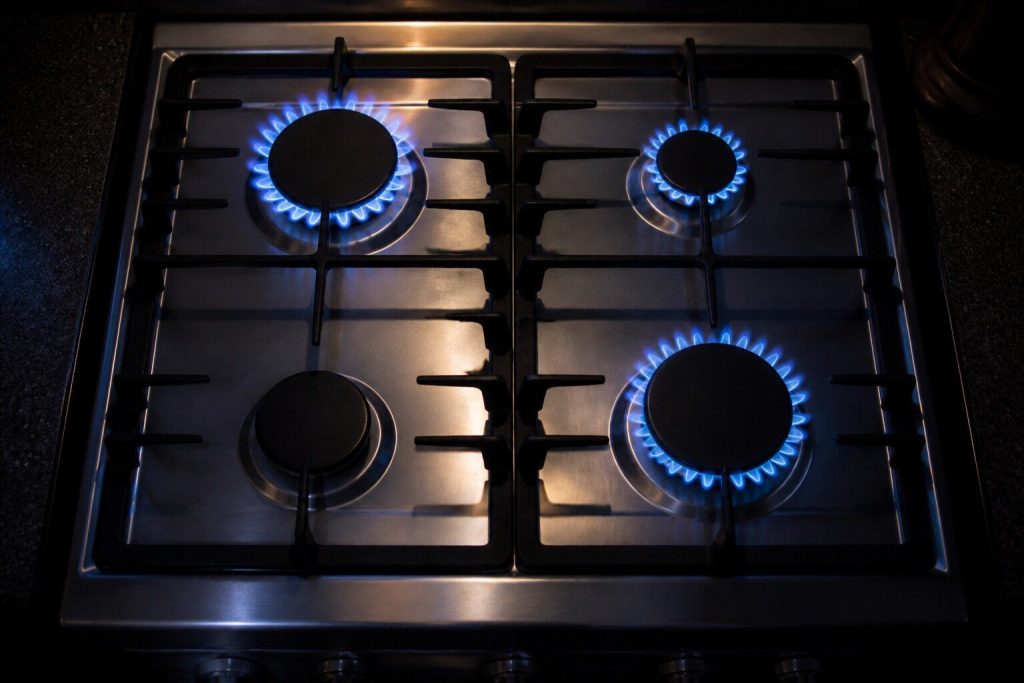
Whirlpool's gas cooktop branch is the one place in its whole support base where there is not a single code page. Fifty-two pages about gas cooktops and no error codes at all, because these burners are not electronically supervised the way an oven is. The machine will not tell you anything here. Everything on this page is looked at rather than read.
- Zero code pages in Whirlpool's entire gas cooktop branch — this diagnosis is visual
- A burner cap seated a fraction out of place stops ignition completely
- Clicking with no flame and no clicking at all are two different repairs
-
The cooktop works, the oven does nothing Oven will not heat
On a Whirlpool range the cooktop and the oven are close to independent, which is why burners that work perfectly tell you nothing about an oven that does not. This maker publishes more code pages for ranges and wall ovens than for anything else it builds, so an oven that will not heat and shows a code has already narrowed the job before anybody arrives.
- Working burners do not mean the oven has power — an electric oven needs both supply legs
- Whirlpool documents a demo mode for its ranges and wall ovens, and it disables heating on purpose
- A gas oven that clicks and never lights is a different repair from one that never clicks
-
from $165 Gas burner and igniter repair
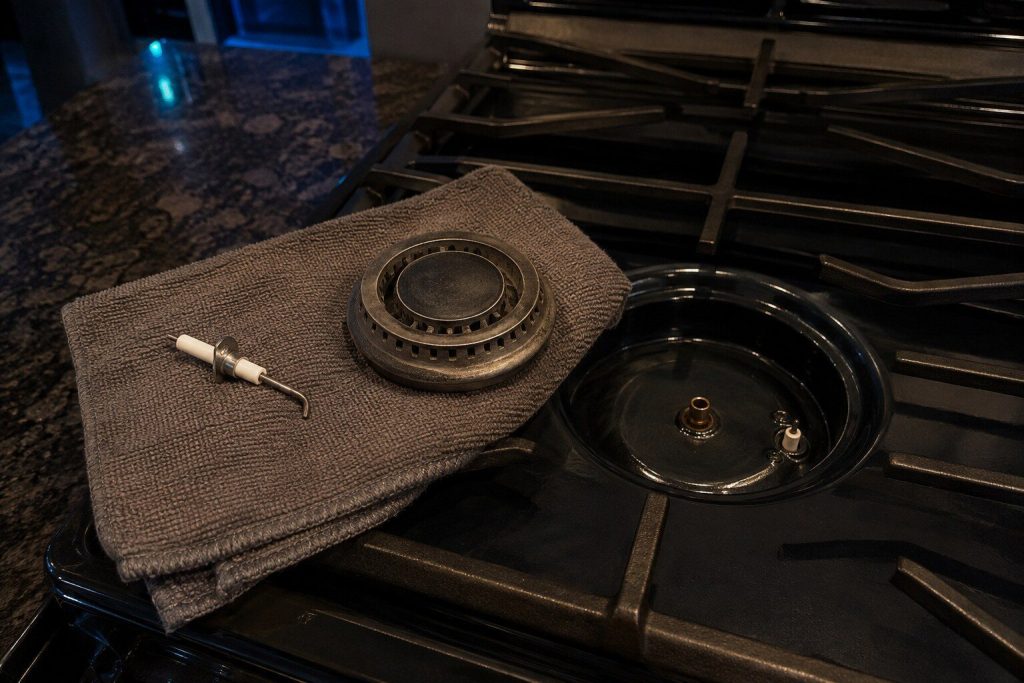
A gas burner that clicks endlessly, lights slowly or will not light at all is one of the few Whirlpool cooking problems the machine will not name for you. This is worth stating plainly: Whirlpool publishes 52 support pages for its gas cooktops and not a single code page among them. There is no reading to look up here. It is done with eyes, a meter and a manometer.
- No published codes on this appliance — this one is diagnosed, not read
- Endless clicking is usually moisture or a misplaced burner cap, not a part
- Flame color and shape are read as the diagnostic they are
-
from $89 Diagnostic visit
One visit, one technician, one answer in writing. On a Whirlpool the first question is whether the appliance is talking, because this make is not evenly talkative. It publishes a separate page for every code on its ranges, its ovens, its cooktops, its washers and its dryers, and it publishes almost nothing of the kind for its refrigerators and freezers. Knowing which half of the house you are standing in changes how the visit starts.
- Whether this appliance talks at all decides how the visit starts
- Laundry and cooking almost always have a code; the cold side almost never does
- Whatever we find goes to you in writing, and the visit comes off the repair
Questions people ask about this
Is a gas smell from oven when off ever normal?
No. Not faintly, not occasionally, and not because the range is old. The odorant added to natural gas is there precisely so that a small release is detectable by a person with no equipment, and a smell with nothing lit means gas is escaping somewhere. Every other smell an oven produces has a source you can name — food, a spill burning off, a new appliance curing, hot dust. Gas with the appliance off has only one.
I smell it for a second when a burner lights. Is that the same thing?
It is not, and the difference is the point of this page. Between the valve opening and the spark taking hold there is a moment where gas is flowing and not yet burning, and a faint smell during that moment which disappears once the flame is established is ordinary. What is not ordinary is a smell that lingers after the burner is alight, a burner that takes several seconds and lights with a thump, or a burner that has to be lit more than once. Those are ignition problems and they are ours.
Should I turn the range off at the wall or unplug it?
No. Touch nothing electrical, in either direction. A switch sparks when it makes contact and when it breaks it, and that includes a wall switch, a plug, a light and a ventilation hood. It also includes the ordinary things people reach for without thinking: a phone, a doorbell, a garage door opener. Leave the house first and make the call from outside.
Where does a supply-side leak usually turn out to be?
The connections rather than the pipe. The flexible connector behind the range, the shut-off valve at the wall, the unions at either end of the connector, or a burner valve that is not seating fully shut. Ranges get pulled out to clean behind and pushed back, and a connector that has been flexed a few dozen times over ten years is a real thing. Which of them it is gets established by somebody with a detector, and that is not a household job.
Once the utility says the supply is sound, what happens next?
Then it becomes an appliance question and it is ours. If the smell was traced to a burner valve, a valve that will not seat is a repair. If the smell arrives only during ignition and lingers, that is the igniter and the flame supervision, and gas burner and igniter work is from $165. If nothing was found at all, we look at the appliance side with the same detector and the same order. A diagnostic visit is from $89 and is credited toward the work, and the exact cost is confirmed on site in writing before anything is opened.
Safety & Risks
More guides like this one
-
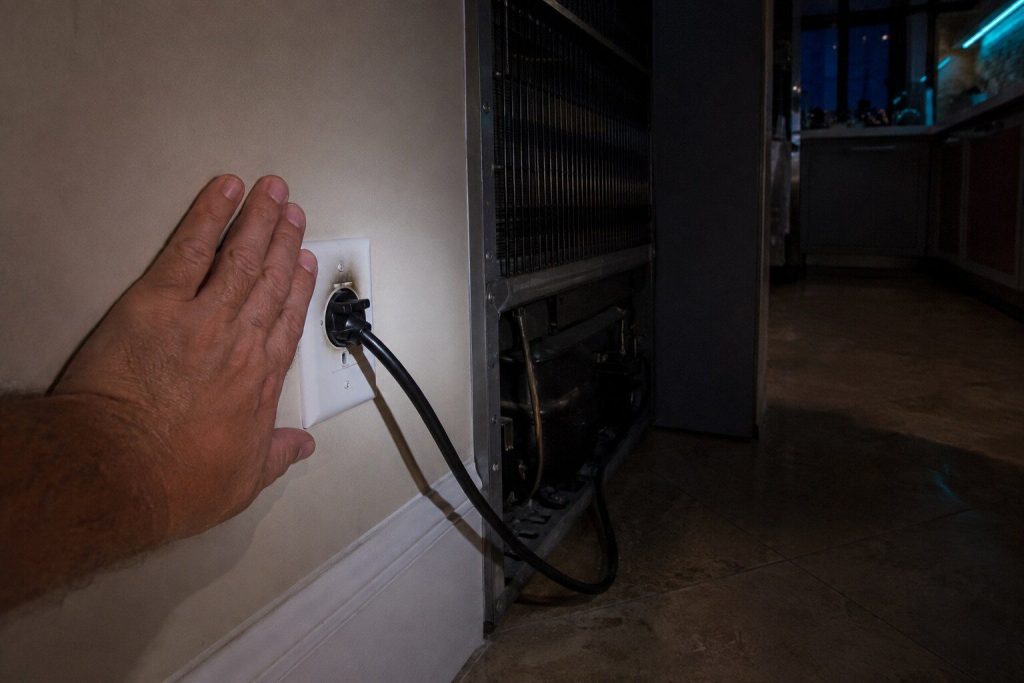
A Refrigerator That Smells Electrical: What to Do in the First Minute
The only guide here whose first instruction is an action rather than an observation, because the order is the safety content.
Read more
Tell us the model number and what it is doing.
This article is based on:
- Official manufacturer documentation
- Internal repair procedures
- Technician repair history
- Company quality standards