Appliance
Whirlpool dishwashers
The dishwasher is the one place in Whirlpool's kitchen where the codes are properly documented: 38 code pages for the built-in machine and 9 more for the portable, covering F1E1 through FAE4 and the H2O code, plus something most makes do not publish at all — the blink patterns. A Whirlpool dishwasher with no display reports by pausing between flashes, and Whirlpool publishes what those pauses mean, from 1 pause 1 through 10 pause 5. It also publishes the front status light, including what it means when it glows red. If your machine is blinking at you rather than showing a number, there is a real answer for it.
- 3 symptoms we are called out to
- From $89 diagnostic, credited to the repair
- 59 cities and neighborhoods covered
- OEM parts available on order
The short version
What this equipment is, for a repair
Configurations
Built-in and portable dishwashers, with the F-and-E code set and the blinking-light set
Access
Planned before the visit, not discovered on arrival
Parts
OEM, available on order
Diagnostic
From $89, credited to the repair
What goes wrong with it
Symptoms we are called out to on Whirlpool dishwashers
Each one covers the likely causes in the order they are worth checking, and what to do in five minutes before booking anything.
-
Water standing in the bottom when the cycle ends Dishwasher will not drain
Whirlpool's own label for this is Long Drain, and the machine reports it as F9 E1 — or, on a dishwasher with no display, as nine flashes of the Clean light, a pause, then one flash. Learning to read those two bursts turns a blinking light into the same information a display would have given you.
- F9 E1 and nine-pause-one are the same report on two generations of the same machine
- Water in the filter recess at the end of a cycle is normal; water covering the floor of the tub is not
- The air gap or the disposer connection is outside the dishwasher and causes this constantly
-
Film on the glasses, grit on the plates, the load coming out no better than it went in Dishwasher is not cleaning the dishes
This is rarely one thing. A Whirlpool dishwasher cleans with hot water, pressure and detergent that has to be released at the right moment, and all three can drift at once. Whirlpool codes the water temperature side of it as F4 E2 and the foam side as F6 E3, and everything else on this page is water reaching the dishes or not.
- Spray arms that will not turn freely are the first check and cost nothing
- F4 E2 is Whirlpool's heating error, and a dishwasher without heat cannot clean grease
- Dish soap instead of dishwasher detergent produces foam the machine reports as F6 E3
-
You press the cycle, the light comes on, and nothing happens Dishwasher will not start
A Whirlpool dishwasher that lights up and does nothing is usually either locked, waiting, or not being told to run at all. The maker publishes a small set of indicator behaviors that explain most of these, and one of them — the control lock — is not a problem at all.
- The Control light flashing three times means the buttons are locked, in Whirlpool's own wording
- A delayed start left set from last night makes a machine look completely dead
- The door latch has to be fully home before the control will accept anything
What we do on it
Repairs we carry out on Whirlpool dishwashers
Starting figures for this equipment in South Florida. The exact cost is confirmed after an on-site diagnostic — and this is not the whole list of what can go wrong, so call if your problem is not here.
-
from $89 Diagnostic visit
One visit, one technician, one answer in writing. On a Whirlpool the first question is whether the appliance is talking, because this make is not evenly talkative. It publishes a separate page for every code on its ranges, its ovens, its cooktops, its washers and its dryers, and it publishes almost nothing of the kind for its refrigerators and freezers. Knowing which half of the house you are standing in changes how the visit starts.
- Whether this appliance talks at all decides how the visit starts
- Laundry and cooking almost always have a code; the cold side almost never does
- Whatever we find goes to you in writing, and the visit comes off the repair
-
from $119 Appliance maintenance
Nothing on this list saves an owner more money and nothing is booked less often. Whirlpool builds appliances that will run for fifteen years in an ordinary house, and what usually ends them early is a maintenance item rather than a design one: a coil under a blanket of dust, a drain pump filter that has never once been opened, a duct that has closed a little further every year. This make publishes cleaning instructions for every one of those. Almost nobody has read them.
- One visit across everything you own, priced on time rather than per machine
- The washer drain pump filter, which is the most neglected part in South Florida
- You keep a written list of what is closest to failing
-
from $139 Appliance installation
Most installations on this make are replacements, and that is worth saying out loud. The owner has just weighed a two-hundred-dollar repair against a nine-hundred-dollar machine and chosen the machine. What decides whether the new one is still working in eight years is the hour after it arrives: whether the opening was measured, whether the duct behind it was cleared, whether anyone put a level on it. A delivery crew is not paid for that hour and does not stay for it.
- The hour after the delivery truck leaves, which is the hour nobody is paid for
- Leveling done with a level and the lock nuts tightened, on every machine that has feet
- Gas joints leak-tested and the result written down
-
from $265 Appliance control board repair
The board is where a Whirlpool reports from, and it is also the part that gets blamed for everything else. Whirlpool runs the same control architecture across its whole line, which is why an F#E# code looks familiar on a range and on a washer — but a board that has died usually died of something, and replacing it without finding that something buys you a few months.
- A board that died usually died of something, and that something kills the next one too
- Browned connectors and pins backed out of a housing are cheap; boards are not
- Whirlpool revises these mid-production, so the order goes out against the serial
-
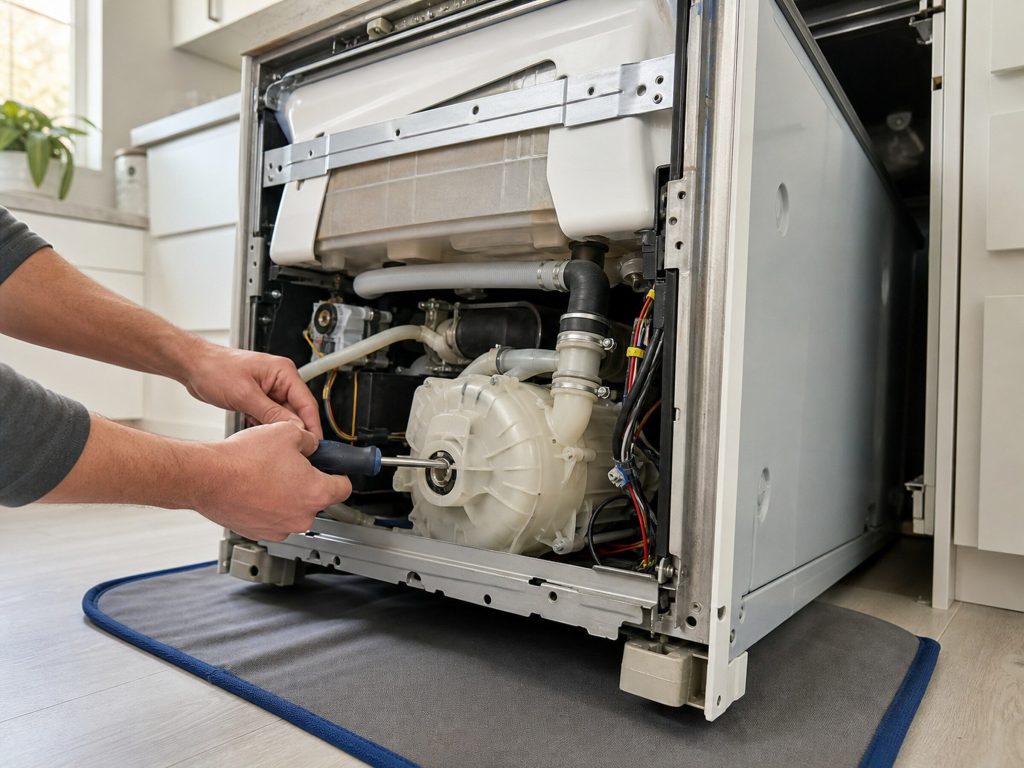
from $135 Dishwasher drain and pump repair
Water standing in the bottom at the end of a cycle is the most common dishwasher call there is, and on a Whirlpool it is worth taking in order because most of it is not the pump. Filter, hose, air gap and the disposal spigot come first, and this make publishes flashing-light sequences and F#E# codes on the drain circuit that tell you when to stop looking at the plumbing and start looking at the machine.
- Filter, hose and disposal spigot before anything is opened
- This make reports drain issues both as F codes and as counted flashing lights
- A drain pump is a contained repair; a knocked-out disposal plug is a five-minute one
-
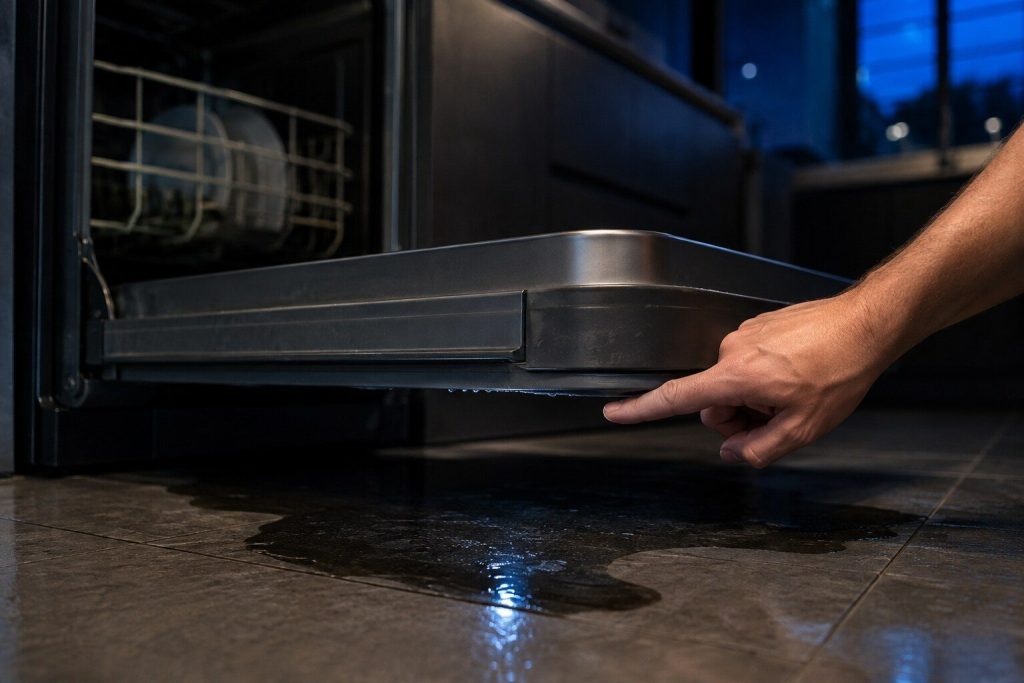
from $145 Dishwasher leak repair
A dishwasher leak is worth finding quickly because the damage is to the floor rather than to the machine. Door gasket, door vent, hose connection, sump seal and the tub itself are the usual candidates, and only the last of them is a conversation about replacement rather than a repair.
- The source is found before anything is quoted
- Most leaks on this make are a gasket or a hose, not the tub
- Cabinet and floor damage checked while the machine is out
-
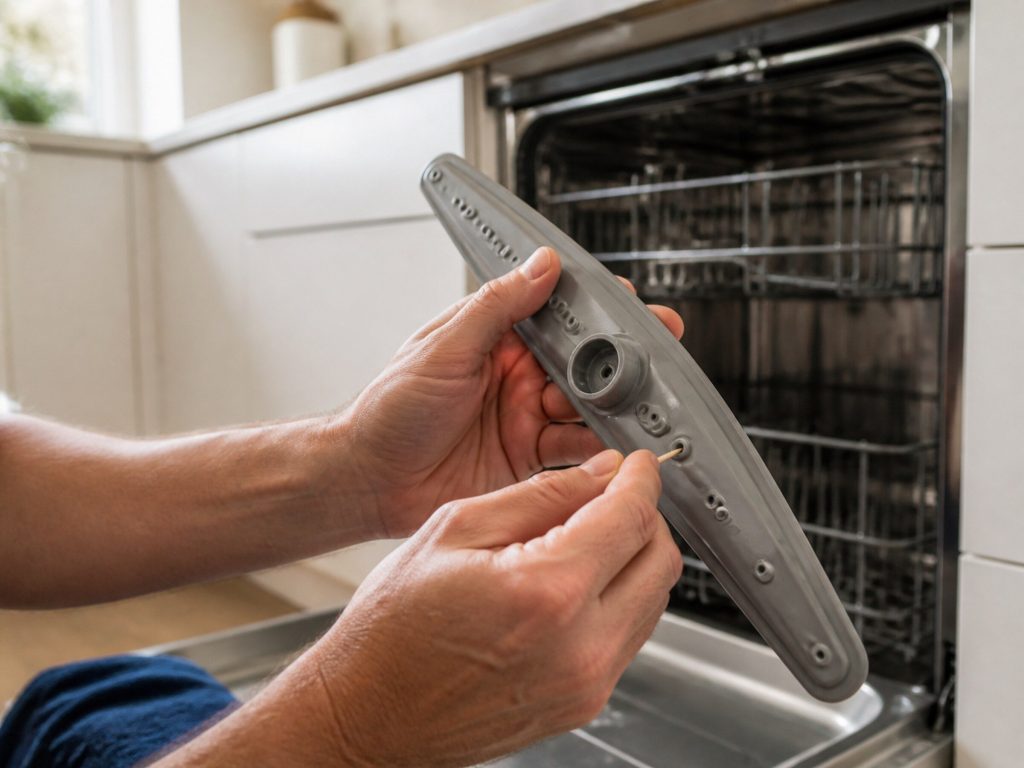
from $119 Dishwasher wash performance service
Dishes coming out dirty or filmed is the complaint with the widest range of causes and the smallest average repair. Spray arms, filter, water temperature, detergent, hardness and loading account for most of it, and Whirlpool devotes 27 pages of its own base to wash performance for exactly that reason. It is diagnosed as a system, not as a part.
- Twenty-seven pages of this make's own base are about wash results, and they are not all the machine
- Hard water here leaves film that reads exactly like a broken dishwasher
- Priced on time, and it frequently ends with no part at all
-
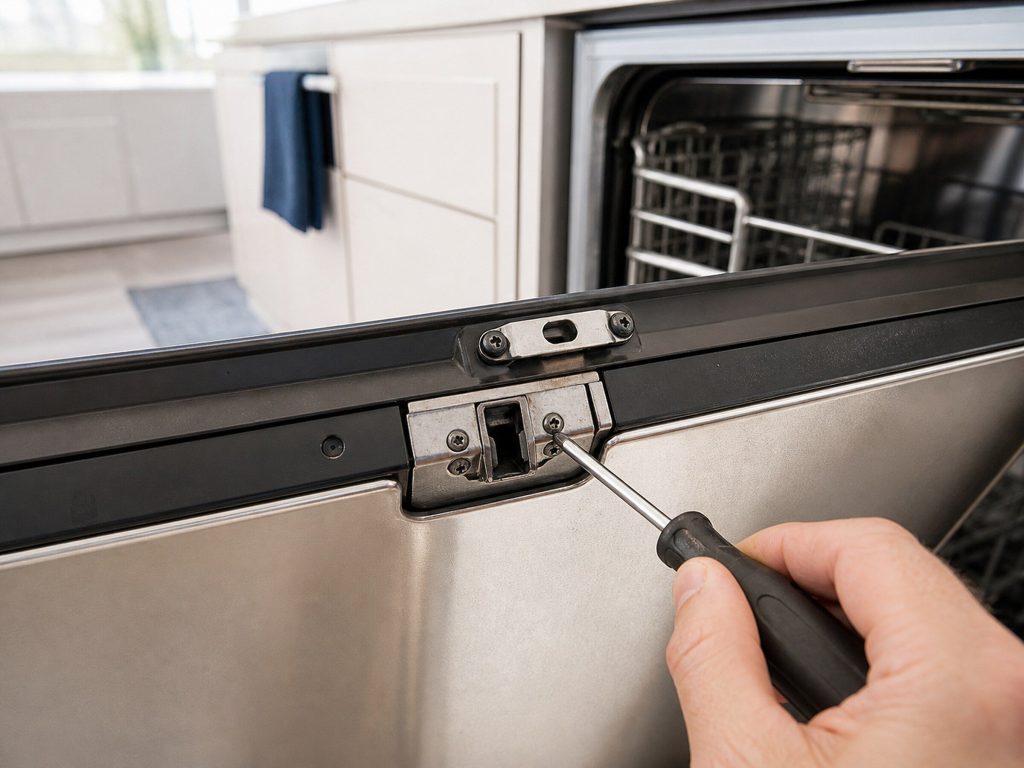
from $135 Dishwasher door latch repair
A dishwasher that will not start is very often a dishwasher that does not believe its door is shut. The latch carries a switch, and the machine will not fill until that switch closes. It is a small part behind the inner door panel and it is one of the more contained repairs on this appliance.
- A panel that lights up and a machine that never fills usually means the latch
- A door that drops rather than lowers has broken a cable, and it eats latches
- Door springs, cables and the gasket all get looked at while the panel is off
-
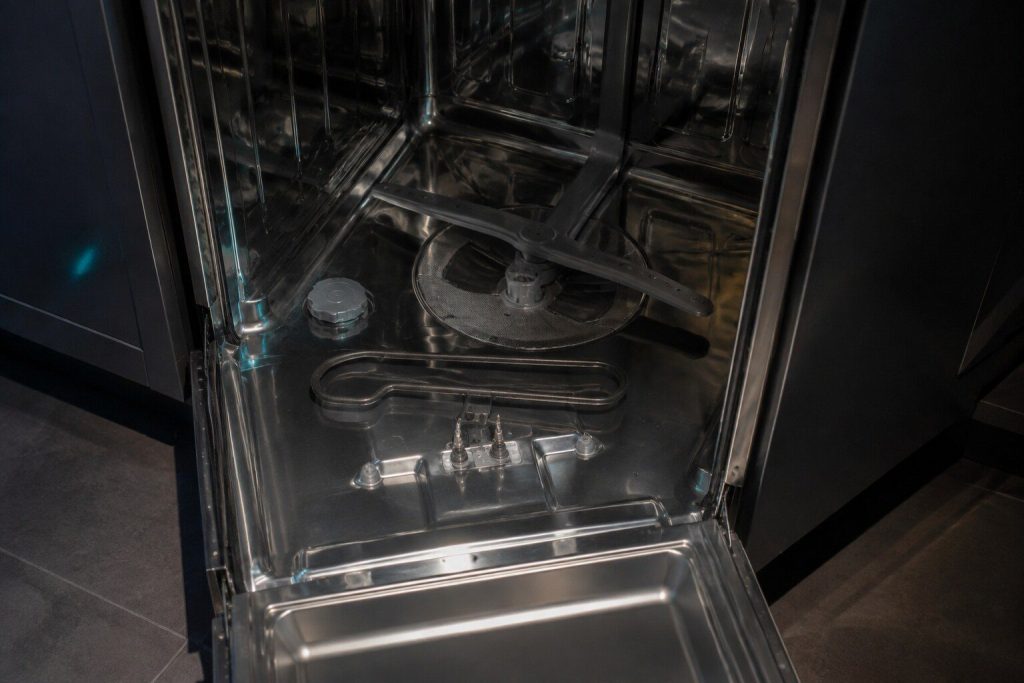
from $175 Dishwasher drying and heat repair
Wet dishes at the end of a cycle are either a heating problem or a drying-strategy problem, and they are worth separating before anybody buys a part. The element inside the tub also heats the wash water, so an element that has failed shows up as poor cleaning before it shows up as wet plastic. Whirlpool publishes both heating errors and drying performance pages, and the two lead to different places.
- Poor cleaning and wet dishes together point at the heating circuit
- Wet plastic alone is usually normal behavior on a condensing dry cycle
- Thermostats and the element are tested, not swapped hopefully
In more detail
About Whirlpool dishwashers
The best-documented machine in the Whirlpool kitchen
Forty-seven code pages across the built-in and portable dishwashers is more than the entire refrigeration branch of this make manages, and the reason is that a dishwasher is mostly sensors: a thermistor for the water, a turbidity sensor for how dirty it is, a flow meter for how much came in, a level switch for how much is still there. When one of those disagrees with the others, the control has something specific to report, and Whirlpool reports it.
The machines with no display
Plenty of Whirlpool dishwashers have a hidden control panel with a handful of lights and nothing to print a code on. Those machines flash, pause, flash again, and repeat, and the count on either side of the pause is the message. Whirlpool publishes those combinations, and this site carries them, because a person standing in front of a machine that is blinking at them has no code to search for and needs the pattern read back. It also publishes the single front status light some models project onto the floor — including what a red glow means, which is not what most owners assume. In a hard-water city these machines also spend their lives fighting scale, and a fair share of what gets reported as poor washing is a spray arm with blocked jets and a filter nobody knew was removable.
This article is based on:
- Official manufacturer documentation
- Internal repair procedures
- Technician repair history
- Company quality standards
Before you book
Questions about Whirlpool dishwashers
The clean light is flashing and the machine will not start.
That is a published condition rather than a random blink, and on this make it usually points at the cycle not having completed — the control stopped part way and is telling you so on the only light it has. Try the reset first: open the door, press Cancel or Cancel Drain, close the door and let it run its drain out. If it comes straight back, the two common causes are heat and drainage. Either the machine could not reach temperature, or it could not empty. Both have their own code on machines with a display, and both are repairs rather than resets.
There is water standing in the bottom after every cycle.
A shallow film in the sump is normal and stops the seals drying out. Standing water is not. Work outward from the machine: the filter in the base, which unscrews and rinses; the drain hose, which must rise into a high loop or an air gap before it reaches the disposer; and the disposer knockout plug, which is still in place more often than anyone expects on a newly installed machine. After those it is the drain pump or the check valve, and on machines with a display Whirlpool codes the drain condition so it is not a guess.
What is the H2O code?
It is one of the codes Whirlpool publishes for its dishwashers, and like every other water-related condition on this machine it sends you to the supply before the machine. The shut-off valve under the sink, the inlet line, the inlet valve and the screen in it. What we will not do is tell you a meaning Whirlpool has not published — we read the code off your machine, look it up against the make's own documentation, and then test what it points at.
Where we do it
Across Miami-Dade, Broward, and Palm Beach
Same terms everywhere we go: an on-site diagnostic first, the price agreed in writing, and the exact figure confirmed once we have seen the unit.
Neighborhoods people ask for by name