Safety & Risks
A Refrigerator That Smells Electrical: What to Do in the First Minute
Switch the circuit off at the electrical panel. Not at the control panel, which only stops the cooling and leaves the appliance live. And not by pulling the plug, which puts your hand and your face at the outlet on a circuit that may be drawing abnormal current, and which can arc as it comes out. The breaker isolates the machine from across the room, and that is the whole reason it is the first move rather than the convenient one. Diagnosis comes afterward, once it is isolated and cool, and where the smell is strongest narrows it. At the grille it is usually a fan motor or the compressor start components. Inside the cabinet it is usually the defrost heater. At the wall outlet itself it is the wiring, and that is an electrician rather than an appliance technician. What separates this from the smells that are not this is simple and reliable: a new machine, warm dust on a coil nobody has cleaned, and food are all smells that fade. Hot insulation does not fade. It gets stronger while the appliance runs and it comes back every time it runs, and no amount of cleaning touches it.
The full guide
Refrigerator electrical smell: do this before you work out what it is
Every other guide on this site starts with an observation. This one starts with an action, because on this problem the order is the safety content.
Switch the circuit off at the electrical panel.
Not at the control panel. Not by pulling the plug. At the breaker, from across the room, with nothing in your hand.
Why those two other moves are the wrong ones
Both are the instinct, and both are worse than the breaker.
The control panel only stops the cooling. Pressing the cooling off, or setting the temperature to its warmest, tells the control not to ask for the compressor. It does not disconnect anything. The board is live, the lights work, the fans may still run, and whatever was getting hot in the supply side of the machine is still connected to the wall. That is a setting, not an isolation.
Pulling the plug puts you at the outlet. If the circuit is drawing abnormal current, a plug can arc as it separates. If the problem is the outlet or the cord rather than the appliance, the outlet is the last place you want your hand and your face. And reaching blind down the side of a refrigerator to find a plug you cannot see is a poor way to spend that particular minute.
The breaker does the same job at a distance. If you cannot identify which one it is, switch the main and sort it out afterward. Nothing in a refrigerator is harmed by an hour without power.
Then leave it alone until it is cool
Once it is isolated, do not open panels and do not pull the machine out to have a look. Give it time to cool, get the room aired, and only then investigate.
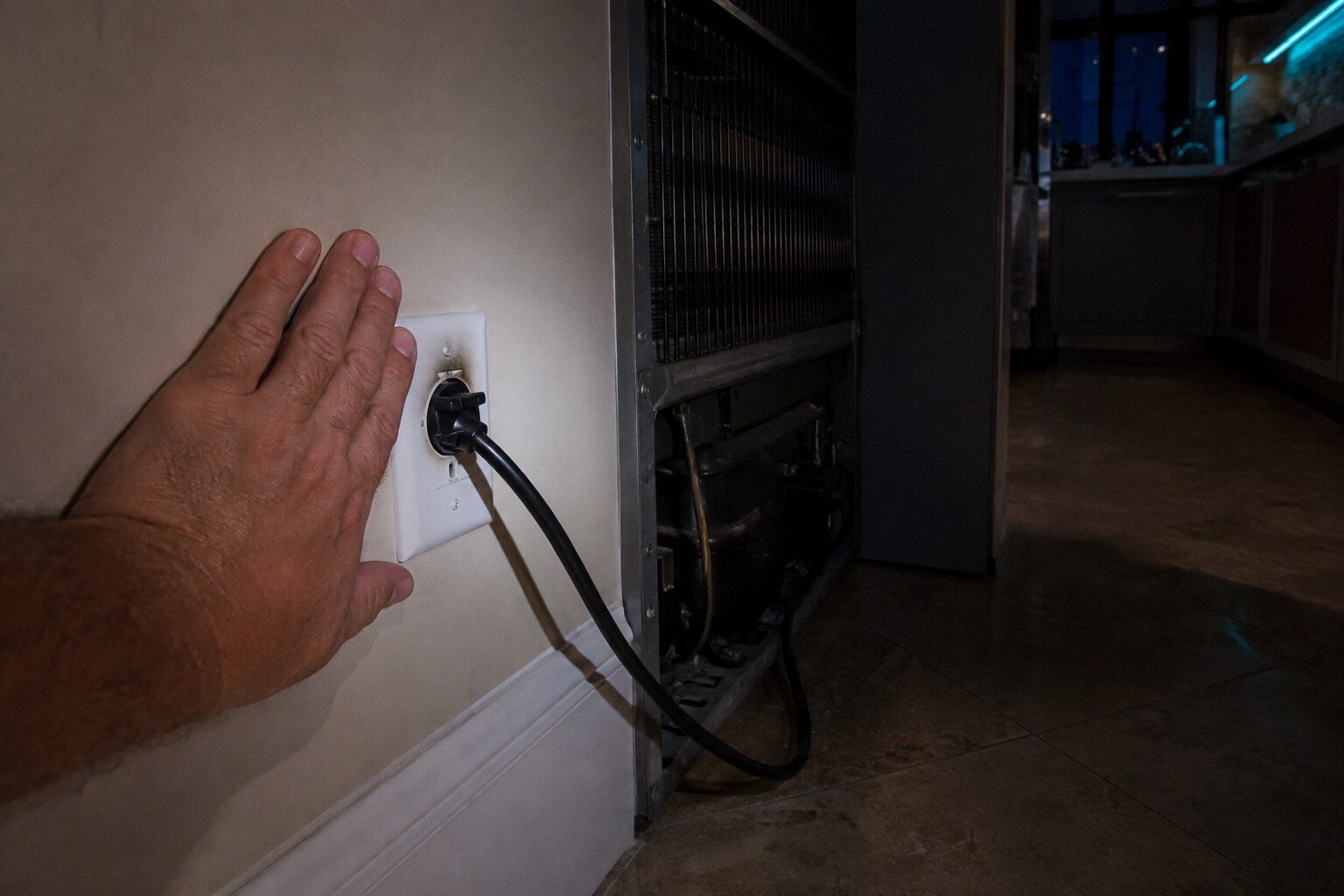
This is also the moment to take a photograph of the plug and the outlet before anything is touched, if it is safe to do so. Scorching and browning are evidence, and they are much easier to explain to whoever comes out than a description.
Where the smell is strongest narrows it
Three places, and they point at three different answers.
At the grille, low down, at the front or the back — usually a motor. The condenser fan and the evaporator fan are the two motors that run for hours a day, and a motor that has been running hot smells of hot varnish. This is also where the compressor start components live: the relay and capacitor that give the compressor its kick every time it starts. They are a common source of an electrical smell and one of the more ordinary repairs on this appliance.
Inside the cabinet, strongest in the freezer — usually the defrost heater. The defrost heater is the one deliberately hot thing inside an insulated box, and its circuit runs several times a day. A smell that is worst with the freezer door open, or that arrives on a schedule rather than continuously, points there.
At the wall outlet — the wiring, not the appliance. A warm faceplate, browning at the socket, a plug that has scorched, or a plug loose in the outlet. This is an electrician, and an appliance technician is the wrong trade for it. It is also the version of this problem that has the least to do with the refrigerator and the most potential to get worse.
The smells that are not this
Half the value of this page is stopping a false alarm, so be clear about what it is not.
A new machine. Manufacturing residue on warm components smells for the first days and then stops. It fades a little each time.
Dust on a warm condenser. Dry, hot, faintly like a radiator switched on in winter. In a South Florida kitchen this is common because coils here pack with humid dust and pet hair faster than they do in a dry climate, and there is no reminder for it anywhere on the appliance. It goes when the coil is cleaned and does not come back.
Food. Obvious once found, and the make publishes its own pages on removing odor from a refrigerator for exactly this reason. It goes when the food does.
Those three fade. Hot insulation does not fade. It is sharp and acrid, it strengthens the longer the appliance runs, and it comes back on every run cycle. If cleaning has not changed it and time has not changed it, stop treating it as a nuisance smell.
The four signs that mean stop today rather than book a visit
Not a wait-and-see list.
A burning smell you cannot trace to a spill or to dust on a coil.
Scorching or brown discoloration at a plug, a socket, a cord, or on a panel.
A plug or an outlet warm to the touch.
A breaker that trips when this appliance runs.
Any one of them: switch the circuit off and call, rather than running it once more to see whether it repeats. Resetting a breaker to make the machine run again is the one response that takes a protected situation and makes it unprotected.
The appliance is not going to tell you
Say this plainly, because owners of connected machines reasonably expect otherwise.
There is no error code anywhere for hot insulation. There is no sensor watching for it. And on this make specifically, refrigeration is the branch with the least published diagnostics of any: Whirlpool's own base carries a couple of dozen code pages for French door refrigerators, single figures for side-by-side, and none at all for top-freezer refrigerators or upright freezers.
A blank display on a refrigerator that smells of burning is not information. Your nose found something the machine has no way of finding, and it is worth acting on the first time.
What happens when we come out
The diagnostic visit is from $89 and is credited toward the repair. Every figure on this site is a from, and the exact cost is confirmed on site, in writing, before anything is opened.
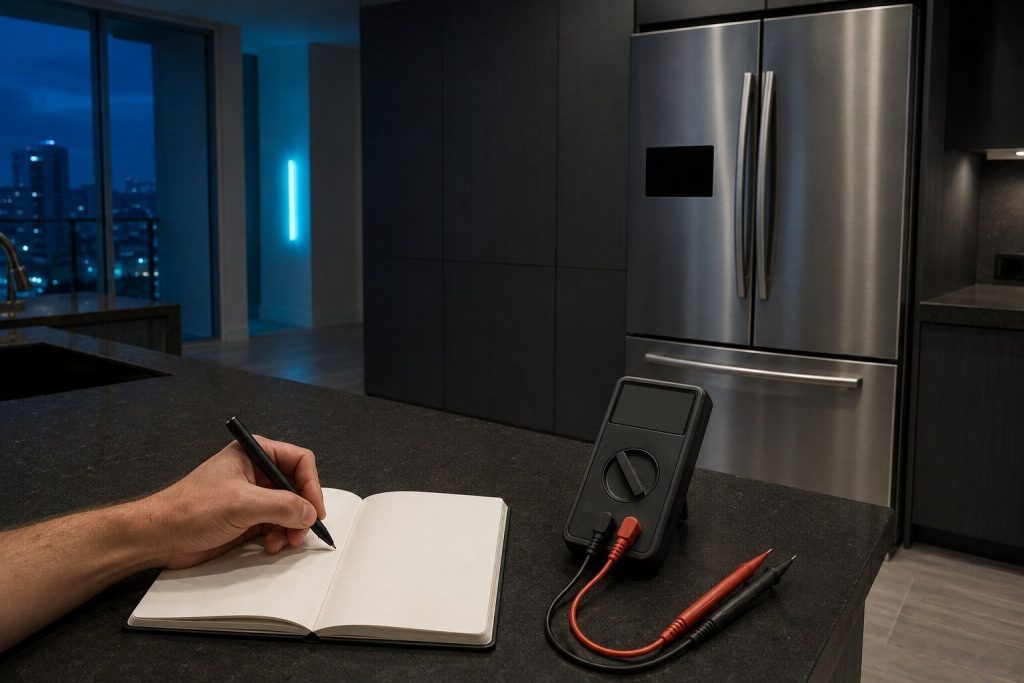
On this call the first part of the visit is measurement rather than parts: current draw at the compressor and its start components, the condition of the fan motors, the defrost circuit, and the supply itself at the outlet.
If the answer is the supply, we will tell you it is an electrician and we will not open the machine. If the answer is the appliance, you get the figure before anything is opened. And if the answer is that a fifteen-year-old refrigerator has reached the end of it, we would rather say that in the first hour than sell you a part for it.
If it turns out to be a repair
What this leads to, and what it costs
Every job on this site is priced the same way: an on-site diagnostic first, the figure agreed in writing before anybody starts.
-
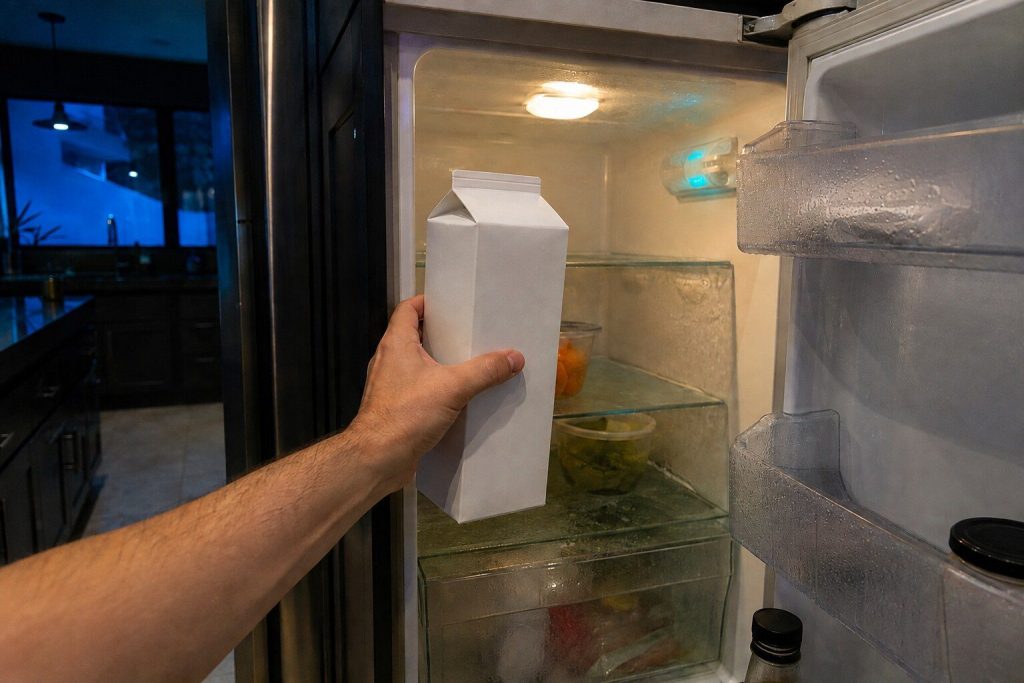
The lights are on, the panel looks normal, and the food is warm Refrigerator is not cooling
This is where Whirlpool goes quiet. Its top-freezer branch publishes 82 pages and not one error code; its side-by-side branch publishes 140 pages and nine. Where an F code does appear on a refrigerator, the maker publishes the fact that an F is flashing and, on the pages behind it, does not publish what each one means. So this diagnosis is measured, not read.
- Whirlpool publishes almost no refrigerator codes, and does not publish meanings for the F codes it does show
- PO is one of the few real messages: the power was off long enough to matter
- A condenser in a Miami garage is doing a much harder job than the design assumed
-
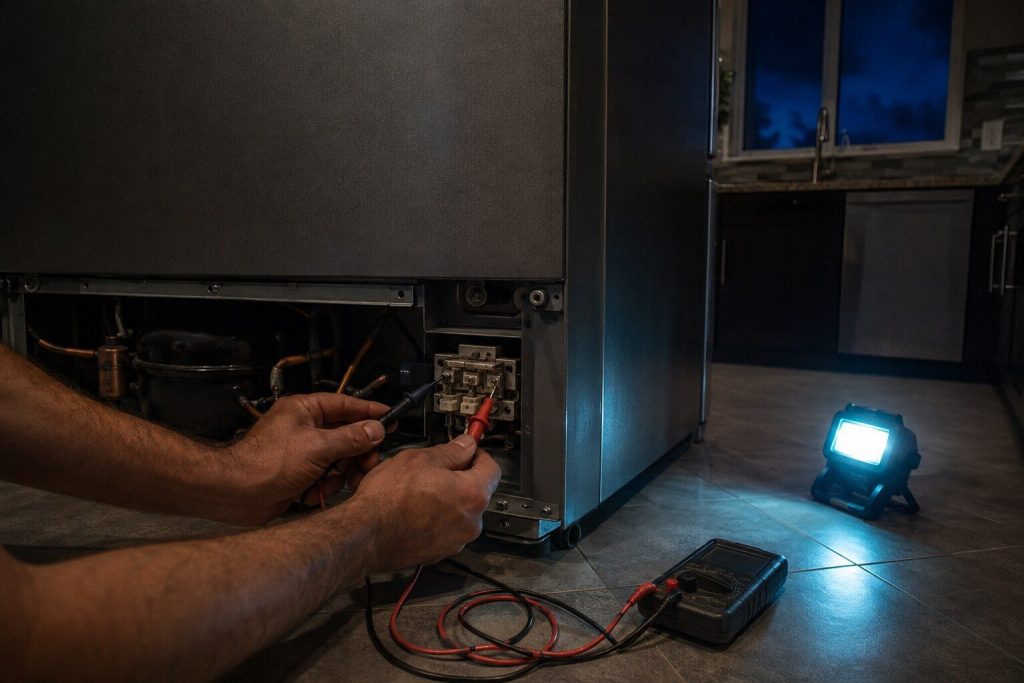
from $145 Refrigerator not cooling repair
A Whirlpool that has stopped cooling will not name the part for you. This make publishes 24 code pages across its French door line, nine on side-by-side and none whatsoever on top freezers, so a warm cabinet arrives as a warm cabinet and nothing else. In practice that makes the first hour measurement — temperatures in both compartments, airflow at the vents, current at the compressor — and it makes anybody who names a part before that hour a guesser.
- Measured, not read: on most of this make's cabinets there is no code to look up
- The causes that cost nothing come first — groceries against a vent, a door held ajar, a coil under dust
- Sealed-system work is quoted only after gauges, and on an old cabinet we will say when it is not worth doing
-
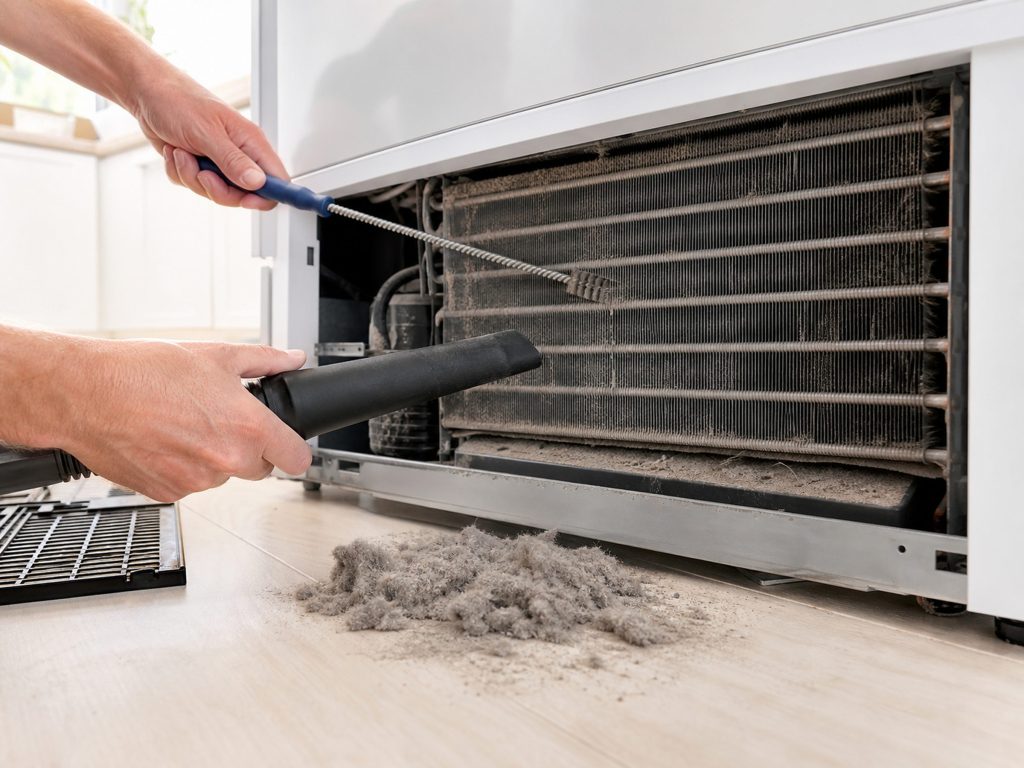
from $115 Condenser cleaning service
Nothing on a Whirlpool will ever tell you the coil is blocked. This make publishes a cleaning-the-condenser page for its top-freezer refrigerators and not one code page for them, so the condition is invisible until the compressor is running almost continuously and the ice cream starts going soft. The machines that need this most are the ordinary ones — the top-freezer in a rental condominium that has not been pulled away from the wall since the day it was delivered.
- There is no code for a blocked coil on this make, so somebody has to go and look
- Top-freezer and side-by-side cabinets, where a toe grille hides most of the coil
- Compressor run time recorded on the visit, so next year has something to compare with
-
from $89 Diagnostic visit
One visit, one technician, one answer in writing. On a Whirlpool the first question is whether the appliance is talking, because this make is not evenly talkative. It publishes a separate page for every code on its ranges, its ovens, its cooktops, its washers and its dryers, and it publishes almost nothing of the kind for its refrigerators and freezers. Knowing which half of the house you are standing in changes how the visit starts.
- Whether this appliance talks at all decides how the visit starts
- Laundry and cooking almost always have a code; the cold side almost never does
- Whatever we find goes to you in writing, and the visit comes off the repair

Questions people ask about this
Why not just unplug it?
Because unplugging is a hands-on move at the exact place the problem may be. A circuit drawing abnormal current can arc as a plug comes out, the outlet itself may be the thing that is overheating, and reaching behind a refrigerator to find a plug by feel is not where you want to be at that moment. A breaker does the same job from across the room with nothing in your hand. If the machine is on a circuit shared with other things and you cannot identify it, switch the whole panel and sort it out afterward.
The control panel says the cooling is off. Is that enough?
No. Turning the cooling off at the control panel stops the compressor from being asked to run. The appliance is still energized, the board is still live, the lights still work, and anything that was overheating in the supply side of the machine is still connected. It is a setting, not an isolation.
How do I tell a refrigerator electrical smell from an ordinary one?
By whether it fades. A new machine smells of manufacturing residue for the first week and then stops. Dust baked on a warm condenser gives a dry, hot-dust smell that goes once the coil is cleaned. Food is food, and it goes when the food does. Hot insulation and hot varnish do the opposite: sharp, acrid, and stronger the longer the machine runs, returning every time it runs. If it strengthens rather than fading, treat it as the real thing.
Nothing on the display is showing. Does that mean it is fine?
It means nothing either way, and on this make it means less than most people assume. Whirlpool publishes very few refrigeration codes — a couple of dozen across French door models, single figures for side-by-side, and none at all for top-freezer refrigerators or upright freezers. There is no code for hot insulation on any appliance. A blank display is not a clean bill of health, and your nose is the more sensitive instrument.
When is it an electrician and not an appliance company?
When the smell, the heat or the discoloration is at the wall rather than at the machine. A warm faceplate, a warm plug, browning around the socket, a plug that is loose in the outlet, or a breaker that trips whenever this appliance runs — all of those are the supply, and they do not get better on their own. That is an electrician, today. An appliance company can tell you which of the two you have, and we will say so rather than opening a machine that is not the problem.
Safety & Risks
More guides like this one
-
The Oven Smells of Gas When It Is Switched Off
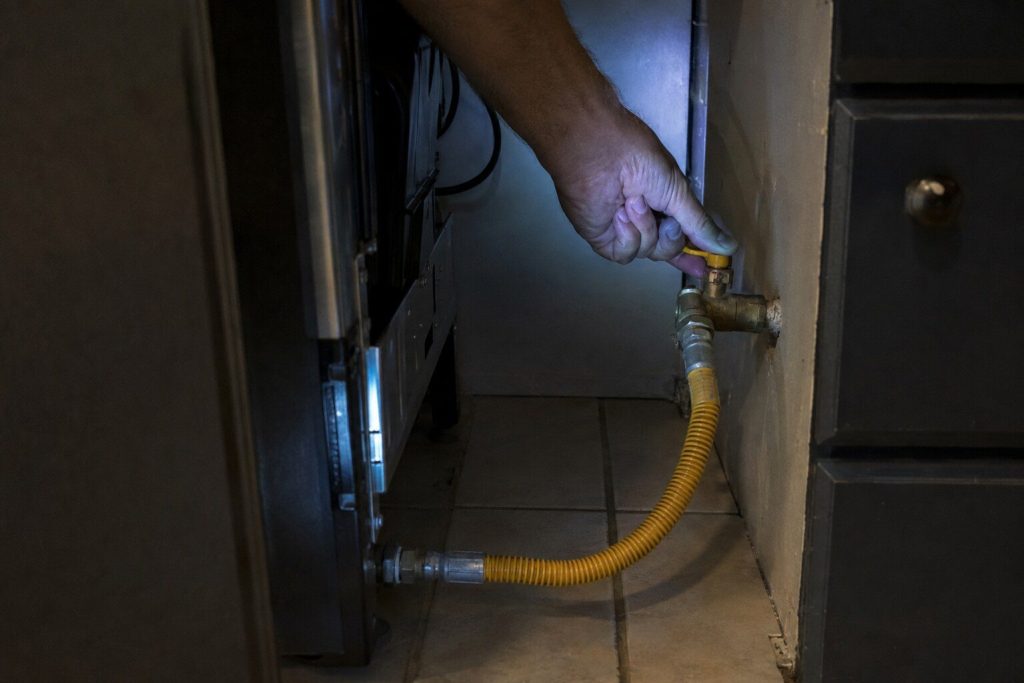
When the smell arrives is the whole diagnosis. A second as a burner lights is ordinary. A smell with everything off is not, at any strength.
Read more
Tell us the model number and what it is doing.
This article is based on:
- Official manufacturer documentation
- Internal repair procedures
- Technician repair history
- Company quality standards