Appliance
Whirlpool range hoods
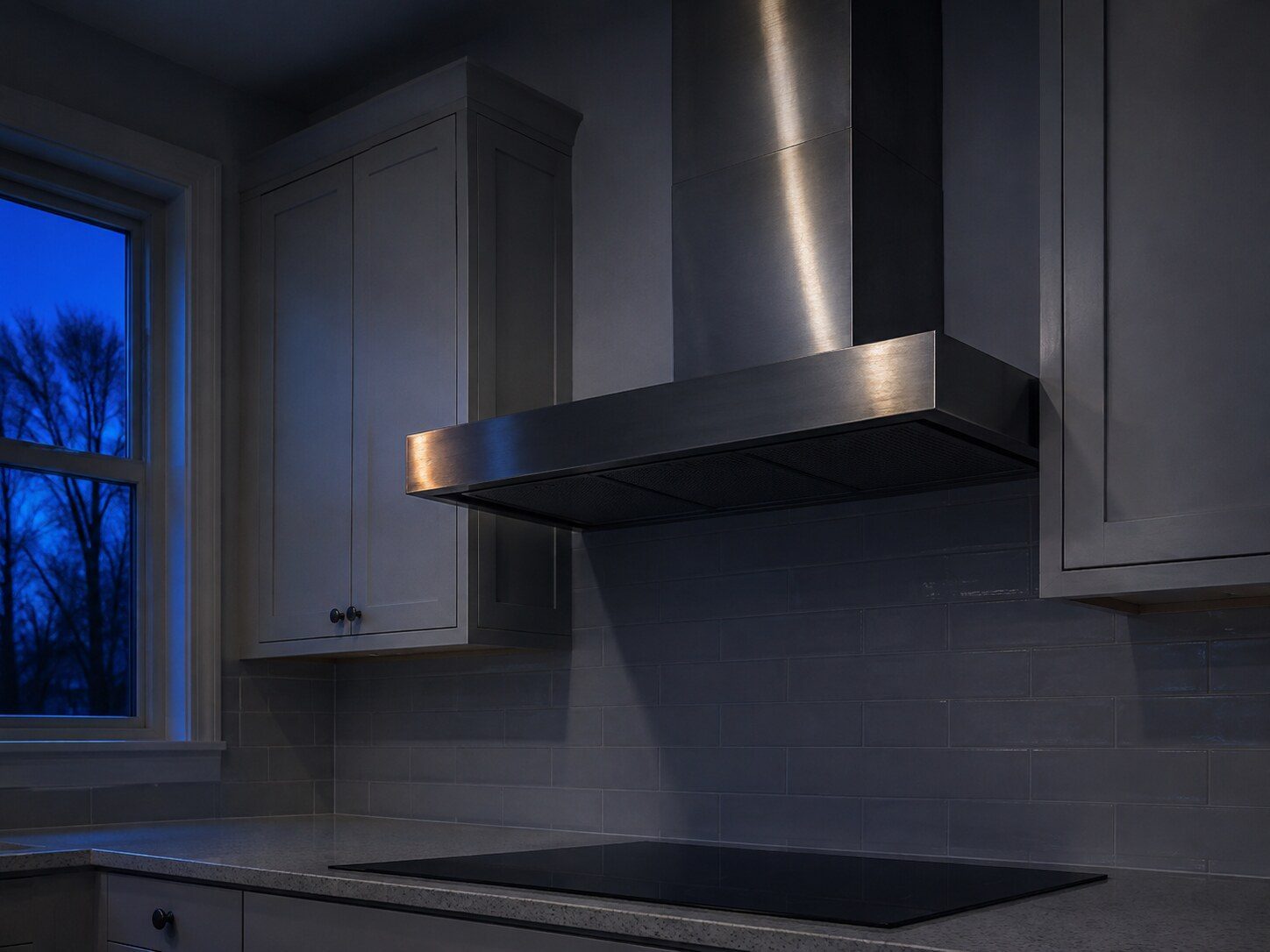
Whirlpool documents ventilation lightly and honestly: 43 pages across its vent hoods and the retractable downdraft vent, of which exactly two are code pages — a C in the display and an F in the display. Everything else is operation, noise and cleaning, which is a fair reflection of what a hood actually is. There are no sensors to disagree with each other, so there is nothing much to report. It is also worth saying that in a great many Whirlpool kitchens in this city the ventilation is not a hood at all but an over-the-range microwave doing the same job, and that machine has 67 published code pages of its own.
- 1 symptoms we are called out to
- From $89 diagnostic, credited to the repair
- 59 cities and neighborhoods covered
- OEM parts available on order
The short version
What this equipment is, for a repair
Configurations
Wall-mount and under-cabinet hoods, retractable downdraft vents, and the OTR microwave
Access
Planned before the visit, not discovered on arrival
Parts
OEM, available on order
Diagnostic
From $89, credited to the repair
What goes wrong with it
Symptoms we are called out to on Whirlpool range hoods
Each one covers the likely causes in the order they are worth checking, and what to do in five minutes before booking anything.
-
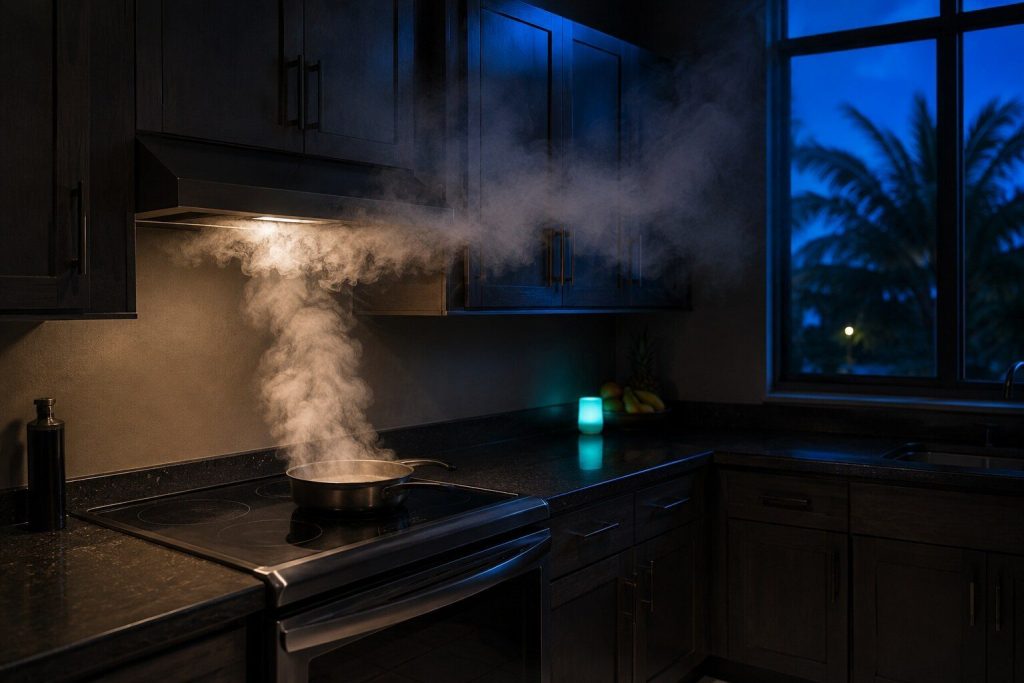
The fan runs and the kitchen still fills up Range hood is not clearing the smoke
Whirlpool's ventilation branch publishes pages titled Fan Not Working, Lights Not Working, Nothing Works and Not Removing Smoke or Odor — and not one error code anywhere in it. A hood is a motor, a filter and a duct. Nothing measures itself and nothing reports, so this diagnosis is made with a hand, a light and a look at the roof line.
- No codes at all in Whirlpool's ventilation branch — this is looked at, not read
- A grease filter that has never been washed halves the airflow before anything fails
- A hood that recirculates is not a hood that vents, and many South Florida kitchens have the first
What we do on it
Repairs we carry out on Whirlpool range hoods
Starting figures for this equipment in South Florida. The exact cost is confirmed after an on-site diagnostic — and this is not the whole list of what can go wrong, so call if your problem is not here.
-
from $89 Diagnostic visit
One visit, one technician, one answer in writing. On a Whirlpool the first question is whether the appliance is talking, because this make is not evenly talkative. It publishes a separate page for every code on its ranges, its ovens, its cooktops, its washers and its dryers, and it publishes almost nothing of the kind for its refrigerators and freezers. Knowing which half of the house you are standing in changes how the visit starts.
- Whether this appliance talks at all decides how the visit starts
- Laundry and cooking almost always have a code; the cold side almost never does
- Whatever we find goes to you in writing, and the visit comes off the repair
-
from $119 Appliance maintenance
Nothing on this list saves an owner more money and nothing is booked less often. Whirlpool builds appliances that will run for fifteen years in an ordinary house, and what usually ends them early is a maintenance item rather than a design one: a coil under a blanket of dust, a drain pump filter that has never once been opened, a duct that has closed a little further every year. This make publishes cleaning instructions for every one of those. Almost nobody has read them.
- One visit across everything you own, priced on time rather than per machine
- The washer drain pump filter, which is the most neglected part in South Florida
- You keep a written list of what is closest to failing
-
from $139 Appliance installation
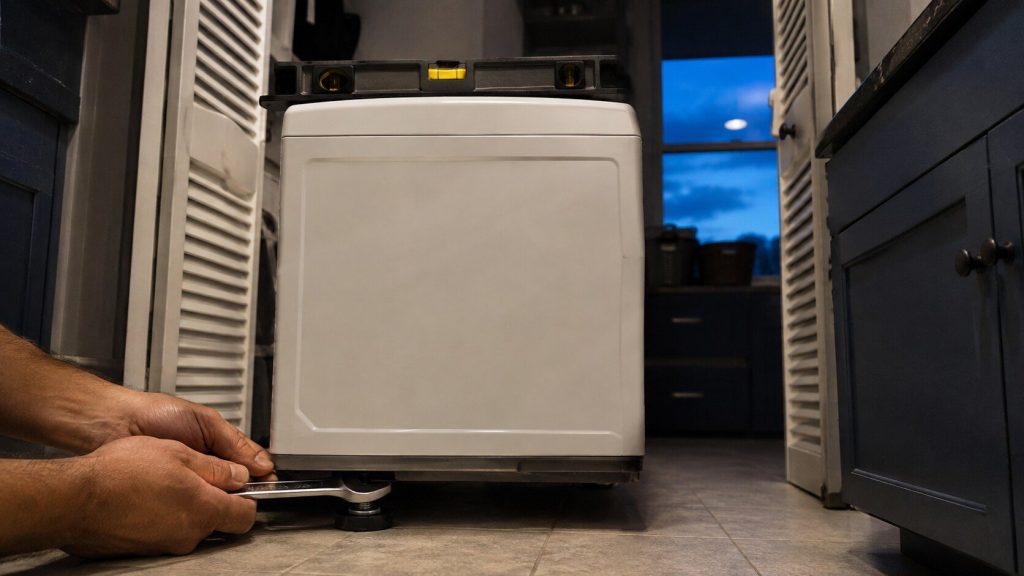
Most installations on this make are replacements, and that is worth saying out loud. The owner has just weighed a two-hundred-dollar repair against a nine-hundred-dollar machine and chosen the machine. What decides whether the new one is still working in eight years is the hour after it arrives: whether the opening was measured, whether the duct behind it was cleared, whether anyone put a level on it. A delivery crew is not paid for that hour and does not stay for it.
- The hour after the delivery truck leaves, which is the hour nobody is paid for
- Leveling done with a level and the lock nuts tightened, on every machine that has feet
- Gas joints leak-tested and the result written down
-
from $265 Appliance control board repair
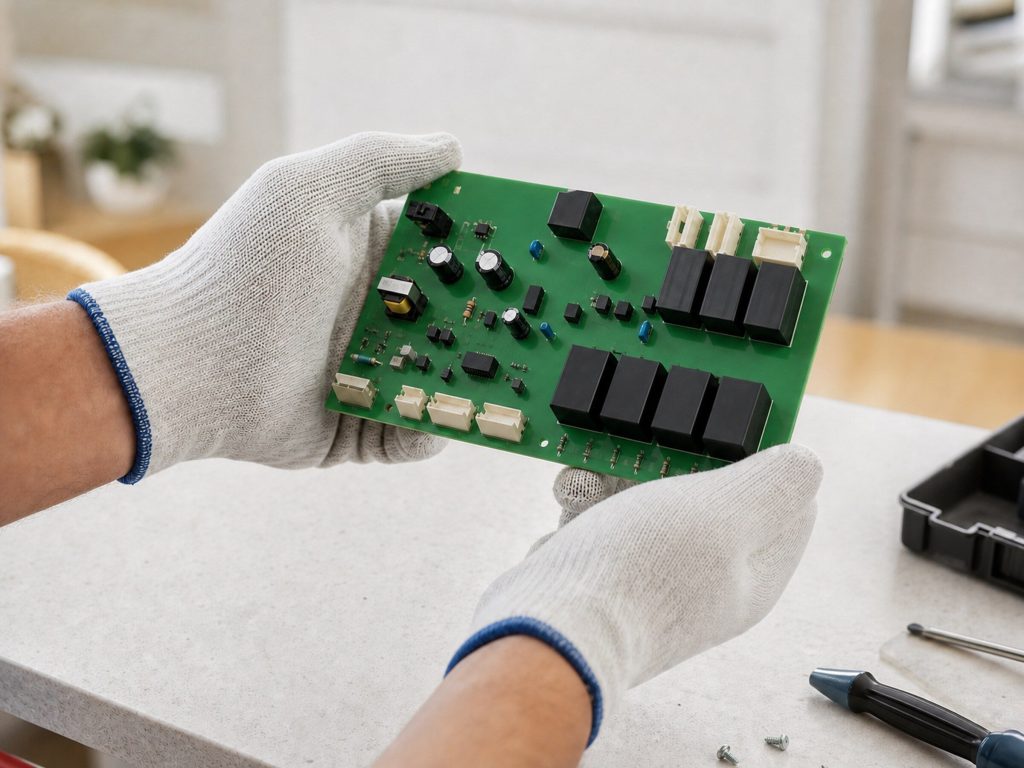
The board is where a Whirlpool reports from, and it is also the part that gets blamed for everything else. Whirlpool runs the same control architecture across its whole line, which is why an F#E# code looks familiar on a range and on a washer — but a board that has died usually died of something, and replacing it without finding that something buys you a few months.
- A board that died usually died of something, and that something kills the next one too
- Browned connectors and pins backed out of a housing are cheap; boards are not
- Whirlpool revises these mid-production, so the order goes out against the serial
-
from $145 Over-the-range microwave vent service
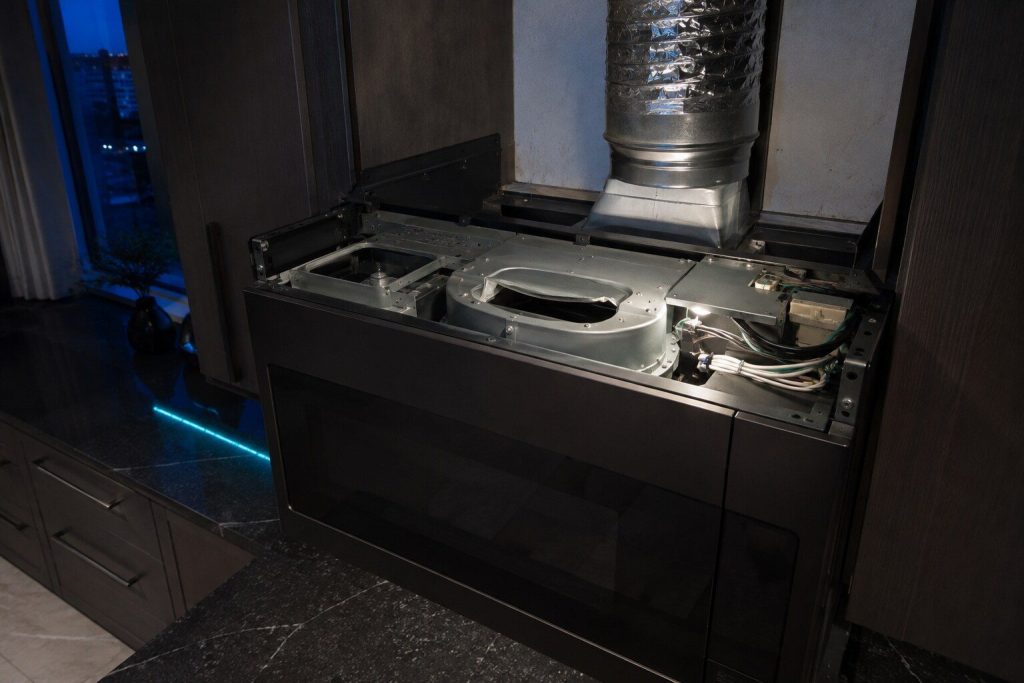
The ventilation half of these machines is the half nobody thinks about until a pan of oil fills the kitchen with smoke. In South Florida condominiums a great many of them were never ducted outside at all: they push the air back into the room through a charcoal filter, and once that filter is saturated the machine is doing precisely nothing for the room. Which arrangement you have decides what maintenance even means here.
- First question: does this one vent outside, or back into your kitchen?
- The metal grease filters wash; the charcoal behind them has a life measured in months
- Airflow checked at the grille rather than judged by how loud the machine is
-
from $145 Range hood repair
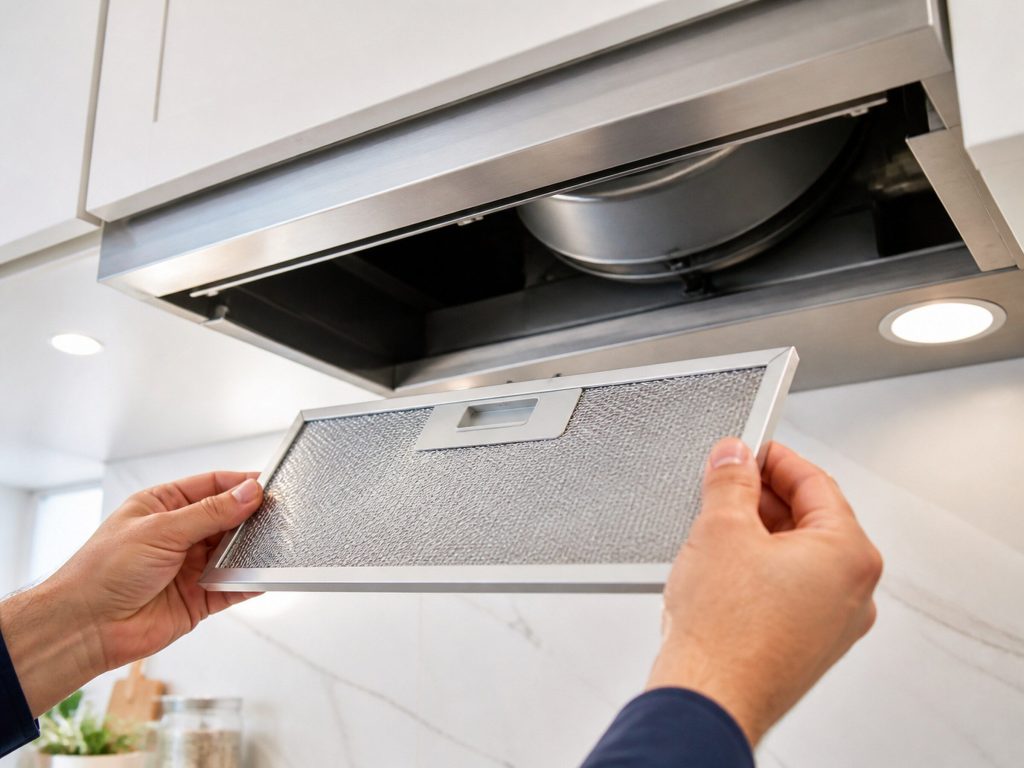
A hood that does not move air is either an electrical problem or a duct problem, and Whirlpool gives you very little to go on: this make publishes 43 support pages across its vent hoods and downdrafts, with two code entries in the entire branch. So this one is diagnosed rather than read, and that includes the retractable downdraft units, which have a motor and a track as well as a fan.
- Almost no published codes on this appliance, so it is measured and inspected
- Motor, capacitor, switch and lights, then the duct
- Retractable downdraft units have a lift mechanism that fails separately from the fan
In more detail
About Whirlpool range hoods
The appliance with almost nothing to say
Two code pages in the whole ventilation branch, against 176 for the wall oven. That is not a gap in the documentation, it is an accurate description of the machine: a hood is a motor, a fan wheel, a lamp circuit, a damper and a filter. When it stops working, the answer is found by looking rather than by reading a display.
Ducted, recirculating, or a microwave
A ducted hood pushes air out of the building. A recirculating one filters it and returns it to the room. Both are legitimate installations, and only one of them removes heat and steam — which means a fair share of complaints about a hood that does not work turn out to be a recirculating installation working exactly as it was built to, with a charcoal filter that has been in place since the kitchen was. In a lot of Whirlpool kitchens across Miami-Dade and Broward the ventilation is an over-the-range microwave instead, which does both jobs and fails in both ways: the vent fan and its switch have their own published codes on that machine. If your ventilation is the microwave, the microwave page on this site is the one you want. Exact cost is confirmed after the on-site diagnostic, which is credited toward the repair.
This article is based on:
- Official manufacturer documentation
- Internal repair procedures
- Technician repair history
- Company quality standards
Before you book
Questions about Whirlpool range hoods
It runs but the kitchen still fills with steam.
Three questions in this order. Is it ducted or recirculating, because a recirculating hood was never going to remove steam from the room — it pulls grease out of the air through a charcoal filter and puts the air back. Are the filters loaded, because a metal baffle or mesh filter packed with grease chokes the airflow completely. And is the duct clear where it leaves the building, because the exterior damper seizes in this climate and everything behind it packs solid. Only after those three is it worth looking at the blower.
The lights work and the fan does not.
Useful, because it proves power is arriving at the hood and the problem is downstream of the switch. That leaves the blower motor, the capacitor that starts it on the models that have one, or the control board that drives it. A motor that hums and will not turn is usually a capacitor or a seized bearing and both are parts. A motor that is completely silent is the control or the motor itself. On a retractable downdraft there is a fourth possibility: the lift mechanism, which has its own motor and its own limit switches.
How often do the filters actually need doing?
Metal filters every month or two in a kitchen that cooks properly, and they go through the dishwasher on their own — Whirlpool devotes eight pages to cleaning and care for a reason. Charcoal filters on a recirculating installation are replaced rather than washed, roughly every six months. Nothing else on this appliance rewards attention as cheaply, and a loaded filter is what makes a perfectly good hood feel broken.
Where we do it
Across Miami-Dade, Broward, and Palm Beach
Same terms everywhere we go: an on-site diagnostic first, the price agreed in writing, and the exact figure confirmed once we have seen the unit.
Neighborhoods people ask for by name